
Palladium Prices, Trend, Chart, Demand, Market Analysis, News, Historical and Forecast Data Report 2026 Edition
Palladium Price Trend, Index and Forecast
Track the latest insights on palladium price trend and forecast with detailed analysis of regional fluctuations and market dynamics across North America, Latin America, Central Europe, Western Europe, Eastern Europe, Middle East, North Africa, West Africa, Central and Southern Africa, Central Asia, Southeast Asia, South Asia, East Asia, and Oceania.
Palladium Prices Outlook Q2 2026
- USA: USD 41,539/Kg
- India: USD 40,415/Kg
- Germany: USD 42,266/Kg
- China: USD 41,100/Kg
- France: USD 42,689/Kg
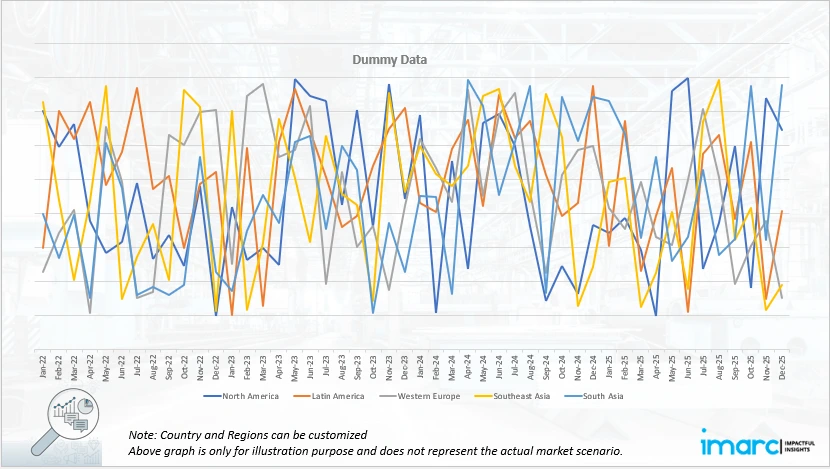
Palladium Price Chart
Get real-time access to monthly/quaterly/yearly prices, Request Sample
During the second quarter of 2026, the palladium prices in the USA reached 41,539 USD/Kg in June. Values declined from the previous quarter as demand from gasoline autocatalyst producers eased and consumers limited forward commitments. Substitution of platinum for palladium in three-way catalytic converters continued to reduce the volume of metal required per vehicle platform. Recycled palladium recovered from scrapped vehicles added to prompt availability and lowered the need for primary purchases. Trade policy uncertainty around proposed duties on Russian imports also encouraged buyers to hold back from large spot transactions.
During the second quarter of 2026, the palladium prices in India reached 40,415 USD/Kg in June. Prices eased over the quarter as domestic autocatalyst manufacturers and jewellery fabricators purchased only against confirmed requirements. Softer than expected passenger vehicle output reduced fresh consumption of the metal during the period. Importers deferred additional cargoes in the expectation of further softening in international quotations. Rising recovery of palladium from spent catalytic converters competed directly with refined imports in the domestic market. Currency movements and freight costs influenced landed values but did not offset the overall downward trend.
During the second quarter of 2026, the palladium prices in Germany reached 42,266 USD/Kg in June. Prices slipped from the previous quarter as European carmakers trimmed gasoline engine production schedules and reduced catalyst loading requirements. A growing share of battery electric and hybrid models in the domestic sales mix lowered the volume of metal consumed per unit produced. Platinum substitution in three-way catalysts remained a persistent drag on palladium offtake through the quarter. Refiners reported comfortable inventories and sufficient prompt availability for routine demand. Industrial applications such as chemical catalysis and electronics offered only partial support to the market.
During the second quarter of 2026, the palladium prices in China reached 41,100 USD/Kg in June. Prices moved lower as expanding electrification cut demand from gasoline vehicle exhaust systems. Domestic catalyst manufacturers relied increasingly on platinum and reduced palladium loadings where emission specifications allowed. Imports remained ample and bonded inventories were adequate to cover routine consumption. Industrial offtake from electronics and chemical processing stayed stable but was too small to reverse the broader decline. Buyers maintained a hand to mouth purchasing approach, which kept quotations under pressure through June.
During the second quarter of 2026, the palladium prices in France reached 42,689 USD/Kg in June. Prices weakened as domestic vehicle assembly volumes stayed modest and catalyst producers reduced spot purchasing. Substitution toward platinum in gasoline autocatalysts continued to erode the base of palladium consumption. Demand from the chemical and electronics sectors was steady but could not absorb the metal released by lower automotive offtake. Recycled material from end of life vehicles added further supply into the European market. Traders reported limited interest in building positions while the price trend remained negative.
Palladium Prices Outlook Q2 2025
- USA: USD 36,839/Kg
- Southeast Asia: USD 38,234/Kg
- Germany: USD 36,205/Kg
- China: USD 36,450/Kg
Regional Coverage
The report provides a detailed analysis of the market across different regions, each with unique pricing dynamics influenced by localized market conditions, supply chain intricacies, and geopolitical factors. This includes price trends, price forecast and supply and demand trends for each region, along with spot prices by major ports. The report also provides coverage of FOB and CIF prices, as well as the key factors influencing palladium prices.
Europe Palladium Price Trend
Q2 2026:
The palladium price index in Europe moved downward during the second quarter of 2026 as automotive demand weakened and substitution toward platinum continued. German and French catalyst manufacturers reduced spot purchasing and covered most of their requirements under existing contracts. Scheduled maintenance and shorter production runs at vehicle assembly plants lowered the volume of metal entering the exhaust systems pipeline. Refined supply from South African and Russian producers remained adequate, and exchange inventories were sufficient to meet routine demand. Recycling of spent autocatalysts expanded across Western Europe, adding secondary units into the market and easing the need for primary metal. Industrial offtake from chemical catalysis, electronics and dental applications stayed broadly stable but offered only limited support to the market. Logistics costs and freight scheduling eased during the quarter, which improved delivered availability and removed a source of premium. Buyers generally purchased against immediate needs only, leaving sellers with little leverage to hold quotations firm.
Detailed price information for palladium can also be provided for an extensive list of European countries.
| Region | Countries Covered |
|---|---|
| Europe | Germany, France, United Kingdom, Italy, Spain, Russia, Turkey, Netherlands, Poland, Sweden, Belgium, Austria, Ireland, Switzerland, Norway, Denmark, Romania, Finland, Czech Republic, Portugal, and Greece, among other European countries. |
North America Palladium Price Trend
Q2 2026:
The palladium price index in North America declined through the second quarter of 2026 as automotive demand moderated and market sentiment stayed cautious. United States gasoline vehicle production held at moderate levels, and catalyst makers purchased strictly against confirmed orders. Substitution of platinum for palladium in three-way catalysts continued to reduce loadings per vehicle. Secondary supply recovered from scrapped vehicles grew steadily, adding units to a market that was already adequately supplied. The pending trade case on imports of Russian palladium created uncertainty over future sourcing arrangements without tightening prompt availability. Inventories held by consumers and merchants remained comfortable, which reduced any urgency to secure material. Industrial demand from electronics, chemical processing and hydrogen purification applications was steady but modest in scale. Producers and traders therefore competed for a smaller pool of spot business, keeping quotations under downward pressure.
Specific palladium historical data within the United States and Canada can also be provided.
| Region | Countries Covered |
|---|---|
| North America | United States and Canada |
Middle East and Africa Palladium Price Trend
Q2 2026:
The study includes palladium price trends across the Middle East and Africa, taking into consideration variables that have a direct impact on market prices, such as regional industrial expansion, natural resource availability, and geopolitical conflicts.
Region-wise data and information on specific countries within these regions can also be provided.
| Region | Countries Covered |
|---|---|
| Middle East & Africa | Saudi Arabia, UAE, Israel, Iran, South Africa, Nigeria, Oman, Kuwait, Qatar, Iraq, Egypt, Algeria, and Morocco, among other Middle Eastern and African countries. |
Asia Pacific Palladium Price Trend
Q2 2026:
The palladium price index in Asia Pacific moved lower during the second quarter of 2026 as electrification reduced gasoline vehicle catalyst demand. Chinese catalyst manufacturers lowered palladium loadings and increasingly favoured platinum wherever technical specifications permitted. Indian autocatalyst and jewellery fabricators purchased only against confirmed requirements and deferred additional cargoes. Ample imports and comfortable bonded inventories across the region removed any sense of prompt shortage. Japanese and Korean electronics producers maintained steady but limited offtake for multilayer ceramic capacitors and related components. Recovery of palladium from spent autocatalysts expanded across the region and added secondary units into the supply pool. Freight and insurance costs were broadly stable during the quarter and did not create a meaningful cost floor. With sellers competing for a narrow order book, regional quotations continued to drift lower through June.
This palladium price analysis can be expanded to include a comprehensive list of countries within the region.
| Region | Countries Covered |
|---|---|
| Asia Pacific | China, India, Indonesia, Pakistan, Bangladesh, Japan, Philippines, Vietnam, Thailand, South Korea, Malaysia, Nepal, Taiwan, Sri Lanka, Hongkong, Singapore, Australia, and New Zealand, among other Asian countries. |
Latin America Palladium Price Trend
Q2 2026:
The palladium market in Latin America is primarily driven by the region's abundant natural resources, particularly in Brazil and Chile. However, due to political instability and varying regulatory regimes, palladium prices might fluctuate dramatically.
This comprehensive review can be extended to include specific countries within Latin America.
| Region | Countries Covered |
|---|---|
| Latin America | Brazil, Mexico, Argentina, Columbia, Chile, Ecuador, and Peru, among other Latin American countries. |
Palladium Pricing Report, Market Analysis, and News
IMARC's latest publication, “Palladium Pricing Report 2026: Price Trend, Chart, Market Analysis, News, Demand, Historical and Forecast Data,” presents a detailed examination of the palladium market, providing insights into both global and regional trends that are shaping prices. This report delves into the spot price of palladium at major ports and analyzes the composition of prices, including FOB and CIF terms. It also presents detailed palladium prices trend analysis by region, covering North America, Europe, Asia Pacific, Latin America, and Middle East and Africa. The factors affecting palladium pricing, such as the dynamics of supply and demand, geopolitical influences, and sector specific developments, are thoroughly explored. This comprehensive report helps stakeholders stay informed with the latest market news, regulatory updates, and technological progress, facilitating informed strategic decision-making and forecasting.
Palladium Industry Analysis
The global palladium industry size reached USD 225.00 Tons in 2025. By 2034, IMARC Group expects the market to reach USD 303.62 Tons, at a projected CAGR of 3.39% during 2026-2034. Market growth is being driven by tightening mine supply from South Africa and Russia, expanding use of palladium in chemical catalysis, hydrogen purification and electronics, and continued demand for gasoline autocatalyst replacements as the global vehicle fleet ages in mature markets.
Latest News and Developments:
- August 2025: Sibanye-Stillwater petitioned the US Department of Commerce and the International Trade Commission on 30 July for anti-dumping and countervailing duties on Russian palladium imports.
- June 2024: Gen Mining reported the enhancements to the design of the Marathon Palladium-Copper Project with the aim of increasing cost efficiency and improving economic viability. It is anticipated that the project will generate substantial palladium and copper deposits in Northwestern Ontario.
- May 2024: Grid Metals reported a 37% rise in the indicated resource at its MM copper-nickel project in Manitoba, reaching a total of 46.2 million tons, with substantial palladium reserves included. The increase was fueled by infill drilling and improved metallurgical recoveries.
Product Description
Palladium is a rare, lustrous, silvery-white metal belonging to the platinum group of metals. Palladium resists tarnishing, is chemically stable at ordinary temperatures, and absorbs large volumes of hydrogen gas. These properties, combined with its strong catalytic activity, make it valuable in emissions control and industrial chemistry. Most palladium is recovered as a by-product of nickel and copper mining rather than from primary deposits. The automotive industry is the largest end user, because palladium is the principal catalyst in three-way catalytic converters for gasoline engines, oxidising carbon monoxide and hydrocarbons and reducing nitrogen oxides. The chemical industry uses palladium catalysts for hydrogenation, carbonylation and cross-coupling reactions, while the electronics industry uses it in multilayer ceramic capacitors, connectors and semiconductor plating. Dental laboratories use palladium in crown and bridge alloys, jewellery makers use it in white gold, and hydrogen purification membranes and glass fibre production also consume the metal.
Report Coverage
| Key Attributes | Details |
|---|---|
| Product Name | Palladium |
| Report Features | Exploration of Historical Trends and Market Outlook, Industry Demand, Industry Supply, Gap Analysis, Challenges, Palladium Price Analysis, and Segment-Wise Assessment. |
| Currency/Units | US$ (Data can also be provided in local currency) or Metric Tons |
| Region/Countries Covered | The current coverage includes analysis at the global and regional levels only. Based on your requirements, we can also customize the report and provide specific information for the following countries: Asia Pacific: China, India, Indonesia, Pakistan, Bangladesh, Japan, Philippines, Vietnam, Thailand, South Korea, Malaysia, Nepal, Taiwan, Sri Lanka, Hongkong, Singapore, Australia, and New Zealand Europe: Germany, France, United Kingdom, Italy, Spain, Russia, Turkey, Netherlands, Poland, Sweden, Belgium, Austria, Ireland, Switzerland, Norway, Denmark, Romania, Finland, Czech Republic, Portugal and Greece North America: United States and Canada Latin America: Brazil, Mexico, Argentina, Columbia, Chile, Ecuador, and Peru Middle East & Africa: Saudi Arabia, UAE, Israel, Iran, South Africa, Nigeria, Oman, Kuwait, Qatar, Iraq, Egypt, Algeria, and Morocco The list of countries presented is not exhaustive. Information on additional countries can be provided if required by the client. |
| Information Covered for Key Suppliers |
|
| Customization Scope | The report can be customized as per the requirements of the customer |
| Report Price and Purchase Option |
Plan A: Monthly Updates - Annual Subscription
Plan B: Quarterly Updates - Annual Subscription
Plan C: Biannually Updates - Annual Subscription
|
| Post-Sale Analyst Support | 360-degree analyst support after report delivery |
| Delivery Format | PDF and Excel through email (We can also provide the editable version of the report in PPT/Word format on special request) |
Key Benefits for Stakeholders:
- IMARC’s report presents a detailed analysis of palladium pricing, covering global and regional trends, spot prices at key ports, and a breakdown of ex-works, FOB, and CIF prices.
- The study examines factors affecting palladium price trend, including supply-demand shifts and geopolitical impacts, offering insights for informed decision-making.
- The competitive landscape review equips stakeholders with crucial insights into the latest market news, regulatory changes, and technological advancements, ensuring a well-rounded, strategic overview for forecasting and planning.
- IMARC offers various subscription options, including monthly, quarterly, and biannual updates, allowing clients to stay informed with the latest market trends, ongoing developments, and comprehensive market insights. The palladium price charts ensure our clients remain at the forefront of the industry.
Need more help?
- Speak to our experienced analysts for insights on the current market scenarios.
- Include additional segments and countries to customize the report as per your requirement.
- Gain an unparalleled competitive advantage in your domain by understanding how to utilize the report and positively impacting your operations and revenue.
- For further assistance, please connect with our analysts.
 Request Customization
 Inquire Before Buying
 Speak to an Analyst
 Request Brochure
Benefits of Customization
- Personalize this research
- Triangulate with your data
- Get data as per your format and definition
- Gain a deeper dive into a specific application, geography, customer, or competitor
- Any level of personalization
Get in Touch With Us
UNITED STATES
Phone: +1-201-971-6302
INDIA
Phone: +91-120-433-0800
UNITED KINGDOM
Phone: +44-753-714-6104
Email: [email protected]
Client Testimonials




.webp)




.webp)













Related Reports

Why Choose Us
IMARC offers trustworthy, data-centric insights into commodity pricing and evolving market trends, enabling businesses to make well-informed decisions in areas such as procurement, strategic planning, and investments. With in-depth knowledge spanning more than 1000 commodities and a vast global presence in over 150 countries, we provide tailored, actionable intelligence designed to meet the specific needs of diverse industries and markets.
1000
+Commodities
150
+Countries Covered
3000
+Clients
20
+Industry

Robust Methodologies & Extensive Resources
IMARC delivers precise commodity pricing insights using proven methodologies and a wealth of data to support strategic decision-making.

Subscription-Based Databases
Our extensive databases provide detailed commodity pricing, import-export trade statistics, and shipment-level tracking for comprehensive market analysis.

Primary Research-Driven Insights
Through direct supplier surveys and expert interviews, we gather real-time market data to enhance pricing accuracy and trend forecasting.

Extensive Secondary Research
We analyze industry reports, trade publications, and market studies to offer tailored intelligence and actionable commodity market insights.
Trusted by 3000+ industry leaders worldwide to drive data-backed decisions. From global manufacturers to government agencies, our clients rely on us for accurate pricing, deep market intelligence, and forward-looking insights.