
Philippines Wound Care Market Size, Share, Trends and Forecast by Product Type, Wound Type, End User, and Region, 2026-2034
Philippines Wound Care Market Size, Share, Trends & Forecast (2026-2034)
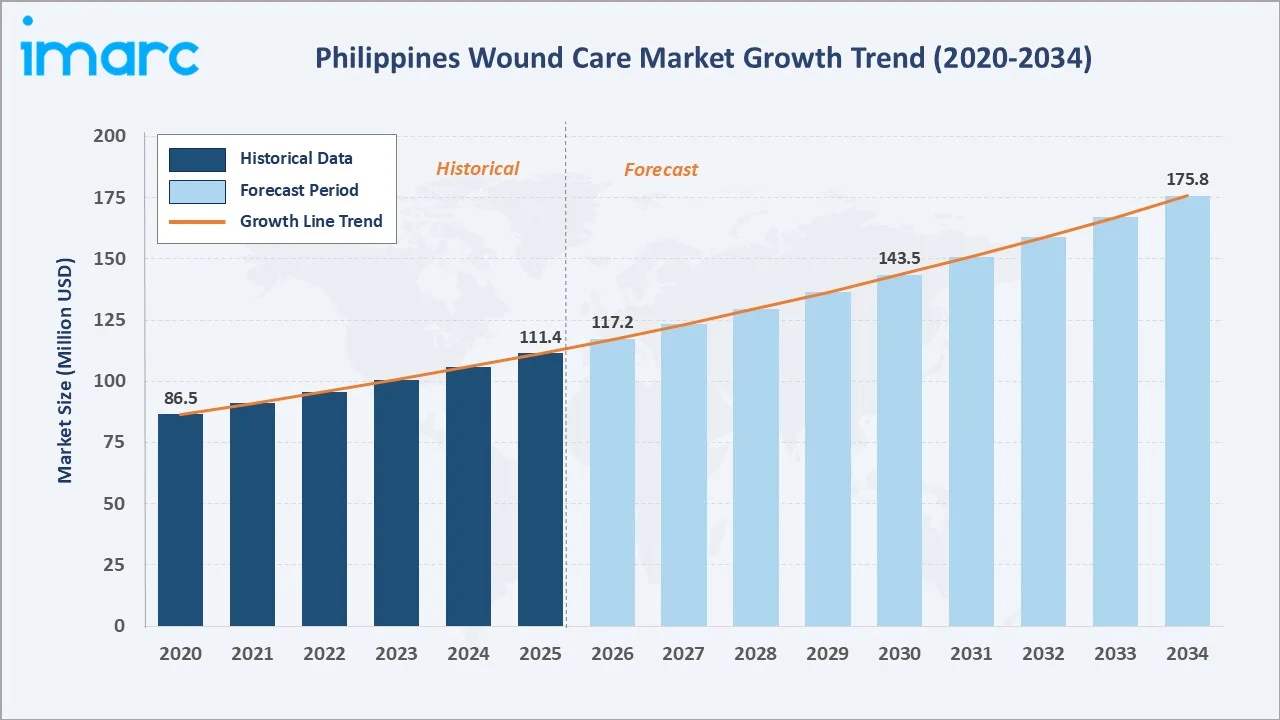
The Philippines wound care market grew from USD 111.4 Million in 2025 to USD 117.2 Million in 2026 and is projected to reach USD 175.8 Million by 2034, growing at a CAGR of 5.20% during 2026-2034. The market is driven by rising chronic disease burden, Universal Health Care Act expansion, growing hospital investments, and increasing adoption of advanced wound care products including hydrocolloid and antimicrobial dressings.
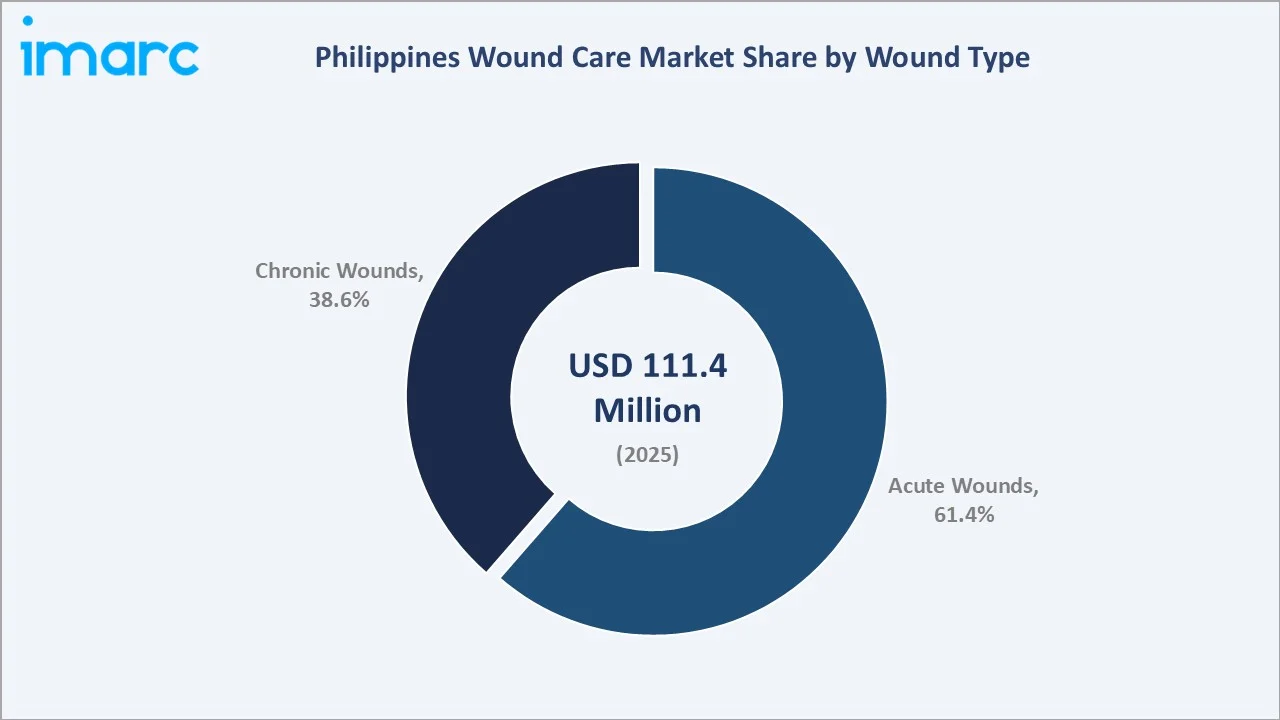
Acute Wounds dominate at 61.4%. Hospitals and Clinics lead end-user demand at 68.5%. Luzon commands 58.4% of the national market share, anchored by Metro Manila's dense healthcare infrastructure.
Market Snapshot
|
Metric |
Value |
|
Base Year Market Size (2025) |
USD 111.4 Million |
|
Market Size (2026) |
USD 117.2 Million |
|
Forecast Market Size (2034) |
USD 175.8 Million |
|
CAGR (2026-2034) |
5.20% |
|
Base Year |
2025 |
|
Historical Period |
2020-2025 |
|
Forecast Period |
2026-2034 |
|
Dominant Wound Type |
Acute Wounds (61.4%, 2025) |
|
Dominant End User |
Hospitals and Clinics (68.5%, 2025) |
|
Leading Region |
Luzon (58.4%, 2025) |
The Philippines wound care market size increased from USD 86.5 Million in 2020 to USD 111.4 Million in 2025 and is estimated to reach USD 117.2 Million in 2026. The market is further expected to grow to USD 143.5 Million by 2030 and USD 175.8 Million by 2034. The Philippines wound care market is driven by rising diabetes prevalence, UHC Act implementation, growing private hospital investment, and increased awareness of advanced wound management solutions.
To get more information on this market, Request Sample
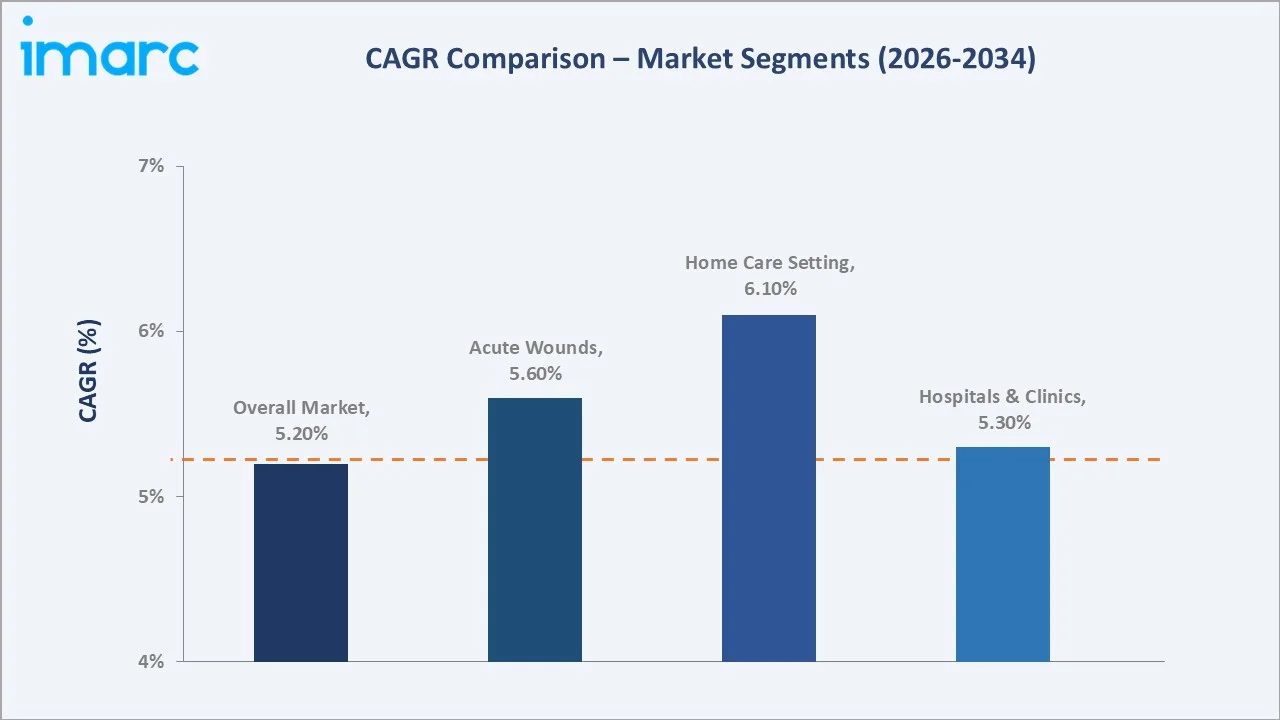
Acute Wounds grow at approximately 5.6% CAGR through surgical volume expansion and trauma care programs. Home Care Setting grows at approximately 6.1% CAGR driven by Philippines' expanding home healthcare sector.
Executive Summary
The Philippines wound care market expanded from USD 111.4 Million in 2025 to an estimated USD 117.2 Million in 2026, positioning it among Southeast Asia's fastest-growing wound care markets. The expansion is underpinned by the Universal Health Care Act's growing coverage, rising diabetes prevalence driving chronic wound demand, and increasing hospital investments in advanced wound management protocols across Metro Manila and provincial healthcare systems.
The market is projected to reach USD 175.8 Million by 2034. Acute Wounds at 61.4% lead through surgical and trauma demand. Hospitals and Clinics at 68.5% reflect institutional procurement dominance. Luzon leads regionally at 58.4%.
Key Market Insights
|
Insight |
Data |
|
Dominant Wound Type |
Acute Wounds – 61.4% share (2025) |
|
Dominant End User |
Hospitals and Clinics – 68.5% market share (2025) |
|
Leading Region |
Luzon – 58.4% share (2025) |
|
Market Opportunity |
UHC Act coverage expansion; advanced dressing adoption; home care wound management growth; diabetic wound care programs; NPWT deployment in private hospitals |
Key Analytical Observations:
- Acute Wounds at 61.4%: The segment dominates through high surgical volume, trauma care, and burns management across Philippine hospitals. Rising road accident rates, surgical site infections, and post-operative care requirements sustain consistent volume demand.
- Hospitals and Clinics at 68.5%: Institutional buyers command market leadership through bulk procurement, clinical protocol adoption, and PhilHealth reimbursement for wound care procedures in accredited facilities.
- Luzon at 58.4%: Metro Manila's concentration of tertiary hospitals, medical centres, and private healthcare chains anchors Luzon's dominance, supported by Cavite-Laguna-Batangas corridor healthcare expansion.
Philippines Wound Care Market Overview
Philippines wound care market is commercially positioned at the intersection of a growing chronic disease burden, expanding universal health coverage, and increasing private healthcare investment. Rising diabetes prevalence, with the Philippines among Southeast Asia's highest diabetic populations, creates consistent chronic wound demand.
Philippines wound care ecosystem integrates global product manufacturers, local distributors, government health procurement, and private hospital chains. Macroeconomic factors including PhilHealth expansion, growing middle class healthcare spending, and DOH facility upgrade programs support sustained market expansion.
Market Dynamics
To evaluate market opportunities, Request Sample
Market Drivers
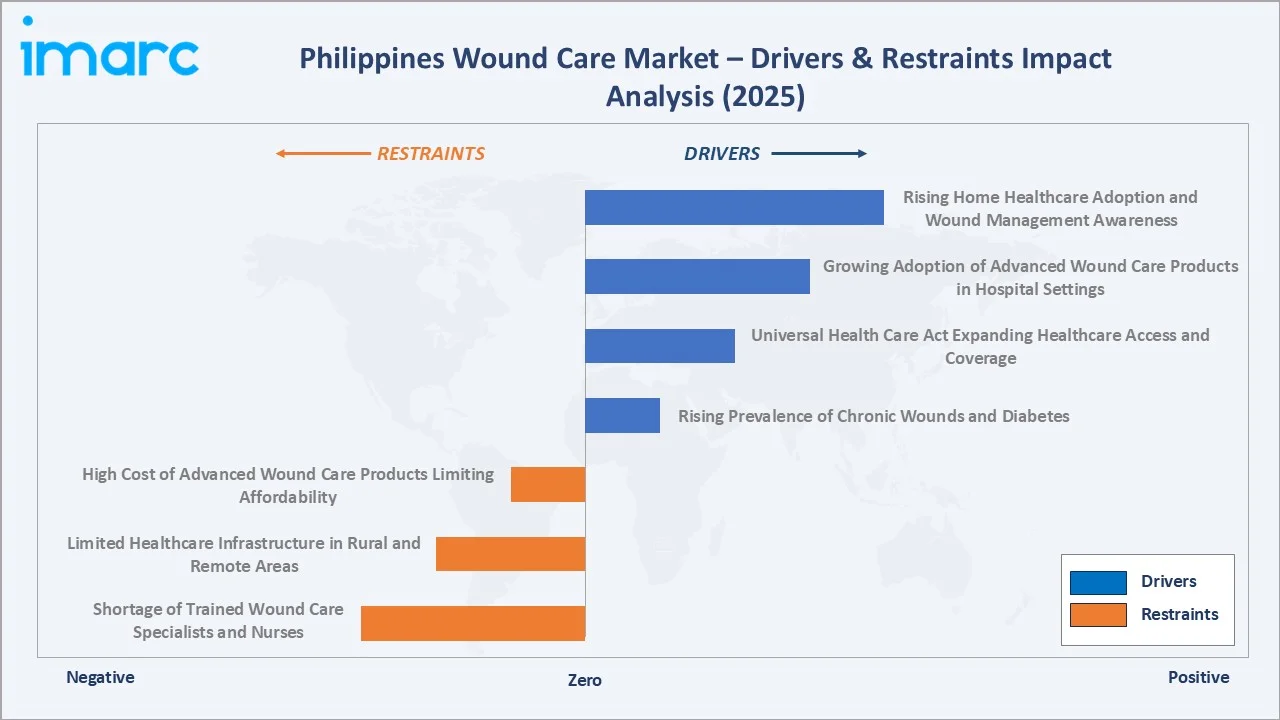
- Rising Prevalence of Chronic Wounds and Diabetes: The Philippines has one of Southeast Asia's highest diabetes prevalence rates, with an estimated 4 million people living with diabetes as of 2025. Diabetic foot ulcers, pressure injuries, and venous leg ulcers are creating sustained demand for chronic wound care products. The Philippine Diabetes Association estimates 15% of diabetic patients develop foot complications requiring professional wound care, creating a clinically significant and growing patient population that generates recurring wound care product consumption across institutional and home care settings.
- Universal Health Care Act Expanding Healthcare Access and Coverage: The Philippines Universal Health Care Act of 2019 has progressively expanded PhilHealth membership to cover all Filipino citizens, increasing hospital admissions, surgical volumes, and wound care procedure reimbursements. This policy-driven demand expansion is structurally increasing wound care product consumption across accredited hospitals, clinics, and rural health units nationwide. The Act's implementation is creating new procurement pipelines, particularly in provincial hospitals and community health centres that previously lacked budget allocation for advanced wound care solutions.
- Growing Adoption of Advanced Wound Care Products in Hospital Settings: Philippine hospitals are progressively adopting advanced wound care solutions including foam dressings, hydrocolloid dressings, negative pressure wound therapy, and antimicrobial dressings as clinical outcomes evidence builds. Major private hospital chains including St. Luke's Medical Center, Makati Medical Center, and The Medical City are establishing dedicated wound care programmes with trained clinical specialists. This institutional commitment to evidence-based wound management is upgrading procurement specifications from traditional gauze to advanced products, expanding average revenue per wound care episode significantly.
- Rising Home Healthcare Adoption and Wound Management Awareness: The Philippines' growing elderly population, estimated to reach around 10 million by 2030, combined with increasing diabetes prevalence, is driving home wound care management adoption. Patients discharged from hospitals increasingly require ongoing wound care at home, supported by the DOH's community health programme expansion and private home nursing agencies. Consumer awareness of wound care hygiene, facilitated by digital health platforms and community health education campaigns, is expanding the home care segment as a commercially significant and rapidly growing wound care distribution channel.
Market Restraints
- High Cost of Advanced Wound Care Products Limiting Affordability: Premium advanced wound care products including negative pressure wound therapy systems, bioactive dressings, and silver antimicrobial dressings command price points that are prohibitive for a significant portion of the Philippine population. Despite PhilHealth expansion, reimbursement rates for advanced wound care procedures remain limited, creating out-of-pocket cost burdens that divert patients toward traditional and lower-cost wound care alternatives. This pricing barrier constrains organised market penetration in lower-income segments and secondary cities.
- Limited Healthcare Infrastructure in Rural and Remote Areas: Approximately 30% of the Philippine population resides in areas with limited access to accredited healthcare facilities capable of delivering advanced wound care management. Island geography creates logistical challenges for medical supply distribution, resulting in stock-outs and reliance on traditional wound care products in many provincial hospitals and rural health units. This infrastructure deficit limits market growth beyond Metro Manila and major regional cities, constraining the geographic expansion of organised wound care market participants.
- Shortage of Trained Wound Care Specialists and Nurses: The Philippines faces a structural shortage of certified wound care specialists, with the Philippine Nurses Association estimating that fewer than 2,000 nurses hold dedicated wound care management certification nationally. Brain drain, with large numbers of Filipino nurses pursuing overseas employment, particularly in the United States, Middle East, and Europe, compounds this shortage. The specialist deficit limits complex wound care capability in provincial hospitals and constrains the adoption of advanced wound care protocols that require skilled clinical intervention.
Market Opportunities
- NPWT and Bioactive Wound Care Technology Adoption: Negative pressure wound therapy and bioactive wound care solutions represent high-growth premium segments within the Philippines wound care market. Growing private hospital capability in complex wound management, including diabetic foot centres and vascular surgery programmes, is creating institutional demand for NPWT devices and bioactive dressings that command substantially higher average selling prices.
- Home Care Wound Management Platform and Product Expansion: The Philippines' expanding home healthcare sector, driven by elderly population growth and post-discharge wound care needs, represents the fastest-growing distribution channel for wound care products. Digital platforms enabling remote wound monitoring and telemedicine-supported wound assessment are creating new commercial models for home care wound product delivery.
Market Challenges
- Counterfeit and Substandard Wound Care Product Prevalence: The Philippines wound care market faces a persistent challenge from counterfeit and substandard wound care products, particularly in informal retail channels and online marketplaces. Philippine FDA enforcement capacity is limited relative to market size, creating quality assurance risks that undermine clinical confidence in locally distributed products and create pricing pressure on legitimate organised market participants.
- Price Competition from Generic and Traditional Products: Traditional wound care products including basic gauze, adhesive bandages, and antiseptic solutions command dominant market share by volume, particularly in price-sensitive institutional and community settings. Generic equivalents and locally manufactured traditional products price legitimate advanced wound care product marketers at significant cost disadvantages in public hospital procurement tenders, limiting advanced product penetration in the largest institutional segment.
Emerging Market Trends
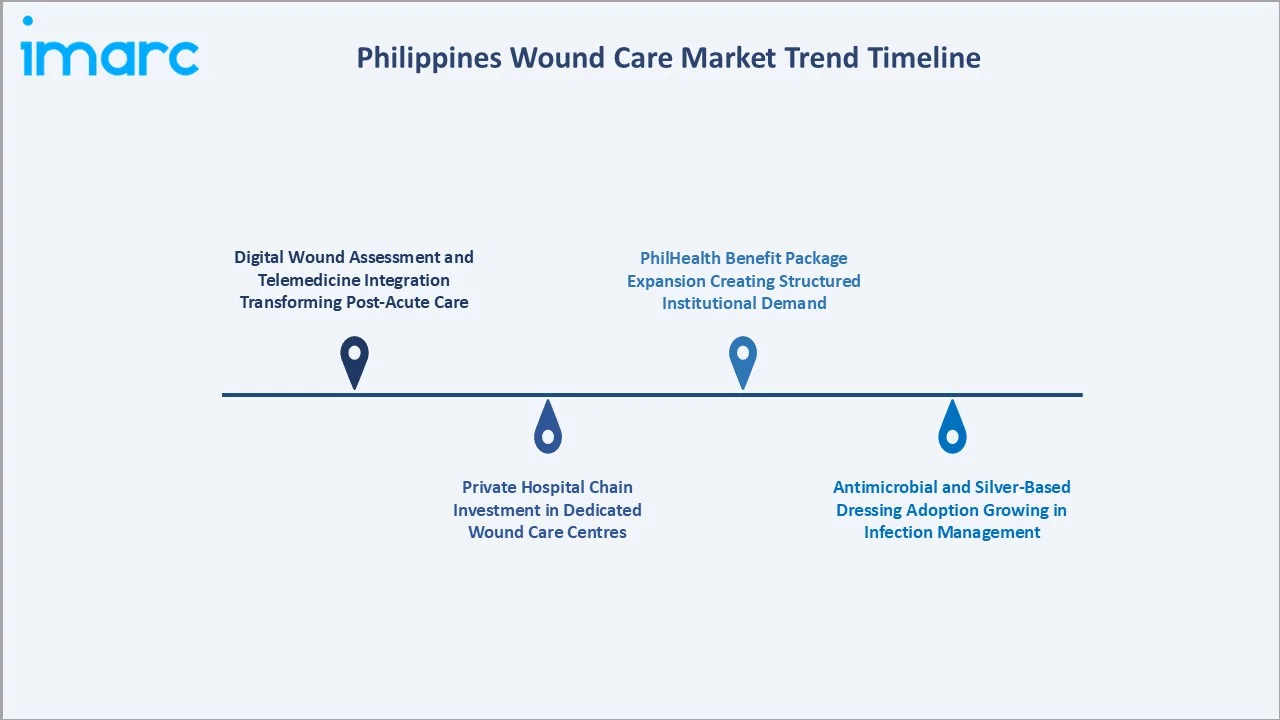
1. Digital Wound Assessment and Telemedicine Integration Transforming Post-Acute Care
Digital wound assessment platforms using smartphone imaging and AI-enabled wound measurement tools are being piloted across Philippine hospitals and home care agencies. These technologies enable remote wound monitoring, reducing in-person consultation frequency while improving adherence to care protocols. The Philippine telemedicine ecosystem, accelerated by COVID-19, is providing commercial infrastructure for digital wound care management services.
2. Private Hospital Chain Investment in Dedicated Wound Care Centres
Major Philippine private hospital groups are establishing dedicated wound care centres with multidisciplinary teams including vascular surgeons, endocrinologists, and certified wound care nurses. These specialist centres are creating structured demand for advanced wound care products, NPWT systems, and bioactive dressings, driving product mix premiumisation in the institutional segment.
3. Antimicrobial and Silver-Based Dressing Adoption Growing in Infection Management
Rising antimicrobial resistance concerns in Philippine hospital settings are driving adoption of silver-impregnated and antimicrobial dressings for infected wound management. Clinical protocol updates by Philippine hospitals, driven by international evidence-based guidelines, are expanding the antimicrobial dressing category and creating sustained demand for premium wound care solutions.
4. PhilHealth Benefit Package Expansion Creating Structured Institutional Demand
Progressive expansion of PhilHealth benefit packages covering wound care procedures is creating structured and predictable institutional demand for wound care products in accredited facilities. As reimbursement coverage extends to advanced wound care procedures, procurement specification upgrades from traditional to advanced products are generating measurable commercial market expansion.
Industry Value Chain Analysis
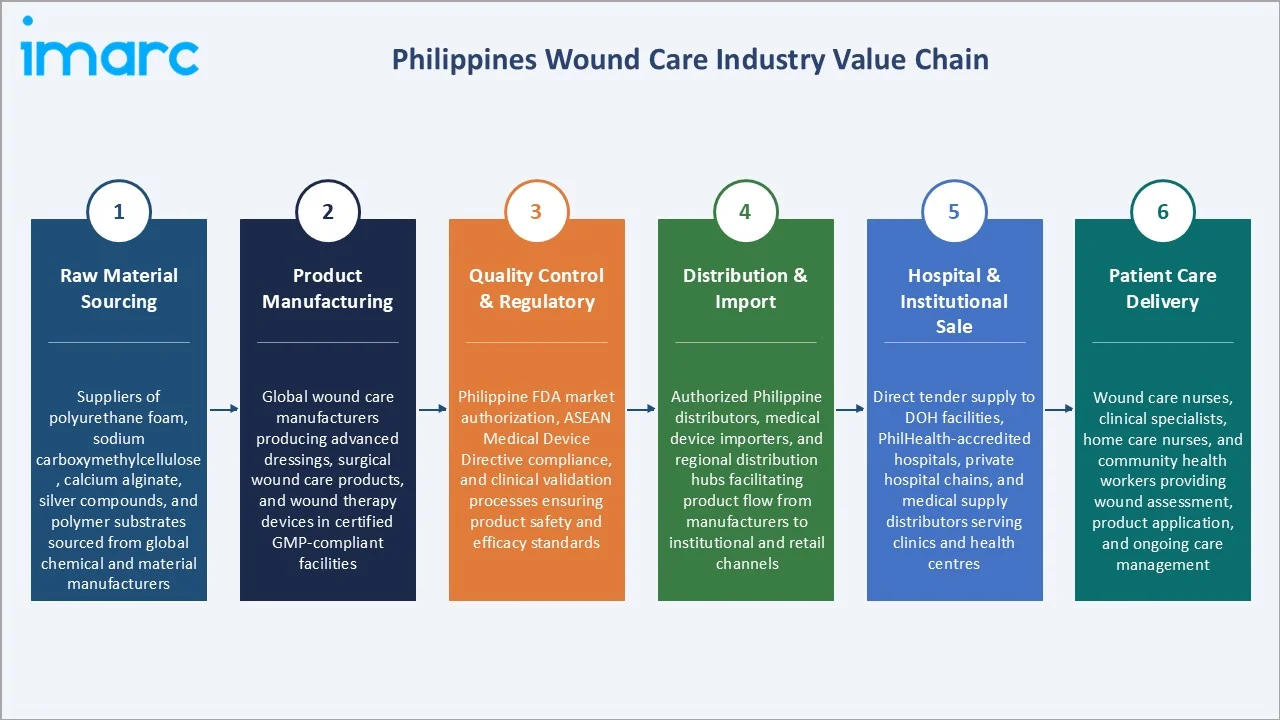
Philippines wound care value chain integrates global product manufacturers through regional distribution hubs, Philippine FDA regulatory processes, and institutional procurement networks to reach hospitals, clinics, home care settings, and long-term care facilities across the archipelago. The value chain's regulatory integrity is governed by Philippine FDA market authorisation and DOH procurement standards.
|
Stage |
Key Participants |
|
Raw Material Sourcing |
Suppliers of polyurethane foam, sodium carboxymethylcellulose, calcium alginate, silver compounds, and polymer substrates sourced from global chemical and material manufacturers |
|
Product Manufacturing |
Global wound care manufacturers producing advanced dressings, surgical wound care products, and wound therapy devices in certified GMP-compliant facilities |
|
Quality Control & Regulatory |
Philippine FDA market authorization, ASEAN Medical Device Directive compliance, and clinical validation processes ensuring product safety and efficacy standards |
|
Distribution & Import |
Authorized Philippine distributors, medical device importers, and regional distribution hubs facilitating product flow from manufacturers to institutional and retail channels |
|
Hospital & Institutional Sale |
Direct tender supply to DOH facilities, PhilHealth-accredited hospitals, private hospital chains, and medical supply distributors serving clinics and health centres |
|
Patient Care Delivery |
Wound care nurses, clinical specialists, home care nurses, and community health workers providing wound assessment, product application, and ongoing care management |
The distribution and import stage is Philippines wound care value chain's most commercially critical regulatory step, where Philippine FDA market authorization separates compliant advanced wound care products from informal market alternatives, enabling authorized distributors to command institutional procurement preference.
Technology Landscape in the Philippines Wound Care Industry
Advanced Moist Wound Healing Technologies
Hydrocolloid, hydrogel, foam, and alginate dressing technologies supporting moist wound healing are the commercially dominant advanced wound care product category in the Philippines. These technologies provide superior healing environments versus traditional dry wound management, with clinical evidence driving progressive specification upgrades in Philippine hospital wound care protocols. Growing awareness among Filipino clinicians of evidence-based wound healing is accelerating adoption particularly in private hospital chains.
Negative Pressure Wound Therapy (NPWT) Technology
NPWT systems providing controlled negative pressure to accelerate complex wound healing are growing rapidly in Philippine tertiary hospitals and wound care centres. Single-use NPWT devices, which reduce device management complexity and cost compared to traditional multi-use systems, are expanding accessibility to medium-capacity provincial hospitals. NPWT adoption is particularly strong in diabetic foot wound management programmes and post-surgical wound complication treatment.
Antimicrobial and Bioactive Wound Care Materials
Silver-impregnated dressings, iodine-based antimicrobial dressings, honey-based wound products, and collagen-based bioactive dressings represent emerging premium segments in Philippine wound care. Rising antimicrobial resistance awareness in Philippine hospitals is driving clinical protocol updates that specify antimicrobial dressings for infected wound management, creating structural demand growth in the antimicrobial wound care product category.
Market Segmentation Analysis
The report covers the following segments:
|
Segment Category |
Leading Segment |
Market Share |
Year |
|
Product Type |
🔒 |
🔒 |
2025 |
|
Wound Type |
Acute Wounds |
61.4% |
2025 |
|
End User |
Hospitals and Clinics |
68.5% |
2025 |
|
Region |
Luzon |
58.4% |
2025 |

By Wound Type
Acute Wounds lead at 61.4% (2025). The acute wound segment encompasses surgical wounds, traumatic wounds, and burns across Philippine hospital settings. Rising surgical volumes driven by UHC Act coverage expansion, increasing road traffic accidents, and growing elective surgery demand are sustaining high acute wound care product consumption.
To access detailed market analysis, Request Sample
Chronic Wounds at 38.6% serve the diabetic ulcer, pressure injury, and venous leg ulcer patient population, which is expanding with Philippines' rising diabetes prevalence and ageing population, creating structural long-term demand growth in this segment.
By End User
Hospitals and Clinics lead at 68.5% (2025). Institutional buyers dominate through bulk procurement, clinical protocol adoption, and PhilHealth reimbursement coverage for wound care procedures. Metro Manila's private hospital chains and DOH regional hospital network anchor this segment.
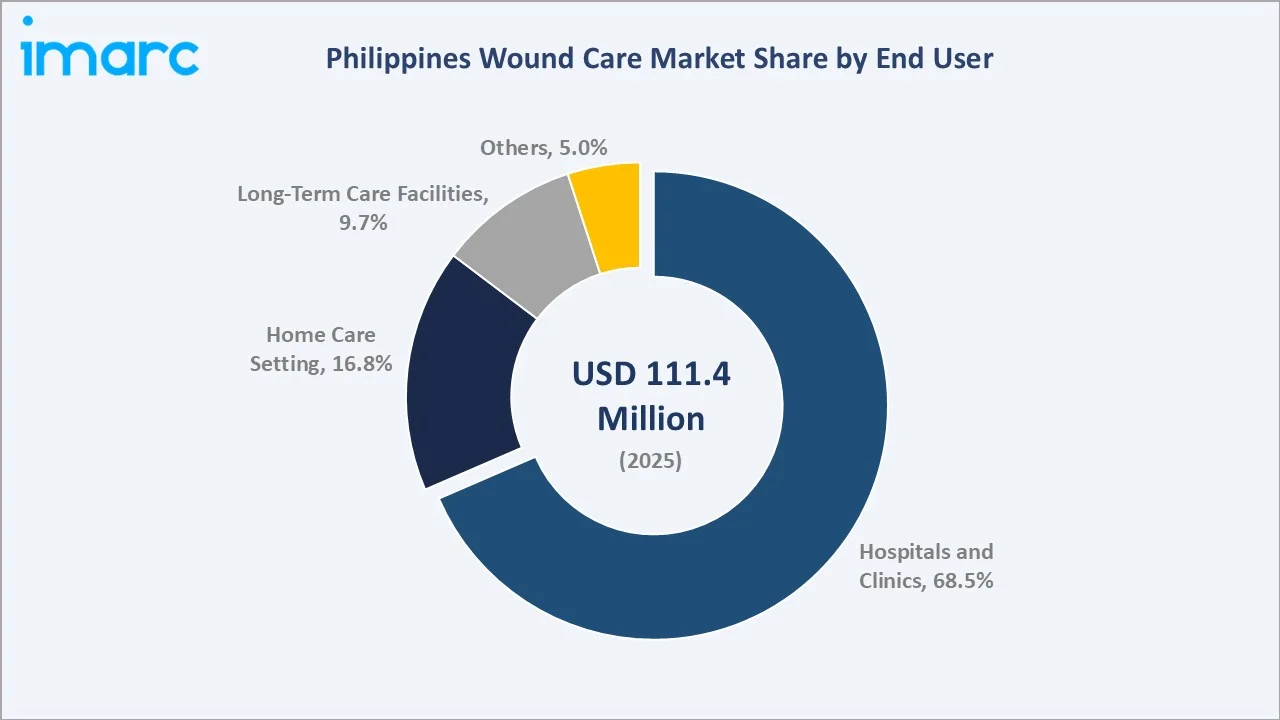
Home Care Setting at 16.8% is growing at approximately 6.1% CAGR through post-discharge wound care and diabetic wound home management. Long-Term Care Facilities at 9.7% serve Philippines' growing elderly care sector. Others at 5.0% includes military medical facilities and occupational health clinics.
Regional Market Insights
|
Region |
Share (2025) |
Key Philippines Wound Care Market Drivers & Characteristics |
|
Luzon |
58.4% |
Anchored by Metro Manila's concentration of tertiary hospitals, private medical centres, and DOH regional facilities. Strong private hospital chain investment in wound care programmes and UHC Act coverage driving organised market procurement. |
|
Visayas |
22.6% |
Cebu City serves as the primary healthcare hub, with growing private hospital investment in the Visayas region. Rising diabetes prevalence and surgical volumes across Cebu, Iloilo, and Bacolod are expanding wound care product demand. |
|
Mindanao |
19.0% |
Davao City's expanding healthcare infrastructure, including tertiary hospitals and specialist wound care programmes, anchors Mindanao demand. DOH facility upgrades under UHC Act implementation are increasing institutional wound care procurement. |
Luzon's 58.4% market dominance reflects Metro Manila's healthcare concentration density, including the Philippine General Hospital, St. Luke's Medical Center, and Makati Medical Center, combined with the Cavite-Laguna-Batangas growth corridor's expanding private hospital infrastructure.
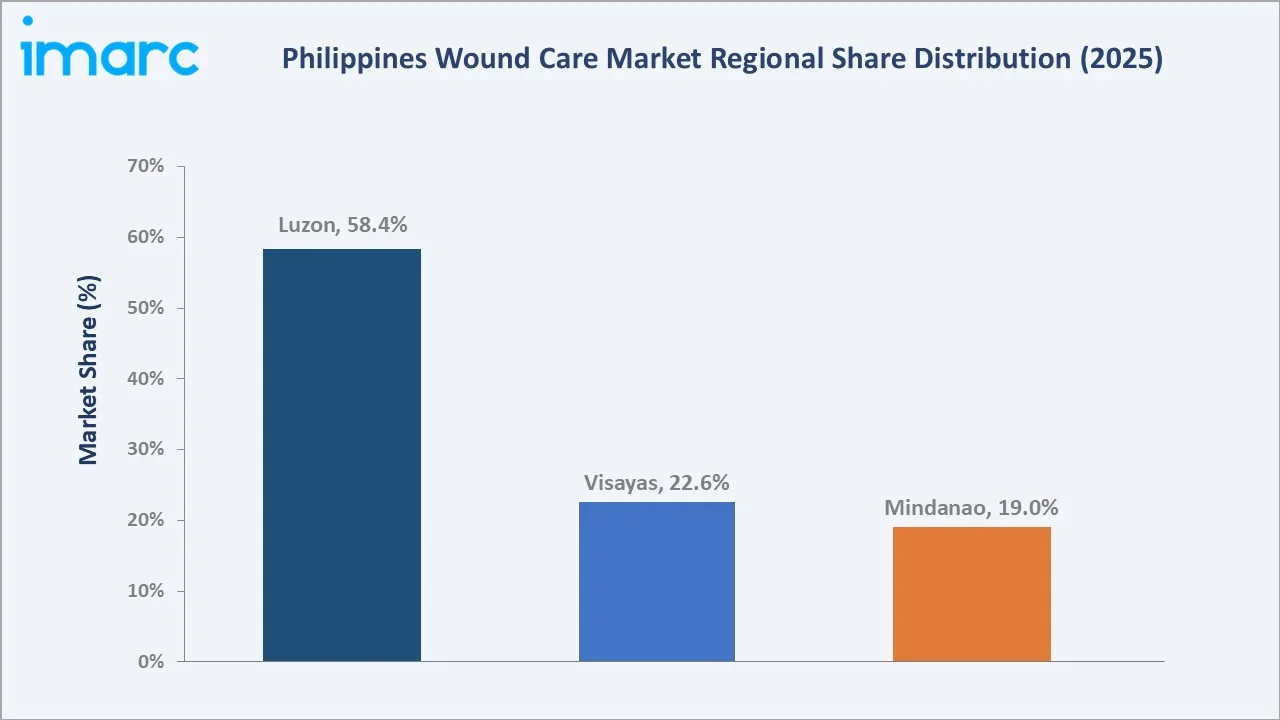
Visayas' 22.6% captures Cebu's growing status as a regional healthcare hub, with specialist wound care services expanding at Chong Hua Hospital and Cebu Doctors' University Hospital. Mindanao's 19.0% reflects Davao City's advancing healthcare infrastructure and Southern Philippines Medical Center's role as a regional tertiary referral centre.
Competitive Landscape
Philippines wound care market competitive landscape is dominated by global wound care majors operating through authorized local distributors and direct commercial representations. Competition centres on hospital tender pricing, clinical evidence, product range breadth, and distributor relationship management across Luzon, Visayas, and Mindanao healthcare networks.
|
Company |
Key Products |
Market Position |
Core Strength |
|
Smith+Nephew |
ALLEVYN Foam, PICO NPWT, IODOSORB |
Strong Challenger |
NPWT market pioneer with PICO single-use system; strong clinical evidence base driving hospital adoption across private Philippine hospital chains. |
|
Convatec Group PLC |
AQUACEL, GranuFlex |
Strong Challenger |
Hydrofiber technology specialist with strong chronic wound care credentials and growing Philippines institutional distribution. |
|
Coloplast A/S |
Biatain Foam, Comfeel Plus, Seasorb |
Niche Player |
Strong in ostomy and chronic wound segments with established Philippine distributor relationships and clinical support programmes. |
|
B. Braun SE |
Askina Derm, Atrauman |
Niche Player |
German engineering quality credentials with comprehensive traditional and advanced wound care portfolio serving Philippine hospital procurement. |
Key players include Smith+Nephew, Convatec Group PLC, Coloplast A/S, B. Braun SE, and others.
Key Company Profiles
Smith+Nephew
Smith+Nephew is a global medical technology company with a comprehensive wound care portfolio encompassing advanced wound dressings, negative pressure wound therapy systems, and wound bioactives, operating in the Philippines through authorized medical device distributors and direct hospital tender management.
- Key Products: ALLEVYN Foam Dressing, PICO Single-Use NPWT System, IODOSORB Antimicrobial, Durafiber Ag, among others.
- Strategic Focus: Expanding PICO NPWT penetration across Philippine private hospital chains through clinical evidence programmes and health economic analyses demonstrating cost-effectiveness versus traditional wound management. Smith+Nephew is investing in wound care clinical education for Filipino healthcare professionals and building direct hospital relationships with wound care centre programme leads in Metro Manila's major private hospital groups.
Convatec Group PLC
Convatec Group Plc is a global medical products and technologies company specialising in advanced wound care solutions, with a strong Philippines institutional presence through authorised distributors supplying hospitals, clinics, and long-term care facilities with its market-leading AQUACEL Hydrofiber technology portfolio.
- Key Products: AQUACEL Ag+ Extra, AQUACEL Foam, ConvaNiox, Biatain Alginate (Seasorb), among others
- Strategic Focus: Expanding AQUACEL Ag+ market leadership in the antimicrobial wound care segment across Philippine hospital networks, where rising antimicrobial resistance awareness is driving clinical protocol upgrades toward silver Hydrofiber dressings. Convatec is prioritising chronic wound care programme adoption among Filipino clinicians managing diabetic foot ulcers and pressure injuries, leveraging its position as the global market leader in antimicrobial dressings and building distributor relationships with Philippine hospital chains to deepen institutional penetration ahead of AQUACEL ConvaFiber's commercial launch.
Market Concentration Analysis
Philippines wound care market is moderately concentrated in the advanced wound care product segment, with the key players commanding the majority of advanced dressing institutional market share. The traditional wound care segment is highly fragmented, with numerous local and regional manufacturers competing on price in commodity gauze, bandage, and antiseptic categories.
Market concentration is evolving as UHC Act implementation drives institutional procurement formalisation, creating tender processes that favour global brands with Philippine FDA authorisation, PhilHealth accreditation, and proven clinical evidence bases over informal and unregistered alternatives.
Investment & Growth Opportunities
Highest Growth Segments
Home Care Setting (~6.1% CAGR), NPWT premium product segment (~8-10% CAGR from small base), antimicrobial dressing category (~6.5% CAGR), chronic wound care products (~4.7% CAGR through diabetes growth), and Luzon regional expansion (~5.8% CAGR through private hospital chain investment) represent Philippines' highest-growth wound care investment vectors through 2034.
Emerging Investment Opportunities
Philippines' digital wound care platform market, combining telemedicine wound assessment and home care wound management product delivery, represents the highest-growth commercial niche in the wound care ecosystem. Smartphone-enabled wound measurement and AI-assisted wound assessment tools are creating new business models that integrate technology and wound care product sales.
Investment Themes
- Advanced Wound Care Institutional Market Penetration: Progressive specification upgrades from traditional to advanced wound care products in Philippine hospital procurement represent the highest-volume commercial opportunity through the forecast period.
- Home Care and Community Wound Management Platform Development: Building integrated home care wound management services combining nurse deployment, product supply, and telemedicine wound assessment creates scalable recurring revenue streams aligned with Philippine demographic trends.
Future Market Outlook (2026-2034)
The Philippines wound care market is projected to grow from USD 111.4 Million in 2025 to USD 117.2 Million in 2026, reaching USD 175.8 Million by 2034, registering a CAGR of 5.20% during 2026–2034. The market's anchor value of USD 143.5 Million in 2030 represents Philippines wound care industry at a structural expansion inflection driven by UHC Act maturation, chronic disease burden growth, and private hospital advanced wound care programme proliferation.
Three structural forces define Philippines wound care market growth through 2034: the Universal Health Care Act's progressive coverage expansion creating institutional procurement growth; rising diabetes and chronic disease burden driving chronic wound care demand; and Philippines' growing middle class healthcare spending supporting premiumisation toward advanced wound care products.
Research Methodology
Primary Research
Primary research comprised structured interviews with Philippines wound care market stakeholders including Hospital Procurement Managers, Wound Care Clinical Specialists, Registered Nurses with wound care certification, medical device distributors, Philippine FDA regulatory affairs executives, and home care agency operators across Luzon, Visayas, and Mindanao.
Secondary Research
Secondary research encompassed Philippine FDA market authorization databases, DOH facility procurement data, PhilHealth benefit package documentation, company annual reports, WHO Philippines country health profiles, Philippine diabetes prevalence studies, and medical device import-export data. Over 45 secondary sources reviewed.
Forecasting Models
Market revenue forecasts were developed using a patient population model: Philippines' wound patient population by wound type and severity category multiplied by average treatment episode value and annual treatment frequency, aggregated across institutional, home care, and long-term care segments.
Philippines Wound Care Market Report Coverage:
| Report Features | Details |
|---|---|
| Base Year of the Analysis | 2025 |
| Historical Period | 2020-2025 |
| Forecast Period | 2026-2034 |
| Units | Million USD |
| Scope of the Report |
Exploration of Historical and Forecast Trends, Industry Catalysts and Challenges, Segment-Wise Historical and Predictive Market Assessment:
|
| Product Types Covered |
|
| Wound Types Covered |
|
| End Users Covered | Hospitals and Clinics, Long-Term Care Facilities, Home Care Setting, Others |
| Regions Covered | Luzon, Visayas, Mindanao |
| Companies Covered | Smith+Nephew, Convatec Group PLC, Coloplast A/S, B. Braun SE, etc. |
| Customization Scope | 10% Free Customization |
| Post-Sale Analyst Support | 10-12 Weeks |
| Delivery Format | PDF and Excel through Email (We can also provide the editable version of the report in PPT/Word format on special request) |
Key Benefits for Stakeholders:
- IMARC’s industry report offers a comprehensive quantitative analysis of various market segments, historical and current market trends, market forecasts, and dynamics of the Philippines wound care market from 2020-2034.
- The research report provides the latest information on the market drivers, challenges, and opportunities in the Philippines wound care market.
- Porter's five forces analysis assist stakeholders in assessing the impact of new entrants, competitive rivalry, supplier power, buyer power, and the threat of substitution. It helps stakeholders to analyze the level of competition within the Philippines wound care industry and its attractiveness.
- Competitive landscape allows stakeholders to understand their competitive environment and provides an insight into the current positions of key players in the market.
Frequently Asked Questions About the Philippines Wound Care Market Report
Philippines wound care market size is estimated at USD 117.2 Million in 2026, driven by Universal Health Care Act implementation, rising diabetes prevalence, growing private hospital investment in wound care programmes, and increasing adoption of advanced wound dressing technologies across institutional and home care settings.
Philippines wound care market grows at 5.20% CAGR during 2026-2034, reaching USD 175.8 Million by 2034. Growth is sustained by UHC Act coverage expansion, chronic disease burden growth, private hospital wound care programme proliferation, and advanced wound care product adoption across institutional and home care channels.
Acute Wounds lead at 61.4% through high surgical volumes, trauma care, and burns management across Philippine hospitals. Rising road accident rates and UHC Act-driven surgical volume expansion sustain consistent acute wound care product demand.
Hospitals and Clinics lead at 68.5% through bulk procurement, PhilHealth reimbursement coverage for wound care procedures, and institutional protocol adoption of advanced wound care products across the Philippines' accredited hospital network.
Luzon leads at 58.4% through Metro Manila's concentration of tertiary hospitals, private medical centre chains, and DOH regional facility networks, combined with Cavite-Laguna-Batangas corridor healthcare expansion.
Leading companies include Smith+Nephew, Convatec Group PLC, Coloplast A/S, B. Braun SE, and others.
Need more help?
- Speak to our experienced analysts for insights on the current market scenarios.
- Include additional segments and countries to customize the report as per your requirement.
- Gain an unparalleled competitive advantage in your domain by understanding how to utilize the report and positively impacting your operations and revenue.
- For further assistance, please connect with our analysts.
 Request Customization
 Speak to an Analyst
 Request Brochure
 Inquire Before Buying
Benefits of Customization
- Personalize this research
- Triangulate with your data
- Get data as per your format and definition
- Gain a deeper dive into a specific application, geography, customer, or competitor
- Any level of personalization
Get in Touch With Us
UNITED STATES
Phone: +1-201-971-6302
INDIA
Phone: +91-120-433-0800
UNITED KINGDOM
Phone: +44-753-714-6104
Email: [email protected]
Client Testimonials






















Related Reports

Choose your plan
*Please note that the prices mentioned below are starting prices for each bundle type. Kindly contact our team for further details.*
Single User License
- 1 User License, Access on 2 Devices
- PDF Report + Excel Dataset (Password Protected)
- Lifetime Access
- No Printing Rights
- 10% Free Report Customization
- 10–12 Weeks of Analyst Support
Five User License
- Access for 5 Users, 2 Devices per User
- PDF Report + Excel Dataset (Password Protected)
- Lifetime Access
- Dedicated Account Manager
- 12–14 Weeks of Analyst Support
- No Printing Rights
- 15% Free Report Customization
- 25% Discount on Your Next Purchase
Corporate User License
- Unlimited User Access (Within Your Organization)
- PDF Report + Excel Dataset
- Lifetime Access
- Dedicated Account Manager
- 14–20 Weeks of Analyst Support
- No Printing Rights
- 20% Free Report Customization
- 30% Discount on Your Next Purchase
Essential Insights
What's included:
3 reports
- Lifetime Access
- PDF Reports
- Excel Datasets
- 2 Weeks of Free Analyst Support
- 2 User Licenses
- Access on 2 Devices
- Printing Rights
- Complimentary PowerPoint (PPT) Version
- Complimentary License Upgrade
Professional Access
What's included:
5 reports
- Lifetime Access
- PDF Reports
- Excel Datasets
- 8 Weeks of Free Analyst Support
- 2 User Licenses
- Access on 2 Devices
- Printing Rights
- Complimentary PowerPoint (PPT) Version
- Complimentary License Upgrade
Business Advantage
What's included:
8 reports
- Lifetime Access
- PDF Reports
- Excel Datasets
- 14 Weeks of Free Analyst Support
- 2 User Licenses
- Access on 2 Devices
- Printing Rights
- Complimentary PowerPoint (PPT) Version
- Complimentary License Upgrade
Enterprise Intelligence
What's included:
10 reports
- Lifetime Access
- PDF Reports
- Excel Datasets
- 20 Weeks of Free Analyst Support
- 2 User Licenses
- Access on 2 Devices
- Printing Rights
- Complimentary PowerPoint (PPT) Version
- Complimentary License Upgrade