
Saudi Arabia Biosimilar Market Size, Share, Trends and Forecast by Molecule, Indication, Manufacturing Type, and Region, 2026-2034
Saudi Arabia Biosimilar Market Size, Share, Trends & Forecast (2026-2034)
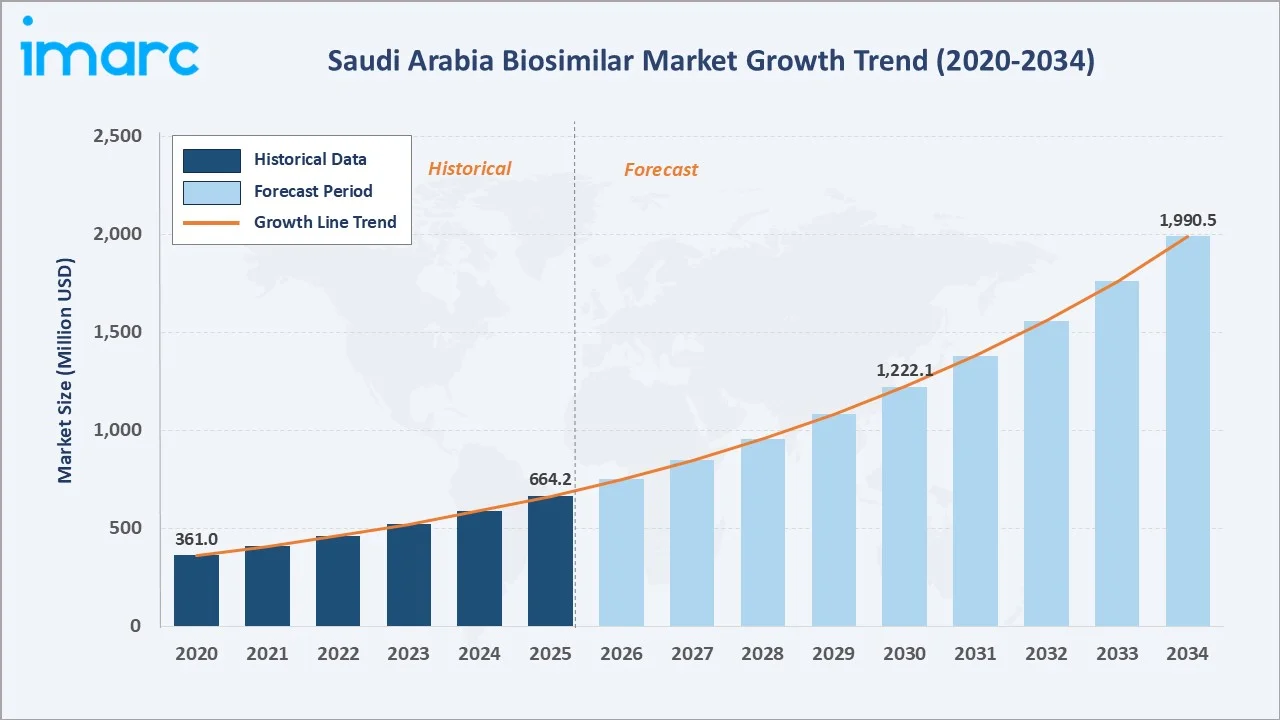
The Saudi Arabia biosimilar market reached USD 664.2 Million in 2025 and is projected to reach USD 1,990.5 Million by 2034, growing at a CAGR of 12.97% during 2026-2034. The market is driven by rising demand for affordable biologic therapies, expanding government support, and higher burden of chronic diseases including oncology, diabetes, and autoimmune conditions. Oncology leads indications at 35.4% and In-House Manufacturing dominates at 63.9%. The Northern and Central Region commands 38.8% of market share.
Market Snapshot
|
Metric |
Value |
|
Market Size (2025) |
USD 664.2 Million |
|
Forecast Market Size (2034) |
USD 1,990.5 Million |
|
CAGR (2026-2034) |
12.97% |
|
Base Year |
2025 |
|
Historical Period |
2020-2025 |
|
Forecast Period |
2026-2034 |
|
Dominant Manufacturing Type |
In-House Manufacturing (63.9%, 2025) |
|
Dominant Indication |
Oncology (35.4%, 2025) |
|
Leading Region |
Northern and Central Region (38.8%, 2025) |
The market expanded from USD 361.0 Million in 2020 to USD 664.2 Million in 2025, growing consistently over five years, anchored at USD 1,222.1 Million in 2030 and forecast to reach USD 1,990.5 Million by 2034. Saudi Arabia's Vision 2030 healthcare transformation and SFDA regulatory reforms accelerated biosimilar adoption throughout this period, with strong institutional procurement from government hospitals driving volume growth.
To get more information on this market, Request Sample
Oncology indication at 35.4% and In-House Manufacturing at 63.9% are the dominant segments, reflecting the combined impact of rising cancer incidence, government biosimilar procurement mandates, and Vision 2030 pharmaceutical localization policies. The Northern and Central Region commands 38.8%, reflecting the concentration of healthcare infrastructure in Riyadh and surrounding areas.
Executive Summary
The Saudi Arabia biosimilar market reached USD 664.2 Million in 2025, representing a transformative segment of the Kingdom's healthcare sector driven by Vision 2030 healthcare mandates and rising chronic disease burden. Biosimilars offer comparable safety and efficacy to reference biologics at significantly reduced cost, improving patient access across oncology, autoimmune, and metabolic disease categories.
Oncology at 35.4% leads indications, driven by rising cancer incidence and high-cost reference biologic displacement. In-House Manufacturing at 63.9% dominates through Saudi Arabia's pharmaceutical localization goals. The Northern and Central Region at 38.8% leads regionally through Riyadh's healthcare infrastructure concentration and institutional procurement volumes. The market is projected to reach USD 1,990.5 Million by 2034.
Key Market Insights
|
Insight |
Data |
|
Dominant Manufacturing Type |
In-House Manufacturing – 63.9% share (2025) |
|
Dominant Indication |
Oncology – 35.4% market share (2025) |
|
Leading Region |
Northern and Central Region – 38.8% market share (2025) |
|
Market Opportunity |
Oncology biosimilars; anti-TNF therapies; insulin glargine scale-up; SFDA pathway expansion; GCC harmonization |
Key Analytical Observations Supporting the Above Data:
- In-House Manufacturing at 63.9%: The Saudi government's pharmaceutical localization policy under Vision 2030 has driven significant capital investment in domestic biologics manufacturing. Local production provides supply chain security, preferential procurement treatment under government tender policies, and long-term cost advantages over import-only competitors.
- Oncology at 35.4%: Rising cancer incidence in Saudi Arabia, combined with the high acquisition cost of reference oncology biologics, creates the strongest biosimilar adoption incentive of any indication.
- Northern and Central Region at 38.8%: The Northern and Central Region, anchored by Riyadh, hosts the largest hospital network and government procurement agencies in the Kingdom, generating the highest biosimilar demand volumes nationally.
Saudi Arabia Biosimilar Market Overview
The Saudi Arabia biosimilar market encompasses the registration, import, manufacture, and distribution of all biological products approved as biosimilars by the Saudi Food and Drug Authority (SFDA). The ecosystem integrates SFDA regulatory bodies, multinational originator pharmaceutical companies, biosimilar manufacturers (domestic and international), government hospital procurement agencies, private hospital groups, and pharmacy chains.
Macroeconomic factors include Vision 2030 healthcare localization mandates, rising per-capita healthcare spending, expanding healthcare insurance coverage, increasing chronic disease prevalence, and government policies promoting pharmaceutical affordability and supply chain resilience across the Kingdom.
Market Dynamics
To evaluate market opportunities, Request Sample
Market Drivers
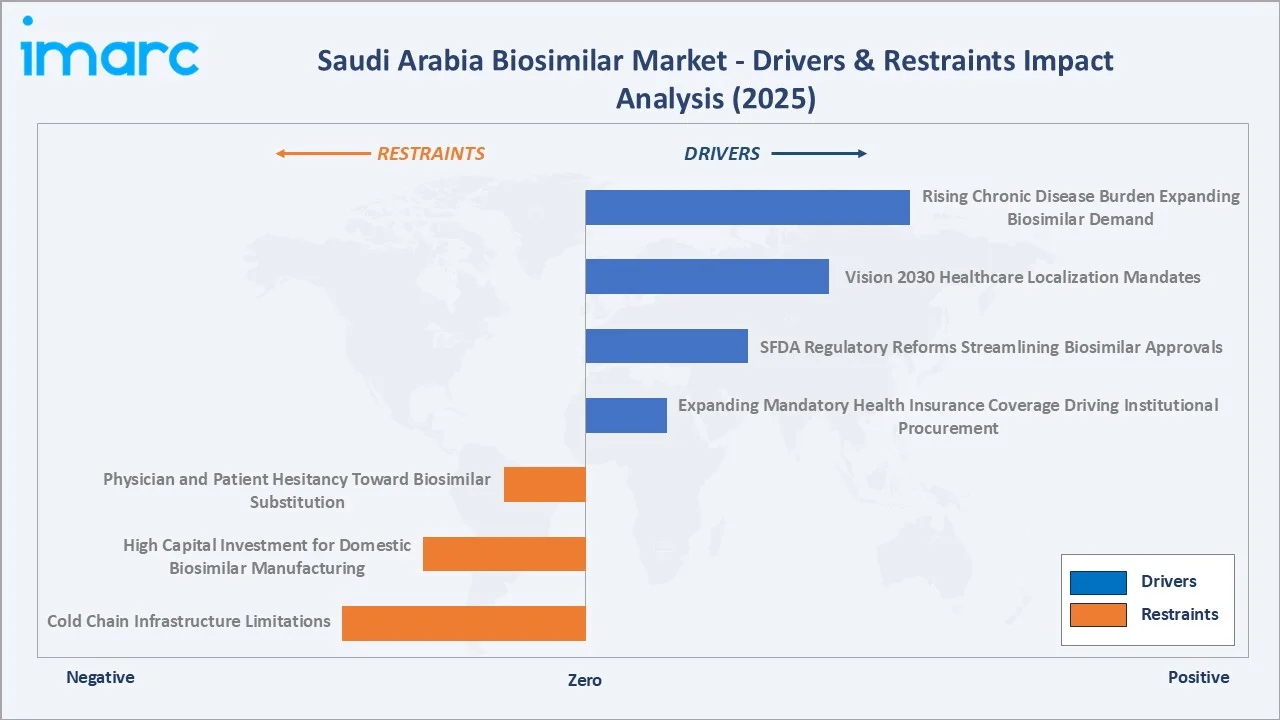
- Rising Chronic Disease Burden Expanding Biosimilar Demand: Saudi Arabia records rapidly increasing incidence of cancer, diabetes, autoimmune disorders, and blood diseases, creating sustained demand for high-cost biologics. Biosimilars address this burden by offering therapeutic equivalence at lower cost, driving institutional formulary inclusion and expanding patient access across public and private healthcare facilities. The Kingdom's non-communicable disease prevalence is among the highest in the GCC, with diabetes affecting approximately 23.1% of adults, creating durable structural demand for biosimilar therapies. Government healthcare spending on biologics has expanded significantly, making cost-effective biosimilar adoption a priority across all Saudi healthcare regions.
- Vision 2030 Healthcare Localization Mandates: Saudi Arabia's Vision 2030 National Transformation Program requires 40% domestic pharmaceutical manufacturing by 2030, directly incentivizing local biosimilar production through tax breaks, land grants, and preferential procurement policies. This policy creates structural demand growth for in-house biosimilar manufacturing capacity throughout the forecast period. The National Industrial Development Center and the Saudi Industrial Development Fund provide concessional financing and technical support to domestic biologics manufacturers, lowering the capital threshold for Saudi biosimilar production investment.
- SFDA Regulatory Reforms Streamlining Biosimilar Approvals: The SFDA has progressively aligned its biosimilar approval pathway with ICH guidelines and WHO recommendations, reducing time-to-market for biosimilar applicants. Streamlined extrapolation policies and abbreviated clinical requirements lower regulatory barriers and accelerate market entry for new biosimilar molecules. The SFDA's adoption of extrapolation principles allows biosimilar approval across multiple indications based on comparative data generated in a single indication, significantly reducing development costs and registration timelines.
- Expanding Mandatory Health Insurance Coverage Driving Institutional Procurement: Saudi Arabia's expanding mandatory health insurance framework increases institutional purchasing power for high-cost biologics. Insurance reimbursement of biosimilars at formulary-preferred positions accelerates adoption, particularly in oncology and autoimmune indications managed through hospital outpatient departments. The Cooperative Health Insurance law extensions and Vision 2030 universal healthcare coverage commitments are progressively integrating biosimilar reimbursement into public and private insurance schemes, creating predictable volume procurement channels.
Market Restraints
- Physician and Patient Hesitancy Toward Biosimilar Substitution: Physician reluctance to switch stable patients from reference biologics to biosimilars, driven by concerns about immunogenicity, real-world safety data, and patient perception, limits automatic substitution rates and constrains market penetration beyond early adopter institutions. Clinical inertia is particularly pronounced in oncology and autoimmune indications where patients are on long-term stable therapy, and prescribers are cautious about any intervention that could disrupt treatment response.
- Cold Chain Infrastructure Limitations: Biological products require uninterrupted cold chain logistics from manufacturing site to patient administration. Gaps in cold chain infrastructure outside major urban centers, particularly in Southern and rural Saudi Arabian regions, limit geographic biosimilar penetration and increase distribution costs. Cold chain distribution deficiencies increase logistics costs and spoilage risk for temperature-sensitive biosimilar products, disadvantaging smaller pharmacy chains and rural healthcare facilities.
- High Capital Investment for Domestic Biosimilar Manufacturing: Establishing biologics manufacturing facilities requires significant capital investment in cleanrooms, bioreactors, analytical testing equipment, and regulatory compliance systems, limiting the number of domestic Saudi manufacturers entering the biosimilar production market. The lengthy timeline from facility investment to first commercial batch release, typically 5-8 years including process development and SFDA approval, creates significant execution risk for domestic biosimilar manufacturing projects. This barrier concentrates Saudi domestic biosimilar supply among a few well-capitalized entities, limiting manufacturing sector competition and slowing domestic production capacity expansion.
Market Opportunities
- Anti-TNF Biosimilar Expansion in Autoimmune Disease Management: Rising prevalence of rheumatoid arthritis, ankylosing spondylitis, and psoriatic arthritis in Saudi Arabia creates a substantial market opportunity for anti-TNF biosimilars including infliximab, etanercept, and adalimumab. Government formulary inclusion at preferred positions accelerates institutional adoption. The anti-TNF biosimilar market in Saudi Arabia remains in an early adoption phase relative to European markets, with significant headroom for penetration rate improvement as physician familiarity with biosimilar products increases and real-world safety data accumulates from early adopter institutions.
- Oncology Biosimilar Pipeline Depth Creating Structural Market Growth: Multiple trastuzumab, rituximab, bevacizumab, and pegfilgrastim biosimilars are approaching or entering the Saudi market. The oncology biosimilar pipeline depth creates multi-year sequential revenue expansion as each new molecule launches, displacing high-cost reference products. The oncology biosimilar market opportunity is further amplified by Saudi Arabia's cancer registry growth, which projects cancer incidence doubling by 2030 relative to 2015 levels, creating a rapidly expanding patient population requiring biologic-based oncology therapies.
Market Challenges
- Import Dependency and Supply Chain Vulnerability for Biological Active Substances: Saudi Arabia's biosimilar market remains heavily dependent on imported biological active pharmaceutical ingredients, creating supply chain vulnerability to international logistics disruptions, currency fluctuations, and geopolitical trade risks that could affect product availability and pricing stability. The concentration of global biologics API manufacturing in a limited number of countries exposes the Saudi supply chain to systemic risks that domestic API development and technology transfer programs are only beginning to address. Vision 2030 pharmaceutical localization targets aim to reduce import dependency, but the capital intensity and technical complexity of biologics API manufacturing means meaningful domestic supply chain diversification requires decade-scale investment horizons.
- Regulatory Complexity in Demonstrating Biosimilarity Across SFDA-Required Studies: Demonstrating biosimilarity through comprehensive physicochemical, biological, and clinical comparative studies requires significant investment in analytical capability, reference product procurement, and clinical trial infrastructure, raising development cost barriers for new market entrants seeking SFDA approval. The SFDA's biosimilarity demonstration requirements, while progressively aligned with international standards, still require tailored regulatory strategies for each molecule-indication combination, increasing the regulatory resource burden for companies seeking broad biosimilar portfolio registrations.
Emerging Market Trends
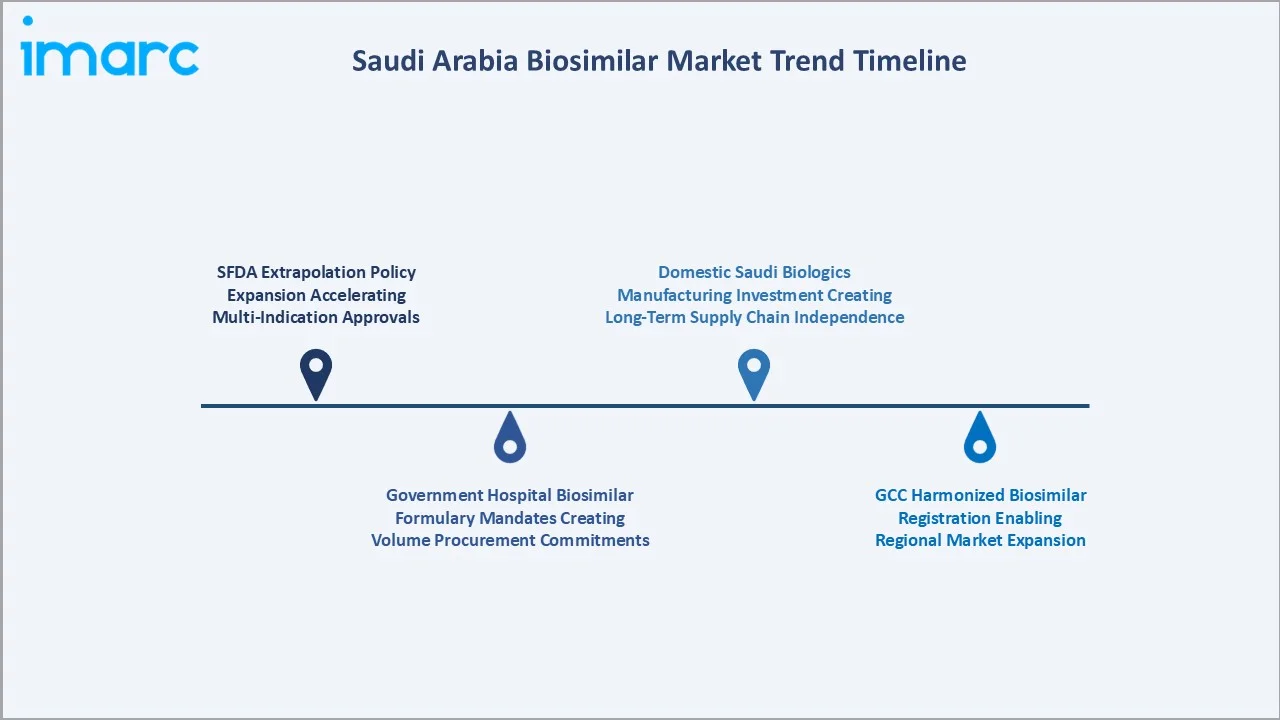
1. SFDA Extrapolation Policy Expansion Accelerating Multi-Indication Approvals
The SFDA's adoption of extrapolation principles allows biosimilar approval across multiple indications based on comparative data generated in a single indication, significantly reducing clinical development costs and timelines. This enables international manufacturers to register in Saudi Arabia simultaneously with other GCC markets. The progressive alignment with ICH and WHO guidelines is reducing approval cycle times from 24-36 months to 18-24 months for well-characterized molecules, lowering the regulatory cost per indication and enabling broader biosimilar portfolio registrations that strengthen competitive positioning in government tenders.
2. Government Hospital Biosimilar Formulary Mandates Creating Volume Procurement Commitments
The Ministry of Health's directive for government hospital formularies to prioritize biosimilar prescribing where therapeutically appropriate creates mandatory volume procurement commitments. These institutional mandates drive predictable demand ramps for approved biosimilar products across the Saudi public healthcare system. The formulary mandate approach is progressively expanding from initial oncology and supportive care categories to autoimmune and metabolic indications, broadening the institutional procurement base and creating multi-year visibility for biosimilar manufacturers planning Saudi market supply volumes.
3. GCC Harmonized Biosimilar Registration Enabling Regional Market Expansion
GCC pharmaceutical regulatory harmonization initiatives allow biosimilar manufacturers to pursue coordinated registration across Saudi Arabia, UAE, Kuwait, Bahrain, Qatar, and Oman. Saudi Arabia's leadership in GCC biosimilar regulation makes it the primary reference market for regional approvals, establishing Riyadh-based commercial operations as regional biosimilar hubs. The harmonization framework reduces duplicative regulatory cost across the GCC, improving the commercial economics of biosimilar market entry and effectively multiplying the commercial return on Saudi Arabia regulatory investment.
4. Domestic Saudi Biologics Manufacturing Investment Creating Long-Term Supply Chain Independence
Vision 2030 pharmaceutical localization targets are driving investment in domestic Saudi biologics manufacturing facilities, with multiple projects at various stages of feasibility, construction, and operational readiness. Successful domestic manufacturing establishment provides competitive advantages including preferential government tender treatment, elimination of import logistics costs, reduced currency exchange exposure, and the ability to customize supply volumes in response to institutional procurement cycles, creating a structural cost and reliability advantage over import-dependent competitors.
Industry Value Chain Analysis
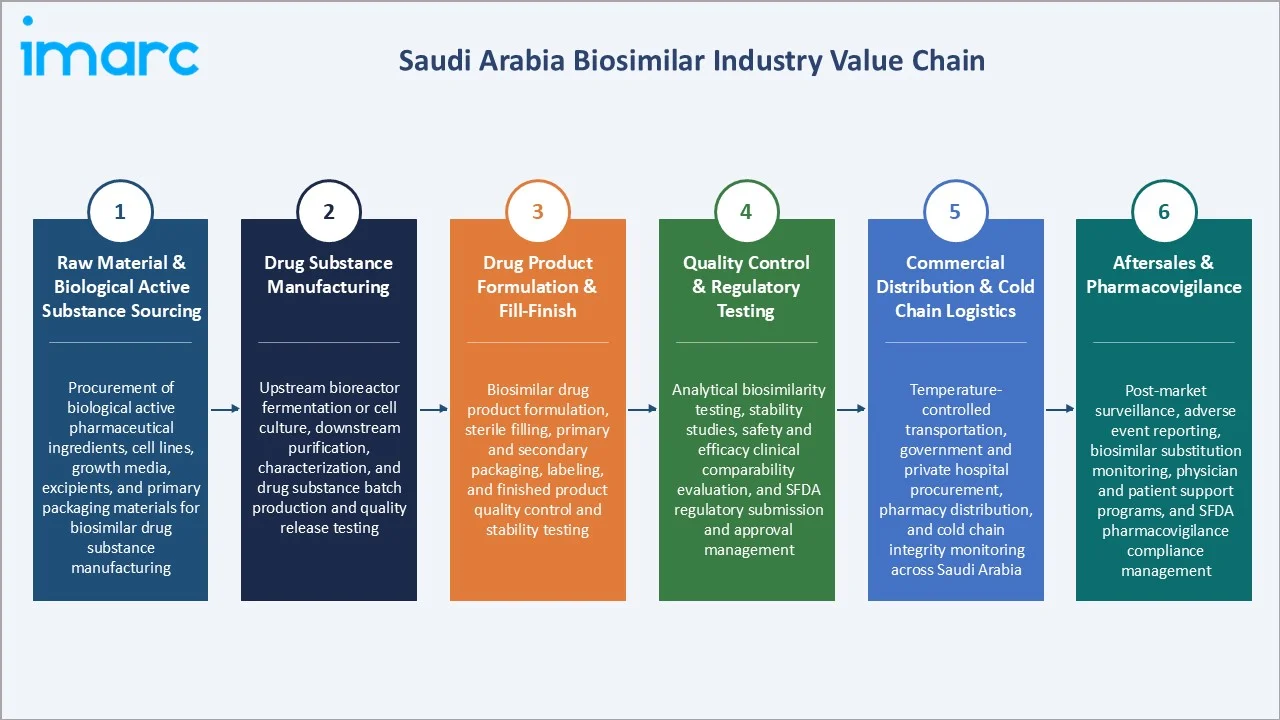
The Saudi Arabia biosimilar value chain integrates raw material and biological active substance sourcing, drug substance manufacturing, drug product formulation and fill-finish, quality control and regulatory testing, commercial distribution and cold chain logistics, hospital and pharmacy dispensing, and post-market pharmacovigilance.
|
Stage |
Key Participants |
|
Raw Material & Biological Active Substance Sourcing |
Procurement of biological active pharmaceutical ingredients, cell lines, growth media, excipients, and primary packaging materials for biosimilar drug substance manufacturing |
|
Drug Substance Manufacturing |
Upstream bioreactor fermentation or cell culture, downstream purification, characterization, and drug substance batch production and quality release testing |
|
Drug Product Formulation & Fill-Finish |
Biosimilar drug product formulation, sterile filling, primary and secondary packaging, labeling, and finished product quality control and stability testing |
|
Quality Control & Regulatory Testing |
Analytical biosimilarity testing, stability studies, safety and efficacy clinical comparability evaluation, and SFDA regulatory submission and approval management |
|
Commercial Distribution & Cold Chain Logistics |
Temperature-controlled transportation, government and private hospital procurement, pharmacy distribution, and cold chain integrity monitoring across Saudi Arabia |
|
Aftersales & Pharmacovigilance |
Post-market surveillance, adverse event reporting, biosimilar substitution monitoring, physician and patient support programs, and SFDA pharmacovigilance compliance management |
The raw material and biological active substance sourcing tier is the most commercially sensitive and import-dependent stage of the Saudi Arabia biosimilar value chain. The quality control and regulatory testing tier is experiencing the most rapid capability development as SFDA-mandated biosimilarity demonstration requirements drive investment in local analytical laboratory infrastructure.
Technology Landscape in the Saudi Arabia Biosimilar Market
Recombinant DNA and Cell Culture Expression Technology
Recombinant DNA technology and mammalian cell culture expression systems form the technological foundation of the Saudi Arabia biosimilar market. CHO cell culture platforms dominate monoclonal antibody biosimilar production, enabling high-yield biological active substance manufacturing. Technology transfer partnerships between international biosimilar developers and Saudi domestic manufacturers are progressively establishing local cell culture manufacturing capability, aligned with Vision 2030 pharmaceutical production targets.
Analytical Characterization and Biosimilarity Assessment Technology
Advanced analytical characterization technologies including mass spectrometry, capillary electrophoresis, surface plasmon resonance, and multi-angle light scattering enable comprehensive physicochemical and functional biosimilarity assessment. These technologies are central to SFDA biosimilar registration submissions and are progressively being deployed in Saudi domestic laboratory facilities, reducing dependence on international contract research organizations for biosimilarity testing.
Continuous Bioprocessing and Process Analytical Technology
Continuous bioprocessing integration with process analytical technology (PAT) represents a significant advancement for biosimilar manufacturing efficiency, enabling real-time monitoring of critical quality attributes during production. These technologies improve batch consistency, reduce manufacturing cycle times, and lower per-unit production costs, providing a competitive advantage for Saudi domestic biosimilar manufacturers investing in next-generation biologics production infrastructure.
Market Segmentation Analysis
The report covers the following segments:
|
Segment Category |
Leading Segment |
Market Share |
Year |
|
Molecule |
🔒 |
🔒 |
2025 |
|
Indication |
Oncology |
35.4% |
2025 |
|
Manufacturing Type |
In-House Manufacturing |
63.9% |
2025 |
|
Region |
Northern and Central Region |
38.8% |
2025 |

By Manufacturing Type
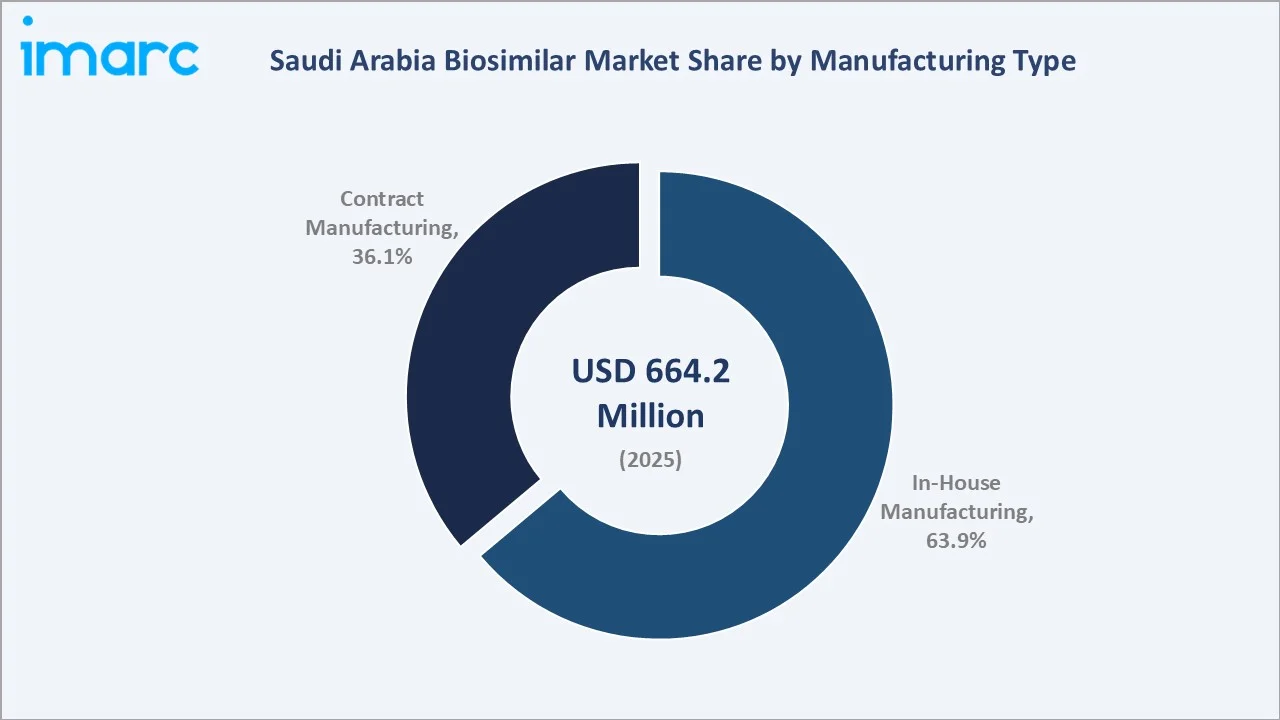
In-House Manufacturing leads at 63.9% in 2025, capturing domestic Saudi pharmaceutical production aligned with Vision 2030 pharmaceutical localization targets. This segment reflects government procurement preferences and fiscal incentives for locally manufactured biosimilars across all government tender categories.
To access detailed market analysis, Request Sample
Contract Manufacturing at 36.1% captures international biosimilar manufacturers partnering with global CDMOs to supply the Saudi market, leveraging established GMP manufacturing capacity and SFDA-recognized facility certifications. Contract manufacturing enables faster product registration timelines for international entrants without the capital burden of local facility construction.
By Indication
Oncology leads at 35.4% in 2025, driven by rising cancer incidence, high government procurement of oncology biosimilars across public hospitals, and the availability of multiple approved biosimilars across key oncology molecules including trastuzumab, rituximab, and bevacizumab.
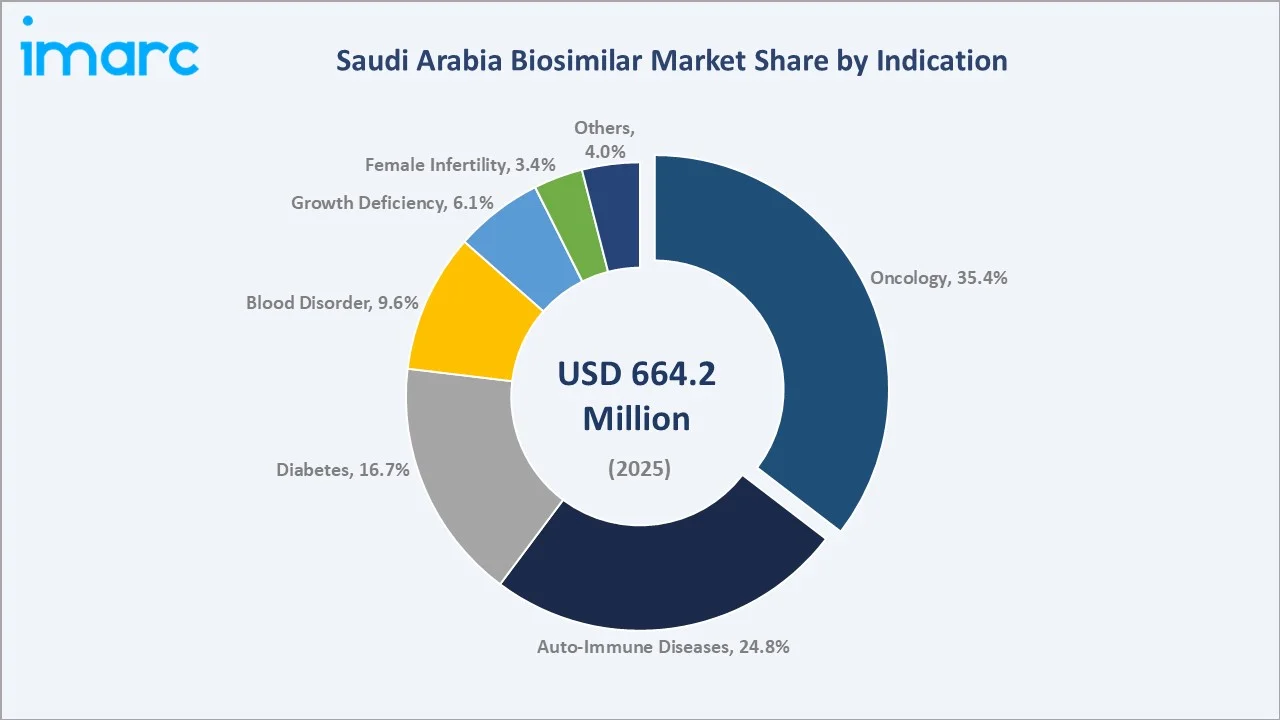
Auto-Immune Diseases at 24.8% captures the growing anti-TNF biosimilar market, while Diabetes at 16.7% reflects insulin glargine biosimilar penetration. Blood Disorder at 9.6%, Growth Deficiency at 6.1%, Female Infertility at 3.4%, and Others at 4.0% complete the indication landscape.
Regional Market Insights
|
Region |
Share (2025) |
Key Biosimilar Market Drivers & Characteristics |
|
Northern and Central Region |
38.8% |
Driven by Riyadh's largest hospital network, government central procurement agencies, specialist physician density, and Ministry of Health institutional formulary mandates for biosimilar prescribing |
|
Western Region |
29.1% |
Driven by Jeddah and Makkah's private hospital growth, pilgrimage healthcare services, insurance coverage expansion, and rising specialist care demand in major urban centers |
|
Eastern Region |
20.2% |
Supported by Aramco's comprehensive employee healthcare system, petrochemical sector insurance coverage, Dammam's public hospital network, and higher-income population profile |
|
Southern Region |
11.9% |
Emerging region with smaller urban population, developing primary healthcare infrastructure, and Vision 2030 hospital investment programs driving future biosimilar market growth |
The Northern and Central Region, at 38.8%, leads through Riyadh's concentration of government hospitals, Ministry of Health procurement agencies, and tertiary care institutions. The Western Region, at 29.1%, reflects Jeddah's growing private hospital sector and Makkah's healthcare infrastructure expansion under Vision 2030.
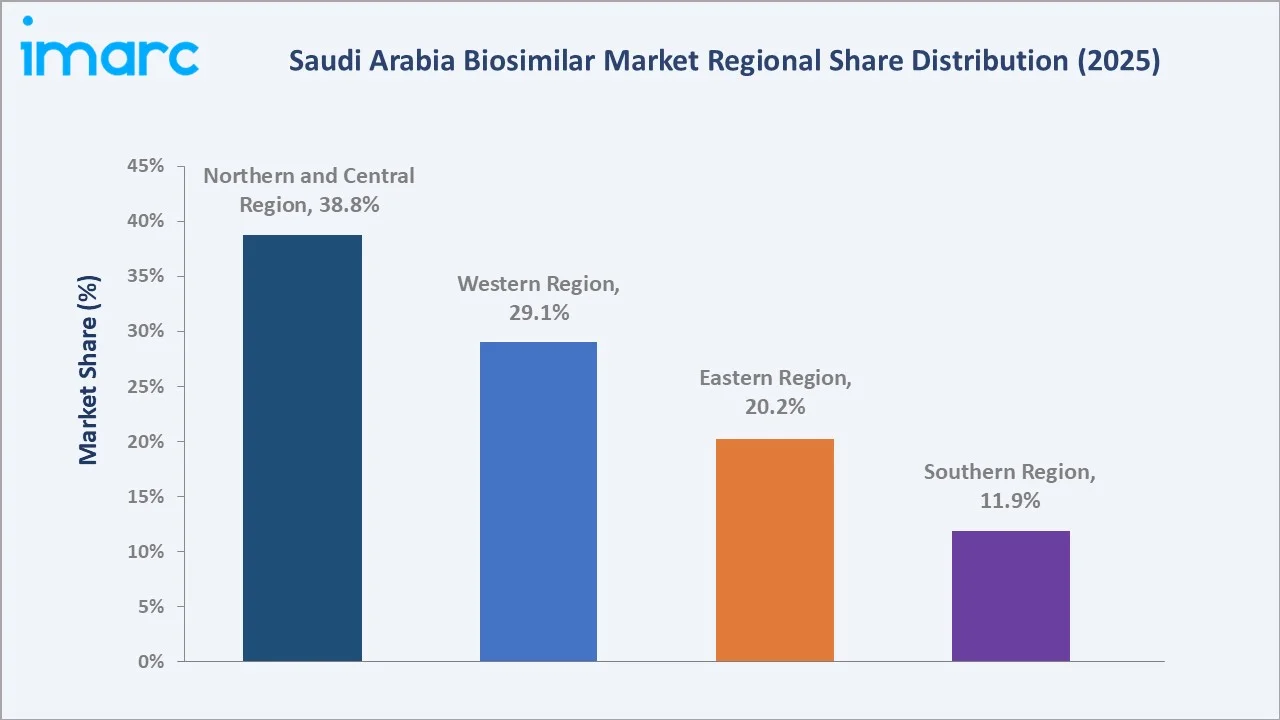
The Eastern Region, at 20.2%, is supported by Aramco's comprehensive healthcare system and the petrochemical sector's employer-sponsored insurance programs, which provide higher biosimilar reimbursement coverage than the national average. The Southern Region, at 11.9%, represents an early-stage but growing market primarily driven by government investment in primary healthcare centers and regional hospital upgrades under Vision 2030.
Competitive Landscape
The Saudi Arabia biosimilar market competitive landscape is moderately concentrated with key multinational pharmaceutical companies, regional biosimilar manufacturers, and emerging domestic Saudi producers competing across indication segments. The market is characterized by government procurement dominance, SFDA registration requirements, and increasing focus on pharmaceutical localization under Vision 2030.
|
Company Name |
Key Products |
Market Position |
Core Strength |
|
Celltrion Inc. |
Remsima, Herzuma, Truxima, Remsima SC, Yuflyma, Vegzelma, Omlyclo, Eydenzelt, SteQeyma, Avtozma |
Market Leader |
Celltrion is a South Korea-based biopharmaceutical company and one of the leading biosimilar manufacturers globally, with strong SFDA-registered oncology and autoimmune biosimilar portfolios in Saudi Arabia. |
|
Sandoz Group AG |
Zarxio (filgrastim), Erelzi (etanercept), Hyrimoz (adalimumab) |
Strong Challenger |
Sandoz Group is an independent Swiss biosimilar and generics company with an extensive SFDA-registered biosimilar portfolio and an established Saudi Arabia commercial infrastructure. |
|
Pfizer Inc. |
Inflectra (infliximab), Retacrit (epoetin), Nivestym (filgrastim) |
Strong Challenger |
Pfizer leverages its established Saudi pharmaceutical distribution network and government tender relationships to market biosimilar products across multiple therapeutic categories. |
|
Amgen |
Kanjinti (trastuzumab), Mvasi (bevacizumab), Avsola (infliximab) |
Strong Challenger |
Amgen is a global biopharmaceutical leader expanding its Saudi Arabia biosimilar portfolio through SFDA registrations across oncology and immunology indication categories. |
|
Dr. Reddy's Laboratories Ltd. |
Reditux (rituximab), Cresp (darbepoetin alfa), Peg-Grafeel (pegfilgrastim) |
Emerging Player |
Dr. Reddy's Laboratories Ltd. is an India-based pharmaceutical company with biosimilar expertise and price-competitive positioning in the Saudi government tender market. |
Key players include Celltrion Inc., Sandoz Group AG, Pfizer Inc., Amgen, Dr. Reddy's Laboratories Ltd., and others.
Key Company Profiles
Celltrion Inc.
Celltrion Inc. is a South Korea-based biopharmaceutical company and one of the world's leading biosimilar manufacturers, with multiple SFDA-approved biosimilar products across oncology and autoimmune indications in Saudi Arabia. The company operates one of the largest mammalian cell culture-based biosimilar manufacturing facilities globally, supporting a comprehensive biosimilar portfolio across multiple therapeutic areas.
- Key Products: Remsima, Herzuma, Truxima, Remsima SC, Yuflyma, Vegzelma, Omlyclo, Eydenzelt, SteQeyma, Avtozma
- Recent Developments: In August 2026, Celltrion applied to South Korea’s Ministry of Food and Drug Safety for approval of CT-P51, a biosimilar candidate for MSD’s Keytruda (pembrolizumab). The filing represents the second pembrolizumab biosimilar application in South Korea. The Korean submission is supported by clinical data from 228 melanoma patients, as the company continues to streamline its global development program.
- Strategic Focus: Expanding SFDA-registered biosimilar portfolio across oncology and autoimmune indications, leveraging government tender participation and formulary inclusion programs to drive volume adoption in public hospitals. Celltrion is prioritizing Saudi Arabia as a reference market for GCC biosimilar registration strategies, enabling coordinated multi-market commercial launches that maximize regional return on SFDA regulatory investment.
Sandoz Group AG
Sandoz Group AG is the global biosimilar and generic division of Novartis, recognized as a pioneer in biosimilar development with one of the world's broadest SFDA-registered biosimilar portfolios covering multiple therapeutic indications in Saudi Arabia. The company leverages the Novartis affiliate commercial network to access government and private hospital segments across all Saudi regions.
- Key Products: Zarxio (filgrastim biosimilar), Erelzi (etanercept biosimilar), Hyrimoz (adalimumab biosimilar).
- Strategic Focus: Leveraging its established Novartis-affiliated Saudi commercial infrastructure to maximize biosimilar portfolio penetration across government and private hospital segments, with focus on anti-TNF and supportive care oncology indications. Sandoz is prioritizing expansion of its Saudi Arabia biosimilar portfolio through additional SFDA molecule registrations, targeting autoimmune indications where originator biologic patent expiry creates new biosimilar market entry opportunities with significant revenue potential.
Market Concentration Analysis
The Saudi Arabia biosimilar market is moderately concentrated, with leading multinational companies collectively accounting for approximately 55-65% of market revenue. South Korean biosimilar manufacturers and established European and American companies maintain dominant positions through SFDA registration breadth and government tender relationships. Market concentration is expected to moderate through the forecast period as domestic Saudi pharmaceutical manufacturers and additional international biosimilar companies obtain SFDA registrations and participate in government procurement tenders, introducing price competition and expanding biosimilar molecule availability across the indication landscape.
Investment & Growth Opportunities
Highest Growth Segments
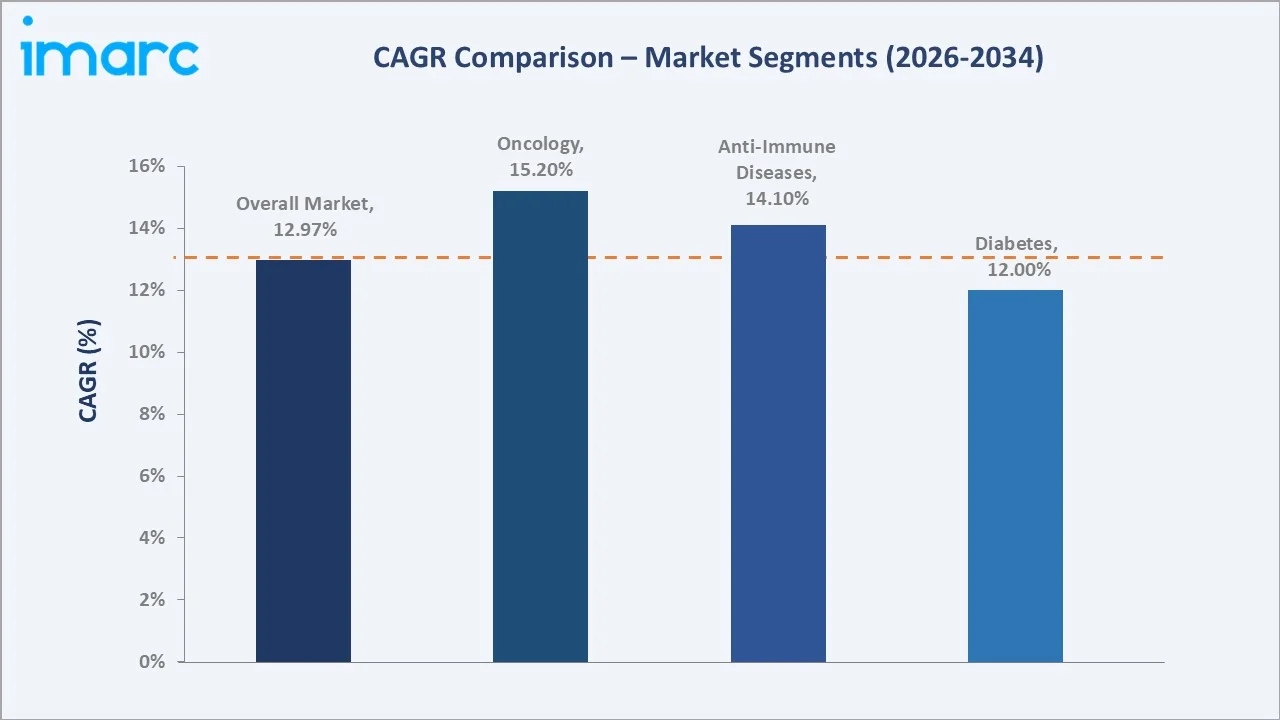
Oncology biosimilars (~15% CAGR), anti-TNF autoimmune biosimilars (~14% CAGR), insulin glargine (~12% CAGR), pegfilgrastim and G-CSF biosimilars (~13% CAGR), and domestic Saudi biologics manufacturing investments (~18-20% CAGR from small base) represent the highest-growth investment vectors through 2034.
Emerging Investment Opportunities
Domestic Saudi biologics manufacturing represents the highest-value emerging investment opportunity, combining Vision 2030 incentives, preferential government procurement treatment, and a structurally growing domestic biosimilar demand pool. Greenfield biologics plants developed under the National Industrial Development Center programs qualify for significant fiscal incentives including land grants, infrastructure support, and concessional industrial financing.
Investment Themes
- SFDA registration breadth as competitive moat: Companies with the broadest SFDA-registered biosimilar portfolios participate in the largest number of government tender categories, creating revenue diversification and scale advantages that compound across the annual tender cycle.
- Domestic manufacturing incentive capture through Vision 2030 partnerships: International biosimilar manufacturers forming local joint ventures or establishing Saudi manufacturing sites capture preferential government procurement positions, regulatory fast-tracks, and fiscal incentives unavailable to import-only market entrants.
Future Market Outlook (2026-2034)
The Saudi Arabia biosimilar market is projected to grow from USD 664.2 Million in 2025 to USD 1,990.5 Million by 2034, delivering a 12.97% CAGR over the forecast period. The market's anchor value of USD 1,222.1 Million in 2030 represents the Saudi biosimilar industry at its most transformative commercial inflection point, with Vision 2030 pharmaceutical manufacturing targets approaching realization and SFDA biosimilar regulatory maturity enabling faster molecule approvals and broader indication access.
Research Methodology
Primary Research
Primary research comprised structured interviews with 40+ industry stakeholders (2025), including pharmaceutical regulatory specialists; biosimilar commercial directors; government hospital formulary committee members; Saudi SFDA regulatory consultants; healthcare insurance reimbursement managers; and hospital pharmacy directors.
Secondary Research
Secondary research encompassed SFDA annual reports and biosimilar registration databases; Saudi Ministry of Health statistical yearbooks; Vision 2030 pharmaceutical sector reports; GCC biosimilar regulatory harmonization documents; WHO biosimilar guidelines; company annual reports; and over 50 secondary sources reviewed.
Forecasting Models
Market revenue forecasts developed using a bottom-up indication-based model: (i) chronic disease patient population by indication; (ii) biosimilar penetration rate by indication and year; (iii) average biosimilar price per treatment course by indication; (iv) manufacturing type split based on Vision 2030 localization trajectory; (v) regional distribution based on hospital infrastructure density and institutional procurement patterns.
Saudi Arabia Biosimilar Market Report Coverage:
| Report Features | Details |
|---|---|
| Base Year of the Analysis | 2025 |
| Historical Period | 2020-2025 |
| Forecast Period | 2026-2034 |
| Units | Million USD |
| Scope of the Report | Exploration of Historical and Forecast Trends, Industry Catalysts and Challenges, Segment-Wise Historical and Predictive Market Assessment:
|
| Molecules Covered | Infliximab, Insulin Glargine, Epoetin Alfa, Etanercept, Filgrastim, Somatropin, Rituximab, Follitropin Alfa, Adalimumab, Pegfilgrastim, Trastuzumab, Bevacizumab, Others |
| Indications Covered | Auto-Immune Diseases, Blood Disorder, Diabetes, Oncology, Growth Deficiency, Female Infertility, Others |
| Manufacturing Types Covered | In-House Manufacturing, Contract Manufacturing |
| Regions Covered | Northern and Central Region, Western Region, Eastern Region, Southern Region |
| Companies Covered | Celltrion Inc., Sandoz Group AG, Pfizer Inc., Amgen, Dr. Reddy's Laboratories Ltd., etc. |
| Customization Scope | 10% Free Customization |
| Post-Sale Analyst Support | 10-12 Weeks |
| Delivery Format | PDF and Excel through Email (We can also provide the editable version of the report in PPT/Word format on special request) |
Key Benefits for Stakeholders:
- IMARC’s industry report offers a comprehensive quantitative analysis of various market segments, historical and current market trends, market forecasts, and dynamics of the Saudi Arabia biosimilar market from 2020-2034.
- The research report provides the latest information on the market drivers, challenges, and opportunities in the Saudi Arabia biosimilar market.
- Porter's five forces analysis assist stakeholders in assessing the impact of new entrants, competitive rivalry, supplier power, buyer power, and the threat of substitution. It helps stakeholders to analyze the level of competition within the Saudi Arabia biosimilar industry and its attractiveness.
- Competitive landscape allows stakeholders to understand their competitive environment and provides an insight into the current positions of key players in the market.
Frequently Asked Questions About the Saudi Arabia Biosimilar Market Report
The Saudi Arabia biosimilar market reached USD 664.2 Million in 2025, driven by Oncology leading at 35.4%, In-House Manufacturing dominating at 63.9%, the Northern and Central Region commanding 38.8% through Riyadh's institutional procurement concentration, government hospital formulary mandates, and Vision 2030 healthcare localization policies supporting biosimilar market development.
The market grows at 12.97% CAGR during 2026-2034, reaching USD 1,990.5 Million by 2034. This growth reflects Vision 2030 pharmaceutical mandates, SFDA regulatory development, chronic disease burden expansion, biosimilar molecule pipeline depth, and expanding mandatory health insurance coverage driving institutional biosimilar procurement across government and private hospital networks.
In-House Manufacturing leads at 63.9% in 2025, reflecting Saudi Arabia's domestic pharmaceutical production investments under the Vision 2030 National Transformation Program and government procurement preferences for locally manufactured biosimilar products. This segment is projected to maintain dominance as additional local biologics manufacturing facilities become operational through the forecast period.
Oncology leads at 35.4% through rising cancer incidence, high government procurement of oncology biosimilars, and the breadth of SFDA-approved trastuzumab, rituximab, bevacizumab, and pegfilgrastim biosimilars available in the Saudi market. Oncology grows fastest at approximately 15% CAGR through the forecast period driven by cancer incidence growth and expanding biosimilar molecule registrations.
The Northern and Central Region leads at 38.8% through Riyadh's concentration of government hospitals, Ministry of Health procurement agencies, and tertiary care institutions generating the highest biosimilar prescription volumes nationally. The Western Region at 29.1% is the second-largest market, driven by Jeddah's private hospital sector and Makkah's healthcare infrastructure.
Leading companies include Celltrion Inc., Sandoz Group AG, Pfizer Inc., Amgen, Dr. Reddy's Laboratories Ltd., and others.
Need more help?
- Speak to our experienced analysts for insights on the current market scenarios.
- Include additional segments and countries to customize the report as per your requirement.
- Gain an unparalleled competitive advantage in your domain by understanding how to utilize the report and positively impacting your operations and revenue.
- For further assistance, please connect with our analysts.
 Request Customization
 Speak to an Analyst
 Request Brochure
 Inquire Before Buying
Benefits of Customization
- Personalize this research
- Triangulate with your data
- Get data as per your format and definition
- Gain a deeper dive into a specific application, geography, customer, or competitor
- Any level of personalization
Get in Touch With Us
UNITED STATES
Phone: +1-201-971-6302
INDIA
Phone: +91-120-433-0800
UNITED KINGDOM
Phone: +44-753-714-6104
Email: [email protected]
Client Testimonials




.webp)




.webp)













Related Reports

Choose your plan
*Please note that the prices mentioned below are starting prices for each bundle type. Kindly contact our team for further details.*
Single User License
- 1 User License, Access on 2 Devices
- PDF Report + Excel Dataset (Password Protected)
- Lifetime Access
- No Printing Rights
- 10% Free Report Customization
- 10–12 Weeks of Analyst Support
Five User License
- Access for 5 Users, 2 Devices per User
- PDF Report + Excel Dataset (Password Protected)
- Lifetime Access
- Dedicated Account Manager
- 12–14 Weeks of Analyst Support
- No Printing Rights
- 15% Free Report Customization
- 25% Discount on Your Next Purchase
Corporate User License
- Unlimited User Access (Within Your Organization)
- PDF Report + Excel Dataset
- Lifetime Access
- Dedicated Account Manager
- 14–20 Weeks of Analyst Support
- No Printing Rights
- 20% Free Report Customization
- 30% Discount on Your Next Purchase
Essential Insights
What's included:
3 reports
- Lifetime Access
- PDF Reports
- Excel Datasets
- 2 Weeks of Free Analyst Support
- 2 User Licenses
- Access on 2 Devices
- Printing Rights
- Complimentary PowerPoint (PPT) Version
- Complimentary License Upgrade
Professional Access
What's included:
5 reports
- Lifetime Access
- PDF Reports
- Excel Datasets
- 8 Weeks of Free Analyst Support
- 2 User Licenses
- Access on 2 Devices
- Printing Rights
- Complimentary PowerPoint (PPT) Version
- Complimentary License Upgrade
Business Advantage
What's included:
8 reports
- Lifetime Access
- PDF Reports
- Excel Datasets
- 14 Weeks of Free Analyst Support
- 2 User Licenses
- Access on 2 Devices
- Printing Rights
- Complimentary PowerPoint (PPT) Version
- Complimentary License Upgrade
Enterprise Intelligence
What's included:
10 reports
- Lifetime Access
- PDF Reports
- Excel Datasets
- 20 Weeks of Free Analyst Support
- 2 User Licenses
- Access on 2 Devices
- Printing Rights
- Complimentary PowerPoint (PPT) Version
- Complimentary License Upgrade