
Saudi Arabia Medical Tourism Market Size, Share, Trends and Forecast by Treatment Type, Service Provider, and Region 2026-2034
Saudi Arabia Medical Tourism Market Size, Share, Trends & Forecast (2026-2034)
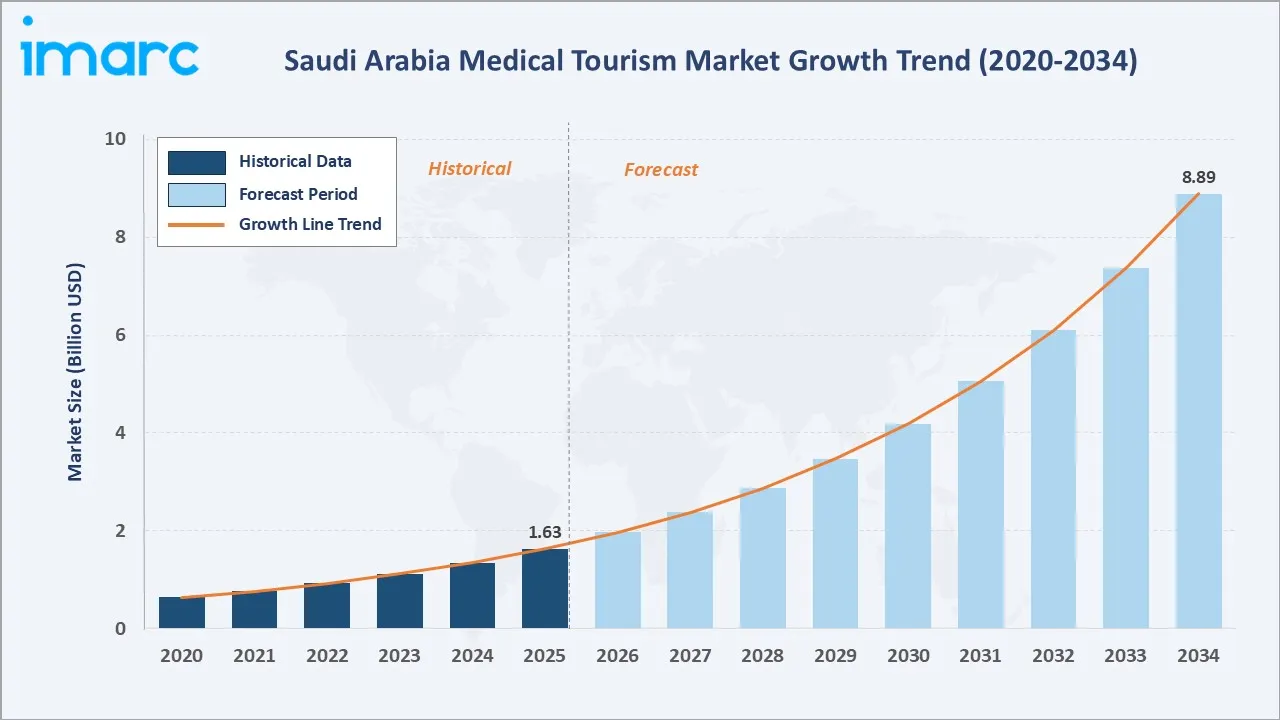
The Saudi Arabia medical tourism market grew from USD 1.63 Billion in 2025 to USD 1.97 Billion in 2026 and is projected to reach USD 8.89 Billion by 2034, growing at a CAGR of 20.71% during 2026-2034. Demand is widening as regional patients, expatriates, and a large religious visitor base seek advanced specialty care. Expanding hospital capacity lifts output, while robotic surgery and digital records modernize delivery.
Supportive health reform, visa facilitation and investment keep capital moving, and a shift toward elective procedures broadens the medical tourism market across every major patient segment. Supporting growth factors include rising healthcare spending, specialty center openings and wider visitor access, along with stronger referral networks and better air connectivity. Cardiovascular treatment dominates at 22.0%. Private leads at 65.0%. Western region commands 35.0% of the regional market share.
Market Snapshot
|
Metric |
Value |
|
Base Year Market Size (2025) |
USD 1.63 Billion |
|
Market Size (2026) |
USD 1.97 Billion |
|
Forecast Market Size (2034) |
USD 8.89 Billion |
|
CAGR (2026-2034) |
20.71% |
|
Base Year |
2025 |
|
Historical Period |
2020-2025 |
|
Forecast Period |
2026-2034 |
|
Dominant Treatment Type |
Cardiovascular Treatment (22.0%, 2025) |
|
Dominant Service Provider |
Private (65.0%, 2025) |
|
Leading Region |
Western Region (35.0%, 2025) |
The Saudi Arabia medical tourism market size increased from USD 0.64 Billion in 2020 to USD 1.63 Billion in 2025 and is estimated to reach USD 1.97 Billion in 2026. The market is further expected to grow to USD 4.19 Billion by 2030 and USD 8.89 Billion by 2034. Its commercial distinctiveness lies in a state-backed effort to convert a large pilgrim and expatriate visitor base into a structured inbound patient stream.
To get more information on this market, Request Sample
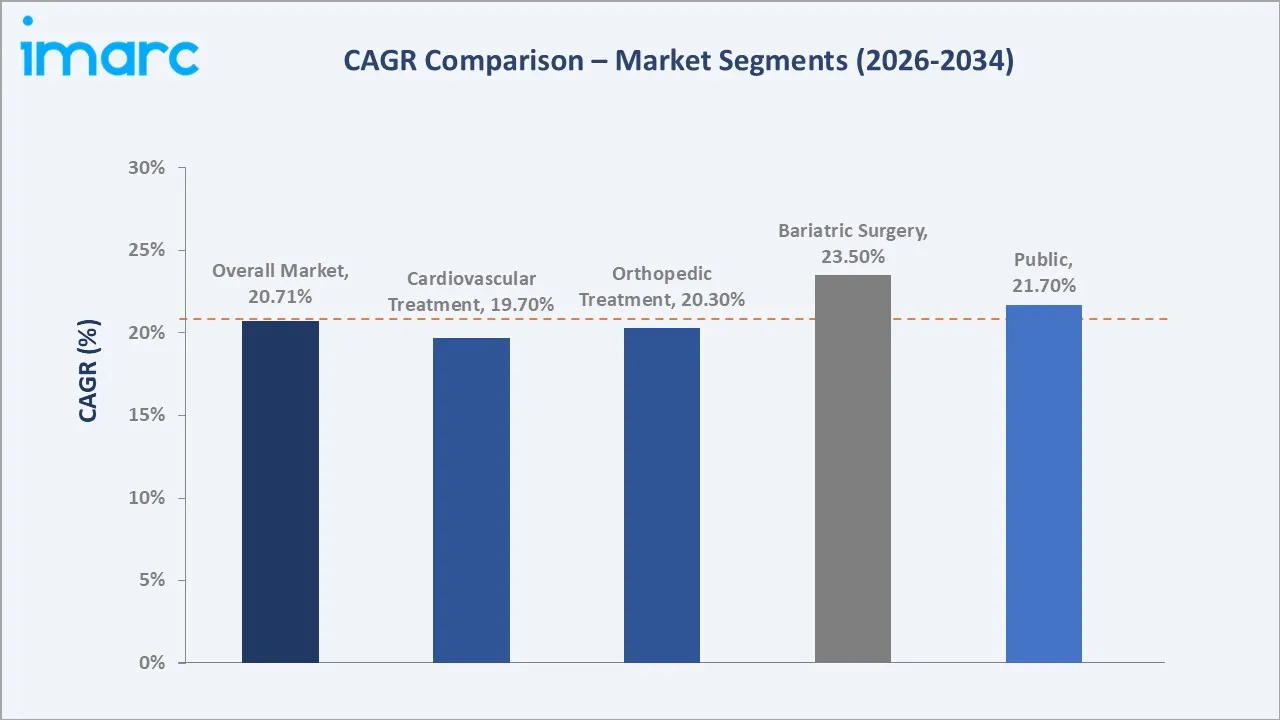
Bariatric surgery at ~23.5% CAGR and public at ~21.7% CAGR are the fastest-growing sub-segments of their dimensions, the first driven by rising metabolic care demand, the second by public hospital upgrades and cluster partnerships, reflecting a medical tourism market that is broadening beyond private care.
Executive Summary
The Saudi Arabia medical tourism market expanded from USD 1.63 Billion in 2025 to an estimated USD 1.97 Billion in 2026, with demand anchored in advanced specialty care, elective procedures and treatment sought by regional patients and long-stay visitors. The fastest-developing areas are bariatric surgery, fertility care, ophthalmic treatment and cosmetic procedures, each outpacing the wider market because they combine strong elective spending with active referral networks.
Expanding hospital capacity, accreditation to international standards, digital health platforms and visa facilitation keep the supply side responsive, while national health reforms improve access to specialist talent and technology. The market is projected to reach USD 8.89 Billion by 2034. Cardiovascular treatment at 22.0% leads through high-acuity demand for interventional cardiology and surgery. Private at 65.0% anchors delivery through capacity and speed. Western region leads regionally at 35.0%.
Key Market Insights
|
Insight |
Data |
|
Dominant Treatment Type |
Cardiovascular Treatment - 22.0% share (2025) |
|
Dominant Service Provider |
Private - 65.0% market share (2025) |
|
Leading Region |
Western Region - 35.0% share (2025) |
|
Market Opportunity |
Bariatric and metabolic care, fertility services, digital patient pathways, wellness-linked recovery. |
Key Analytical Observations Supporting the Above Data:
- Cardiovascular Treatment at 22.0%: Cardiovascular care leads because heart disease burden is high, procedures are complex and high value, and referral hospitals with catheterization, surgical and transplant capability attract patients who need rapid, trusted specialist treatment.
- Private at 65.0%: Private providers dominate because they offer shorter waiting times, modern facilities, international-standard service and flexible packages, which suit visiting patients who pay directly or through insurers and expect hospitality-level experience.
- Western Region at 35.0%: Western Region leads because Jeddah, Makkah and Madinah combine large pilgrim flows, major tertiary hospitals, international airport access and an established hospitality base that supports patients and accompanying families throughout their stay.
Saudi Arabia Medical Tourism Market Overview
The Saudi Arabia medical tourism market is organized around large private hospital groups, government-backed tertiary and research hospitals, specialty clinics, and a growing layer of facilitators, insurers and travel partners. Patients arrive from neighboring Gulf states, the wider Middle East and Africa, expatriate communities and religious visitors, while many residents now choose domestic treatment rather than traveling abroad. Care spans cardiology, orthopedics, cosmetic and dental procedures, fertility, bariatric surgery and ophthalmology, supported by diagnostics, pharmaceuticals and rehabilitation services.
National health transformation programs encourage private participation, accreditation to international standards and tourism-linked packages, while digital platforms improve booking, records transfer and aftercare. Clinical quality, speed of access, specialist reputation and the ability to coordinate visas, accommodation and follow-up decide competitiveness in the Saudi Arabia medical tourism market, and providers that combine these capabilities hold the strongest referral relationships.
Market Dynamics
To evaluate market opportunities, Request Sample
Market Drivers
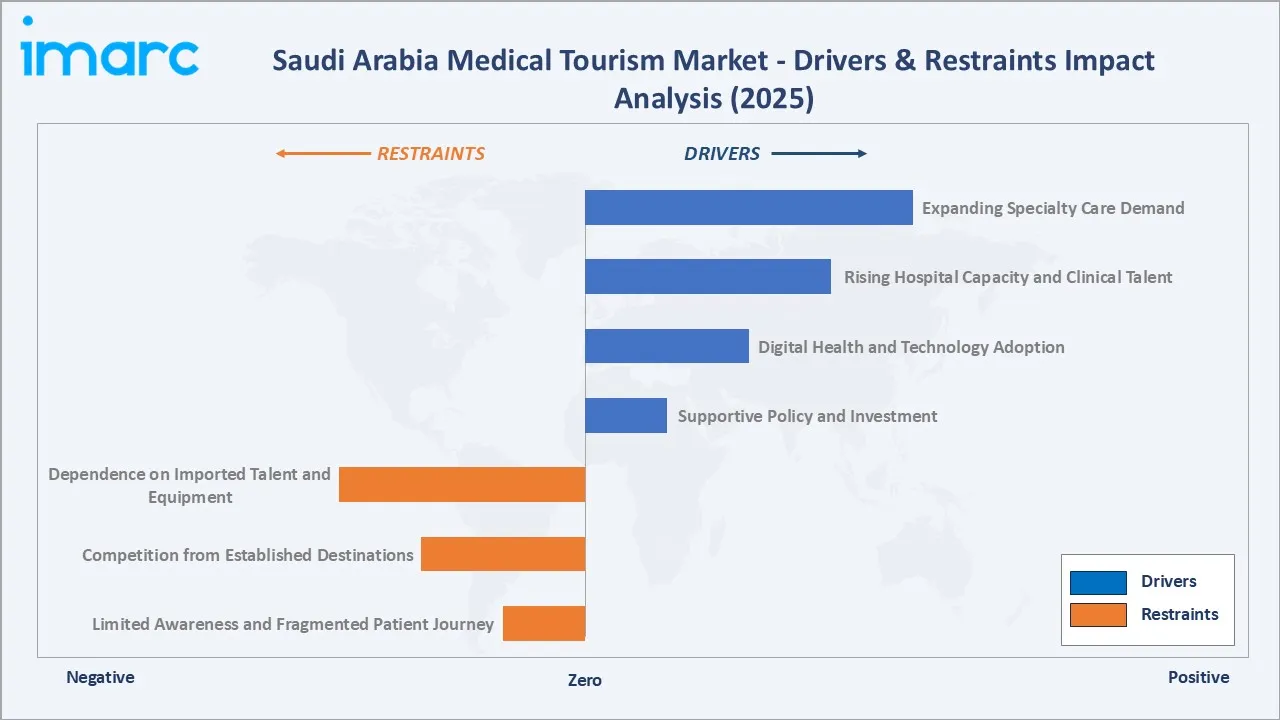
- Expanding Specialty Care Demand: Patients from neighboring Gulf states, long-stay expatriates and religious visitors increasingly seek complex cardiac, orthopedic, fertility and metabolic care within the Kingdom. Domestic residents who once traveled abroad for advanced procedures now choose local hospitals, which raises utilization and adds a second demand stream. Rising chronic disease prevalence and growing acceptance of elective procedures keep referrals steady across the year.
- Rising Hospital Capacity and Clinical Talent: Private groups and public health clusters are adding hospital beds, specialty centers and day-surgery units, while recruitment of internationally trained physicians and nurses deepens clinical capability. Larger facilities shorten waiting times, widen procedure menus and allow centers of excellence to form around cardiology, orthopedics and transplant care, giving the country the throughput needed to serve inbound patients.
- Digital Health and Technology Adoption: Electronic health records, tele-consultation, robotic surgery and AI-assisted imaging are now common in leading hospitals, improving diagnostic accuracy and shortening recovery. Digital platforms let international patients submit records, receive second opinions and schedule procedures before travel. These capabilities lower perceived risk for overseas patients and help hospitals document outcomes that support their reputation with referring physicians and insurers.
- Supportive Policy and Investment: National transformation programs prioritize healthcare privatization, tourism diversification and local life-science capacity, drawing public and private capital into new facilities. Streamlined visas for treatment seekers, accreditation to international standards and public-private partnership frameworks reduce entry barriers for operators. Together, these measures make health services an explicit export priority and give investors a clear long-term case for expanding specialty capacity.
Market Restraints
- Dependence on Imported Talent and Equipment: Many specialist physicians, nurses and advanced devices still come from abroad, which raises operating costs and exposes providers to recruitment cycles and currency swings. Competition for experienced clinicians with regional hubs can slow the opening of new service lines. Until domestic training pipelines mature, capacity growth depends on external supply that providers cannot fully control.
- Competition from Established Destinations: Patients weigh the Kingdom against well-known destinations in Europe, Asia and neighboring Gulf hubs that offer long track records, lower package prices or deeper brand recognition. Overseas patients often rely on word of mouth and facilitator reputation, so new entrants must prove outcomes. This limits pricing power and lengthens the time needed to build international referral volume.
- Limited Awareness and Fragmented Patient Journey: Information on accredited providers, package pricing and recourse options is scattered across hospitals, facilitators and travel agents, leaving international patients uncertain about quality and total cost. Gaps in coordinated visa, insurance and follow-up processes add friction. Without a consistent, transparent journey, many prospective patients default to destinations where the end-to-end process feels better established.
Market Opportunities
- Bariatric, Metabolic and Fertility Programs: High prevalence of lifestyle-related conditions and strong regional demand for fertility services create room for dedicated metabolic and reproductive centers. Bundled programs that combine surgery, nutrition, counseling and long-term follow-up can command premium pricing and generate repeat engagement. Providers that publish outcomes and build referral ties with regional clinicians can scale these programs with comparatively low incremental capital.
- Wellness, Rehabilitation and Recovery Tourism: Post-operative recovery, rehabilitation and wellness packages let hospitals extend patient stays and capture hospitality spending alongside clinical fees. Developing destination-style recovery centers, physiotherapy units and medically supervised wellness programs can link healthcare with the broader tourism strategy. These offers appeal to families and companions who travel with patients and raise revenue per visitor.
- Digital Patient Journey Platforms: Integrated platforms that combine teleconsultation, price transparency, visa support, translation and aftercare monitoring can remove the friction that deters overseas patients. Operators that build such platforms with hospitals, insurers and airlines can capture facilitation fees and data advantages while improving outcome tracking, creating scalable, asset-light revenue alongside clinical services through the forecast period.
Market Challenges
- Regulatory and Accreditation Complexity: Cross-border care involves licensing, insurance recognition, medical records transfer and liability rules that differ by patient origin. Providers must invest in accreditation and compliance teams to meet international expectations. Navigating these requirements slows the launch of new services and raises administrative costs, especially for smaller hospitals seeking to enter the inbound patient segment.
- Language, Cultural and Service Standardization: International patients expect multilingual staff, culturally attuned hospitality and consistent service across facilities. Meeting these expectations demands training, interpreter services and standard care pathways that many providers are still building. Variation in patient experience between hospitals can undermine national branding and weaken word-of-mouth referrals, which is vital for building trust with new patient origins.
- Capacity Strain and Workforce Retention: Rapid facility expansion competes with domestic demand for the same beds and specialists, creating the risk of waiting times that frustrate both local and international patients. Retaining skilled clinicians amid regional competition requires attractive compensation and development paths, adding cost. Balancing inbound growth with resident access remains a continuing operational and policy challenge.
Emerging Market Trends
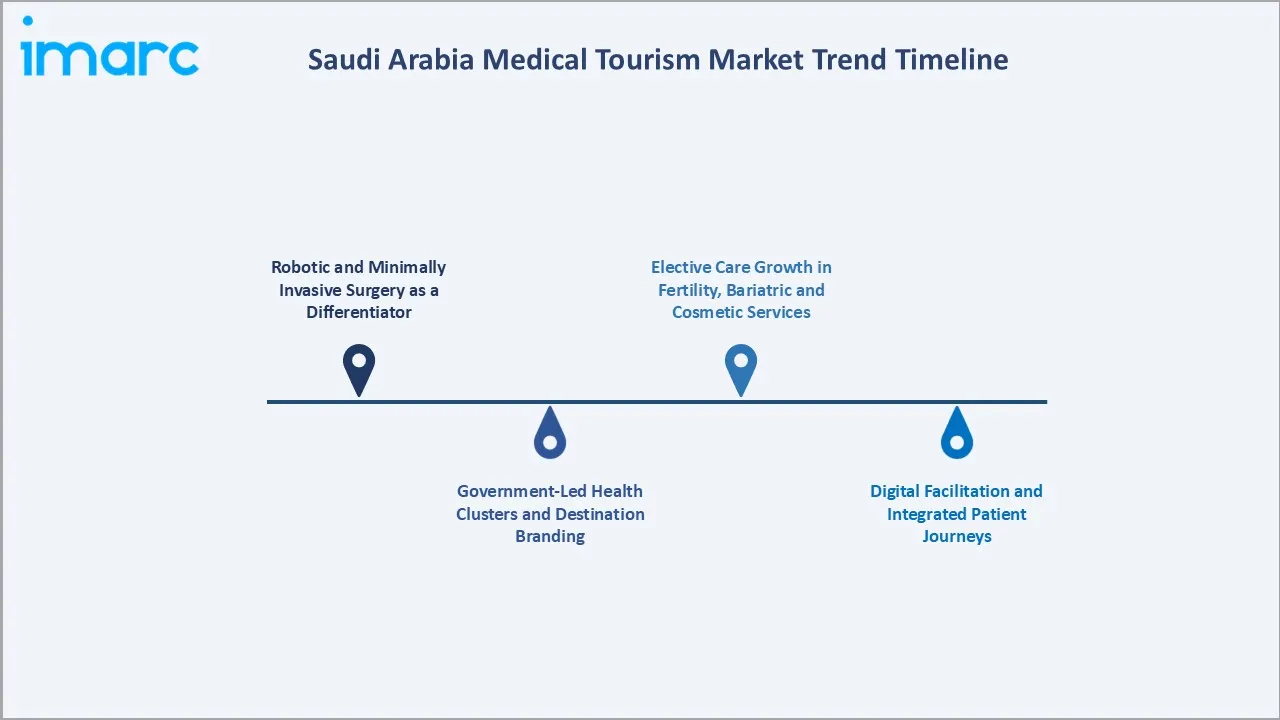
1. Robotic and Minimally Invasive Surgery as a Differentiator
Leading hospitals are using robotic platforms and minimally invasive techniques in cardiac, orthopedic, bariatric and urological procedures to shorten stays and reduce complications. International patients regard these capabilities as a marker of quality, so hospitals promote them in referral materials and packages. Investment in surgeon training and simulation centers is spreading the skills, and procedure volumes on advanced platforms are rising steadily. The trend positions the Kingdom as a destination for complex surgery rather than only routine care, and it supports premium pricing for technology-led procedures. Referral partners increasingly ask for volume and outcome evidence.
2. Government-Led Health Clusters and Destination Branding
Public health clusters, national tourism agencies and investment bodies are coordinating to present the Kingdom as a healthcare destination, linking hospital networks, airports and hospitality offers. Branding efforts highlight accredited centers of excellence, research hospitals and wellness developments. Cluster models also pool referral flows between public and private facilities, improving specialist access. This coordination reduces fragmentation in the patient journey, strengthens credibility with overseas referrers and gives private operators a clearer pathway to build cross-border programs with institutional support. Shared quality standards strengthen their case.
3. Elective Care Growth in Fertility, Bariatric and Cosmetic Services
Elective and quality-of-life procedures are growing faster than the overall market as regional patients look for privacy, expertise and convenient access close to home. Fertility, bariatric, cosmetic and ophthalmic services benefit from clear pricing, short stays and strong word of mouth. Providers are building dedicated centers with specialized teams, counseling and long-term follow-up programs. The shift raises average revenue per patient, improves utilization of operating theaters and encourages operators to develop bundled packages that include accommodation, transport and companion services for patients and families. Specialized teams also build repeat referrals from the region.
4. Digital Facilitation and Integrated Patient Journeys
Hospitals and facilitators are building digital platforms that manage inquiries, records transfer, remote consultations, visas, accommodation and post-treatment follow-up in one flow. Patients receive treatment estimates and second opinions before they travel, which reduces uncertainty and cancellations. Aftercare monitoring through mobile applications and telemedicine keeps contact after discharge and supports outcome tracking. The approach shortens the time from inquiry to admission, improves satisfaction and creates data that providers can use to refine packages and demonstrate quality to referring physicians and insurers abroad, building lasting trust.
Industry Value Chain Analysis
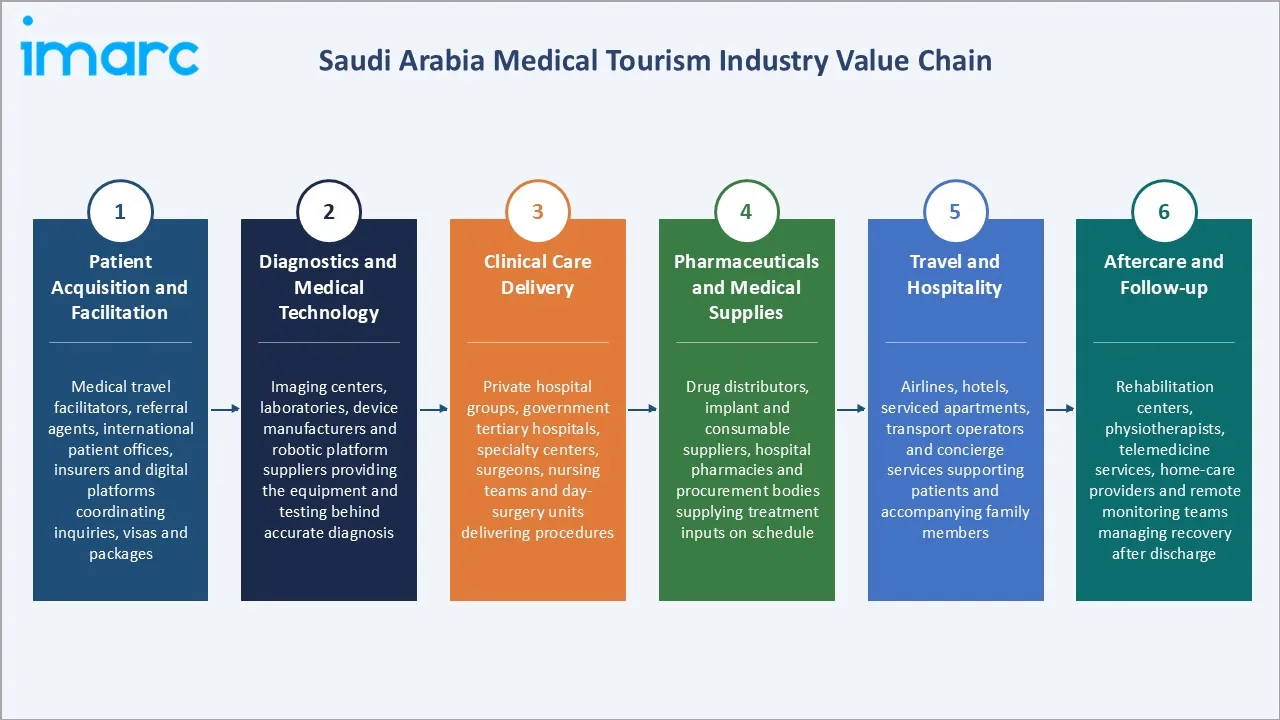
The industry value chain spans patient acquisition and facilitation, diagnostics and medical technology, clinical care delivery, pharmaceuticals and medical supplies, travel and hospitality, and aftercare and follow-up. Each stage adds value by connecting a patient to the right specialist, delivering safe treatment efficiently and supporting recovery with services that make the whole journey reliable and comfortable. Weak coordination at any link slows the whole journey and raises costs.
|
Stage |
Key Participants |
|
Patient Acquisition and Facilitation |
Medical travel facilitators, referral agents, international patient offices, insurers and digital platforms coordinating inquiries, visas and packages. |
|
Diagnostics and Medical Technology |
Imaging centers, laboratories, device manufacturers and robotic platform suppliers providing the equipment and testing behind accurate diagnosis. |
|
Clinical Care Delivery |
Private hospital groups, government tertiary hospitals, specialty centers, surgeons, nursing teams and day-surgery units delivering procedures. |
|
Pharmaceuticals and Medical Supplies |
Drug distributors, implant and consumable suppliers, hospital pharmacies and procurement bodies supplying treatment inputs on schedule. |
|
Travel and Hospitality |
Airlines, hotels, serviced apartments, transport operators and concierge services supporting patients and accompanying family members. |
|
Aftercare and Follow-up |
Rehabilitation centers, physiotherapists, telemedicine services, home-care providers and remote monitoring teams managing recovery after discharge. |
Clinical care delivery is the most commercially critical stage, because outcomes, specialist reputation and safety record decide whether patients and referrers choose a destination and recommend it again. Facilitation and aftercare reinforce that decision, but hospitals that deliver consistent clinical quality capture the largest share of value across the entire patient journey.
Technology Landscape in the Saudi Arabia Medical Tourism Industry
Robotic-Assisted Surgery Platforms
Robotic systems support precise, minimally invasive surgery in cardiac, orthopedic, bariatric, urologic and gynecologic procedures, reducing blood loss, pain and hospital stay. Leading hospitals pair these platforms with surgeon training programs and simulation facilities to maintain consistent outcomes. International patients associate robotic capability with advanced care, so providers feature it in packages. Wider availability across major cities is increasing procedure volumes and supporting the Kingdom's reputation for complex surgery.
AI-Enabled Diagnostics and Imaging
Artificial intelligence tools assist radiologists and pathologists in reading scans, detecting abnormalities earlier and prioritizing urgent cases. Integrated with high-resolution CT, MRI and cardiac imaging, they shorten diagnosis time and improve consistency across facilities. For international patients, faster and more accurate workups reduce stay length and cost. Hospitals also use predictive analytics to plan bed capacity, operating theater use and discharge, improving throughput without compromising safety.
Telemedicine and Remote Aftercare
Telemedicine allows specialists to review records, offer second opinions and conduct pre-travel consultations, while remote monitoring tools track recovery after patients return home. Secure video platforms, wearable sensors and mobile applications extend the care relationship beyond the hospital. This lowers readmission risk, reassures patients and creates a record of outcomes. Providers use these services to build loyalty with patients and referring physicians across neighboring countries and wider regions.
Electronic Health Records and Interoperability
Unified electronic health records and national health information exchanges let hospitals access patient history, imaging and laboratory results quickly, reducing duplication and errors. For medical travelers, digital record transfer simplifies pre-admission review and post-discharge communication with home physicians. Interoperability standards also support insurer verification and billing transparency. Strong data governance and cybersecurity are becoming commercial requirements, since overseas patients and partners expect their sensitive information to be handled securely.
Market Segmentation Analysis
The report covers the following segments:
|
Segment Category |
Leading Segment |
Market Share |
Year |
|
Treatment Type |
Cardiovascular Treatment |
22.0% |
2025 |
|
Service Provider |
Private |
65.0% |
2025 |
|
Region |
Western Region |
35.0% |
2025 |

By Treatment Type
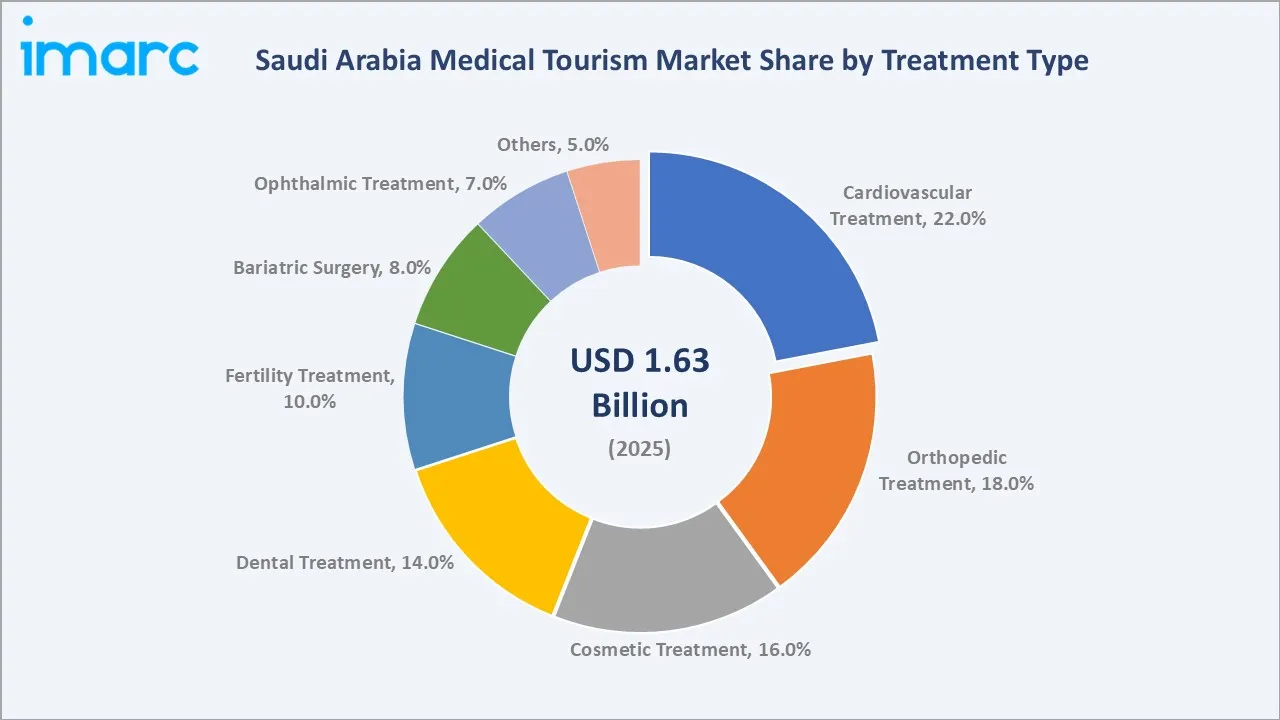
Cardiovascular treatment leads at 22.0% (2025). High disease burden, the complexity of interventional and surgical procedures and the concentration of experienced cardiac teams in referral hospitals keep patients flowing toward specialist centers, where speed of access and outcomes matter most.
To Request customized data tailored to your needs – Request Customization
Bariatric surgery is the fastest-growing treatment type at ~23.5% CAGR. Rising metabolic disease awareness, dedicated bariatric centers and bundled programs with nutrition and follow-up draw regional patients, while minimally invasive techniques shorten stays and support wider acceptance.
By Service Provider
Private leads at 65.0% (2025). Private providers offer shorter waiting times, modern facilities, international-standard service and flexible package pricing, which suit visiting patients who pay directly or through insurers and expect a coordinated experience from admission through discharge.
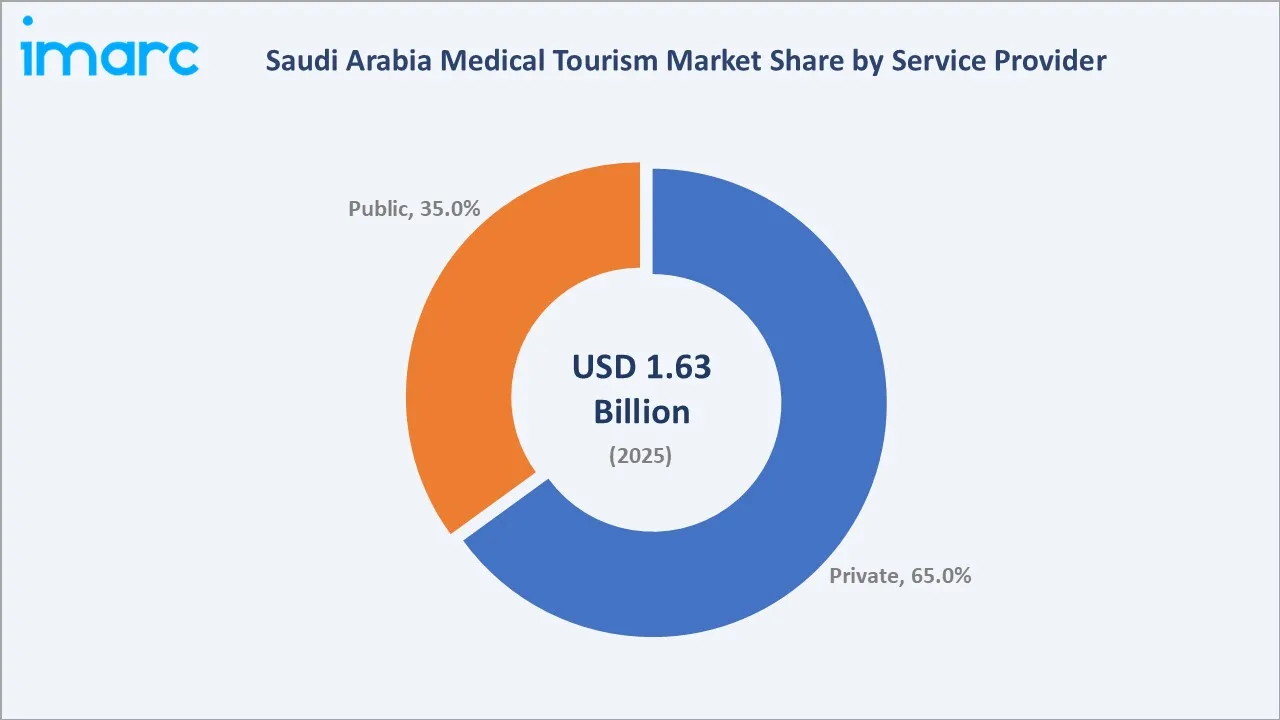
Public is the fastest-growing service provider at ~21.7% CAGR. Government hospital upgrades, research-driven tertiary centers and cluster partnerships are widening access to advanced procedures, and growing international patient offices are drawing referrals into public specialist facilities.
Regional Market Insights
|
Region |
Share (2025) |
Key Medical Tourism Market Drivers & Characteristics |
|
Western Region |
35.0% |
Driven by Jeddah, Makkah and Madinah pilgrim flows, major tertiary hospitals, international airport access and strong hospitality infrastructure |
|
Northern and Central Region |
33.0% |
Reflects Riyadh's concentration of specialty hospitals, research centers, government health clusters and corporate decision makers driving referral demand |
|
Eastern Region |
22.0% |
Driven by Dammam, Khobar and Al Ahsa private hospitals serving Gulf neighbors through causeway access and industrial city populations |
|
Southern Region |
10.0% |
Supported by Abha and Jazan tourism growth and expanding public hospital capacity, with smaller private specialty presence |
Western region accounts for 35.0% of the Saudi Arabia medical tourism market, anchored by Jeddah, Makkah and Madinah, where large pilgrim and visitor flows, leading tertiary hospitals and strong air connectivity create a natural base for inbound care. Pilgrim volumes also create a predictable seasonal demand pattern that hospitals plan bed capacity around each year. Northern and Central region holds 33.0%, led by Riyadh's cluster of specialty hospitals, research institutions and government referral centers, which sustain complex cardiac, transplant and orthopedic demand within the wider medical tourism market.
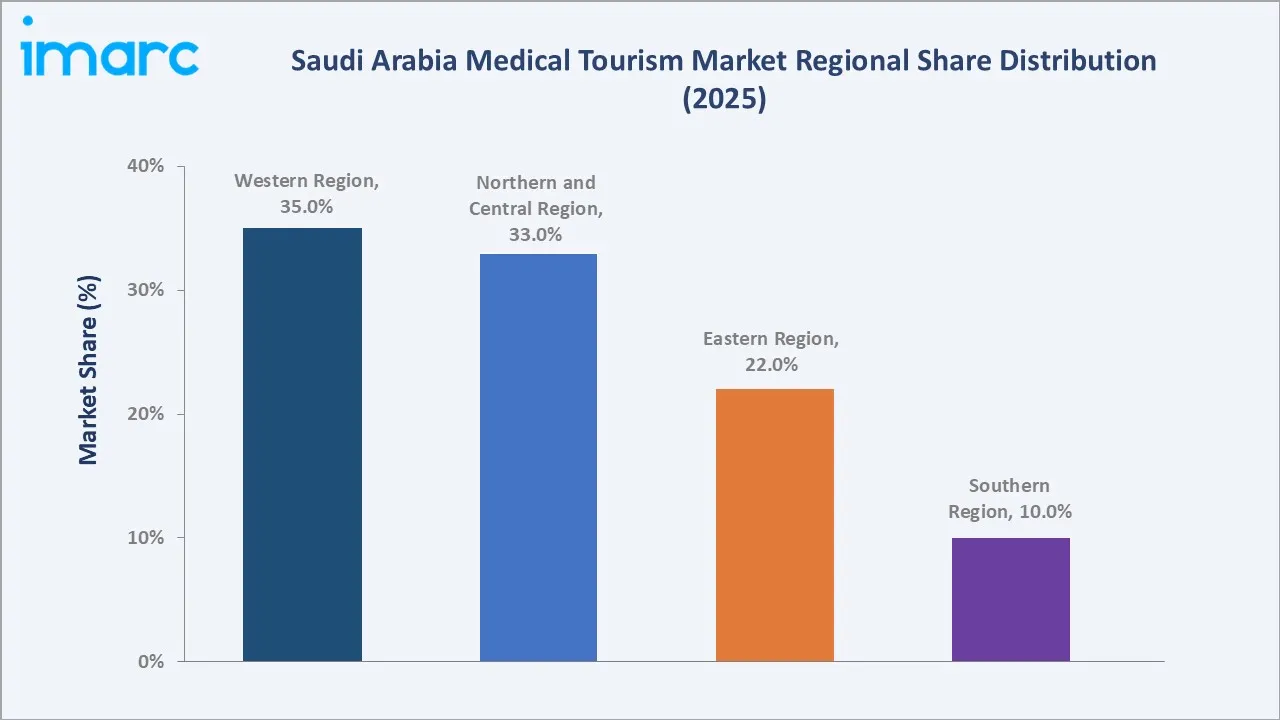
Eastern region contributes 22.0%, supported by private hospital groups in Dammam, Khobar and Al Ahsa that attract patients from neighboring Gulf states through road access and strong employer coverage. Southern region accounts for 10.0%, a smaller but developing base where tourism growth, new public hospital capacity and emerging specialty services are widening access and building a platform for faster expansion over time.
Competitive Landscape
The competitive landscape is moderately fragmented, combining large listed private hospital groups, government-backed tertiary and research hospitals, and regional specialty centers. Providers compete on clinical reputation, specialist depth, waiting times, technology, accreditation and the ability to coordinate international patient services. Group scale increasingly matters, as networks can share talent, equipment and referral relationships across facilities and cities.
| Company | Key Offerings | Market Position | Core Strength |
|---|---|---|---|
| Dr. Sulaiman Al-Habib Medical Group | Normal Spontaneous Delivery, Newborn Care, Senile Cataract, Caesarian Section, Diabetes Mellitus | Market Leader | Largest private hospital network with deep cardiac, women's health, and other specialty capabilities. |
| KFSHRC | Cancer Center, Heart Center, Neuroscience Center, Organ Transplant Center, Pediatrics & Women's Center | Strong Challenger | Tertiary and quaternary leadership in transplant, oncology, genomics and surgery. |
| Dallah Hospital | Cardiac Center, Orthopedics & Rheumatology Center, Dental Center, Diabetes & Endocrinology Center, E.N.T Center, Maternity Hospital | Strong Challenger | Established Riyadh network with strong obstetrics, orthopedic and specialty outpatient services. |
| Saudi German Hospital Group | Anesthesiology and Pain Management, Cardiology and Cardiothoracic Surgery, Chest and Respiratory Care, Clinical Nutrition and Dietetics, Colorectal Surgery | Established Player | Multi-city private network with international accreditation and broad specialty coverage. |
| Almoosa Health | Cancer & blood disorders, Bones, joints & movement, Brain, nerve & spine care, Physical medicine & rehabilitation | Innovator | Eastern Region specialty hospital with growing tertiary services and regional referral base. |
Private networks expand through new hospitals, acquisitions and specialty centers aimed at faster access and hospitality-grade service, while public tertiary institutions rely on research depth, transplant programs and trusted clinical reputation. International patient offices, digital facilitation and accreditation are becoming equally competitive tools, since overseas patients choose based on perceived safety and convenience as much as price. Collaboration is also growing, with referral partnerships, shared training and joint programs blurring the boundary between public and private offerings.
Key Company Profiles
Dr. Sulaiman Al-Habib Medical Group
Dr. Sulaiman Al-Habib Medical Group is a leading Saudi Arabia-based private healthcare provider that operates a network of hospitals, specialized medical centers, day surgery facilities, pharmacies, and diagnostic laboratories across Saudi Arabia and the wider region. It offers advanced medical services across multiple specialties, supported by modern healthcare infrastructure, experienced medical professionals, and advanced treatment technologies. Through its specialized care facilities and focus on international healthcare standards, the group contributes to Saudi Arabia's growing medical tourism industry.
- Key Offerings: Normal Spontaneous Delivery, Newborn Care, Senile Cataract, Caesarian Section, Diabetes Mellitus.
- Recent Developments: In September 2026, Red Sea Global (RSG), the developer of The Red Sea and AMAALA tourism destinations, inaugurated The Red Sea Hospital in partnership with Dr. Sulaiman Al Habib Medical Services Group (HMG). The facility aims to enhance access to advanced healthcare services for employees, residents, nearby communities, and visitors, supporting the region's tourism and infrastructure development.
- Strategic Focus: Expanding bed capacity, specialty centers and clinical talent, building hospital clusters in high-demand cities and strengthening international patient services to capture growth in advanced and elective procedures.
KFSHRC
King Faisal Specialist Hospital & Research Centre (KFSHRC) is a leading Saudi Arabian tertiary and quaternary healthcare institution that operates major medical campuses, offering specialized healthcare services across oncology, organ transplantation, cardiovascular diseases, neurosciences, and genomic medicine. It attracts international patients through its advanced medical technologies, internationally recognized specialists, and specialized treatment programs. Its dedicated international patient services, including travel assistance and personalized treatment coordination, strengthen its role in Saudi Arabia's growing medical tourism industry.
- Key Offerings: Cancer Center, Heart Center, Neuroscience Center, Organ Transplant Center, Pediatrics & Women's Center.
- Recent Developments: In January 2025, King Faisal Specialist Hospital & Research Centre (KFSHRC) highlighted its role in advancing Saudi Arabia's healthcare sector at Arab Health 2025, emphasizing the adoption of AI-powered diagnostics, robotic surgeries, and telemedicine. These technological advancements support the Kingdom's ambition to become a global healthcare hub, with the hospital reporting a 47.39% increase in medical tourism patients in 2024, representing visitors from 17 countries.
- Strategic Focus: Investing in robotic surgery, genomics, artificial intelligence and research partnerships while strengthening international patient services, aiming to extend its complex-care leadership across additional campuses and referral networks.
Market Concentration Analysis
The Saudi Arabia medical tourism market is moderately concentrated at the top and fragmented below. Dr. Sulaiman Al-Habib Medical Group holds the largest single position, with an estimated 12% to 18% share of provider value, supported by its network scale, specialist depth and brand recognition. A tier of government-backed tertiary centers and listed private groups follows, while many independent hospitals, specialty clinics and facilitators divide the remainder, which keeps overall concentration moderate rather than high.
Two opposing forces are reshaping concentration. Incumbent groups are consolidating through new hospital openings, acquisitions, specialist recruitment and referral partnerships that raise the capital and talent barriers for newcomers. At the same time, specialty clinics, digital facilitation platforms, international operators and public-private partnership projects are widening choice and contesting niche segments, preventing the top tier from tightening its grip on the market as patient preferences evolve.
Investment & Growth Opportunities
Highest Growth Segments
Bariatric surgery at ~23.5% CAGR, fertility treatment at ~22.8% CAGR, ophthalmic treatment at ~21.9% CAGR and public at ~21.7% CAGR lead the investment hierarchy through 2034, followed by cosmetic treatment at ~21.2% CAGR. Investment concentrates there because elective demand is rising, procedures are repeatable and well priced, and capacity additions in specialty centers and upgraded public facilities support above-market volume growth and stronger returns.
Emerging Investment Opportunities
The most dynamic emerging opportunity is integrated specialty centers that bundle surgery, recovery, accommodation and digital follow-up into one packaged patient journey. They scale fastest in cities with strong air access and existing hospital clusters, where shared talent, hospitality partners and referral networks lower unit cost and allow operators to serve both regional patients and long-stay visitors.
Investment Themes
- Elective and metabolic specialty centers: Dedicated bariatric, fertility and ophthalmic centers offer repeatable procedures, clear pricing and strong referral demand, supporting attractive utilization and margins for operators that build specialist teams and publish outcome data for patients.
- Digital patient journey platforms: Platforms that combine teleconsultation, price transparency, visa support and aftercare monitoring reduce friction for overseas patients, creating asset-light revenue and valuable outcome data alongside hospital services across the forecast period.
- Public-private capacity partnerships: Joint programs that upgrade public facilities and open them to international patients expand specialist capacity quickly, share risk between operators and government, and add referral volume to advanced centers in high-demand specialties.
Future Market Outlook (2026-2034)
The Saudi Arabia medical tourism market is projected to grow from USD 1.63 Billion in 2025 to USD 1.97 Billion in 2026, reaching USD 8.89 Billion by 2034, registering a CAGR of 20.71% during 2026-2034. The market's anchor value of USD 4.19 Billion in 2030 reflects compounding from capacity additions, elective procedure growth and digital facilitation rather than a single demand surge. Expanding specialist talent, wider visa access and rising international awareness keep growth well ahead of general healthcare spending. Western region and Northern and Central region sustain leadership as hospital depth, airport access and visitor flows remain strongest there.
Three structural forces define market growth through 2034 the build-out of specialty centers and hospital clusters that raises capacity and complexity of care; the integration of digital platforms that connect patients, providers, insurers and travel partners into one journey; and sustained policy support that positions health services as a tourism and investment priority, drawing capital and talent into the sector.
Research Methodology
Primary Research
Primary research covered discussions with hospital executives, specialist physicians, international patient office managers, medical travel facilitators, insurers and hospitality partners in Saudi Arabia, focused on patient origin, procedure mix, pricing practice, capacity plans and the constraints that shape inbound demand and growth, with responses compared across respondent groups.
Secondary Research
Secondary research drew on company disclosures, health ministry and tourism authority publications, accreditation records, trade association commentary and industry reporting, triangulated to establish treatment type, service provider and regional splits for the Saudi Arabia medical tourism market, with figures cross-checked across independent sources and reconciled where they differed.
Forecasting Models
Forecasting combined patient flow modeling by origin and treatment category with provider capacity analysis, adjusted for pricing, accreditation and policy effects, producing year-wise values from 2026 to 2034 with segment growth paths reconciled to the overall market CAGR of 20.71%, and tested against alternative scenarios.
Saudi Arabia Medical Tourism Market Report Coverage:
| Report Features | Details |
|---|---|
| Base Year of the Analysis | 2025 |
| Historical Period | 2020-2025 |
| Forecast Period | 2026-2034 |
| Units | Billion USD |
| Scope of the Report | Exploration of Historical and Forecast Trends, Industry Catalysts and Challenges, Segment-Wise Historical and Predictive Market Assessment:
|
| Treatment Types Covered | Cosmetic Treatment, Dental Treatment, Cardiovascular Treatment, Orthopedic Treatment, Bariatric Surgery, Fertility Treatment, Ophthalmic Treatment, Others |
| Service Providers Covered | Public, Private |
| Regions Covered | Northern and Central Region, Western Region, Eastern Region, Southern Region |
| Companies Covered | Dr. Sulaiman Al-Habib Medical Group, KFSHRC, Dallah Hospital, Saudi German Hospital Group, Almoosa Health, etc. |
| Customization Scope | 10% Free Customization |
| Post-Sale Analyst Support | 10-12 Weeks |
| Delivery Format | PDF and Excel through Email (We can also provide the editable version of the report in PPT/Word format on special request) |
Key Benefits for Stakeholders:
- IMARC’s industry report offers a comprehensive quantitative analysis of various market segments, historical and current market trends, market forecasts, and dynamics of the Saudi Arabia medical tourism market from 2020-2034.
- The research report provides the latest information on the market drivers, challenges, and opportunities in the Saudi Arabia medical tourism market.
- Porter's five forces analysis assist stakeholders in assessing the impact of new entrants, competitive rivalry, supplier power, buyer power, and the threat of substitution. It helps stakeholders to analyze the level of competition within the Saudi Arabia medical tourism industry and its attractiveness.
- Competitive landscape allows stakeholders to understand their competitive environment and provides an insight into the current positions of key players in the market.
Frequently Asked Questions About the Saudi Arabia Medical Tourism Market Report
The Saudi Arabia medical tourism market reached USD 1.97 Billion in 2026, supported by increasing investments in advanced healthcare infrastructure, growing availability of specialized medical treatments, and rising international patient inflows.
The market is expected to register a CAGR of 20.71% during 2026-2034, driven by increasing international patient arrivals, expanding specialized healthcare facilities, and rising investments in advanced medical technologies. Additionally, government initiatives under Saudi Vision 2030, growing private-sector participation, and efforts to position the Kingdom as a global healthcare destination are expected to accelerate market growth.
Cardiovascular treatment leads the treatment type segment with a 22.0% share in 2025, reflecting high disease burden, complex interventional and surgical procedures, and concentrated specialist expertise in referral hospitals that attract regional and long-stay patients seeking trusted, rapid access to advanced cardiac care.
Private leads the service provider segment with a 65.0% share in 2025, because private hospitals offer shorter waiting times, modern facilities, international-standard service and flexible packages that suit visiting patients, who value coordinated care from admission through discharge and recovery.
Western region leads with a 35.0% regional share in 2025, supported by large pilgrim and visitor flows, major tertiary hospitals, strong airport connectivity and established hospitality infrastructure in Jeddah, Makkah and Madinah, which together create a natural base for inbound medical travelers.
Leading companies include Dr. Sulaiman Al-Habib Medical Group, KFSHRC, Dallah Hospital, Saudi German Hospital Group, and Almoosa Health, among others.
Key investment opportunities in the Saudi Arabia medical tourism market lie in developing specialized hospitals, advanced treatment centers, and integrated healthcare facilities catering to international patients. Investments in medical technology, robotic surgery, telemedicine, fertility treatments, wellness tourism, and international patient support services also offer significant growth potential.
Need more help?
- Speak to our experienced analysts for insights on the current market scenarios.
- Include additional segments and countries to customize the report as per your requirement.
- Gain an unparalleled competitive advantage in your domain by understanding how to utilize the report and positively impacting your operations and revenue.
- For further assistance, please connect with our analysts.
 Request Customization
 Speak to an Analyst
 Request Brochure
 Inquire Before Buying
Benefits of Customization
- Personalize this research
- Triangulate with your data
- Get data as per your format and definition
- Gain a deeper dive into a specific application, geography, customer, or competitor
- Any level of personalization
Get in Touch With Us
UNITED STATES
Phone: +1-201-971-6302
INDIA
Phone: +91-120-433-0800
UNITED KINGDOM
Phone: +44-753-714-6104
Email: [email protected]
Client Testimonials





















Related Reports

Choose your plan
*Please note that the prices mentioned below are starting prices for each bundle type. Kindly contact our team for further details.*
Single User License
- 1 User License, Access on 2 Devices
- PDF Report + Excel Dataset (Password Protected)
- Lifetime Access
- No Printing Rights
- 10% Free Report Customization
- 10–12 Weeks of Analyst Support
Five User License
- Access for 5 Users, 2 Devices per User
- PDF Report + Excel Dataset (Password Protected)
- Lifetime Access
- Dedicated Account Manager
- 12–14 Weeks of Analyst Support
- No Printing Rights
- 15% Free Report Customization
- 25% Discount on Your Next Purchase
Corporate User License
- Unlimited User Access (Within Your Organization)
- PDF Report + Excel Dataset
- Lifetime Access
- Dedicated Account Manager
- 14–20 Weeks of Analyst Support
- No Printing Rights
- 20% Free Report Customization
- 30% Discount on Your Next Purchase
Essential Insights
What's included:
3 reports
- Lifetime Access
- PDF Reports
- Excel Datasets
- 2 Weeks of Free Analyst Support
- 2 User Licenses
- Access on 2 Devices
- Printing Rights
- Complimentary PowerPoint (PPT) Version
- Complimentary License Upgrade
Professional Access
What's included:
5 reports
- Lifetime Access
- PDF Reports
- Excel Datasets
- 8 Weeks of Free Analyst Support
- 2 User Licenses
- Access on 2 Devices
- Printing Rights
- Complimentary PowerPoint (PPT) Version
- Complimentary License Upgrade
Business Advantage
What's included:
8 reports
- Lifetime Access
- PDF Reports
- Excel Datasets
- 14 Weeks of Free Analyst Support
- 2 User Licenses
- Access on 2 Devices
- Printing Rights
- Complimentary PowerPoint (PPT) Version
- Complimentary License Upgrade
Enterprise Intelligence
What's included:
10 reports
- Lifetime Access
- PDF Reports
- Excel Datasets
- 20 Weeks of Free Analyst Support
- 2 User Licenses
- Access on 2 Devices
- Printing Rights
- Complimentary PowerPoint (PPT) Version
- Complimentary License Upgrade