
Saudi Arabia Wound Care Market Size, Share, Trends and Forecast by Product Type, Wound Type, End User, and Region, 2026-2034
Saudi Arabia Wound Care Market Size, Share, Trends & Forecast (2026-2034)
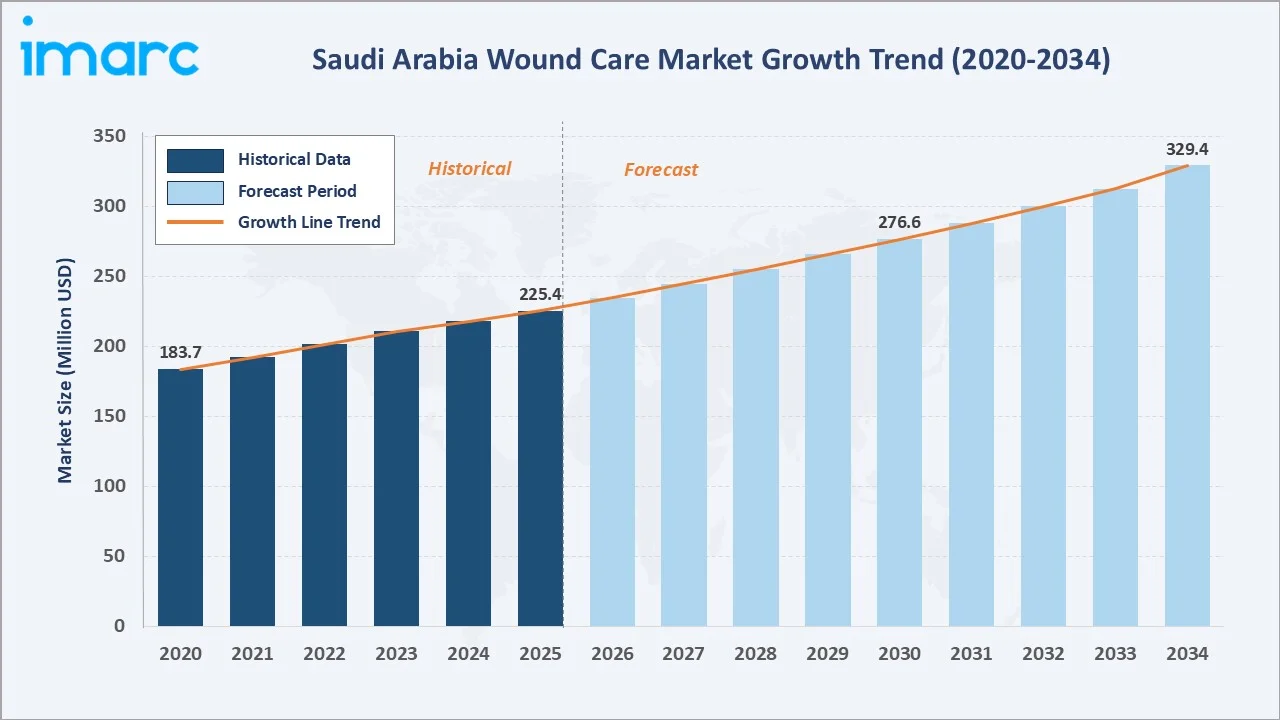
The Saudi Arabia wound care market grew from USD 225.4 Million in 2025 to USD 237.4 Million in 2026 and is projected to reach USD 329.4 Million by 2034, growing at a CAGR of 4.18% during 2026-2034. Rising prevalence of diabetes and other chronic conditions is increasing the incidence of chronic wounds, driving sustained demand for advanced wound care products and services. Chronic wounds lead wound type at 58.7%, hospitals & clinics dominate end user at 57.8%, and the Northern and Central Region commands 36.8% of the regional share.
Market Snapshot
|
Metric |
Value |
|
Base Year Market Size (2025) |
USD 225.4 Million |
|
Market Size (2026) |
USD 237.4 Million |
|
Forecast Market Size (2034) |
USD 329.4 Million |
|
CAGR (2026-2034) |
4.18% |
|
Base Year |
2025 |
|
Historical Period |
2020-2025 |
|
Forecast Period |
2026-2034 |
|
Dominant Wound Type |
Chronic Wounds (58.7%, 2025) |
|
Dominant End User |
Hospitals & Clinics (57.8%, 2025) |
|
Leading Region |
Northern and Central Region (36.8%, 2025) |
The Saudi Arabia wound care market expanded from USD 183.7 Million in 2020 to USD 225.4 Million in 2025 and an estimated USD 237.4 Million in 2026, driven by rising chronic wound prevalence, growing diabetic population, and amplifying healthcare investments under Vision 2030.
To get more information on this market, Request Sample
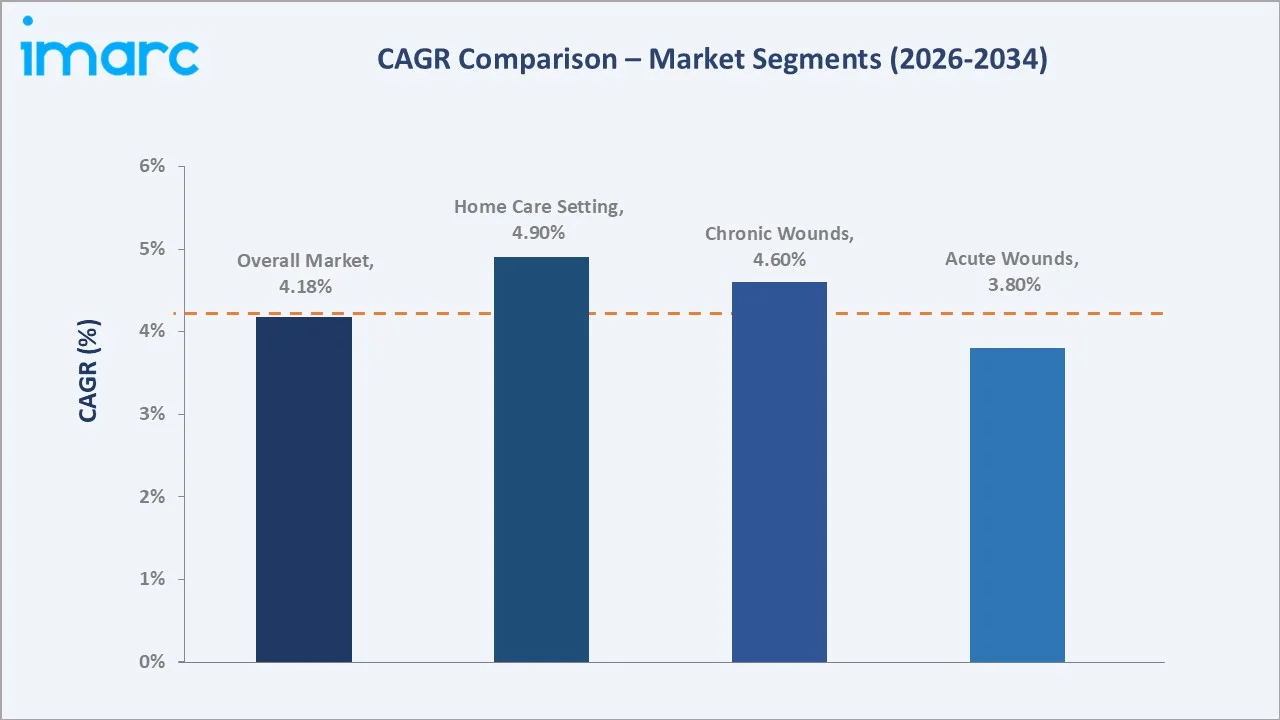
Chronic wounds hold the dominant share as diabetes affects 17.7% of Saudi adults, driving sustained demand for advanced dressings. Home care and long-term care segments are gaining traction alongside hospital-led procurement.
Executive Summary
The Saudi Arabia wound care market expanded from USD 225.4 Million in 2025 to an estimated USD 237.4 Million in 2026. Saudi Arabia's growing diabetic population, aging demographics, and Vision 2030 healthcare investments are the primary catalysts driving the market toward USD 329.4 Million by 2034.
Chronic wounds at 58.7% dominate by capturing the largest patient burden. Hospitals and clinics at 57.8% lead end-user adoption. The Northern and Central Region at 36.8% anchors market growth through Riyadh's concentration of tertiary hospitals and specialist wound care centers.
Key Market Insights
|
Insight |
Data |
|
Dominant Wound Type |
Chronic Wounds — 58.7% share (2025) |
|
Dominant End User |
Hospitals & Clinics — 57.8% market share (2025) |
|
Leading Region |
Northern and Central Region — 36.8% market share (2025) |
|
Market Opportunity |
Advanced dressings, NPWT systems, home care wound management solutions |
Key Analytical Observations Supporting the Above Data:
- Chronic Wounds at 58.7%: Diabetes mellitus affects 17.7% of Saudi Arabia's adult population, ranked second-highest in the region. Diabetic ulcers and pressure ulcers drive the sustained demand for advanced wound care solutions across hospitals and long-term care settings.
- Hospitals & Clinics at 57.8%: Saudi Arabia's expanding hospital network and government investment in tertiary care facilities concentrate wound care procurement within institutional settings. Specialist wound care units and multidisciplinary teams drive adoption of advanced dressings and NPWT systems.
- Northern & Central Region at 36.8%: Riyadh's concentration of major hospitals, specialist medical centers, and healthcare administrative infrastructure drives dominant regional market share. Vision 2030 healthcare spending is most intensively deployed across this region's growing health facilities.
Saudi Arabia Wound Care Market Overview
The Saudi Arabia wound care market encompasses advanced wound care products, surgical wound care products, traditional dressings, active wound care products, and wound therapy devices deployed across hospitals, clinics, long-term care facilities, and home care settings.
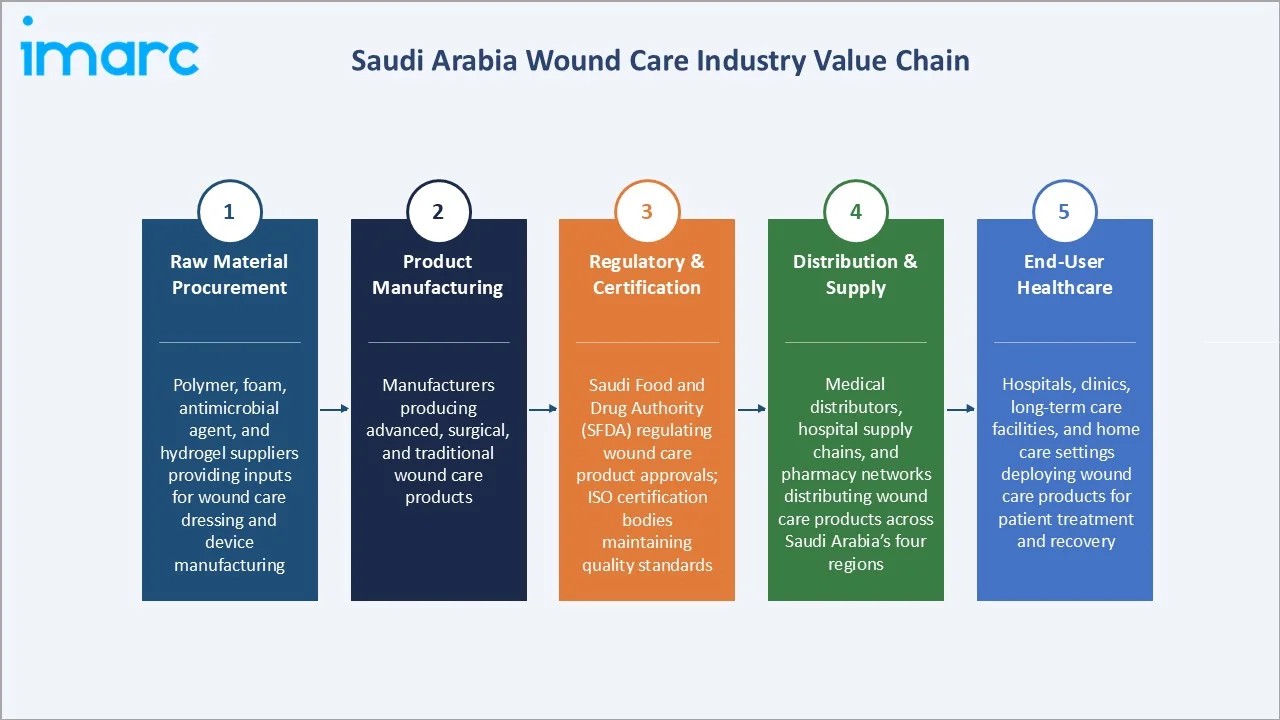
The ecosystem integrates raw material suppliers, product manufacturers, SFDA regulatory bodies, medical distributors, and end-user healthcare providers. Saudi Arabia's high diabetes prevalence, aging population, and Vision 2030 healthcare expansion create a sustained and growing wound care demand environment.
Market Dynamics
To evaluate market opportunities, Request Sample
Market Drivers
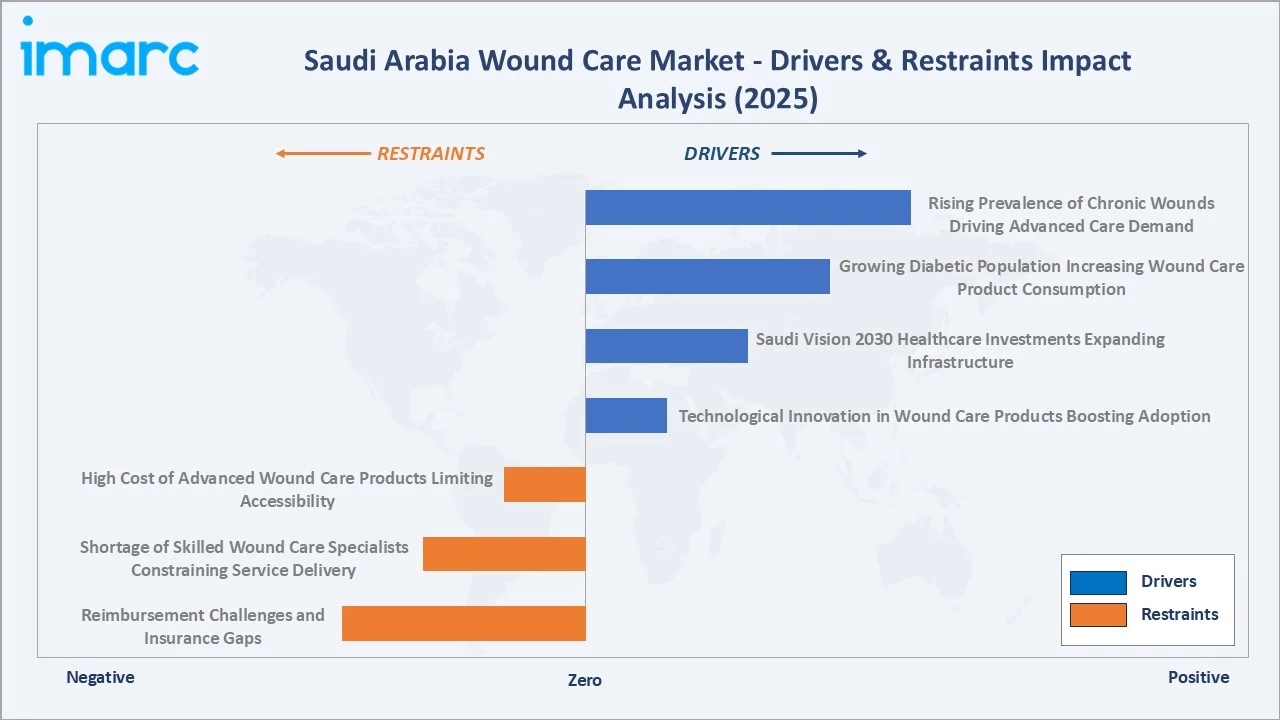
- Rising Prevalence of Chronic Wounds Driving Advanced Care Demand: Diabetes mellitus affects 17.7% of Saudi Arabia's adult population, increasing chronic wound incidence including diabetic ulcers, pressure ulcers, and venous leg ulcers. This high disease burden creates sustained procurement demand for advanced wound care products across the Kingdom's hospital and clinic network. The escalating patient load is driving healthcare providers to adopt specialized wound management protocols and superior dressing products.
- Growing Diabetic Population Increasing Wound Care Product Consumption: Saudi Arabia ranks seventh globally for diabetes prevalence, with the condition projected to increase further. Diabetic foot ulcers represent a significant clinical and economic burden, necessitating chronic wound care interventions spanning advanced dressings, antimicrobial products, and NPWT systems. This patient population creates a large and growing addressable market for wound care product manufacturers operating in the Kingdom.
- Saudi Vision 2030 Healthcare Investments Expanding Infrastructure: The Saudi government's Vision 2030 program has directed substantial investments toward healthcare infrastructure expansion, including new hospital construction, specialist center development, and digital health adoption. These investments are increasing wound care service capacity and driving procurement of advanced wound management products across public and private healthcare facilities throughout Saudi Arabia's four regions.
- Technological Innovation in Wound Care Products Boosting Adoption: Ongoing technological advances in negative pressure wound therapy, antimicrobial dressings, biological skin substitutes, and wound monitoring devices are expanding treatment options and driving adoption across Saudi healthcare facilities.
Market Restraints
- High Cost of Advanced Wound Care Products Limiting Accessibility: Advanced wound care products including NPWT systems, bioactive dressings, and biological skin substitutes carry significantly higher price points than traditional alternatives. Cost barriers restrict their adoption in smaller clinics and home care settings, particularly among patients without comprehensive insurance coverage, limiting full market penetration across the Kingdom's diverse healthcare delivery network.
- Shortage of Skilled Wound Care Specialists Constraining Service Delivery: Saudi Arabia faces a shortage of trained wound care specialists and wound care nurses, limiting the clinical expertise available for implementing advanced wound management protocols. This skills gap constrains the adoption of complex wound therapy systems and specialized treatment procedures, particularly in non-urban healthcare facilities and emerging healthcare markets in the Southern Region.
- Reimbursement Challenges and Insurance Gaps: Inconsistent insurance reimbursement policies for advanced wound care products create financial barriers for both healthcare providers and patients. Coverage gaps, particularly for home care wound management products and newer therapy devices, slow the uptake of innovative solutions and restrict market expansion beyond established hospital and clinic procurement channels in Saudi Arabia.
Market Opportunities
- Expanding Home Care Wound Management Market: Saudi Arabia's aging population and Vision 2030's patient-centric care goals are driving demand for home-based wound care solutions. Self-application dressings, antiseptics, and wound monitoring devices are enabling patients to manage wounds outside clinical settings, creating substantial growth opportunities for home care wound care product manufacturers and distributors.
- NPWT and Advanced Therapy Device Adoption in Saudi Hospitals: Negative pressure wound therapy and advanced wound monitoring systems are gaining significant traction across Saudi tertiary hospitals. Healthcare facility investments and clinical guideline updates supporting advanced wound therapy adoption create strong procurement opportunities for NPWT device manufacturers and therapy system providers entering or expanding within the Saudi market.
Market Challenges
- Limited Awareness of Advanced Wound Care Among Patients and Caregivers: Patient and caregiver awareness of advanced wound care options remains limited outside major urban healthcare centers. Insufficient wound care education restricts early intervention and appropriate product selection, particularly in home care and long-term care settings, constraining the uptake of superior wound management solutions across Saudi Arabia's diverse patient population.
- Regulatory Complexity for New Product Introduction via SFDA: International wound care manufacturers seeking to enter the Saudi market face regulatory requirements through the Saudi Food and Drug Authority. SFDA registration timelines and compliance requirements increase market entry costs and delays, presenting a structural challenge for companies seeking to introduce innovative wound care products and technologies to Saudi Arabia's growing healthcare market.
Emerging Market Trends
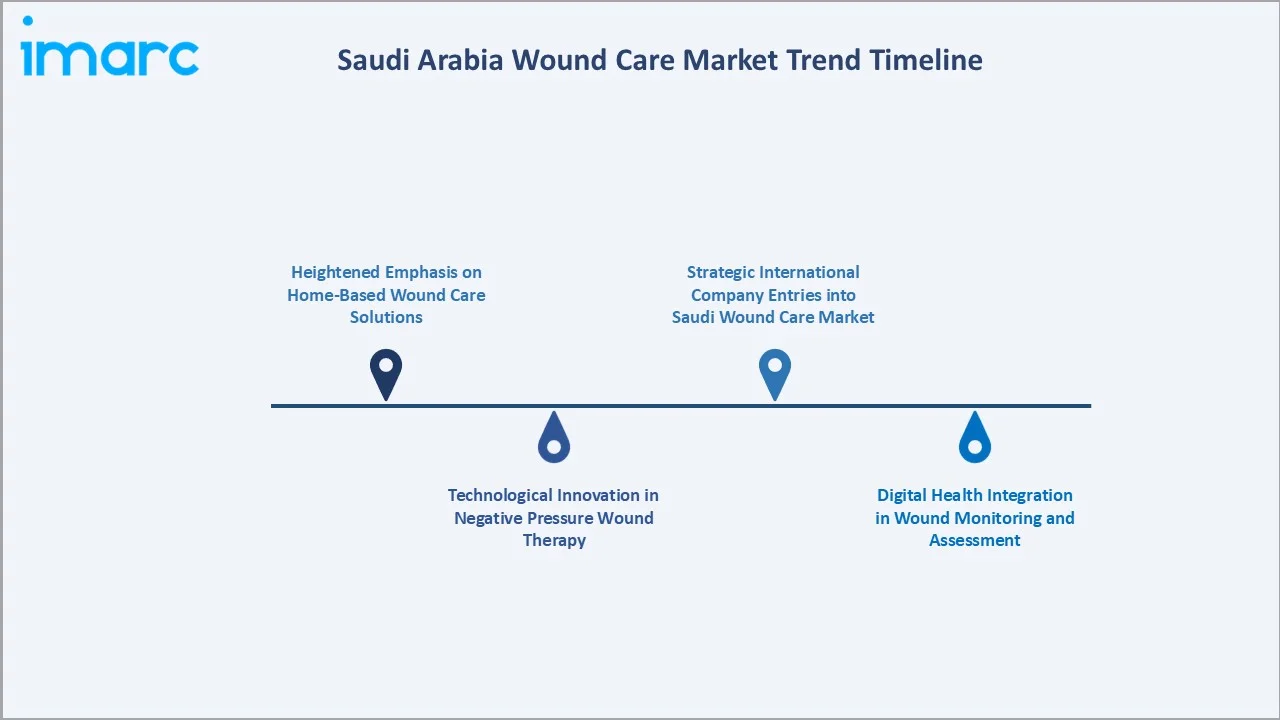
1. Heightened Emphasis on Home-Based Wound Care Solutions
A significant inclination toward home-based wound care solutions is emerging, driven by the accelerating elderly population and preference for convenient healthcare. Home care products including self-application dressings, antiseptics, and wound monitoring devices enable patients to handle wounds with minimal clinical intervention, aligning with Vision 2030's patient-centric healthcare objectives.
2. Technological Innovation in Negative Pressure Wound Therapy
NPWT systems, antimicrobial dressings, and biological skin substitutes are gaining rapid adoption across Saudi hospitals and specialist wound centers. These advanced technologies enhance healing rates, improve patient comfort, and reduce infection risks, driving healthcare facility procurement upgrades and attracting heavy investments from international wound care manufacturers.
3. Digital Health Integration in Wound Monitoring and Assessment
Digital wound assessment and monitoring devices are emerging as a key technology trend, enabling remote wound tracking, telehealth-supported wound management, and AI-driven healing outcome predictions. These innovations align with Saudi Arabia's broader digital health transformation agenda under Vision 2030 and are being rapidly adopted across major hospital networks.
4. Strategic International Company Entries into Saudi Wound Care Market
International wound care companies are increasingly expanding their presence in Saudi Arabia, supported by rising healthcare expenditure, a growing chronic disease burden, and increasing demand for advanced wound management products. Market entry strategies, partnerships, acquisitions, and regional expansion by global players are strengthening competition and broadening the availability of innovative wound care solutions. This trend is also encouraging greater product differentiation and investment in advanced wound management technologies.
Industry Value Chain Analysis
The Saudi Arabia wound care value chain integrates raw material procurement, product manufacturing, regulatory compliance, distribution networks, and end-user healthcare settings including hospitals, long-term care facilities, and home care environments.
|
Stage |
Key Participants |
|
Raw Material Procurement |
Polymer, foam, antimicrobial agent, and hydrogel suppliers providing inputs for wound care dressing and device manufacturing |
|
Product Manufacturing |
Manufacturers producing advanced, surgical, and traditional wound care products |
|
Regulatory & Certification |
Saudi Food and Drug Authority (SFDA) regulating wound care product approvals; ISO certification bodies maintaining quality standards |
|
Distribution & Supply |
Medical distributors, hospital supply chains, and pharmacy networks distributing wound care products across Saudi Arabia's four regions |
|
End-User Healthcare |
Hospitals, clinics, long-term care facilities, and home care settings deploying wound care products for patient treatment and recovery |
The distribution and supply tier, anchored by established medical distribution networks and hospital group procurement systems, represents a critical access enabler. Home care distribution is emerging as a high-growth channel driven by Vision 2030 patient-centric care initiatives and expanding telemedicine adoption.
Technology Landscape in the Saudi Arabia Wound Care Industry
Advanced Wound Dressing Technology
Advanced wound dressings including foam, hydrocolloid, hydrogel, alginate, and collagen formulations represent the most widely adopted wound care technology in Saudi Arabia. These products provide superior moisture management, infection control, and healing environments compared to traditional alternatives, driving their adoption across hospitals and specialist wound care units.
Negative Pressure Wound Therapy (NPWT) Systems
NPWT systems are gaining significant traction across Saudi tertiary hospitals for treating complex chronic wounds including diabetic foot ulcers and pressure injuries. These systems apply controlled negative pressure to wound beds, accelerating healing, reducing wound volume, and minimizing infection risk, making them a preferred technology for complex wound management in resource-rich healthcare settings.
Biological Skin Substitutes and Active Wound Products
Biological skin substitutes and topical active wound agents represent the frontier of wound care technology adoption in Saudi Arabia. Oxybarica's September 2024 Middle East expansion announcement highlighted growing demand for hyperbaric oxygen therapy as a complementary wound care treatment, reflecting broader institutional interest in technology-driven wound healing solutions.
Market Segmentation Analysis
The report covers the following segments:
|
Segment Category |
Leading Segment |
Market Share |
Year |
|
Product Type |
🔒 |
🔒 |
2025 |
|
Wound Type |
Chronic Wounds |
58.7% |
2025 |
|
End User |
Hospitals & Clinics |
57.8% |
2025 |
|
Region |
Northern & Central Region |
36.8% |
2025 |

By Wound Type
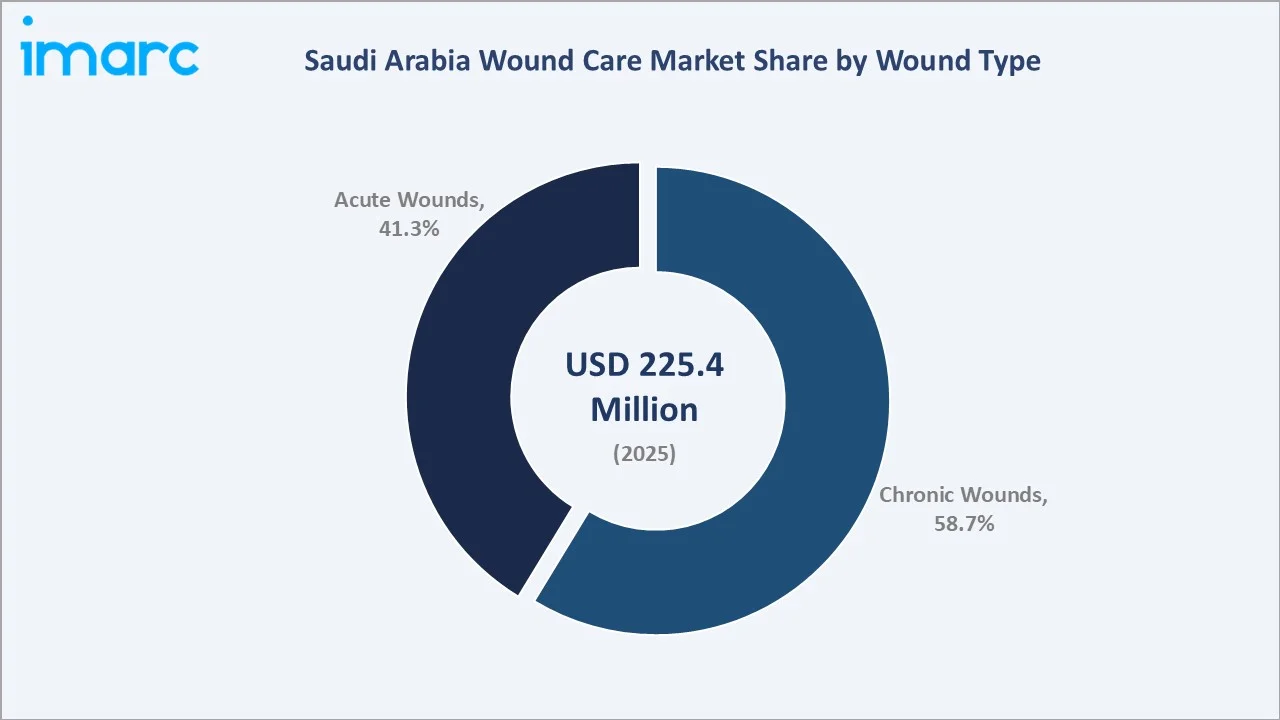
Chronic wounds lead at 58.7% in 2025, driven by Saudi Arabia's high diabetes and obesity prevalence generating diabetic ulcers, pressure ulcers, and venous leg ulcers as the primary wound care burden. The 17.7% adult diabetes prevalence directly underpins this segment's dominant position through persistent treatment demand.
To access detailed market analysis, Request Sample
Acute wounds at 41.3% encompass surgical traumatic wounds and burns, driven by Saudi Arabia's expanding surgical activity volumes and trauma care across its hospital network. Surgical wound care demand is increasing alongside hospital capacity expansion under Vision 2030's healthcare infrastructure investment program.
By End User
Hospitals and clinics lead at 57.8% through centralized procurement, specialist wound care units, and the highest concentration of complex wound patient cases. Saudi Arabia's government hospital network and expanding private hospital sector anchor institutional wound care product demand.
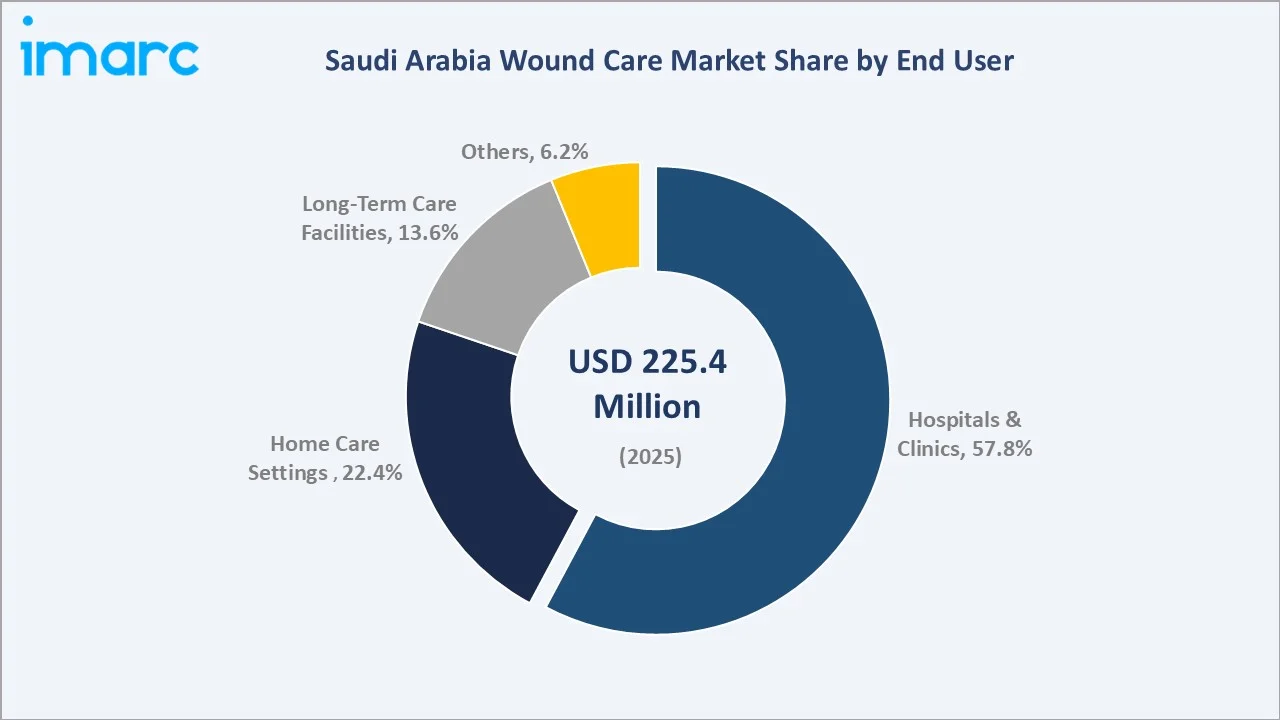
Home care settings at 22.4% represent the fastest-growing end-user segment, supported by Vision 2030 patient-centric care goals, telemedicine expansion, and growing elderly population requiring wound management outside clinical facilities. Long-term care facilities at 13.6% are expanding as chronic wound care demands exceed acute hospital capacity.
Regional Market Insights
|
Region |
Share (2025) |
Key Wound Care Market Drivers & Characteristics |
|
Northern & Central Region |
36.8% |
Anchored by Riyadh's concentration of tertiary hospitals, specialist wound centers, and Vision 2030 healthcare investments; highest procurement density in the Kingdom. |
|
Western Region |
30.5% |
Driven by Jeddah's large population base, expanding private hospital sector, and Makkah's healthcare infrastructure serving the Hajj pilgrim population with wound care needs. |
|
Eastern Region |
21.4% |
Dominated by industrial workforce wound care demands, petrochemical sector occupational health programs, and Dammam's expanding medical infrastructure serving oil industry employees. |
|
Southern Region |
11.3% |
Emerging market driven by healthcare infrastructure development, growing provincial hospital capacity, and increasing chronic wound prevalence among the region's aging population. |
The Northern and Central Region at 36.8% leads through Riyadh's concentration of major teaching hospitals, specialist wound care facilities, and government healthcare procurement centers. The Western Region at 30.5% reflects Jeddah's large private hospital sector and substantial wound care demand generated by the Hajj and Umrah pilgrim healthcare system.
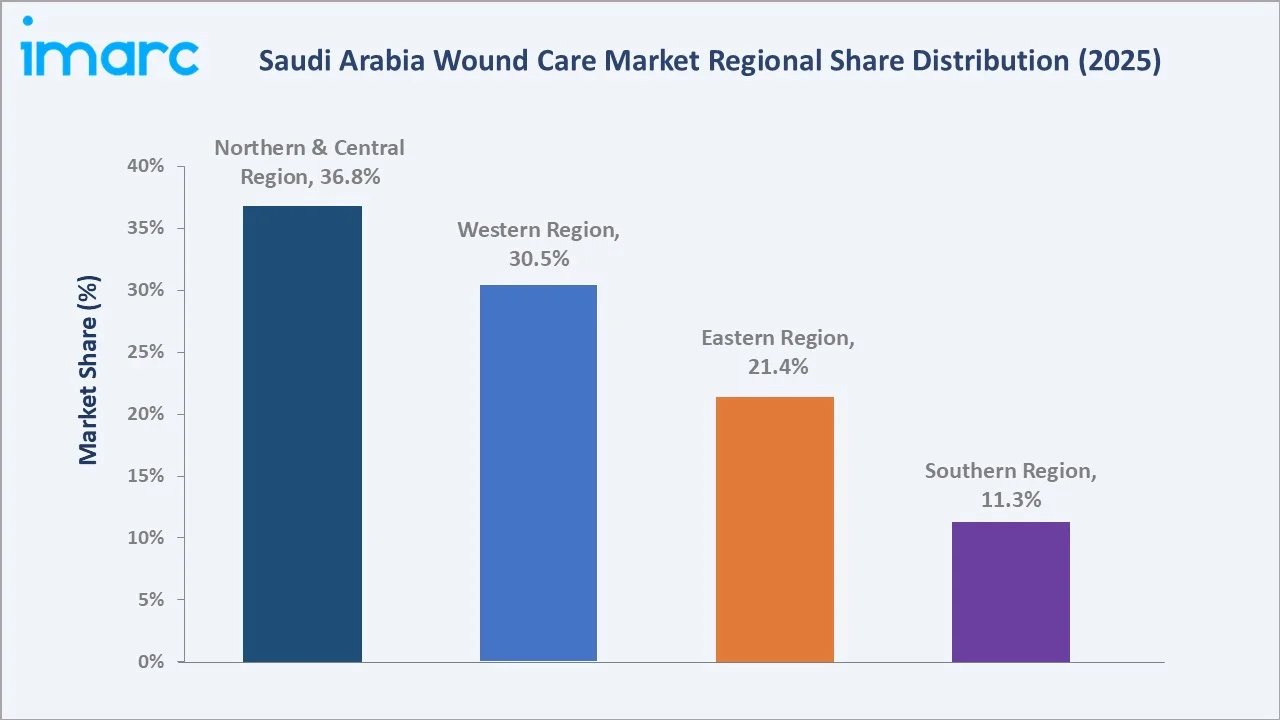
The Eastern Region at 21.4% is driven by industrial workforce wound care requirements within the petrochemical and oil industry sector. The Southern Region at 11.3% represents an emerging growth corridor with expanding provincial hospital infrastructure and increasing chronic wound care demand.
Competitive Landscape
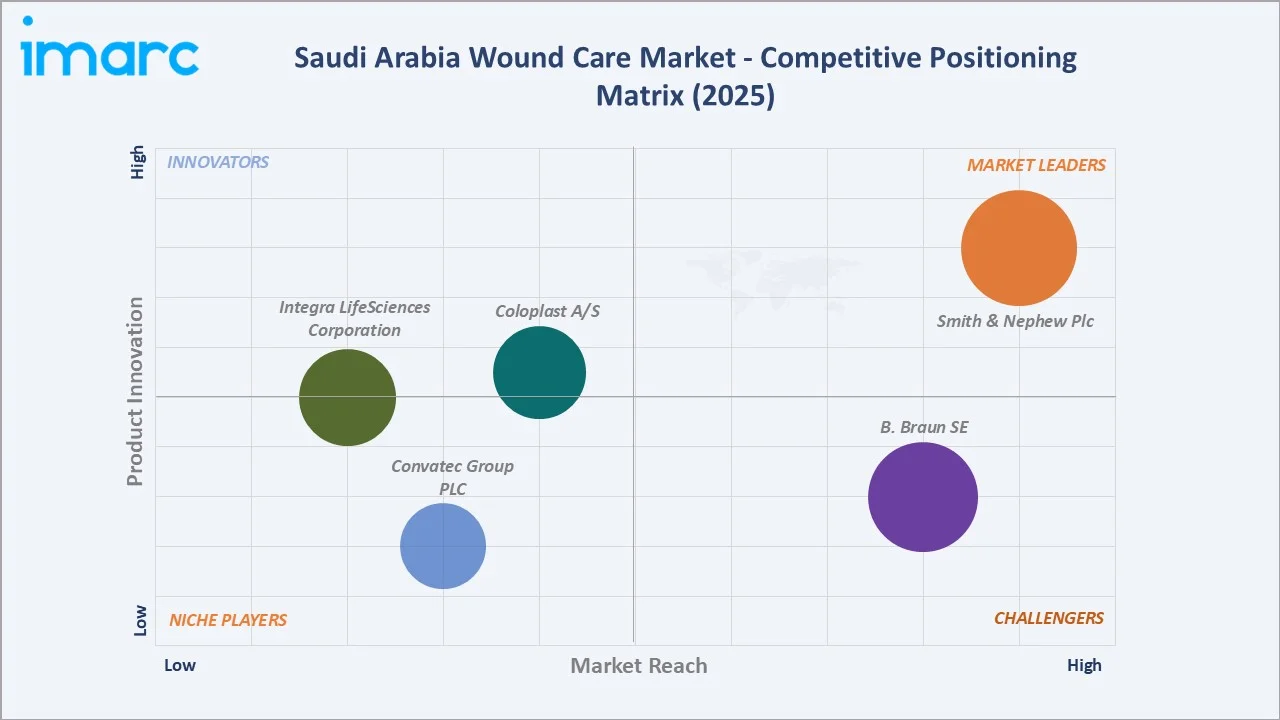
The Saudi Arabia wound care market is moderately concentrated, with global leaders holding significant market positions through established distributor relationships, SFDA-registered product portfolios, and strong institutional procurement networks.
|
Company Name |
Key Products |
Market Position |
Core Strength |
|
Smith & Nephew Plc |
ALLEVYN, ACTICOAT, PICO NPWT |
Market Leader |
Leading advanced wound care and NPWT technology provider with established Saudi healthcare partnerships. |
|
B. Braun SE |
Sterile Dressings, Gauze and Cellulose Products, Compression Bandages, Non-Sterile Dressings, Fixation Bandages, Adhesive Fixation Dressings and Tapes |
Strong Challenger |
Comprehensive wound care and surgical product portfolio with broad distribution across Saudi healthcare facilities. |
|
Coloplast A/S |
Biatain adhesive, Biatain Silicone Ag, Biatain silicone heel, Biatain Non-Adhesive, Biatain Ag non-adhesive |
Established Player |
Chronic wound and ostomy care specialist targeting diabetic ulcer and pressure injury management in Saudi Arabia. |
|
Integra LifeSciences Corporation |
Integra Dermal Regeneration Template |
Established Player |
Advanced biological skin substitute provider serving Saudi tertiary hospitals for complex wound reconstruction. |
|
Convatec Group PLC |
AQUACEL, Versiva XC, Avelle NPWT |
Niche Player |
NPWT and advanced dressing provider expanding Saudi market presence through hospital system partnerships. |
Key players include Smith & Nephew Plc, B. Braun SE, Coloplast A/S, Integra LifeSciences Corporation, Convatec Group PLC, and others.
Key Company Profiles
Smith & Nephew Plc
Smith & Nephew Plc is a UK-based medical technology company with a significant presence in the Saudi Arabia wound care market through its advanced foam dressing, antimicrobial dressing, negative pressure wound therapy systems, and other products deployed across major Saudi healthcare facilities.
- Key Products: ALLEVYN foam dressings, ACTICOAT antimicrobial wound dressings, and PICO single-use negative pressure wound therapy systems for complex chronic wound management.
- Strategic Focus: Expanding NPWT and advanced wound care technology adoption across Saudi tertiary hospitals, targeting diabetic foot ulcer and pressure injury management through evidence-based clinical partnerships and specialist wound care unit engagement programs.
B. Braun SE
B. Braun SE is a Germany-based medical and pharmaceutical device company with a broad presence in the Saudi Arabia wound care market through its Askina wound care product line, serving hospitals, clinics, and long-term care facilities across the Kingdom with a comprehensive range of sterile and non-sterile wound management solutions.
- Key Products: Sterile Dressings, Gauze and Cellulose Products, Compression Bandages, Non-Sterile Dressings, Fixation Bandages, Adhesive Fixation Dressings and Tapes, and other products.
- Strategic Focus: Expanding comprehensive wound care product portfolio penetration across Saudi Arabia's hospital and clinic procurement systems, targeting institutional formulary inclusion of Askina advanced dressings and compression products through clinical evidence support, healthcare professional engagement programs, and strengthened distributor partnerships aligned with Vision 2030 healthcare quality objectives.
Market Concentration Analysis
The Saudi Arabia wound care market is moderately concentrated at the advanced wound care product level, with the key players holding significant combined market positions through established SFDA registrations, institutional procurement relationships, and broad distributor networks.
Market concentration is expected to evolve as international companies expand their Saudi presence, introducing new products and therapies that broaden competitive dynamics and create increased choice for Saudi healthcare procurement decision-makers.
Investment & Growth Opportunities
Highest Growth Segments
Home care wound management (~4.9% CAGR), NPWT systems, advanced antimicrobial dressings, and biological skin substitutes represent the highest growth commercial opportunities through 2034 in Saudi Arabia's expanding wound care market.
Emerging Investment Opportunities
Digital wound monitoring platforms and telehealth-integrated wound care solutions represent the Saudi wound care market's highest-value emerging investment opportunity, addressing both the chronic wound clinical burden and Vision 2030's digital healthcare transformation agenda. Biological skin substitutes targeting diabetic foot ulcer reconstruction represent a high-value niche with significant clinical and commercial scaling potential.
Investment Themes
- Home care wound product portfolio development aligned with Vision 2030 patient-centric care objectives: reducing hospital readmission rates for chronic wound patients through scalable home-based wound management solutions suited for self-application across Saudi Arabia's growing elderly population.
- Advanced wound care technology partnerships with Saudi hospital groups and specialty centers: driving formulary inclusion of NPWT systems, antimicrobial dressings, and biological skin substitutes across the Kingdom's expanding tertiary hospital network through 2034.
Future Market Outlook (2026-2034)
The Saudi Arabia wound care market is projected to grow from USD 225.4 Million in 2025 to USD 237.4 Million in 2026 and further to USD 329.4 Million by 2034, delivering a 4.18% CAGR over the forecast period, anchored by sustained chronic wound demand, healthcare infrastructure expansion, and increasing adoption of advanced wound management technologies.
Three structural forces define market growth through 2034: Saudi Arabia's high and rising diabetes prevalence creating persistent chronic wound demand, Vision 2030 healthcare investments expanding wound care service capacity, and growing home care adoption reflecting demographic change and patient-centric care policy evolution.
Research Methodology
Primary Research
Primary research comprised structured interviews with 40+ industry stakeholders (2025), including wound care clinicians, hospital procurement officers, medical distributors, SFDA regulatory specialists, and home care service providers across Saudi Arabia's key healthcare markets.
Secondary Research
Secondary research encompassed SFDA regulatory publications, Saudi Ministry of Health reports, Vision 2030 healthcare program documentation, peer-reviewed wound care clinical literature, company annual reports, and industry association data from the World Union of Wound Healing Societies and regional healthcare bodies.
Forecasting Models
Market revenue forecasts developed using a bottom-up model incorporating: (i) wound type prevalence estimates by patient population, (ii) product category average selling price trends, (iii) end-user procurement volume projections by facility type, and (iv) regulatory market access timeline assessments for new wound care products entering Saudi Arabia.
Saudi Arabia Wound Care Market Report Coverage:
| Report Features | Details |
|---|---|
| Base Year of the Analysis | 2025 |
| Historical Period | 2020-2025 |
| Forecast Period | 2026-2034 |
| Units | Million USD |
| Scope of the Report | Exploration of Historical Trends and Market Outlook, Industry Catalysts and Challenges, Segment-Wise Historical and Future Market Assessment:
|
| Product Types Covered |
|
| Wound Types Covered |
|
| End Users Covered | Hospitals & Clinics, Long-Term Care Facilities, Home Care Setting, Others |
| Regions Covered | Northern and Central Region, Western Region, Eastern Region, Southern Region |
| Companies Covered | Smith & Nephew Plc, B. Braun SE, Coloplast A/S, Integra LifeSciences Corporation, Convatec Group PLC, etc. |
| Customization Scope | 10% Free Customization |
| Post-Sale Analyst Support | 10-12 Weeks |
| Delivery Format | PDF and Excel through Email (We can also provide the editable version of the report in PPT/Word format on special request) |
Key Benefits for Stakeholders:
- IMARC’s industry report offers a comprehensive quantitative analysis of various market segments, historical and current market trends, market forecasts, and dynamics of the Saudi Arabia wound care market from 2020-2034.
- The research report provides the latest information on the market drivers, challenges, and opportunities in the Saudi Arabia wound care market.
- Porter's five forces analysis assist stakeholders in assessing the impact of new entrants, competitive rivalry, supplier power, buyer power, and the threat of substitution. It helps stakeholders to analyze the level of competition within the Saudi Arabia wound care industry and its attractiveness.
- Competitive landscape allows stakeholders to understand their competitive environment and provides an insight into the current positions of key players in the market.
Frequently Asked Questions About the Saudi Arabia Wound Care Market Report
The Saudi Arabia wound care market size is estimated at USD 237.4 Million in 2026, driven by chronic wounds at 58.7%, hospitals and clinics at 57.8%, and the Northern and Central Region at 36.8%. High diabetes prevalence and Vision 2030 healthcare investments underpin sustained market demand.
The market grows at a CAGR of 4.18% during 2026-2034, reaching USD 329.4 Million by 2034. This growth reflects rising chronic wound prevalence, expanding healthcare infrastructure, and increasing adoption of advanced wound management technologies across the Kingdom.
Chronic wounds lead at 58.7%, capturing the largest patient burden driven by Saudi Arabia's 17.7% adult diabetes prevalence rate. Diabetic ulcers, pressure ulcers, and venous leg ulcers generate sustained demand for advanced dressings and specialized wound care products.
Hospitals and clinics lead at 57.8% through centralized procurement, specialist wound care units, and the highest concentration of complex wound cases. Home care settings at 22.4% represent the fastest-growing end-user segment driven by Vision 2030 patient-centric care initiatives.
The Northern and Central Region leads at 36.8% through Riyadh's concentration of tertiary hospitals, specialist wound care centers, and Vision 2030 healthcare investments. The Western Region at 30.5% and Eastern Region at 21.4% follow as key commercial healthcare hubs.
Leading companies include Smith & Nephew Plc, B. Braun SE, Coloplast A/S, Integra LifeSciences Corporation, Convatec Group PLC, and others.
The Saudi Arabia wound care market is projected to reach approximately USD 276.6 Million by 2030, with advanced wound dressings, NPWT systems, and home care wound products emerging as primary growth drivers through the midpoint of the 2026-2034 forecast period.
Three priority investment opportunities: home care wound product development aligned with Vision 2030 patient-centric care, advanced wound care technology partnerships with Saudi hospital groups, and digital wound monitoring platform development integrating telehealth and AI-driven healing outcome assessment.
Need more help?
- Speak to our experienced analysts for insights on the current market scenarios.
- Include additional segments and countries to customize the report as per your requirement.
- Gain an unparalleled competitive advantage in your domain by understanding how to utilize the report and positively impacting your operations and revenue.
- For further assistance, please connect with our analysts.
 Request Customization
 Speak to an Analyst
 Request Brochure
 Inquire Before Buying
Benefits of Customization
- Personalize this research
- Triangulate with your data
- Get data as per your format and definition
- Gain a deeper dive into a specific application, geography, customer, or competitor
- Any level of personalization
Get in Touch With Us
UNITED STATES
Phone: +1-201-971-6302
INDIA
Phone: +91-120-433-0800
UNITED KINGDOM
Phone: +44-753-714-6104
Email: sales@imarcgroup.com
Client Testimonials




.webp)




.webp)













Related Reports

Choose your plan
*Please note that the prices mentioned below are starting prices for each bundle type. Kindly contact our team for further details.*
Single User License
- 1 User License, Access on 2 Devices
- PDF Report + Excel Dataset (Password Protected)
- Lifetime Access
- No Printing Rights
- 10% Free Report Customization
- 10–12 Weeks of Analyst Support
Five User License
- Access for 5 Users, 2 Devices per User
- PDF Report + Excel Dataset (Password Protected)
- Lifetime Access
- Dedicated Account Manager
- 12–14 Weeks of Analyst Support
- No Printing Rights
- 15% Free Report Customization
- 25% Discount on Your Next Purchase
Corporate User License
- Unlimited User Access (Within Your Organization)
- PDF Report + Excel Dataset
- Lifetime Access
- Dedicated Account Manager
- 14–20 Weeks of Analyst Support
- No Printing Rights
- 20% Free Report Customization
- 30% Discount on Your Next Purchase
Essential Insights
What's included:
3 reports
- Lifetime Access
- PDF Reports
- Excel Datasets
- 2 Weeks of Free Analyst Support
- 2 User Licenses
- Access on 2 Devices
- Printing Rights
- Complimentary PowerPoint (PPT) Version
- Complimentary License Upgrade
Professional Access
What's included:
5 reports
- Lifetime Access
- PDF Reports
- Excel Datasets
- 8 Weeks of Free Analyst Support
- 2 User Licenses
- Access on 2 Devices
- Printing Rights
- Complimentary PowerPoint (PPT) Version
- Complimentary License Upgrade
Business Advantage
What's included:
8 reports
- Lifetime Access
- PDF Reports
- Excel Datasets
- 14 Weeks of Free Analyst Support
- 2 User Licenses
- Access on 2 Devices
- Printing Rights
- Complimentary PowerPoint (PPT) Version
- Complimentary License Upgrade
Enterprise Intelligence
What's included:
10 reports
- Lifetime Access
- PDF Reports
- Excel Datasets
- 20 Weeks of Free Analyst Support
- 2 User Licenses
- Access on 2 Devices
- Printing Rights
- Complimentary PowerPoint (PPT) Version
- Complimentary License Upgrade