
United States Caustic Potash Market Size, Share, Trends and Forecast by Form, Grade, End Use, and Region, 2026-2034
United States Caustic Potash Market Size, Share, Trends & Forecast (2026-2034)
The United States caustic potash market reached 664.8 Thousand Tons in 2025 and is projected to reach 806.4 Thousand Tons by 2034, growing at a CAGR of 2.06% during 2026-2034. The market is driven by strong demand from fertilizers, potassium-based chemicals, soaps and detergents, batteries, and industrial processing applications. In 2024, the United States exported USD 95.95 million worth of potassium hydroxide, also known as caustic potash. Key export destinations included Canada, Mexico, Belgium, Japan, and Singapore, with Canada and Mexico accounting for major shares of export value and volume. This export activity supports the U.S. caustic potash market by reflecting strong international demand and the country’s reliable supply position. Solid leads form at 58.6%. Industrial grade leads at 73.8%. Midwest leads regionally at 31.8%.
Market Snapshot
|
Metric |
Value |
|
Market Volume (2025) |
664.8 Thousand Tons |
|
Forecast Market Volume (2034) |
806.4 Thousand Tons |
|
CAGR (2026-2034) |
2.06% |
|
Base Year |
2025 |
|
Historical Period |
2020-2025 |
|
Forecast Period |
2026-2034 |
|
Dominant Form |
Solid (58.6%, 2025) |
|
Dominant Grade |
Industrial (73.8%, 2025) |
|
Leading Region |
Midwest (31.8%, 2025) |
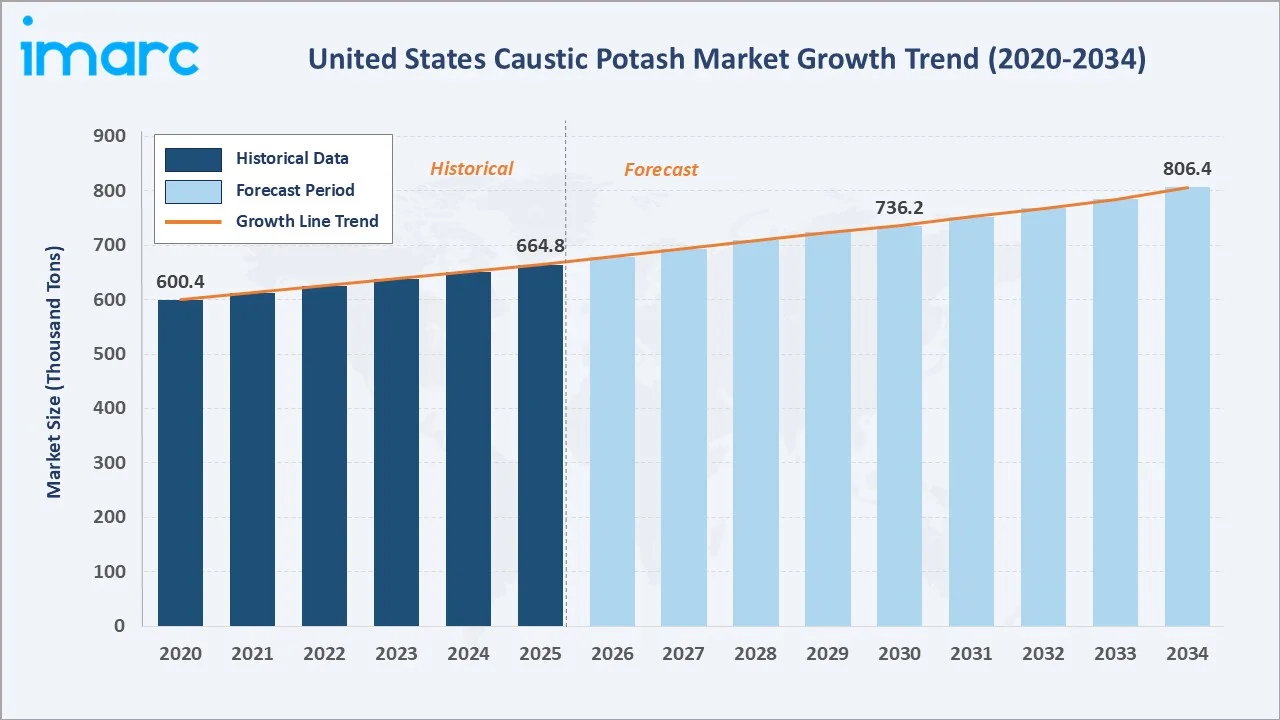
The United States caustic potash (Potassium Hydroxide) market grew from 600.4 Thousand Tons in 2020 to 664.8 Thousand Tons in 2025, supported by demand from fertilizers, potassium chemicals, soaps, detergents, and industrial processing. The market is expected to reach 736.2 Thousand Tons by 2030, indicating steady expansion across chemical and agricultural applications. By 2034, consumption is forecast to rise to 806.4 Thousand Tons, reflecting continued use in specialty chemicals, batteries, pharmaceuticals, and manufacturing. This growth highlights KOH’s importance as a versatile industrial alkali in the U.S. economy.
To get more information on this market, Request Sample
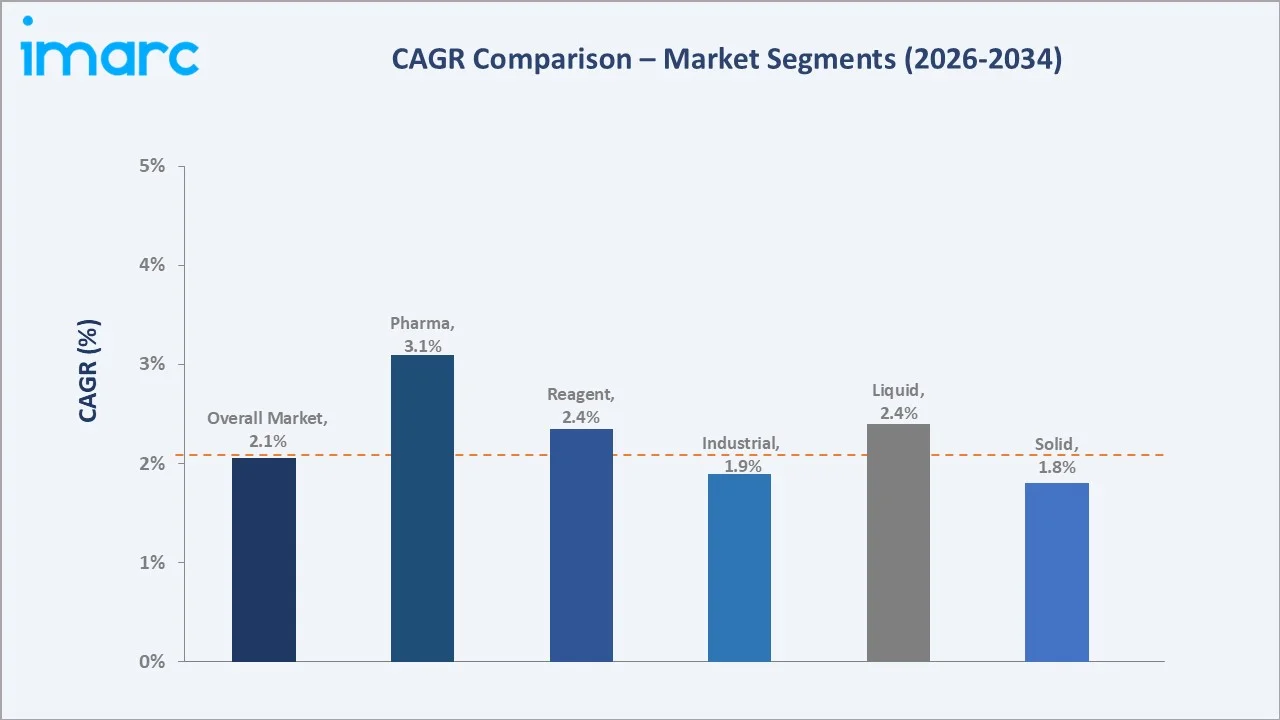
Pharma grade grows fastest at ~3.1% CAGR through USP-grade KOH pharmaceutical API and personal care expanding. Liquid grows at ~2.4% CAGR through green hydrogen alkaline electrolyzer KOH electrolyte, liquid KOH biodiesel catalyst, and liquid soap/detergent.
Executive Summary
The United States caustic potash market is expanding steadily, rising from 600.4 Thousand Tons in 2020 to 664.8 Thousand Tons in 2025. It is projected to reach 806.4 Thousand Tons by 2034, supported by demand from fertilizers, potassium chemicals, soaps, detergents, batteries, and industrial processing. The 736.2 Thousand Tons forecast for 2030 reflects stable mid-term growth across agricultural and specialty chemical applications. Export demand further strengthens market momentum and supports domestic producer utilization. KOH’s role as a versatile industrial alkali will continue to drive long-term consumption. Solid at 58.6% leads through KOH flake and pellet. Industrial grade at 73.8% leads through fertilizer, soap, and chemical manufacturing. Midwest leads at 31.8% through the chlor-alkali plant cluster.
Key Market Insights
|
Insight |
Data |
|
Dominant Form |
Solid - 58.6% share (2025) |
|
Dominant Grade |
Industrial - 73.8% market share (2025) |
|
Leading Region |
Midwest - 31.8% share (2025) |
|
Market Opportunity |
Green hydrogen PEM/AEM electrolyzer liquid KOH; USP pharma-grade KOH API; soybean biodiesel KOH catalyst; potassium carbonate K2CO3 derivative; liquid KOH soft soap and personal care |
Key Analytical Observations Supporting the Above Data:
- Solid Caustic Potash at 58.6%: Solid caustic potash is dominant due to its higher concentration, longer shelf life, and ease of bulk storage and transportation. It is widely preferred in industrial processing, chemical manufacturing, and export applications where stable handling and efficient logistics are important.
- Industrial Grade at 73.8%: The industrial grade dominates due to its extensive use in chemical manufacturing, fertilizers, soaps and detergents, batteries, and water treatment applications. Its broad industrial applicability and large-volume consumption make it the leading grade across end-use industries.
- Midwest Region at 31.8%: The Midwest region dominates due to its strong concentration of chemical manufacturing facilities, agricultural activities, and industrial processing industries. The region also benefits from abundant raw material availability, established transportation networks, and significant demand from fertilizer and specialty chemical producers.
United States Caustic Potash Market Overview
The United States caustic potash market is produced domestically through the chlor-alkali process, where potassium chloride (KCl) is electrolyzed to produce potassium hydroxide (KOH), along with chlorine and hydrogen as co-products. Production is concentrated near chemical manufacturing hubs with access to reliable electricity, raw materials, and transportation infrastructure. Domestic manufacturers supply a wide range of end-use industries, including fertilizers, specialty chemicals, soaps and detergents, batteries, pharmaceuticals, and water treatment. Strong integration with the U.S. chemical sector supports stable production and supply security. Macroeconomic factors include growth in industrial production, agricultural activity, and chemical manufacturing output.
Market Dynamics
To evaluate market opportunities, Request Sample
Market Drivers
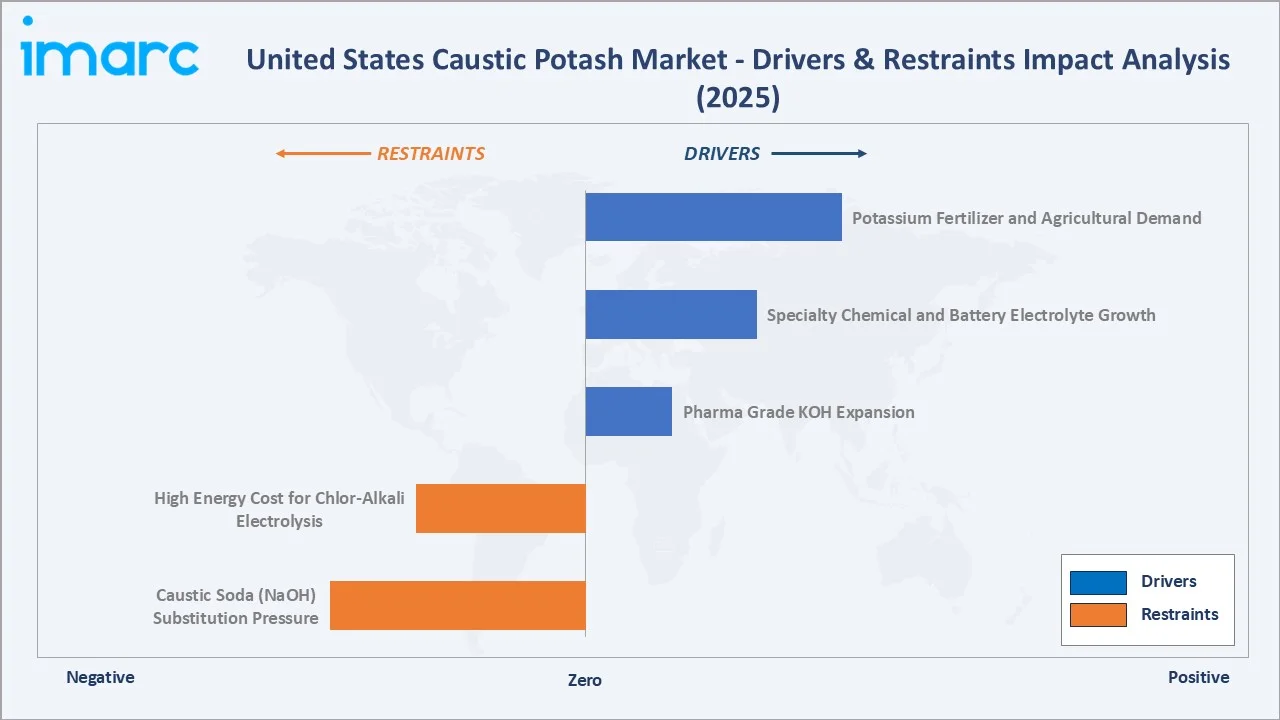
- Potassium Fertilizer and Agricultural Demand: Potassium hydroxide is used in the production of potassium-based fertilizers and specialty agricultural chemicals. Farmers for Soil Health is a farmer-led program designed to improve soil quality by encouraging wider adoption of cover crops. The initiative, supported by the Soy Checkoff, Pork Checkoff, National Corn Growers Association, state commodity groups, and conservation organizations, aims to expand cover crop acreage to 30 million acres by 2030. As farmers adopt practices that enhance soil structure and long-term yields, demand for potassium-based fertilizers and related inputs can rise, thereby supporting caustic potash consumption in fertilizer and agricultural chemical production.
- Specialty Chemical and Battery Electrolyte Growth: Specialty chemical and battery electrolyte growth is increasing demand for potassium hydroxide as a key raw material in chemical synthesis, catalysts, and potassium-based compounds. KOH is also used in alkaline battery production and emerging energy storage technologies, where high-purity electrolytes are required. Expanding investments in advanced manufacturing, electronics, and battery supply chains are supporting higher consumption of industrial-grade caustic potash. As demand for specialty chemicals and energy-storage solutions rises, KOH usage continues to grow across high-value applications.
- Pharma Grade KOH Expansion: Pharma-grade KOH expansion is driving the market as pharmaceutical and healthcare manufacturers require high-purity potassium hydroxide for regulated production processes. It is used in pH adjustment, synthesis of active pharmaceutical ingredients, excipient processing, and laboratory applications. Rising demand for specialty drugs, personal care products, and high-quality chemical intermediates is increasing the need for purified KOH grades. This supports higher-value market growth beyond bulk industrial applications.
Market Restraints
- High Energy Cost for Chlor-Alkali Electrolysis: Potassium hydroxide production is highly electricity-intensive. Rising power prices increase manufacturing costs and can reduce profit margins for domestic producers. Energy cost volatility also affects pricing competitiveness against imported products and alternative chemical inputs. As electricity represents a significant share of operating expenses, sustained high energy costs can constrain production expansion and investment in new capacity.
- Caustic Soda (NaOH) Substitution Pressure: Sodium hydroxide can perform similar functions in many chemical manufacturing, cleaning, and industrial processing applications. Since caustic soda is generally produced in much larger volumes and is often available at a lower cost, some end users choose it as a substitute where potassium-specific properties are not required. This limits demand growth for potassium hydroxide in price-sensitive industries. As a result, KOH producers face competitive pressure on both pricing and market share.
Market Opportunities
- Green Hydrogen Alkaline Water Electrolyzer KOH: In January 2025, Kit Carson Electric Cooperative, serving Taos, Colfax, and Rio Arriba counties, secured a USD 231 million USDA grant to advance green hydrogen projects. The initiative is expected to generate 104 MW of energy, enough to power nearly 25,000 homes, strengthening KCEC’s renewable energy portfolio, which already includes 42 MW of distributed solar capacity and 16 MW of battery storage. The rapid expansion of green hydrogen projects in the United States is creating a significant opportunity, as potassium hydroxide (KOH) is the preferred electrolyte in alkaline water electrolyzers. Growing investments in hydrogen hubs, renewable ammonia, and industrial decarbonization are driving installations of large-scale alkaline electrolysis systems.
- Biodiesel and Renewable Fuel Processing: In 2022, the United States produced nearly 3.2 billion gallons of biodiesel and renewable diesel. Industry groups such as Clean Fuels Alliance America expect output to reach around 5 billion gallons by 2030. The expansion of biodiesel and renewable fuel production in the United States is creating new demand opportunities for caustic potash (KOH). Potassium hydroxide is widely used as a catalyst in the transesterification process that converts vegetable oils, animal fats, and waste oils into biodiesel.
Market Challenges
- Hazardous Handling and Safety Compliance: Potassium hydroxide (KOH) is a highly corrosive chemical that can cause severe burns and equipment damage if improperly handled. Manufacturers, distributors, and end users must comply with stringent OSHA, EPA, and transportation regulations governing storage, packaging, labeling, and worker protection. These requirements increase operating costs through investments in specialized containers, safety systems, employee training, and regulatory documentation. Additionally, stricter workplace safety and environmental compliance standards can lengthen project timelines and create barriers for smaller market participants.
- Environmental and Decarbonization Pressure: Potassium hydroxide production relies on energy-intensive chlor-alkali electrolysis processes. Rising regulatory scrutiny on greenhouse gas emissions and corporate sustainability targets are pushing producers to reduce their carbon footprint and improve energy efficiency. Transitioning to renewable electricity, upgrading membrane-cell technologies, and implementing emissions-reduction measures require significant capital investment, increasing production costs. Additionally, customers increasingly favor low-carbon chemical supply chains, placing further pressure on manufacturers to demonstrate sustainable production practices while maintaining competitiveness.
Emerging Market Trends
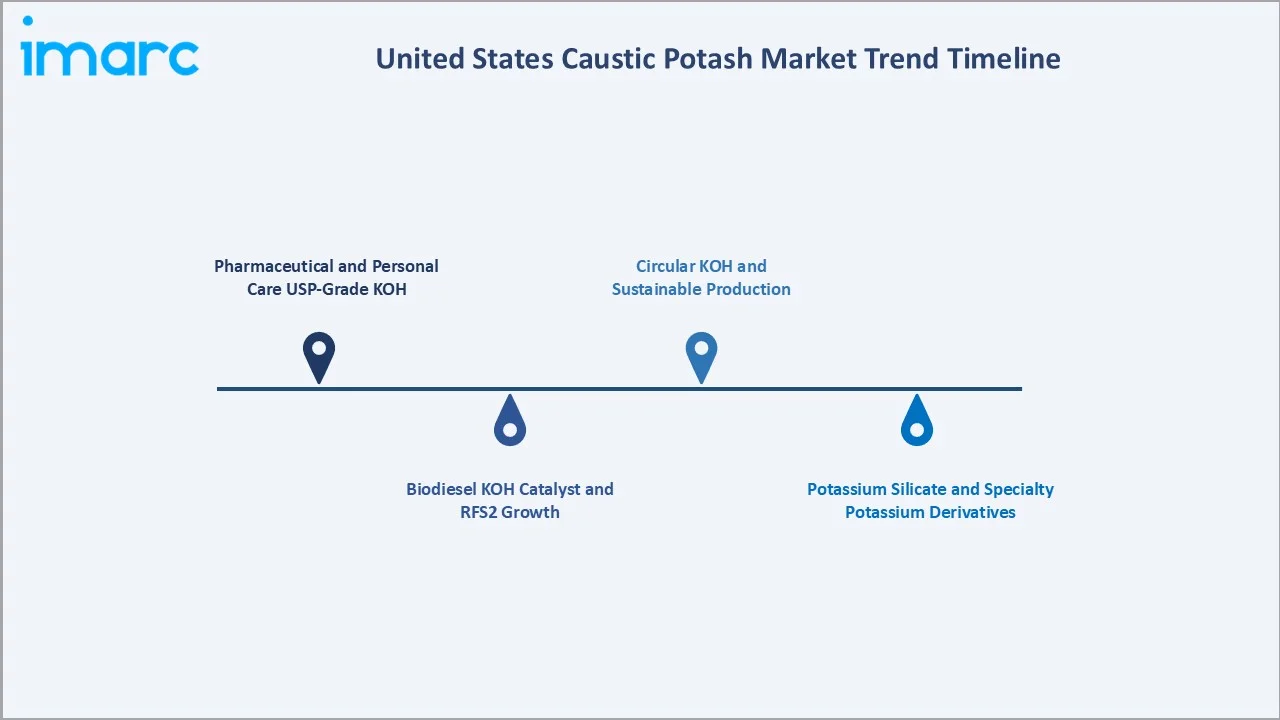
1. Pharmaceutical and Personal Care USP-Grade KOH
Pharmaceutical and personal care USP-grade KOH is emerging as demand rises for high-purity, regulated ingredients. USP-grade potassium hydroxide is used as a pH adjuster, neutralizing agent, and processing aid in pharmaceutical formulations, cosmetics, soaps, creams, and hair-care products. Growth in personal care, dermatology, and specialty healthcare products is encouraging suppliers to offer higher-quality KOH grades with stronger purity, traceability, and compliance documentation. This trend supports premium pricing and creates opportunities beyond conventional industrial-grade caustic potash.
2. Biodiesel KOH Catalyst and RFS2 Growth
Expansion of biodiesel and renewable diesel capacity, supported by the renewable fuel standard and low-carbon fuel policies, is increasing demand for catalyst-grade KOH. Producers use KOH in the transesterification process to improve conversion efficiency and fuel quality. As renewable fuel blending targets continue to rise, biodiesel manufacturers are expected to increase KOH consumption, creating sustained growth opportunities for caustic potash suppliers.
3. Potassium Silicate and Specialty Potassium Derivatives
Potassium hydroxide serves as a key raw material in the production of potassium silicates, potassium carbonates, potassium phosphates, and other specialty derivatives used in phrama, agriculture, coatings, detergents, refractory materials, and industrial formulations. Manufacturers are increasingly shifting toward high-performance and specialty chemicals that offer superior functionality and environmental benefits. In March 2026, Glenmark Pharmaceuticals Inc. USA announced the planned launch of Potassium Phosphates Injection USP in multiple strengths, including 15 mmol P / 22 mEq K per 5 mL and 45 mmol P / 66 mEq K per 15 mL single-dose vials, as well as 150 mmol P / 220 mEq K per 50 mL pharmacy bulk package vials. This trend is boosting consumption of value-added potassium derivatives and creating new growth avenues for caustic potash producers beyond traditional applications.
4. Circular KOH and Sustainable Production
Circular KOH and sustainable production are emerging as manufacturers seek to reduce carbon emissions and improve resource efficiency. Producers are increasingly investing in energy-efficient membrane-cell technologies, renewable electricity sourcing, and waste minimization initiatives to lower the environmental footprint of potassium hydroxide production. Growing customer demand for low-carbon chemicals and stricter ESG requirements are encouraging the adoption of circular economy practices, including process optimization and by-product utilization. These sustainability-focused strategies are helping suppliers differentiate their products while meeting evolving regulatory and corporate sustainability goals.
Industry Value Chain Analysis
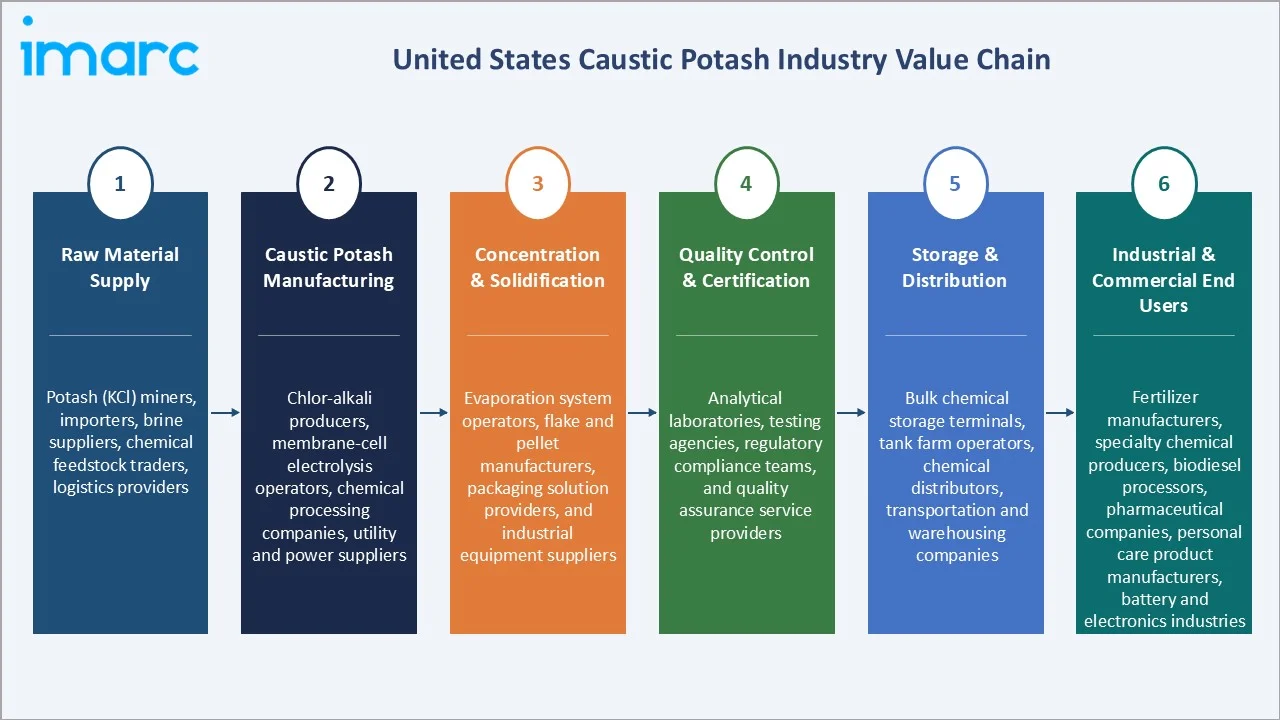
The US caustic potash value chain integrates raw material supply, caustic potash manufacturing, concentration & solidification, quality control & certification, storage & distribution, and industrial & commercial end users.
|
Stage |
Key Participants |
|
Raw Material Supply |
Potash (KCl) miners, importers, brine suppliers, chemical feedstock traders, logistics providers |
|
Caustic Potash Manufacturing |
Chlor-alkali producers, membrane-cell electrolysis operators, chemical processing companies, utility and power suppliers |
|
Concentration & Solidification |
Evaporation system operators, flake and pellet manufacturers, packaging solution providers, and industrial equipment suppliers |
|
Quality Control & Certification |
Analytical laboratories, testing agencies, regulatory compliance teams, and quality assurance service providers |
|
Storage & Distribution |
Bulk chemical storage terminals, tank farm operators, chemical distributors, transportation and warehousing companies |
|
Industrial & Commercial End Users |
Fertilizer manufacturers, specialty chemical producers, biodiesel processors, pharmaceutical companies, personal care product manufacturers, battery and electronics industries |
The caustic potash manufacturing stage is the most value-added segment of the value chain because it converts potassium chloride (KCl) into high-purity potassium hydroxide through capital-intensive membrane-cell electrolysis and downstream processing. This stage requires significant investments in technology, energy, quality control, and regulatory compliance, generating the highest margins and product differentiation, particularly for pharmaceutical, electronic, and specialty chemical grades.
Technology Landscape in the United States Caustic Potash Industry
KOH Flaking and Solidification Technology
KOH flaking and solidification technology enables liquid potassium hydroxide to be converted into stable flakes, pellets, and other solid forms. These technologies improve product handling, storage, transportation efficiency, and shelf life while reducing leakage and safety risks associated with liquid KOH. Advanced cooling, crystallization, and packaging systems also help manufacturers achieve consistent product quality and purity for specialty chemical, pharmaceutical, and industrial applications. As demand for easier-to-handle and higher-purity KOH products grows, investments in modern flaking and solidification systems are increasing across the industry.
Energy-Efficient Chlor-Alkali Technologies
Energy-efficient chlor-alkali technologies reduce the high electricity consumption associated with KOH production. Manufacturers are increasingly adopting advanced membrane-cell systems, optimized electrode designs, and heat-recovery technologies to improve operational efficiency and lower production costs. These innovations help producers meet sustainability goals while reducing greenhouse gas emissions and dependence on fossil-fuel-based power. As energy costs and decarbonization pressures rise, investment in next-generation chlor-alkali technologies is becoming a key competitive differentiator across the U.S. market.
Advanced Brine Purification Technology
Advanced brine purification technology ensures high-purity potassium chloride brine for membrane-cell electrolysis. These systems use filtration, chemical precipitation, ion exchange, and polishing processes to remove calcium, magnesium, iron, and other contaminants that can damage membranes and reduce operational efficiency. Improved brine quality enhances KOH purity, extends equipment lifespan, and lowers maintenance costs. As demand grows for pharmaceutical-grade, battery-grade, and specialty chemical KOH, investments in advanced purification technologies are increasing across U.S. production facilities.
Market Segmentation Analysis
The report covers the following segments:
|
Segment Category |
Leading Segment |
Market Share |
Year |
|
Form |
Solid |
58.6% |
2025 |
|
Grade |
Industrial |
73.8% |
2025 |
|
End Use |
Potassium Carbonate |
🔒 |
2025 |
|
Region |
Midwest |
31.8% |
2025 |

By Form
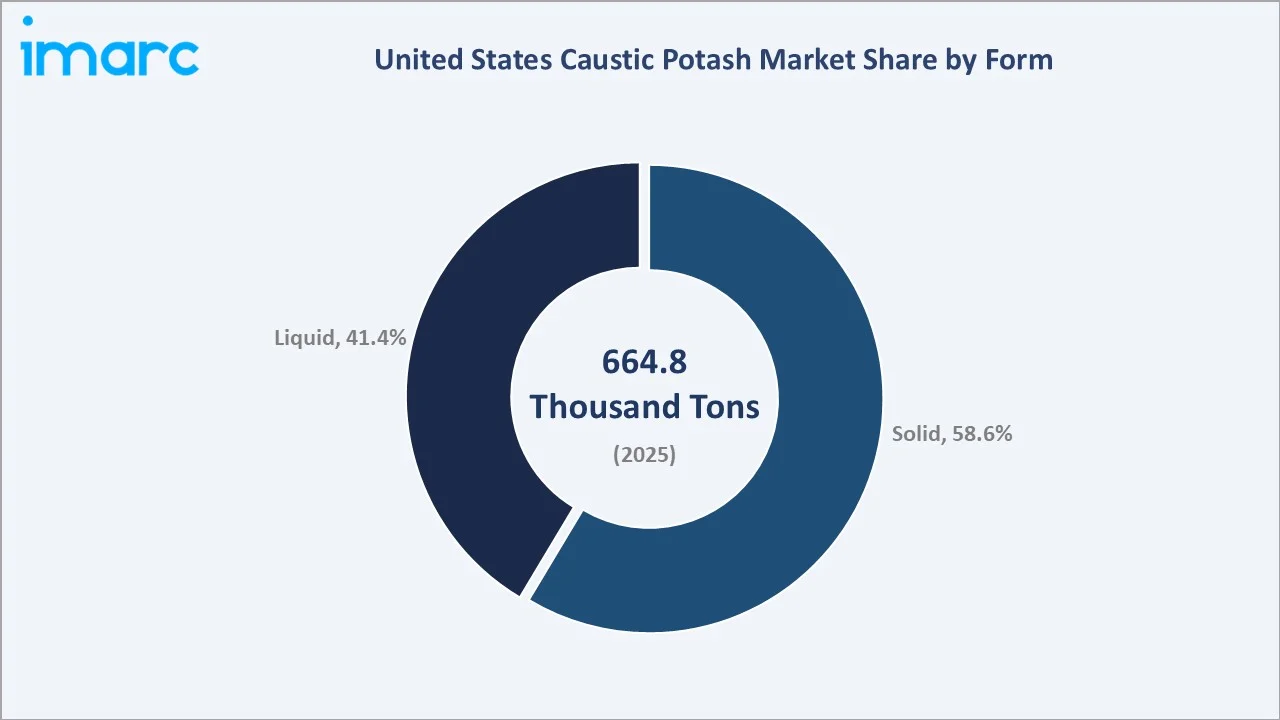
Solid leads at 58.6% (2025), due to its easier storage, longer shelf life, and lower transportation risk compared with liquid. Its flake and pellet forms are widely preferred in chemicals, fertilizers, pharmaceuticals, soaps, and industrial processing, where precise dosing and high concentration are required.
To access detailed market analysis, Request Sample
Liquid at 41.4% grows fastest at ~2.4% CAGR due to its direct use in continuous industrial processes, including chemical synthesis, biodiesel production, pH adjustment, and cleaning formulations. It's easy to pump, mix, and bulk handle, making it suitable for large-volume users such as chemical plants, refineries, and fertilizer manufacturers.
By Grade
Industrial grade leads at 73.8% (2025), as it is widely used in bulk applications such as chemical manufacturing, fertilizers, biodiesel processing, detergents, and industrial cleaning. Its lower cost, broad availability, and suitability for large-volume consumption make it the preferred grade across U.S. end-use industries.
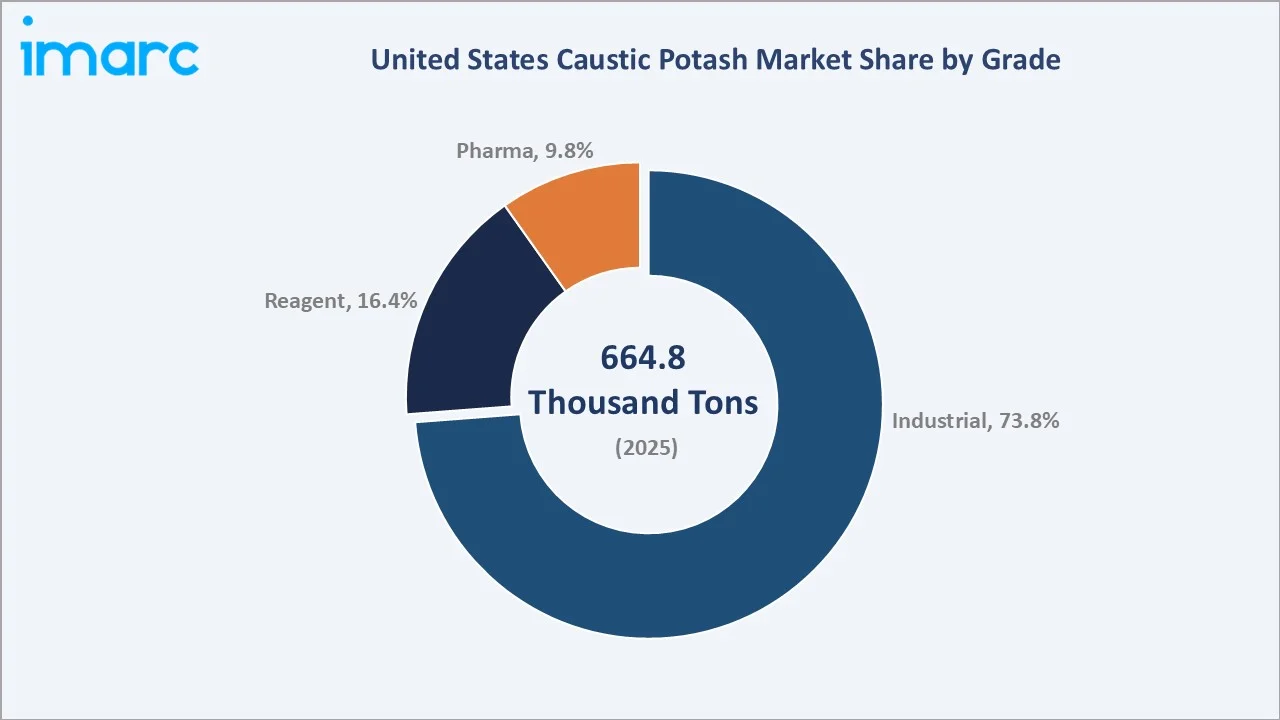
Reagent grade at 16.4% is driving demand through its use in laboratories, analytical testing, R&D, and specialty chemical synthesis, where high purity and consistency are required. Pharma grade at 9.8%, gaining traction in pharmaceutical formulations, excipients, and personal care products, supported by stricter quality standards and rising demand for regulated high-purity ingredients.
Regional Market Insights
|
Region |
Share (2025) |
Key US Caustic Potash Market Drivers & Characteristics |
|
Midwest |
31.8% |
Driven by its strong agricultural base, fertilizer production activities, and large chemical manufacturing presence. |
|
South |
29.4% |
Reflects its concentration of chlor-alkali facilities, petrochemical complexes, biodiesel plants, and industrial manufacturing hubs. |
|
Northeast |
21.6% |
Supported by pharmaceutical manufacturing, specialty chemicals, laboratories, personal care products, and water treatment applications. |
|
West |
17.2% |
Driven by technology industries, green hydrogen projects, specialty chemical production, and environmental applications. |
Midwest's 31.8% dominance is supported by its extensive agricultural sector, fertilizer production, and chemical manufacturing base. South's 29.4% represents a major consumption hub due to its concentration of chlor-alkali plants, petrochemical complexes, biodiesel facilities, and industrial manufacturing operations.
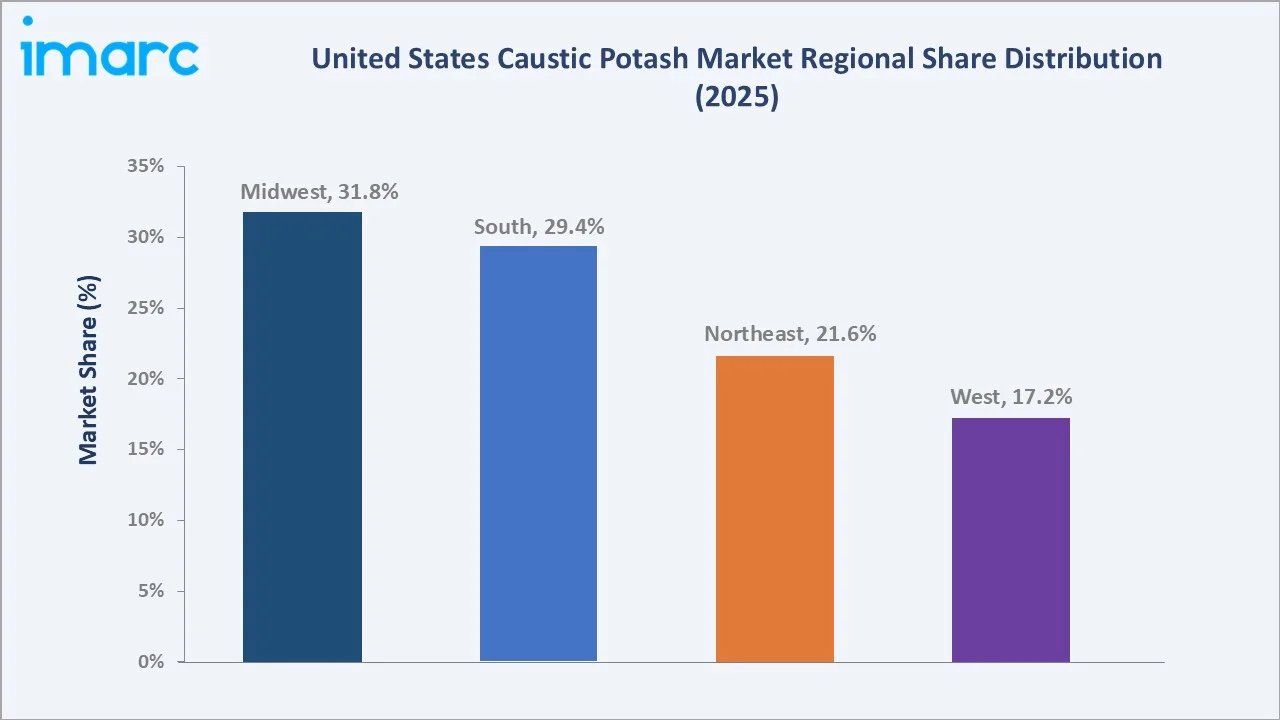
Northeast's 21.6% driven by pharmaceutical manufacturing, specialty chemicals, laboratories, and personal care product industries. West's 17.2% driven by green hydrogen projects, clean energy investments, advanced manufacturing, and technology-related applications.
Competitive Landscape
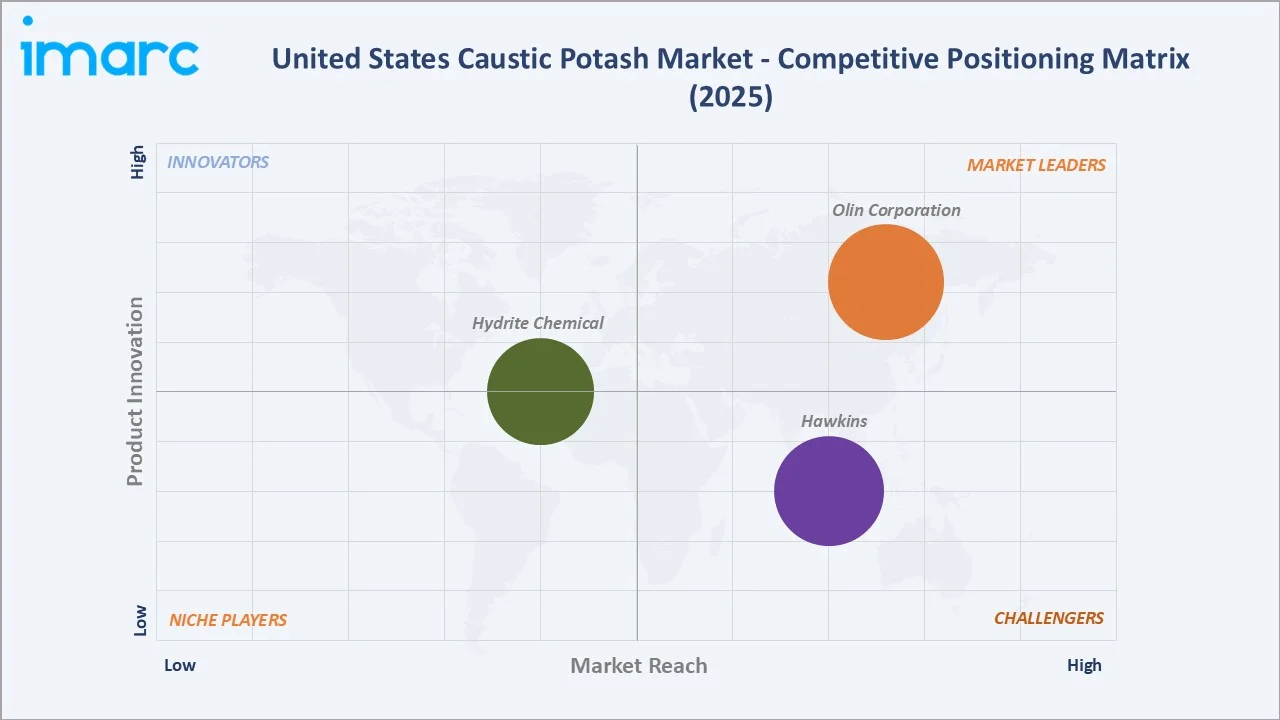
The United States caustic potash market is moderately consolidated, with competition centered on production capacity, product purity, supply reliability, and distribution reach. Major chlor-alkali producers compete by offering industrial-grade, reagent-grade, and high-purity KOH solutions tailored to fertilizer, chemical, pharmaceutical, biodiesel, and specialty applications.
|
Company |
Key Products |
Market Position |
Core Strength |
|
Olin Corporation |
Potassium Hydroxide Solution 30 - 55% |
Market Leader |
Olin Corporation operates as a leading manufacturer and distributor of essential industrial chemicals, holding a top-tier position in the US market. Its Olin Chlor Alkali Products division serves as a major supplier of caustic potash (potassium hydroxide or KOH) to domestic and international markets. |
|
Hawkins |
Liquid Potassium Hydroxide 50% |
Strong Challenger |
Hawkins, Inc. acts as a domestic liquid potassium hydroxide (45%) manufacturer, supplier, and distributor in the US, providing reliable bulk supply, custom blending, and rapid order adjustments while eliminating overseas delays. |
|
Hydrite Chemical |
45% Caustic Potash, 50% Caustic Potash, 20% Caustic Potash Food Grade, 45% Caustic Potash Food Grade, Caustic Potash Flakes |
Established Player |
Hydrite Chemical acts as a vital blender, formulator, and distributor of caustic potash (potassium hydroxide / KOH) in the United States. They supply non-mercury cell-manufactured products directly to industrial, agricultural, and food processing markets, specializing in tailored bulk distribution. |
Companies are increasingly investing in energy-efficient membrane-cell technologies, sustainability initiatives, and low-carbon production processes to strengthen their market position. Strategic partnerships, long-term supply agreements, and expansion of specialty-grade product portfolios are common competitive strategies. In addition, strong logistics networks and technical support capabilities remain important differentiators for serving diverse industrial end-use sectors across the United States.
Key Company Profiles
Olin Corporation
Olin Corporation is one of the leading participants in the US caustic potash market and a major producer of chlor-alkali products. Through its Chlor Alkali Products division, the company manufactures and supplies potassium hydroxide (KOH), chlorine, caustic soda, hydrochloric acid, hydrogen, and other industrial chemicals to a broad range of end-use industries.
- Key Products: Potassium Hydroxide Solution 30 - 55%.
- Recent Developments: In June 2026, Olin announced that it will acquire Huntsman in an all-stock transaction valued at approximately USD 2.43 billion. The deal will combine two U.S.-based chemical manufacturers, reflecting the industry’s broader push for greater scale, operational efficiencies, and cost savings amid challenging market conditions.
- Strategic Focus: Centered on leveraging its large-scale chlor-alkali manufacturing network, expanding membrane-cell production, and strengthening supply reliability for industrial and specialty-grade potassium hydroxide customers.
Hawkins
Hawkins is a US-based specialty chemical manufacturer, blender, and distributor with a significant presence in industrial chemicals, water treatment, food ingredients, and health sciences. The company serves a broad range of industrial customers across the United States.
- Key Products: Liquid Potassium Hydroxide 50%.
- Strategic Focus: Centered on strengthening its specialty chemical distribution network, expanding value-added services, and ensuring a reliable supply of potassium hydroxide products to industrial customers.
Market Concentration Analysis
The United States caustic potash market exhibits a moderately concentrated structure, with a limited number of large chlor-alkali producers accounting for a significant share of domestic production capacity. Large integrated manufacturers benefit from economies of scale, captive chlorine utilization, and advanced membrane-cell technologies, creating relatively high barriers to entry. Meanwhile, regional distributors and specialty chemical suppliers focus on customized formulations, technical support, and niche end-use applications. Competition is increasingly shifting toward high-purity, pharmaceutical-grade, and sustainability-focused KOH products as demand diversifies across renewable fuels, green hydrogen, and specialty chemicals. Overall, the market remains competitive but is led by a small group of established producers with strong operational and supply-chain advantages.
Investment & Growth Opportunities
Highest Growth Segments
Pharma grade KOH (~3.1% CAGR), liquid KOH (~2.4% CAGR), West region (~2.8% CAGR), specialty potassium derivatives (K2CO3, potassium phosphate ~3-4% CAGR), and green hydrogen AWE KOH (~10-15% CAGR from emerging small base) represent the US caustic potash highest-growth investment vectors through 2034.
Investment Themes
- USP pharma-grade KOH personal care and pharmaceuticals: USP pharma-grade potassium hydroxide represents an attractive investment theme as demand rises for high-purity ingredients used in pharmaceutical formulations, excipients, topical products, and personal care applications. Stricter regulatory standards and growing healthcare spending are supporting premium-margin opportunities for manufacturers capable of producing consistent, compliant, and traceable KOH grades.
- Specialty potassium derivatives K2CO3 and potassium phosphate: Specialty potassium derivatives such as potassium carbonate (K₂CO₃) and potassium phosphate offer strong growth potential due to their expanding use in food processing, pharmaceuticals, fertilizers, specialty chemicals, and industrial applications. Rising demand for value-added potassium compounds enables producers to diversify beyond commodity KOH and capture higher-margin specialty chemical markets.
Future Market Outlook (2026-2034)
The US caustic potash market is projected to grow from 664.8 Thousand Tons in 2025 to 806.4 Thousand Tons by 2034, delivering a 2.06% CAGR over the forecast period through stable agricultural fertilizer demand, expanding green hydrogen AWE KOH electrolyte, growing pharma and personal care USP-grade KOH, biodiesel KOH catalyst from RFS2, and specialty potassium chemical derivatives. The market's anchor volume of 736.2 Thousand Tons in 2030 represents US KOH at application inflection.
Three structural forces define US caustic potash growth through 2034. First, expanding demand from green hydrogen alkaline electrolyzers, renewable fuels, and biodiesel production is increasing the consumption of high-purity potassium hydroxide. Second, growth in pharmaceuticals, personal care products, and specialty chemicals is driving demand for reagent-grade and USP-grade KOH. Third, increasing production of specialty potassium derivatives, including potassium carbonate and potassium phosphate, is creating new value-added opportunities for KOH manufacturers while supporting market diversification beyond traditional industrial applications.
Research Methodology
Primary Research
Primary research comprised extensive interviews and discussions with key stakeholders across the US caustic potash value chain, including potassium hydroxide manufacturers, chemical distributors, raw material suppliers, technology providers, and end users. Insights were gathered from executives, procurement managers, product specialists, and industry experts to validate market trends, demand patterns, pricing dynamics, competitive positioning, and future growth opportunities.
Secondary Research
Secondary research encompassed company websites, annual reports, product brochures, trade databases, government publications, industry journals, and regulatory sources. It also included a review of market reports, press releases, import-export data, technical literature, and end-use industry trends to validate market size, competitive landscape, demand drivers, and technology developments.
Forecasting Models
Forecasting models combined historical market trends, end-use industry demand analysis, capacity expansions, and macroeconomic indicators to project future market growth. A bottom-up approach was used to assess consumption across key sectors such as chemicals, fertilizers, pharmaceuticals, biodiesel, and water treatment, while a top-down validation ensured consistency with industry production, trade flows, and economic outlooks. Scenario analysis was also applied to account for technology adoption and regulatory developments.
United States Caustic Potash Market Report Coverage:
| Report Features | Details |
|---|---|
| Base Year of the Analysis | 2025 |
| Historical Period | 2020-2025 |
| Forecast Period | 2026-2034 |
| Units | ‘000 Tons |
| Scope of the Report | Exploration of Historical and Forecast Trends, Industry Catalysts and Challenges, Segment-Wise Historical and Predictive Market Assessment:
|
| Forms Covered | Solid, Liquid |
| Grades Covered | Industrial, Reagent, Pharma |
| End Uses Covered | Potassium Carbonate, Potassium Phosphates, Potassium Soaps and Detergents, Liquid Fertilizers, Agricultural Chemicals, Others |
| Regions Covered | Northeast, Midwest, South, West |
| Companies Covered | Olin Corporation, Hawkins, Hydrite Chemical, etc. |
| Customization Scope | 10% Free Customization |
| Post-Sale Analyst Support | 10-12 Weeks |
| Delivery Format | PDF and Excel through Email (We can also provide the editable version of the report in PPT/Word format on special request) |
Frequently Asked Questions About the United States Caustic Potash Market Report
The US caustic potash (KOH) market reached 664.8 Thousand Tons in 2025, driven by rising demand from specialty chemicals, potassium derivatives, biodiesel processing, pharmaceuticals, personal care, and industrial cleaning applications. Growth in green hydrogen alkaline electrolyzers and high-purity KOH uses is further supporting long-term market expansion.
The US caustic potash market grows at 2.06% CAGR during 2026-2034, reaching 806.4 Thousand Tons by 2034. The CAGR reflects agricultural fertilizer structural demand, green hydrogen AWE KOH emerging, pharma and personal care USP-KOH growing, and biodiesel RFS2 KOH catalyst.
Solid leads at 58.6% due to its high concentration, longer shelf life, and easier storage compared with liquid forms. Its flakes and pellets are widely used in chemicals, fertilizers, soaps, pharmaceuticals, and industrial processing, where precise dosing and efficient transportation are required.
Industrial grade leads at 73.8% due to its broad use in chemical manufacturing, fertilizers, biodiesel, detergents, and industrial cleaning. Its cost-effectiveness, availability, and suitability for bulk-volume applications make it the preferred grade across US industries.
Midwest leads at 31.8% due to its strong agricultural base, fertilizer demand, and established chemical manufacturing activities. Its well-developed logistics network and industrial processing hubs further support large-volume KOH consumption.
Leading companies include Olin Corporation, Hawkins, and Hydrite Chemical, among others.
The market is projected to reach approximately 736.2 Thousand Tons by 2030, supported by steady demand from chemicals, fertilizers, biodiesel, pharmaceuticals, and industrial processing. Growth in green hydrogen, specialty potassium derivatives, and high-purity KOH applications is expected to further strengthen consumption.
Three priority investment opportunities: USP pharma-grade KOH for personal care and pharmaceuticals offers attractive growth potential as demand rises for high-purity ingredients used in regulated healthcare and cosmetic applications. Green hydrogen alkaline electrolyzers represent a major opportunity, with expanding clean-energy projects increasing demand for electrolyte-grade potassium hydroxide. Additionally, specialty potassium derivatives such as potassium carbonate (K₂CO₃) and potassium phosphate provide access to higher-margin markets in food processing, specialty chemicals, fertilizers, and pharmaceutical formulations.
Need more help?
- Speak to our experienced analysts for insights on the current market scenarios.
- Include additional segments and countries to customize the report as per your requirement.
- Gain an unparalleled competitive advantage in your domain by understanding how to utilize the report and positively impacting your operations and revenue.
- For further assistance, please connect with our analysts.
 Request Customization
 Speak to an Analyst
 Request Brochure
 Inquire Before Buying
Benefits of Customization
- Personalize this research
- Triangulate with your data
- Get data as per your format and definition
- Gain a deeper dive into a specific application, geography, customer, or competitor
- Any level of personalization
Get in Touch With Us
UNITED STATES
Phone: +1-201-971-6302
INDIA
Phone: +91-120-433-0800
UNITED KINGDOM
Phone: +44-753-714-6104
Email: [email protected]
Client Testimonials




.webp)




.webp)













Related Reports

Choose your plan
*Please note that the prices mentioned below are starting prices for each bundle type. Kindly contact our team for further details.*
Single User License
- 1 User License, Access on 2 Devices
- PDF Report + Excel Dataset (Password Protected)
- Lifetime Access
- No Printing Rights
- 10% Free Report Customization
- 10–12 Weeks of Analyst Support
Five User License
- Access for 5 Users, 2 Devices per User
- PDF Report + Excel Dataset (Password Protected)
- Lifetime Access
- Dedicated Account Manager
- 12–14 Weeks of Analyst Support
- No Printing Rights
- 15% Free Report Customization
- 25% Discount on Your Next Purchase
Corporate User License
- Unlimited User Access (Within Your Organization)
- PDF Report + Excel Dataset
- Lifetime Access
- Dedicated Account Manager
- 14–20 Weeks of Analyst Support
- No Printing Rights
- 20% Free Report Customization
- 30% Discount on Your Next Purchase
Essential Insights
What's included:
3 reports
- Lifetime Access
- PDF Reports
- Excel Datasets
- 2 Weeks of Free Analyst Support
- 2 User Licenses
- Access on 2 Devices
- Printing Rights
- Complimentary PowerPoint (PPT) Version
- Complimentary License Upgrade
Professional Access
What's included:
5 reports
- Lifetime Access
- PDF Reports
- Excel Datasets
- 8 Weeks of Free Analyst Support
- 2 User Licenses
- Access on 2 Devices
- Printing Rights
- Complimentary PowerPoint (PPT) Version
- Complimentary License Upgrade
Business Advantage
What's included:
8 reports
- Lifetime Access
- PDF Reports
- Excel Datasets
- 14 Weeks of Free Analyst Support
- 2 User Licenses
- Access on 2 Devices
- Printing Rights
- Complimentary PowerPoint (PPT) Version
- Complimentary License Upgrade
Enterprise Intelligence
What's included:
10 reports
- Lifetime Access
- PDF Reports
- Excel Datasets
- 20 Weeks of Free Analyst Support
- 2 User Licenses
- Access on 2 Devices
- Printing Rights
- Complimentary PowerPoint (PPT) Version
- Complimentary License Upgrade