
Asia Pacific Electric Insulator Market Size, Share, Trends and Forecast by Material, Voltage, Category, Installation, Product, Rating, Application, End Use Industry, and Country, 2026-2034
Asia Pacific Electric Insulator Market Size, Share, Trends & Forecast (2026-2034)
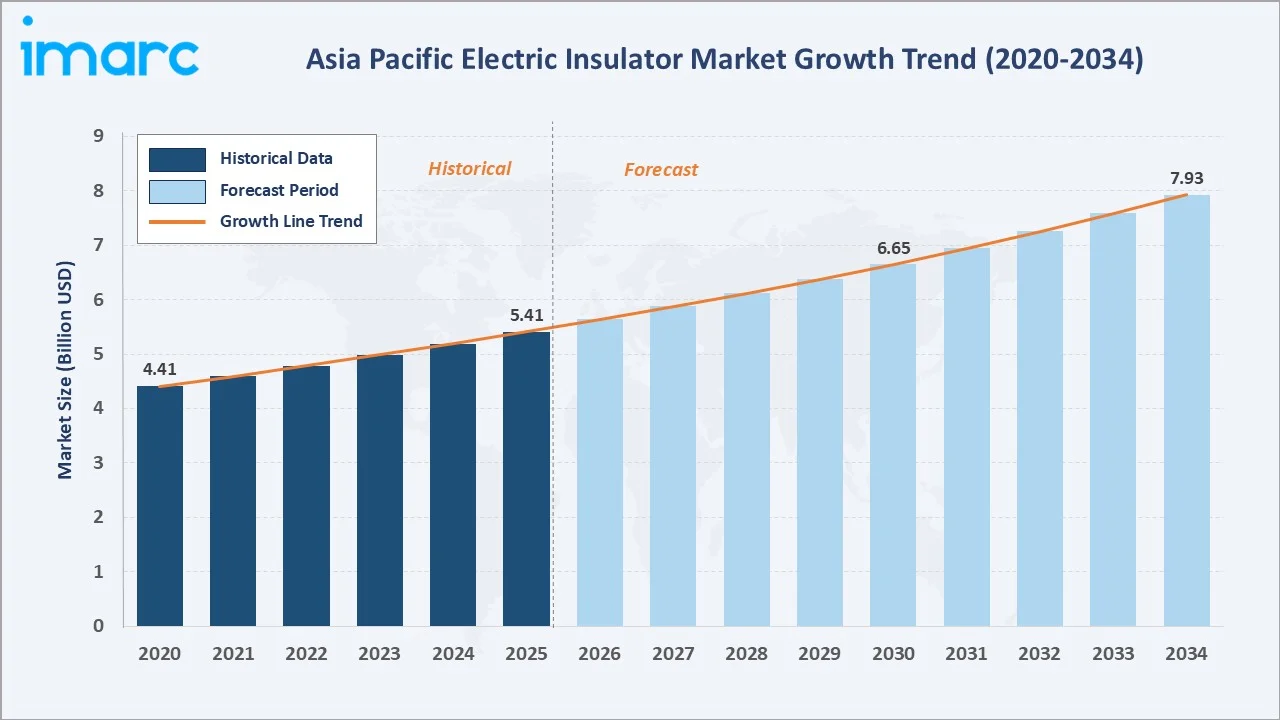
The Asia Pacific electric insulator market reached USD 5.41 Billion in 2025 and is projected to reach USD 7.93 Billion by 2034, growing at a CAGR of 4.20% during 2026-2034. Growth is driven by rapid urbanization, expanding transmission and distribution (T&D) infrastructure, privatization of electricity distribution networks, and rising industrial and HVAC power consumption across China, India, and Southeast Asia. Low voltage insulators lead the voltage segment at 46.8%, while bushings dominate the category segment at 58.3%. China commands the largest country share at 39.8%, supported by its expansive grid network and large-scale renewable energy integration programs.
Market Snapshot
|
Metric |
Value |
|
Market Size (2025) |
USD 5.41 Billion |
|
Forecast Market Size (2034) |
USD 7.93 Billion |
|
CAGR (2026-2034) |
4.20% |
|
Base Year |
2025 |
|
Historical Period |
2020-2025 |
|
Forecast Period |
2026-2034 |
|
Dominant Voltage Segment |
Low (46.8%, 2025) |
|
Dominant Category Segment |
Bushings (58.3%, 2025) |
|
Leading Country |
China (39.8%, 2025) |
The market expanded from USD 4.41 Billion in 2020 to USD 5.41 Billion in 2025, anchored at USD 6.65 Billion in 2030 and forecast to reach USD 7.93 Billion by 2034. Grid privatization and T&D capacity additions sustained demand even as raw material cost volatility briefly constrained manufacturer margins during 2022-2023.
To get more information on this market, Request Sample
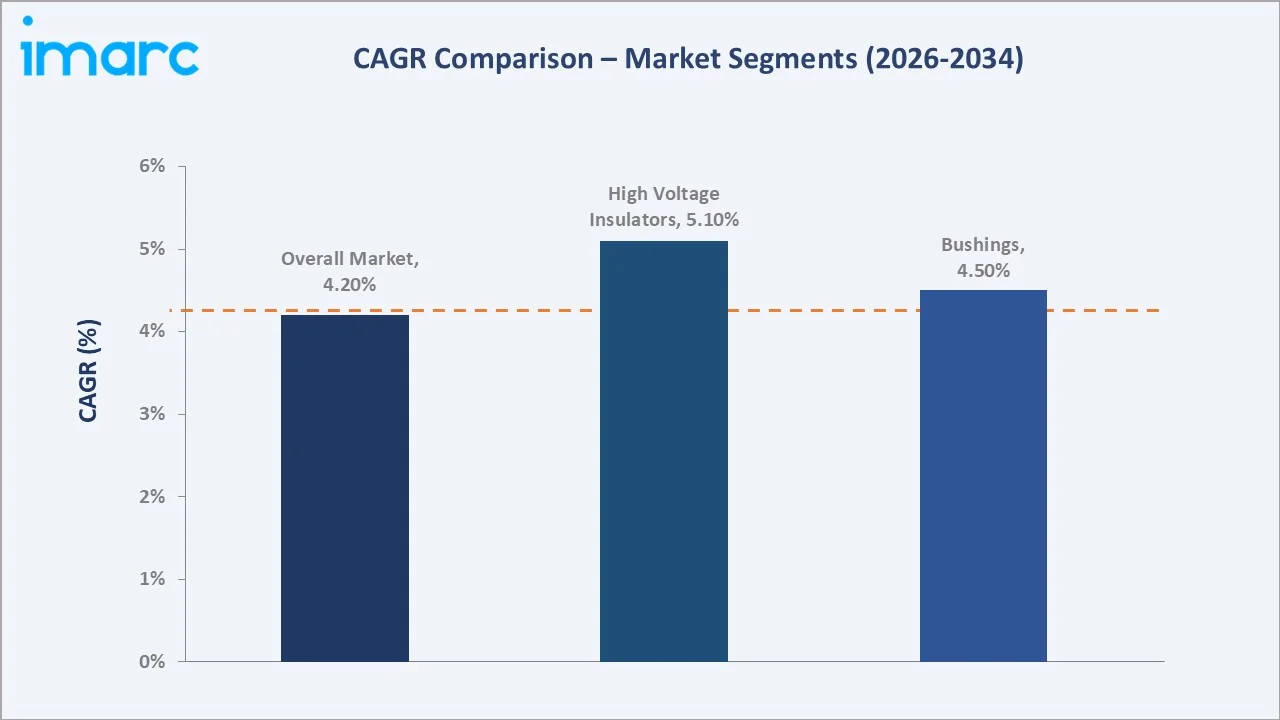
High voltage insulators grow fastest at ~5.1% CAGR as UHV and HVDC transmission projects expand across China, Japan, and India. Bushings grow at ~4.5% CAGR, outpacing other insulators as transformer and switchgear installations rise alongside substation modernization programs Country-wide.
Executive Summary
The Asia Pacific electric insulator market reached USD 5.41 Billion in 2025, reflecting sustained investment in power transmission and distribution infrastructure across the region's largest economies. Electric insulators remain indispensable components safeguarding overhead lines, substations, and distribution networks from electrical faults and environmental stress. The market is projected to reach USD 7.93 Billion by 2034.
Low voltage insulators lead at 46.8% share, reflecting extensive low-tension distribution networks across urban and rural areas. Bushings dominate the category segment at 58.3% through their critical role in transformers and switchgear. China leads at 39.8%, driven by its expansive grid infrastructure, followed by India at 19.7% on account of rapid rural electrification and T&D capacity expansion.
Key Market Insights
|
Insight |
Data |
|
Dominant Voltage Segment |
Low - 46.8% share (2025) |
|
Dominant Category Segment |
Bushings - 58.3% market share (2025) |
|
Leading Country |
China - 39.8% market share (2025) |
|
Market Opportunity |
Composite polymer insulators; smart sensor-enabled insulators; HVDC/UHV-grade insulation; recycled, low-carbon materials |
Key Analytical Observations Supporting the Above Data:
- Low Voltage at 46.8%: The low voltage segment dominates as it underpins the region's expansive distribution networks connecting households, commercial establishments, and light industries. Continuous rural electrification programs in India and Indonesia, alongside urban distribution upgrades in China, sustain the segment's leading position.
- Bushings at 58.3%: The bushings segment leads due to its essential function in transformers, switchgear, and circuit breakers across utility and industrial installations. Rising transformer manufacturing capacity across China, Japan, and South Korea reinforces bushings' dominant share.
- China at 39.8%: China dominates the country market through its vast transmission and distribution network, aggressive grid modernization, and large-scale renewable energy integration, generating substantial recurring demand for high-performance electric insulators.
Asia Pacific Electric Insulator Market Overview
The Asia Pacific electric insulator market encompasses the design, manufacture, and supply of ceramic, glass, and composite polymer insulators used to isolate live conductors in transmission lines, distribution networks, substations, and railway electrification systems. The ecosystem integrates raw material suppliers, insulator manufacturers, EPC contractors, and utility and industrial end users. Macroeconomic factors including urbanization, grid privatization, renewable energy investment, and industrial electricity demand growth continue to shape regional insulator procurement patterns. Ongoing investment in transmission and distribution capacity across the region's largest economies continues to underpin long-term structural demand for both established and emerging insulator technologies.
Market Dynamics
To evaluate market opportunities, Request Sample
Market Drivers
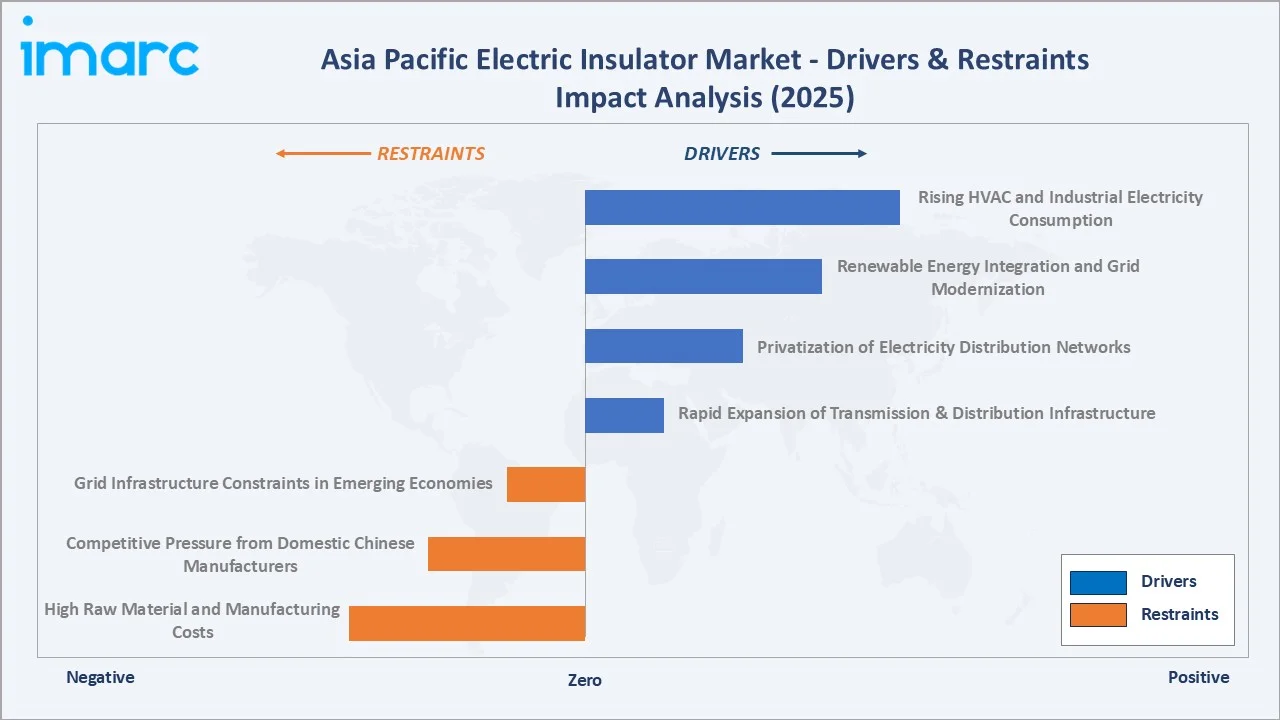
- Rapid Expansion of Transmission & Distribution Infrastructure: Rapid urbanization across China, India, and Southeast Asia is expanding T&D networks, directly increasing demand for pin, suspension, and shackle insulators. Governments are investing heavily in new substations and distribution lines to meet rising residential and commercial electricity consumption, sustaining steady insulator procurement across the region's fast-growing economies. National grid expansion programs in India and Indonesia are extending rural distribution coverage, creating recurring demand for low and medium voltage insulator products. Continued upgrades to distribution networks in China's smaller cities are reinforcing long-term procurement volumes across the insulator supply chain.
- Privatization of Electricity Distribution Networks: Privatization of electricity distribution across several Asia Pacific economies is accelerating network upgrades and capacity expansion, as private operators invest in reliable, loss-minimizing infrastructure, expanding the addressable installed base for insulators used in modernized distribution and transmission systems. Private distribution companies are prioritizing reduction of transmission losses, prompting replacement of aging insulators with higher-performance alternatives. Competitive service standards imposed by regulators are further encouraging utilities to accelerate insulator upgrade cycles across urban and semi-urban networks.
- Renewable Energy Integration and Grid Modernization: Large-scale wind and solar capacity additions require extensive grid interconnection, driving demand for high-voltage and composite insulators capable of withstanding variable loads. Grid modernization initiatives across China, Japan, and Australia are further increasing insulator replacement and upgrade cycles. Integration of offshore wind projects in Japan and South Korea is generating additional demand for specialized marine-grade insulation solutions. Expanding renewable energy corridors are also prompting utilities to adopt insulators engineered for fluctuating load conditions and extended service life.
- Rising HVAC and Industrial Electricity Consumption: Growing HVAC penetration in India and China, combined with expanding industrial electricity demand, is increasing sales of insulators used in distribution transformers, switchgear, and busbars across utility and industrial end-use segments. Rising commercial real estate development is further amplifying cooling-related electricity consumption across the region's major urban centers. Expanding manufacturing and data center capacity is also increasing industrial power load, sustaining demand for reliable insulation across electrical distribution equipment.
Market Restraints
- High Raw Material and Manufacturing Costs: Producing advanced composite and porcelain insulators requires costly raw materials, including silicone rubber, alumina, and specialty glass, alongside precision manufacturing and testing equipment, constraining smaller manufacturers' capacity expansion. Volatility in raw material prices further complicates cost planning for manufacturers operating on thin margins. These cost pressures can delay technology upgrades and limit the pace of new capacity additions among regional producers.
- Competitive Pressure from Domestic Chinese Manufacturers: Low-cost domestic Chinese insulator manufacturers are intensifying price competition, pressuring margins for international suppliers operating in China and neighboring export markets, compelling global players to localize production. Aggressive pricing strategies by domestic players are also affecting bidding outcomes in public utility tenders across the region. Sustained price competition may limit profitability for suppliers unable to achieve manufacturing scale comparable to leading domestic producers.
- Grid Infrastructure Constraints in Emerging Economies: Inadequate grid capacity and slow electrification in parts of Indonesia and other emerging Asia Pacific economies limit new transmission and distribution line construction, restraining incremental insulator demand growth despite favorable long-term electrification potential. Limited access to financing for grid infrastructure projects further slows the pace of network expansion in several rural regions. These constraints may delay the realization of insulator demand growth until supporting infrastructure investment accelerates.
Market Opportunities
- Composite Polymer Insulator Commercialization: Expanding commercialization of composite polymer insulators presents a significant opportunity as utilities increasingly favor lightweight, contamination-resistant designs over traditional ceramic products, particularly across coastal and high-pollution regions. Manufacturers investing in silicone rubber housing technology can capture share from utilities upgrading aging ceramic insulator inventories. Wider adoption of composite designs in medium and high voltage applications is expected to open additional revenue streams for suppliers with advanced polymer engineering capabilities.
- Smart Sensor-Enabled Insulator Monitoring Systems: Growing utility interest in predictive maintenance is creating opportunities for smart sensor-enabled insulators capable of real-time contamination and health monitoring. Suppliers integrating digital monitoring capabilities into insulator products can differentiate offerings and capture premium pricing across utility modernization programs. Expanding grid digitalization initiatives across Japan, South Korea, and Australia are expected to accelerate adoption of sensor-enabled insulation solutions over the forecast period.
Market Challenges
- Counterfeit and Substandard Insulator Products: The presence of counterfeit and substandard insulator products in price-sensitive markets poses a challenge to established manufacturers, as inferior products can compromise grid reliability and safety. Addressing this issue requires strengthened quality certification, testing standards, and utility procurement due diligence across the region's diverse regulatory environments. Manufacturers may need to invest in traceability and certification programs to protect brand reputation and support premium product positioning.
- Insulator Contamination and Flashover Risk in High-Pollution Zones: Insulator contamination from industrial pollution, coastal salinity, and dust accumulation increases flashover risk in high-pollution and coastal zones, requiring advanced materials and more frequent maintenance cycles. Utilities operating in these environments face higher lifecycle costs and must balance performance requirements against budget constraints. Addressing these challenges is driving demand for specialized coatings and hydrophobic surface treatments that reduce contamination-related failures.
Emerging Market Trends
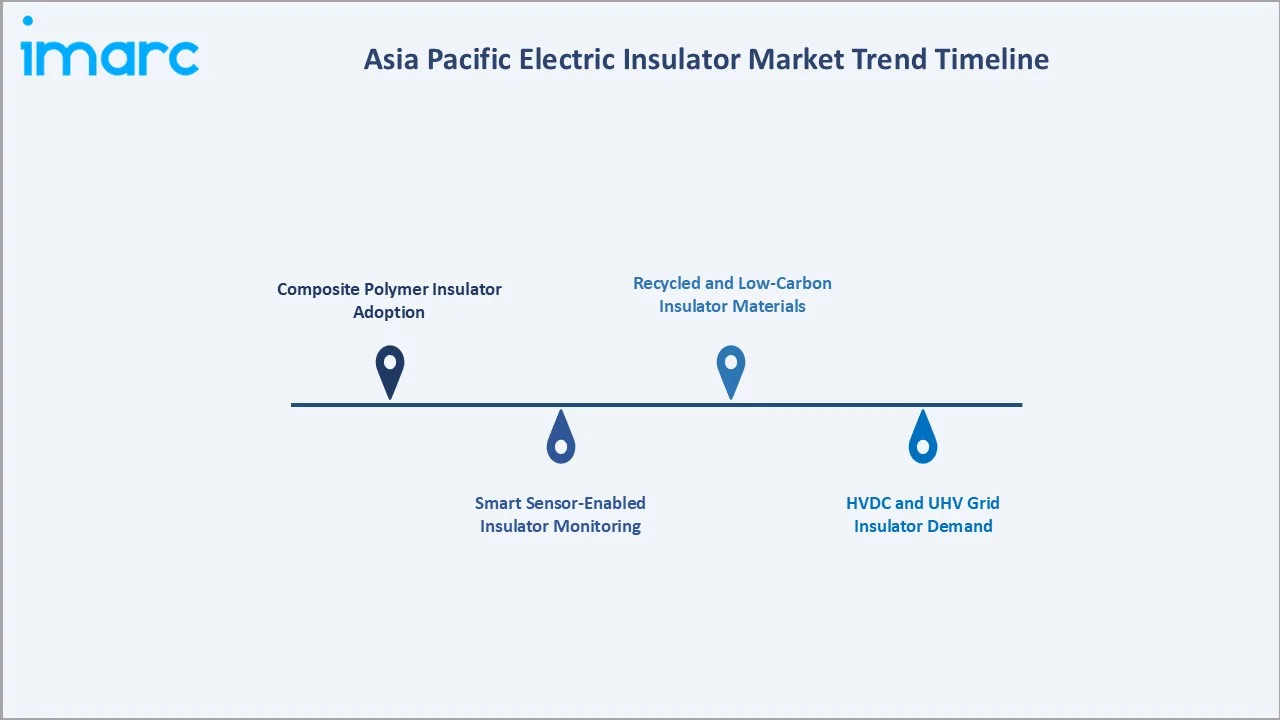
1. Composite Polymer Insulator Adoption
Utilities are increasingly replacing traditional ceramic insulators with lightweight, weather-resistant composite polymer insulators that offer superior contamination resistance and lower installation costs, particularly across coastal and high-pollution areas of China and Southeast Asia. This shift is also reducing transportation and installation costs given the lower weight of polymer housings compared to porcelain designs.
2. Smart Sensor-Enabled Insulator Monitoring
Integration of sensors for real-time insulator health and contamination monitoring is emerging across high-voltage transmission networks, enabling predictive maintenance and reducing unplanned outages for utilities across Japan, South Korea, and Australia. Pilot deployments are increasingly informing wider utility-scale rollout plans across the region.
3. HVDC and UHV Grid Insulator Demand
Expansion of HVDC and ultra-high-voltage transmission corridors in China and India is generating demand for specialized high-performance insulators engineered for extreme voltage and environmental stress conditions. Suppliers with proven UHV-grade product certifications are well positioned to capture this specialized demand.
4. Recycled and Low-Carbon Insulator Materials
Manufacturers are investing in recycled glass and low-carbon ceramic formulations to align with regional sustainability mandates, supporting utilities' broader decarbonization and circular-economy procurement goals. Regulatory incentives in several markets are further encouraging adoption of lower-carbon manufacturing processes.
Industry Value Chain Analysis
|
Stage |
Key Participants |
|
Raw Material Sourcing |
Procurement of key insulator raw materials, including ceramics, glass, and polymer compounds |
|
Insulator Manufacturing |
Molding, curing, and assembly of insulator products across multiple types and ratings |
|
Testing & Quality Assurance |
Dielectric, mechanical, and environmental performance testing |
|
Distribution & EPC Integration |
Distribution to utilities and integration into infrastructure projects |
|
Installation & Maintenance |
Field installation and ongoing maintenance across power networks |
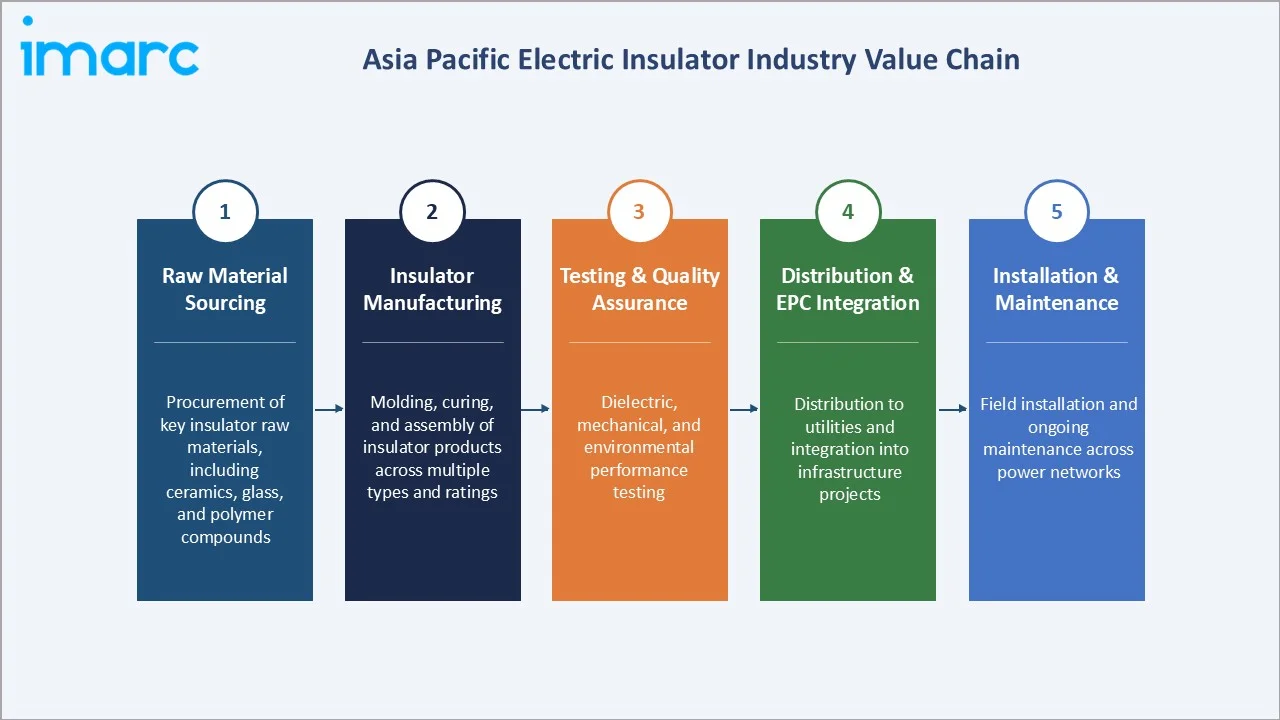
The insulator manufacturing stage remains the value chain's most capital-intensive tier, requiring precision molding and high-temperature firing infrastructure. Testing and quality assurance is gaining prominence as utilities enforce stricter dielectric and mechanical performance standards for high-voltage and HVDC-grade insulators.
Technology Landscape in the Electric Insulator Industry
Composite Polymer Insulator Technology
Composite polymer insulators offer lightweight construction, superior contamination and vandalism resistance, and lower installation costs compared to traditional ceramic designs. Their growing adoption across coastal and high-pollution regions is accelerating technology transition among utilities modernizing transmission and distribution networks across China, Japan, and Southeast Asia.
Ceramic and Glass Insulator Technology
Ceramic and glass insulators continue to serve as the reliability benchmark for high-voltage transmission applications, offering proven long-term durability and established manufacturing infrastructure. Continued innovation in glazing and firing techniques is enhancing dielectric performance while supporting cost-competitive large-scale production.
Market Segmentation Analysis
The report covers the following segments:
|
Segment Category |
Leading Segment |
Market Share |
Year |
|
Material |
Ceramic/Porcelain |
🔒 |
2025 |
|
Voltage |
Low |
46.8% |
2025 |
|
Category |
Bushings |
58.3% |
2025 |
|
Installation |
Distribution Networks |
🔒 |
2025 |
|
Product |
Pin Insulator |
🔒 |
2025 |
|
Rating |
22 kV |
🔒 |
2025 |
|
Application |
Cable |
🔒 |
2025 |
|
End Use Industry |
Utilities |
🔒 |
2025 |
|
Country |
China |
39.8% |
2025 |

By Voltage
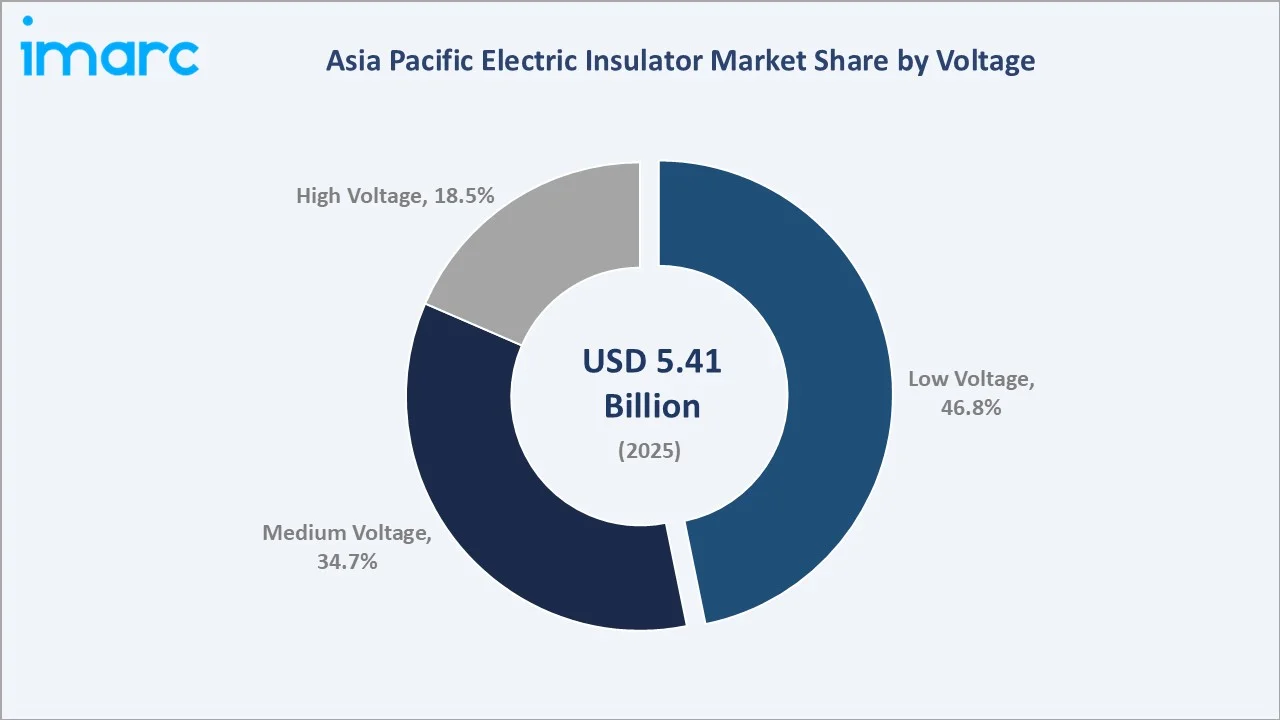
Low voltage insulators lead at 46.8% in 2025, reflecting extensive distribution networks connecting households and light commercial establishments across the region's rapidly urbanizing economies.
To access detailed market analysis, Request Sample
Medium voltage insulators hold 34.7% share, supporting industrial and commercial distribution infrastructure, while high voltage insulators at 18.5% serve transmission-grade applications and are growing fastest at ~5.1% CAGR through UHV and HVDC network expansion.
By Category
Bushings lead the category segment at 58.3% in 2025, given their critical role in transformers, switchgear, and circuit breakers across utility and industrial installations region-wide.
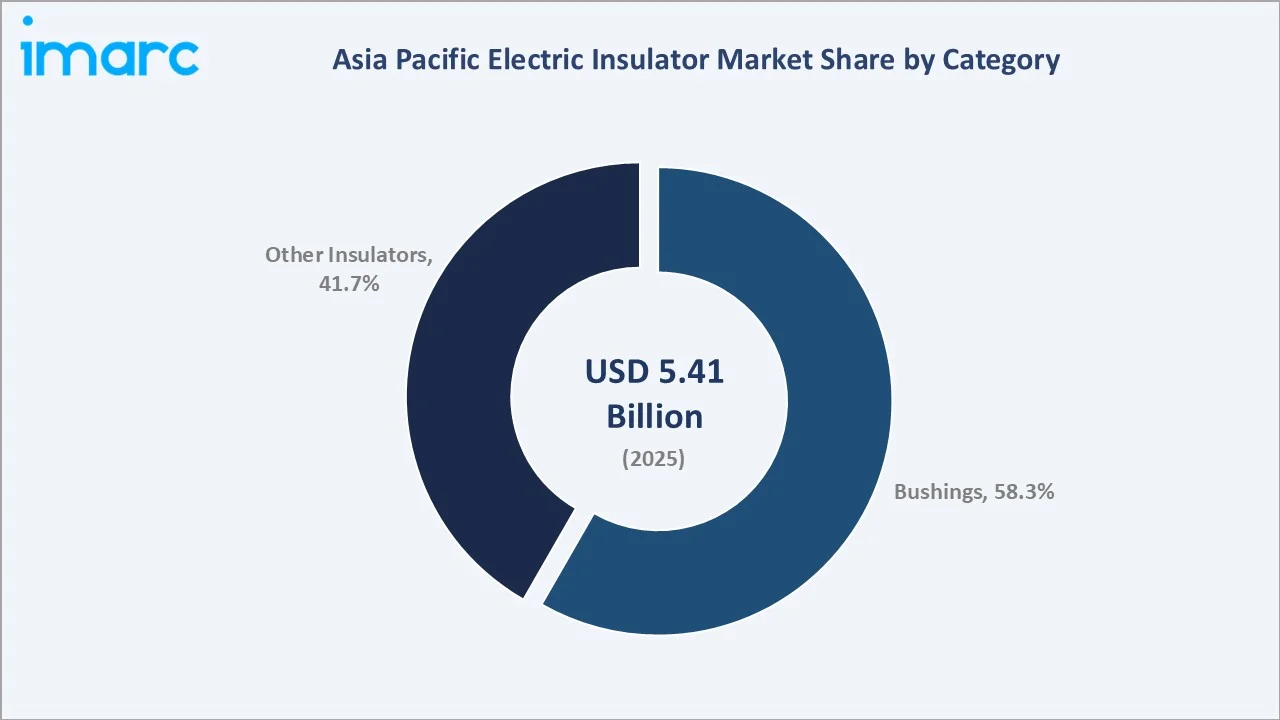
Other insulators, including pin, suspension, and shackle types, hold 41.7% share, supporting overhead line and substation applications across distribution and transmission networks.
Regional Market Insights
|
Country |
Share (2025) |
Key Market Drivers & Characteristics |
|
China |
39.8% |
Driven by large-scale grid infrastructure development and renewable energy integration |
|
India |
19.7% |
Supported by rural electrification and distribution network investment |
|
Japan |
12.8% |
Driven by grid modernization and infrastructure replacement |
|
South Korea |
9.4% |
Supported by substation upgrades and industrial demand growth |
|
Australia |
6.7% |
Driven by renewable energy integration and network expansion |
|
Indonesia |
4.8% |
Emerging with growing electrification initiatives |
|
Others |
6.8% |
Reflects combined demand from remaining regional markets |
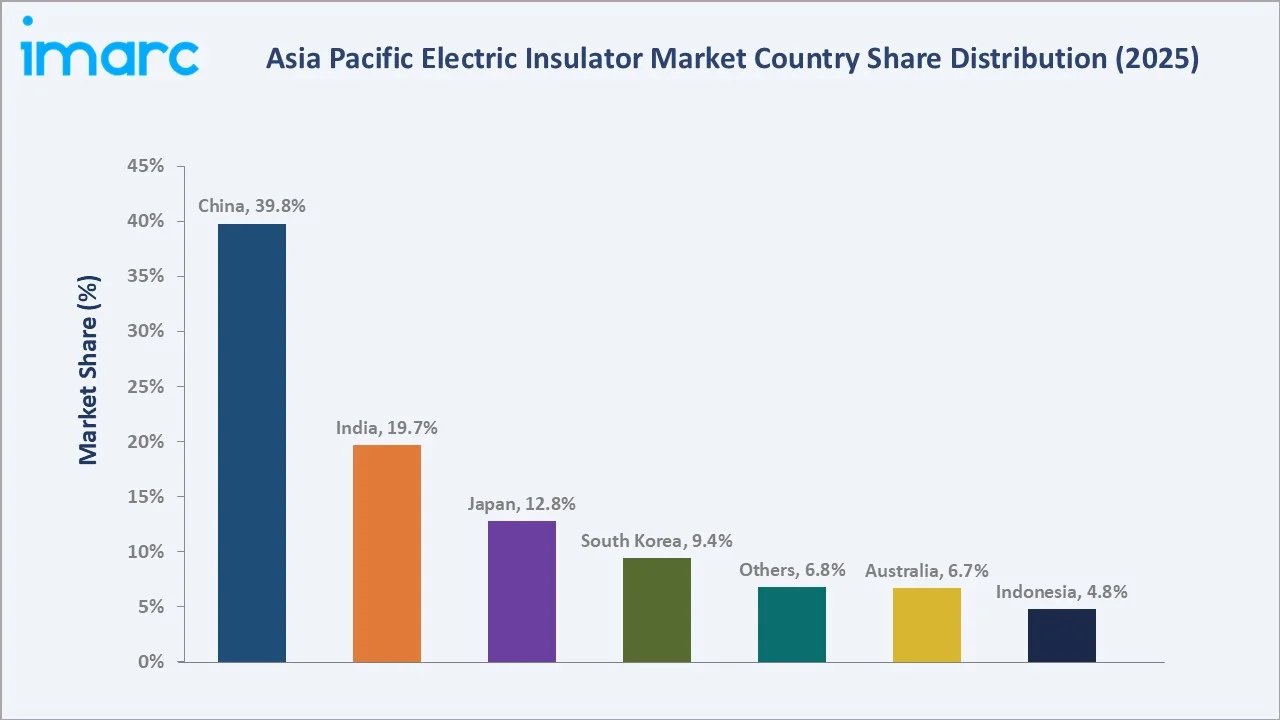
China, at 39.8%, leads through its extensive grid network, UHV transmission corridors, and continued renewable energy integration. India, at 19.7%, benefits from rural electrification and privatized distribution investment. Japan, at 12.8%, reflects steady replacement demand amid aging grid infrastructure. South Korea, Australia, and Indonesia collectively contribute a growing share as substation modernization and electrification programs expand region-wide.
Competitive Landscape
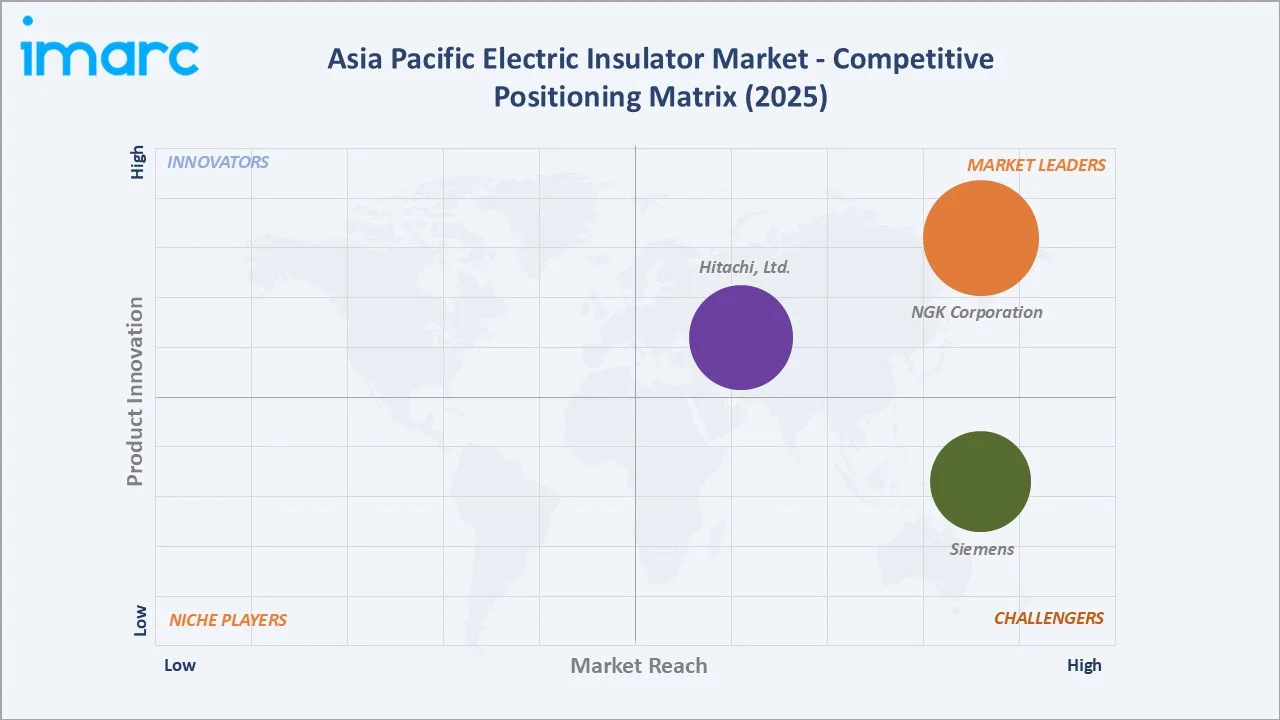
The Asia Pacific electric insulator market competitive landscape is moderately consolidated, comprising established global technology leaders, regional specialists, and fast-growing domestic Chinese manufacturers competing intensely on price and localization across the region's largest markets.
|
Company Name |
Key Products |
Market Position |
Core Strength |
|
NGK Corporation |
Suspension, station post & hollow insulators |
Market Leader |
Global ceramic insulator technology leadership with extensive Asia Pacific manufacturing footprint |
|
Hitachi, Ltd. |
Composite & SF6-free insulated switchgear |
Market Leader |
Advanced grid technology portfolio with strong utility relationships across Japan and India |
|
Siemens |
Bushings, instrument transformers, AIS/GIS insulation |
Strong Challenger |
Broad high-voltage substation and transformer insulation product portfolio |
Key players include NGK Corporation, Hitachi, Ltd., Siemens, and others.
Key Company Profiles
NGK Corporation
NGK Corporation (formerly NGK Insulators, Ltd., renamed effective April 2026) is a Japan-based global leader in ceramic insulator technology with an extensive manufacturing and sales presence across Asia Pacific.
- Key Products: Suspension, long rod, station post, hollow, and pin post insulators.
- Strategic Focus: Expanding ceramic and composite insulator technologies to support carbon-neutral grid infrastructure across Asia Pacific. The company continues to invest in advanced ceramic formulations that improve dielectric performance while reducing manufacturing emissions. NGK is also strengthening its regional manufacturing footprint to support faster delivery timelines for utility customers across Japan, Southeast Asia, and India.
Hitachi, Ltd.
Hitachi is a global technology leader in electrification, providing insulated switchgear, bushings, and composite insulation solutions supporting grid reliability across Japan, India, and Southeast Asia.
- Key Products: EconiQ SF6-free gas-insulated switchgear, composite and transformer insulation components.
- Recent Developments: In March 2026, Hitachi Energy delivered the world's first fully SF6-free 550 kV gas-insulated switchgear to Chubu Electric Power Grid in Japan, reducing insulating-gas emissions by 99%.
- Strategic Focus: Expanding SF6-free and composite insulation technologies to support sustainable grid modernization across the region. The company continues to scale its EconiQ portfolio to meet growing utility demand for low-emission switchgear and insulation solutions. Hitachi Energy is also deepening service and maintenance offerings to support long-term reliability of installed insulation assets across Asia Pacific grids.
Market Concentration Analysis
The Asia Pacific electric insulator market is moderately consolidated, with the key players Insulators collectively accounting for an estimated 35-45% of regional revenue. Domestic Chinese manufacturers account for a growing share of volume-driven distribution-grade insulator supply, while global Tier-1 suppliers retain leadership in high-voltage and specialized composite segments. Market concentration is gradually declining as regional manufacturers scale quality certification for mainstream utility applications. Continued localization of manufacturing by global suppliers is expected to further intensify competition across price-sensitive distribution-grade product categories over the forecast period.
Investment & Growth Opportunities
Highest Growth Segments
High voltage insulators (~5.1% CAGR) and bushings (~4.5% CAGR) represent the fastest-growing segments through 2034, driven by UHV/HVDC transmission expansion and rising transformer and switchgear installations. India's rural electrification and China's continued grid modernization investment represent the highest-volume growth opportunities. Medium voltage insulators are also expected to see steady above-market growth as industrial and commercial distribution networks continue to expand across the region.
Emerging Investment Opportunities
Composite polymer insulator manufacturing represents the market's highest-value emerging opportunity, as utilities increasingly favor lightweight, contamination-resistant designs over traditional ceramic products. Smart sensor-enabled insulator monitoring solutions also present a structurally growing investment opportunity as utilities prioritize predictive maintenance. Export-oriented manufacturing hubs in India and Southeast Asia represent an additional emerging opportunity as global suppliers seek to diversify production beyond China.
Investment Themes
- Localized Composite Insulator Manufacturing Capacity: Establishing local composite polymer insulator production across India and Southeast Asia can reduce import dependence, lower landed costs, and position manufacturers to capture rural electrification and distribution network expansion demand. This theme is further supported by government incentives promoting domestic electrical equipment manufacturing across several regional economies.
- HVDC and UHV-Grade Insulation Technology Development: Investment in specialized insulation technology for HVDC and ultra-high-voltage transmission corridors positions suppliers to capture China and India's large-scale grid expansion programs requiring insulators engineered for extreme voltage conditions. Early movers in UHV-grade certification are likely to secure preferred-supplier status on major transmission tenders.
Future Market Outlook (2026-2034)
The Asia Pacific electric insulator market is projected to grow from USD 5.41 Billion in 2025 to USD 7.93 Billion by 2034, delivering a 4.20% CAGR over the forecast period. The market's anchor value of USD 6.65 Billion in 2030 reflects sustained T&D infrastructure investment across the region's largest economies. Composite polymer insulators are expected to gain further share from traditional ceramic designs, while HVDC and UHV transmission expansion in China and India will continue generating demand for specialized high-performance insulation.
Smart sensor-enabled monitoring technologies are anticipated to see wider utility adoption, supporting predictive maintenance across aging grid infrastructure. Grid privatization and renewable energy integration will remain structural demand drivers, sustaining steady insulator procurement across China, India, and Southeast Asia through 2034. Manufacturers that combine local production scale with advanced material technology are best positioned to capture the market's long-term growth trajectory.
Research Methodology
Primary Research
Primary research comprised structured interviews with industry stakeholders across the region, including utility procurement heads, insulator manufacturing executives, EPC project engineers, and grid infrastructure planners across China, India, Japan, and Southeast Asia. These interviews were used to validate demand assumptions and competitive positioning across each segment.
Secondary Research
Secondary research encompassed company annual reports, national grid and electricity regulatory data, utility capital expenditure disclosures, industry association publications, and trade data across major Asia Pacific electric insulator manufacturing and consuming economies. Publicly available regulatory filings and utility procurement disclosures were also reviewed to cross-check segment-level estimates.
Forecasting Models
Market revenue forecasts were developed using a bottom-up model incorporating regional T&D infrastructure investment, insulator unit demand by voltage and category segment, and average revenue per unit adjusted for material and technology mix across the forecast period. Historical trend analysis was combined with planned utility capital expenditure programs to validate forecast assumptions across each country market.
Report Coverage:
| Report Features | Details |
|---|---|
| Base Year of the Analysis | 2025 |
| Historical Period | 2020-2025 |
| Forecast Period | 2026-2034 |
| Units | Billion USD |
| Scope of the Report | Exploration of Historical and Forecast Trends, Industry Catalysts and Challenges, Segment-Wise Historical and Predictive Market Assessment:
|
| Materials Covered | Ceramic/Porcelain, Glass, Composites, Others |
| Voltages Covered | Low, Medium, High |
| Categories Covered | Bushings, Other Insulators |
| Installations Covered | Distribution Networks, Transmission Lines, Substations, Railways, Others |
| Products Covered | Pin Insulator, Suspension Insulator, Shackle Insulator, Others |
| Ratings Covered | <11 kV, 11 kV, 22 kV, 33 kV, 72.5 kV, 145 kV, Others |
| Applications Covered | Transformer, Cable, Switchgear, Busbar, Surge Protection Device, Others |
| End Use Industries Covered | Utilities, Industries, Others |
| Countries Covered | China, Japan, India, South Korea, Australia, Indonesia, Others |
| Companies Covered | NGK Corporation, Hitachi, Ltd., Siemens, etc. |
| Customization Scope | 10% Free Customization |
| Post-Sale Analyst Support | 10-12 Weeks |
| Delivery Format | PDF and Excel through Email (We can also provide the editable version of the report in PPT/Word format on special request) |
Frequently Asked Questions About the Asia Pacific Electric Insulator Market Report
The Asia Pacific electric insulator market reached USD 5.41 Billion in 2025, driven by low voltage insulators dominant at 46.8%, bushings leading the category segment at 58.3%, and China commanding the largest country share at 39.8%.
The market grows at a 4.20% CAGR during 2026-2034, reaching USD 7.93 Billion by 2034, supported by T&D infrastructure expansion, grid privatization, and renewable energy integration across the region.
Low voltage insulators lead at 46.8% share, reflecting extensive distribution networks, while high voltage insulators grow fastest at ~5.1% CAGR through UHV and HVDC transmission expansion.
Bushings lead at 58.3% share given their essential role in transformers and switchgear, while other insulators, including pin, suspension, and shackle types, hold 41.7% share.
China leads at 39.8% share through its extensive grid network and renewable energy integration, followed by India at 19.7% and Japan at 12.8%.
Leading companies include NGK Corporation, Hitachi, Ltd., Siemens, and others.
The market is projected to reach approximately USD 6.65 Billion by 2030, with composite polymer insulators and HVDC-grade insulation technologies gaining wider adoption across the region.
Priority investment opportunities include localized composite polymer insulator manufacturing, HVDC and UHV-grade insulation technology development, and smart sensor-enabled insulator monitoring solutions for predictive maintenance.
Need more help?
- Speak to our experienced analysts for insights on the current market scenarios.
- Include additional segments and countries to customize the report as per your requirement.
- Gain an unparalleled competitive advantage in your domain by understanding how to utilize the report and positively impacting your operations and revenue.
- For further assistance, please connect with our analysts.
 Request Customization
 Speak to an Analyst
 Request Brochure
 Inquire Before Buying
Benefits of Customization
- Personalize this research
- Triangulate with your data
- Get data as per your format and definition
- Gain a deeper dive into a specific application, geography, customer, or competitor
- Any level of personalization
Get in Touch With Us
UNITED STATES
Phone: +1-201-971-6302
INDIA
Phone: +91-120-433-0800
UNITED KINGDOM
Phone: +44-753-714-6104
Email: [email protected]
Client Testimonials




.webp)




.webp)













Related Reports

Choose your plan
*Please note that the prices mentioned below are starting prices for each bundle type. Kindly contact our team for further details.*
Single User License
- 1 User License, Access on 2 Devices
- PDF Report + Excel Dataset (Password Protected)
- Lifetime Access
- No Printing Rights
- 10% Free Report Customization
- 10–12 Weeks of Analyst Support
Five User License
- Access for 5 Users, 2 Devices per User
- PDF Report + Excel Dataset (Password Protected)
- Lifetime Access
- Dedicated Account Manager
- 12–14 Weeks of Analyst Support
- No Printing Rights
- 15% Free Report Customization
- 25% Discount on Your Next Purchase
Corporate User License
- Unlimited User Access (Within Your Organization)
- PDF Report + Excel Dataset
- Lifetime Access
- Dedicated Account Manager
- 14–20 Weeks of Analyst Support
- No Printing Rights
- 20% Free Report Customization
- 30% Discount on Your Next Purchase
Essential Insights
What's included:
3 reports
- Lifetime Access
- PDF Reports
- Excel Datasets
- 2 Weeks of Free Analyst Support
- 2 User Licenses
- Access on 2 Devices
- Printing Rights
- Complimentary PowerPoint (PPT) Version
- Complimentary License Upgrade
Professional Access
What's included:
5 reports
- Lifetime Access
- PDF Reports
- Excel Datasets
- 8 Weeks of Free Analyst Support
- 2 User Licenses
- Access on 2 Devices
- Printing Rights
- Complimentary PowerPoint (PPT) Version
- Complimentary License Upgrade
Business Advantage
What's included:
8 reports
- Lifetime Access
- PDF Reports
- Excel Datasets
- 14 Weeks of Free Analyst Support
- 2 User Licenses
- Access on 2 Devices
- Printing Rights
- Complimentary PowerPoint (PPT) Version
- Complimentary License Upgrade
Enterprise Intelligence
What's included:
10 reports
- Lifetime Access
- PDF Reports
- Excel Datasets
- 20 Weeks of Free Analyst Support
- 2 User Licenses
- Access on 2 Devices
- Printing Rights
- Complimentary PowerPoint (PPT) Version
- Complimentary License Upgrade