
Asia Pacific Minimally Invasive Surgery Market Size, Share, Trends and Forecast by Product Type, Application, End User, and Country, 2026-2034
Asia Pacific Minimally Invasive Surgery Market Size, Share, Trends & Forecast (2026-2034)
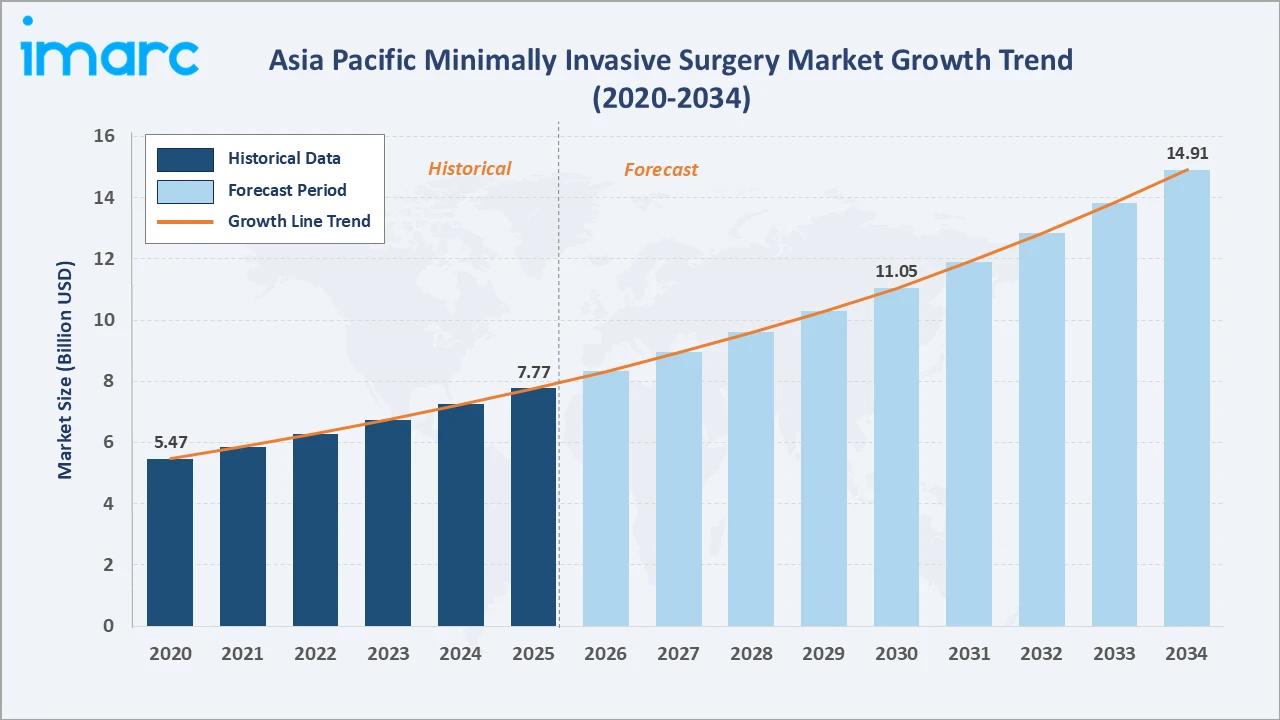
The Asia Pacific minimally invasive surgery market reached USD 7.77 Billion in 2025 and is projected to reach USD 14.91 Billion by 2034, growing at a CAGR of 7.29% during 2026-2034. Growth is driven by rising incidences of cardiac, orthopedic, and oncological conditions, an expanding geriatric population, and government support for advanced surgical equipment development. Laparoscopy Devices lead the product type segment at 43.7%, Hospitals dominate end-user demand at 61.5%, and China commands 35.6% of the regional market.
Market Snapshot
|
Metric |
Value |
|
Market Size (2025) |
USD 7.77 Billion |
|
Forecast Market Size (2034) |
USD 14.91 Billion |
|
CAGR (2026-2034) |
7.29% |
|
Base Year |
2025 |
|
Historical Period |
2020-2025 |
|
Forecast Period |
2026-2034 |
|
Dominant Product Type |
Laparoscopy Devices (43.7%, 2025) |
|
Dominant End User |
Hospitals (61.5%, 2025) |
|
Leading Country |
China (35.6%, 2025) |
The market grew from USD 5.47 Billion in 2020 to USD 7.77 Billion in 2025, recovering steadily after COVID-19 deferred elective procedures, and is anchored at USD 11.05 Billion in 2030 before reaching USD 14.91 Billion by 2034.
To get more information on this market, Request Sample
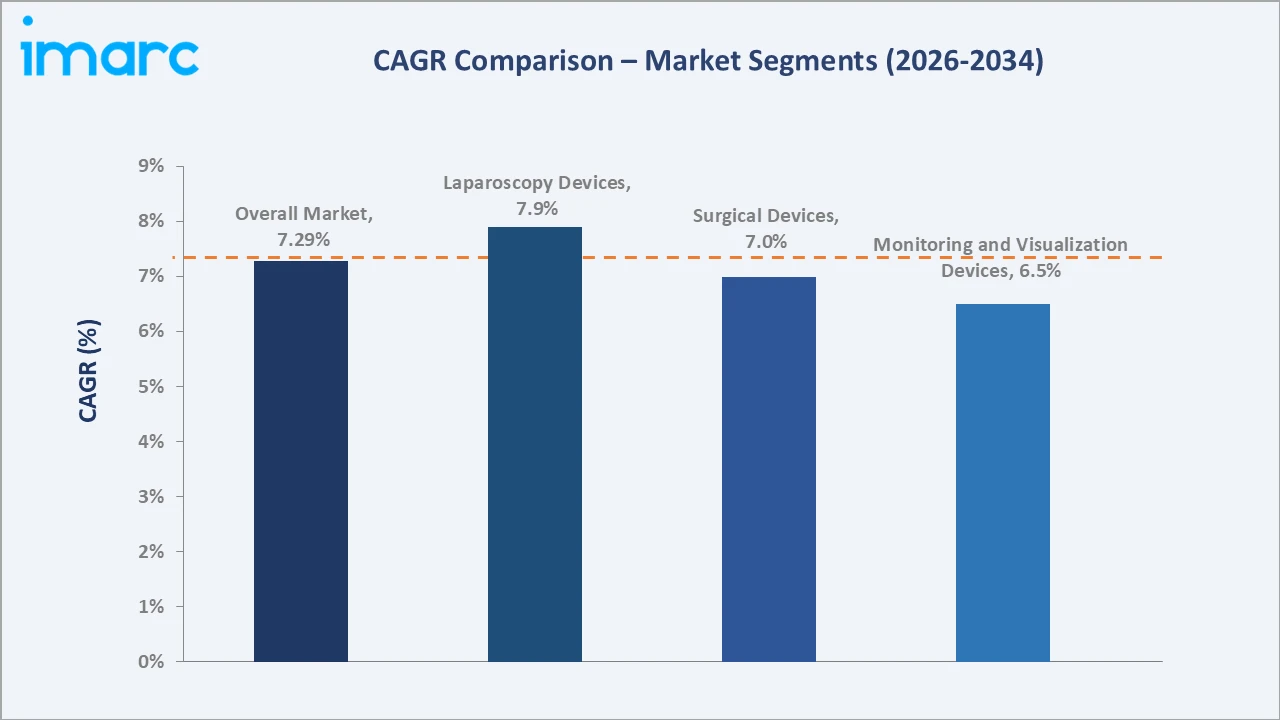
Clinics grow fastest among end users at approximately 8.0% CAGR as ambulatory surgical capacity expands, while Laparoscopy Devices lead product type growth at approximately 7.9% CAGR through rising adoption of single-port and needlescopic systems across the region.
Executive Summary
The Asia Pacific minimally invasive surgery market reached USD 7.77 Billion in 2025, reflecting the region's rapid transition from open surgical techniques toward laparoscopic, endoscopic, and robotic-assisted procedures. Minimally invasive surgery reduces hospital stay duration, recovery time, and patient trauma relative to conventional open surgery, driving strong preference among surgeons and patients alike. The market is projected to reach USD 14.91 Billion by 2034, supported by sustained investment in hospital infrastructure and surgical training capacity across the region.
Laparoscopy Devices at 43.7% dominate the product type segment through widespread use in gastrointestinal, gynaecological, and bariatric procedures. Hospitals at 61.5% lead end-user demand as the primary setting for complex MIS procedures. China at 35.6% leads regionally through its large patient population and expanding hospital infrastructure, followed by Japan and India.
Key Market Insights
|
Insight |
Data |
|
Dominant Product Type |
Laparoscopy Devices - 43.7% share (2025) |
|
Dominant End User |
Hospitals - 61.5% market share (2025) |
|
Leading Country |
China - 35.6% market share (2025) |
|
Market Opportunity |
AI-integrated visualization; single-port laparoscopy; robotic-assisted platforms; ambulatory surgical centers; India hospital infrastructure scale-up |
Key Analytical Observations Supporting the Above Data:
- Laparoscopy Devices at 43.7%: This segment dominates as it offers reduced incision size, faster recovery, and lower complication rates across gastrointestinal, gynaecological, and general surgery procedures, supported by rising adoption among hospitals and surgical centers.
- Hospitals at 61.5%: Hospitals dominate as the primary setting for MIS procedures given their advanced infrastructure, trained surgical staff, and post-operative care capabilities required for complex laparoscopic and robotic-assisted surgeries.
- China at 35.6%: China leads through its large patient base, rapidly expanding hospital networks, and strong government support for advanced surgical equipment adoption across tier-1 and tier-2 cities.
Asia Pacific Minimally Invasive Surgery Market Overview
The Asia Pacific minimally invasive surgery market encompasses laparoscopy devices, surgical devices, and monitoring and visualization devices used across hospitals, clinics, and other care settings for cardiac, orthopedic, gastrointestinal, and cosmetic procedures, among others. The market's scope spans device manufacturing, clinical adoption, and aftersales support across the region's diverse healthcare systems, which range from highly developed networks in Japan and Australia to rapidly modernizing systems in India and Indonesia.
The ecosystem integrates device manufacturers, component suppliers, distributors, hospitals, clinics, and regulatory bodies including China's NMPA, Japan's PMDA, and India's CDSCO. Macroeconomic factors include rising healthcare expenditure, an aging population, and growing medical tourism across the region, all of which continue to shape procurement patterns and device adoption cycles. Cross-border patient flows for advanced procedures further reinforce demand for internationally certified MIS devices.
Market Dynamics
To evaluate market opportunities, Request Sample
Market Drivers
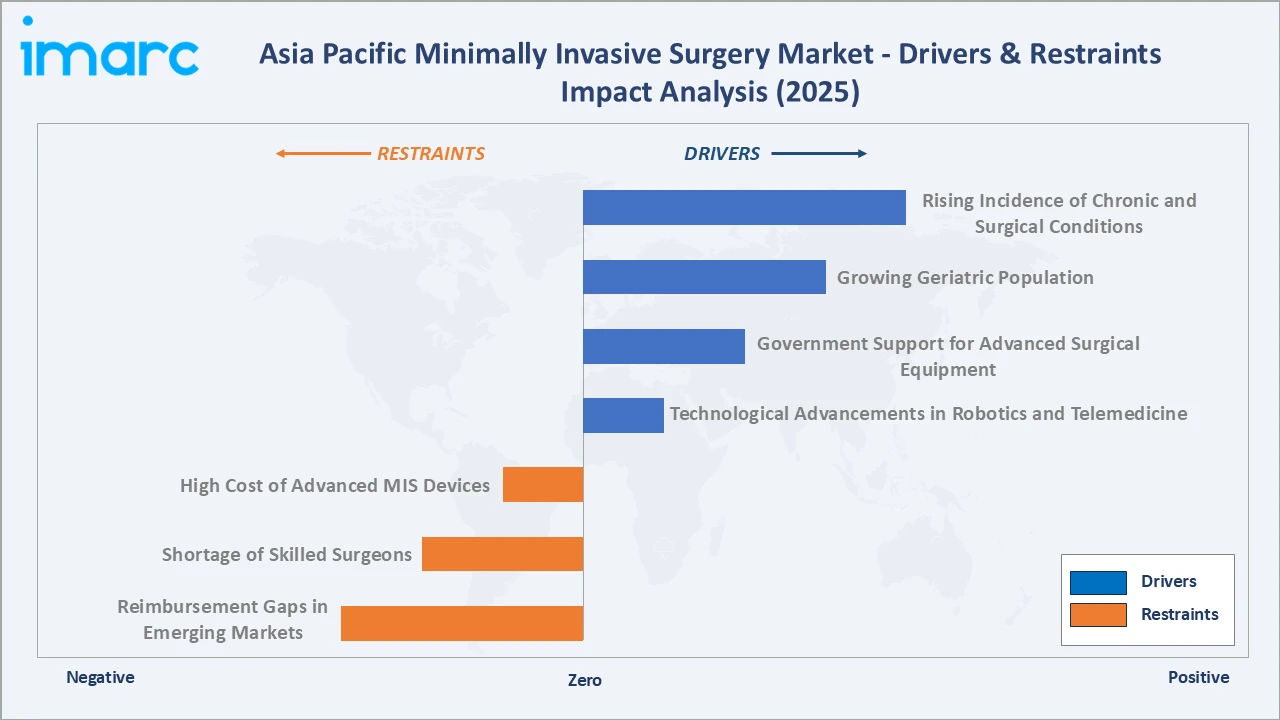
- Rising Incidence of Chronic and Surgical Conditions: Growing prevalence of cardiac illness, arthritis, and cancer across Asia Pacific is increasing demand for surgical intervention. MIS procedures offer safer alternatives to open surgery, driving adoption among hospitals treating these rising caseloads. Screening programs across China and Japan are identifying candidates for surgery earlier, expanding the addressable patient pool. Growing awareness of minimally invasive options among referring physicians is also accelerating patient referrals to specialist surgical centers.
- Growing Geriatric Population: The region's aging population, particularly in Japan, China, and South Korea, is increasing the volume of orthopedic, cardiac, and gastrointestinal procedures, most of which are increasingly performed using minimally invasive techniques to reduce recovery time for elderly patients. Elderly patients face higher surgical risk under open procedures, making MIS a preferred pathway for reducing complications. National healthcare systems are also prioritizing MIS reimbursement for elderly cohorts to reduce post-operative hospitalization costs.
- Government Support for Advanced Surgical Equipment: Collaborations between governments, universities, and companies, such as Japan's public-private initiatives, are driving innovation in MIS equipment development, encouraging faster adoption of advanced laparoscopic and monitoring devices across public hospital networks. China's medical equipment upgrade programs are similarly subsidizing hospital purchases of laparoscopic towers and visualization systems. These initiatives collectively lower the capital barrier for tier-2 and tier-3 city hospitals to modernize their surgical infrastructure.
- Technological Advancements in Robotics and Telemedicine: Advances in medical robotics, AI-integrated visualization, and telemedicine are enhancing surgical precision and enabling remote proctoring, further propelling demand for MIS procedures and supporting devices across the region's expanding hospital infrastructure. Remote mentoring platforms are helping regional surgeons gain proficiency in advanced techniques without extensive overseas training. AI-assisted image analysis is also reducing intraoperative decision-making time, supporting broader adoption in high-volume surgical centers.
Market Restraints
- High Cost of Advanced MIS Devices: Robotic-assisted systems and advanced visualization platforms carry high acquisition and maintenance costs, limiting adoption among smaller hospitals and clinics, particularly in emerging Southeast Asian markets with constrained capital budgets. Financing and leasing arrangements remain underdeveloped in several markets, further limiting equipment access. Ongoing consumable and servicing costs add to the total cost of ownership, discouraging smaller facilities from upgrading existing laparoscopic towers.
- Shortage of Skilled Surgeons: Minimally invasive techniques require specialized training; a shortage of surgeons proficient in laparoscopic and robotic-assisted procedures constrains the pace of MIS adoption outside major metropolitan hospital networks. Surgical training programs in several countries have not scaled fast enough to match rising procedure demand. This shortage is particularly acute in rural and semi-urban facilities, where patients are often referred to distant tertiary centers.
- Reimbursement Gaps in Emerging Markets: Uneven insurance coverage and reimbursement frameworks across Indonesia, India, and other emerging markets increase out-of-pocket costs for patients, slowing broader adoption of advanced MIS procedures. Private insurance penetration remains limited outside major urban centers, leaving many patients to self-fund elective MIS procedures. Public insurance schemes in several countries also cap reimbursement well below the cost of advanced device consumables.
Market Opportunities
- Ambulatory Surgical Center Expansion: Growth of outpatient surgical centers across urban Asia Pacific markets creates new procurement channels for compact, cost-efficient MIS devices suited to same-day discharge procedures. These centers typically favor devices with lower upfront cost and simplified maintenance requirements. Their rapid proliferation across China and Australia is opening a distinct purchasing channel separate from traditional hospital tenders.
- AI-Integrated Visualization Platforms: Rising adoption of AI-enabled imaging and fluorescence-guided surgery platforms offers manufacturers opportunities to differentiate through improved surgical precision and workflow efficiency. Early clinical evidence linking AI-assisted visualization to reduced operative time is strengthening the commercial case for hospital upgrades. Vendors that bundle AI software subscriptions with hardware sales are also opening new recurring revenue streams.
Market Challenges
- Regulatory Fragmentation Across Countries: Differing approval pathways across China's NMPA, Japan's PMDA, and India's CDSCO increase time-to-market and compliance costs for manufacturers seeking region-wide product launches. Manufacturers often need country-specific clinical data packages, adding to development timelines. Harmonization efforts among regional regulators remain at an early stage, leaving fragmentation as a persistent structural challenge.
- Price Competition from Domestic Manufacturers: Growing domestic device manufacturing capacity in China and India is intensifying price competition, pressuring margins for established international MIS device suppliers. Local manufacturers benefit from lower production costs and faster regulatory turnaround within their home markets. This dynamic is prompting global suppliers to localize manufacturing or pursue tiered pricing strategies to remain competitive.
Emerging Market Trends
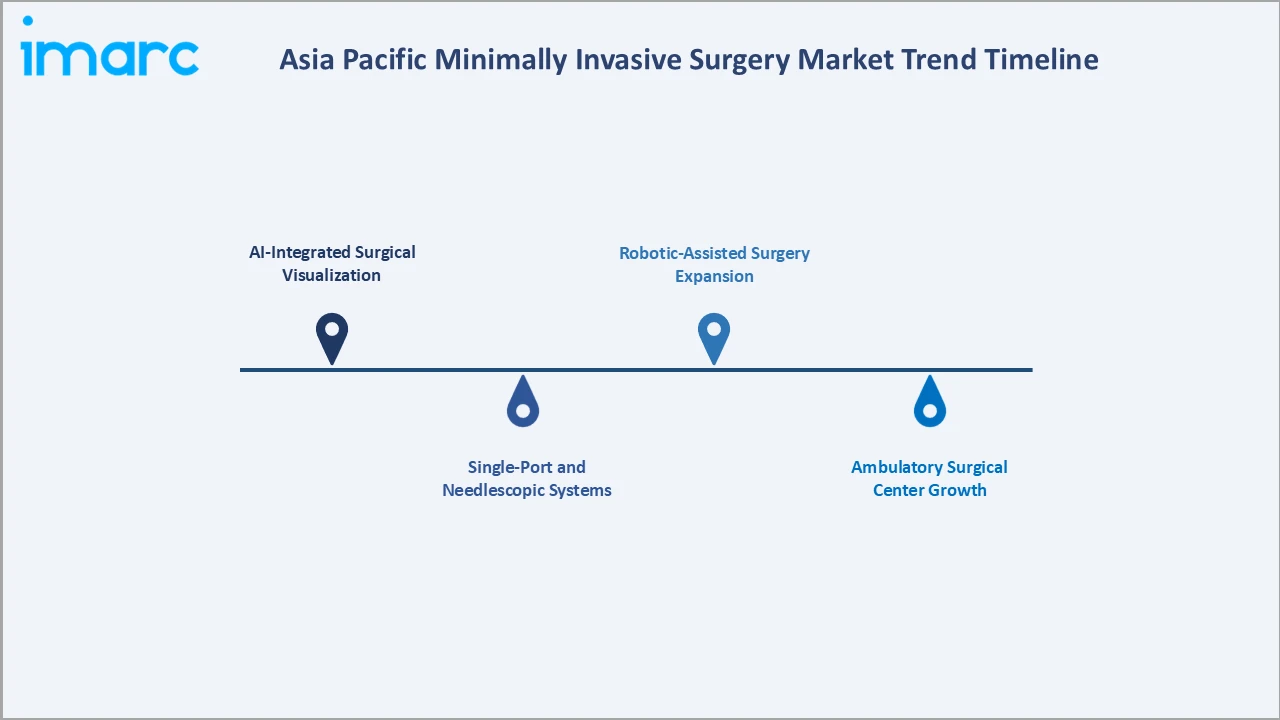
1. AI-Integrated Surgical Visualization
AI-enabled imaging platforms are enhancing surgical precision through real-time tissue recognition and fluorescence-guided visualization. In March 2026, Olympus launched its VISERA ELITE III surgical imaging platform, supporting laparoscopic, arthroscopic, and multispecialty MIS procedures with advanced 4K imaging and continuous autofocus.
2. Single-Port and Needlescopic Systems
Manufacturers are developing single-incision and needlescopic instrument systems that further reduce scarring and recovery time, appealing to cosmetic and gynaecological surgery segments increasingly popular among younger patients across urban Asia Pacific markets.
3. Robotic-Assisted Surgery Expansion
Robotic-assisted platforms are expanding beyond flagship hospitals into regional centers as manufacturers introduce compact and handheld systems. Stryker's Mako RPS handheld robot, illustrates the shift toward accessible robotic-assisted MIS technology.
4. Ambulatory Surgical Center Growth
The proliferation of ambulatory surgical centers across China, Japan, and Australia is creating demand for compact, portable MIS device configurations optimized for high-throughput, same-day discharge surgical workflows.
Industry Value Chain Analysis
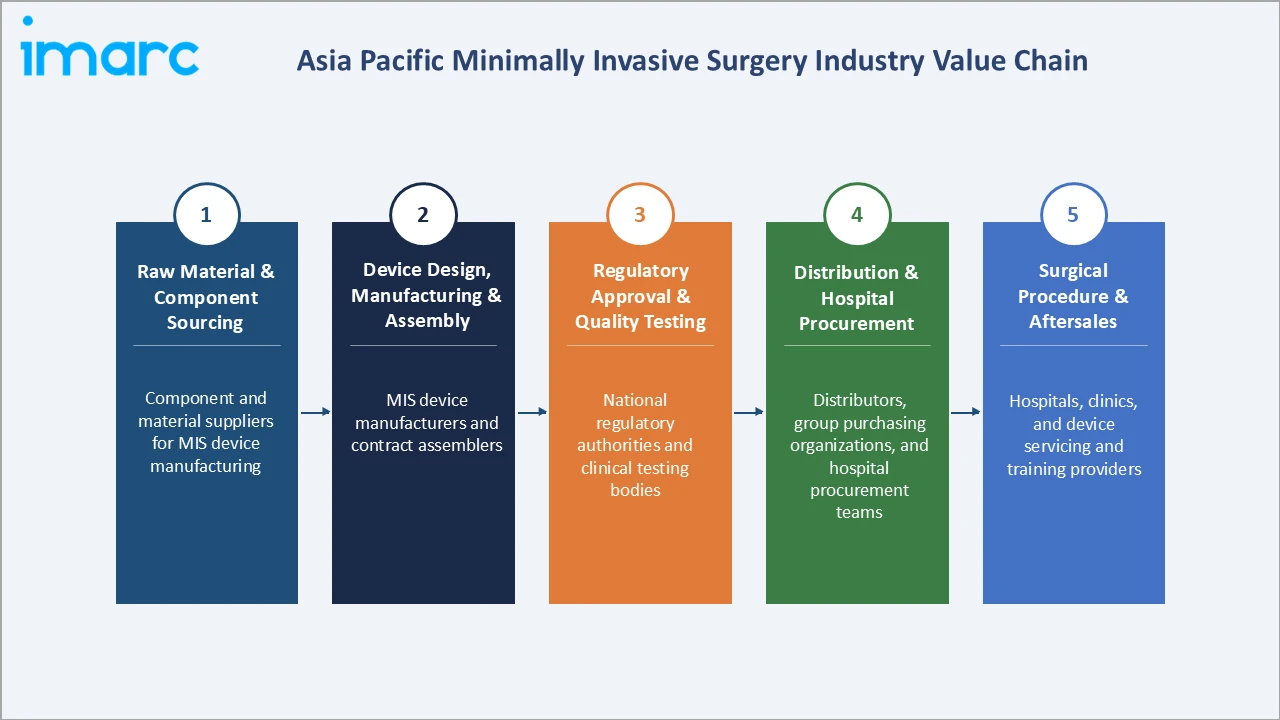
The Asia Pacific MIS value chain integrates component sourcing, device manufacturing, regulatory approval, distribution, and aftersales support, with the regulatory approval stage acting as the primary gatekeeper for market entry across the region's fragmented national regulatory frameworks.
|
Stage |
Key Participants |
|
Raw Material & Component Sourcing |
Component and material suppliers for MIS device manufacturing |
|
Device Design, Manufacturing & Assembly |
MIS device manufacturers and contract assemblers |
|
Regulatory Approval & Quality Testing |
National regulatory authorities and clinical testing bodies |
|
Distribution & Hospital Procurement |
Distributors, group purchasing organizations, and hospital procurement teams |
|
Surgical Procedure & Aftersales Support |
Hospitals, clinics, and device servicing and training providers |
Technology Landscape in the Asia Pacific Minimally Invasive Surgery Industry
Laparoscopic Imaging and Energy Devices
Laparoscopic imaging platforms combined with advanced energy devices for tissue dissection and vessel sealing form the technological backbone of most MIS procedures, offering surgeons enhanced visualization and precise tissue management during minimally invasive interventions. Continued miniaturization of camera and light-source components is further improving access to confined surgical fields.
Robotic-Assisted Surgical Systems
Robotic-assisted platforms provide enhanced dexterity, tremor filtration, and 3D visualization, improving surgical outcomes for complex orthopedic, urological, and gynaecological procedures, with adoption accelerating as compact and handheld robotic systems reach regional hospital networks. Declining per-unit system costs are gradually extending robotic adoption beyond flagship academic hospitals.
Monitoring and Visualization Technology
Advanced monitoring and visualization systems, including 4K and fluorescence-guided imaging, are improving intraoperative decision-making by enabling surgeons to distinguish healthy from diseased tissue in real time, supporting broader MIS adoption across surgical specialties. Integration with hospital data systems is also enabling post-procedure video review for training and quality improvement.
Market Segmentation Analysis
The report covers the following segments:
|
Segment Category |
Leading Segment |
Market Share |
Year |
|
Product Type |
Laparoscopy Devices |
43.7% |
2025 |
|
Application |
Gynaecological Surgery |
🔒 |
2025 |
|
End User |
Hospitals |
61.5% |
2025 |
|
Country |
China |
35.6% |
2025 |

By Product Type
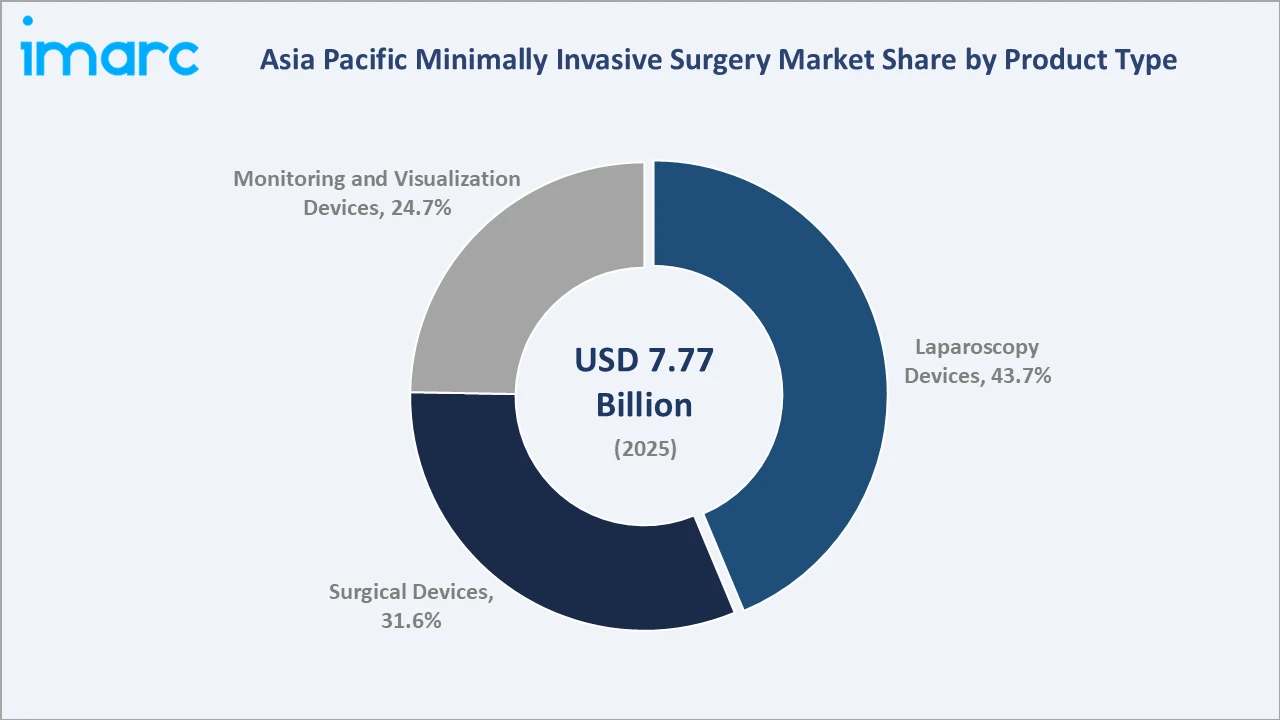
Laparoscopy Devices lead at 43.7% in 2025, encompassing laparoscopes, trocars, and insufflation systems used across gastrointestinal, gynaecological, and general surgery procedures, the most commercially established MIS product category in the region.
To access detailed market analysis, Request Sample
Surgical Devices at 31.6% include staplers, energy devices, and hand instruments supporting a broad range of MIS procedures. Monitoring and Visualization Devices at 24.7% capture imaging systems, video processors, and displays essential to laparoscopic and robotic-assisted surgery. Together, these three categories form a tightly interlinked product ecosystem, as most MIS procedures require a combination of devices from all three groups.
By End User
Hospitals lead at 61.5% through their advanced infrastructure and capacity to manage complex, multi-specialty MIS procedures requiring dedicated operating rooms, trained surgical teams, and post-operative care facilities.
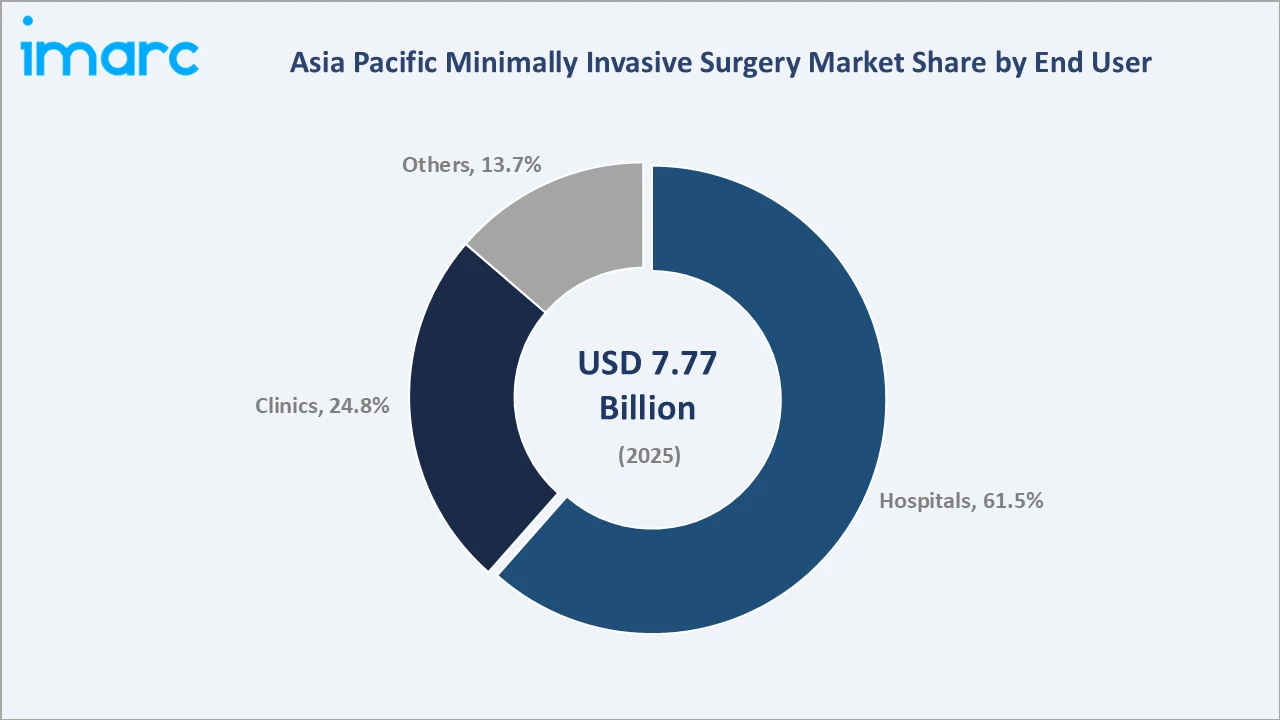
Clinics at 24.8% are gaining share as outpatient and ambulatory MIS procedures expand. Others at 13.7%, including specialty surgical centers, reflect the region's diversifying care delivery models for less complex MIS interventions. This gradual shift toward outpatient settings is expected to continue as device manufacturers introduce more compact, clinic-suited MIS equipment.
Regional Market Insights
|
Country |
Share (2025) |
Key MIS Market Drivers & Characteristics |
|
China |
35.6% |
Driven by its large patient base, expanding hospital infrastructure, and supportive government healthcare policies |
|
Japan |
20.4% |
Supported by an aging population, high healthcare spending, and a strong domestic medical device manufacturing base |
|
India |
16.8% |
Driven by rising healthcare investment, expanding hospital networks, and growing medical tourism |
|
South Korea |
10.7% |
Supported by advanced healthcare infrastructure and strong adoption of robotic-assisted surgery |
|
Australia |
7.2% |
Driven by well-established healthcare systems and early adoption of advanced surgical technologies |
|
Indonesia |
4.9% |
Emerging with growing healthcare infrastructure investment and rising demand for surgical care |
|
Others |
4.4% |
Reflects early-stage but steadily growing MIS adoption across the remaining regional markets |
China at 35.6% leads through its large-scale hospital expansion and government-backed healthcare modernization programs. Japan at 20.4% reflects its aging population and domestic manufacturing strength, while India at 16.8% benefits from rising medical tourism and infrastructure investment.
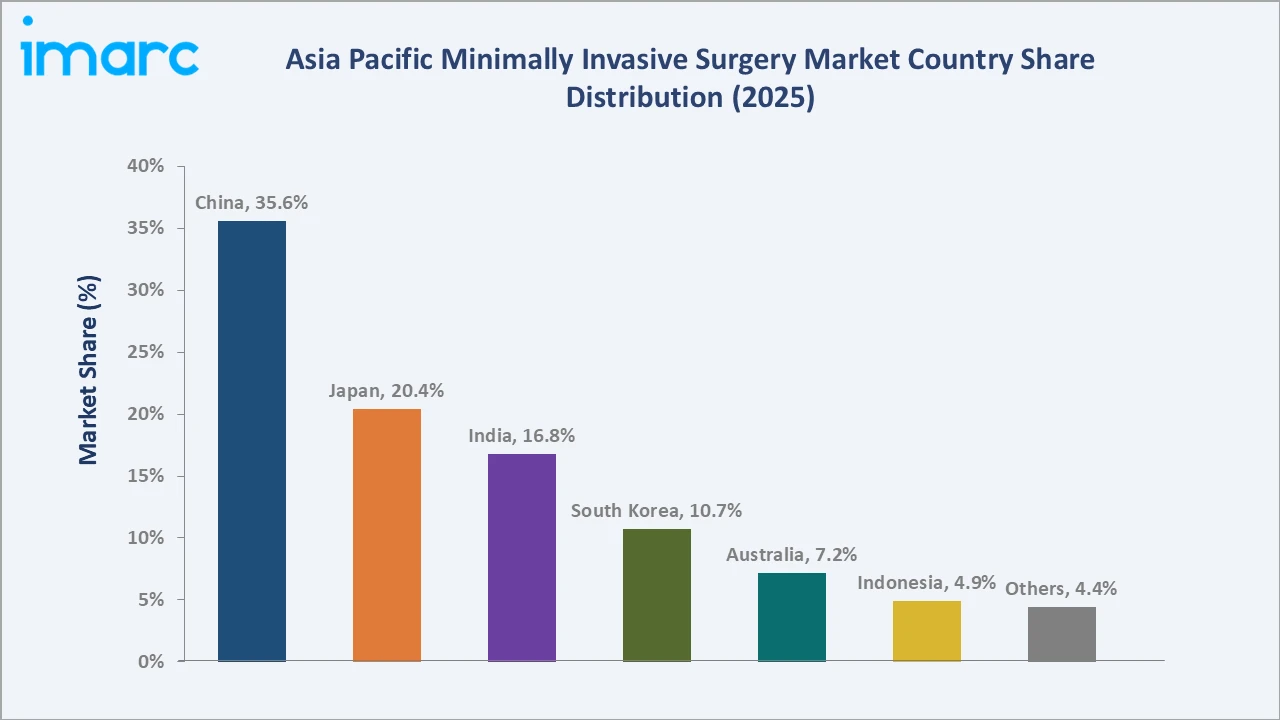
South Korea at 10.7% and Australia at 7.2% reflect mature, technologically advanced healthcare systems. Indonesia at 4.9% and Others at 4.4% represent earlier-stage but steadily growing MIS markets across the wider region. As healthcare infrastructure investment continues across Southeast Asia, these smaller markets are expected to gradually narrow the adoption gap with the region's largest economies.
Competitive Landscape
The Asia Pacific minimally invasive surgery market competitive landscape is moderately concentrated, comprising global medical technology leaders, strong regional challengers, and niche specialty device manufacturers competing across laparoscopy, surgical devices, and visualization technology.
|
Company Name |
Key Products |
Market Position |
Core Strength |
|
Medtronic |
Signia Stapling System, LigaSure Vessel Sealing, Touch Surgery Ecosystem |
Market Leader |
Global leadership in laparoscopic devices with AI-enabled surgical analytics |
|
Johnson & Johnson |
ECHELON Powered Staplers, HARMONIC Scalpel, VELYS Robotics |
Market Leader |
Broad energy, stapling, and robotics portfolio across general surgery |
|
Olympus Corporation |
VISERA ELITE III Platform, EndoTherapy Devices |
Strong Challenger |
Japan-based leadership in endoscopic imaging and visualization systems |
|
Stryker |
1688 AIM Platform, Mako SmartRobotics, Mako RPS |
Strong Challenger |
Advanced visualization and robotic-assisted MIS instrumentation |
|
Boston Scientific Corporation |
SpyGlass Discover, LithoVue |
Niche Specialist |
Endoscopic imaging and guided devices for GI and urology procedures |
|
B. Braun SE |
Aesculap Caiman, EinsteinVision 3.0 |
Niche Specialist |
Energy devices and 3D visualization systems for MIS procedures |
Key players include Medtronic, Johnson & Johnson, Olympus Corporation, Stryker, Boston Scientific Corporation, B. Braun SE, and others.
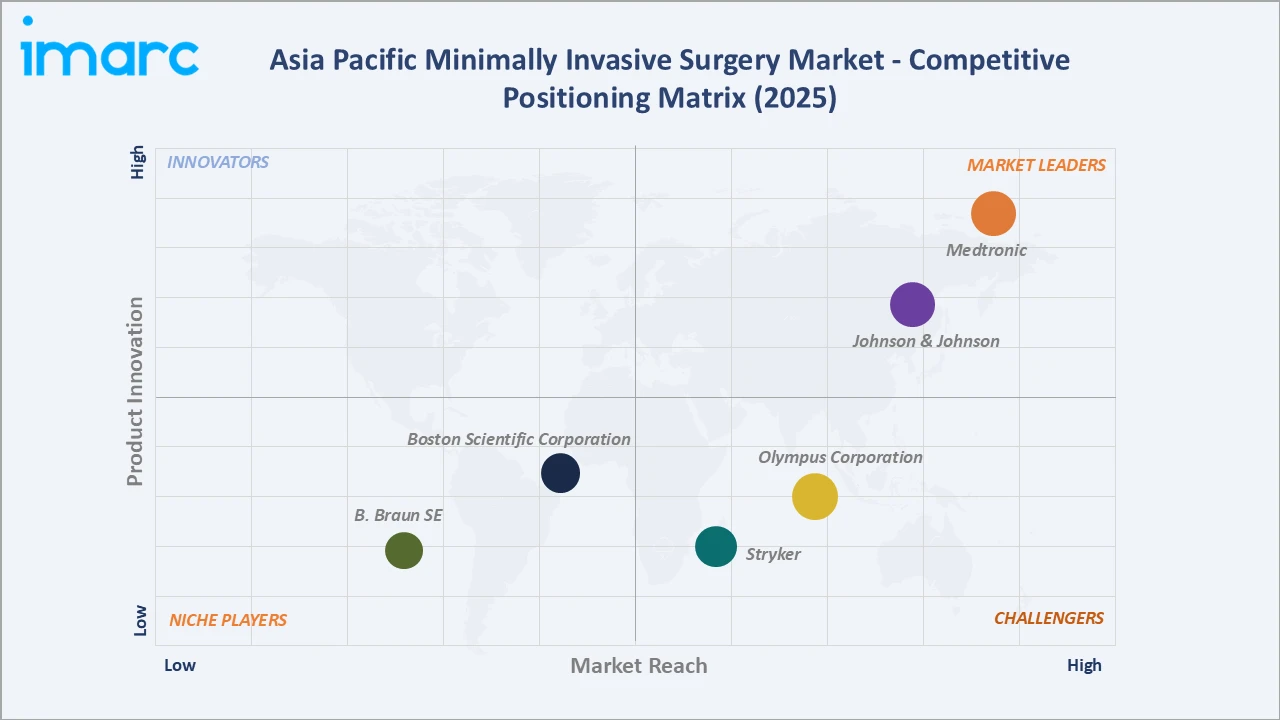
Key Company Profiles
Medtronic
Medtronic is a global healthcare technology company with a strong presence in the Asia Pacific minimally invasive surgery market through its laparoscopic stapling, energy, and AI-enabled surgical analytics portfolio.
- Key Products: Signia Stapling System, LigaSure Vessel Sealing, Touch Surgery Ecosystem.
- Recent Developments: In September 2021, Medtronic and Apollo Hospitals Group announced the first clinical procedure in the Asia-Pacific region using Medtronic’s Hugo Robotic-Assisted Surgery (RAS) system. As a form of minimally invasive surgery, robotic-assisted surgery offers the potential for fewer complications, shorter hospital stays, faster return to normal activities, and smaller scars.
- Strategic Focus: Expanding regional surgeon training infrastructure and AI-integrated surgical analytics to support broader robotic and laparoscopic adoption across Asia Pacific. Medtronic is also deepening partnerships with regional hospital networks to accelerate clinician onboarding onto its digital surgery ecosystem. The company continues to invest in localized manufacturing and service capacity to shorten equipment lead times across key Asian markets.
Olympus Corporation
Olympus Corporation is a Japan-based medical technology company with a leading presence in the Asia Pacific minimally invasive surgery market through its endoscopic imaging and visualization systems.
- Key Products: VISERA ELITE III Surgical Imaging Platform, EndoTherapy Devices.
- Recent Developments: In February 2025, Olympus expanded rollout of its iTind minimally invasive device for benign prostatic hyperplasia across six APAC markets, including India, Singapore, Thailand, Australia, Hong Kong, and South Korea; in March 2026, it launched its VISERA ELITE III imaging platform.
- Strategic Focus: Expanding AI-integrated endoscopic visualization and minimally invasive urology solutions across key Asia Pacific markets. Olympus continues to broaden its regional training and innovation programs to strengthen ties with local hospital networks and surgeons. The company is also prioritizing multispecialty platform compatibility to extend the useful life of installed imaging systems across its APAC customer base.
Market Concentration Analysis
The Asia Pacific MIS market is moderately concentrated, with the key players collectively accounting for an estimated 35-45% of regional laparoscopy and surgical device revenue. Domestic Chinese and South Korean manufacturers account for an estimated 15-20% of regional volume, with concentration gradually declining as regional suppliers gain quality certification for mainstream hospital procurement. This gradual de-concentration is expected to continue as domestic manufacturers expand their product portfolios beyond entry-level devices.
Investment & Growth Opportunities
Highest Growth Segments
Clinics (~8.0% CAGR), Laparoscopy Devices (~7.9% CAGR), robotic-assisted surgical platforms, AI-integrated visualization systems, and ambulatory surgical center-focused compact devices represent the highest-growth investment vectors through 2034.
Emerging Investment Opportunities
India's expanding hospital infrastructure and medical tourism sector represent the region's fastest-growing MIS procurement opportunity, as rising healthcare investment and government support create structurally growing demand for advanced surgical devices through 2034.
Investment Themes
- Regional manufacturing localization for cost-competitive MIS devices: Establishing manufacturing capacity within China, India, and South Korea reduces import costs and tariff exposure while meeting local regulatory and sourcing preferences of domestic hospital networks.
- AI-integrated visualization platform development: Investment in AI-enabled imaging and fluorescence-guided surgery technology creates a differentiated, defensible product position as hospitals increasingly prioritize surgical precision and workflow efficiency.
Future Market Outlook (2026-2034)
The Asia Pacific minimally invasive surgery market is projected to grow from USD 7.77 Billion in 2025 to USD 14.91 Billion by 2034, delivering a 7.29% CAGR. The market's anchor value of USD 11.05 Billion in 2030 reflects continued hospital infrastructure expansion, rising MIS procedure volumes, and broader robotic-assisted surgery adoption across the region.
Three structural forces define market growth through 2034. Rising chronic disease prevalence sustains procedure volume growth across cardiac, orthopedic, and oncological indications. Expanding hospital and ambulatory surgical infrastructure across China and India creates additional procurement capacity. Continued technological advancement in robotics and AI-integrated visualization broadens the clinical scope of MIS adoption across surgical specialties, while rising surgeon training capacity gradually widens access to advanced procedures beyond major metropolitan centers. Collectively, these forces position the region as one of the fastest-modernizing surgical technology markets globally through the forecast period.
Research Methodology
Primary Research
Primary research comprised structured interviews with industry stakeholders, including hospital procurement leads, surgeons specializing in MIS procedures, and regional device distributors across China, Japan, and India. These interviews were used to validate segment-level growth assumptions and to identify emerging procurement priorities among hospital networks.
Secondary Research
Secondary research encompassed company annual reports, national health ministry data, regional medical device association publications, and peer-reviewed surgical technology literature, with over 50 secondary sources reviewed. Historical procedure volume data was cross-referenced across multiple sources to improve estimate reliability.
Forecasting Models
Market revenue forecasts were developed using a bottom-up approach combining country-level procedure volume estimates, average device revenue per procedure by product type, and top-down validation against regional healthcare expenditure trends. Forecast sensitivity was tested against alternative healthcare spending growth scenarios across the region's largest markets.
Asia Pacific Minimally Invasive Surgery Market Report Coverage:
| Report Features | Details |
|---|---|
| Base Year of the Analysis | 2025 |
| Historical Period | 2020-2025 |
| Forecast Period | 2026-2034 |
| Units | Billion USD |
| Scope of the Report | Exploration of Historical Trends and Market Outlook, Industry Catalysts and Challenges, Segment-Wise Historical and Future Market Assessment:
|
| Product Types Covered | Surgical Devices, Laparoscopy Devices, Monitoring and Visualization Devices |
| Applications Covered | Bariatric Surgery, Breast Surgery, Cardiac Surgery, Cosmetic Surgery, Gastrointestinal Surgery, Gynaecological Surgery, Orthopedics and Spine Surgery, Thoracic Surgery, Others |
| End Users Covered | Hospitals, Clinics, Others |
| Countries Covered | China, Japan, India, South Korea, Australia, Indonesia, Others |
| Companies Covered | Medtronic, Johnson & Johnson, Olympus Corporation, Stryker, Boston Scientific Corporation, B. Braun SE, etc. |
| Customization Scope | 10% Free Customization |
| Post-Sale Analyst Support | 10-12 Weeks |
| Delivery Format | PDF and Excel through Email (We can also provide the editable version of the report in PPT/Word format on special request) |
Frequently Asked Questions About the Asia Pacific Minimally Invasive Surgery Market Report
The Asia Pacific MIS market reached USD 7.77 Billion in 2025, driven by Laparoscopy Devices dominant at 43.7%, Hospitals leading end-user demand at 61.5%, and China commanding 35.6% of the regional market.
The market grows at a 7.29% CAGR during 2026-2034, reaching USD 14.91 Billion by 2034, reflecting rising chronic disease prevalence, an aging population, and expanding hospital infrastructure across the region.
Laparoscopy Devices lead at 43.7%, capturing the most commercially established MIS product category, growing at approximately 7.9% CAGR through rising adoption of single-port and needlescopic systems.
Hospitals lead at 61.5% through their capacity to manage complex, multi-specialty MIS procedures, while Clinics grow fastest at approximately 8.0% CAGR as ambulatory surgical capacity expands across China and India.
China leads at 35.6% through its large patient population and expanding hospital infrastructure, followed by Japan at 20.4% and India at 16.8%.
Leading companies include Medtronic, Johnson & Johnson, Olympus Corporation, Stryker, Boston Scientific Corporation, B. Braun SE, and others.
The market is projected to reach approximately USD 11.05 Billion by 2030, with robotic-assisted surgery and AI-integrated visualization platforms gaining broader adoption across regional hospital networks.
Priority opportunities include regional manufacturing localization, AI-integrated visualization platform development, and India's expanding hospital infrastructure and medical tourism sector.
Need more help?
- Speak to our experienced analysts for insights on the current market scenarios.
- Include additional segments and countries to customize the report as per your requirement.
- Gain an unparalleled competitive advantage in your domain by understanding how to utilize the report and positively impacting your operations and revenue.
- For further assistance, please connect with our analysts.
 Request Customization
 Speak to an Analyst
 Request Brochure
 Inquire Before Buying
Benefits of Customization
- Personalize this research
- Triangulate with your data
- Get data as per your format and definition
- Gain a deeper dive into a specific application, geography, customer, or competitor
- Any level of personalization
Get in Touch With Us
UNITED STATES
Phone: +1-201-971-6302
INDIA
Phone: +91-120-433-0800
UNITED KINGDOM
Phone: +44-753-714-6104
Email: [email protected]
Client Testimonials




.webp)




.webp)













Related Reports

Choose your plan
*Please note that the prices mentioned below are starting prices for each bundle type. Kindly contact our team for further details.*
Single User License
- 1 User License, Access on 2 Devices
- PDF Report + Excel Dataset (Password Protected)
- Lifetime Access
- No Printing Rights
- 10% Free Report Customization
- 10–12 Weeks of Analyst Support
Five User License
- Access for 5 Users, 2 Devices per User
- PDF Report + Excel Dataset (Password Protected)
- Lifetime Access
- Dedicated Account Manager
- 12–14 Weeks of Analyst Support
- No Printing Rights
- 15% Free Report Customization
- 25% Discount on Your Next Purchase
Corporate User License
- Unlimited User Access (Within Your Organization)
- PDF Report + Excel Dataset
- Lifetime Access
- Dedicated Account Manager
- 14–20 Weeks of Analyst Support
- No Printing Rights
- 20% Free Report Customization
- 30% Discount on Your Next Purchase
Essential Insights
What's included:
3 reports
- Lifetime Access
- PDF Reports
- Excel Datasets
- 2 Weeks of Free Analyst Support
- 2 User Licenses
- Access on 2 Devices
- Printing Rights
- Complimentary PowerPoint (PPT) Version
- Complimentary License Upgrade
Professional Access
What's included:
5 reports
- Lifetime Access
- PDF Reports
- Excel Datasets
- 8 Weeks of Free Analyst Support
- 2 User Licenses
- Access on 2 Devices
- Printing Rights
- Complimentary PowerPoint (PPT) Version
- Complimentary License Upgrade
Business Advantage
What's included:
8 reports
- Lifetime Access
- PDF Reports
- Excel Datasets
- 14 Weeks of Free Analyst Support
- 2 User Licenses
- Access on 2 Devices
- Printing Rights
- Complimentary PowerPoint (PPT) Version
- Complimentary License Upgrade
Enterprise Intelligence
What's included:
10 reports
- Lifetime Access
- PDF Reports
- Excel Datasets
- 20 Weeks of Free Analyst Support
- 2 User Licenses
- Access on 2 Devices
- Printing Rights
- Complimentary PowerPoint (PPT) Version
- Complimentary License Upgrade