
Canada Generic Drug Market: Industry Trends, Share, Size, Growth, Opportunity and Forecast 2026-2034
Canada Generic Drug Market Size, Share, Trends & Forecast (2026-2034)
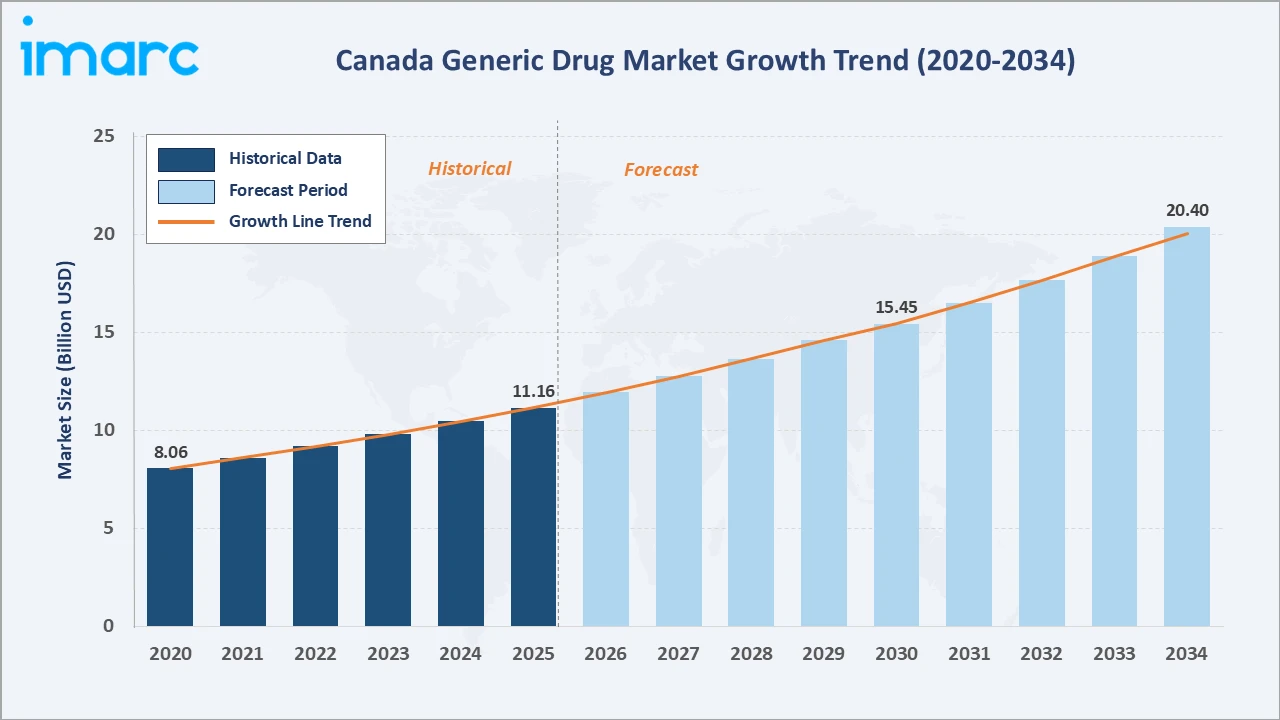
The Canada generic drug market reached USD 11.16 Billion in 2025 and is projected to reach USD 20.40 Billion by 2034, growing at a CAGR of 6.73% during 2026-2034. The rising burden of chronic diseases driving generic prescription volumes, ongoing patent expirations of major brand-name drugs opening generic entry, provincial drug plan policies mandating generic substitution, and Canada’s growing elderly population requiring sustained multi-drug therapy are the primary growth catalysts.
Market Snapshot
|
Metric |
Value |
|
Market Size (2025) |
USD 11.16 Billion |
|
Forecast Market Size (2034) |
USD 20.40 Billion |
|
CAGR (2026-2034) |
6.73% |
|
Base Year |
2025 |
|
Historical Period |
2020-2025 |
|
Forecast Period |
2026-2034 |
The Canada generic drug market is driven by three structural demand forces: the progressive patent cliff as major brand-name drugs lose patent protection and create immediate generic entry opportunities; provincial drug program formulary policies that actively mandate or incentivize pharmacists to dispense generic alternatives to reduce provincial drug expenditure; and the structural increase in chronic disease prescription volumes driven by Canada’s aging population.
To get more information on this market, Request Sample
Executive Summary
The Canada generic drug market is experiencing robust growth, driven by the convergence of an increasing chronic disease burden creating sustained prescription demand, provincial drug plan policies actively favoring generic substitution to control public drug expenditure, and Canada’s ongoing biosimilar switching policies that are extending generic competition principles into the biologic drug category. The market was valued at USD 11.16 Billion in 2025 and is forecast to reach USD 20.40 Billion by 2034, growing at a CAGR of 6.73%.
Canada’s generic drug market is one of the well-developed in the world, with generic drugs accounting for approximately 75% of all prescription drug dispensing transactions (by volume) while representing a significantly lower share by value, reflecting the fundamental economics of generic drug competition where price competition rapidly erodes the per-unit value of generic drugs after market entry.
The Pan-Canadian Pharmaceutical Alliance (pCPA) generic drug pricing framework, implemented across provincial drug programs, has established maximum reimbursement prices for generic drugs that have further increased the volume-over-value ratio of the Canadian generic market. Key players compete across formulary breadth, manufacturing capability, provincial tender performance, and biosimilar pipeline depth.
Key Market Insights
Key Analytical Observations Supporting the Above Data:
- As hypertension, dyslipidemia, and heart failure are becoming the most prevalent chronic conditions in Canada, with nearly 25% of adults in Canada aged 20 years and above living with diagnosed hypertension and the majority treated with first-line generic antihypertensives, including amlodipine, ramipril, lisinopril, and atorvastatin. The cardiovascular generic market benefits from extremely high prescription renewal rates and low brand-to-generic switch resistance for established medications.
- Canada’s universal healthcare model directs the majority of prescription drug dispensing through community pharmacies with universal access points. Canada’s approximately 11,000+ retail pharmacies serve as the primary dispensing point for provincial drug program beneficiaries and private insurance members, with mandatory generic substitution rules in most provinces requiring pharmacists to dispense the lowest-cost generic equivalent unless the prescriber specifically indicates otherwise.
- CNS & neurology is the high and growing prevalence of depression, anxiety, epilepsy, and dementia in Canada’s aging population. Generic versions of antidepressants, anticonvulsants, and sedative-hypnotics represent high-volume dispensing categories within the retail pharmacy channel, with significant brand-to-generic switching occurring when major branded CNS drugs lose patent protection.
Canada Generic Drug Market Overview
Generic drugs are pharmaceutical products that are bioequivalent to brand-name reference drugs in terms of active pharmaceutical ingredient (API), dosage form, strength, route of administration, and intended use. In Canada, generic drugs are regulated by Health Canada under the Food and Drug Regulations, requiring manufacturers to submit an Abbreviated New Drug Submission (ANDS) demonstrating bioequivalence to the reference listed drug and compliance with Good Manufacturing Practices (GMP) before receiving a Notice of Compliance (NOC) authorizing market sale.
Macroeconomic drivers include the prescription drug spending under public drug plans, which reached CAD 14.1 billion, up from CAD 13.2 billion in 2021/22 (Patented Medicine Prices Review Board’s (PMPRB) CompassRx report); and the pCPA’s generic drug pricing framework, establishing maximum prices for over 4,000 generic products at 18–25% of the reference listed drug price for most therapeutic categories. Canada’s federal Bill C-64, introducing national pharmacare for diabetes and contraception products in 2024, represents the beginning of a structural expansion of public drug coverage that will drive incremental generic dispensing volumes through the provincial and federal payer system through 2034.
Market Dynamics
To evaluate market opportunities, Request Sample
Market Drivers
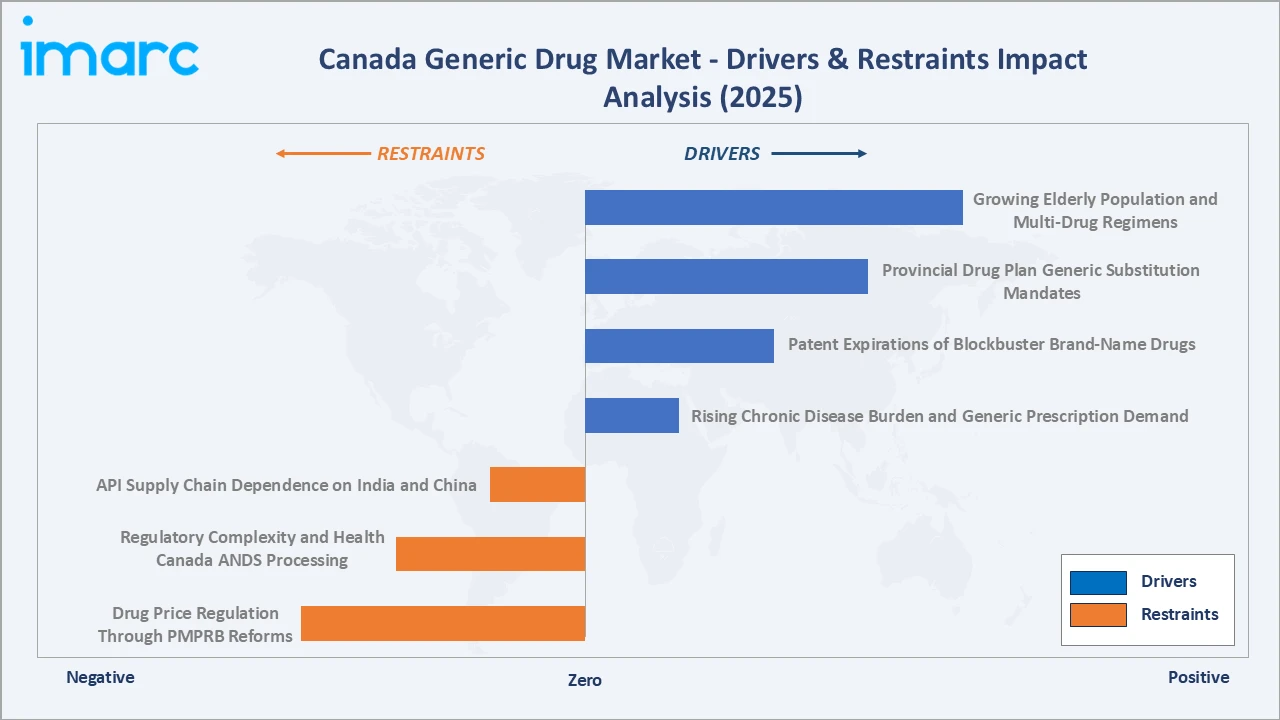
- Rising Chronic Disease Burden and Generic Prescription Demand: The Canadian Chronic Disease Surveillance System reports that 8.2% of adults in Canada were living with diagnosed ischemic heart disease, and about 25% of adults in Canada aged 20 years and older are living with diagnosed hypertension, all conditions requiring sustained multi-drug therapy, predominantly fulfilled by generic medications once initial branded therapies lose patent protection.
- Patent Expirations of Blockbuster Brand-Name Drugs: The continued patent cliff for major brand-name pharmaceuticals is creating recurring generic market entry opportunities as new product categories become available for generic competition. Recent and upcoming patent expirations in Canada include major biologic drugs whose biosimilar alternatives Health Canada is increasingly approving, representing the next wave of generic-equivalent market entry after the small-molecule patent cliff of the 2010s.
- Provincial Drug Plan Generic Substitution Mandates: All Canadian provincial drug programs operate generic substitution or equivalency policies that actively incentivize or mandate pharmacists to dispense the lowest-cost generic equivalent of any brand-name prescription. Ontario’s Transparent Drug System for Patients Act, Quebec’s Act respecting prescription drug insurance equivalency provisions, and BC’s Low Cost Alternative policy each create regulatory mandates for generic dispensing that collectively drive Canada’s high generic prescription volume.
- Growing Elderly Population and Multi-Drug Regimens: In Canada, almost one in five people (19.5%) were aged 65 and older on July 1, 2025, representing a demographic cohort that uses, on average, 5–7 prescription medications per person, the majority of which are generic drugs for chronic disease management. The combination of higher per-capita prescription volume among seniors and the coverage of the majority of senior drug costs through provincial programs creates a compounding structural demand driver for generic drug volume growth through the forecast period.
Market Restraints
- Regulatory Complexity and Health Canada ANDS Processing: The Abbreviated New Drug Submission process at Health Canada requires comprehensive documentation, including bioequivalence study data, chemistry and manufacturing information, and quality control data that takes 12–36 months to review. The backlog of ANDS submissions and the complexity of bioequivalence standards for modified-release, narrow therapeutic index, and inhaled drug products create development timeline uncertainty for generic manufacturers planning market entry.
- Drug Price Regulation Through PMPRB Reforms: The Patented Medicine Prices Review Board (PMPRB) regulates the maximum price at which patented drug manufacturers can sell in Canada, and has been engaged in ongoing reform of its pricing framework to align Canadian drug prices with those of comparator countries.
- API Supply Chain Dependence on India and China: Canada’s generic drug manufacturers are heavily dependent on active pharmaceutical ingredient supply from India and China, which collectively produce the majority of global API supply. Geopolitical risk, quality concerns, regulatory compliance failures at API manufacturing facilities, and pandemic-era supply chain disruptions create supply chain vulnerability for Canadian generic manufacturers and have contributed to periodic drug shortages that affect patient access and create reputational risk for the generic drug industry.
Market Opportunities
- National Pharmacare Program Expansion: Canada’s federal Bill C-64 Pharmacare Act, passed in 2024, introduced a national pharmacare program for diabetes and contraception coverage with plans for expansion to additional therapeutic categories. Full implementation of a national pharmacare program would represent the largest structural expansion of the Canadian generic drug addressable market in decades, as nearly 3 million Canadians are not able to afford one or more of their prescription drugs.
- Biosimilar Switching Policy Expansion: Provincial biosimilar switching policies are transitioning eligible public drug program beneficiaries from originator biologic products to lower-cost biosimilars for conditions including inflammatory arthritis, Crohn’s disease, psoriasis, and anemia. These mandatory switching programs are creating a structural new wave of generic-equivalent market penetration in the biologic drug category, representing the most significant generic market expansion opportunity of the 2025–2030 period.
Market Challenges
- Drug Shortages and Supply Chain Vulnerability: Canada has experienced recurrent generic drug shortages affecting hundreds of medications annually, driven by API supply chain disruptions, manufacturing quality failures, and the economics of generic drug manufacturing that create thin margins that discourage manufacturers from maintaining excess production capacity as a supply buffer. In 2023–24, a total of 3,098 drug shortages were reported, representing an increase of nearly 15% compared with 2022–23, according to Health Canada.
- Generic Drug Price Erosion and Manufacturer Margin Pressure: The pCPA’s category-based generic drug pricing framework has driven continuous generic drug price erosion that compresses manufacturer margins on established generic products. The 18–25% of brand-name reference price ceiling for most generic drugs, combined with multi-source competition among 5–10 approved generic manufacturers for major product categories, creates intense price competition that limits the profitability of the Canadian generic market for manufacturers with high domestic manufacturing cost structures.
Emerging Market Trends
1. Biosimilar Market Expansion Through Mandatory Switching
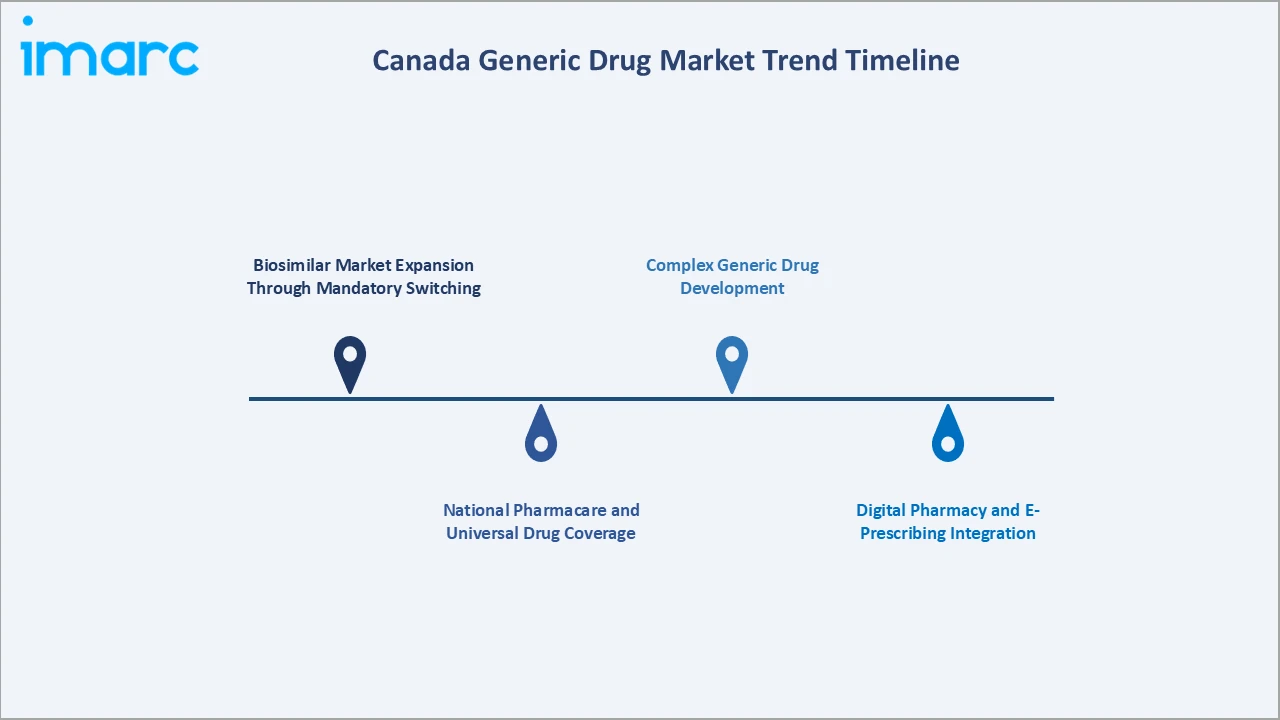
The provincial biosimilar switching policies mandating transition of public drug program beneficiaries from originator biologics to approved biosimilars for conditions including rheumatoid arthritis, inflammatory bowel disease, psoriasis, and anemia are creating a structural new market category within the Canadian generic drug ecosystem. Health Canada had approved 67 biosimilar products as of April 2025, with the number projected to grow significantly through 2034 as additional biologic drugs lose data protection.
2. National Pharmacare and Universal Drug Coverage
Canada’s federal Pharmacare Act, introduced through Bill C-64 in 2024, represents the most significant structural policy development for the Canadian generic drug market since the establishment of provincial drug programs. The initial coverage of diabetes medications and contraception under the national pharmacare framework creates immediate incremental prescription volumes for generic manufacturers in these categories, while signaling a long-term trajectory toward broader national drug coverage that would significantly expand the Canadian generic drug addressable market.
3. Digital Pharmacy and E-Prescribing Integration
The integration of e-prescribing, digital pharmacy platforms, medication adherence tracking, and automated refill programs is transforming generic drug dispensing operations. Pharmacy chains, including Shoppers Drug Mart, Rexall, and Jean Coutu, are investing significantly in digital pharmacy capabilities that enable seamless prescription transfer, mobile medication management, and home delivery of generic prescriptions.
4. Complex Generic Drug Development
Generic manufacturers are increasingly pursuing complex generic drug approvals for technically challenging dosage forms, including long-acting injectable microsphere formulations, inhaled drug products, intranasal sprays, transdermal patches, and liposomal injectables that have historically been protected from generic competition by technical barriers even after patent expiry. Health Canada’s guidance development for complex generic products and the investment by Apotex, Teva Canada, and international manufacturers in complex generic development pipelines are creating the next wave of generic market entry in therapeutic categories previously insulated from generic competition.
Industry Value Chain Analysis
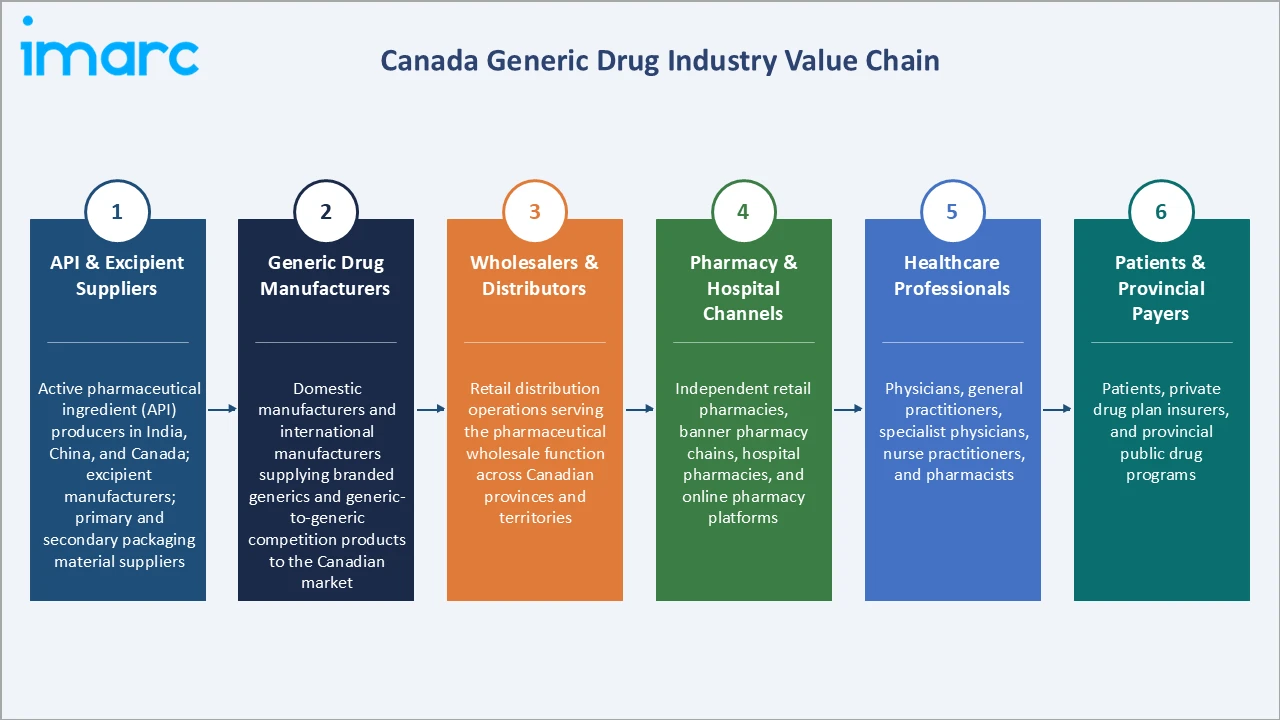
The Canada generic drug market value chain spans from active pharmaceutical ingredient and excipient supply through domestic and international generic drug manufacturing, Health Canada regulatory review and approval, pharmaceutical wholesale distribution, pharmacy and hospital dispensing, prescriber-patient interaction, and provincial and private payer reimbursement.
|
Stage |
Key Players / Examples |
|
API & Excipient Suppliers |
Active pharmaceutical ingredient (API) producers in India, China, and Canada; excipient manufacturers; primary and secondary packaging material suppliers |
|
Generic Drug Manufacturers |
Domestic manufacturers and international manufacturers supplying branded generics and generic-to-generic competition products to the Canadian market |
|
Wholesalers & Distributors |
Retail distribution operations serving the pharmaceutical wholesale function across Canadian provinces and territories |
|
Pharmacy & Hospital Channels |
Independent retail pharmacies, banner pharmacy chains, hospital pharmacies, and online pharmacy platforms |
|
Healthcare Professionals |
Physicians, general practitioners, specialist physicians, nurse practitioners, and pharmacists |
|
Patients & Provincial Payers |
Patients, private drug plan insurers, and provincial public drug programs |
Technology Landscape in the Canada Generic Drug Industry
Bioequivalence Assessment and Regulatory Science
Health Canada’s bioequivalence requirements for ANDS approval require generic manufacturers to demonstrate that their product delivers equivalent drug exposure (AUC and Cmax) to the reference listed drug within the standard confidence interval in pharmacokinetic studies conducted in healthy volunteers. Advances in physiologically-based pharmacokinetic (PBPK) modelling, in-vitro dissolution testing methodology, and biopharmaceutics classification system (BCS)-based biowaiver science are progressively enabling generic manufacturers to reduce the human clinical study burden for certain generic drug categories while maintaining equivalence standards.
Advanced Manufacturing Technologies
Canadian generic drug manufacturers are investing in advanced manufacturing technologies, including continuous manufacturing, which enables uninterrupted drug production with real-time quality monitoring, replacing traditional batch manufacturing, reducing manufacturing cost, and improving quality consistency. Apotex’s investment in solid dosage form continuous manufacturing, spray drying for amorphous dispersion formulations enabling improved bioavailability of poorly soluble drugs, and lyophilisation capacity for injectable generic biologics exemplify the Canadian generic drug industry’s manufacturing technology investment.
Serialization and Supply Chain Traceability
Health Canada’s drug traceability requirements and the pharmaceutical industry’s adoption of GS1 serialization standards are requiring generic drug manufacturers to implement unit-level product serialization, aggregation tracking, and electronic pedigree documentation across their Canadian market supply chains. Serialization implementation creates supply chain transparency that reduces counterfeit drug risk, enables rapid and accurate drug recall execution, and supports regulatory compliance with Health Canada’s Drug Identification Number (DIN) traceability requirements.
Competitive Landscape
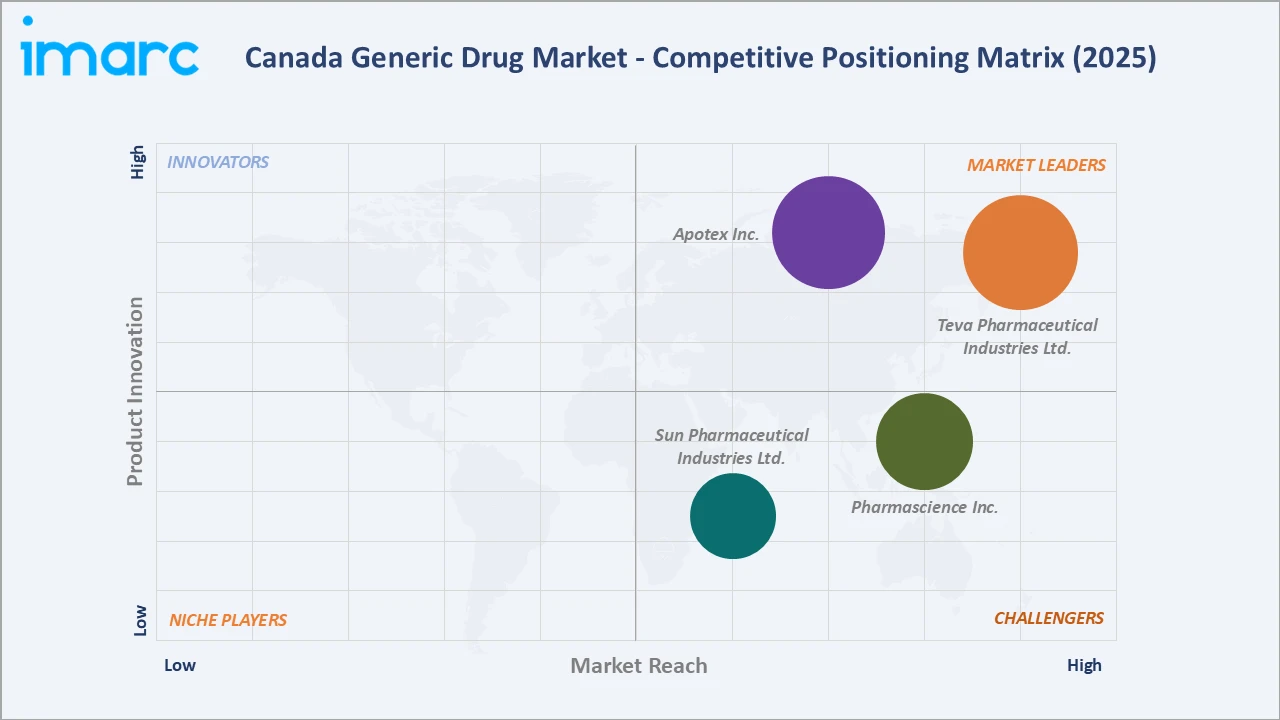
The Canada generic drug market exhibits moderate-to-high concentration, with the top manufacturers collectively holding approximately 55–65% of total generic drug market revenue.
|
Company Name |
Key Product Range |
Market Position |
Core Strength |
|
Teva Pharmaceutical Industries Ltd. |
Oral solids, injectables, biologics |
Market Leader |
Global generic market leader with strong Canadian franchise; broad formulary-listed generic portfolio across all major therapeutic areas |
|
Apotex Inc. |
Oral solids, creams, ophthalmic |
Market Leader |
Canadian-headquartered global generic manufacturer; largest domestic manufacturing capability |
|
Pharmascience Inc. |
Oral solids, liquids, generics |
Strong Challenger |
Strong RAMQ formulary presence; growing international export business from Canadian manufacturing base |
|
Sun Pharmaceutical Industries Ltd. |
Oral solids, dermatology, specialty |
Challenger |
Indian generic company with growing Canadian distribution; competitive pricing in dermatology and CNS generic categories |
The competitive landscape is evolving as biosimilar market development creates a new high-value competition tier above standard small-molecule generic drugs. Companies with biosimilar development capability are positioned to capture disproportionate revenue growth relative to companies limited to small-molecule generic portfolios.
Key Company Profiles
Apotex Inc.
Apotex Inc. is one of Canada’s largest domestic generic drug manufacturers and one of the world’s largest generic pharmaceutical companies. The company represents Canada’s most significant domestic pharmaceutical manufacturing capability and the generic drug company with the deepest formulary presence across all provincial drug programs.
- Product Portfolio: Generic drug products spanning oral solids, semi-solids, ophthalmic preparations, and inhalers across cardiovascular, CNS, oncology, anti-infective, and dermatology therapeutic categories, under the Apo- brand prefix.
- Recent Developments: In May 2026, Apotex launched Apo-Semaglutide Injection, a generic equivalent of Ozempic, in Canada following Health Canada approval. The once-weekly prefilled pen is indicated for adults with type 2 diabetes to improve glycemic control, with initial inventory shipping to wholesalers and pharmacy availability expected within weeks.
- Strategic Focus: Complex generic product development for reduced pricing competition; biosimilar pipeline development; international market expansion; domestic manufacturing optimization for pCPA formulary price compliance; digital pharmacy channel engagement.
Teva Pharmaceutical Industries Ltd.
Teva Pharmaceutical Industries Ltd.’s subsidiary, Teva Canada Limited, is one of Canada’s largest generic drug distributors and marketers, operating primarily through the importation of globally manufactured generic drugs supported by Canadian regulatory affairs, sales, and distribution operations.
- Product Portfolio: Broad generic drug portfolio across all major therapeutic areas, including cardiovascular, CNS, gastrointestinal, dermatology, and respiratory generic categories.
- Recent Developments: In April 2026, Teva Pharmaceutical Industries Ltd. reported Q1 2026 revenues of about USD 4.0 billion, up 2% year-over-year in U.S. dollar terms, driven by growth in its innovative medicines portfolio and disciplined execution.
- Strategic Focus: Biosimilar market leadership for Canadian provincial switching programs; formulary breadth maintenance across pCPA pricing framework; digital pharmacy channel development; complex generic product pipeline, Canada market entry.
Market Concentration Analysis
The Canada generic drug market exhibits moderate-to-high concentration at the national formulary-listed supplier level, where the top manufacturers hold approximately 55–65% of total market revenue. The remaining 35–45% is distributed among smaller Canadian generic manufacturers and a growing number of international generic drug importers supplying Health Canada-approved generic products to Canadian wholesalers and pharmacy chains.
Market concentration is increasing as the pCPA’s generic pricing framework creates pricing pressure that makes small-volume generic products uneconomical for small manufacturers to maintain on their product lists, driving product discontinuation and market exit from marginal categories that concentrates remaining supply among larger manufacturers with the economies of scale to maintain profitability at regulated price points.
Investment & Growth Opportunities
Fastest Growing Segments
Biosimilar drugs (~12–15% CAGR), oncology generic and biosimilar products (~9% CAGR), digital pharmacy distribution channel (~8% annual growth), and national pharmacare-covered therapeutic categories represent the highest-growth investment vectors within the Canada generic drug market through 2034. Complex generic product categories, including long-acting injectables, inhaled generics, and transdermal patches, command above-market revenue per prescription and grow at above-market rates as technical development barriers enable higher generic pricing versus commodity oral solid categories.
Emerging Trends
Several structural trends are reshaping the Canada generic drug market through 2034. The national pharmacare program’s expansion beyond its initial diabetes and contraception categories represents the most transformative potential market expansion event, as universal pharmacare would add millions of currently uninsured Canadians as publicly covered generic drug consumers. Domestic generic drug manufacturing capacity investment is creating new domestic manufacturing capability for API and finished dose forms that reduces import dependence.
Technology Investment Trends
- Biosimilar analytical characterization and manufacturing technology investment is the highest-priority R&D area for generic drug companies targeting the Canadian market, with cell culture scale-up, protein analytics, and Health Canada biosimilar guideline compliance representing the primary technical investment vectors for companies seeking to participate in provincial biosimilar switching program tenders.
- Digital pharmacy platform investment is attracting both incumbent pharmacy chain capital and venture-backed startup investment in Canada, with online prescription dispensing, medication adherence monitoring, automated refill management, and virtual pharmacist consultation services creating new generic drug distribution economics that improve dispensing efficiency and patient access.
- Complex generic drug development investment in modified-release oral dosage forms, parenteral generic formulations, and inhaled generic products is growing among Canadian generic manufacturers seeking above-commodity margin through technical differentiation in product categories with limited generic competition.
Future Market Outlook (2026-2034)
The Canada generic drug market is positioned for sustained robust growth through 2034. From USD 11.16 Billion in 2025, the market is projected to reach USD 20.40 Billion by 2034, representing total incremental value creation of USD 9.24 Billion at a CAGR of 6.73%.
This growth is underpinned by the irreversible demographic aging creating above-GDP chronic disease drug demand growth, the biosimilar market expansion creating a new high-value generic category alongside established small-molecule generic competition, and the potential national pharmacare program expansion that could structurally increase the generic drug addressable market by incorporating currently uninsured Canadians.
The market’s competitive structure will continue evolving as biosimilar development capability becomes the primary differentiator between market leaders and challengers, digital pharmacy disruption reshapes generic drug distribution economics, and domestic manufacturing investment creates new supply chain resilience advantages for companies that invest in Canadian production capacity.
Research Methodology
Primary Research
Primary research comprised structured interviews with over 65 industry participants in 2024–2025, including generic drug manufacturer executives, Health Canada regulatory affairs specialists, provincial drug program pharmacoeconomists, Canadian pharmacy chain procurement managers, hospital pharmacy directors, prescribing physicians, and generic drug industry association representatives. Expert input validated market sizing, provincial demand estimates, and segment growth rates.
Secondary Research
Secondary research encompassed generic drug company annual reports and investor presentations, Health Canada Drug Product Database data, Canadian Institute for Health Information (CIHI) National Health Expenditure Trends pharmaceutical spending data, Canadian Institute for Health Information drug use reports, IQVIA Canadian pharmaceutical market data, provincial drug program annual reports (ODB, RAMQ, BC PharmaCare, Alberta Blue Cross), and industry publications including the Canadian Pharmacists Journal, and Drug Benefit Trends.
Forecasting Models
Market size estimations were derived using top-down and bottom-up forecasting, incorporating Canadian pharmaceutical market total expenditure projections, generic drug penetration rate modelling by therapeutic area, provincial drug program formulary expansion analysis, patent expiry and generic entry timeline analysis for major brand-name drugs, biosimilar market development modelling, and national pharmacare implementation scenario analysis.
Key Benefits for Stakeholders:
- IMARC’s report offers a comprehensive quantitative analysis of various market segments, historical and current market trends, market forecasts, and dynamics of the Canada generic drug market from 2020-2034.
- The research study provides the latest information on the market drivers, challenges, and opportunities in the Canada generic drug market.
- Porter's five forces analysis assists stakeholders in assessing the impact of new entrants, competitive rivalry, supplier power, buyer power, and the threat of substitution. It helps stakeholders to analyze the level of competition within the Canada generic drug industry and its attractiveness.
- Competitive landscape allows stakeholders to understand their competitive environment and provides insight into the current positions of key players in the market.
Frequently Asked Questions About the Canada Generic Drug Market Report
The Canada generic drug market reached USD 11.16 Billion in 2025 and is projected to reach USD 20.40 Billion by 2034.
The market is expected to grow at a CAGR of 6.73% during 2026-2034, driven by rising chronic disease burden, patent expirations, provincial generic substitution mandates, biosimilar market expansion, and national pharmacare program development.
Some of the key players include Teva Pharmaceutical Industries Ltd., Apotex Inc., Pharmascience Inc., and Sun Pharmaceutical Industries Ltd., competing across formulary breadth, manufacturing capability, provincial tender performance, and biosimilar pipeline depth.
Key drivers include the rising chronic disease burden driving generic prescription volumes, ongoing patent expirations of brand-name drugs opening generic entry, biosimilar market expansion through provincial switching mandates, and national pharmacare program development.
The Canada generic drug market was valued at approximately USD 8.06 Billion in 2020, growing to USD 11.16 Billion by 2025, reflecting consistent above-healthcare-GDP growth driven by patent expirations, provincial formulary expansion, and chronic disease prescription volume growth.
Key opportunities include biosimilar development for provincial switching program tenders, national pharmacare expansion coverage categories, domestic API and finished dose manufacturing for supply chain resilience, and therapeutic area expansion into underserved or recently patent-expired drug categories.
Need more help?
- Speak to our experienced analysts for insights on the current market scenarios.
- Include additional segments and countries to customize the report as per your requirement.
- Gain an unparalleled competitive advantage in your domain by understanding how to utilize the report and positively impacting your operations and revenue.
- For further assistance, please connect with our analysts.
 Request Customization
 Speak to an Analyst
 Request Brochure
 Inquire Before Buying
Benefits of Customization
- Personalize this research
- Triangulate with your data
- Get data as per your format and definition
- Gain a deeper dive into a specific application, geography, customer, or competitor
- Any level of personalization
Get in Touch With Us
UNITED STATES
Phone: +1-201-971-6302
INDIA
Phone: +91-120-433-0800
UNITED KINGDOM
Phone: +44-753-714-6104
Email: [email protected]
Client Testimonials




.webp)




.webp)













Related Reports

Choose your plan
*Please note that the prices mentioned below are starting prices for each bundle type. Kindly contact our team for further details.*
Single User License
- 1 User License, Access on 2 Devices
- PDF Report + Excel Dataset (Password Protected)
- Lifetime Access
- No Printing Rights
- 10% Free Report Customization
- 10–12 Weeks of Analyst Support
Five User License
- Access for 5 Users, 2 Devices per User
- PDF Report + Excel Dataset (Password Protected)
- Lifetime Access
- Dedicated Account Manager
- 12–14 Weeks of Analyst Support
- No Printing Rights
- 15% Free Report Customization
- 25% Discount on Your Next Purchase
Corporate User License
- Unlimited User Access (Within Your Organization)
- PDF Report + Excel Dataset
- Lifetime Access
- Dedicated Account Manager
- 14–20 Weeks of Analyst Support
- No Printing Rights
- 20% Free Report Customization
- 30% Discount on Your Next Purchase
Essential Insights
What's included:
3 reports
- Lifetime Access
- PDF Reports
- Excel Datasets
- 2 Weeks of Free Analyst Support
- 2 User Licenses
- Access on 2 Devices
- Printing Rights
- Complimentary PowerPoint (PPT) Version
- Complimentary License Upgrade
Professional Access
What's included:
5 reports
- Lifetime Access
- PDF Reports
- Excel Datasets
- 8 Weeks of Free Analyst Support
- 2 User Licenses
- Access on 2 Devices
- Printing Rights
- Complimentary PowerPoint (PPT) Version
- Complimentary License Upgrade
Business Advantage
What's included:
8 reports
- Lifetime Access
- PDF Reports
- Excel Datasets
- 14 Weeks of Free Analyst Support
- 2 User Licenses
- Access on 2 Devices
- Printing Rights
- Complimentary PowerPoint (PPT) Version
- Complimentary License Upgrade
Enterprise Intelligence
What's included:
10 reports
- Lifetime Access
- PDF Reports
- Excel Datasets
- 20 Weeks of Free Analyst Support
- 2 User Licenses
- Access on 2 Devices
- Printing Rights
- Complimentary PowerPoint (PPT) Version
- Complimentary License Upgrade