
Disinfection Robots Market Size, Share, Trends and Forecast by Product Type, Technology, End User, and Region, 2026-2034
Disinfection Robots Market Size, Share, Trends & Forecast (2026-2034)
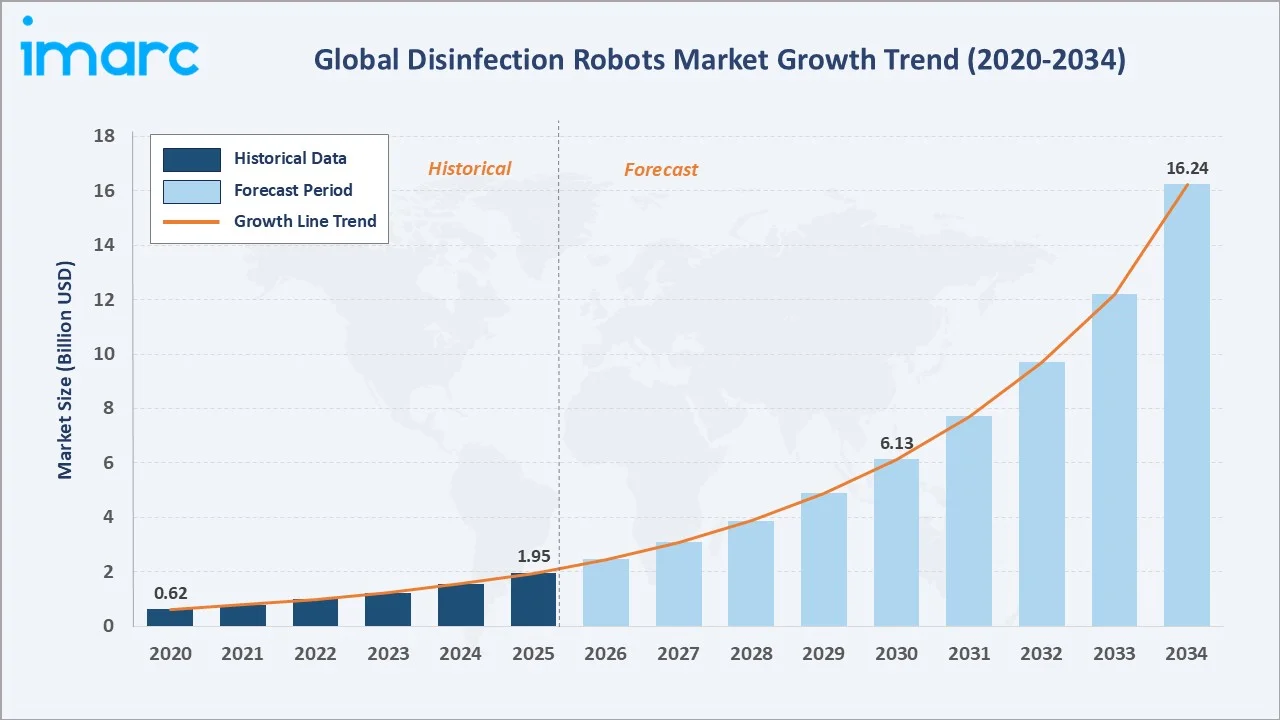
The disinfection robots market was valued at USD 1.95 Billion in 2025 and is projected to reach USD 16.24 Billion by 2034, exhibiting a CAGR of 25.76% during 2026-2034. The escalating prevalence of healthcare-associated infections (HAIs), rising demand for automated hygiene solutions, and heightened global awareness of infection control protocols are the primary drivers shaping market growth.
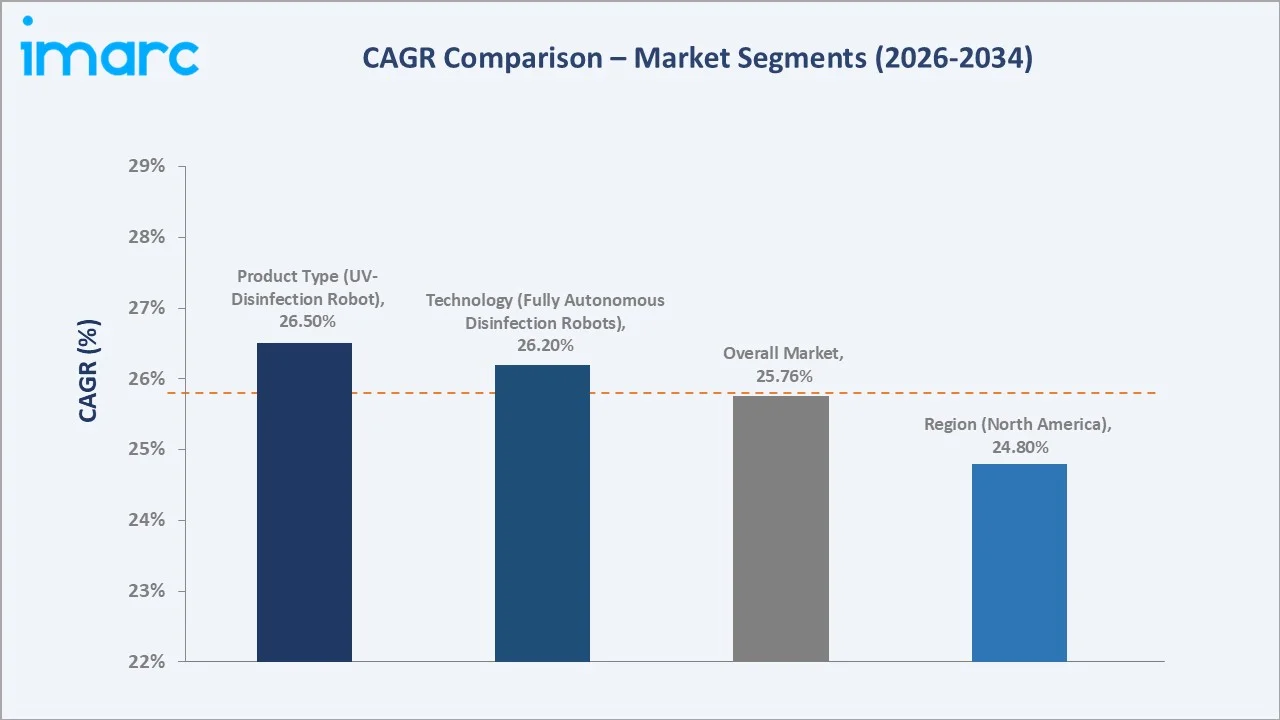
UV-disinfection robot leads the product type segment at 62.8%, fully autonomous disinfection robots dominate the technology segment at 64.3%, and North America commands 39.4% regional share.
Market Snapshot
|
Metric |
Value |
|
Market Size (2025) |
USD 1.95 Billion |
|
Forecast Market Size (2034) |
USD 16.24 Billion |
|
CAGR (2026-2034) |
25.76% |
|
Base Year |
2025 |
|
Historical Period |
2020-2025 |
|
Forecast Period |
2026-2034 |
|
Largest Region |
North America (39.4%, 2025) |
|
Second Largest Region |
Europe (27.8%, 2025) |
|
Leading Product Type |
UV-Disinfection Robot (62.8%, 2025) |
|
Leading Technology |
Fully Autonomous Disinfection Robots (64.3%, 2025) |
The disinfection robots market expanded from USD 0.62 Billion in 2020 to USD 1.95 Billion in 2025, driven by accelerating adoption of UV-C disinfection in hospital settings, rising demand from airports and hotels, and rapid advances in autonomous navigation capabilities. Anchored at USD 6.13 Billion in 2030, the forecast to USD 16.24 Billion by 2034 is supported by growing end-user diversification, expanding applications in pharmaceutical facilities and food processing, and integration of AI-powered pathogen detection systems.
To get more information on this market, Request Sample
CAGR trajectories across product type and technology sub-segments show hydrogen peroxide vaporization robot (HPV) and fully autonomous disinfection robots expanding faster than the overall 25.76% market CAGR, driven by growing demand for zero-residue disinfection, adoption in pharmaceutical and cleanroom applications, and ongoing improvements in robot autonomy and coverage efficiency.
Executive Summary
The disinfection robots market is on a strong growth trajectory, expanding from USD 0.62 Billion in 2020 to USD 16.24 Billion by 2034. The market has evolved from niche hospital pilot deployments to broad-scale commercial rollouts across the healthcare, aviation, hospitality, and institutional sectors. Regulatory emphasis on infection prevention, rising HAI-related costs, and the adoption of automation in public health management are collectively accelerating market expansion.
UV-disinfection robot dominates with 62.8% product type share in 2025, supported by proven germicidal efficacy against multi-drug-resistant organisms, ease of integration into existing hospital workflows, and rapid return-on-investment calculations for high-traffic clinical environments. Fully autonomous disinfection robots command 64.3% technology share, driven by their ability to operate without human intervention, map environments in real time, and deliver consistent disinfection cycles. North America leads at 39.4% regional share, benefiting from an advanced healthcare ecosystem, strong regulatory backing, and early adoption by major hospital networks.
Key Market Insights
|
Insight |
Data |
|
Leading Product Type |
UV-Disinfection Robot – 62.8% share (2025) |
|
Second Largest Product Type |
Hydrogen Peroxide Vaporization Robot (HPV) – 24.6% share (2025) |
|
Leading Technology |
Fully Autonomous Disinfection Robots – 64.3% share (2025) |
|
Second Largest Technology |
Semi-Autonomous Disinfection Robots – 35.7% share (2025) |
|
Leading Region |
North America – 39.4% share (2025) |
|
Second Largest Region |
Europe – 27.8% share (2025) |
|
Top Companies |
Xenex Disinfection Services Inc., Blue Ocean Robotics, PDI Healthcare, Skytron, LLC |
Key Analytical Observations Expanding On the Data Above:
- UV-disinfection robot dominance at 62.8% is supported by decades of proven UV-C germicidal research, broad hospital acceptance, competitive pricing relative to alternative technologies, and established regulatory clearances across major markets. These robots are increasingly deployed in operating rooms, intensive care units, and patient wards.
- Hydrogen peroxide vaporization robot (HPV) share at 24.6% reflects growing preference for hydrogen peroxide vaporization in pharmaceutical cleanrooms, biocontainment units, and settings where surface residue from UV-C shadows is a clinical concern. The segment benefits from its ability to penetrate complex room geometries and achieve validated sterility assurance levels.
- Fully autonomous disinfection robots leadership at 64.3% signals a decisive shift toward robots capable of independent room mapping, obstacle detection, and multi-room scheduling. These systems eliminate operator dependency, reduce per-cycle labor costs, and enable 24/7 disinfection without workflow disruption.
- Semi-autonomous disinfection robots share at 35.7% is supported by their lower upfront costs, greater operator control, and suitability for facilities that require human oversight during disinfection cycles.
- North America at 39.4% is anchored by the United States healthcare system's early investment in disinfection automation, strong reimbursement frameworks supporting infection prevention capital expenditure, and the presence of leading disinfection robot manufacturers and research institutions.
Disinfection Robots Market Overview
Disinfection robots are autonomous or semi-autonomous machines designed to decontaminate surfaces, air, and environments using technologies. These robots operate in healthcare facilities, airports, hotels, educational institutions, food processing plants, and pharmaceutical manufacturing environments to reduce pathogen loads and prevent the spread of infectious diseases.
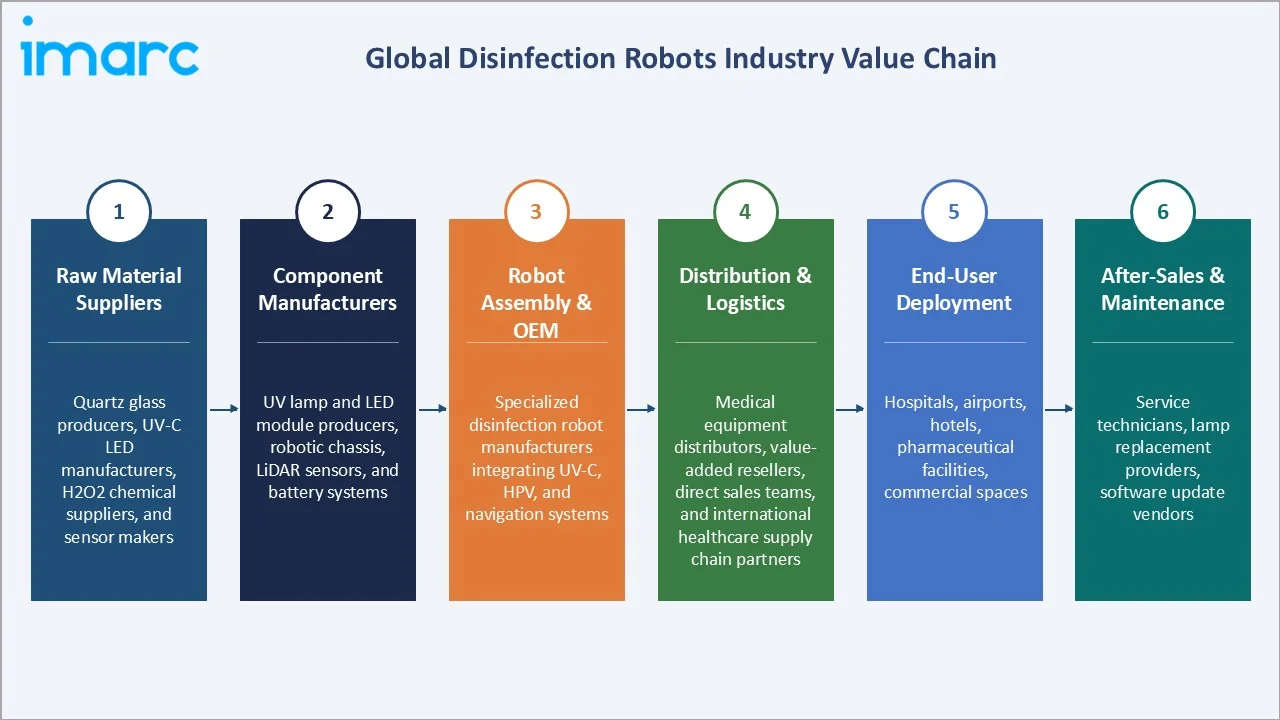
The global ecosystem integrates UV lamp and LED component suppliers, robotic chassis and navigation hardware manufacturers, software and AI platform developers, healthcare facility operators, regulatory authorities, and after-sales maintenance providers. Together, these stakeholders enable consistent, validated, and efficient disinfection cycles that supplement traditional cleaning protocols and reduce human exposure to chemical or UV-C disinfection agents.
Market Dynamics
To evaluate market opportunities, Request Sample
Market Drivers
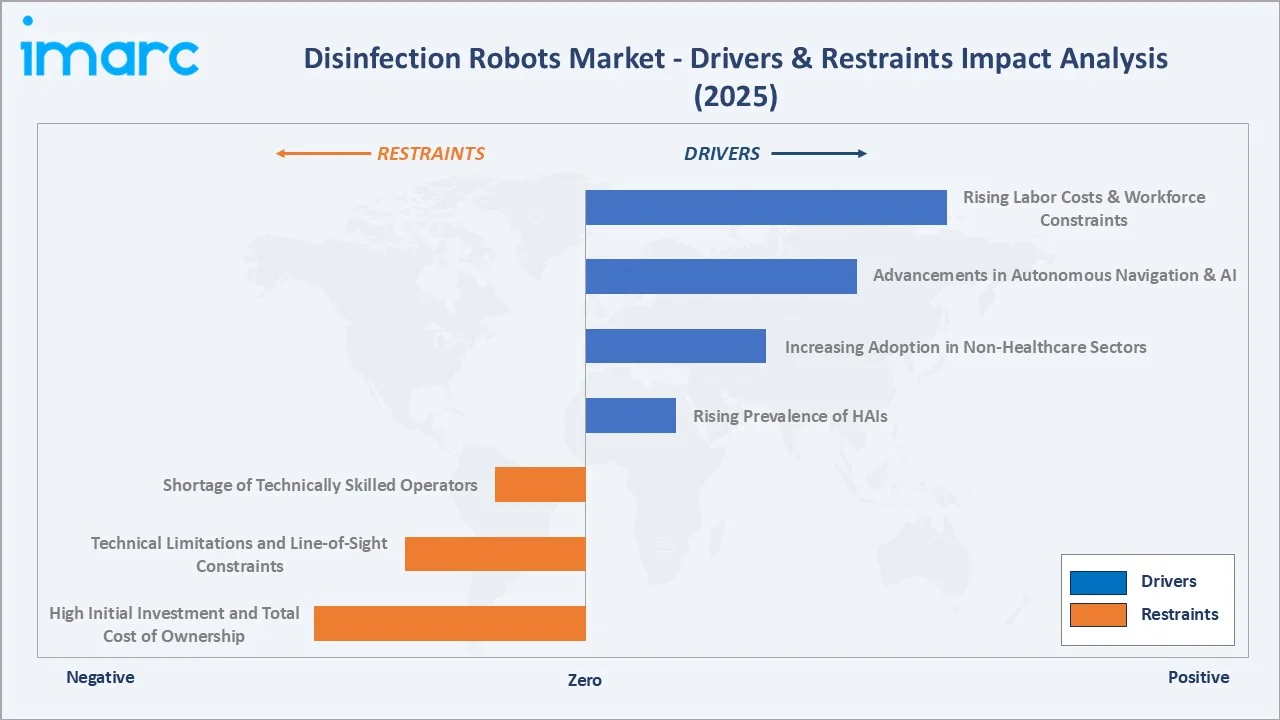
- Rising Prevalence of HAIs: The growing burden of HAIs, including catheter-associated urinary tract infections, surgical site infections, and ventilator-associated pneumonia, is a primary catalyst for disinfection robot adoption. According to the HAI Hospital Prevalence Survey, in 2023, 1 out of 38 patients in hospitals in the United States had at least one healthcare-associated infection on any specific day.
- Increasing Adoption in Non-Healthcare Sectors: Airports, hotels, schools, and commercial real estate operators are deploying disinfection robots to meet elevated hygiene expectations from passengers, guests, students, and tenants. This diversification beyond the hospital setting is opening new addressable markets and supporting volume scale that is lowering per-unit costs industry-wide.
- Advancements in Autonomous Navigation and AI: Continuous improvements in LiDAR-based mapping, simultaneous localization and mapping (SLAM) algorithms, and AI-driven path planning are enabling disinfection robots to navigate complex clinical and commercial environments more efficiently, complete multi-room cycles autonomously, and integrate with building management systems, enhancing operational value and broadening deployment feasibility.
- Rising Labor Costs and Workforce Constraints: Increasing labor costs and shortages of trained environmental services personnel are encouraging healthcare facilities and commercial establishments to automate routine disinfection tasks. Disinfection robots can reduce reliance on manual labor for repetitive cleaning cycles, improve staff productivity, and allow personnel to focus on higher-value cleaning and infection-control activities.
Market Restraints
- High Initial Investment and Total Cost of Ownership: Disinfection robots represent a significant capital outlay for healthcare facilities and commercial operators, with acquisition costs that can be prohibitive for smaller hospitals, clinics, and facilities in developing markets. The high upfront cost remains the most significant barrier to broader market penetration, particularly in cost-sensitive segments.
- Technical Limitations and Line-of-Sight Constraints: UV-C disinfection efficacy is subject to line-of-sight limitations, meaning shadowed surfaces or areas behind equipment may not receive adequate germicidal exposure during a standard cycle. This technical constraint requires supplementary manual cleaning, limiting the technology's ability to fully replace traditional disinfection methods in complex room layouts.
- Shortage of Technically Skilled Operators: Effective deployment, maintenance, and validation of disinfection robots require technically skilled staff who can manage dosimetry calculations, maintain UV lamp performance, and troubleshoot sensor or navigation issues. The shortage of such expertise, particularly in emerging markets, constrains rapid scaling of robot deployment.
Market Opportunities
- Expanding Applications in Pharmaceutical and Food Processing: Pharmaceutical manufacturing cleanrooms, sterile compounding pharmacies, and food processing facilities represent substantial growth opportunities for HPV and UV-C robots. These settings demand validated, residue-free disinfection cycles that robotic systems can deliver with consistent repeatability and full documentation trails.
- Integration with IoT, Smart Buildings, and Hospital Management Systems: The convergence of disinfection robotics with IoT-enabled building management systems, electronic health records, and real-time infection surveillance platforms is creating opportunities for predictive disinfection scheduling, remote monitoring, and outcome-linked ROI reporting, enabling facility managers to optimize disinfection resource allocation across entire facility networks.
Market Challenges
- Regulatory Complexity and Validation Requirements: Disinfection robots deployed in regulated environments must meet stringent efficacy validation standards set by health authorities. Navigating differing regulatory frameworks across the United States, European Union, and Asia-Pacific markets adds compliance cost and time-to-market uncertainty for manufacturers targeting multi-regional deployment.
- Resistance from Healthcare Staff and Infection Control Practitioners: Adoption of disinfection robots can face internal institutional resistance from cleaning staff concerned about workflow disruption or job displacement, and from infection control practitioners who require peer-reviewed clinical evidence of robot-specific HAI reduction outcomes before committing to budget-intensive procurement decisions.
Emerging Market Trends
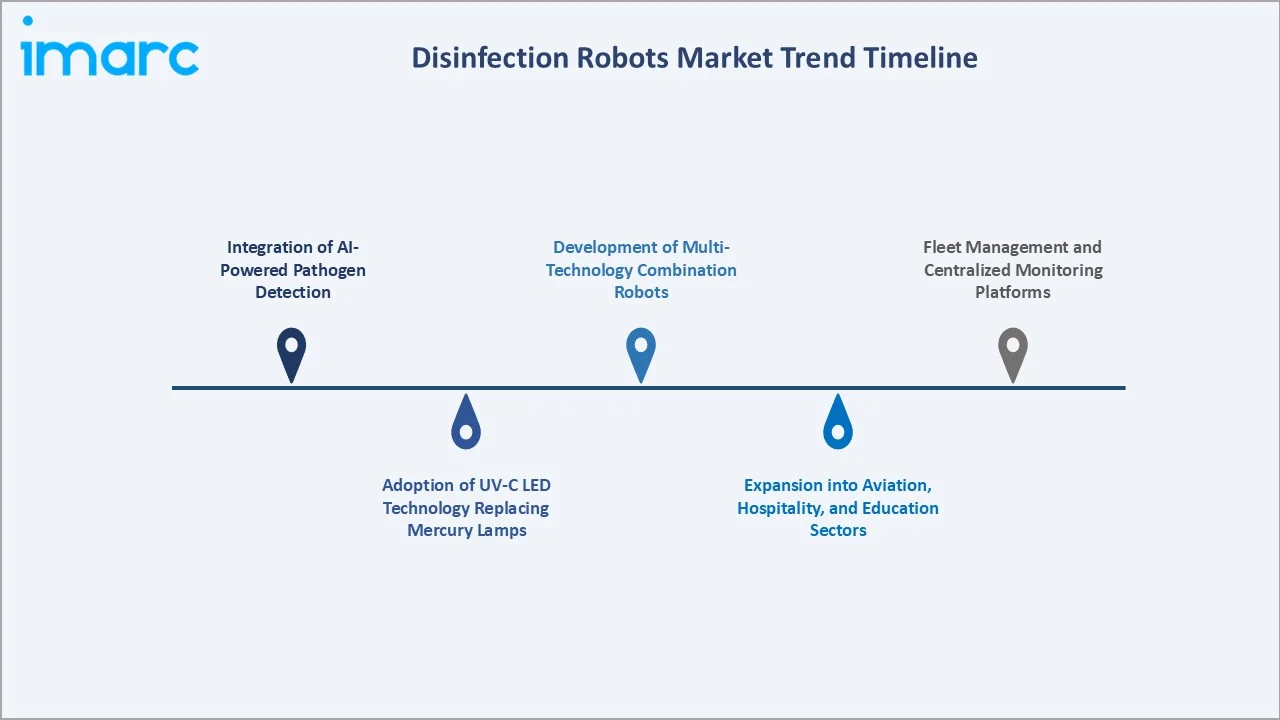
1. Integration of AI-Powered Pathogen Detection
Leading manufacturers are embedding AI-based imaging sensors and spectral analysis capabilities into disinfection robots, enabling real-time identification of high-contamination zones and adaptive disinfection intensity. This shift from fixed-protocol to outcome-driven disinfection is improving cycle efficiency and enabling more targeted resource deployment across large facilities.
2. Adoption of UV-C LED Technology Replacing Mercury Lamps
UV-C LED systems are increasingly displacing traditional mercury vapor lamps in new disinfection robot models. UV-C LEDs offer longer operational lifespans, instant startup without warm-up delays, lower energy consumption, and elimination of mercury-related disposal and regulatory compliance burdens.
3. Expansion into Aviation, Hospitality, and Education Sectors
Airports, airline operators, hotels, and universities are increasingly deploying disinfection robots as visible demonstrations of hygiene commitment to passengers, guests, and students. This cross-sector diversification is expanding the addressable market significantly beyond the healthcare setting, creating volume that supports continued cost reduction across the disinfection robots supply chain.
4. Development of Multi-Technology Combination Robots
Next-generation disinfection robots are combining UV-C irradiation with HPV or dry mist disinfection in a single autonomous platform. These combination systems address the complementary limitations of individual technologies, providing both surface and air disinfection in a single deployment cycle, appealing to pharmaceutical facilities and biocontainment environments requiring comprehensive environmental decontamination.
5. Fleet Management and Centralized Monitoring Platforms
Enterprise-grade disinfection robot deployments are increasingly managed through centralized fleet management software platforms that schedule, monitor, validate, and report on disinfection activity across multiple robots and facilities in real time. This shift toward software-enabled fleet operations is improving utilization rates, simplifying compliance reporting, and enabling facility networks to optimize disinfection coverage without proportional staffing increases.
Industry Value Chain Analysis
The disinfection robots market value chain spans six stages from raw material supply through end-user lifecycle management. Component manufacturing, robot assembly, and after-sales software and maintenance services capture the highest value-add, while distribution and logistics networks are increasingly streamlined through direct manufacturer-to-facility sales models in major healthcare markets.
|
Stage |
Key Players / Examples |
|
Raw Material Suppliers |
Quartz glass producers, mercury lamp suppliers, UV-C LED component manufacturers, hydrogen peroxide chemical suppliers, and advanced sensor component makers |
|
Component Manufacturers |
UV lamp and LED module producers, robotic chassis and motor suppliers, LiDAR and navigation sensor makers, battery and power system manufacturers |
|
Robot Assembly & OEM |
Specialized disinfection robot manufacturers integrating UV-C systems, HPV dispensers, and autonomous navigation into deployable units |
|
Distribution & Logistics |
Medical equipment distributors, value-added resellers, direct sales teams, and international healthcare supply chain partners |
|
End-User Deployment |
Hospitals, airports, hotels, schools, pharmaceutical facilities, and commercial spaces adopting robotic disinfection solutions |
|
After-Sales & Maintenance |
Service technicians, lamp replacement providers, software update vendors, and remote monitoring service providers |
Vertically integrated manufacturers controlling proprietary UV-C lamp designs, autonomous navigation software, and fleet management platforms are positioned to capture greater margin than assemblers reliant on third-party component supply chains.
Technology Landscape in the Disinfection Robots Industry
UV-C Irradiation Technology
UV-C irradiation technology is widely used in disinfection robots to deliver automated, chemical-free surface disinfection across healthcare facilities, hotels, airports, and commercial spaces. Robotic systems use UV-C lamps to target exposed surfaces and high-touch areas.
Autonomous Navigation and SLAM
SLAM using LiDAR sensors, depth cameras, and inertial measurement units enables disinfection robots to create real-time maps of unfamiliar environments, plan optimal disinfection paths, and avoid obstacles autonomously. Advanced SLAM implementations allow robots to adapt to dynamic environments, resume interrupted cycles after human entry, and update stored maps as room layouts evolve over time.
AI and Data Analytics Integration
AI-driven analytics platforms are enabling disinfection robots to correlate disinfection activity data with infection surveillance outcomes, optimize cycle timing based on room occupancy patterns, and flag maintenance requirements before performance degradation occurs. These capabilities are transforming disinfection robots from standalone devices into connected components of broader hospital infection control and smart building management ecosystems.
Market Segmentation Analysis
The report covers the following segments:
|
Segment Category |
Leading Segment |
Market Share |
Year |
|
Product Type |
UV-Disinfection Robot |
62.8% |
2025 |
|
Technology |
Fully Autonomous Disinfection Robots |
64.3% |
2025 |
|
End User |
Hospitals and Clinics |
🔒 |
2025 |
|
Region |
North America |
39.4% |
2025 |

By Product Type
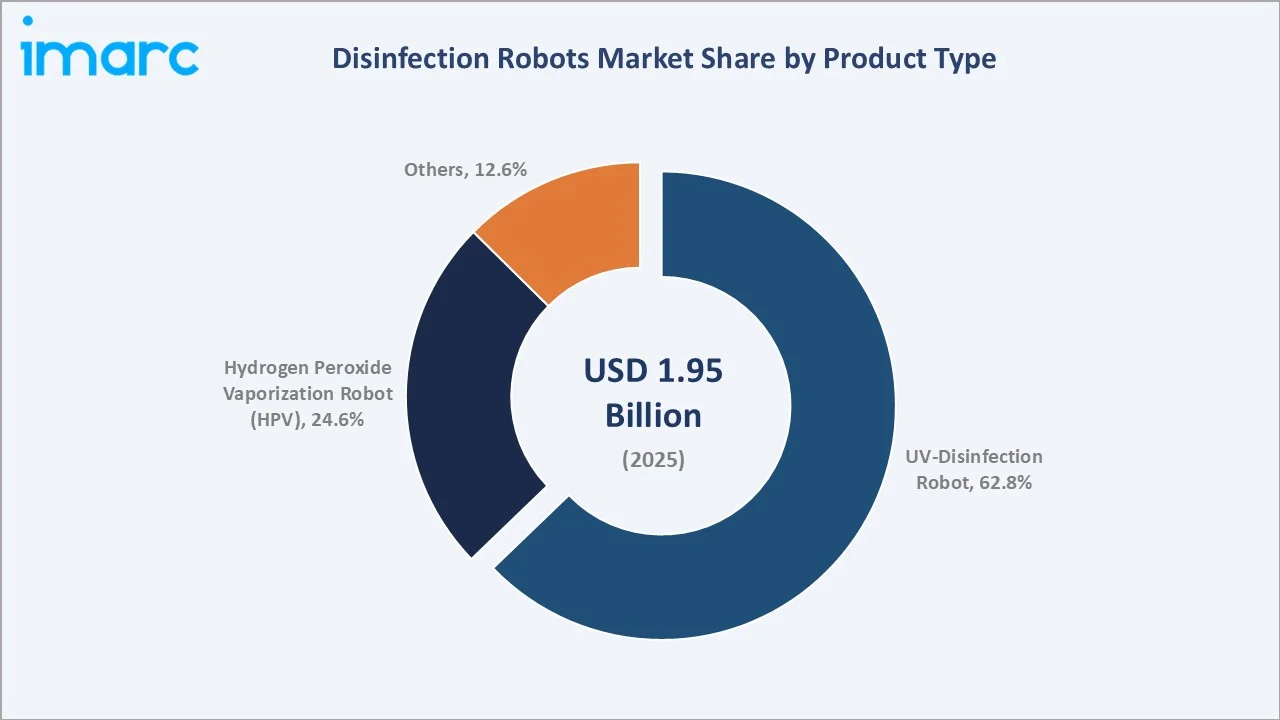
UV-disinfection robot commands a 62.8% majority share in 2025, driven by broad hospital acceptance, established clinical evidence for germicidal efficacy, competitive pricing compared to HPV alternatives, and compatibility with standard hospital room configurations.
To access detailed market analysis, Request Sample
Hydrogen peroxide vaporization robot (HPV) at 24.6% in 2025 is gaining share in pharmaceutical manufacturing, biotech laboratories, and clinical settings requiring sporicidal efficacy against Clostridioides difficile and other spore-forming pathogens. The higher cost and longer cycle times of HPV systems are offset by their superior performance in complex environments and regulated cleanroom applications.
By Technology
Fully autonomous disinfection robots hold 64.3% technology segment share in 2025, reflecting strong demand from hospital networks seeking labor-independent, 24/7 disinfection capability. These systems use onboard sensors to map room layouts, detect obstacles, and complete pre-programmed disinfection cycles without human supervision, reducing the per-cycle labor cost and eliminating variability in disinfection protocol adherence.
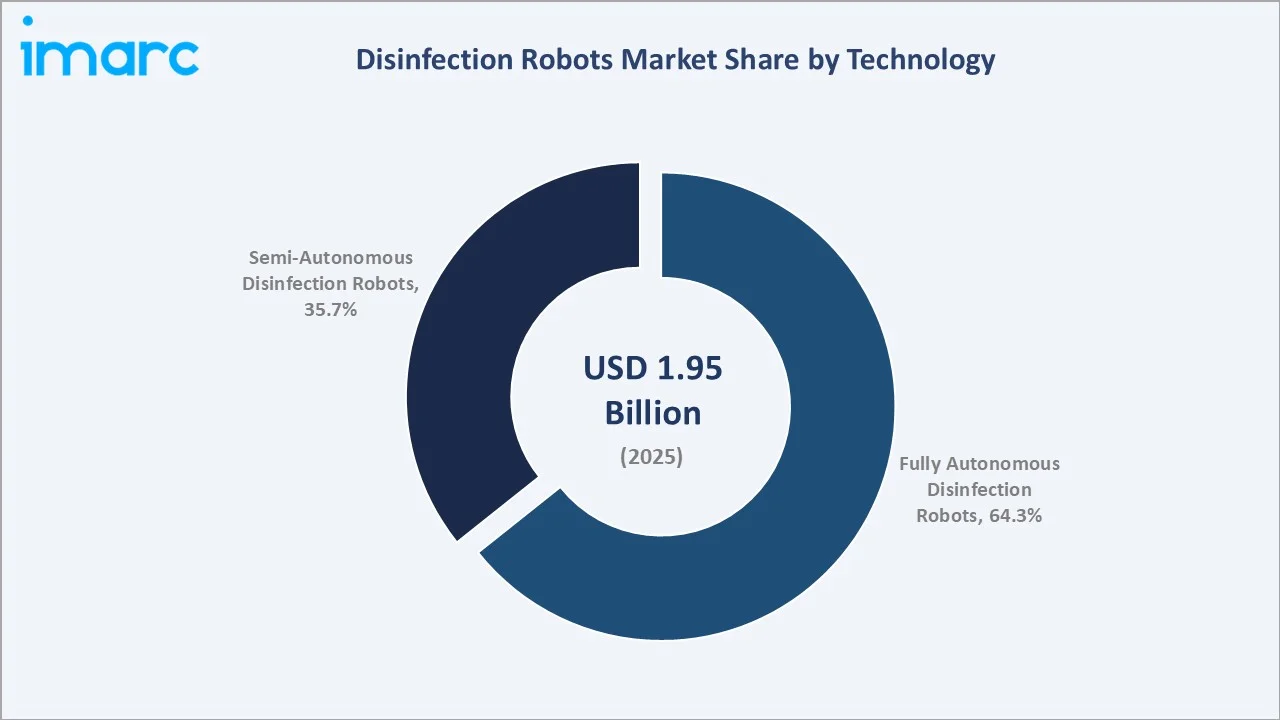
Semi-autonomous disinfection robots at 35.7% in 2025 require operator supervision or intervention at key points in the disinfection cycle, including room setup, positioning confirmation, and cycle initiation.
Regional Market Insights
|
Region |
Share (2025) |
Key Growth Drivers |
|
North America |
39.4% |
Large healthcare infrastructure, strong regulatory push for infection control, high adoption of advanced medical technologies, and significant hospital network investment |
|
Europe |
27.8% |
Stringent healthcare hygiene regulations, growing adoption across public health sectors, government-funded infection prevention initiatives, and expanding pharmaceutical industry needs |
|
Asia-Pacific |
23.9% |
Rapidly growing healthcare sector, increasing hospital construction, rising awareness of HAIs, government investments in health infrastructure, and expanding pharmaceutical manufacturing |
|
Latin America |
5.3% |
Growing healthcare spending, rising concern over hospital-acquired infections, expanding private healthcare sector, and increasing adoption of automation in medical facilities |
|
Middle East & Africa |
3.6% |
Expanding healthcare infrastructure, government healthcare modernization programs, rising investment in smart hospital solutions, and growing awareness of disinfection robotics |
North America at 39.4% in 2025 leads the regional landscape, anchored by the United States healthcare system's deep investment in infection prevention infrastructure, strong reimbursement policies supporting hospital capital expenditure, and the presence of leading disinfection robot manufacturers.
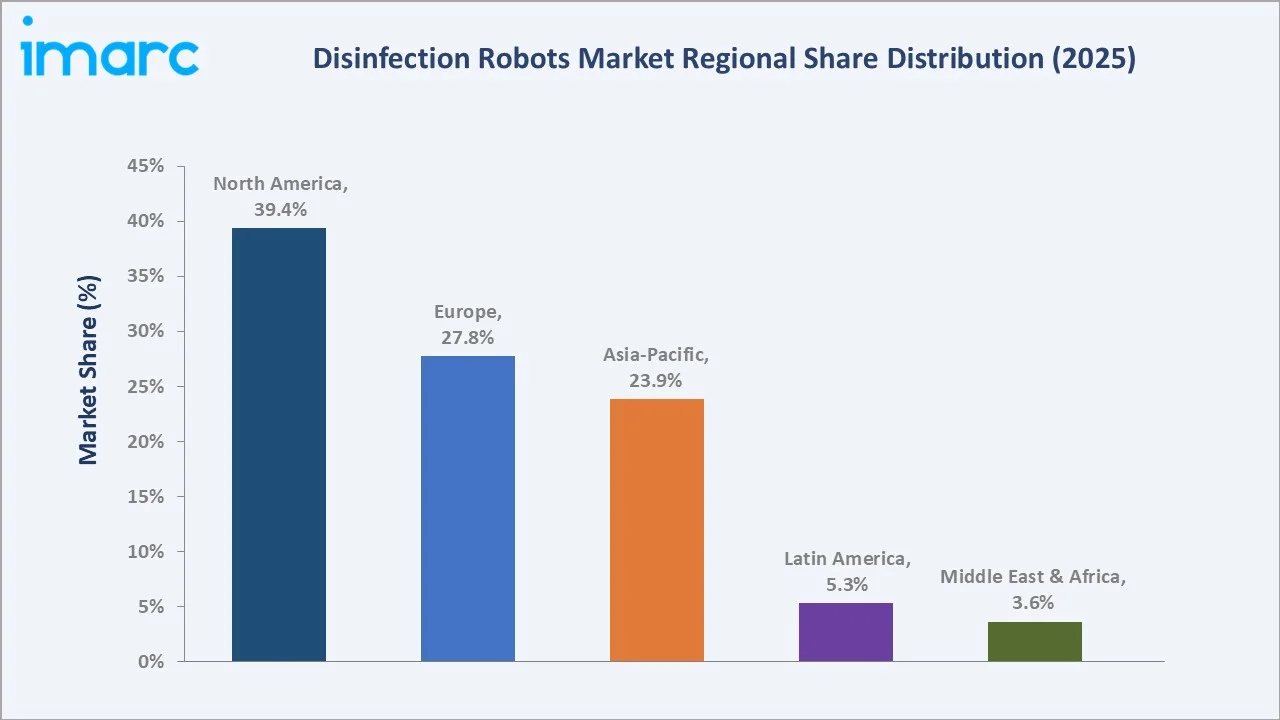
Asia-Pacific at 23.9% is the fastest growing region. Rapid hospital construction across China and India, government investments in smart healthcare infrastructure, and expanding pharmaceutical manufacturing in South Korea, Japan, and Southeast Asia are driving accelerating disinfection robot deployment across the region through 2034.
Competitive Landscape
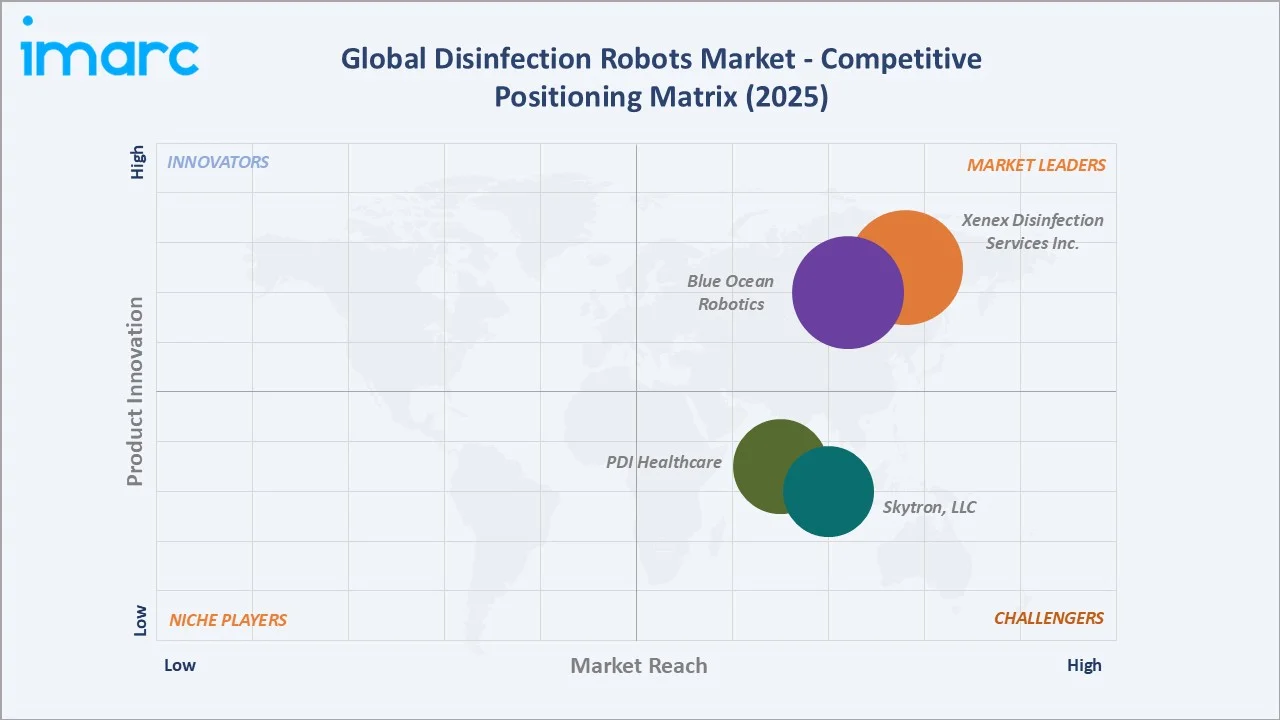
The disinfection robots market is moderately fragmented, with a combination of specialized disinfection robot manufacturers, broader medical technology companies, and emerging technology entrants competing on technology performance, autonomous navigation capability, clinical evidence, and total cost of ownership.
|
Company Name |
Brand / Key Product |
Position |
Strategic Focus |
|
Xenex Disinfection Services Inc. |
LightStrike+ |
Leader |
UV-C technology innovation and hospital deployment |
|
Blue Ocean Robotics |
UVD Robots |
Leader |
Autonomous navigation and multi-sector disinfection |
|
PDI Healthcare |
Tru-D SmartUVC |
Challenger |
Data-driven disinfection measurement and validation |
|
Skytron, LLC |
IPT UV-C Robots (SmartDosage) |
Challenger |
OR-focused disinfection and healthcare automation |
Key players include Xenex Disinfection Services Inc., Blue Ocean Robotics, PDI Healthcare, and Skytron, LLC, among others.
Key Company Profiles
Xenex Disinfection Services Inc.
Xenex Disinfection Services Inc. is a United States-based medical device company headquartered in San Antonio, Texas. The company specializes in pulsed xenon UV-C room disinfection robots and has established a broad clinical evidence base through hospital deployments across the United States and internationally, supporting a wide range of healthcare facilities.
- Product Portfolio: LightStrike+ UV-C Disinfection Robot, featuring pulsed broad-spectrum xenon UV light technology, clinically validated whole-room microbial reduction, and compatibility with hospital operating rooms, ICUs, and patient wards.
- Recent Developments: The company continues to enhance its robotic disinfection technologies and expand their adoption across healthcare facilities.
- Strategic Focus: Expanding clinical validation programs, growing international regulatory clearances, and broadening hospital network partnerships across North America and Europe.
Blue Ocean Robotics
Blue Ocean Robotics is a Denmark-based robotics company headquartered in Odense, Denmark, engaged in the development, production, and commercialization of autonomous mobile service robots for healthcare, pharmaceutical, and life sciences sectors. The company operates the UVD Robots brand as its primary commercial platform for disinfection solutions.
- Product Portfolio: UVD Robots autonomous UV-C disinfection robots for healthcare facilities, hospitals, and pharmaceutical cleanrooms.
- Recent Developments: The firm has continued to expand pharmaceutical sector distribution through new partnerships and achieved commercial breakthrough in cleanroom disinfection, with growing deployments across the United States, Europe, and Asia-Pacific.
- Strategic Focus: Concentrating commercial efforts on the UVD Robot platform, accelerating pharmaceutical market penetration, and expanding autonomous disinfection solutions into regulated life sciences environments.
PDI Healthcare
PDI Healthcare is a United States-based infection prevention company headquartered in Woodcliff Lake, New Jersey, providing a comprehensive portfolio of disinfection products and automated solutions for healthcare facilities.
- Product Portfolio: Tru-D SmartUVC UV-C Disinfection Robots, featuring automated room mapping and cloud-based compliance reporting for hospital and long-term care facility deployment.
- Recent Developments: The company continues to expand and enhance its infection prevention and automated disinfection offerings for healthcare applications.
- Strategic Focus: Delivering integrated surface disinfection and UV-C room automation solutions under the PDI Healthcare brand, targeting hospital environmental services teams seeking unified infection prevention programs.
Market Concentration Analysis
The disinfection robots market is moderately concentrated, with the top manufacturers holding significant combined revenue share driven by established hospital network relationships, published clinical evidence, and multi-country distribution footprints.
Barriers to entry include the capital-intensive nature of robotic hardware development, the requirement for multi-jurisdictional regulatory clearance, the need to build a clinical evidence base acceptable to hospital procurement committees, and the competitive advantage held by incumbents with established service and maintenance networks. These factors favor well-capitalized manufacturers with diversified product portfolios and strong healthcare facility relationships.
Consolidation is progressing as established medical equipment companies acquire specialized disinfection robot firms to expand their infection prevention portfolios, while technology companies with robotics and AI capabilities are entering the market through partnerships and acquisitions. Strategic alliances between robot manufacturers and hospital group purchasing organizations are further concentrating market access in key healthcare markets.
Investment & Growth Opportunities
Fastest-Growing Segments
Hydrogen peroxide vaporization robot (HPV) is the fastest-growing product type segment, driven by pharmaceutical cleanroom expansion, biocontainment facility construction, and regulatory requirements for validated sporicidal disinfection. Fully autonomous disinfection robots are expanding fastest within the technology segment, supported by declining autonomous navigation hardware costs, improving AI-based path planning software, and hospital workforce automation trends.
Emerging Markets
Asia-Pacific represents the highest-growth regional opportunity, particularly China, India, and Southeast Asia, where large-scale hospital construction, government smart healthcare initiatives, and expanding pharmaceutical manufacturing are creating significant disinfection robot installation opportunities through 2034. Latin America and the Middle East are secondary emerging markets with growing private healthcare sector investment.
Venture & Investment Trends
Investment is concentrated in AI-powered autonomous navigation platform development, UV-C LED component technology, fleet management and infection surveillance software integration, and multi-technology combination robot platforms. Strategic partnerships between disinfection robot manufacturers and hospital systems, group purchasing organizations, and real estate operators are emerging as a key channel for accelerating deployment scale and securing long-term service revenue streams.
Future Market Outlook (2026-2034)
The disinfection robots market is forecast to expand from USD 1.95 Billion in 2025 to USD 16.24 Billion by 2034 at a CAGR of 25.76%, adding approximately USD 14.29 Billion in incremental market value over the forecast period.
Four forces will shape the market through 2034: accelerating adoption across non-healthcare commercial sectors; continued decline in autonomous navigation and UV-C LED component costs enabling broader price accessibility; increasing regulatory mandates for automated disinfection in healthcare and pharmaceutical settings; and integration of AI-driven dosimetry, infection surveillance, and predictive maintenance capabilities into disinfection robot platforms.
By 2034, disinfection robots are expected to be standard infrastructure across major hospital networks, pharmaceutical manufacturing facilities, and high-traffic commercial environments globally. Fully autonomous, AI-connected fleet deployments capable of dynamic scheduling, real-time efficacy validation, and seamless integration with building management and infection control systems will define the market's next competitive frontier.
Research Methodology
Primary Research
Primary research included structured interviews with hospital infection control officers, facility management directors, disinfection robot procurement specialists, clinical engineers, and regulatory affairs professionals across North America, Europe, and Asia-Pacific. Primary insights validated market sizing, segment demand patterns, regional adoption drivers, and technology preference evolution.
Secondary Research
Secondary sources included World Health Organization and Centers for Disease Control publications on HAIs, European Centre for Disease Prevention and Control guidelines, disinfection robot manufacturer annual reports and investor presentations, peer-reviewed clinical journals documenting UV-C and HPV efficacy outcomes, and trade association market assessments.
Forecasting Models
Market forecasts used top-down and bottom-up models combining healthcare facility installation counts, disinfection robot penetration rates by facility type, average selling price trajectories, technology adoption curves, regional healthcare capital expenditure growth rates, and macroeconomic indicators. Scenario analysis addressed regulatory acceleration, cost reduction pace, and cross-sector adoption timing.
Disinfection Robots Market Report Scope:
| Report Features | Details |
|---|---|
| Base Year of the Analysis | 2025 |
| Historical Period | 2020-2025 |
| Forecast Period | 2026-2034 |
| Units | Billion USD |
|
Scope of the Report |
Exploration of Historical Trends and Market Outlook, Industry Catalysts and Challenges, Segment-Wise Historical and Predictive Market Assessment:
|
| Product Types Covered | UV-Disinfection Robot, Hydrogen Peroxide Vaporization Robot (HPV), Others |
| Technologies Covered | Fully Autonomous Disinfection Robots, Semi-Autonomous Disinfection Robots |
| End Users Covered | Hospitals and Clinics, Research Institutes, Others |
| Regions Covered | Asia Pacific, Europe, North America, Latin America, Middle East and Africa |
| Countries Covered | United States, Canada, Germany, France, United Kingdom, Italy, Spain, Russia, China, Japan, India, South Korea, Australia, Indonesia, Brazil, Mexico |
| Companies Covered | Xenex Disinfection Services Inc., Blue Ocean Robotics, PDI Healthcare, Skytron, LLC, etc. |
| Customization Scope | 10% Free Customization |
| Post-Sale Analyst Support | 10-12 Weeks |
| Delivery Format | PDF and Excel through Email (We can also provide the editable version of the report in PPT/Word format on special request) |
Key Benefits for Stakeholders:
- IMARC's industry report offers a comprehensive quantitative analysis of various market segments, historical and current market trends, market forecasts, and dynamics of the disinfection robots market from 2020-2034.
- The research report provides the latest information on the market drivers, challenges, and opportunities in the global disinfection robots market.
- The study maps the leading, as well as the fastest-growing, regional markets. It further enables stakeholders to identify the key country-level markets within each region.
- Porter's five forces analysis assists stakeholders in assessing the impact of new entrants, competitive rivalry, supplier power, buyer power, and the threat of substitution. It helps stakeholders to analyze the level of competition within the disinfection robots industry and its attractiveness.
- The competitive landscape allows stakeholders to understand their competitive environment and provides insight into the current positions of key players in the market.
Frequently Asked Questions About the Disinfection Robots Market Report
The disinfection robots market was valued at USD 1.95 Billion in 2025, driven by rising HAI prevention needs, post-pandemic hygiene standards, and growing deployment across healthcare and commercial sectors.
The market is projected to grow at a CAGR of 25.76% from 2026 to 2034, reaching USD 16.24 Billion, supported by technology cost reductions, cross-sector adoption, and accelerating regulatory mandates for automated disinfection.
UV-disinfection robot is the leading product type, commanding 62.8% share in 2025, driven by proven germicidal efficacy, clinical acceptance, competitive pricing, and compatibility with standard hospital room disinfection protocols.
Fully autonomous disinfection robots hold 64.3% share in 2025. They are preferred for their ability to operate independently, map environments in real time, and deliver consistent, labor-free disinfection cycles across healthcare and commercial facilities.
North America commands 39.4% in 2025, anchored by the United States healthcare system's early adoption, strong regulatory infection prevention frameworks, and the presence of leading disinfection robot manufacturers.
Asia-Pacific is the fastest-growing region, driven by large-scale hospital construction, government smart healthcare initiatives, and expanding pharmaceutical manufacturing demand in China, India, Japan, and South Korea.
Leading companies include Xenex Disinfection Services Inc., Blue Ocean Robotics, PDI Healthcare, and Skytron, LLC, among others.
Key applications span hospital operating rooms, intensive care units, patient wards, airport terminals, hotel rooms, pharmaceutical cleanrooms, food processing facilities, and educational institutions seeking automated, consistent environmental disinfection.
Need more help?
- Speak to our experienced analysts for insights on the current market scenarios.
- Include additional segments and countries to customize the report as per your requirement.
- Gain an unparalleled competitive advantage in your domain by understanding how to utilize the report and positively impacting your operations and revenue.
- For further assistance, please connect with our analysts.
 Request Customization
 Speak to an Analyst
 Request Brochure
 Inquire Before Buying
Benefits of Customization
- Personalize this research
- Triangulate with your data
- Get data as per your format and definition
- Gain a deeper dive into a specific application, geography, customer, or competitor
- Any level of personalization
Get in Touch With Us
UNITED STATES
Phone: +1-201-971-6302
INDIA
Phone: +91-120-433-0800
UNITED KINGDOM
Phone: +44-753-714-6104
Email: [email protected]
Client Testimonials




.webp)




.webp)













Related Reports

Choose your plan
*Please note that the prices mentioned below are starting prices for each bundle type. Kindly contact our team for further details.*
Single User License
- 1 User License, Access on 2 Devices
- PDF Report + Excel Dataset (Password Protected)
- Lifetime Access
- No Printing Rights
- 10% Free Report Customization
- 10–12 Weeks of Analyst Support
Five User License
- Access for 5 Users, 2 Devices per User
- PDF Report + Excel Dataset (Password Protected)
- Lifetime Access
- Dedicated Account Manager
- 12–14 Weeks of Analyst Support
- No Printing Rights
- 15% Free Report Customization
- 25% Discount on Your Next Purchase
Corporate User License
- Unlimited User Access (Within Your Organization)
- PDF Report + Excel Dataset
- Lifetime Access
- Dedicated Account Manager
- 14–20 Weeks of Analyst Support
- No Printing Rights
- 20% Free Report Customization
- 30% Discount on Your Next Purchase
Essential Insights
What's included:
3 reports
- Lifetime Access
- PDF Reports
- Excel Datasets
- 2 Weeks of Free Analyst Support
- 2 User Licenses
- Access on 2 Devices
- Printing Rights
- Complimentary PowerPoint (PPT) Version
- Complimentary License Upgrade
Professional Access
What's included:
5 reports
- Lifetime Access
- PDF Reports
- Excel Datasets
- 8 Weeks of Free Analyst Support
- 2 User Licenses
- Access on 2 Devices
- Printing Rights
- Complimentary PowerPoint (PPT) Version
- Complimentary License Upgrade
Business Advantage
What's included:
8 reports
- Lifetime Access
- PDF Reports
- Excel Datasets
- 14 Weeks of Free Analyst Support
- 2 User Licenses
- Access on 2 Devices
- Printing Rights
- Complimentary PowerPoint (PPT) Version
- Complimentary License Upgrade
Enterprise Intelligence
What's included:
10 reports
- Lifetime Access
- PDF Reports
- Excel Datasets
- 20 Weeks of Free Analyst Support
- 2 User Licenses
- Access on 2 Devices
- Printing Rights
- Complimentary PowerPoint (PPT) Version
- Complimentary License Upgrade