
India Calcium Chloride Market Size, Share, Trends and Forecast by Application, Product Type, Raw Material, Grade, and Region, 2026-2034
India Calcium Chloride Market Size, Share, Trends & Forecast (2026-2034)
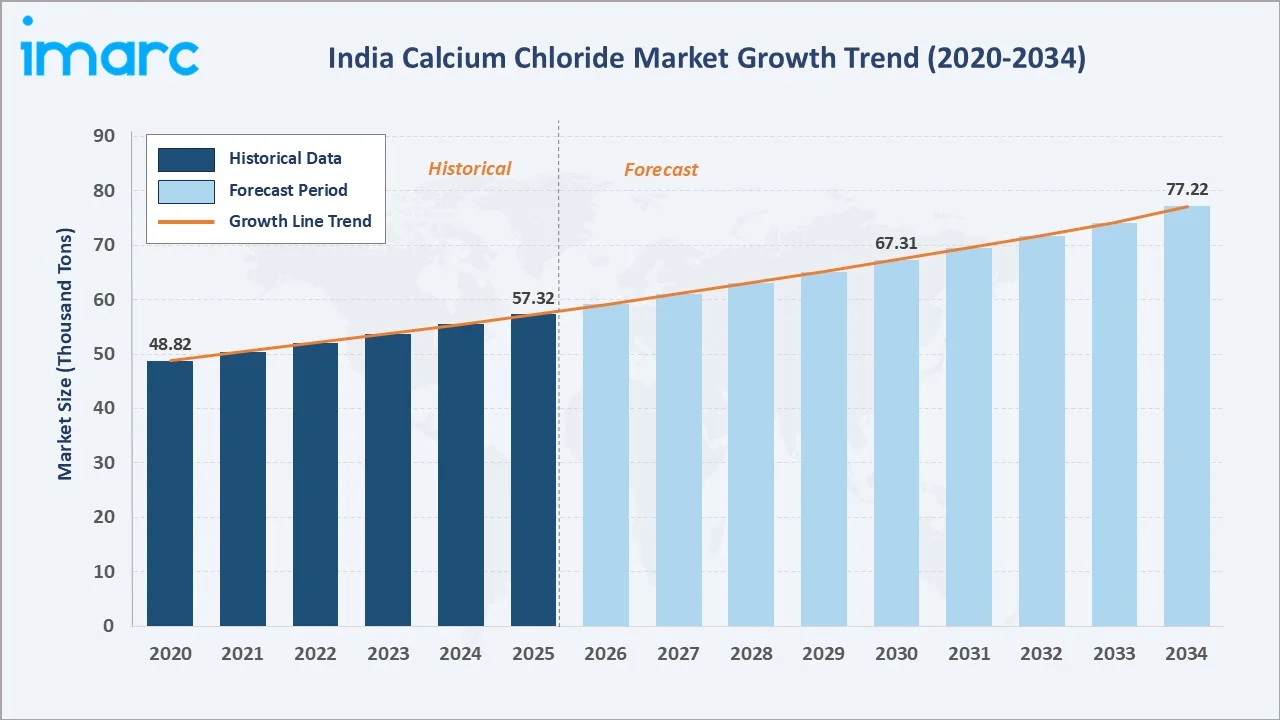
The India calcium chloride market reached 57.32 Thousand Tons in 2025 and is projected to reach 77.22 Thousand Tons by 2034, exhibiting a steady CAGR of 3.27% during 2026-2034. India’s calcium chloride sector is driven by the country’s accelerating infrastructure build-out and the National Infrastructure Pipeline, expanding oil and gas exploration activities, and the progressive modernization of the food processing industry that has elevated demand for food-grade calcium chloride in cheese manufacturing, tofu production, and packaged vegetable preservation. India exported 83.58 million kg of calcium chloride worth USD 16.53 million in 2024, led by Oman, the UAE, Kuwait, Vietnam, and Malaysia. Strong overseas demand is supporting domestic production, improving capacity utilization, and expanding growth opportunities for Indian calcium chloride manufacturers. Hydrated solid leads product type at 42.0%, natural brine dominates raw material at 38.0%, and West and Central India command the largest regional share at 30.5%.
Market Snapshot
|
Metric |
Value |
|
Market Size (2025) |
57.32 Thousand Tons |
|
Forecast Market Size (2034) |
77.22 Thousand Tons |
|
CAGR (2026-2034) |
3.27% |
|
Base Year |
2025 |
|
Historical Period |
2020-2025 |
|
Forecast Period |
2026-2034 |
|
Dominant Product Type |
Hydrated Solid – 42.0% (2025) |
|
Dominant Raw Material |
Natural Brine – 38.0% (2025) |
|
Leading Region |
West and Central India – 30.5% (2025) |
The India calcium chloride (CaCl₂) market grew from 48.82 Thousand Tons in 2020 to 57.32 Thousand Tons in 2025, driven by post-COVID construction revival, growing demand from road stabilization programs, and the increasing adoption of calcium chloride in drilling fluid formulations for India’s expanding domestic petroleum exploration. The market is projected to reach 67.31 Thousand Tons by 2030 and 77.22 Thousand Tons by 2034.
To get more information on this market, Request Sample
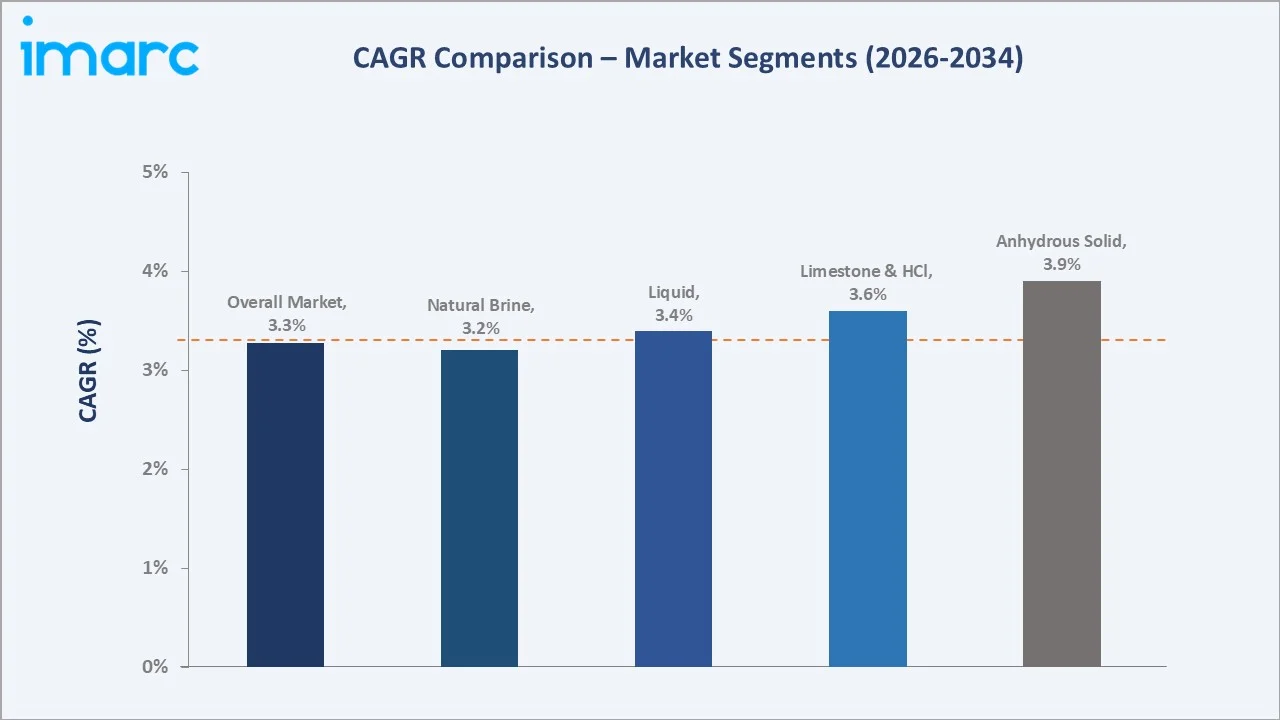
Anhydrous solid grows fastest at ~3.90% CAGR through high-purity desiccant and drying agent applications in pharmaceuticals and electronics. Limestone and HCl production route grows at ~3.60% CAGR through expanding synthetic chemical manufacturing. Liquid products grow at ~3.40% CAGR through dust suppression and road treatment applications. Natural brine route grows at ~3.20% CAGR through Gujarat coastal brine field expansion.
Executive Summary
India calcium chloride market presents a steady and broadly supported growth story anchored in the country’s infrastructure investment supercycle, expanding oil and gas exploration mandate, and the food processing sector’s formal growth trajectory under the Production Linked Incentive (PLI) scheme for food processing. Calcium chloride’s multi-functional chemical profile creates a demand base that is distributed across India’s most investment-intensive economic sectors, insulating the market from single-sector cyclicality.
Hydrated solid’s 42.0% product type dominance reflects its versatility across both construction and food applications. Natural brine’s 38.0% raw material share reflects the strategic advantage of Gujarat’s coastal salt pans and Rajasthan’s brine reserves, which provide India’s producers with the most economical calcium chloride production route at an operational cost 30-40% below Solvay by-product and limestone and HCl synthesis alternatives. West and Central India’s 30.5% regional dominance reflects both the raw material proximity advantage of Gujarat’s brine fields and the demand concentration from Maharashtra’s construction and industrial cluster.
Key Market Insights
|
Insight |
Data |
|
Dominant Product Type |
Hydrated Solid – 42.0% share (2025) |
|
Dominant Raw Material |
Natural Brine – 38.0% share (2025) |
|
Leading Region |
West and Central India – 30.5% share (2025) |
|
Market Opportunity |
High-purity pharmaceutical-grade calcium chloride for IV solutions and parenteral nutrition manufacturing; food-grade demand growth from organized dairy and tofu sector; cement acceleration demand from affordable housing; water hardness correction for desalination plants |
Key Analytical Observations:
- Hydrated Solid at 42.0% (2025): Calcium chloride hydrated solid is India’s most widely traded and consumed calcium chloride form due to its optimal balance between active content concentration, handling safety, solubility rate, and storage stability. Hydrated solid’s dominance reflects its suitability across India’s three largest application verticals: construction and concrete acceleration, dust control and road stabilization, and food processing.
- Natural Brine at 38.0% (2025): Natural brine-derived calcium chloride leverages India’s extensive coastal salt pan infrastructure in Gujarat and Rajasthan’s inland brine lakes to produce calcium chloride through solar evaporation and chemical processing of the natural brine solution.
- West and Central India at 30.5% (2025): West and Central India lead the market due to strong demand from chemical processing, oil and gas, construction, mining, and industrial manufacturing. The region’s established chemical production hubs and well-developed logistics infrastructure further support market growth.
India Calcium Chloride Market Overview
The India calcium chloride market encompasses calcium chloride products used across oil and gas, construction, mining, chemicals, food processing, and moisture control applications. Demand is supported by industrial expansion, infrastructure development, and growing requirements for dehumidification, dust control, concrete acceleration, and brine solutions. Macroeconomic factors include rapid industrialization, infrastructure development, urbanization, and expanding construction and chemical-processing activities. Growth in water treatment and sanitation infrastructure, which also supports the India calcium hypochlorite market, is further strengthening demand for calcium-based industrial chemicals.
Market Dynamics
To evaluate market opportunities, Request Sample
Market Drivers
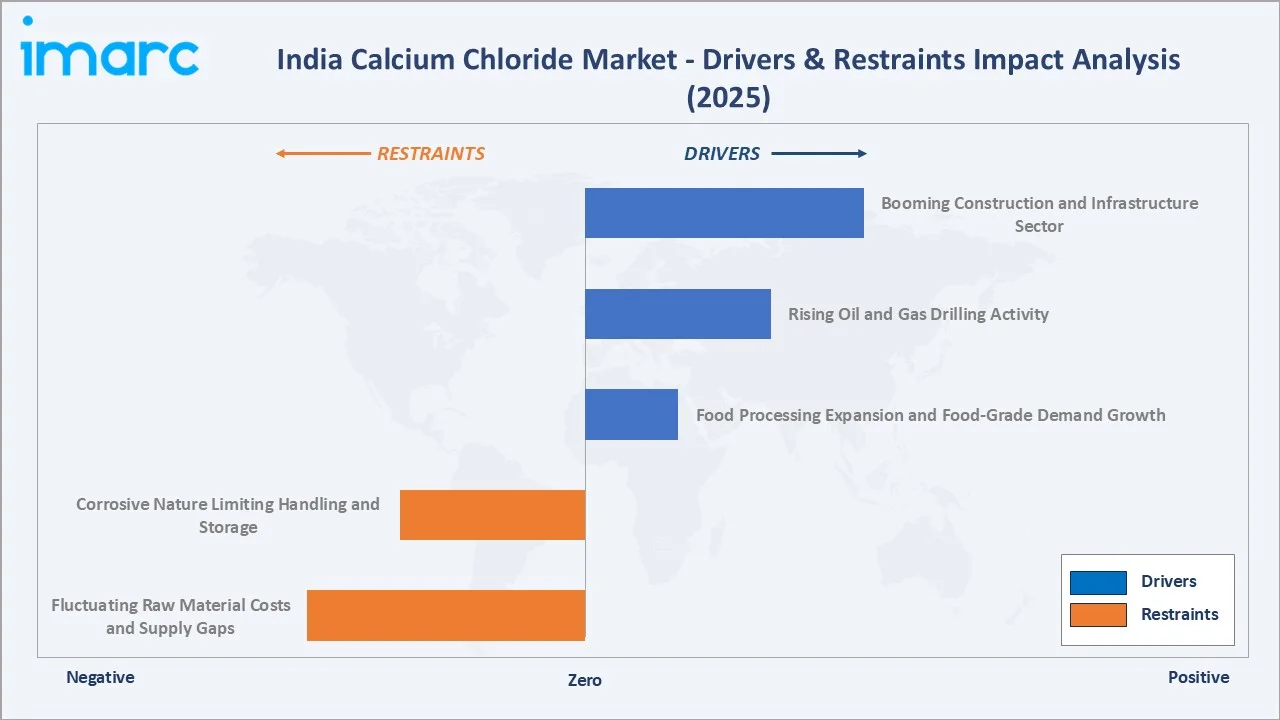
- Booming Construction and Infrastructure Sector: The National Infrastructure Pipeline (NIP) introduced with an estimated investment of INR 111 lakh crore (USD 1.5 trillion) for 2020–2025, with major allocations directed toward energy, roads, urban infrastructure, and railways, creates a sustained multi-year demand stream for calcium chloride in concrete acceleration, soil stabilization, and construction-related applications. Calcium chloride is used at 0.5-2% by cement weight as a concrete accelerator to advance the initial and final setting time, particularly valuable in monsoon-season construction where limited daily working windows motivate contractors to use accelerants that reduce form-stripping time.
- Rising Oil and Gas Drilling Activity: India’s Open Acreage Licensing Policy (OALP) awarded 172 exploration blocks covering 378,652 sq. km through Rounds I–IX, while Round X, launched in April 2025, offered another 25 blocks spanning 191,986.21 sq. km. India also has eight LNG terminals with a combined capacity of 52.7 MMTPA, along with 29 operational LNG retail stations, including 13 state-owned and 16 privately operated facilities, creating structured calcium chloride demand for high-density completion brines and packer fluid applications. Calcium chloride brines are used as clear brine completion fluids in well completion operations to maintain wellbore pressure control without suspended solids that could damage reservoir permeability.
- Food Processing Expansion and Food-Grade Demand Growth: The Production-Linked Incentive Scheme for the Food Processing Industry (PLISFPI), with an allocation of INR 10,900 crore, is being implemented from 2021-22 to 2026-27 to strengthen India’s food processing sector. The scheme aims to generate INR 33,494 crore in processed food output and create employment for nearly 2.5 lakh people by 2026-27, creating structural demand for food-grade calcium chloride across organized dairy processing (cheese, paneer, yogurt firming), tofu manufacturing, and fruit and vegetable processing for both domestic modern retail and export markets.
Market Restraints
- Corrosive Nature Limiting Handling and Storage: Calcium chloride’s corrosive and highly hygroscopic nature creates challenges in handling, transportation, and long-term storage. It requires corrosion-resistant equipment, moisture-proof packaging, and controlled storage conditions, increasing operational costs. These requirements can restrict adoption among smaller end users and thereby hamper the India calcium chloride market.
- Fluctuating Raw Material Costs and Supply Gaps: Volatility in the prices and availability of key raw materials used in calcium chloride production can increase manufacturing costs and pressure producer margins. Supply chain disruptions and transportation bottlenecks may also cause production delays and inconsistent product availability. These factors can lead to price fluctuations and hamper the growth of the India calcium chloride market.
Market Opportunities
- Pharmaceutical and Healthcare Grade Calcium Chloride: India’s pharmaceutical industry creates a premium pharmaceutical-grade calcium chloride market for intravenous (IV) solutions, parenteral nutrition formulations, and cardiac resuscitation injections. Pharmaceutical-grade CaCl₂ commands price premiums of 3-5x industrial grade, creating attractive margin opportunities for quality-certified producers. India’s increasing domestic IV solution production and the government schemes expanding affordable generic medicine availability collectively drive pharmaceutical-grade CaCl₂ demand that remains largely import-dependent, representing an import substitution opportunity.
- Water Treatment for Desalination Expansion: Expanding desalination and industrial water treatment capacity in India is creating new opportunities for calcium chloride suppliers. Calcium chloride is used in water conditioning, brine preparation, and process treatment applications, supporting demand from desalination and utility facilities. Rising investment in water infrastructure can therefore broaden the application base of the India calcium chloride market.
Market Challenges
- Competition from Alternative Chemicals: Calcium chloride faces competition from alternative salts and chemicals such as sodium chloride and magnesium chloride across several industrial applications. Cost-sensitive end users may switch to substitutes when calcium chloride prices increase, limiting demand growth.
- Quality and Purity Consistency: Maintaining consistent calcium chloride concentration and purity across industrial, food, and specialized applications remains challenging. Variations in raw materials and production processes can affect product quality, requiring manufacturers to strengthen quality-control systems.
Emerging Market Trends
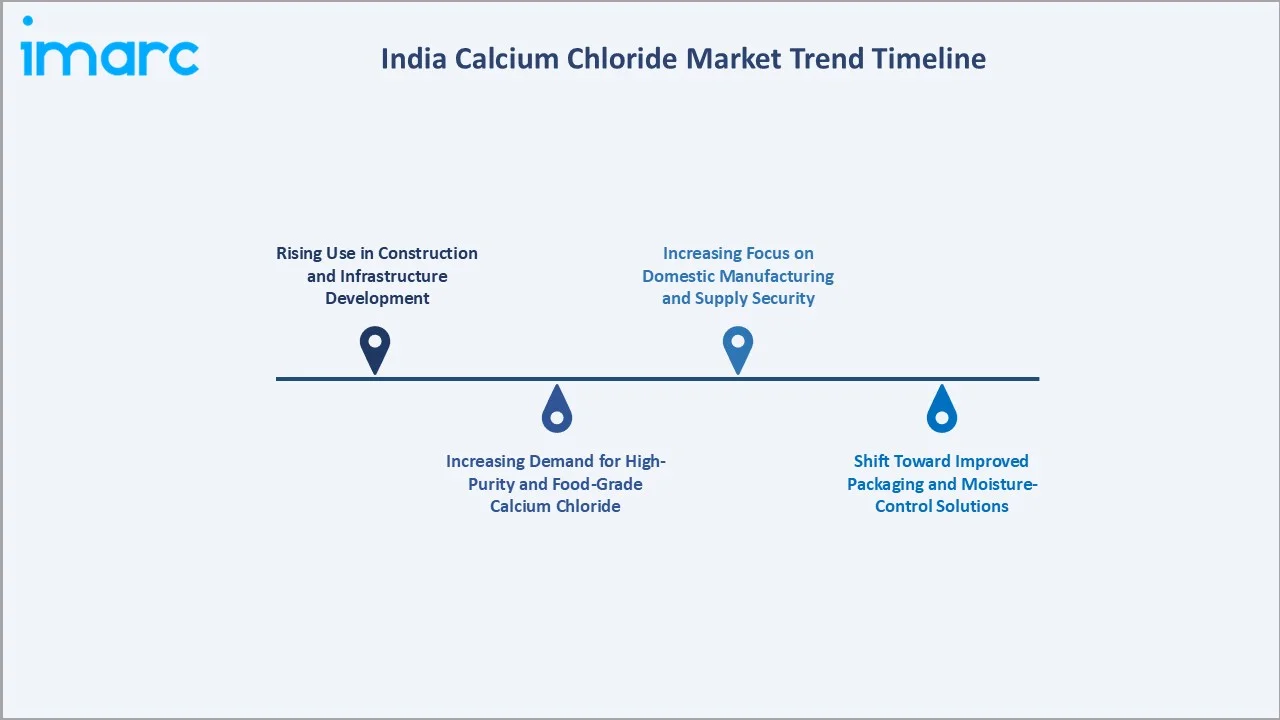
1. Rising Use in Construction and Infrastructure Development
Large-scale infrastructure development is supporting calcium chloride consumption in construction applications. The chemical can be used as a concrete accelerator and for selected dust-control applications at construction sites. By 2025, 7,555 projects valued at INR 1.64 lakh crore had been completed under the Smart Cities Mission. Additionally, 2.98 crore houses were completed under the Pradhan Mantri Awas Yojana–Gramin (PMAY-G) as of March 2026. Faster project execution is increasing interest in concrete admixture solutions. Infrastructure investment is therefore emerging as an important demand trend.
2. Increasing Demand for High-Purity and Food-Grade Calcium Chloride
Demand for higher-purity calcium chloride is increasing across food processing, pharmaceuticals, and other specialized applications. Food-grade calcium chloride is used as a firming agent, stabilizer, and processing aid in various products. Expansion of India’s processed food industry is supporting consumption. Manufacturers are increasingly focusing on purity, consistency, and regulatory compliance. This is creating opportunities for differentiated higher-value calcium chloride grades.
3. Shift Toward Improved Packaging and Moisture-Control Solutions
The highly hygroscopic nature of calcium chloride is encouraging manufacturers to adopt improved packaging and storage technologies. Moisture-resistant bags, sealed containers, and optimized warehousing help maintain product quality during transportation. Suppliers are also strengthening bulk-handling systems for large industrial customers. Better packaging can reduce product deterioration and handling losses. This trend is improving supply-chain efficiency across the India calcium chloride market.
4. Increasing Focus on Domestic Manufacturing and Supply Security
Indian chemical manufacturers are increasingly emphasizing domestic production and reliable sourcing of industrial chemicals. Reducing dependence on supply disruptions and improving availability for downstream industries are becoming important priorities. Local production can shorten delivery times and improve responsiveness to customers. Capacity expansion near major industrial clusters can also reduce logistics costs. This trend is strengthening the domestic calcium chloride supply ecosystem.
Industry Value Chain Analysis
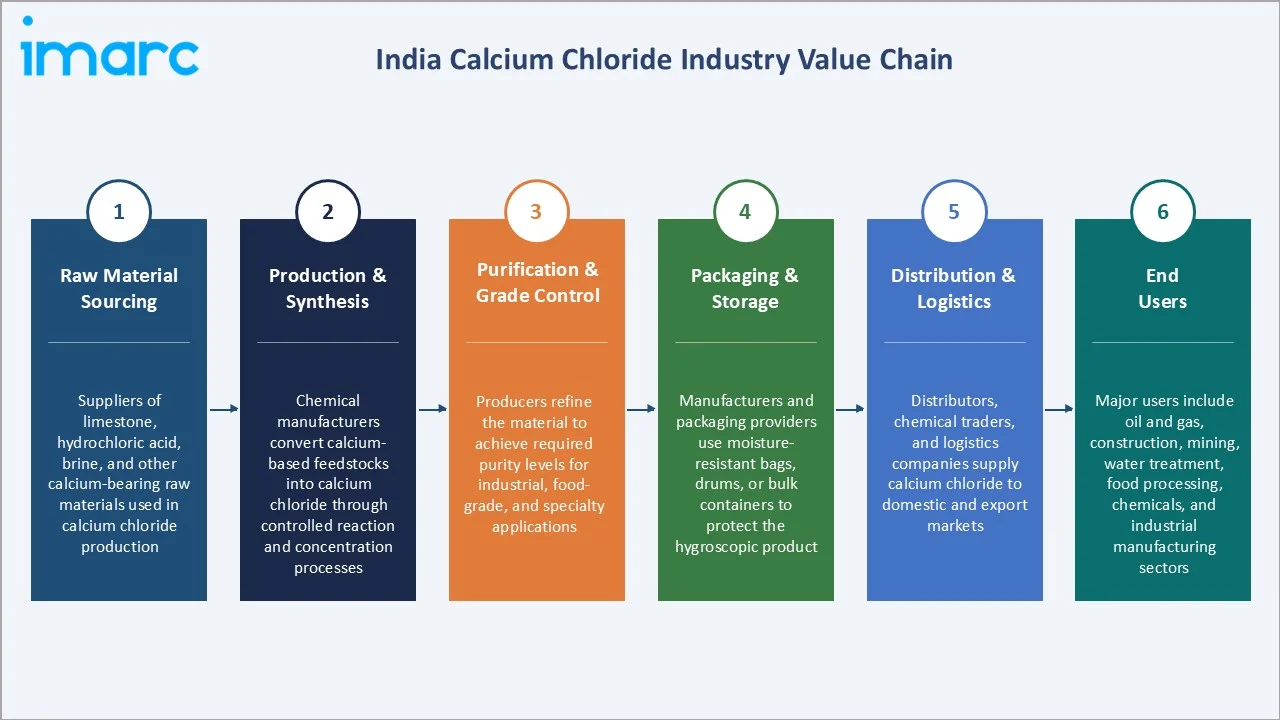
India calcium chloride value chain integrates brine and mineral raw material sourcing, chemical synthesis and purification, grade-specific quality control and certification, packaging and storage, multi-channel distribution, and application-specific end-user delivery across construction, oil and gas, food processing, and industrial sectors.
|
Stage |
Key Participants |
|
Raw Material Sourcing |
Suppliers of limestone, hydrochloric acid, brine, and other calcium-bearing raw materials used in calcium chloride production. |
|
Production & Synthesis |
Chemical manufacturers convert calcium-based feedstocks into calcium chloride through controlled reaction and concentration processes. |
|
Purification & Grade Control |
Producers refine the material to achieve required purity levels for industrial, food-grade, and specialty applications. |
|
Packaging & Storage |
Manufacturers and packaging providers use moisture-resistant bags, drums, or bulk containers to protect the hygroscopic product. |
|
Distribution & Logistics |
Distributors, chemical traders, and logistics companies supply calcium chloride to domestic and export markets. |
|
End Users |
Major users include oil and gas, construction, mining, water treatment, food processing, chemicals, and industrial manufacturing sectors. |
Purification & grade control is the most value-added stage in the India calcium chloride market, as it determines product purity, concentration, and suitability for specialized applications. Higher-purity and food-grade products command premium pricing and offer stronger margins compared with standard industrial grades.
Technology Landscape in the India Calcium Chloride Industry
Hydrochloric Acid–Limestone Reaction Technology
This widely used production technology involves reacting hydrochloric acid with limestone or calcium carbonate to manufacture calcium chloride. The process enables relatively straightforward production and can be operated at different capacity levels. Modern plants focus on optimizing reaction conditions to improve conversion efficiency. Filtration and concentration systems help achieve the required product specifications. The technology is particularly suitable for producing industrial-grade calcium chloride.
Solvay Process By-product Recovery Technology
Calcium chloride can be recovered as a by-product from soda ash manufacturing using the Solvay process. This approach enables manufacturers to utilize process streams that might otherwise require disposal. Recovery systems incorporate purification, concentration, and crystallization stages to obtain commercial-grade products. Integration with existing chemical facilities can improve resource utilization. The technology supports cost-efficient production where suitable soda ash infrastructure exists.
Crystallization and Flake Production Technology
Crystallization technology converts concentrated calcium chloride solutions into solid products with controlled moisture and concentration levels. Flaking, granulation, and crystallization equipment enable production in forms suitable for transportation and industrial use. Automated process controls help maintain uniform particle characteristics. Improved systems can also reduce product losses during processing. These technologies support differentiated solid calcium chloride offerings.
Market Segmentation Analysis
The report covers the following segments:
|
Segment Category |
Leading Segment |
Market Share |
Year |
|
Application |
De-Icing |
🔒 |
2025 |
|
Product Type |
Hydrated Solid |
42.0% |
2025 |
|
Raw Material |
Natural Brine |
38.0% |
2025 |
|
Grade |
Industrial Grade |
🔒 |
2025 |
|
Region |
West and Central India |
30.5% |
2025 |

By Product Type
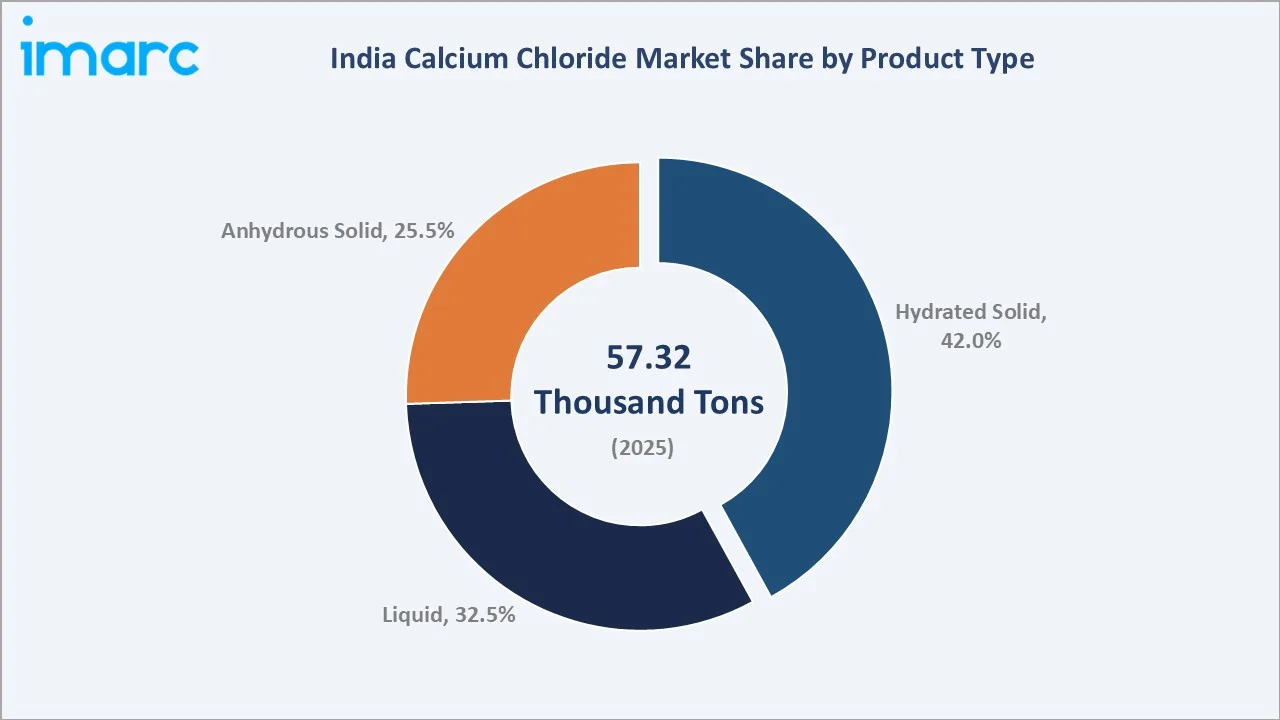
Hydrated solid leads at 42.0% (2025) through versatility across construction, food processing, and dust control applications.
To access detailed market analysis, Request Sample
Liquid at 32.5% serves bulk road treatment and industrial cooling applications. Anhydrous solid at 25.5%, growing fastest at ~3.90% CAGR, through pharmaceutical desiccation, high-density drilling brines, and electronics industry humidity control.
By Raw Material
Natural brine leads at 38.0% (2025) through Gujarat’s cost-competitive brine field infrastructure and established production scale. Solvay process (by-product) at 28.5% serves integrated soda ash complex by-product recovery.
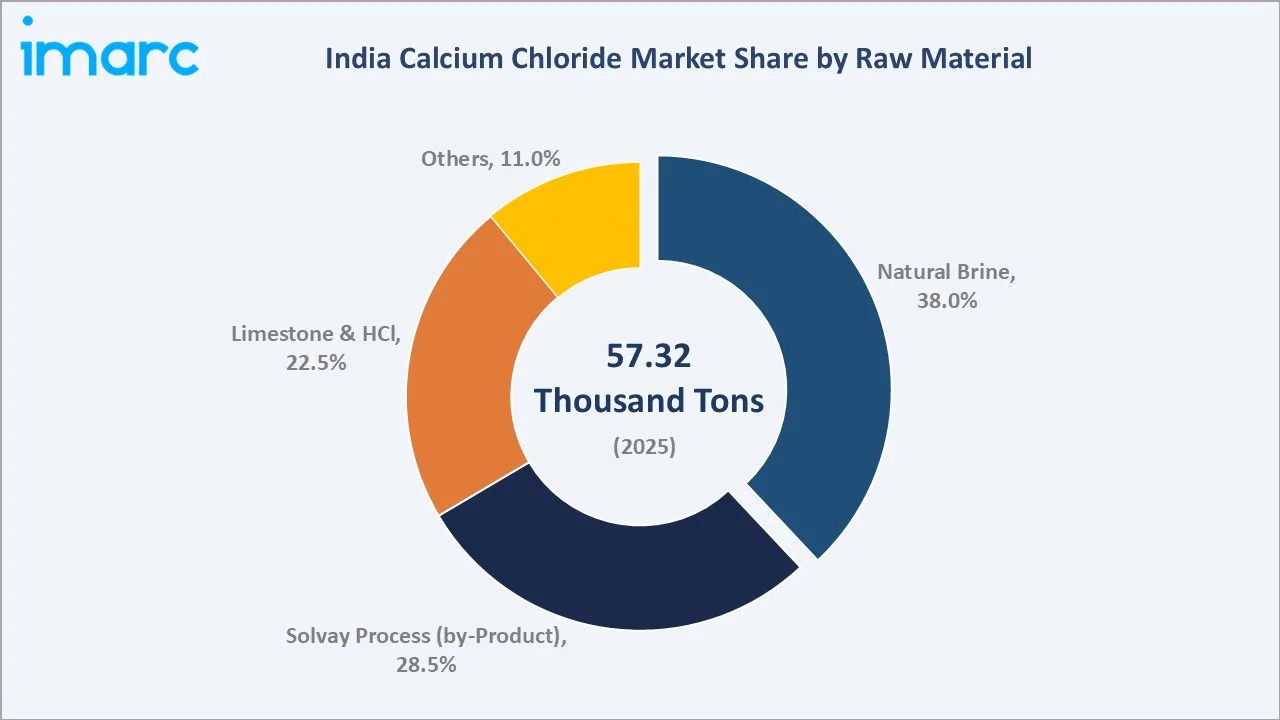
Limestone and HCl at 22.5% are growing at ~3.60% CAGR through expanding synthetic chemical manufacturing in non-brine regions. Others, at 11.0%, include seawater concentration, industrial waste HCl recovery, and minor production routes.
Regional Market Insights
|
Region |
Share (2025) |
Key India Calcium Chloride Market Drivers & Characteristics |
|
West and Central India |
30.5% |
Leads due to a strong chemical manufacturing base, construction activity, and demand from oil & gas and industrial processing. |
|
North India |
27.4% |
Supported by infrastructure development, food processing, water treatment, and expanding industrial activities. |
|
South India |
23.8% |
Demand is driven by chemical processing, construction, oil & gas activities, and growing water treatment requirements. |
|
East India |
18.3% |
Growth is supported by mining, metals, infrastructure development, and expanding industrial applications. |
West and Central India lead the market with a 30.5% share in 2025, supported by a strong chemical manufacturing base, construction activity, and industrial demand. North India accounts for 27.4%, driven by infrastructure development, food processing, and water treatment applications.
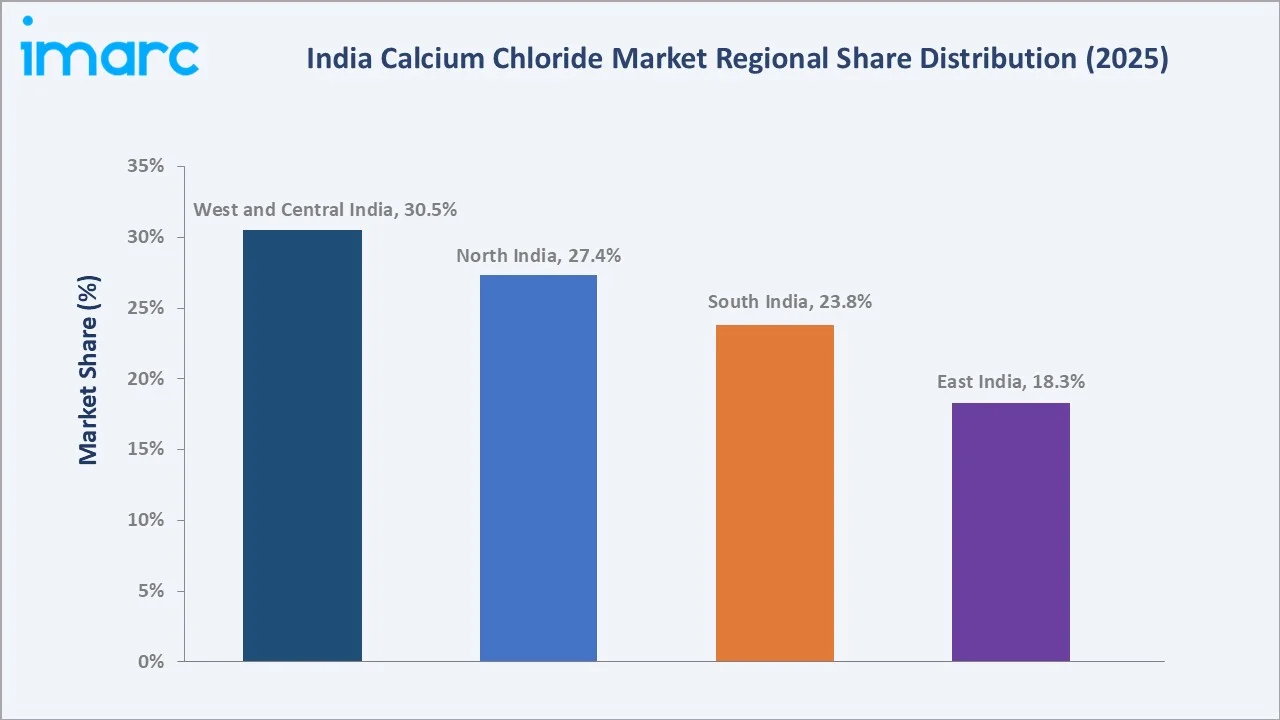
South India holds 23.8%, supported by chemical processing, oil and gas activities, and expanding industrial facilities. Meanwhile, East India represents 18.3% of the market, with demand primarily supported by mining, metals, and infrastructure sectors. Gujarat and Maharashtra strengthen western demand through established chemical and manufacturing clusters.
Competitive Landscape
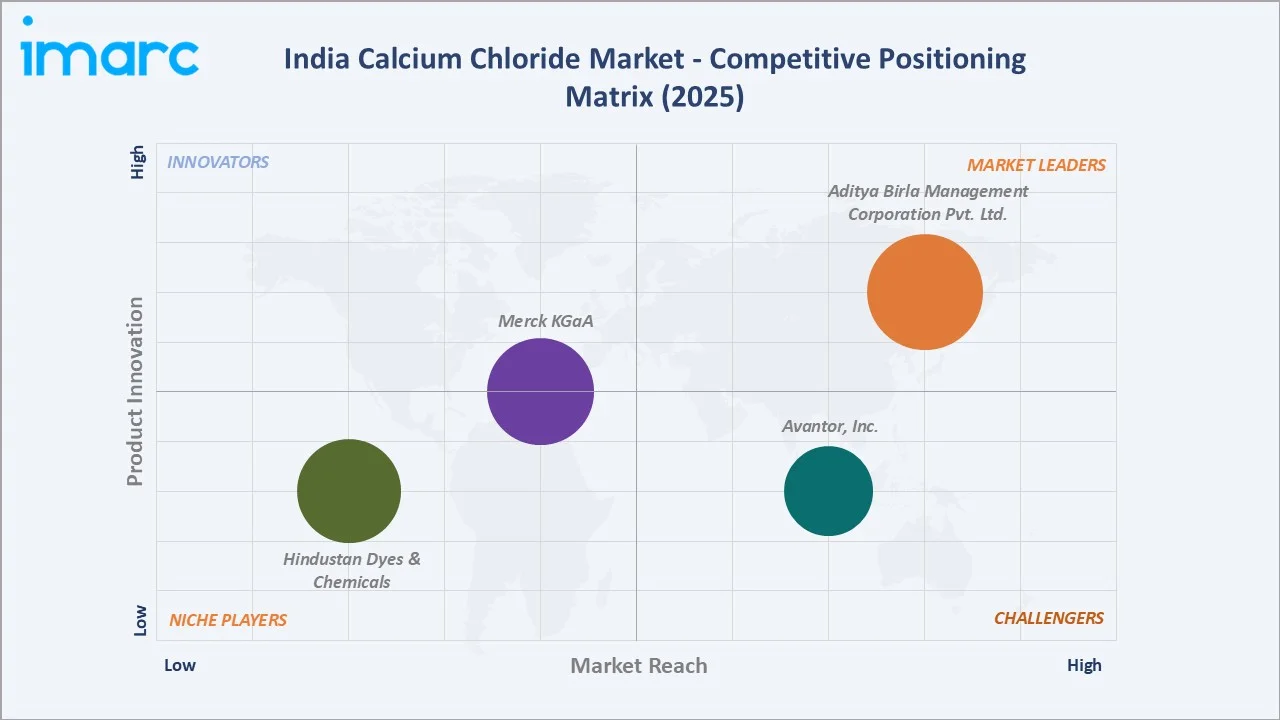
The India calcium chloride market is moderately fragmented, with domestic chemical manufacturers, regional suppliers, and international companies competing on product quality, purity, pricing, and distribution reach. Market players are increasingly focusing on capacity expansion, specialty grades, efficient production, and stronger supply networks to improve their competitive position.
|
Company |
Key Products |
Market Position |
Core Strength |
|
Aditya Birla Management Corporation Pvt. Ltd. |
Altura |
Market Leader |
Aditya Birla Management Corporation Pvt. Ltd. (operating through Aditya Birla Chemicals, a division of Grasim Industries) is one of the largest chlor-alkali manufacturers in India. |
|
Hindustan Dyes & Chemicals |
Calcium Chloride Flakes |
Niche Player |
Hindustan Dyes & Chemicals operates as a regional trader and supplier of industrial and commercial chemicals. |
|
Merck KGaA |
Anhydrous Calcium Chloride |
Established Player |
Merck KGaA acts as a premier, specialized supplier of high-purity calcium chloride. |
|
Avantor, Inc. |
Anhydrous Calcium Chloride, Calcium chloride 1 mol/l in aqueous solution, Calcium chloride 90-98% |
Challenger |
Avantor, Inc. serves the Indian market by supplying high-purity laboratory reagents, analytical chemicals, and raw materials. |
The market’s progressive shift toward food-grade and pharmaceutical-grade premium products is creating a second competitive dimension based on quality certification, traceability systems, and regulatory documentation capability.
Key Company Profiles
Aditya Birla Management Corporation Pvt. Ltd.
Aditya Birla Management Corporation Pvt. Ltd. has a significant presence in India’s chemicals sector through Aditya Birla Chemicals/Grasim Industries’ chemicals business, which is a leading domestic producer of chlor-alkali and chlorine-derivative chemicals. Its portfolio includes calcium chloride, manufactured by reacting limestone with hydrochloric acid at a certified facility. It also offers high-purity food-grade calcium chloride for applications such as dairy processing, canned foods, beverages, water remineralization, and animal feed, strengthening its presence across both industrial and value-added calcium chloride segments.
- Key Products: Altura.
- Strategic Focus: Strengthening its chlorine-derivatives portfolio and improving chlorine integration, with calcium chloride forming part of Grasim’s downstream chlorine product range. The broader chemicals strategy emphasizes operational efficiency, sustainable manufacturing, capacity optimization, and higher-value downstream chemicals, helping improve competitiveness and serve diverse industrial end users.
Merck KGaA
Merck KGaA is a science and technology company with operations spanning life science, healthcare, and electronics. In India, its life science activities include Merck Life Science Private Limited and Sigma-Aldrich Chemicals Private Limited, supporting the manufacturing, marketing, and distribution of laboratory reagents, specialty chemicals, and life science products. Within the India calcium chloride market, Merck offers calcium chloride through its life science portfolio in multiple grades and specifications, including ACS reagent, molecular biology, anhydrous, granular, and high-purity calcium chloride products.
- Key Products: Anhydrous Calcium Chloride.
- Strategic Focus: Focuses primarily on the high-purity and specialty segment, supplying calcium chloride grades for laboratory, molecular biology, analytical, and pharmaceutical applications. Its strategy emphasizes product quality, standardized specifications, reliable supply, and research-to-manufacturing support, rather than competing primarily in bulk industrial calcium chloride.
Market Concentration Analysis
The India calcium chloride market is moderately fragmented, with competition between large integrated chemical producers, specialty chemical suppliers, and numerous regional manufacturers. The presence of a broad domestic supplier base limits excessive concentration among a few companies. Large players benefit from integrated production, established manufacturing infrastructure, and wider distribution networks. Specialty suppliers such as Merck compete primarily through high-purity and regulated grades for pharmaceutical and laboratory applications. Overall, competition is shaped by pricing, purity, product grade, supply reliability, and application-specific capabilities.
Investment & Growth Opportunities
Highest Growth Segments
Anhydrous solid (~3.90% CAGR) and limestone and HCl production route (~3.60% CAGR) represent India’s calcium chloride market’s highest-growth investment vectors through 2034, driven by pharmaceutical desiccation demand growth and regional production decentralization, respectively.
Investment Themes
- Food-Grade and Pharmaceutical-Grade Premium Expansion: Investment in high-purity food- and pharmaceutical-grade calcium chloride offers opportunities to capture higher-value applications in processed foods, beverages, healthcare, and specialty formulations. Expanding purification and quality-control capabilities can enable manufacturers to differentiate from bulk industrial-grade suppliers and improve margins.
- East India Regional Production: Establishing calcium chloride production and distribution capacity in East India can serve growing demand from infrastructure, water treatment, agriculture, and industrial activities in states such as Odisha and West Bengal. Regional facilities can also reduce transportation costs and improve supply availability across eastern markets.
Future Market Outlook (2026-2034)
The India calcium chloride market is projected to grow from 57.32 Thousand Tons in 2025 to 77.22 Thousand Tons by 2034, delivering a steady 3.27% CAGR that reflects the structural characteristics of a chemically mature industrial market growing in line with India’s broader industrial activity expansion across construction, energy, and food processing sectors. The midpoint anchor of 67.31 Thousand Tons in 2030 confirms the structural stability of India’s calcium chloride demand trajectory across economic cycles.
First, India’s infrastructure investment supercycle under the National Infrastructure Pipeline and PM GatiShakti National Master Plan is the calcium chloride market’s most durable and volume-significant demand driver through 2034. Second, India’s oil and gas sector’s domestic exploration expansion creates a sustained and growing calcium chloride brine demand that is currently partially met through imports and will increasingly be sourced from domestic producers as import substitution gains priority under Make in India for chemicals. Third, India’s food processing industry’s structural formalization is creating a food-grade calcium chloride demand segment growing at 5-8% annually that will constitute an increasing share of India’s total calcium chloride consumption through 2034.
Research Methodology
Primary Research
Primary research comprised in-depth interviews with calcium chloride production plant managers and technical directors, procurement managers at EPC contractors and major mining companies sourcing calcium chloride for dust suppression, drilling fluid engineers on calcium chloride brine specification requirements, food processors (dairy cooperatives, tofu manufacturers) on food-grade calcium chloride sourcing and specification requirements, chemical distributors in Gujarat, Maharashtra, Rajasthan, and North India on trading dynamics and regional pricing, and industrial calcium chloride end-users in construction, water treatment, and manufacturing.
Secondary Research
Secondary research encompassed government publications, trade databases, industry reports, company annual reports, regulatory sources, and industry associations. The analysis also reviewed calcium chloride import-export trends, production technologies, end-use demand, competitive developments, and regional market dynamics.
Forecasting Models
Forecasting models were developed using historical India calcium chloride market volume data (2020-2025), NIP infrastructure investment disbursement schedule, food processing industry output growth aligned to PLI scheme investment disbursement and registered processor database expansion, standard update impact on quality specification compliance requirements, regional production capacity expansion announcements from major Gujarat producers, and competitive import substitution trajectory from Indian calcium chloride export data.
India Calcium Chloride Market Report Scope:
| Report Features | Details |
|---|---|
| Base Year of the Analysis | 2025 |
| Historical Period | 2020-2025 |
| Forecast Period | 2026-2034 |
| Units | Thousand Tons |
| Scope of the Report |
Exploration of Historical Trends and Market Outlook, Industry Catalysts and Challenges, Segment-Wise Historical and Future Market Assessment:
|
| Applications Covered | De-Icing, Dust Control and Road Stabilization, Drilling Fluids, Construction, Industrial Processing, Others |
| Product Types Covered | Liquid, Hydrated Solid, Anhydrous Solid |
| Raw Materials Covered | Natural Brine, Solvay Process (by-Product), Limestone and HCL, Others |
| Grades Covered | Food Grade, Industrial Grade |
| Regions Covered | North India, West and Central India, South India, East India |
| Companies Covered | Aditya Birla Management Corporation Pvt. Ltd., Hindustan Dyes & Chemicals, Merck KGaA, Avantor, Inc., etc. |
| Customization Scope | 10% Free Customization |
| Post-Sale Analyst Support | 10-12 Weeks |
| Delivery Format | PDF and Excel through Email (We can also provide the editable version of the report in PPT/Word format on special request) |
Key Benefits for Stakeholders:
- IMARC’s report offers a comprehensive quantitative analysis of various market segments, historical and current market trends, market forecasts, and dynamics of the India calcium chloride market from 2020-2034.
- The research study provides the latest information on the market drivers, challenges, and opportunities in the India calcium chloride market.
- Porter's Five Forces analysis assists stakeholders in assessing the impact of new entrants, competitive rivalry, supplier power, buyer power, and the threat of substitution. It helps stakeholders to analyze the level of competition within the India calcium chloride industry and its attractiveness.
- Competitive landscape allows stakeholders to understand their competitive environment and provides an insight into the current positions of key players in the market.
Frequently Asked Questions About the India Calcium Chloride Market Report
The India calcium chloride market reached 57.32 Thousand Tons in 2025, driven by expressway construction requiring concrete acceleration and dust suppression, OALP exploration drilling program creating well completion brine demand, infrastructure acceleration, affordable housing concrete demand, food processing PLI scheme expansion of organized dairy and tofu manufacturing, and food-grade CaCl₂ demand from organized pizza chain cheese manufacturing expansion.
The market grows at 3.27% CAGR, reaching 77.22 Thousand Tons by 2034. Growth is supported by expanding demand from construction, oil and gas, water treatment, food processing, and industrial applications.
Hydrated solid leads at 42.0% (2025) through its versatility across construction concrete acceleration, dust control, food processing coagulation, and general industrial applications at an optimal cost-performance balance.
Natural brine leads at 38.0% (2025) through Gujarat’s strategic coastal and inland brine field advantage, providing India’s lowest-cost CaCl₂ production feedstock.
West and Central India lead at 30.5% through Gujarat’s concentration of India’s major calcium chloride production capacity, providing both supply leadership and Maharashtra’s large construction and industrial demand.
Leading companies include Aditya Birla Management Corporation Pvt. Ltd., Hindustan Dyes & Chemicals, Merck KGaA, and Avantor, Inc., among others.
The market is projected to reach 67.31 Thousand Tons by 2030, driven by rising demand from construction, oil and gas, water treatment, food processing, and chemical industries. Expanding infrastructure and industrial activities are further supporting market growth.
Top investment opportunities include food-grade and pharmaceutical-grade calcium chloride, East India regional limestone and HCl plant, pharmaceutical packaging desiccant CaCl₂ pouches, oil and gas brine blending and supply, and water treatment calcium chloride supply for desalination.
Need more help?
- Speak to our experienced analysts for insights on the current market scenarios.
- Include additional segments and countries to customize the report as per your requirement.
- Gain an unparalleled competitive advantage in your domain by understanding how to utilize the report and positively impacting your operations and revenue.
- For further assistance, please connect with our analysts.
 Request Customization
 Speak to an Analyst
 Request Brochure
 Inquire Before Buying
Benefits of Customization
- Personalize this research
- Triangulate with your data
- Get data as per your format and definition
- Gain a deeper dive into a specific application, geography, customer, or competitor
- Any level of personalization
Get in Touch With Us
UNITED STATES
Phone: +1-201-971-6302
INDIA
Phone: +91-120-433-0800
UNITED KINGDOM
Phone: +44-753-714-6104
Email: sales@imarcgroup.com
Client Testimonials




.webp)




.webp)













Related Reports

Choose your plan
*Please note that the prices mentioned below are starting prices for each bundle type. Kindly contact our team for further details.*
Single User License
- 1 User License, Access on 2 Devices
- PDF Report + Excel Dataset (Password Protected)
- Lifetime Access
- No Printing Rights
- 10% Free Report Customization
- 10–12 Weeks of Analyst Support
Five User License
- Access for 5 Users, 2 Devices per User
- PDF Report + Excel Dataset (Password Protected)
- Lifetime Access
- Dedicated Account Manager
- 12–14 Weeks of Analyst Support
- No Printing Rights
- 15% Free Report Customization
- 25% Discount on Your Next Purchase
Corporate User License
- Unlimited User Access (Within Your Organization)
- PDF Report + Excel Dataset
- Lifetime Access
- Dedicated Account Manager
- 14–20 Weeks of Analyst Support
- No Printing Rights
- 20% Free Report Customization
- 30% Discount on Your Next Purchase
Essential Insights
What's included:
3 reports
- Lifetime Access
- PDF Reports
- Excel Datasets
- 2 Weeks of Free Analyst Support
- 2 User Licenses
- Access on 2 Devices
- Printing Rights
- Complimentary PowerPoint (PPT) Version
- Complimentary License Upgrade
Professional Access
What's included:
5 reports
- Lifetime Access
- PDF Reports
- Excel Datasets
- 8 Weeks of Free Analyst Support
- 2 User Licenses
- Access on 2 Devices
- Printing Rights
- Complimentary PowerPoint (PPT) Version
- Complimentary License Upgrade
Business Advantage
What's included:
8 reports
- Lifetime Access
- PDF Reports
- Excel Datasets
- 14 Weeks of Free Analyst Support
- 2 User Licenses
- Access on 2 Devices
- Printing Rights
- Complimentary PowerPoint (PPT) Version
- Complimentary License Upgrade
Enterprise Intelligence
What's included:
10 reports
- Lifetime Access
- PDF Reports
- Excel Datasets
- 20 Weeks of Free Analyst Support
- 2 User Licenses
- Access on 2 Devices
- Printing Rights
- Complimentary PowerPoint (PPT) Version
- Complimentary License Upgrade