
India Endoscopy Devices Market Size, Share, Trends and Forecast by Type, Application, End Use, and Region, 2026-2034
India Endoscopy Devices Market Size, Share, Trends & Forecast (2026-2034)
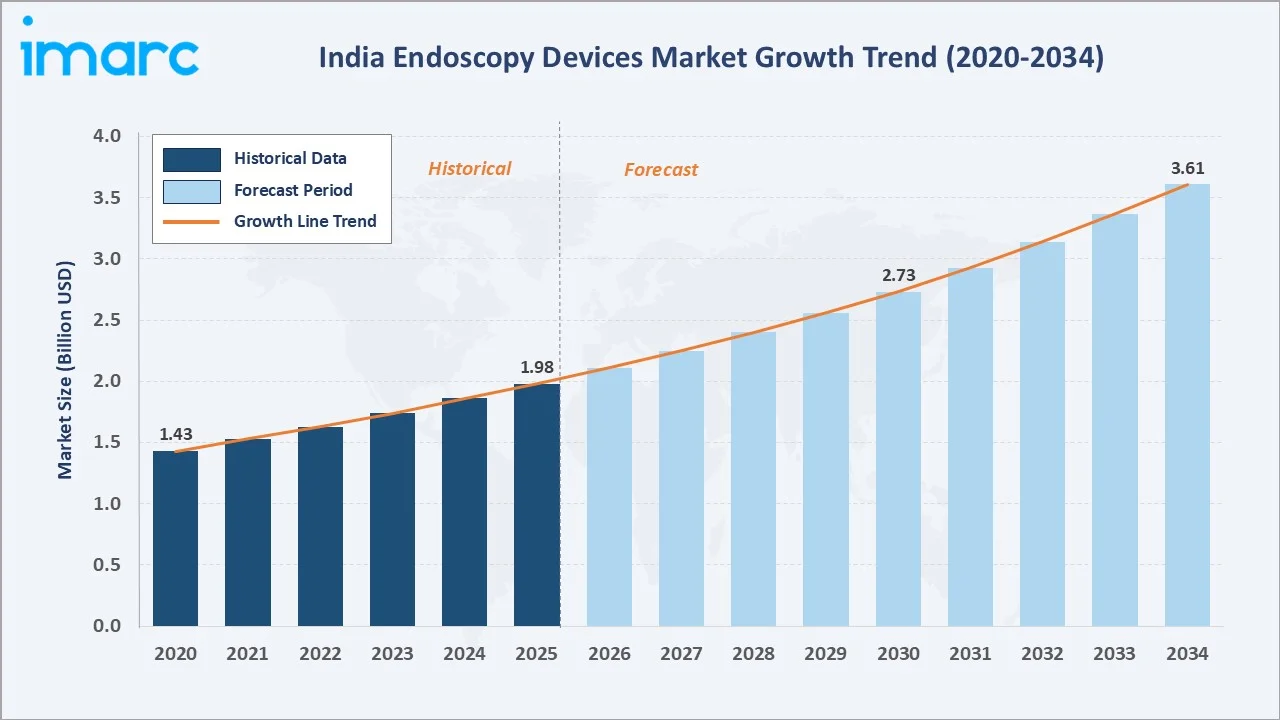
The India endoscopy devices market reached USD 1.98 Billion in 2025 and is projected to reach USD 3.61 Billion by 2034, growing at a CAGR of 6.70% during 2026-2034. The market is driven by rising prevalence of gastrointestinal disorders, increasing demand for minimally invasive procedures, and expanding hospital infrastructure across India. India's growing geriatric population and rising incidence of colorectal cancer and gastroesophageal reflux disease are directly increasing diagnostic procedure volumes, as endoscopy remains the preferred first-line diagnostic and therapeutic tool for internal organ visualization.
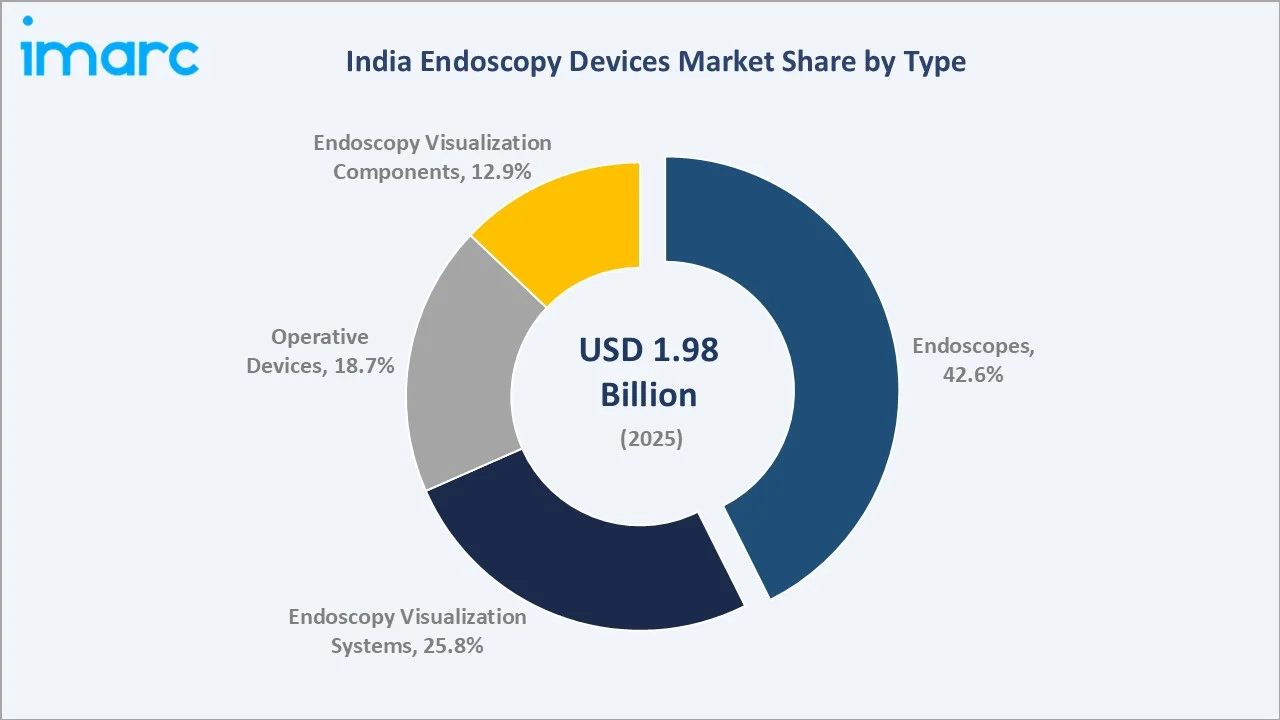
The Endoscopes segment from the type breakup dominates at 42.6%. Hospitals and Clinics lead end use applications at 72.4%. North India commands 32.7% of the national market share.
Market Snapshot
|
Metric |
Value |
|
Market Size (2025) |
USD 1.98 Billion |
|
Forecast Market Size (2034) |
USD 3.61 Billion |
|
CAGR (2026-2034) |
6.70% |
|
Base Year |
2025 |
|
Historical Period |
2020-2025 |
|
Forecast Period |
2026-2034 |
|
Dominant Type |
Endoscopes (42.6%, 2025) |
|
Dominant End Use |
Hospitals and Clinics (72.4%, 2025) |
|
Leading Region |
North India (32.7%, 2025) |
The market expanded from USD 1.43 Billion in 2020 to USD 1.98 Billion in 2025 - growing by nearly 39% in five years - anchored at USD 2.73 Billion in 2030 and forecast to reach USD 3.61 Billion by 2034. The COVID-19 pandemic created temporary elective-procedure deferrals through 2020-2021, but did not reverse the structural demand trajectory, which recovered steadily as hospital procedure backlogs cleared and screening programs resumed.
To get more information on this market, Request Sample
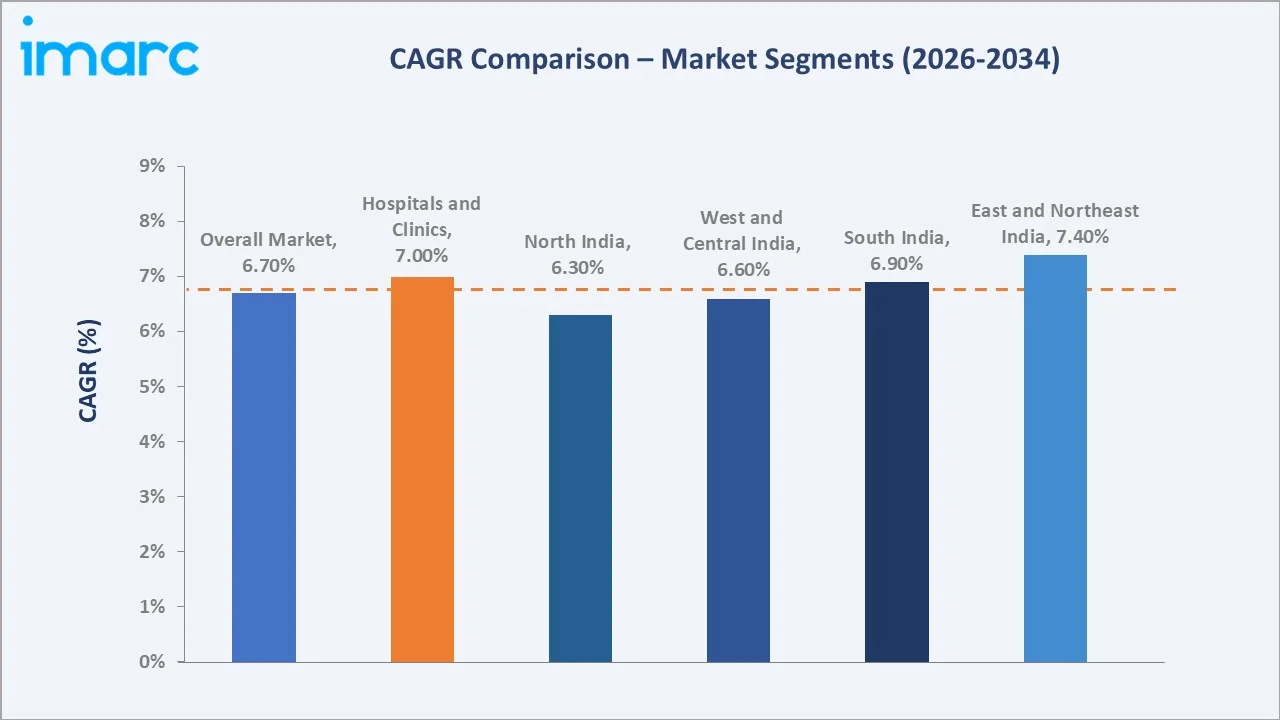
Hospitals and Clinics application grows fastest at approximately 7.0% CAGR as corporate hospital chains expand endoscopy suite capacity and day-care procedure volumes rise. The Endoscopes segment grows at approximately 6.5% CAGR as the foundational diagnostic instrument continues to see steady replacement and expansion demand across public and private healthcare settings.
Executive Summary
The India endoscopy devices market reached USD 1.98 Billion in 2025, representing one of the healthcare industry's most consistent growth segments, driven by the fundamental shift toward minimally invasive diagnostic and therapeutic procedures across Indian hospitals. The endoscope is the defining diagnostic instrument for gastrointestinal, urological, and gynecological conditions, enabling real-time visualization that reduces the need for exploratory surgery. The market is projected to reach USD 3.61 Billion by 2034.
The Endoscopes segment at 42.6% dominates by capturing the core diagnostic and procedural instrument category used across virtually all endoscopic specialities. Hospitals and Clinics at 72.4% lead through the concentration of specialist gastroenterologists, sterilization infrastructure, and integrated diagnostic-to-treatment pathways available in hospital settings. North India at 32.7% leads nationally through Delhi-NCR's dense network of NABH-accredited super-speciality hospitals, higher regional healthcare spending, and growing medical tourism inflow.
Key Market Insights
|
Insight |
Data |
|
Dominant Type |
Endoscopes - 42.6% share (2025) |
|
Dominant End Use |
Hospitals and Clinics - 72.4% market share (2025) |
|
Leading Region |
North India - 32.7% market share (2025) |
|
Market Opportunity |
AI-assisted diagnostic imaging; single-use endoscopes; robotic-assisted endoscopy; tier 2/3 city hospital expansion; ambulatory surgical center scale-up |
Key Analytical Observations Supporting the Above Data:
- Endoscopes at 42.6%: The Endoscopes segment dominates as it provides the foundational diagnostic and procedural instrument required across gastrointestinal, urological, and gynecological applications, with widespread deployment in both diagnostic and therapeutic settings. Its consistent replacement cycle and expanding procedure base across public and private hospitals further reinforce segment demand. Continued technological refinement in flexible optics and maneuverability is sustaining upgrade cycles across the installed hospital base.
- Hospitals and Clinics at 72.4%: The Hospitals and Clinics segment dominates due to the concentration of trained specialists, sterilization infrastructure, and integrated diagnostic-to-treatment pathways available in hospital settings. With India's gastrointestinal disease burden continuing to rise, hospital-based endoscopy procedure volumes are generating substantial and sustained device demand. Corporate hospital chains are further expanding dedicated endoscopy suites to accommodate rising patient throughput.
- North India at 32.7%: The North India region dominates the endoscopy devices market due to its dense network of NABH-accredited tertiary hospitals and strong consumer demand, led primarily by Delhi-NCR. Higher regional per-capita healthcare spending and a growing base of medical tourism patients are generating substantial demand for advanced endoscopic diagnostic and therapeutic devices across the region.
India Endoscopy Devices Market Overview
The India endoscopy devices market encompasses the design, manufacture, and supply of instruments used to visualize, diagnose, and treat internal organs through minimally invasive access, spanning endoscopes, endoscopy visualization systems, endoscopy visualization components, and operative devices deployed across gastrointestinal, urological, gynecological, arthroscopic, and other surgical specialities.
The ecosystem integrates device manufacturers, optical and component suppliers, hospital and ambulatory surgical center procurement networks, distributors, and regulatory bodies overseeing approval under India's Medical Device Rules, 2017. This ecosystem also connects closely with adjacent segments such as the India ultrasound gastroscopes market, where endosonography devices support combined imaging and diagnostic workflows within the same procedural settings. Macroeconomic factors include rising healthcare expenditure, expanding insurance coverage under schemes such as Ayushman Bharat, and continued tertiary and secondary care infrastructure investment.
Market Dynamics
To evaluate market opportunities, Request Sample
Market Drivers
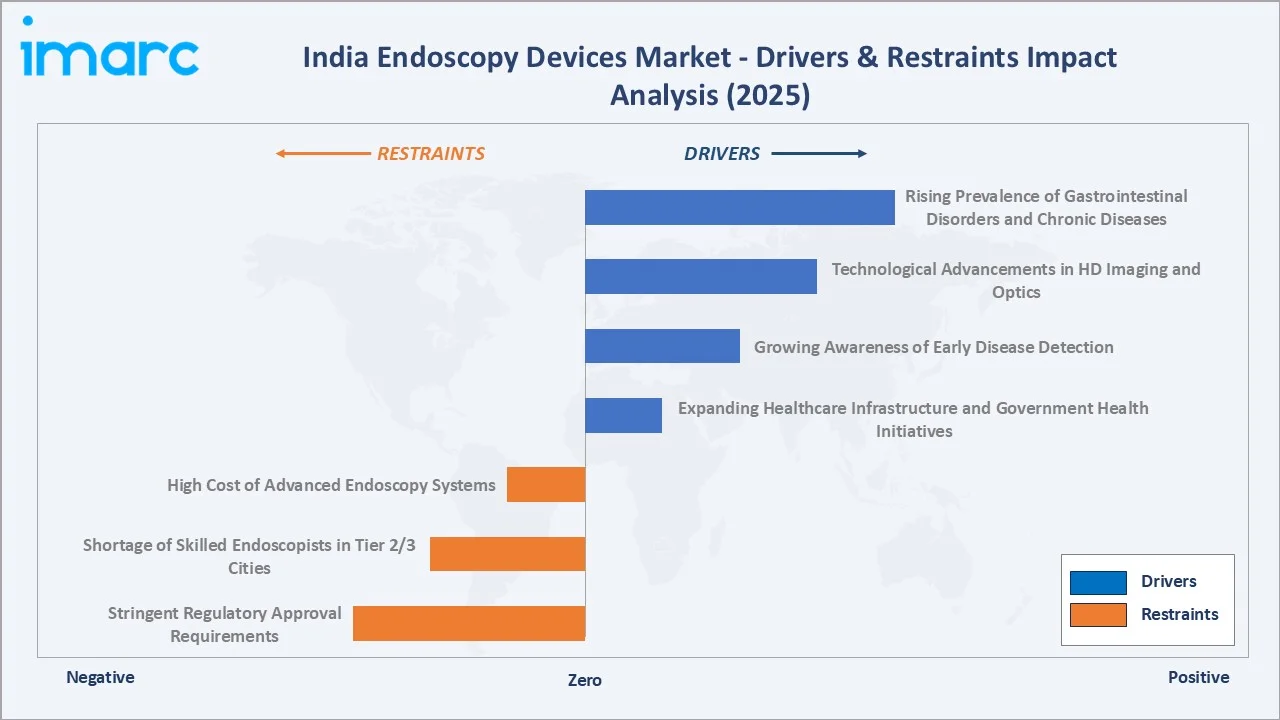
- Rising Prevalence of Gastrointestinal Disorders and Chronic Diseases: The growing incidence of colorectal cancer, gastroesophageal reflux disease, and inflammatory bowel disease across India is increasing the volume of diagnostic and therapeutic endoscopic procedures performed annually. This rising disease burden is translating into higher device utilization across public and private hospital networks. As screening guidelines expand to younger at-risk populations, the addressable patient base for routine endoscopy is widening further.
- Technological Advancements in HD Imaging and Optics: The integration of high-definition imaging, advanced optics, and enhanced maneuverability into modern endoscopes is improving diagnostic accuracy and procedural outcomes across Indian healthcare settings. Hospitals are increasingly upgrading legacy standard-definition systems to next-generation HD and 4K platforms, generating consistent capital equipment demand even in mature hospital networks.
- Growing Awareness of Early Disease Detection: Rising awareness among healthcare professionals and patients regarding the benefits of early diagnosis and preventive healthcare is increasing voluntary screening uptake across India. Public health campaigns emphasizing early gastrointestinal cancer detection are contributing to steady growth in elective screening volumes, a shift expected to sustain procedural demand well beyond the current forecast period.
- Expanding Healthcare Infrastructure and Government Health Initiatives: Government programs supporting hospital infrastructure expansion and insurance coverage under schemes such as Ayushman Bharat are improving access to endoscopic diagnostics in tier 2 and tier 3 cities. These initiatives are widening the addressable patient base beyond metro markets, encouraging both public and private investment in new endoscopy suite capacity across rural and semi-urban regions.
Market Restraints
- High Cost of Advanced Endoscopy Systems: The high capital cost of advanced HD and 4K visualization systems limits adoption among smaller hospitals and clinics operating in price-sensitive regional markets. This cost barrier is particularly pronounced in tier 2 and tier 3 cities, where hospital capital budgets are more constrained, causing equipment upgrade cycles to lag several years behind leading urban hospital chains.
- Shortage of Skilled Endoscopists in Tier 2/3 Cities: A limited pool of trained gastroenterologists and endoscopy specialists outside major urban centers constrains procedure volumes and equipment utilization in emerging regional healthcare markets. This shortage creates a structural bottleneck limiting new endoscopy capacity deployment outside major cities, requiring sustained investment in specialist training programs.
- Stringent Regulatory Approval Requirements: Compliance with India's Medical Device Rules, 2017 and associated quality certification processes increases time-to-market and cost for new device introductions. These requirements create meaningful entry barriers for smaller domestic manufacturers competing with established international players, extending product launch timelines and raising compliance costs across the industry.
Market Opportunities
- AI-Assisted Diagnostic Imaging Integration: The integration of artificial intelligence into endoscopic imaging platforms is enabling real-time polyp detection and abnormality flagging, improving diagnostic accuracy and reducing missed-lesion rates. Leading Indian hospitals are beginning to pilot AI-assisted endoscopy systems for early cancer detection, creating a meaningful upgrade opportunity as clinical validation data accumulates and broader mid-tier hospital adoption follows.
- Single-Use Endoscope Adoption: Rising infection-control priorities are driving hospital interest in single-use endoscopic devices that eliminate reprocessing-related contamination risk. This shift is particularly relevant for high-volume settings where reprocessing capacity constraints limit patient throughput, positioning manufacturers offering validated single-use alternatives to capture incremental share.
Market Challenges
- Import Dependence for Advanced Visualization Systems: India's reliance on imported HD and AI-integrated visualization systems exposes hospital procurement budgets to currency fluctuation and global supply chain disruption risk. This dependence extends device delivery lead times compared to domestic alternatives, though government initiatives promoting domestic manufacturing are gradually addressing this.
- Price Competition from Domestic Manufacturers: The entry of cost-competitive domestic endoscope manufacturers is intensifying pricing pressure on established international suppliers, particularly in tier 2 and tier 3 city hospital segments. This dynamic is compressing margins for global players while expanding market access for price-sensitive regional hospitals.
Emerging Market Trends
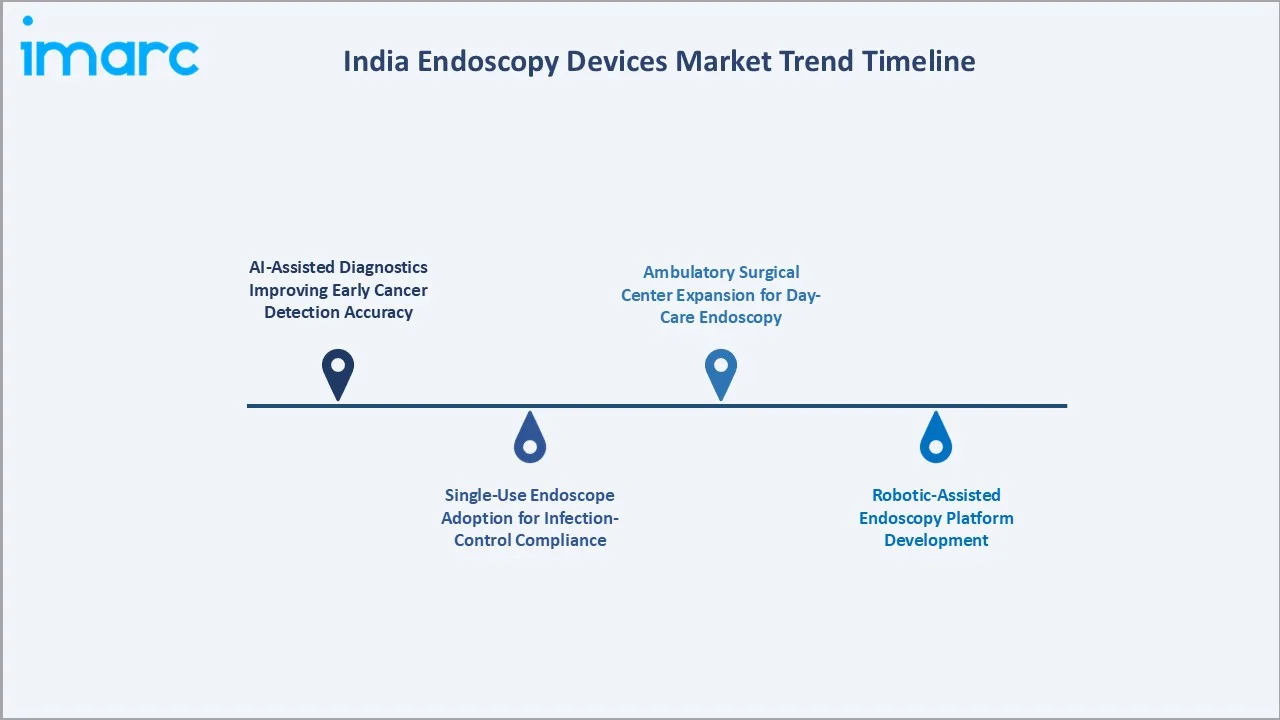
1. AI-Assisted Diagnostics Improving Early Cancer Detection Accuracy
Artificial intelligence integration into endoscopic imaging platforms is enabling real-time detection of polyps and mucosal abnormalities, improving diagnostic sensitivity and reducing missed-lesion rates during routine screening procedures. Leading Indian hospitals, including the All India Institute of Medical Sciences, are expanding AI-assisted endoscopy trials for early cancer detection. This technology is expected to become a standard feature across premium hospital endoscopy suites as clinical validation accumulates over the forecast period.
2. Single-Use Endoscope Adoption for Infection-Control Compliance
Single-use endoscope adoption is emerging as hospitals prioritize infection-control compliance and seek to eliminate reprocessing-related contamination risk in high-volume procedure settings. This shift is a defining feature of the broader India disposable endoscope market, which is expanding as manufacturers introduce validated single-use alternatives across gastrointestinal and urological applications. This design shift can enhance patient safety, reduce cross-contamination incidents, and simplify hospital sterilization workflows. As manufacturers expand validated single-use portfolios, wider adoption is expected across both metro and regional hospital networks.
3. Robotic-Assisted Endoscopy Platform Development
Robotic-assisted endoscopy platforms are beginning to emerge as next-generation diagnostic and therapeutic tools, offering enhanced precision and reduced procedural fatigue for practicing endoscopists. These systems can improve procedural consistency and enable more complex therapeutic interventions to be performed endoscopically. As development matures, robotic-assisted platforms are expected to gain traction in leading tertiary care hospitals.
4. Ambulatory Surgical Center Expansion for Day-Care Endoscopy
Ambulatory surgical centers are gaining prominence as standalone day-care procedure volumes rise for routine screening and minor therapeutic endoscopies. Their rapid expansion creates new procurement opportunities for compact, cost-efficient endoscopy systems tailored to high-throughput outpatient settings. As manufacturers expand offerings suited to ambulatory settings, device suppliers benefit from a broadening customer base beyond traditional hospital channels.
Industry Value Chain Analysis
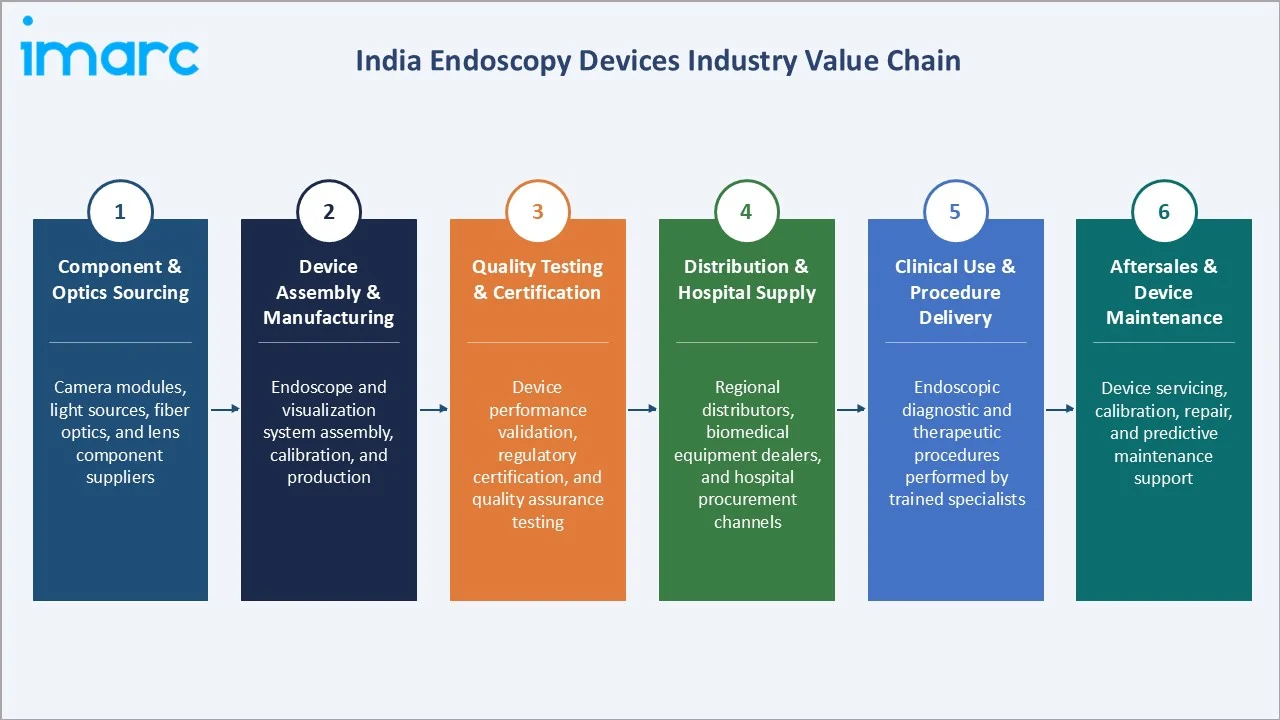
The India endoscopy devices value chain integrates component and optics sourcing, device assembly and manufacturing, quality testing and certification, distribution and hospital supply, clinical use, and aftersales maintenance. The chain's commercial architecture is anchored around hospital procurement cycles, with distributors playing a growing role in supporting device uptime across the installed base.
|
Stage |
Key Participants |
|
Component & Optics Sourcing |
Camera modules, light sources, fiber optics, and lens component suppliers |
|
Device Assembly & Manufacturing |
Endoscope and visualization system assembly, calibration, and production |
|
Quality Testing & Certification |
Device performance validation, regulatory certification, and quality assurance testing |
|
Distribution & Hospital Supply |
Regional distributors, biomedical equipment dealers, and hospital procurement channels |
|
Clinical Use & Procedure Delivery |
Endoscopic diagnostic and therapeutic procedures performed by trained specialists |
|
Aftersales & Device Maintenance |
Device servicing, calibration, repair, and predictive maintenance support |
The device assembly stage remains the value chain's most technologically intensive segment, requiring precision optical engineering. Distribution is gaining importance as domestic manufacturers expand regional dealer networks into tier 2 and tier 3 city hospitals.
Technology Landscape in the India Endoscopy Devices Industry
High-Definition and 4K Visualization Technology
High-definition and 4K visualization technology offers superior image clarity, enabling more accurate identification of mucosal abnormalities and early-stage lesions during diagnostic procedures. These systems support improved procedural outcomes and reduced missed-lesion rates, making them the preferred choice for leading hospital endoscopy suites. Their widespread adoption is accelerating replacement demand for legacy standard-definition systems across the country.
Flexible Fiber-Optic Endoscope Technology
Flexible fiber-optic endoscope technology offers enhanced maneuverability, patient comfort, and access to anatomically complex regions compared to rigid alternatives. These devices provide reliable performance across gastrointestinal, urological, and pulmonary applications, supporting their broad adoption in both diagnostic and therapeutic settings across Indian hospitals.
AI-Integrated Diagnostic Support Systems
Numerous leading Indian tertiary hospitals expanded pilot programs for AI-assisted endoscopy aimed at improving early cancer detection accuracy. These systems use machine learning algorithms trained on large procedural image datasets to flag suspicious lesions in real time, supporting endoscopists in reducing missed-detection rates. Continued clinical validation is expected to drive broader adoption of AI-integrated diagnostic support across premium and mid-tier hospital segments.
Market Segmentation Analysis
The report covers the following segments:
|
Segment Category |
Leading Segment |
Market Share |
Year |
|
Type |
Endoscopes |
42.6% |
2025 |
|
Application |
🔒 |
🔒 |
2025 |
|
End Use |
Hospitals and Clinics |
72.4% |
2025 |
|
Region |
North India |
32.7% |
2025 |

By Type
The Endoscopes segment leads at 42.6% in 2025, encompassing the foundational diagnostic and procedural instrument category, the most commercially significant and highest-revenue product category in the India endoscopy devices market.
To access detailed market analysis, Request Sample
Endoscopy Visualization Systems at 25.8% capture hospital investment in HD and 4K imaging platform upgrades. Operative Devices at 18.7% support therapeutic interventions performed alongside diagnostic endoscopy, including biopsy and resection tools. Endoscopy Visualization Components at 12.9% comprise cameras, light sources, and monitors supplied as system upgrades or replacement parts across the installed hospital base.
By End Use
Hospitals and Clinics dominate end use at 72.4%, reflecting their comprehensive diagnostic and surgical infrastructure and the concentration of specialist endoscopists required for complex procedures.
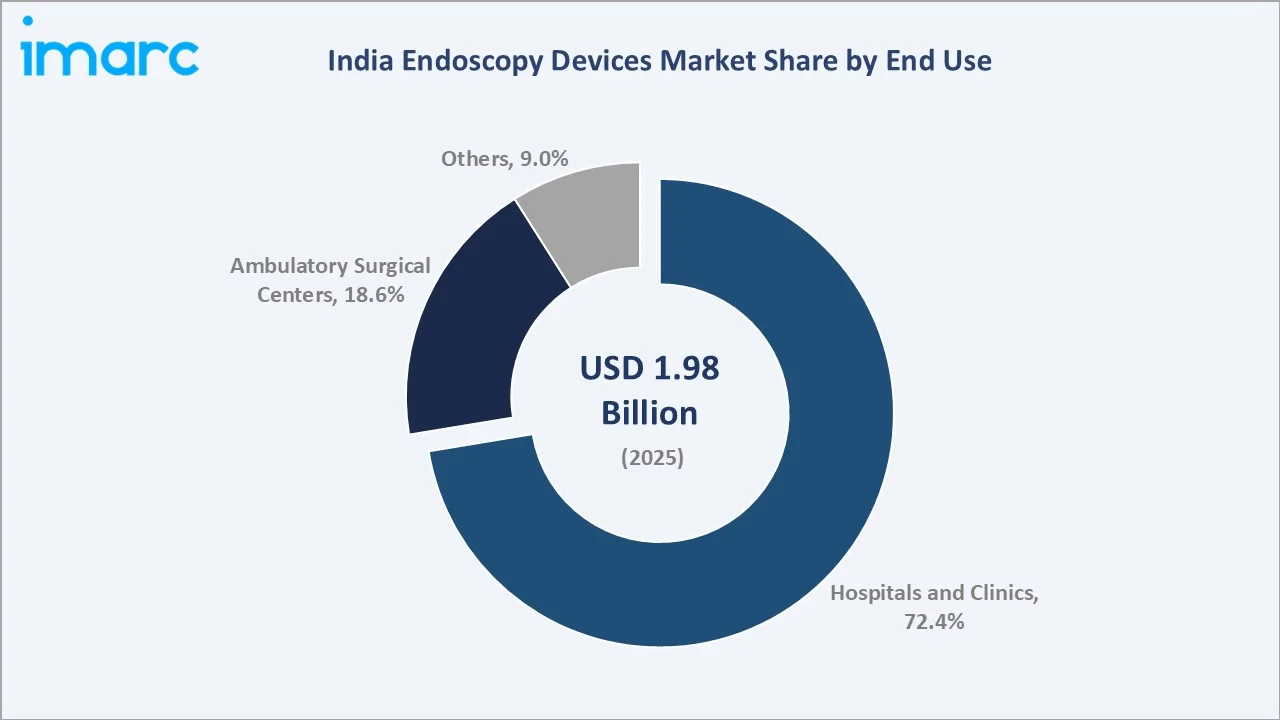
Ambulatory Surgical Centers account for 18.6%, gaining share as standalone day-care procedure volumes rise for routine screening endoscopies. Others, at 9.0%, includes diagnostic imaging centers and specialty clinics offering focused endoscopic services outside traditional hospital settings.
Regional Market Insights
|
Region |
Share (2025) |
Key Market Drivers & Characteristics |
|
North India |
32.7% |
Driven by its dense network of accredited hospitals, higher regional healthcare spending, and growing medical tourism inflow |
|
West and Central India |
29.8% |
Driven by strong private healthcare investment, expanding corporate hospital chains, and rising urban healthcare demand |
|
South India |
24.1% |
Supported by established speciality gastroenterology centers, strong medical device manufacturing presence, and skilled specialist availability |
|
East and Northeast India |
13.4% |
Emerging with growing government healthcare infrastructure investment and rising screening awareness |
North India, at 32.7%, leads through Delhi-NCR's healthcare infrastructure concentration and rising diagnostic spending. West and Central India, at 29.8%, reflects strong private hospital investment growth across Maharashtra and Gujarat.
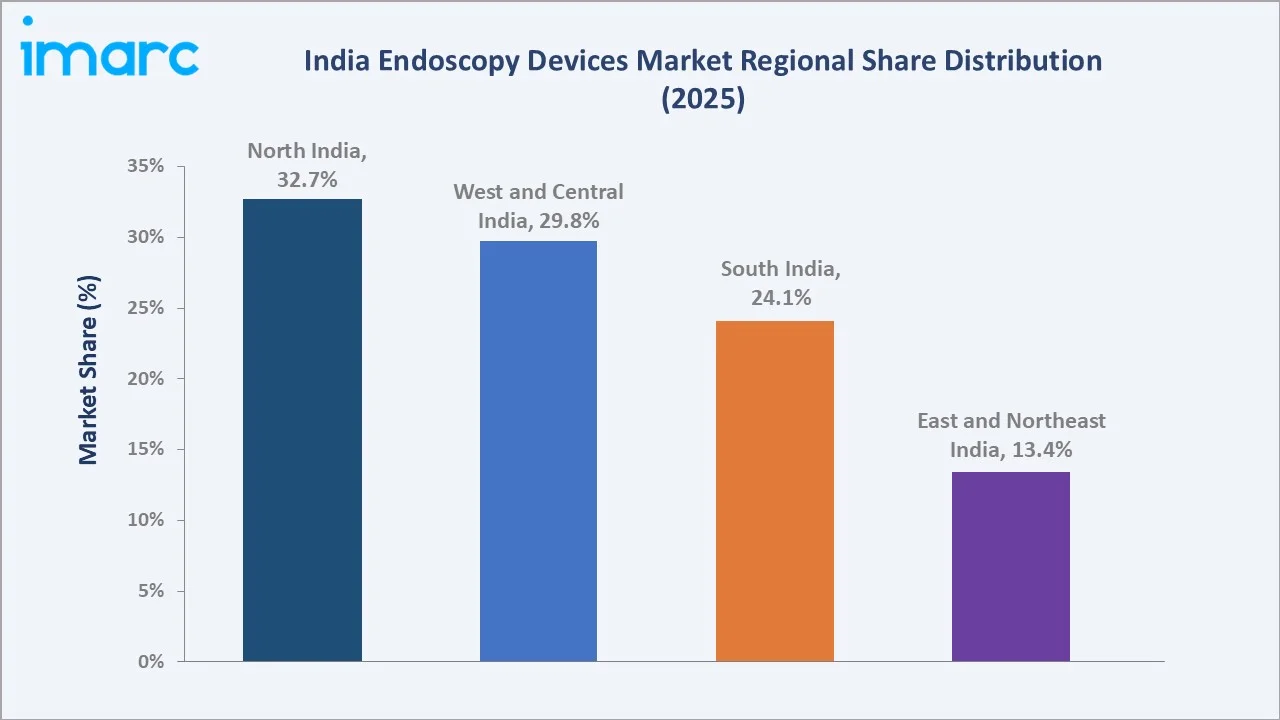
South India, at 24.1%, benefits from its speciality clinic density and established medical device manufacturing base. East and Northeast India, at 13.4%, represents an emerging market as government infrastructure investment expands diagnostic access in underserved districts.
Competitive Landscape
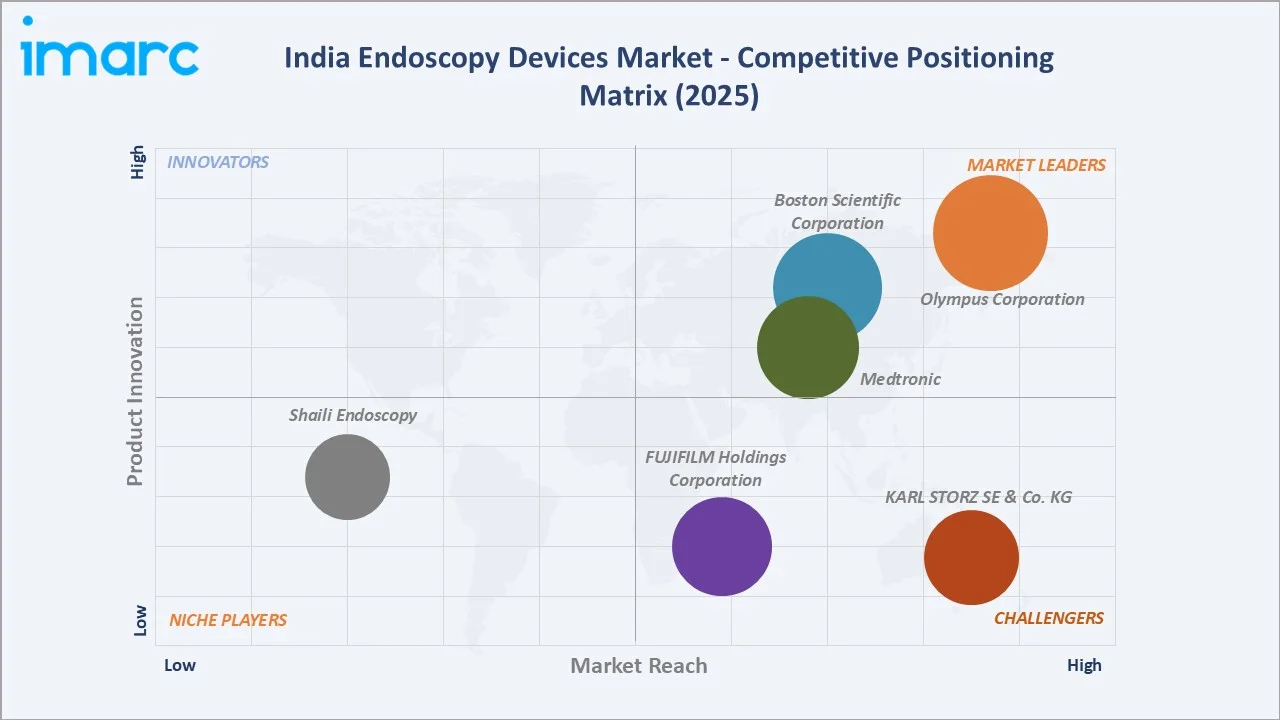
The India endoscopy devices market competitive landscape is moderately fragmented, comprising established global medical technology corporations alongside specialized domestic manufacturers competing on cost, service reach, and product customization suited to the Indian healthcare setting. The leading endoscopy companies in India span both multinational device makers with deep hospital distribution networks and regional manufacturers focused on price-sensitive tier 2 and tier 3 city markets.
|
Company Name |
Key Products |
Market Position |
Core Strength |
|
Olympus Corporation |
EVIS X1 endoscopy system, flexible gastrointestinal endoscopes |
Market Leader |
Leading global endoscopy imaging systems provider with strong hospital penetration across India |
|
Boston Scientific Corporation |
EXALT single-use duodenoscopes, OverStitch Endoscopic Suturing System |
Market Leader |
Broad portfolio of gastrointestinal and urological endoscopic devices with established distribution |
|
Medtronic |
GI Genius intelligent endoscopy module, operative device systems |
Market Leader |
Diversified operative device and visualization systems portfolio serving multi-speciality hospitals |
|
FUJIFILM Holdings Corporation |
EG-860R, EG-840N, EG-840T, EG-840TP, ED-580XT / ED-580T, EB-840S, EB-840T, EC-860P/M, EC-860P/L, EN-840T |
Strong Challenger |
Advanced HD and AI-assisted endoscopic imaging technology adoption across metro hospitals |
|
KARL STORZ SE & Co. KG |
Rigid and flexible endoscopes |
Strong Challenger |
Comprehensive rigid and flexible endoscopy systems for surgical and diagnostic applications |
|
Shaili Endoscopy |
Endoscopic Accessories |
Niche Player |
Domestic manufacturer offering cost-competitive endoscopes for regional hospital networks |
Key players include Olympus Corporation, Boston Scientific Corporation, Medtronic, FUJIFILM Holdings Corporation, KARL STORZ SE & Co. KG, Shaili Endoscopy, and others.
Key Company Profiles
Olympus Corporation
Olympus Corporation is a Japan-based global leader in medical endoscopy systems, maintaining a strong presence in the India endoscopy devices market through its comprehensive gastrointestinal and surgical endoscope portfolio.
- Key Products: EVIS X1 endoscopy system, flexible gastrointestinal endoscopes
- Recent Developments: In June 2026, Olympus Corporation announced the launch of its new 4K LCD monitors designed for use with Olympus endoscopy systems. The monitors are intended to provide clearer and more reliable visualization during endoscopic diagnosis and treatment, helping clinicians improve observation and support more accurate clinical decision-making.
- Strategic Focus: Expanding AI-integrated endoscopic imaging and strengthening hospital training partnerships across major Indian metro and tier 2 cities. The company is also investing in regional service infrastructure to reduce equipment downtime, including additional biomedical training centers to build a larger pool of certified endoscopy technicians nationwide.
Boston Scientific Corporation
Boston Scientific Corporation is a global medical device company with a strong presence in the India endoscopy devices market through its gastrointestinal and urological endoscopic device portfolio.
- Key Products: EXALT single-use duodenoscopes, OverStitch Endoscopic Suturing System
- Strategic Focus: Growing adoption of single-use endoscopic devices and expanding therapeutic device offerings for Indian gastroenterology and urology practices. The company is prioritizing partnerships with leading corporate hospital chains to accelerate single-use device adoption, while expanding clinical training support to help specialists transition their workflows.
Market Concentration Analysis
The India endoscopy devices market is moderately concentrated at the advanced visualization systems level, with the key players collectively accounting for a significant share of premium hospital endoscopy device revenue. Domestic manufacturers account for a growing share of the operative devices and entry-level endoscope segments, particularly across tier 2 and tier 3 city hospital networks, with concentration expected to gradually decline as these suppliers gain certification for mainstream hospital applications.
Investment & Growth Opportunities
Highest Growth Segments
Hospitals and Clinics end use (approximately 7.0% CAGR), Ambulatory Surgical Centers (approximately 7.8% CAGR from a smaller base), AI-assisted diagnostic imaging systems, single-use endoscope adoption, and East and Northeast India's regional healthcare infrastructure expansion represent the highest-growth investment vectors through 2034.
Emerging Investment Opportunities
Ambulatory surgical center endoscopy systems represent the market's fastest-growing emerging opportunity, as standalone day-care procedure volumes expand across metro and tier 2 cities, creating structurally growing demand for compact, cost-efficient systems.
Investment Themes
- AI-Integrated Diagnostic Platform Development for Early Cancer Detection Through 2034: AI-assisted endoscopy represents a meaningful investment opportunity for manufacturers seeking to differentiate premium hospital offerings. Companies that achieve validated clinical accuracy improvements can create a durable competitive advantage in the high-value hospital procurement segment that is difficult for smaller competitors to replicate.
- Domestic Manufacturing Capacity Expansion Capturing Tier 2/3 City Hospital Growth: India's tier 2 and tier 3 city hospital expansion trajectory creates a structurally growing addressable market for cost-competitive domestic endoscope manufacturing, a segment currently served primarily by a mix of domestic suppliers and imported entry-level systems.
Future Market Outlook (2026-2034)
The India endoscopy devices market is projected to grow from USD 1.98 Billion in 2025 to USD 3.61 Billion by 2034, delivering a 6.70% CAGR over the forecast period. The market's anchor value of USD 2.73 Billion in 2030 represents the industry at a significant infrastructure expansion inflection point, with AI-assisted diagnostic imaging, single-use endoscopes, and ambulatory surgical center capacity all expected to see wider adoption. India's rising gastrointestinal disease burden, expanding tier 2 and tier 3 city hospital infrastructure, and the convergence of AI-assisted diagnostics with single-use device adoption together define a durable, self-reinforcing growth trajectory through 2034.
Research Methodology
Primary Research
Primary research comprised structured interviews with hospital procurement heads, practicing gastroenterologists, endoscopy device distributors, and biomedical engineering leads across India's major healthcare markets.
Secondary Research
Secondary research encompassed company annual reports, India Ministry of Health and Family Welfare data, hospital association publications, Indian Society of Gastroenterology conference papers, and peer-reviewed gastrointestinal procedure volume studies. Over 50 secondary sources were reviewed.
Forecasting Models
Market revenue forecasts were developed using a procedure-volume-based bottom-up model incorporating: (i) hospital and ambulatory surgical center infrastructure growth by region; (ii) average device utilization and replacement cycles by type; (iii) average device revenue per procedure by type and end use multiplied by annual procedure volume; and (iv) technology premium adjustment for HD, 4K, and AI-integrated system pricing versus standard-definition equipment.
India Endoscopy Devices Market Report Coverage:
| Report Features | Details |
|---|---|
| Base Year of the Analysis | 2025 |
| Historical Period | 2020-2025 |
| Forecast Period | 2026-2034 |
| Units | Billion USD |
| Scope of the Report | Exploration of Historical Trends and Market Outlook, Industry Catalysts and Challenges, Segment-Wise Historical and Future Market Assessment:
|
| Types Covered | Endoscopes, Endoscopy Visualization Systems, Endoscopy Visualization Components, Operative Devices |
| Applications Covered | Gastrointestinal Endoscopy, Urology Endoscopy, Laparoscopy, Gynecology Endoscopy, Arthroscopy, Others |
| End Uses Covered | Hospitals and Clinics, Ambulatory Surgical Centers, Others |
| Regions Covered | North India, West and Central India, South India, East and Northeast India |
| Companies Covered | Olympus Corporation, Boston Scientific Corporation, Medtronic, FUJIFILM Holdings Corporation, KARL STORZ SE & Co. KG, Shaili Endoscopy, etc. |
| Customization Scope | 10% Free Customization |
| Post-Sale Analyst Support | 10-12 Weeks |
| Delivery Format | PDF and Excel through Email (We can also provide the editable version of the report in PPT/Word format on special request) |
Key Benefits for Stakeholders:
- IMARC’s industry report offers a comprehensive quantitative analysis of various market segments, historical and current market trends, market forecasts, and dynamics of the India endoscopy devices market from 2020-2034.
- The research report provides the latest information on the market drivers, challenges, and opportunities in the India endoscopy devices market.
- Porter's five forces analysis assist stakeholders in assessing the impact of new entrants, competitive rivalry, supplier power, buyer power, and the threat of substitution. It helps stakeholders to analyze the level of competition within the India endoscopy devices industry and its attractiveness.
- Competitive landscape allows stakeholders to understand their competitive environment and provides an insight into the current positions of key players in the market.
Frequently Asked Questions About the India Endoscopy Devices Market Report
The India endoscopy devices market reached USD 1.98 Billion in 2025, driven by Endoscopes dominant at 42.6%, Hospitals and Clinics leading end use at 72.4%, rising gastrointestinal disease prevalence, and North India commanding 32.7% market share through its dense accredited hospital network.
The market grows at 6.70% CAGR during 2026-2034, reaching USD 3.61 Billion by 2034, reflecting India's rising gastrointestinal disease burden, expanding hospital infrastructure, and increasing adoption of AI-assisted and single-use endoscopic devices.
Endoscopes lead at 42.6%, capturing the foundational diagnostic and procedural instrument category used across gastrointestinal, urological, and gynecological applications, growing at approximately 6.5% CAGR through steady replacement demand.
Hospitals and Clinics lead at 72.4% through the highest concentration of specialist endoscopists and comprehensive procedural infrastructure, growing fastest at approximately 7.0% CAGR through corporate hospital chain expansion.
North India leads at 32.7% through Delhi-NCR's dense network of accredited tertiary hospitals, higher regional healthcare spending, and growing medical tourism inflow.
Leading companies include Olympus Corporation, Boston Scientific Corporation, Medtronic, FUJIFILM Holdings Corporation, KARL STORZ SE & Co. KG, Shaili Endoscopy, and others.
The India endoscopy devices market is projected to reach approximately USD 2.73 Billion by 2030, with AI-assisted diagnostic imaging becoming more standard in premium hospital endoscopy suites, single-use endoscope adoption continuing to grow, and domestic manufacturing capacity expanding across tier 2 and tier 3 city markets.
Three priority opportunities: AI-integrated diagnostic platforms for early cancer detection, domestic manufacturing expansion for tier 2/3 city hospital growth, and ambulatory surgical center endoscopy system supply.
Need more help?
- Speak to our experienced analysts for insights on the current market scenarios.
- Include additional segments and countries to customize the report as per your requirement.
- Gain an unparalleled competitive advantage in your domain by understanding how to utilize the report and positively impacting your operations and revenue.
- For further assistance, please connect with our analysts.
 Request Customization
 Speak to an Analyst
 Request Brochure
 Inquire Before Buying
Benefits of Customization
- Personalize this research
- Triangulate with your data
- Get data as per your format and definition
- Gain a deeper dive into a specific application, geography, customer, or competitor
- Any level of personalization
Get in Touch With Us
UNITED STATES
Phone: +1-201-971-6302
INDIA
Phone: +91-120-433-0800
UNITED KINGDOM
Phone: +44-753-714-6104
Email: [email protected]
Client Testimonials




.webp)




.webp)













Related Reports

Choose your plan
*Please note that the prices mentioned below are starting prices for each bundle type. Kindly contact our team for further details.*
Single User License
- 1 User License, Access on 2 Devices
- PDF Report + Excel Dataset (Password Protected)
- Lifetime Access
- No Printing Rights
- 10% Free Report Customization
- 10–12 Weeks of Analyst Support
Five User License
- Access for 5 Users, 2 Devices per User
- PDF Report + Excel Dataset (Password Protected)
- Lifetime Access
- Dedicated Account Manager
- 12–14 Weeks of Analyst Support
- No Printing Rights
- 15% Free Report Customization
- 25% Discount on Your Next Purchase
Corporate User License
- Unlimited User Access (Within Your Organization)
- PDF Report + Excel Dataset
- Lifetime Access
- Dedicated Account Manager
- 14–20 Weeks of Analyst Support
- No Printing Rights
- 20% Free Report Customization
- 30% Discount on Your Next Purchase
Essential Insights
What's included:
3 reports
- Lifetime Access
- PDF Reports
- Excel Datasets
- 2 Weeks of Free Analyst Support
- 2 User Licenses
- Access on 2 Devices
- Printing Rights
- Complimentary PowerPoint (PPT) Version
- Complimentary License Upgrade
Professional Access
What's included:
5 reports
- Lifetime Access
- PDF Reports
- Excel Datasets
- 8 Weeks of Free Analyst Support
- 2 User Licenses
- Access on 2 Devices
- Printing Rights
- Complimentary PowerPoint (PPT) Version
- Complimentary License Upgrade
Business Advantage
What's included:
8 reports
- Lifetime Access
- PDF Reports
- Excel Datasets
- 14 Weeks of Free Analyst Support
- 2 User Licenses
- Access on 2 Devices
- Printing Rights
- Complimentary PowerPoint (PPT) Version
- Complimentary License Upgrade
Enterprise Intelligence
What's included:
10 reports
- Lifetime Access
- PDF Reports
- Excel Datasets
- 20 Weeks of Free Analyst Support
- 2 User Licenses
- Access on 2 Devices
- Printing Rights
- Complimentary PowerPoint (PPT) Version
- Complimentary License Upgrade