
Italy Diabetes Market Size, Share, Trends and Forecast by Segment and Distribution Channel, 2026-2034
Italy Diabetes Market Size, Share, Trends & Forecast (2026-2034)
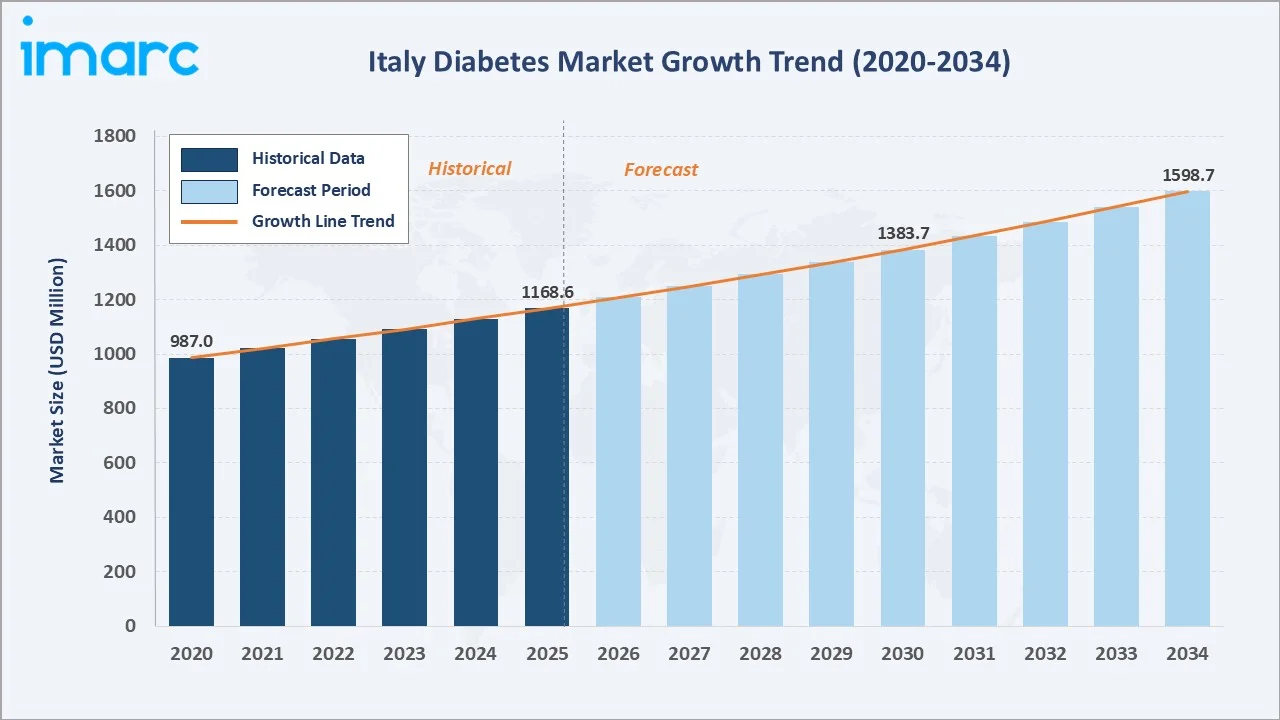
The Italy diabetes market was valued at USD 1,168.6 Million in 2025 and is projected to reach USD 1,598.7 Million by 2034, exhibiting a CAGR of 3.44% during 2026-2034. Rising Type 2 diabetes prevalence, a rapidly aging population, broad SSN reimbursement coverage, and accelerating GLP-1 adoption are the primary drivers shaping the market. According to the AIFA OsMed 2024 Report, Italian public expenditure on antidiabetic drugs reached EUR 1.642 Billion in 2024, a 13.2% increase over 2023.
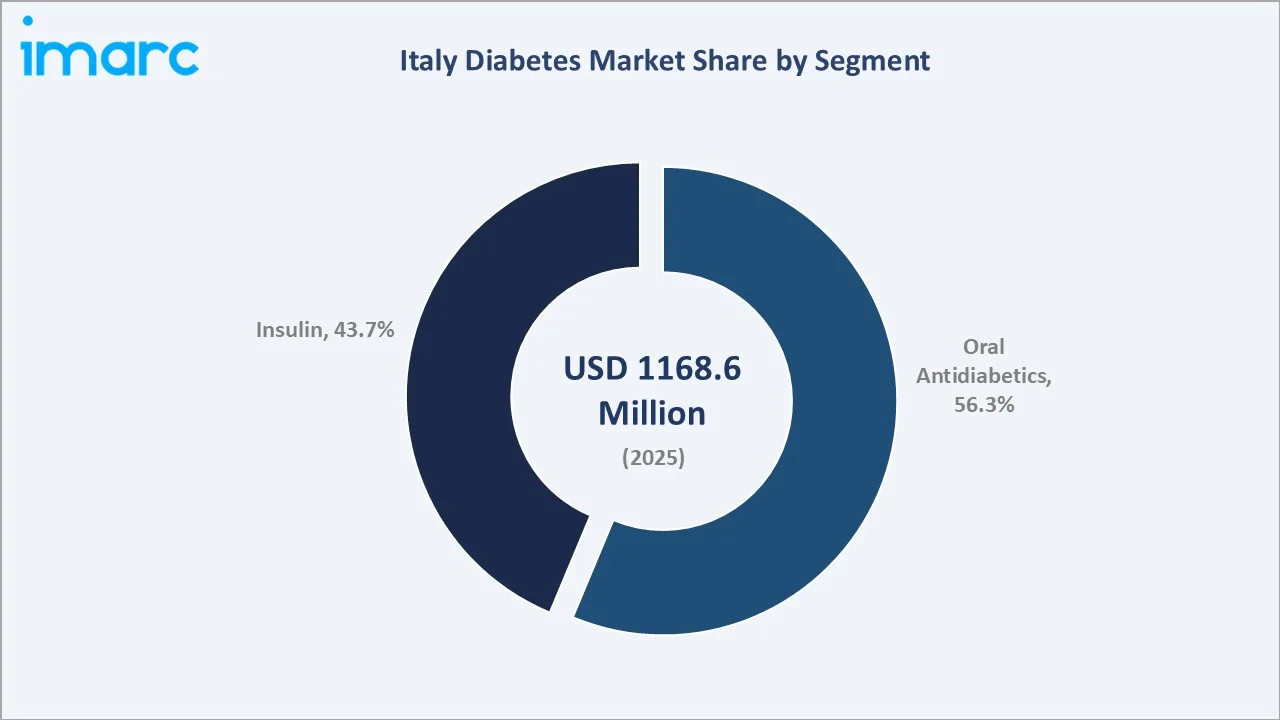
Oral antidiabetics lead the segment at 56.3% and retail pharmacies dominate the distribution channel at 52.4%.
Market Snapshot
|
Metric |
Value |
|
Market Size (2025) |
USD 1,168.6 Million |
|
Forecast Market Size (2034) |
USD 1,598.7 Million |
|
CAGR (2026-2034) |
3.44% |
|
Base Year |
2025 |
|
Historical Period |
2020-2025 |
|
Forecast Period |
2026-2034 |
|
Leading Segment |
Oral Antidiabetics (56.3%, 2025) |
|
Leading Distribution Channel |
Retail Pharmacies (52.4%, 2025) |
The Italy diabetes market expanded from USD 987.0 Million in 2020 to USD 1,168.6 Million in 2025, supported by rising Type 2 diabetes prevalence, broader uptake of novel oral antidiabetics, and sustained SSN reimbursement. Anchored at USD 1383.7 Million in 2030, the forecast to USD 1,598.7 Million by 2034 is underpinned by continued GLP-1 adoption and demographic aging.
To get more information on this market, Request Sample
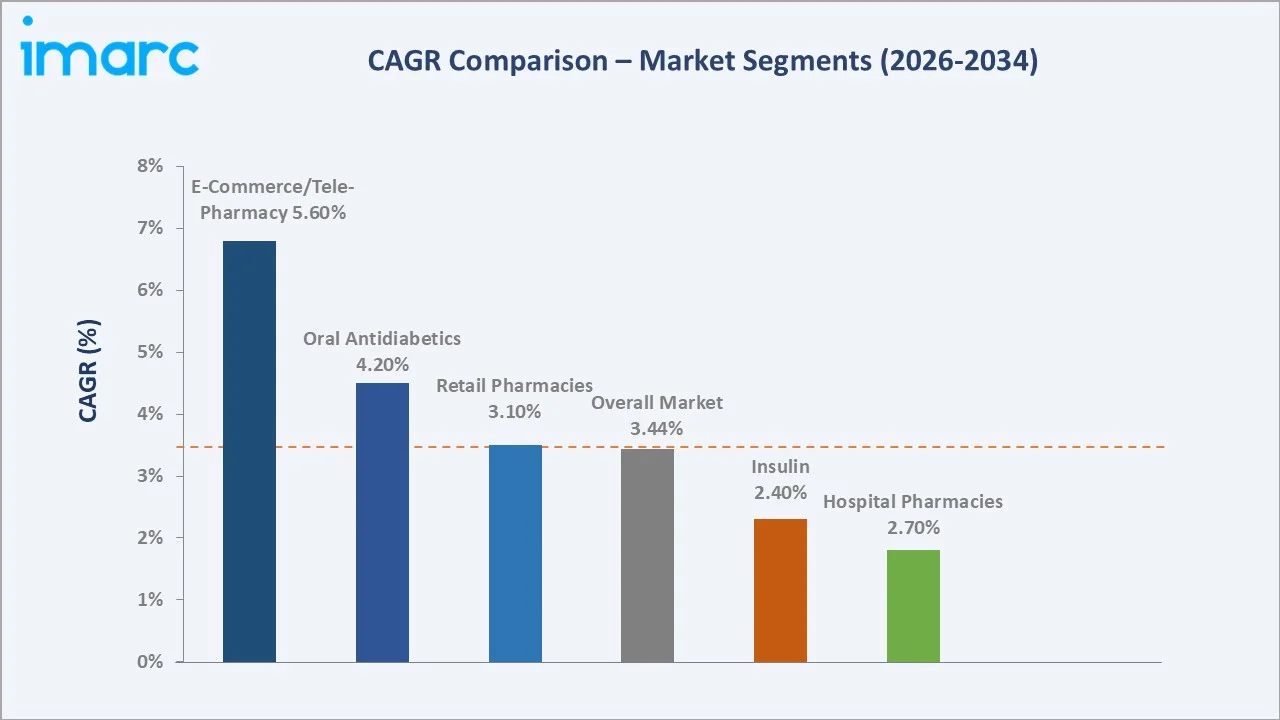
CAGR trajectories across segment and distribution channel categories show oral antidiabetics and e-commerce/tele-pharmacy expanding faster than the overall 3.44% market CAGR, while insulin and hospital pharmacies grow more modestly.
Executive Summary
The Italy diabetes market is on a steady growth path from USD 987.0 Million in 2020 to USD 1,598.7 Million by 2034. Diabetes management has shifted from an insulin-anchored model to a therapy mix dominated by oral antidiabetics, reflecting clinical preference for GLP-1 receptor agonists and SGLT-2 inhibitors. Universal reimbursement under the Italian National Healthcare Service continues to shape access and treatment pathways.
Oral antidiabetics dominate the segment at 56.3% in 2025, supported by growing clinical use of GLP-1 and SGLT-2 therapies in Type 2 diabetes. Retail pharmacies lead the distribution channel category at 52.4%, driven by widespread community pharmacy coverage and strong patient preference for in-person counseling.
Key Market Insights
|
Insight |
Data |
|
Leading Segment |
Oral Antidiabetics - 56.3% share (2025) |
|
Second Segment |
Insulin - 43.7% share (2025) |
|
Leading Distribution Channel |
Retail Pharmacies - 52.4% share (2025) |
|
Second Distribution Channel |
Hospital Pharmacies - 29.8% share (2025) |
|
Fastest Growing Distribution Channel |
E-Commerce/Tele-Pharmacy - 17.8% share (2025) |
|
Top Companies |
Novo Nordisk A/S, Sanofi, AstraZeneca, Boehringer Ingelheim International GmbH., and Novartis AG |
Key Analytical Observations Expanding on the Data Above:
- Oral antidiabetics dominance at 56.3% reflects widespread clinical use of metformin, DPP-4 inhibitors, SGLT-2 inhibitors, and GLP-1 receptor agonists in Italian Type 2 diabetes care. Rising physician familiarity with newer classes and strong cardio-renal outcome evidence continue to drive prescription volumes.
- Insulin at 43.7% remains anchored by Type 1 patients and insulin-requiring Type 2 cases, with long-acting analogues and biosimilars holding the core of demand. Once-weekly insulin candidates are expected to reshape product mix during the forecast period.
- Retail pharmacies at 52.4% benefit from dense community pharmacy coverage across Italian regions, supported by a strong dispensing infrastructure and 140 pharmacists per 100,000 population in Italy (OECD, Health at a Glance 2025), enabling widespread access, strong integration with general practitioner prescribing, and consistent chronic therapy dispensing.
- Hospital pharmacies at 29.8% captures initiation of specialty therapies, GLP-1 injectables, and inpatient insulin titration under specialist supervision. Hospital channels remain central for diagnosis-linked therapy starts and complex regimen adjustments.
- E-commerce/tele-pharmacy at 17.8% is the fastest-growing channel, supported by electronic prescription reforms, home delivery of repeat medications, and rising elderly patient adoption of digital health services across Italian regions.
Italy Diabetes Market Overview
The Italy diabetes market covers pharmacological therapies used to manage Type 1 and Type 2 diabetes mellitus, including oral antidiabetic agents and insulin formulations dispensed across retail, hospital, and digital pharmacy channels.
The Italian ecosystem integrates global innovator pharmaceutical firms, biosimilar developers, regional health authorities, community and hospital pharmacies, and diabetes specialty centers, collectively supporting a universally reimbursed care pathway under the National Healthcare Service.
Market Dynamics
To evaluate market opportunities, Request Sample
Market Drivers
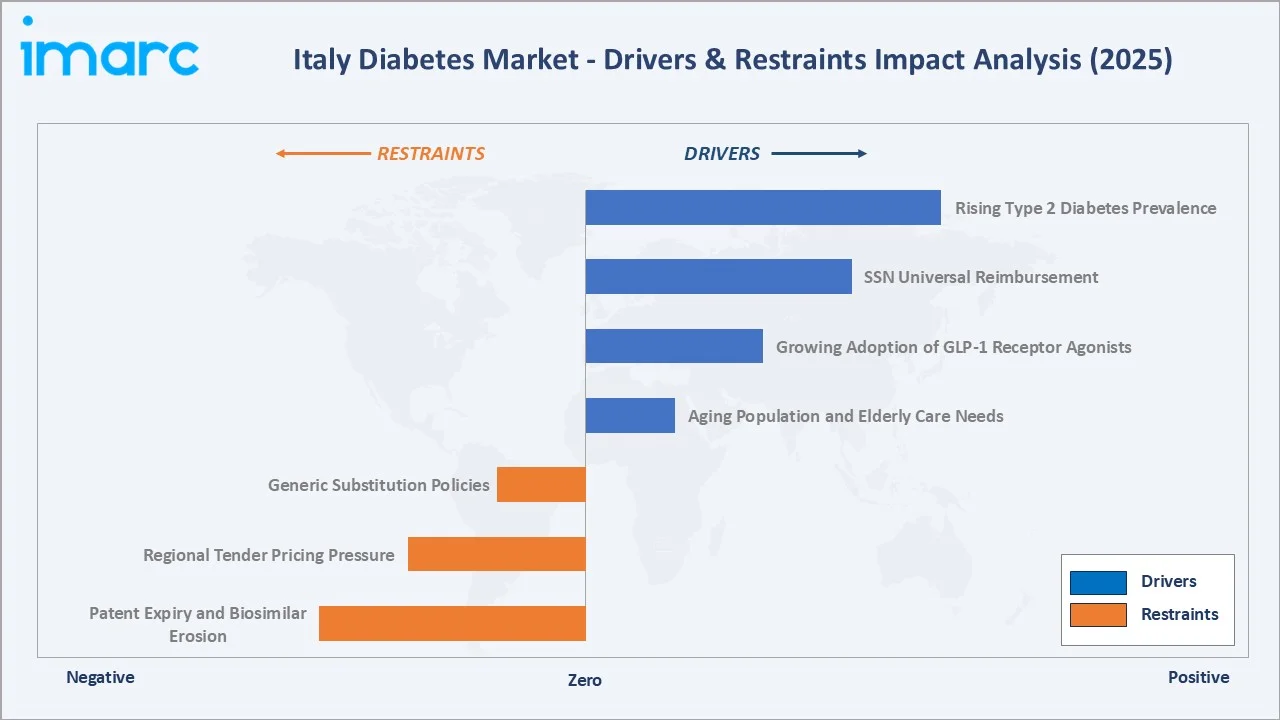
- Rising Type 2 Diabetes Prevalence: Lifestyle changes, obesity, and sedentary behavior are expanding the Italian diabetes patient base, driving higher demand for effective treatment solutions.
- SSN Universal Reimbursement: Italian patients diagnosed with diabetes receive medicines, devices, and specialist visits at no out-of-pocket cost, supporting strong adherence and consistent therapy access across all regions.
- Growing Adoption of GLP-1 Receptor Agonists: Clinical evidence on weight reduction and cardiovascular benefits is driving physician shift toward semaglutide, tirzepatide, and dulaglutide. These therapies are increasingly replacing older oral agents in insulin-naive patients.
- Aging Population and Elderly Care Needs: Italy has one of the highest average population ages in Europe, and diabetes prevalence climbs sharply in the 65+ age group, expanding the chronic-therapy pool served by retail and hospital channels. Across EU countries, the highest share of older people in the total population in 2025 was observed in Italy at 24.7%.
Market Restraints
- Patent Expiry and Biosimilar Erosion: Originator brand revenues are facing pressure as biosimilar insulins and generic DPP-4 inhibitors gain share. Italy's pharmaceutical expenditure ceiling and AIFA price negotiations further compress branded-drug margins across therapy classes.
- Regional Tender Pricing Pressure: Regional health authority tenders for insulin and oral antidiabetics drive aggressive price negotiation, compressing manufacturer margins and shortening product lifecycles.
- Generic Substitution Policies: Mandatory generic substitution at the pharmacy counter limits branded oral antidiabetic revenues and forces innovator firms to compete on new-molecule differentiation rather than lifecycle extensions.
Market Opportunities
- Once-Weekly Insulin Launches: Upcoming long-acting basal insulin approvals offer opportunities to improve adherence among elderly patients and reposition insulin portfolios facing biosimilar pressure.
- Tele-Pharmacy Channel Expansion: Italy's digital prescription reforms and home-delivery regulations are enabling growth of online pharmacy platforms, creating new touchpoints for chronic refill management and patient education services.
Market Challenges
- Supply Constraints on GLP-1 Therapies: Global demand for semaglutide-based products in both diabetes and weight management has created episodic supply shortages in Italy, limiting patient access and physician prescribing confidence.
- Physician Adoption Lag for Newer Classes: Some general practitioners continue to rely on metformin and sulfonylureas as first-line therapy, slowing uptake of SGLT-2 inhibitors and GLP-1 agonists despite favorable guideline recommendations.
Emerging Market Trends
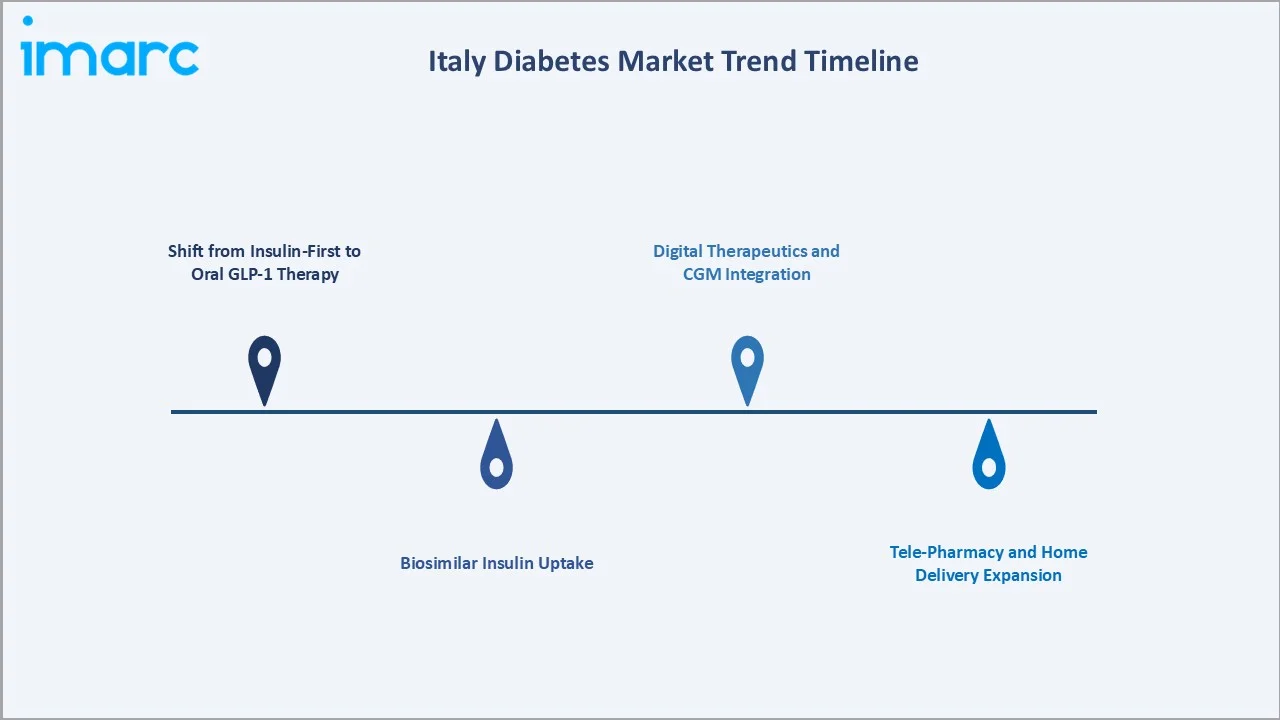
1. Shift from Insulin-First to Oral GLP-1 Therapy
Italian prescribing is moving away from early insulin initiation toward oral semaglutide and dual GIP/GLP-1 agonists in Type 2 care. This shift reflects evolving treatment guidelines that prioritize cardio-renal protection and weight management alongside glycemic control.
2. Biosimilar Insulin Uptake
Biosimilar insulin glargine and human insulin biosimilars are gaining share in Italian retail and hospital channels, supported by regional tender preferences and physician confidence in clinical equivalence.
3. Digital Therapeutics and Continuous Glucose Monitoring Integration
Continuous glucose monitors and smart insulin pens are increasingly bundled with pharmacological therapy, enabling real-time dose adjustment and remote physician oversight. Integration with telemedicine platforms is reshaping chronic-care pathways across Italian diabetes centers.
4. Tele-Pharmacy and Home Delivery Expansion
Italy's digital prescription rollout is supporting the rise of accredited online pharmacies that deliver chronic medications to patient homes. In 2022, Farmacosmo, one of the top online pharmacies in Italy, became a member of the EAEP. The Italian e-pharmacy aligns with the EAEP’s mission and goals to highlight the vital role of online pharmacies in establishing a robust cross-border healthcare system in Europe. Elderly adoption of home-delivery services is growing, reducing pharmacy-visit burden for diabetes patients.
Industry Value Chain Analysis
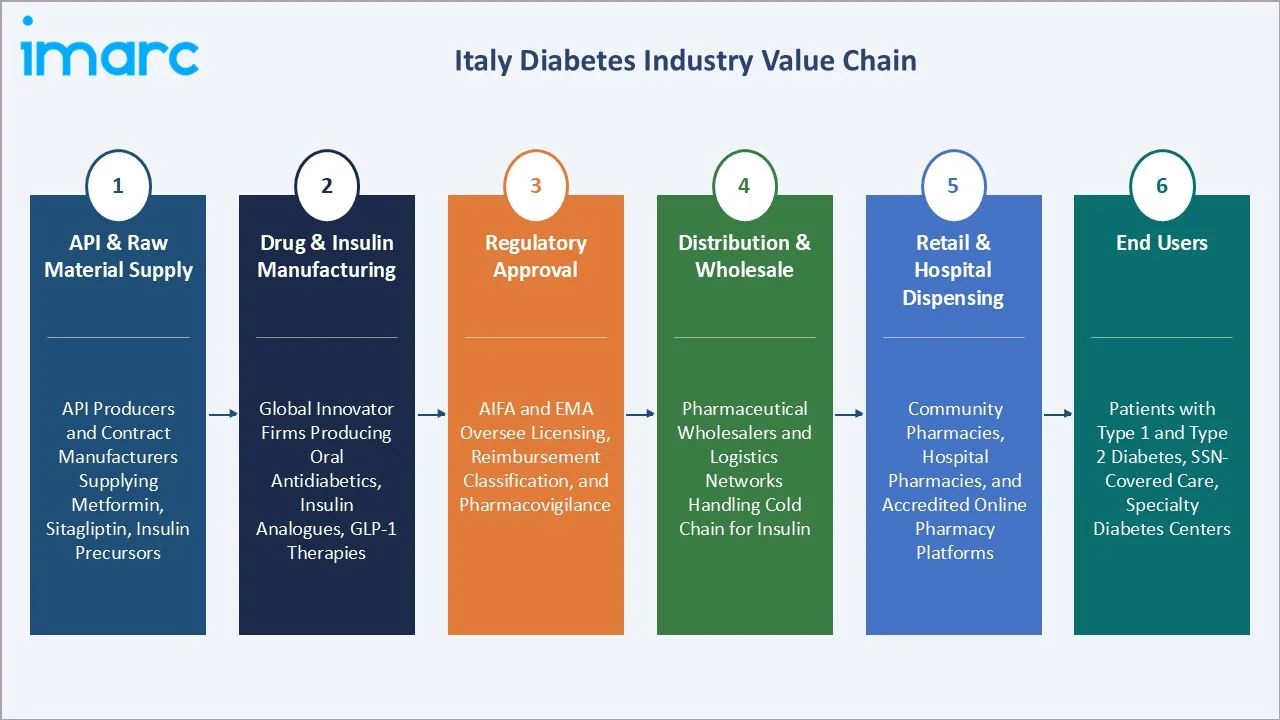
The Italy diabetes market value chain spans six stages, from API sourcing through patient-level dispensing. Drug manufacturing and regulatory approval capture the highest value-add, while pharmacy networks and SSN reimbursement determine downstream access economics.
|
Stage |
Key Players / Examples |
|
API & Raw Material Supply |
Active pharmaceutical ingredient producers, contract manufacturers supplying metformin, sitagliptin, and insulin precursors for downstream formulation |
|
Drug & Insulin Manufacturing |
Global innovator pharmaceutical firms producing branded oral antidiabetics, insulin analogues, and injectable GLP-1 therapies for the Italian market |
|
Regulatory Approval |
Italian Medicines Agency (AIFA) and European Medicines Agency (EMA) oversee licensing, reimbursement classification, and pharmacovigilance |
|
Distribution & Wholesale |
Nationwide pharmaceutical wholesalers and logistics networks handling cold chain for insulin and temperature-sensitive therapies |
|
Retail & Hospital Dispensing |
Independent community pharmacies, chain pharmacy groups, hospital pharmacies, and accredited online pharmacy platforms |
|
End Users |
Patients with Type 1 and Type 2 diabetes, SSN-covered reimbursement, and specialty diabetes care centers across Italian regions |
Vertically integrated insulin producers and global innovator pharmaceutical firms achieve superior cost control and supply continuity, while biosimilar developers and regional wholesalers enable price competition and channel diversity across the Italian market.
Technology Landscape in the Italy Diabetes Industry
Novel Drug Classes and Formulations
GLP-1 receptor agonists, SGLT-2 inhibitors, and dual GIP/GLP-1 agonists are reshaping Italian Type 2 diabetes care. Oral semaglutide and once-weekly formulations are lowering the injection burden for elderly patients and improving long-term therapy adherence.
Biosimilar Innovation
Biosimilar insulin glargine, detemir, and aspart are steadily expanding their presence in Italian hospital and retail channels. Regional health authorities are using tendering mechanisms to accelerate biosimilar substitution and reduce payer costs.
Smart Delivery Devices and Connectivity
Connected insulin pens, patch pumps, and hybrid closed-loop systems are becoming standard in specialty diabetes centers. Integration with continuous glucose monitors and smartphone apps enables automated insulin dosing and remote monitoring by endocrinologists.
Digital Therapeutics and Automation
Artificial intelligence (AI)-enabled dose titration platforms, behavior-change mobile applications, and tele-consultation tools are extending diabetes care beyond the clinic. Pharmacies are also automating chronic refill management through integrated e-prescription systems.
Market Segmentation Analysis
The report covers the following segments:
| Segment Category | Leading Segment | Market Share | Year |
|---|---|---|---|
| Segment | Oral Antidiabetics | 56.3% | 2025 |
| Distribution Channel | Retail Pharmacies | 52.4% | 2025 |

By Segment
Oral antidiabetics command a 56.3% majority share in 2025, driven by broad first-line use of metformin, rapidly expanding SGLT-2 inhibitor and DPP-4 inhibitor prescribing, and growing adoption of oral GLP-1 therapies. This category remains the preferred treatment path for most newly diagnosed Type 2 patients in Italy.
To access detailed market analysis, Request Sample
Insulin at 43.7% in 2025 serves all Type 1 patients, insulin-requiring Type 2 patients, and gestational cases. Long-acting analogues and basal-bolus regimens dominate clinical use, with biosimilar penetration gradually reshaping the cost base of this segment.
By Distribution Channel
Retail pharmacies dominate with 52.4% share in 2025, reflecting Italy's extensive community pharmacy network and patient preference for in-person counseling on chronic medications. Broad SSN reimbursement flows through this channel, which serves as the backbone of chronic therapy dispensing.
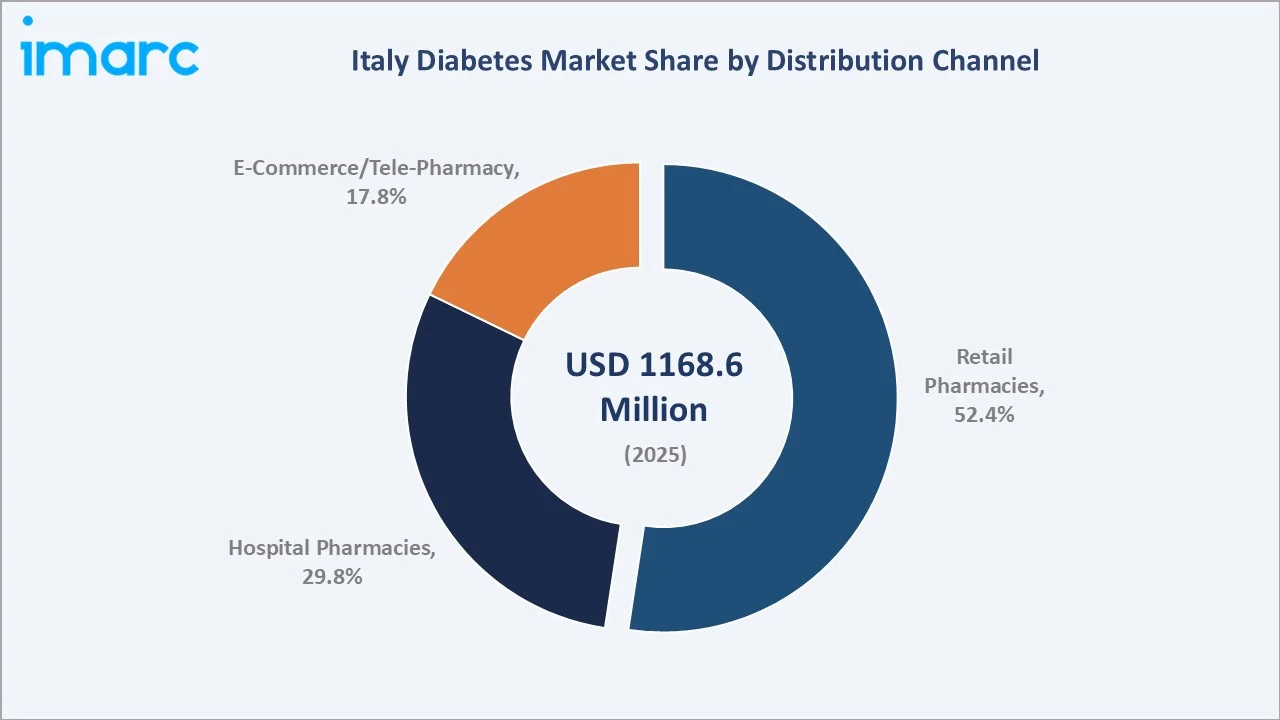
Hospital pharmacies at 29.8% in 2025 anchor specialty therapy initiation, injectable GLP-1 starts, and inpatient insulin management under endocrinologist supervision. This channel remains critical for diagnosis-linked prescriptions and complex regimen adjustments.
E-commerce/tele-pharmacy at 17.8% is the fastest-growing channel, expanding through electronic prescription rollouts, accredited online pharmacy platforms, and home delivery services. This channel is particularly effective at reaching elderly chronic-therapy patients across Italian regions.
Competitive Landscape
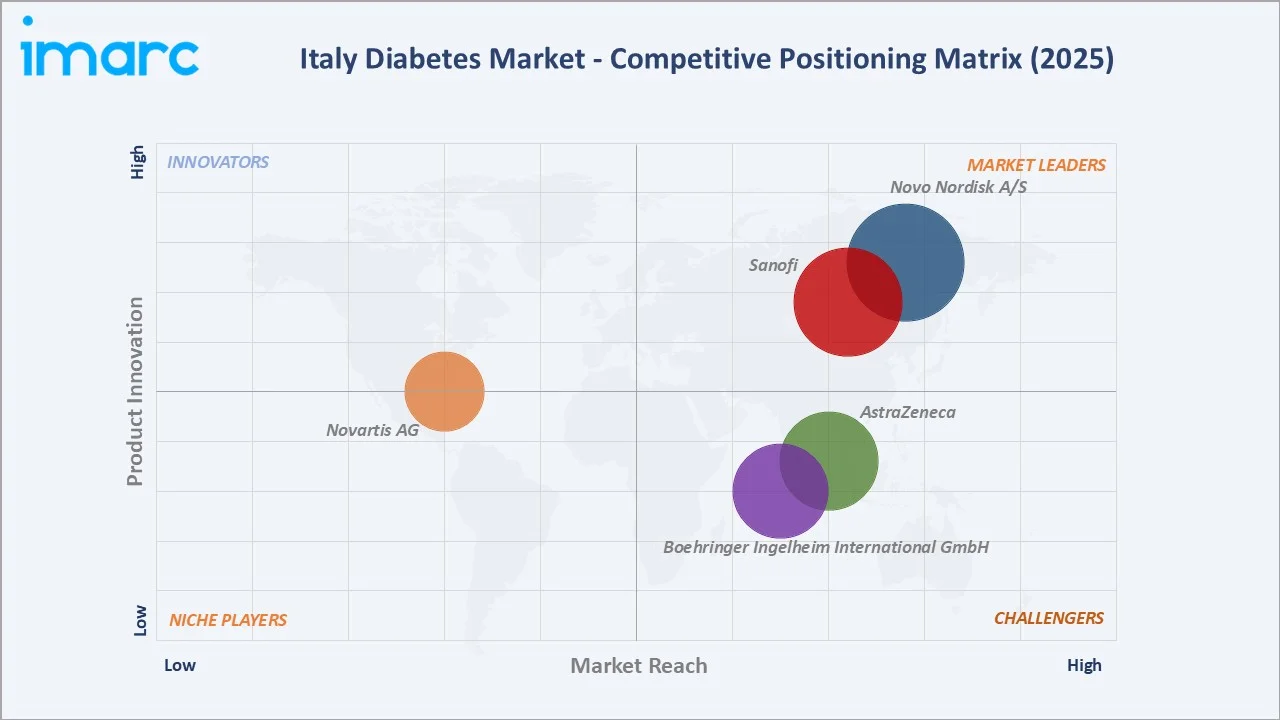
The Italy diabetes market is moderately concentrated, with global innovator firms dominating branded oral antidiabetics and insulin analogues, while biosimilar and generic manufacturers compete on price across retail and hospital tender channels. Clinical evidence depth and SSN reimbursement positioning form the key competitive moats.
|
Company Name |
Brand / Key Product |
Position |
Strategic Focus |
| Novo Nordisk A/S | Ozempic, Rybelsus, Tresiba | Leader | GLP-1 franchise leadership; once-weekly semaglutide; insulin innovation |
| Sanofi | Lantus, Toujeo | Leader | Long-acting insulin leadership; broad retail pharmacy footprint |
| AstraZeneca | Forxiga, Xigduo XR, Qtern | Challenger | SGLT-2 inhibitor positioning in cardio-renal outcomes |
| Boehringer Ingelheim International GmbH | Jardiance, Trajenta | Challenger | Empagliflozin co-promotion partnership; primary care focus |
| Novartis AG | Galvus, Eucreas | Emerging | DPP-4 inhibitor positioning; vildagliptin-metformin combination access |
Key players include Novo Nordisk A/S, Sanofi, AstraZeneca, Boehringer Ingelheim International GmbH., and Novartis AG, among others.
Key Company Profiles
Novo Nordisk A/S
Novo Nordisk A/S is a Danish multinational pharmaceutical company, with a global leadership position in diabetes and obesity care. The company serves Italian patients across the insulin, GLP-1, and oral antidiabetic categories.
- Product Portfolio: Tresiba (insulin degludec), NovoRapid (insulin aspart), Fiasp (fast-acting insulin aspart), Awiqli (once-weekly insulin icodec), Ozempic (semaglutide injection), and Rybelsus (oral semaglutide).
- Recent Developments: In July 2025, the Italian government appointed a special commissioner to fast-track Novo Nordisk's EUR 2 Billion+ investment to expand its manufacturing facility in Anagni, Frosinone.
- Strategic Focus: Sustained leadership in GLP-1 receptor agonists, advancement of once-weekly basal insulin candidates, and deep engagement with Italian endocrinology specialty centers.
Sanofi
Sanofi is a multinational pharmaceutical and healthcare company, with a long-standing presence in Italian diabetes care through Sanofi S.p.A. The company is a global leader in long-acting insulin therapies and maintains broad reach across Italian retail and hospital channels.
- Product Portfolio: Lantus (insulin glargine U-100), Toujeo (insulin glargine U-300), Apidra (insulin glulisine), and Soliqua fixed-ratio combination.
- Recent Developments: In August 2024, Sanofi broke ground on a EUR 1.3 Billion expansion of its Frankfurt, Germany facility, the company's principal site for the manufacture of diabetes treatments, which will support long-term European supply continuity, including for Italian patients reliant on basal insulin therapy. The facility is scheduled to open by 2029.
- Strategic Focus: Defending long-acting insulin leadership amid biosimilar competition, advancing combination therapies, and maintaining broad retail pharmacy partnerships.
AstraZeneca
AstraZeneca is a British-Swedish multinational pharmaceutical company, with a strong global presence in cardiovascular, renal, and metabolic (CVRM) therapies. The company serves Italian patients across the SGLT-2 inhibitor and fixed-dose combination categories.
- Product Portfolio: Forxiga (dapagliflozin), Xigduo XR (dapagliflozin plus metformin), Qtern (dapagliflozin plus saxagliptin), and Onglyza (saxagliptin).
- Recent Developments: AstraZeneca continues to generate cardio-renal outcome evidence for dapagliflozin through trial programs, reinforcing clinical positioning in Italian Type 2 diabetes care alongside its heart failure and chronic kidney disease indications.
- Strategic Focus: Leveraging cardio-renal outcome evidence from trial programs, expanding SGLT-2 inhibitor positioning beyond glycemic control, and building primary care and nephrology prescriber relationships.
Market Concentration Analysis
The Italy diabetes market is moderately concentrated, with the top five companies, Novo Nordisk A/S, Sanofi, AstraZeneca, Boehringer Ingelheim International GmbH., and Novartis AG, collectively holding a significant share of prescription revenues in 2025, particularly in the insulin and branded oral antidiabetic categories.
Barriers to entry include EMA and AIFA marketing authorization, complex pricing and reimbursement negotiations, and deep clinical evidence requirements for cardio-renal outcome claims. These dynamics favor well-capitalized global firms with established Italian commercial infrastructure.
Consolidation is occurring through biosimilar portfolio acquisitions, GLP-1 pipeline partnerships, and digital health integration deals. Scale advantages in manufacturing, supply continuity, and specialty channel coverage are reinforcing the competitive position of established leaders.
Investment & Growth Opportunities
Fastest-Growing Segments
E-commerce/tele-pharmacy and oral antidiabetics are expanding faster than the overall 3.44% market CAGR through 2034, driven by digital prescription reforms and GLP-1 adoption in Type 2 care. Oral semaglutide and tirzepatide represent key high-growth product opportunities.
Emerging Sub-Markets
Biosimilar insulin, continuous glucose monitor bundles, and once-weekly insulin candidates represent the largest untapped opportunities. Home-delivery-enabled tele-pharmacy platforms and digital therapeutic adjuncts are creating new revenue streams for chronic diabetes care.
Venture & Investment Trends
Venture capital and corporate investment are concentrated in digital diabetes management platforms, closed-loop insulin delivery systems, oral peptide formulations, and biosimilar manufacturing. Italian regional innovation hubs in Milan and Rome are attracting diabetes-focused digital health startups.
Future Market Outlook (2034)
The Italy diabetes market is forecast to expand from USD 1,168.6 Million in 2025 to USD 1,598.7 Million by 2034 at a CAGR of 3.44%, adding roughly USD 430 Million in incremental annual market value over the forecast period.
Four forces will shape the market through 2034: continued GLP-1 receptor agonist expansion; once-weekly insulin commercialization; biosimilar substitution across insulin analogues; and digital therapeutic integration with pharmacological care.
By 2034, oral antidiabetics are expected to further consolidate their lead as dual GIP/GLP-1 agonists and oral peptide therapies reach broader use. E-commerce/tele-pharmacy channels will capture a greater share of chronic-refill volumes as digital prescription pathways mature across Italian regions.
Research Methodology
Primary Research
Primary research included structured interviews with Italian endocrinologists, hospital pharmacists, community pharmacy leaders, pharmaceutical country managers, and payer authorities. These inputs validated segment sizing, prescription mix, channel distribution, and pricing dynamics.
Secondary Research
Secondary sources include International Diabetes Federation (IDF) Atlas, Italian Medicines Agency (AIFA) publications, Italian National Institute of Statistics (ISTAT) data, Italian Diabetologists Association (AMD) annual reports, and public filings from listed manufacturers.
Forecasting Models
Market forecasts used top-down and bottom-up models combining diabetes prevalence trends, therapy adoption rates, SSN reimbursement policy, biosimilar substitution pace, and channel mix evolution. Scenario analysis addressed pricing policy variation and GLP-1 supply constraints.
Italy Diabetes Market Report Coverage
| Report Features | Details |
|---|---|
| Base Year of the Analysis | 2025 |
| Historical Period | 2020-2025 |
| Forecast Period | 2026-2034 |
| Units | Million USD |
| Scope of the Report |
Exploration of Historical Trends and Market Outlook, Industry Catalysts and Challenges, Segment-Wise Historical and Future Market Assessment:
|
| Segments Covered | Oral Antidiabetics, Insulin |
| Distribution Channels Covered | E-commerce and Tele-pharmacy, Hospital Pharmacies, Retail Pharmacies |
| Companies Covered | Novo Nordisk A/S, Sanofi, AstraZeneca, Boehringer Ingelheim International GmbH, Novartis AG, etc. |
| Customization Scope | 10% Free Customization |
| Post-Sale Analyst Support | 10-12 Weeks |
| Delivery Format | PDF and Excel through Email (We can also provide the editable version of the report in PPT/Word format on special request) |
Frequently Asked Questions About the Italy Diabetes Market Report
The Italy diabetes market was valued at USD 1,168.6 Million in 2025, driven by rising Type 2 diabetes prevalence, an aging population, and broad SSN reimbursement coverage for antidiabetic therapies.
The market is projected to grow at a 3.44% CAGR from 2026 to 2034, reaching USD 1,598.7 Million, supported by GLP-1 adoption, biosimilar expansion, and tele-pharmacy channel growth.
Oral antidiabetics lead at 56.3% in 2025, driven by metformin, SGLT-2 inhibitors, DPP-4 inhibitors, and oral GLP-1 therapies. Insulin at 43.7% remains central for Type 1 and insulin-requiring Type 2 patients.
Retail pharmacies dominate at 52.4% in 2025, followed by hospital pharmacies at 29.8%. E-commerce/tele-pharmacy at 17.8% is the fastest-growing channel through 2034.
Cardio-renal outcome evidence, weight management benefits, and updated Italian diabetes guidelines are driving GLP-1 adoption. Oral semaglutide has further widened access among injection-averse patients.
Leading players include Novo Nordisk A/S, Sanofi, AstraZeneca, Boehringer Ingelheim International GmbH., and Novartis AG, among others serving Italian diabetes patients.
The Italian National Healthcare Service provides universal coverage for diabetes medicines, devices, and specialist care, ensuring patient access but creating continuous pricing pressure through AIFA negotiations.
Biosimilar insulins, including glargine, detemir, and aspart variants, are gaining share through regional tender preferences, reducing branded-analogue margins and supporting payer cost containment.
Need more help?
- Speak to our experienced analysts for insights on the current market scenarios.
- Include additional segments and countries to customize the report as per your requirement.
- Gain an unparalleled competitive advantage in your domain by understanding how to utilize the report and positively impacting your operations and revenue.
- For further assistance, please connect with our analysts.
 Request Customization
 Speak to an Analyst
 Request Brochure
 Inquire Before Buying
Benefits of Customization
- Personalize this research
- Triangulate with your data
- Get data as per your format and definition
- Gain a deeper dive into a specific application, geography, customer, or competitor
- Any level of personalization
Get in Touch With Us
UNITED STATES
Phone: +1-201-971-6302
INDIA
Phone: +91-120-433-0800
UNITED KINGDOM
Phone: +44-753-714-6104
Email: [email protected]
Client Testimonials




.webp)




.webp)













Related Reports

Choose your plan
*Please note that the prices mentioned below are starting prices for each bundle type. Kindly contact our team for further details.*
Single User License
- 1 User License, Access on 2 Devices
- PDF Report + Excel Dataset (Password Protected)
- Lifetime Access
- No Printing Rights
- 10% Free Report Customization
- 10–12 Weeks of Analyst Support
Five User License
- Access for 5 Users, 2 Devices per User
- PDF Report + Excel Dataset (Password Protected)
- Lifetime Access
- Dedicated Account Manager
- 12–14 Weeks of Analyst Support
- No Printing Rights
- 15% Free Report Customization
- 25% Discount on Your Next Purchase
Corporate User License
- Unlimited User Access (Within Your Organization)
- PDF Report + Excel Dataset
- Lifetime Access
- Dedicated Account Manager
- 14–20 Weeks of Analyst Support
- No Printing Rights
- 20% Free Report Customization
- 30% Discount on Your Next Purchase
Essential Insights
What's included:
3 reports
- Lifetime Access
- PDF Reports
- Excel Datasets
- 2 Weeks of Free Analyst Support
- 2 User Licenses
- Access on 2 Devices
- Printing Rights
- Complimentary PowerPoint (PPT) Version
- Complimentary License Upgrade
Professional Access
What's included:
5 reports
- Lifetime Access
- PDF Reports
- Excel Datasets
- 8 Weeks of Free Analyst Support
- 2 User Licenses
- Access on 2 Devices
- Printing Rights
- Complimentary PowerPoint (PPT) Version
- Complimentary License Upgrade
Business Advantage
What's included:
8 reports
- Lifetime Access
- PDF Reports
- Excel Datasets
- 14 Weeks of Free Analyst Support
- 2 User Licenses
- Access on 2 Devices
- Printing Rights
- Complimentary PowerPoint (PPT) Version
- Complimentary License Upgrade
Enterprise Intelligence
What's included:
10 reports
- Lifetime Access
- PDF Reports
- Excel Datasets
- 20 Weeks of Free Analyst Support
- 2 User Licenses
- Access on 2 Devices
- Printing Rights
- Complimentary PowerPoint (PPT) Version
- Complimentary License Upgrade