
United Kingdom Diabetes Market Size, Share, Trends and Forecast by Segment and Distribution Channel, 2026-2034
United Kingdom Diabetes Market Size, Share, Trends & Forecast (2026-2034)
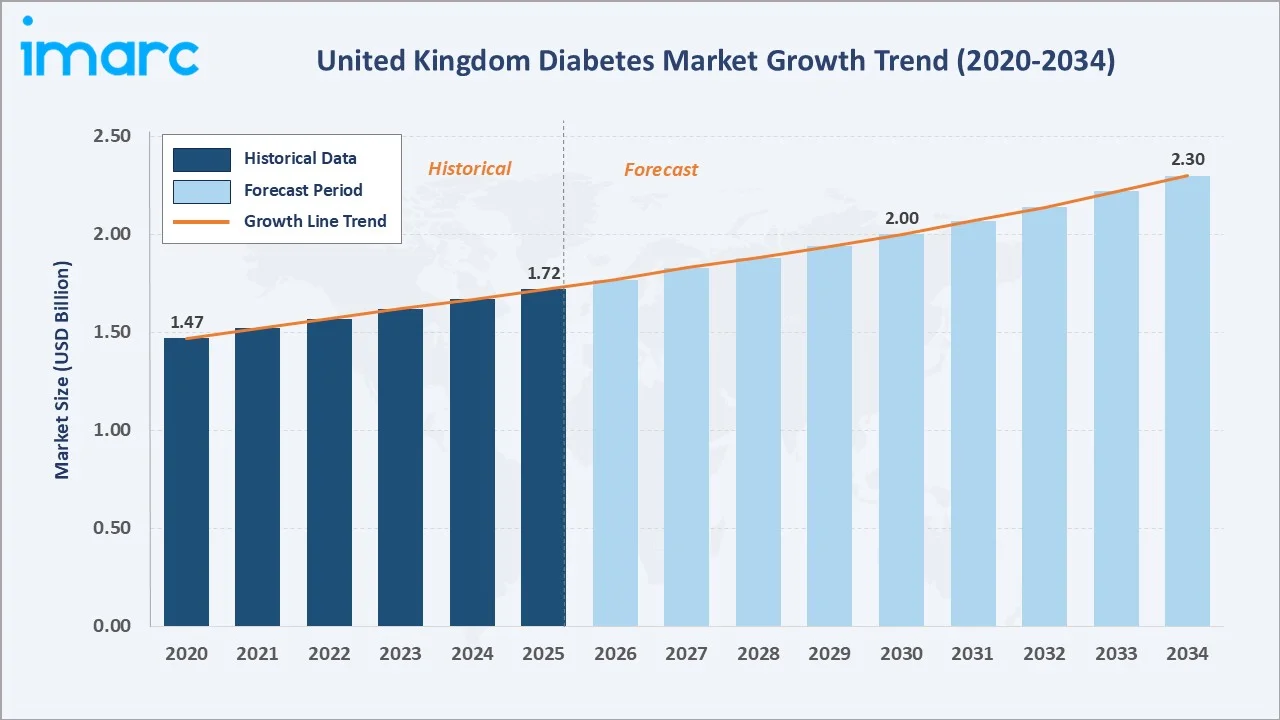
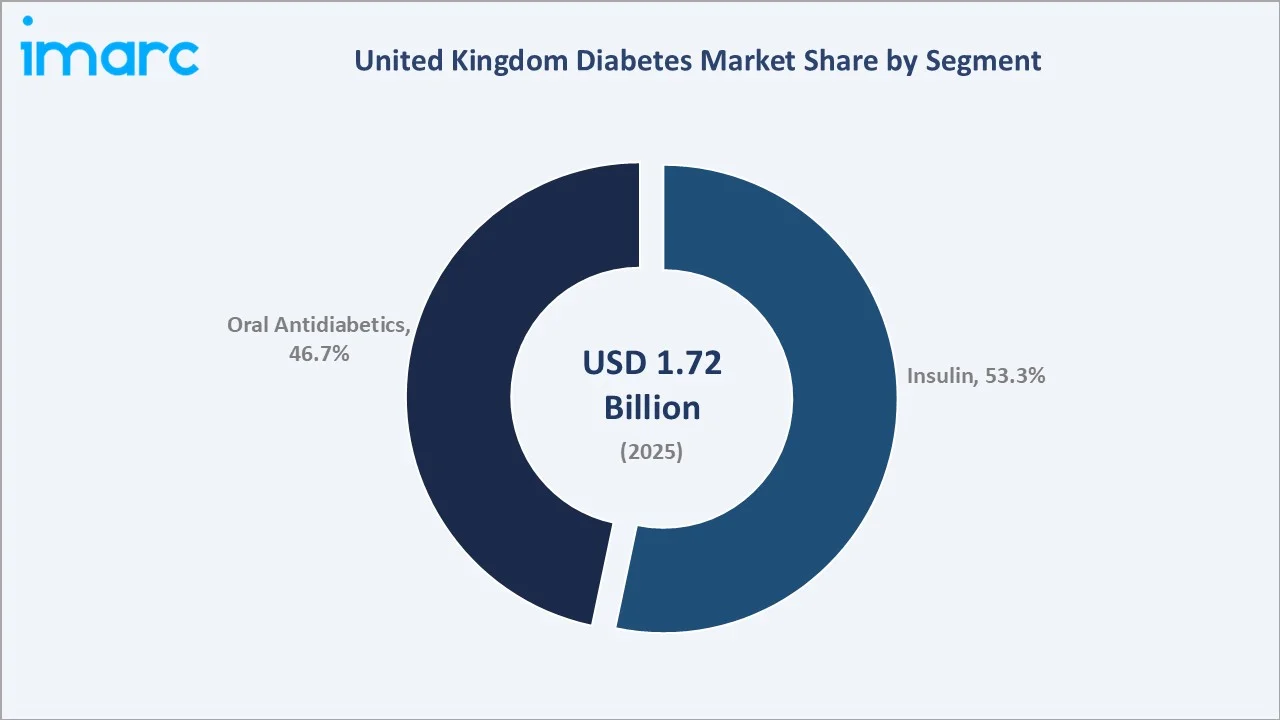
The United Kingdom diabetes market size was valued at USD 1.72 Billion in 2025 and is projected to reach USD 2.30 Billion by 2034, exhibiting a CAGR of 3.14% during the forecast period 2026-2034. Rising type-2 diabetes prevalence, the ageing UK population, growing adoption of GLP-1 therapies such as semaglutide and tirzepatide, NHS drug reimbursement expansion under NICE’s 2024 guideline updates, and steady uptake of biosimilar insulin analogues are driving the UK diabetes market growth. Insulin leads the product segment at 53.3% in 2025, while Oral Antidiabetics hold 46.7%. Retail Pharmacies dominate distribution at 53.6% in 2025, supported by the UK’s strong community pharmacy network.
Market Snapshot
|
Metric |
Value |
|
Market Size (2025) |
USD 1.72 Billion |
|
Forecast Market Size (2034) |
USD 2.30 Billion |
|
CAGR (2026-2034) |
3.14% |
|
Base Year |
2025 |
|
Historical Period |
2020-2025 |
|
Forecast Period |
2026-2034 |
|
Leading Segment |
Insulin (53.3%, 2025) |
|
Leading Distribution Channel |
Retail Pharmacies (53.6%, 2025) |
The UK diabetes market growth trajectory from 2020 through 2034 contrasts a consistent historical expansion base against a sustained forecast curve powered by GLP-1 receptor agonist adoption, NICE guideline expansion for SGLT2 inhibitors, and the NHS rollout of premium antidiabetic therapies, including tirzepatide, across type-2 diabetes management.
To get more information on this market, Request Sample
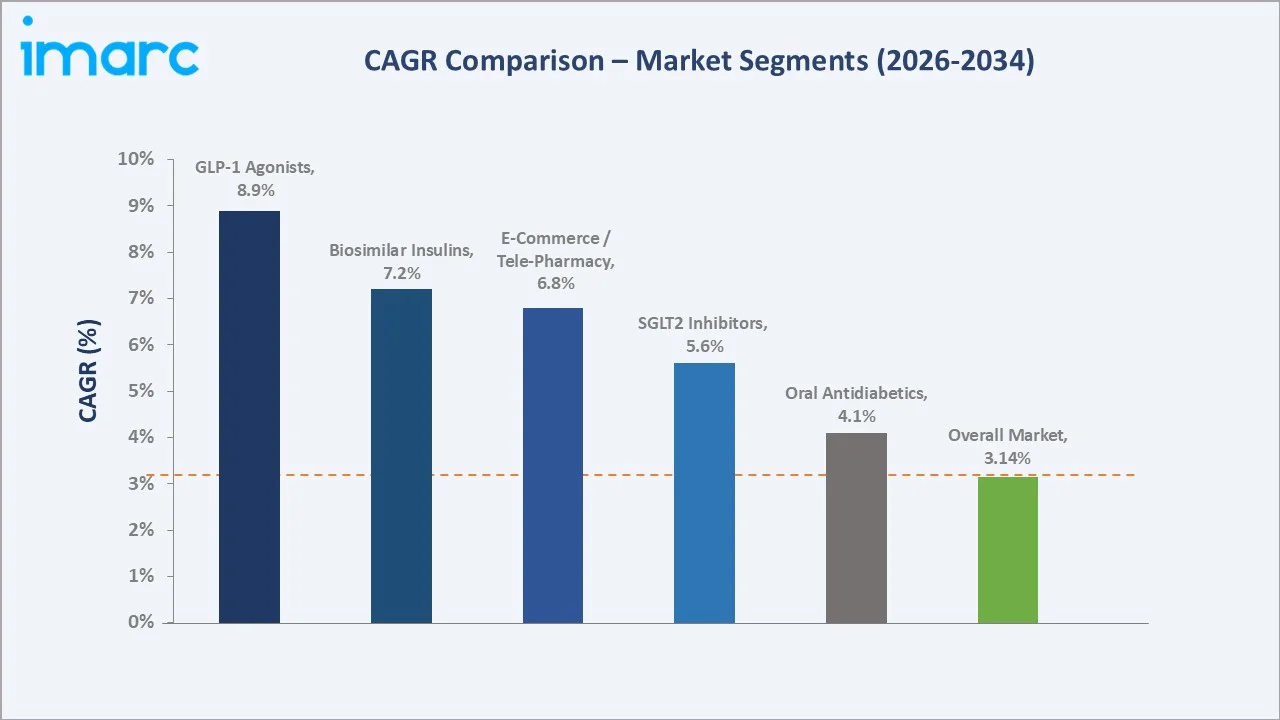
Segment-level CAGR comparisons highlight GLP-1 agonists and biosimilar insulins as the two fastest-growing sub-categories within the UK diabetes industry analysis through 2034, reflecting the NHS therapy-class mix shift and cost-optimisation strategy.
Executive Summary
The UK diabetes market is undergoing structural transformation driven by rising prevalence, therapy innovation, and evolving NHS reimbursement policy. Valued at USD 1.72 Billion in 2025, the market is forecast to reach USD 2.30 Billion by 2034 at a CAGR of 3.14%. Diabetes UK reports over 5.8 million people live with diabetes in the UK, the highest figure on record, with type-2 accounting for around 90% of diagnosed cases. Each newly diagnosed patient represents multi-year therapy demand across oral regimens and, eventually, insulin initiation.
Insulin commands the dominant product segment share at 53.3% in 2025, driven by the established type-1 patient base and extensive basal-bolus use in advanced type-2 management. Long-acting analogues including insulin glargine and insulin degludec lead prescription volume. Oral Antidiabetics at 46.7% in 2025 represent the faster-growing segment, fuelled by SGLT2 inhibitor uptake (dapagliflozin, empagliflozin) and GLP-1 receptor agonist adoption following NICE's 2024 first-line expansion.
Key Market Insights
|
Insight |
Data |
|
Largest Segment |
Insulin - 53.3% share (2025) |
|
Leading Distribution Channel |
Retail Pharmacies - 53.6% share (2025) |
|
Fastest Growing Channel |
E-Commerce / Tele-Pharmacy - 16.6% (2025) |
|
Top Companies |
Novo Nordisk A/S, Sanofi, Eli Lilly and Company, AstraZeneca, Boehringer Ingelheim International GmbH, Merck & Co., Inc. |
Key Analytical Observations Supporting the Above Data:
- Insulin's 53.3% dominance in 2025 reflects the UK's type-1 diabetes base and the extensive basal-bolus regimens used in advanced type-2 management across NHS primary and specialist care.
- Oral Antidiabetics at 46.7% in 2025 is led by SGLT2 inhibitors (dapagliflozin, empagliflozin) and GLP-1 agonists, following NICE's 2024 guideline expansion for cardiovascular and renal comorbidity patients.
- Retail Pharmacies' 53.6% share in 2025 is underpinned by the UK's 11,600-strong community pharmacy network and NHS Pharmacy First, which expanded prescribing authority in 2024.
- E-Commerce and Tele-Pharmacy at 16.6% in 2025 is the fastest-growing channel, fuelled by the NHS App (34+ million users) and online pharmacies including Pharmacy2U and LloydsDirect.
United Kingdom Diabetes Market Overview
Diabetes is a chronic metabolic disease characterised by elevated blood glucose. The UK diabetes market comprises pharmaceutical products - insulin therapies, oral antidiabetic agents, and GLP-1 receptor agonists - alongside associated drug delivery devices used to manage type-1 and type-2 diabetes across the four UK nations.
Applications span primary care through GPs, specialist NHS Trust diabetes clinics, hospital inpatient care, self-administration via pen and pump devices, and an expanding tele-health cohort. Diabetes UK estimates around 4.4 million people are formally diagnosed, while 1.3 million remain undiagnosed, sustaining robust long-term therapy demand.
Macroeconomic enablers include an ageing demographic, with the ONS projecting 25% of the UK population aged 65+ by 2045, adult obesity at 26% in 2024, and sustained NHS per-capita drug expenditure growth. Post-Brexit MHRA independence is reshaping regulatory timelines and patient access pathways across the four UK nations.
Market Dynamics
To evaluate market opportunities, Request Sample
Market Drivers
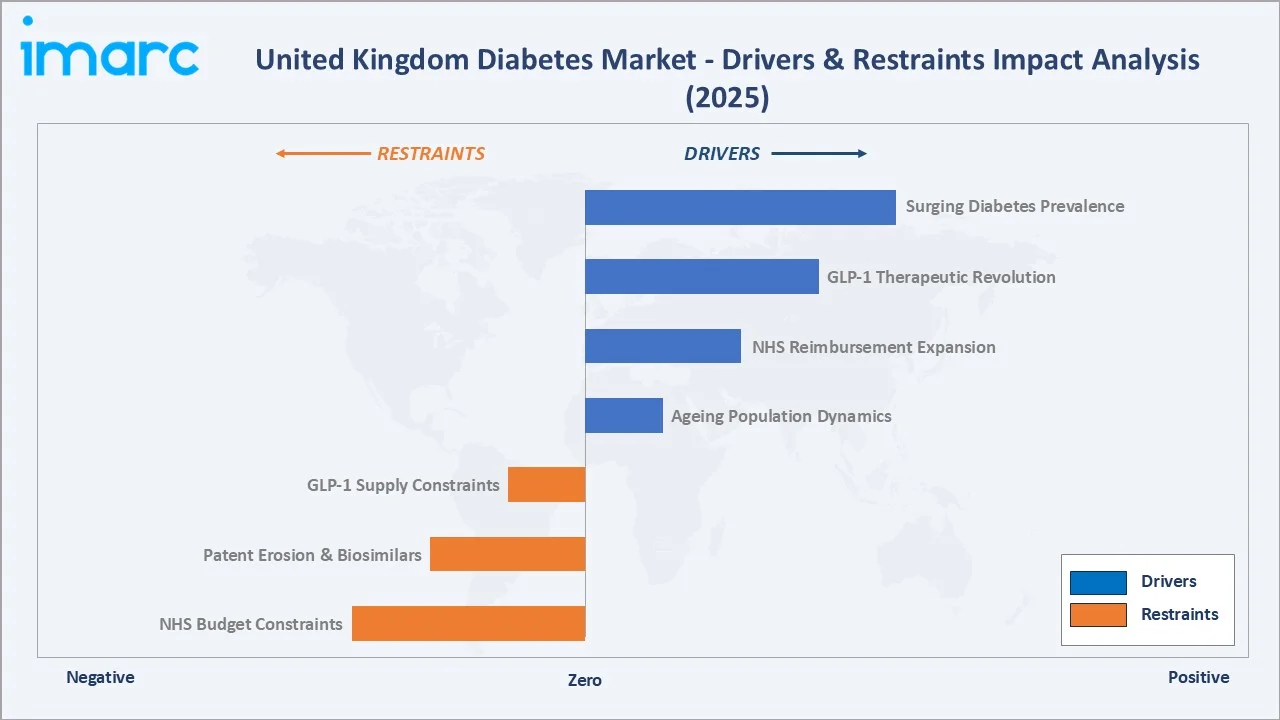
- Surging Diabetes Prevalence: Rising type-2 diabetes prevalence is the dominant structural driver. Diabetes UK reports 5.8 million people live with diabetes in the UK in 2024, a record high, with cases rising in working-age adults. Each new diagnosis represents multi-year therapy demand.
- NHS Reimbursement Expansion: NICE's 2024 guideline update elevated SGLT2 inhibitors into first-line consideration for cardiovascular and renal comorbidity patients, driving step-change demand for dapagliflozin and empagliflozin across NHS primary care.
- Ageing Population Dynamics: The UK population aged 65+ surpassed 19.5 million in 2024, with diabetes prevalence near 16% in this cohort - driving longer treatment duration and higher per-patient therapy value across NHS pathways.
- GLP-1 Therapeutic Revolution: GLP-1 receptor agonists, led by semaglutide (Ozempic) and tirzepatide (Mounjaro), are transforming UK type-2 care. NHS England's 2024 tirzepatide rollout has created a new high-value category in the antidiabetic segment.
Market Restraints
- NHS Budget Constraints: NHS drug budgets grew only 3-4% annually from 2022-2025, forcing VPAG rebate schemes that limit manufacturer pricing power on premium branded diabetes therapies.
- Patent Erosion & Biosimilars: Insulin glargine biosimilars (Semglee, Abasaglar) have captured sizable NHS basal insulin share since 2023, compressing pricing for originator products and limiting branded revenue growth.
- GLP-1 Supply Constraints: GLP-1 supply shortages during 2023-2025 limited semaglutide and tirzepatide growth, with NHS trusts periodically restricting new initiations to protect continuity for existing patients.
Market Opportunities
- Biosimilar Expansion: With biosimilar glargine widely adopted, biosimilar insulin aspart and lispro create new market entry opportunities for Biocon and Viatris across the UK from 2025-2028.
- Digital Health Integration: The NHS App, with over 34 million registered users, enables repeat prescriptions, medication reminders, and virtual consultations that support adherence in chronic diabetes care.
- Once-Weekly Insulins: Novo Nordisk's insulin icodec offers a premium innovation opportunity that could reshape the UK basal insulin segment from 2026, subject to MHRA approval and NICE appraisal.
Market Challenges
- Undiagnosed Population: Diabetes UK estimates around 1.3 million people in the UK have type-2 diabetes without a formal diagnosis, representing untapped clinical demand but reflecting screening gaps in NHS primary care.
- Adherence Gaps: NHS primary care audits indicate roughly one-third of diabetes patients are non-adherent to prescribed oral regimens, limiting realised therapeutic value and diabetes outcomes.
Emerging Market Trends
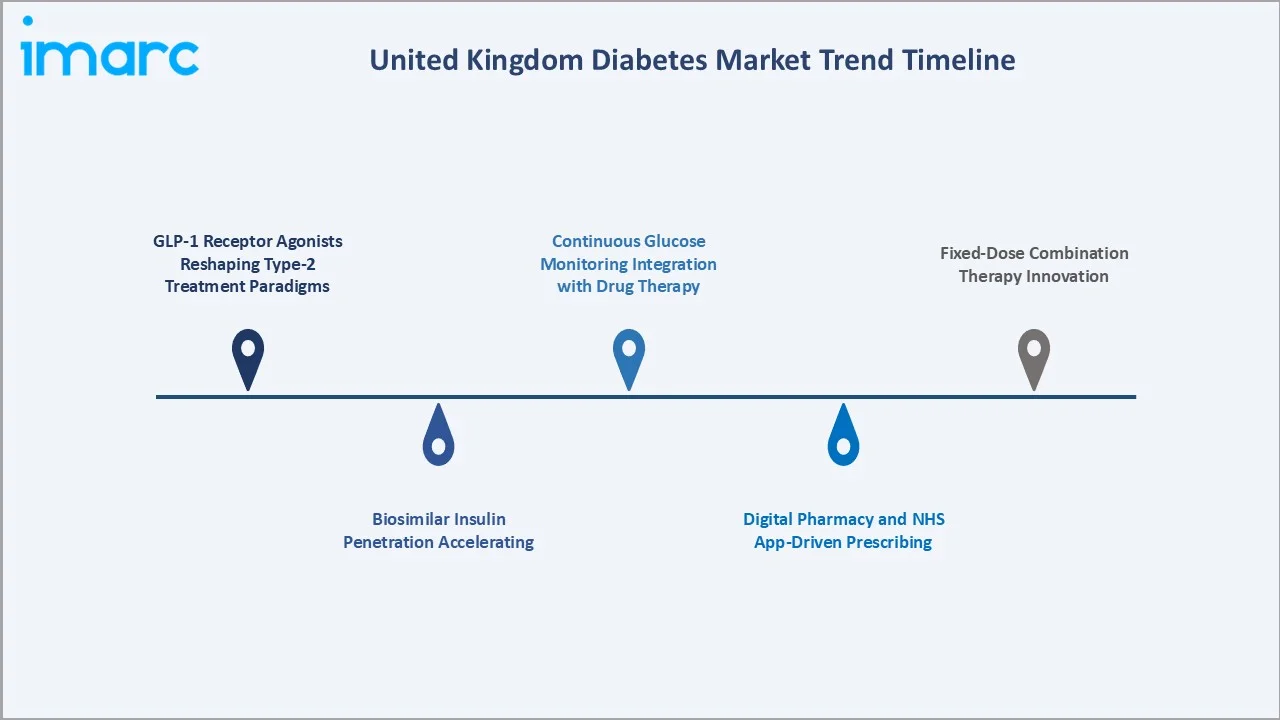
1. GLP-1 Receptor Agonists Reshaping Type-2 Treatment Paradigms
GLP-1 agonists are transforming UK type-2 care through glycaemic control and weight-loss benefits. NHS England's 2024 tirzepatide rollout enables access for eligible patients meeting specific BMI and comorbidity criteria. Semaglutide prescriptions have surged across NHS primary care during 2023-2025.
2. Biosimilar Insulin Penetration Accelerating
Biosimilar insulin glargine commands a large share of NHS basal insulin initiations, with Viatris Semglee and Lilly Abasaglar driving material NHS cost savings. Biosimilar rapid-acting analogues are forecast to enter the market from 2025-2027.
3. Continuous Glucose Monitoring Integration with Drug Therapy
NICE's 2022-2024 expansion of CGM reimbursement to all type-1 and select type-2 patients has created an integrated CGM-drug ecosystem. Real-world glucose data from Abbott FreeStyle Libre and Dexcom G7 now informs therapy titration.
4. Digital Pharmacy and NHS App-Driven Prescribing
Digital prescription channels, including the NHS App's repeat feature and private online pharmacies like Pharmacy2U and LloydsDirect, are capturing rising share of diabetes medicine dispensing, reshaping UK distribution economics.
5. Fixed-Dose Combination Therapy Innovation
Fixed-dose combinations such as metformin + SGLT2 (Xigduo XR) and GLP-1 + basal insulin (Xultophy, Suliqua) simplify polytherapy regimens for patients managing multiple daily medications, improving adherence and unlocking incremental value.
Industry Value Chain Analysis
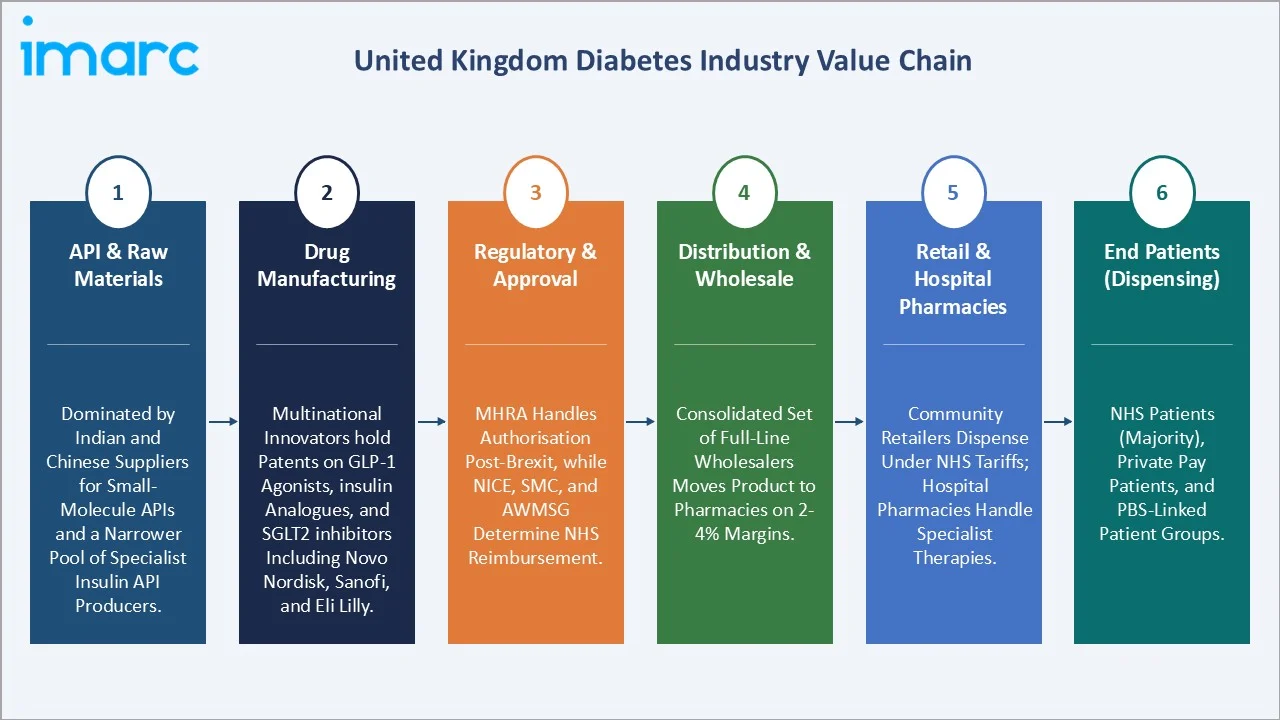
The UK diabetes industry value chain spans six integrated stages from active pharmaceutical ingredient (API) sourcing through NHS and private patient dispensing. Each stage presents distinct competitive dynamics, margin profiles, and MHRA regulatory touchpoints.
|
Stage |
Key Players / Examples |
|
API & Raw Materials |
Dominated by Indian and Chinese suppliers for small-molecule APIs, with a narrower pool of specialist CDMOs supplying peptide and biologic intermediates for insulin and GLP-1 products. Margins are thin on commodity APIs but stronger on complex biologics. |
|
Drug Manufacturing |
The highest-value stage, led by multinational innovators holding patents on GLP-1 agonists, insulin analogues, and combination therapies. High capital, regulatory, and IP barriers sustain premium margins. |
|
Regulatory & Approval |
MHRA handles authorisation post-Brexit, while NICE, SMC, and AWMSG determine NHS reimbursement across the four nations. A non-revenue but decisive gatekeeping stage that shapes commercial viability. |
|
Distribution & Wholesale |
Consolidated set of full-line wholesalers moves product to pharmacies on 2–4% margins. Increasingly bypassed by direct-to-pharmacy models during GLP-1 shortages. |
|
Retail & Hospital Pharmacies |
Community retailers dispense under NHS tariffs while hospital pharmacies handle specialist therapies, pumps, and CGM consumables. Retail margins are compressed; online pharmacies are gaining share. |
|
End Patients (Dispensing) |
NHS patients (majority), private pay patients, PBS-linked patient groups |
Multinational pharmaceutical manufacturers occupy the highest strategic value position, combining proprietary insulin analogues, patented oral therapies, and pen-device platforms. NHS reimbursement status, determined by NICE and equivalents in Scotland, Wales, and Northern Ireland, directly dictates market access and pricing across therapy classes.
Technology Landscape in the UK Diabetes Industry
Insulin Analogue Evolution and Once-Weekly Innovation
The UK basal insulin segment is transitioning from earlier-generation analogues to ultra-long-acting agents such as insulin degludec (Tresiba) and emerging once-weekly candidates. Novo Nordisk's insulin icodec, under MHRA review, could compress injection burden from daily to weekly, reshaping type-2 initiation patterns.
GLP-1 Receptor Agonist Platform Advancement
Next-generation GLP-1 therapies including dual GIP/GLP-1 agonist tirzepatide (Mounjaro) deliver glycaemic reductions exceeding earlier-generation products alongside meaningful weight loss. Oral semaglutide (Rybelsus) has expanded injectable-to-oral switching in type-2 pathways.
Continuous Glucose Monitoring and Insulin Pump Integration
Closed-loop hybrid pump systems, including Medtronic MiniMed 780G and Tandem t:slim X2 with Control-IQ, integrate CGM data with real-time insulin delivery. NICE expanded hybrid closed-loop reimbursement in 2023-2024, accelerating uptake across UK type-1 cohorts.
Digital Adherence and AI-Driven Diabetes Management
AI-powered adherence platforms, such as Abbott LibreView and Dexcom Clarity, use predictive analytics to flag hypoglycaemic risk, optimise insulin titration, and support remote clinician monitoring across UK primary care.
Market Segmentation Analysis
The report covers the following segments:
| Segment Category | Leading Segment | Market Share | Year |
|---|---|---|---|
| Segment | Insulin | 53.3% | 2025 |
| Distribution Channel | Retail Pharmacies | 53.6% | 2025 |

By Segment
Insulin commands a 53.3% majority share in 2025, reflecting the established UK type-1 patient base and extensive basal-bolus use in advanced type-2 management. Long-acting analogues including insulin glargine and insulin degludec dominate prescription volume, while biosimilar glargine adoption has compressed per-unit pricing.
To access detailed market analysis, Request Sample
Oral Antidiabetics at 46.7% in 2025 represent the faster-growing segment, driven by SGLT2 inhibitors (dapagliflozin, empagliflozin) and GLP-1 receptor agonists (semaglutide, tirzepatide). NICE's 2024 guideline update elevated these classes in first-line care for patients with cardiovascular and renal comorbidities.
By Distribution Channel
Retail Pharmacies dominate at 53.6% in 2025, supported by the UK's 11,600-strong community pharmacy network and NHS Pharmacy First initiatives that expanded prescribing authority in 2024. Boots, LloydsPharmacy, and Well Pharmacy are the leading chains.
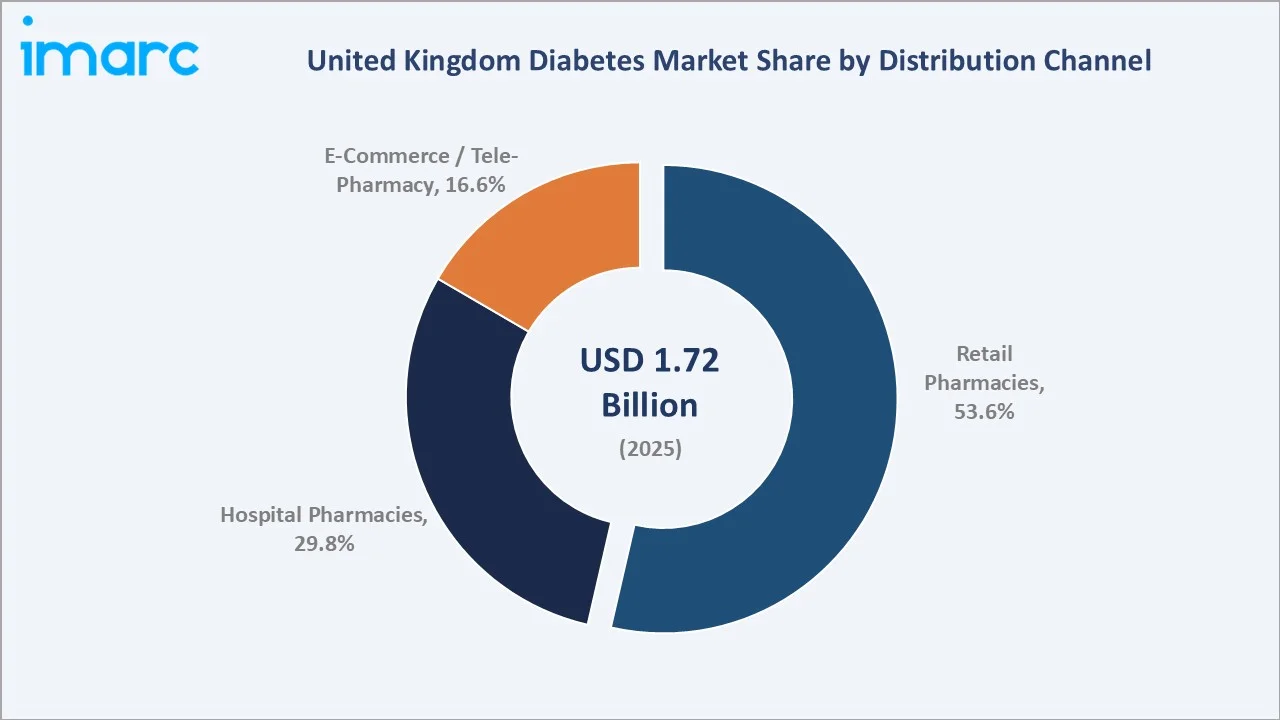
Hospital Pharmacies at 29.8% in 2025 serve inpatient diabetes management, complex GLP-1 initiations, and NHS specialist clinics. E-Commerce and Tele-Pharmacy at 16.6% in 2025 is the fastest-growing route, fuelled by the NHS App's 34+ million users and online pharmacies including Pharmacy2U, LloydsDirect, and Echo.
Competitive Landscape
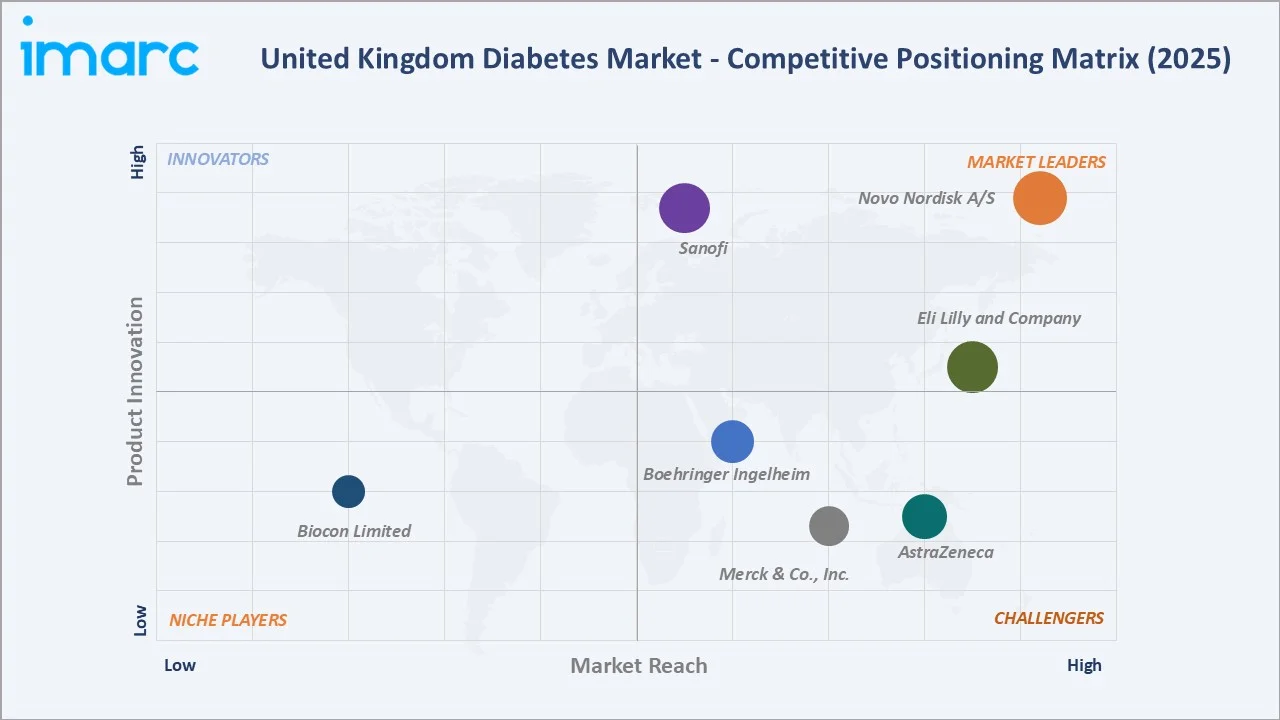
|
Company Name |
Key Brand / Product |
Market Position |
Core Strength |
|
Novo Nordisk A/S |
Ozempic, Tresiba |
Leader |
GLP-1 pioneer, insulin analogue breadth |
|
Sanofi |
Lantus |
Leader |
Basal insulin leadership, pen platform |
|
Eli Lilly and Company |
Mounjaro, Trulicity, Humalog, Abasaglar |
Leader |
Dual GIP/GLP-1 innovation (tirzepatide) |
|
AstraZeneca |
Bydureon, Forxiga |
Challenger |
SGLT2 leader (dapagliflozin) |
|
Boehringer Ingelheim International GmbH |
Jardiance |
Challenger |
Empagliflozin platform, CV outcome data |
|
Merck & Co., Inc. |
Januvia |
Challenger |
DPP-4 franchise (sitagliptin) |
|
Biocon Limited |
Semglee (biosimilar glargine) |
Emerging |
Biosimilar insulin cost leadership |
The UK diabetes competitive landscape is characterised by concentration at the top tier, with Novo Nordisk, Sanofi, and Eli Lilly collectively accounting for over 55% of NHS market value in 2025. AstraZeneca and Boehringer Ingelheim hold strong SGLT2 positions, while Biocon and Viatris have emerged as biosimilar insulin challengers.
Key Company Profiles
Novo Nordisk A/S
Novo Nordisk is the global leader in diabetes and obesity care, headquartered in Denmark, with a dominant UK presence spanning insulin analogues, GLP-1 receptor agonists, and next-generation once-weekly insulins under MHRA review.
- Product & Platform Portfolio: Ozempic (semaglutide), Wegovy, Tresiba (insulin degludec), NovoRapid, Levemir, and the emerging once-weekly insulin icodec.
- Recent Developments: In February 2026, Novo Nordisk and Vivtex Corporation announced a partnership to develop next-generation oral biologic medicines for obesity, diabetes and associated comorbidities.
- Strategic Focus: Novo Nordisk's UK strategy centres on GLP-1 category leadership, once-weekly basal insulin innovation, and dual diabetes-obesity therapy positioning under NICE reimbursement pathways across the four UK nations.
Sanofi S.A.
Sanofi is a leading French pharmaceutical multinational with a strong UK basal insulin portfolio spanning insulin glargine U100 (Lantus) and U300 (Toujeo), alongside fixed-dose combinations.
- Product & Platform Portfolio: Lantus, Toujeo, Suliqua (insulin glargine + lixisenatide), Apidra, SoloStar pen devices.
- Recent Developments: In January 2026, Sanofi’s Teizeild approved in the EU for patients with stage 2 type 1 diabetes.
- Strategic Focus: Sanofi's UK strategy prioritises basal insulin leadership, fixed-dose combination innovation, and smart pen device integration across NHS primary care and specialist diabetes services.
Eli Lilly and Company
Eli Lilly has emerged as the fastest-growing UK diabetes player through its dual GIP/GLP-1 receptor agonist tirzepatide (Mounjaro), authorised in the UK for type-2 diabetes and obesity indications.
- Product & Platform Portfolio: Mounjaro (tirzepatide), Trulicity (dulaglutide), Humalog, Abasaglar (biosimilar glargine), Humulin.
- Recent Developments: In June 2023, Eli Lilly and Company became a corporate partner of the United Nations International Children’s Emergency Fund (UNICEF) with the aim of treating and preventing non-communicable diseases, such as diabetes, in young people globally.
- Strategic Focus: Eli Lilly's UK strategy is anchored on tirzepatide platform expansion, diabetes-obesity integration, and continued biosimilar insulin competitiveness through Abasaglar within the NHS basal insulin segment.
Market Concentration Analysis
The UK diabetes market exhibits high concentration among the top pharmaceutical players, with Novo Nordisk, Sanofi, Eli Lilly, AstraZeneca, and Boehringer Ingelheim collectively accounting for 70-75% of NHS market value in 2025. This reflects the research intensity and specialist sales infrastructure required for premium therapy segments.
The insulin segment is particularly concentrated, with Novo Nordisk, Sanofi, and Eli Lilly commanding over 85% of UK insulin prescription value. Biosimilar entry from Biocon (Semglee) and Viatris is gradually fragmenting the basal analogue sub-segment, although originator brands retain strong prescribing loyalty across NHS primary care.
The oral antidiabetic segment shows moderate fragmentation, with SGLT2 competition between AstraZeneca (Forxiga) and Boehringer Ingelheim (Jardiance), DPP-4 inhibitors from Merck and Takeda, and GLP-1 agonist concentration in Novo Nordisk and Eli Lilly portfolios.
Investment & Growth Opportunities
Fastest-Growing Segments
GLP-1 receptor agonists represent the highest-growth UK diabetes sub-segment, with double-digit NHS prescription volume growth from 2023-2025. Tirzepatide (Mounjaro) rollout for eligible type-2 patients is forecast to sustain this trajectory through 2028. SGLT2 inhibitors are the second fastest-growing, benefiting from expanded NICE indications across diabetes, heart failure, and chronic kidney disease.
Emerging Market Expansion
Biosimilar insulin analogue penetration presents a meaningful opportunity as biosimilar insulin aspart and lispro enter UK approval pathways during 2025-2028. Digital pharmacy platforms including Pharmacy2U and LloydsDirect are emerging as high-growth distribution assets as NHS App-integrated prescription volumes scale across the population.
Venture & Strategic Investment Trends
Notable UK and European activity includes continued diabetes R&D investment from Novo Nordisk on once-weekly insulin, Eli Lilly's UK manufacturing expansion, and Biocon Biologics' UK biosimilar scaling. Digital diabetes venture activity includes CGM-integrated adherence platforms and tele-pharmacy innovation.
Future Market Outlook (2026-2034)
The UK diabetes market forecast projects steady value expansion from USD 1.72 Billion in 2025 to USD 2.30 Billion by 2034 at a CAGR of 3.14%. Growth is underpinned by rising prevalence, advanced GLP-1 and SGLT2 therapy expansion, and sustained NHS reimbursement support for chronic disease management.
Three discontinuities are likely to reshape the market through 2034. First, once-weekly insulin analogues such as Novo Nordisk's insulin icodec could shift the basal insulin segment from daily to weekly dosing from 2026-2028. Second, biosimilar entry in insulin aspart and lispro will compress pricing across the rapid-acting segment.
By 2034, the UK diabetes industry is forecast to have transformed from insulin-dominant to a more balanced therapy landscape, with GLP-1 and SGLT2 classes commanding a larger share of oral/injectable value. Integrated digital-drug ecosystems combining CGM, AI adherence, and tele-pharmacy will further reshape distribution.
Research Methodology
Primary Research
Primary research encompassed structured interviews conducted in 2024-2025 with UK-based diabetes specialists, NHS primary care prescribers, hospital diabetes clinic consultants, community pharmacy leaders, and diabetes charity representatives. Primary insights validated market sizing, segmentation estimates, NHS reimbursement trends, and competitive positioning.
Secondary Research
Secondary sources include Diabetes UK epidemiology publications, NHS Digital National Diabetes Audit reports, NICE technology appraisal documents, MHRA registration data, ONS demographic projections, company annual reports, and peer-reviewed clinical trial publications including BMJ diabetes editorial coverage.
Forecasting Models
Market size estimations and forecast projections were derived using a combination of top-down and bottom-up models, incorporating UK population growth, diabetes prevalence trend curves, NHS drug budget trajectories, therapy class penetration rates, and patent expiry timelines. Scenario analysis (base, optimistic, conservative) accounts for NHS policy and biosimilar entry uncertainties.
UK Diabetes Market Report Coverage
|
Attribute |
Details |
|
Market Size (2025) |
USD 1.72 Billion |
|
Market Forecast (2034) |
USD 2.30 Billion |
|
CAGR (2026-2034) |
3.14% |
|
Base Year |
2025 |
|
Historical Period |
2020-2025 |
|
Forecast Period |
2026-2034 |
|
Segments Covered |
|
|
Companies Covered |
Novo Nordisk A/S, Sanofi, Eli Lilly and Company, AstraZeneca, Boehringer Ingelheim International GmbH, Merck & Co., Inc., Biocon Limited, etc. |
|
Scope of the Report |
Market size, share, drivers, restraints, opportunities, competitive benchmarking, SWOT, value chain, regulatory outlook |
Frequently Asked Questions About the United Kingdom Diabetes Market Report
The UK diabetes market was valued at USD 1.72 Billion in 2025, driven by rising type-2 prevalence, GLP-1 therapy uptake, and NHS reimbursement expansion.
The market is projected to reach USD 2.30 Billion by 2034, growing at a CAGR of 3.14% during 2026-2034, driven by GLP-1 agonists, SGLT2 inhibitors, and biosimilar expansion.
Insulin leads with a 53.3% share in 2025, driven by extensive basal-bolus usage in type-1 and advanced type-2 diabetes management across NHS primary and specialist care.
Retail Pharmacies lead with a 53.6% share in 2025, supported by the UK's 11,600-strong community pharmacy network and NHS Pharmacy First prescribing initiatives.
Key drivers include rising type-2 prevalence, NHS GLP-1 rollout, NICE SGLT2 expansion, ageing population, and digital pharmacy adoption.
E-Commerce and Tele-Pharmacy at 16.6% in 2025 is the fastest-growing, fuelled by the NHS App's 34+ million users and online pharmacies such as Pharmacy2U and LloydsDirect.
Leading companies include Novo Nordisk A/S, Sanofi, Eli Lilly and Company, AstraZeneca, Boehringer Ingelheim International GmbH, Merck & Co., Inc., and Biocon Limited.
Biosimilar insulin glargine (Semglee, Abasaglar) has captured sizable NHS basal insulin share, driving cost savings and extending affordability for long-term diabetes care.
GLP-1 agonists such as semaglutide (Ozempic) and tirzepatide (Mounjaro) are the fastest-growing therapy class, expanding NHS access for eligible type-2 patients under NICE criteria.
NICE technology appraisals determine NHS reimbursement for diabetes drugs in England and Wales. Its 2024 GLP-1 and SGLT2 guideline updates significantly expanded first-line access.
Digital pharmacy platforms integrated with the NHS App enable repeat prescriptions, remote consultations, and adherence reminders, forecast to grow rapidly through 2034.
Need more help?
- Speak to our experienced analysts for insights on the current market scenarios.
- Include additional segments and countries to customize the report as per your requirement.
- Gain an unparalleled competitive advantage in your domain by understanding how to utilize the report and positively impacting your operations and revenue.
- For further assistance, please connect with our analysts.
 Request Customization
 Speak to an Analyst
 Request Brochure
 Inquire Before Buying
Benefits of Customization
- Personalize this research
- Triangulate with your data
- Get data as per your format and definition
- Gain a deeper dive into a specific application, geography, customer, or competitor
- Any level of personalization
Get in Touch With Us
UNITED STATES
Phone: +1-201-971-6302
INDIA
Phone: +91-120-433-0800
UNITED KINGDOM
Phone: +44-753-714-6104
Email: [email protected]
Client Testimonials




.webp)




.webp)













Related Reports

Choose your plan
*Please note that the prices mentioned below are starting prices for each bundle type. Kindly contact our team for further details.*
Single User License
- 1 User License, Access on 2 Devices
- PDF Report + Excel Dataset (Password Protected)
- Lifetime Access
- No Printing Rights
- 10% Free Report Customization
- 10–12 Weeks of Analyst Support
Five User License
- Access for 5 Users, 2 Devices per User
- PDF Report + Excel Dataset (Password Protected)
- Lifetime Access
- Dedicated Account Manager
- 12–14 Weeks of Analyst Support
- No Printing Rights
- 15% Free Report Customization
- 25% Discount on Your Next Purchase
Corporate User License
- Unlimited User Access (Within Your Organization)
- PDF Report + Excel Dataset
- Lifetime Access
- Dedicated Account Manager
- 14–20 Weeks of Analyst Support
- No Printing Rights
- 20% Free Report Customization
- 30% Discount on Your Next Purchase
Essential Insights
What's included:
3 reports
- Lifetime Access
- PDF Reports
- Excel Datasets
- 2 Weeks of Free Analyst Support
- 2 User Licenses
- Access on 2 Devices
- Printing Rights
- Complimentary PowerPoint (PPT) Version
- Complimentary License Upgrade
Professional Access
What's included:
5 reports
- Lifetime Access
- PDF Reports
- Excel Datasets
- 8 Weeks of Free Analyst Support
- 2 User Licenses
- Access on 2 Devices
- Printing Rights
- Complimentary PowerPoint (PPT) Version
- Complimentary License Upgrade
Business Advantage
What's included:
8 reports
- Lifetime Access
- PDF Reports
- Excel Datasets
- 14 Weeks of Free Analyst Support
- 2 User Licenses
- Access on 2 Devices
- Printing Rights
- Complimentary PowerPoint (PPT) Version
- Complimentary License Upgrade
Enterprise Intelligence
What's included:
10 reports
- Lifetime Access
- PDF Reports
- Excel Datasets
- 20 Weeks of Free Analyst Support
- 2 User Licenses
- Access on 2 Devices
- Printing Rights
- Complimentary PowerPoint (PPT) Version
- Complimentary License Upgrade