
United States Nanocellulose Market Report by Product Type (Nanofibrillated Cellulose (NFC), Nanocrystalline Cellulose (NCC), Bacterial Cellulose, Microfibrillated Cellulose (MFC), and Others), Application (Pulp and Paperboard, Composites, Pharmaceuticals and Biomedical, Electronics, Food and Beverages, and Others), and Region 2026-2034
United States Nanocellulose Market Size Overview:
The United States nanocellulose market size reached USD 213.8 Million in 2025. Looking forward, IMARC Group expects the market to reach USD 931.3 Million by 2034, exhibiting a growth rate (CAGR) of 17.23% during 2026-2034. The increasing demand for renewable materials, the rising emphasis on green technologies and eco-friendly solutions, continual advancements in nanotechnology, the growing demand in the paper and packaging industry, and rapid product utilization in the biomedical and pharmaceutical sectors are some of the factors propelling the market.
|
Report Attribute
|
Key Statistics
|
|---|---|
|
Base Year
|
2025 |
|
Forecast Years
|
2026-2034
|
|
Historical Years
|
2020-2025
|
| Market Size in 2025 | USD 213.8 Million |
| Market Forecast in 2034 | USD 931.3 Million |
| Market Growth Rate (2026-2034) | 17.23% |
Access the full market insights report Request Sample
Nanocellulose is an advanced nanomaterial derived from cellulose, the natural and fibrous structural component found in plants. This innovative material is produced through the breakdown of cellulose fibers into nanoscale dimensions, typically ranging from 1 to 100 nanometers in width. It exhibits unique and advantageous properties, including high strength, lightweight nature, biodegradability, and excellent biocompatibility. There are various types of nanocellulose, with the most common being cellulose nanocrystals (CNC), cellulose nanofibrils (CNF), and bacterial nanocellulose (BNC). CNC consists of crystalline regions derived from cellulose, while CNF retains the fibrillar structure of cellulose on a nanoscale. BNC is produced by bacteria, offering a high degree of purity and uniformity in its nanoscale structure. Nanocellulose's exceptional mechanical properties, such as high tensile strength and stiffness, make it a promising material for a wide range of applications. It finds uses in industries such as packaging, textiles, paper production, construction materials, and biomedical applications. In packaging, it enhances the strength and barrier properties of materials, contributing to sustainable and eco-friendly packaging solutions. Its biodegradability and minimal environmental impact contribute to its appeal in various applications, driving demand from environmentally conscious consumers and industries.
United States Nanocellulose Market Trends:
The market in the United States is majorly driven by the increasing focus on sustainability and environmental consciousness. As industries seek renewable and eco-friendly alternatives to traditional materials, nanocellulose, derived from abundant and renewable sources like wood pulp, stands out as a sustainable choice. Furthermore, rapid technological advancements and ongoing research in nanotechnology play a crucial role in the market's expansion. Continued innovations in extraction methods and processing techniques have enhanced the production and performance of nanocellulose. Apart from this, the paper and packaging industry is a major driver for the market. As the demand for sustainable and high-performance packaging solutions rises, it finds increasing use in enhancing the mechanical and barrier characteristics of paper and cardboard, driving growth in this segment. Moreover, the growth of the biomedical and pharmaceutical sectors is stimulating the market. As the medical industry seeks advanced and biodegradable materials, nanocellulose gains traction for its potential to create innovative solutions. Additionally, the introduction of favorable government initiatives and regulations promoting sustainable practices and green technologies further fuel the market. Supportive policies and funding for research and development in sustainable materials contribute to the market's growth, encouraging industries to explore and adopt nanocellulose-based solutions. This, in turn, is creating a positive outlook for the market.
United States Nanocellulose Market Segmentation:
IMARC Group provides an analysis of the key trends in each segment of the market, along with forecasts at the country level for 2026-2034. Our report has categorized the market based on product type and application.
Product Type Insights:
To get detailed segment analysis of this market Request Sample
- Nanofibrillated Cellulose (NFC)
- Nanocrystalline Cellulose (NCC)
- Bacterial Cellulose
- Microfibrillated Cellulose (MFC)
- Others
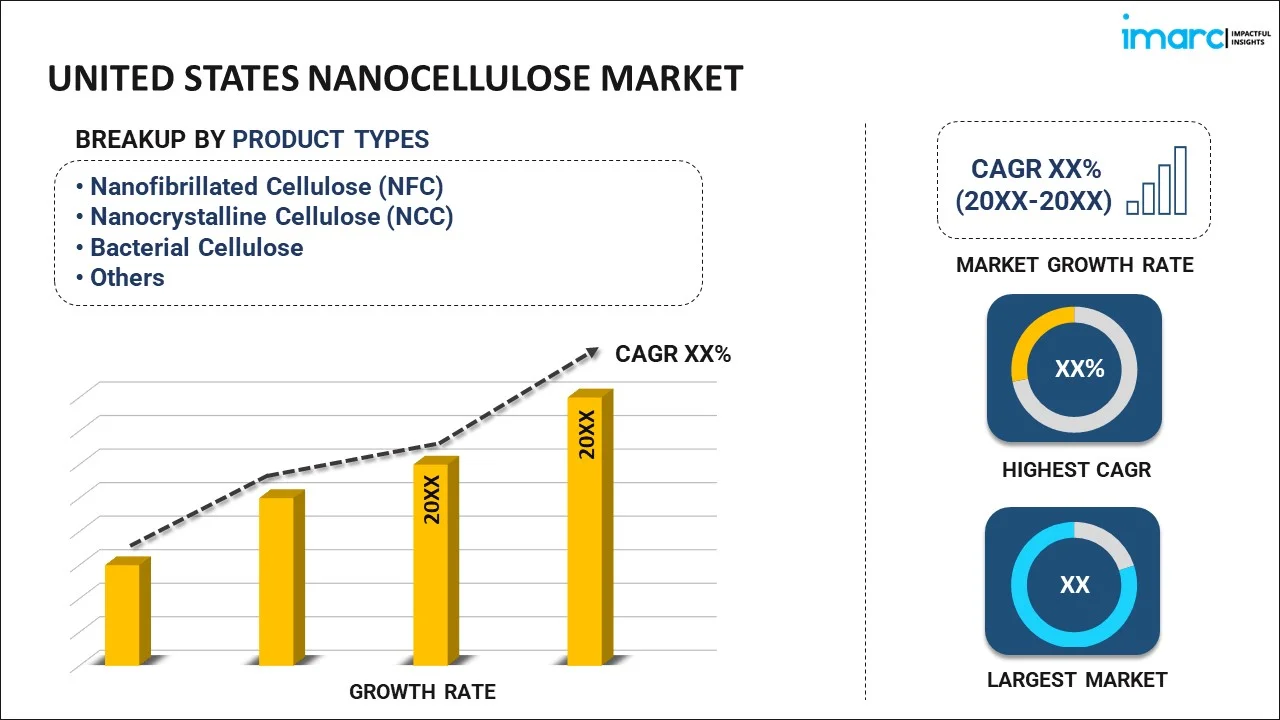
The report has provided a detailed breakup and analysis of the market based on the product type. This includes nanofibrillated cellulose (NFC), nanocrystalline cellulose (NCC), bacterial cellulose, microfibrillated cellulose (MFC), and others.

Application Insights:
- Pulp and Paperboard
- Composites
- Pharmaceuticals and Biomedical
- Electronics
- Food and Beverages
- Others
A detailed breakup and analysis of the market based on the application have also been provided in the report. This includes pulp and paperboard, composites, pharmaceuticals and biomedical, electronics, food and beverages, and others.
Regional Insights:
To get detailed regional analysis of this market Request Sample
- Northeast
- Midwest
- South
- West
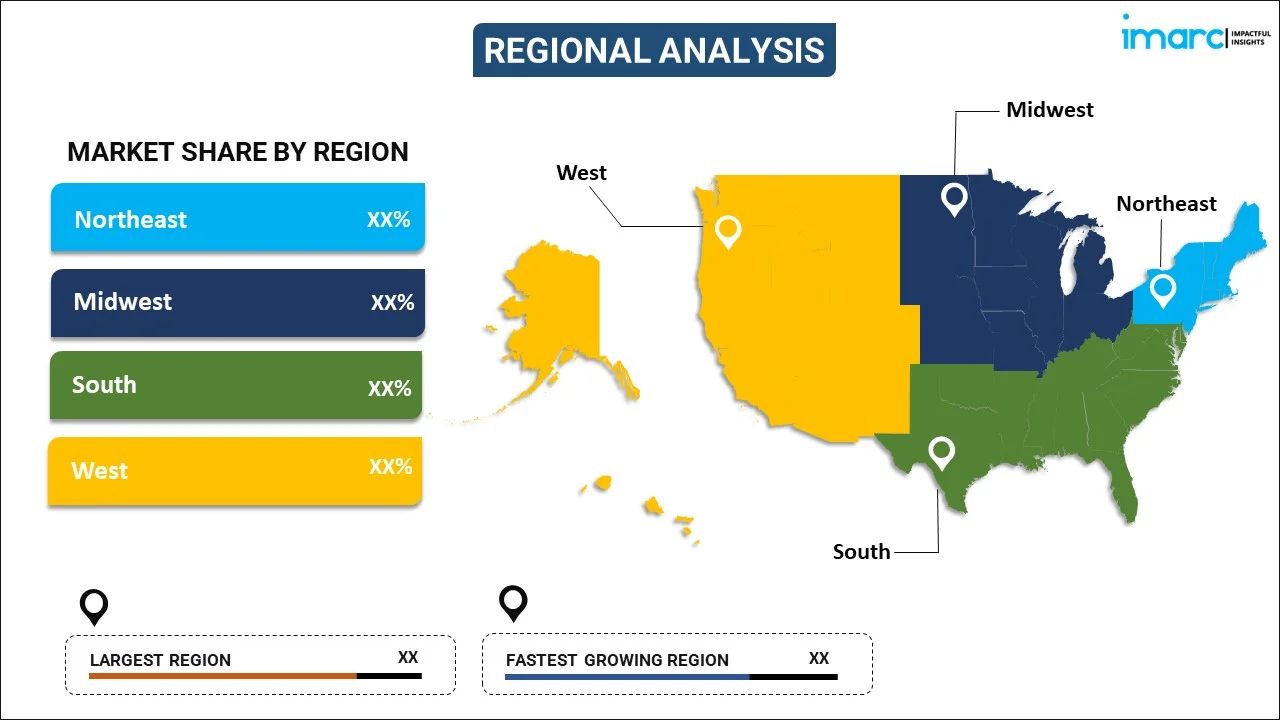
The report has also provided a comprehensive analysis of all the major regional markets, which include Northeast, Midwest, South, and West.
Competitive Landscape:
The market research report has also provided a comprehensive analysis of the competitive landscape in the market. Competitive analysis such as market structure, key player positioning, top winning strategies, competitive dashboard, and company evaluation quadrant has been covered in the report. Also, detailed profiles of all major companies have been provided.
United States Nanocellulose Market Report Coverage:
| Report Features | Details |
|---|---|
| Base Year of the Analysis | 2025 |
| Historical Period | 2020-2025 |
| Forecast Period | 2026-2034 |
| Units | Million USD |
| Scope of the Report | Exploration of Historical and Forecast Trends, Industry Catalysts and Challenges, Segment-Wise Historical and Predictive Market Assessment:
|
| Product Types Covered | Nanofibrillated Cellulose (NFC), Nanocrystalline Cellulose (NCC), Bacterial Cellulose, Microfibrillated Cellulose (MFC), Others |
| Applications Covered | Pulp and Paperboard, Composites, Pharmaceuticals and Biomedical, Electronics, Food and Beverages, Others |
| Regions Covered | Northeast, Midwest, South, West |
| Customization Scope | 10% Free Customization |
| Post-Sale Analyst Support | 10-12 Weeks |
| Delivery Format | PDF and Excel through Email (We can also provide the editable version of the report in PPT/Word format on special request) |
Key Questions Answered in This Report:
- How has the United States nanocellulose market performed so far and how will it perform in the coming years?
- What has been the impact of COVID-19 on the United States nanocellulose market?
- What is the breakup of the United States nanocellulose market on the basis of product type?
- What is the breakup of the United States nanocellulose market on the basis of application?
- What are the various stages in the value chain of the United States nanocellulose market?
- What are the key driving factors and challenges in the United States nanocellulose?
- What is the structure of the United States nanocellulose market and who are the key players?
- What is the degree of competition in the United States nanocellulose market?
Key Benefits for Stakeholders:
- IMARC’s industry report offers a comprehensive quantitative analysis of various market segments, historical and current market trends, market forecasts, and dynamics of the United States nanocellulose market from 2020-2034.
- The research report provides the latest information on the market drivers, challenges, and opportunities in the United States nanocellulose market.
- Porter's five forces analysis assist stakeholders in assessing the impact of new entrants, competitive rivalry, supplier power, buyer power, and the threat of substitution. It helps stakeholders to analyze the level of competition within the United States nanocellulose industry and its attractiveness.
- Competitive landscape allows stakeholders to understand their competitive environment and provides an insight into the current positions of key players in the market.
Need more help?
- Speak to our experienced analysts for insights on the current market scenarios.
- Include additional segments and countries to customize the report as per your requirement.
- Gain an unparalleled competitive advantage in your domain by understanding how to utilize the report and positively impacting your operations and revenue.
- For further assistance, please connect with our analysts.
 Request Customization
 Speak to an Analyst
 Request Brochure
 Inquire Before Buying
Benefits of Customization
- Personalize this research
- Triangulate with your data
- Get data as per your format and definition
- Gain a deeper dive into a specific application, geography, customer, or competitor
- Any level of personalization
Get in Touch With Us
UNITED STATES
Phone: +1-201-971-6302
INDIA
Phone: +91-120-433-0800
UNITED KINGDOM
Phone: +44-753-714-6104
Email: [email protected]
Client Testimonials




.webp)




.webp)













Related Reports

Choose your plan
*Please note that the prices mentioned below are starting prices for each bundle type. Kindly contact our team for further details.*
Single User License
- 1 User License, Access on 2 Devices
- PDF Report + Excel Dataset (Password Protected)
- Lifetime Access
- No Printing Rights
- 10% Free Report Customization
- 10–12 Weeks of Analyst Support
Five User License
- Access for 5 Users, 2 Devices per User
- PDF Report + Excel Dataset (Password Protected)
- Lifetime Access
- Dedicated Account Manager
- 12–14 Weeks of Analyst Support
- No Printing Rights
- 15% Free Report Customization
- 25% Discount on Your Next Purchase
Corporate User License
- Unlimited User Access (Within Your Organization)
- PDF Report + Excel Dataset
- Lifetime Access
- Dedicated Account Manager
- 14–20 Weeks of Analyst Support
- No Printing Rights
- 20% Free Report Customization
- 30% Discount on Your Next Purchase
Essential Insights
What's included:
3 reports
- Lifetime Access
- PDF Reports
- Excel Datasets
- 2 Weeks of Free Analyst Support
- 2 User Licenses
- Access on 2 Devices
- Printing Rights
- Complimentary PowerPoint (PPT) Version
- Complimentary License Upgrade
Professional Access
What's included:
5 reports
- Lifetime Access
- PDF Reports
- Excel Datasets
- 8 Weeks of Free Analyst Support
- 2 User Licenses
- Access on 2 Devices
- Printing Rights
- Complimentary PowerPoint (PPT) Version
- Complimentary License Upgrade
Business Advantage
What's included:
8 reports
- Lifetime Access
- PDF Reports
- Excel Datasets
- 14 Weeks of Free Analyst Support
- 2 User Licenses
- Access on 2 Devices
- Printing Rights
- Complimentary PowerPoint (PPT) Version
- Complimentary License Upgrade
Enterprise Intelligence
What's included:
10 reports
- Lifetime Access
- PDF Reports
- Excel Datasets
- 20 Weeks of Free Analyst Support
- 2 User Licenses
- Access on 2 Devices
- Printing Rights
- Complimentary PowerPoint (PPT) Version
- Complimentary License Upgrade