
Europe Gluten-Free Oats Market Size, Share, Trends and Forecast by Product Type, Application, End Use, Distribution Channel, and Country, 2026-2034
Europe Gluten-Free Oats Market Size, Share, Trends & Forecast (2026-2034)
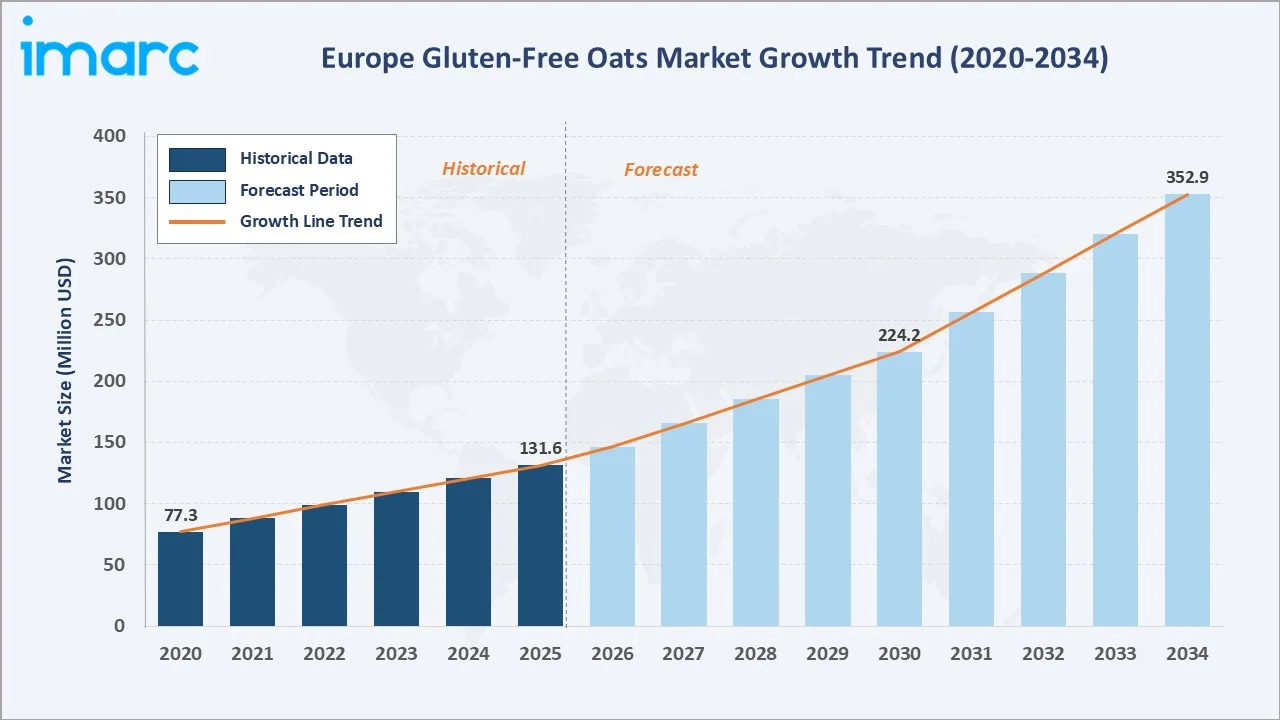
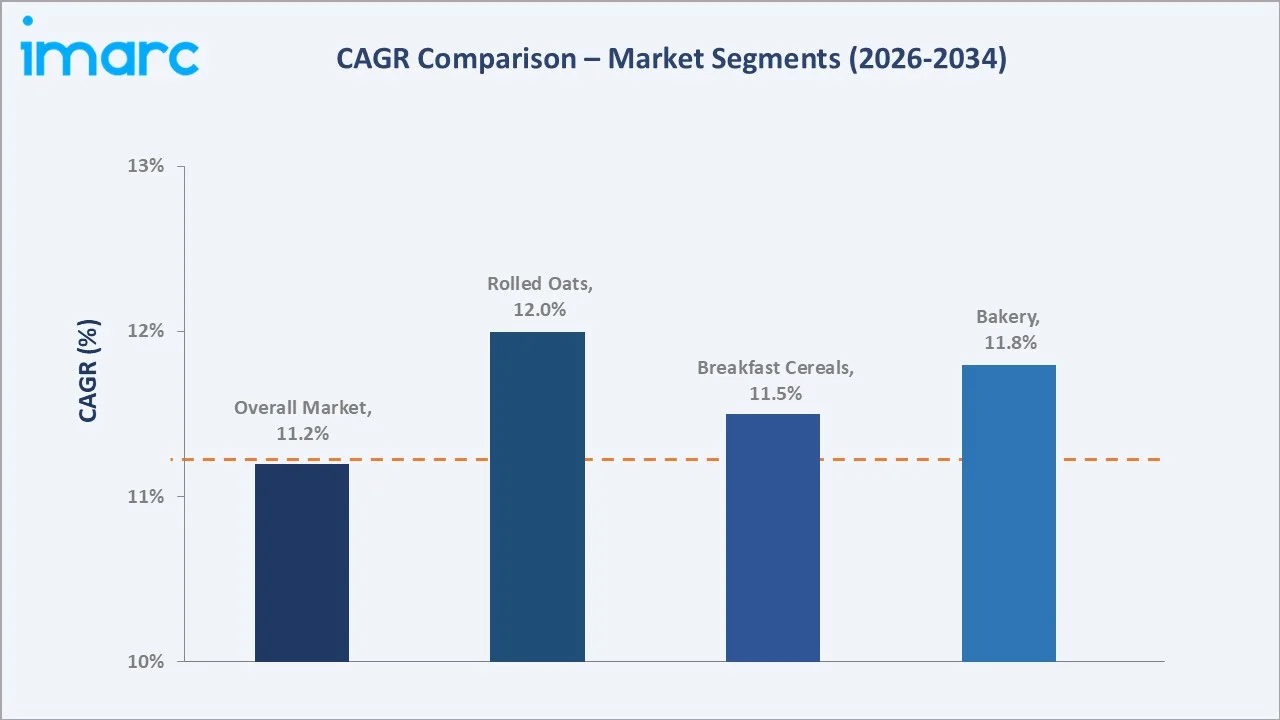
The Europe gluten-free oats market grew from USD 131.6 Million in 2025 to USD 146.4 Million in 2026 and is projected to reach USD 352.9 Million by 2034, growing at a CAGR of 11.2% during 2026-2034. The market is driven by rising celiac disease prevalence, growing health-consciousness, and expanding gluten-free food innovation. Rolled Oats lead at 41.8%. Breakfast Cereals dominate at 46.2%. Italy commands 24.8% of the regional market.
Growing e-commerce penetration, rising clean-label consumer demand, and expanding gluten-free bakery and snack product launches are further supporting European market growth. Regulatory clarity under EU Codex Alimentarius gluten-free standards is accelerating certified product development across the continent.
Market Snapshot
|
Metric |
Value |
|
Base Year Market Size (2025) |
USD 131.6 Million |
|
Market Size (2026) |
USD 146.4 Million |
|
Forecast Market Size (2034) |
USD 352.9 Million |
|
CAGR (2026-2034) |
11.2% |
|
Base Year |
2025 |
|
Historical Period |
2020-2025 |
|
Forecast Period |
2026-2034 |
|
Dominant Product Type |
Rolled Oats (41.8%, 2025) |
|
Dominant Application |
Breakfast Cereals (46.2%, 2025) |
|
Leading Country |
Italy (24.8%, 2025) |
The Europe gluten-free oats market size increased from an estimated USD 77.3 Million in 2020 to USD 131.6 Million in 2025 and is estimated to reach USD 146.4 Million in 2026. The market is further expected to grow to USD 224.2 Million by 2030 and USD 352.9 Million by 2034.
To get more information on this market, Request Sample
Rolled Oats lead at 41.8% CAGR driven by their versatile use in breakfast and baking applications. Breakfast Cereals lead at 46.2% through strong retail positioning and health-conscious consumer demand. Italy leads regionally at 24.8%, supported by high celiac disease prevalence and strong gluten-free consumer awareness.
Executive Summary
The Europe gluten-free oats market expanded from USD 131.6 Million in 2025 to an estimated USD 146.4 Million in 2026, positioning it as one of Europe's fastest-growing specialized food segments. Italy leads at 24.8%, supported by the continent's highest celiac disease diagnosis rates and a well-developed gluten-free retail infrastructure.
Rising health-consciousness across Europe is reshaping breakfast and snacking habits. Consumers are increasingly seeking certified gluten-free oats as a clean-label, nutritionally superior alternative to conventional cereals. Expanding distribution in both supermarkets and online health specialty channels is supporting rapid market penetration.
Rolled Oats at 41.8% and Breakfast Cereals at 46.2% reinforce the category's strong anchoring in daily breakfast habits. The market is projected to reach USD 352.9 Million by 2034, driven by product innovation in functional oat formats, premium positioning, and rising awareness of oat-based nutrition.
Key Market Insights
|
Insight |
Data |
|
Dominant Product Type |
Rolled Oats – 41.8% share (2025) |
|
Dominant Application |
Breakfast Cereals – 46.2% share (2025) |
|
Leading Country |
Italy – 24.8% share (2025) |
|
Market Opportunity |
Functional snack formats; organic certified GF oats; gluten-free bakery innovation; e-commerce and D2C subscription models |
Key Analytical Observations Supporting the Above Data:
- Rolled Oats at 41.8%: Rolled oats dominate as the most versatile and widely adopted gluten-free oat format, suitable for porridge, muesli, granola, and baking applications. Their broad utility across breakfast and bakery categories makes them the commercial cornerstone of Europe's gluten-free oats market. Certified gluten-free rolled oats from dedicated purity protocol farms command premium pricing and strong consumer loyalty across health food retailers and supermarkets throughout Western Europe.
- Breakfast Cereals at 46.2%: Breakfast cereals represent the largest application segment due to growing consumer preference for nutritious, convenient, and allergen-free morning meal options. Health-focused messaging from major cereal brands, combined with increasing availability of certified gluten-free oat-based granola and muesli in supermarkets, is driving sustained category growth. The breakfast occasion's high purchase frequency creates strong recurring demand fundamentals for gluten-free oat product developers.
- Italy at 24.8%: Italy leads regionally due to the highest celiac disease prevalence in Europe, with well-established national screening programs and strong physician-led dietary guidance toward gluten-free products. Italian retailers have developed highly organized gluten-free product sections, and the national health system partially reimburses gluten-free food purchases for diagnosed celiac patients, creating uniquely strong and structurally supported consumer demand.
Europe Gluten-Free Oats Market Overview
The Europe gluten-free oats market occupies a distinctive commercial position: a medically necessitated demand base from celiac disease patients, overlaid by a rapidly expanding voluntary health consumer segment choosing gluten-free diets for wellness benefits. This dual-driver structure supports above-average market growth sustainability.
The market integrates certified oat grain production through purity protocol farming, specialized milling and processing, rigorous quality testing for gluten contamination, and distribution through both mainstream retail and specialized health food channels. EU regulatory frameworks provide consumer trust through standardized gluten-free labeling thresholds below 20 ppm.
Market Dynamics
To evaluate market opportunities, Request Sample
Market Drivers
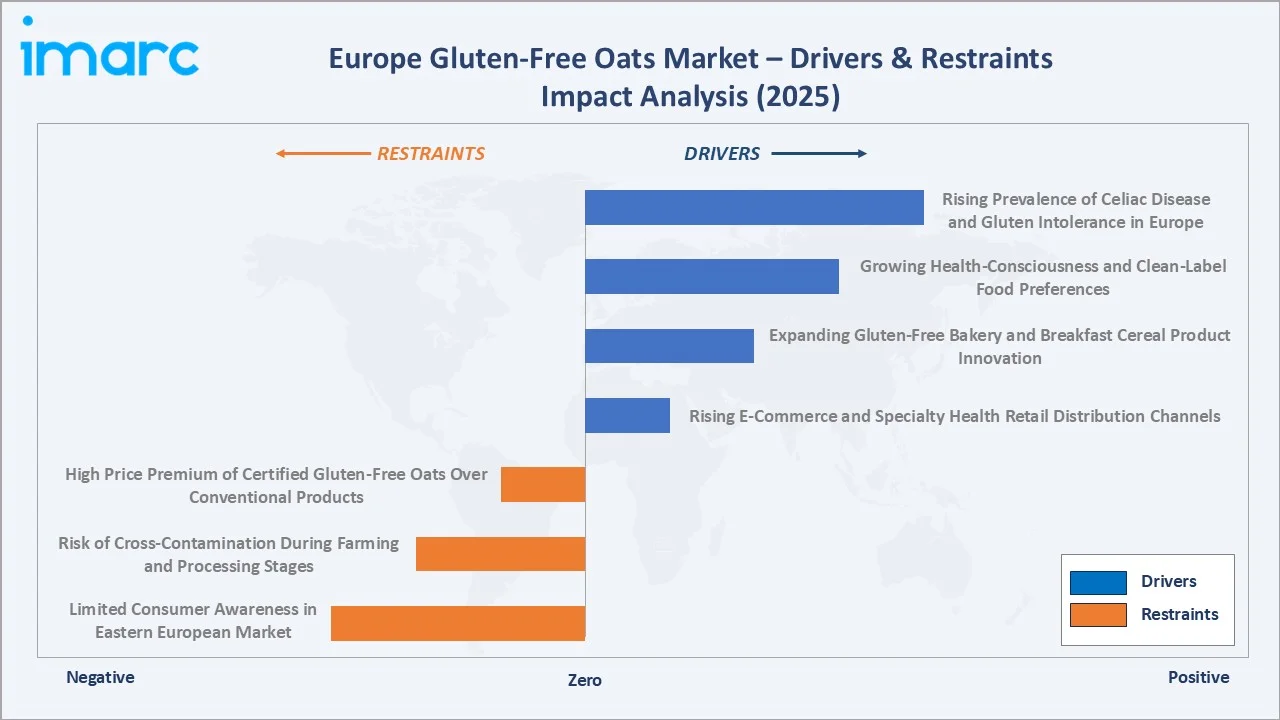
- Rising Prevalence of Celiac Disease and Gluten Intolerance in Europe: Europe has the world's highest celiac disease prevalence rates, with approximately 1% of the population affected and many more experiencing non-celiac gluten sensitivity. Improving diagnostic capabilities and rising physician screening rates are expanding the medically diagnosed consumer base requiring certified gluten-free oats. Italy, Germany, and the UK have seen significant increases in celiac disease diagnoses over the past decade, directly driving demand for certified gluten-free staple food products including oats across retail and foodservice channels throughout the continent.
- Growing Health-Consciousness and Clean-Label Food Preferences: Beyond medically necessitated demand, a growing population of health-conscious European consumers is voluntarily adopting gluten-free diets, perceiving them as cleaner, more digestible, and nutritionally superior. This wellness-driven segment significantly amplifies market demand beyond the celiac patient base. Clean-label certifications, organic credentials, and transparency around gluten-free production methods are becoming key purchase drivers, particularly among premium health food consumers in Germany, France, and the United Kingdom.
- Expanding Gluten-Free Bakery and Breakfast Cereal Product Innovation: Major food companies and specialist brands are investing in gluten-free oat product innovation, launching new formats including instant oat cups, overnight oat kits, protein-fortified oat products, and flavored granola ranges. This product proliferation is expanding the use occasions for gluten-free oats beyond traditional porridge into premium snacking, bakery, and functional food categories, broadening the consumer addressable market and driving incremental volume growth throughout European retail channels.
- Rising E-Commerce and Specialty Health Retail Distribution Channels: The expansion of online health food retail platforms and dedicated gluten-free product sections in mainstream supermarkets has dramatically improved accessibility of certified gluten-free oats across Europe. E-commerce growth allows niche certified producers to reach consumers nationally and internationally without traditional brick-and-mortar distribution barriers. Subscription-based online D2C oat delivery models are also emerging, enhancing consumer loyalty and generating predictable recurring revenue for gluten-free oat brands targeting health-conscious European demographics.
Market Restraints
- High Price Premium of Certified Gluten-Free Oats Over Conventional Products: Certified gluten-free oats command a significant price premium over conventional oats, reflecting the higher production costs of purity protocol farming, dedicated processing facilities, extensive quality testing, and certification maintenance. This price differential limits market penetration in price-sensitive European consumer segments and creates a commercial barrier for first-time adopters outside the medically necessitated celiac patient base, particularly in Eastern and Southern European markets with lower average disposable incomes.
- Risk of Cross-Contamination During Farming and Processing Stages: Despite purity protocol farming advances, oats remain susceptible to gluten cross-contamination through co-farming with wheat, barley, and rye, shared farm equipment, and processing facility contamination risks. Managing contamination risk requires significant investment in dedicated infrastructure and testing protocols. Consumer confidence incidents related to contamination can cause significant market disruption and brand damage, creating ongoing operational challenges for certified gluten-free oat producers across the European supply chain.
- Limited Consumer Awareness in Eastern European Market: While Western Europe has well-established gluten-free consumer markets, Eastern European countries including Poland, Romania, and Hungary show significantly lower consumer awareness of celiac disease, gluten intolerance, and gluten-free dietary requirements. Low physician screening rates, limited retail availability of certified products, and price sensitivity combine to suppress market development in these geographies, representing both a current restraint and a longer-term opportunity as healthcare awareness improves.
Market Opportunities
- Functional Nutrition and Sports Oat Product Development: Growing European interest in sports nutrition and functional foods creates opportunity for protein-enriched, beta-glucan fortified, and probiotic-enhanced certified gluten-free oat products. Athletes and fitness-focused consumers represent a premium-paying segment seeking high-performance nutritional oat formats, with growing openness to gluten-free options for digestive health reasons even without formal diagnosis.
- Organic Certified Gluten-Free Oat Market Expansion: Combined organic and gluten-free certification represents a premium market segment growing faster than either attribute alone. European consumers' strong preference for organic food products, combined with gluten-free dietary requirements, creates compelling opportunity for certified organic gluten-free oat producers to capture premium retail positioning and above-average margin realization.
Market Challenges
- Maintaining Purity Protocol Certification Across a Complex Supply Chain: Ensuring consistent gluten contamination levels below 20 ppm throughout the farming, transportation, milling, and packaging supply chain requires extensive certification infrastructure, dedicated logistics, and ongoing supplier auditing. Scaling certified gluten-free oat production to meet growing European demand while maintaining certification integrity is a significant operational challenge for producers and processors seeking to capitalize on market growth opportunities.
- Competition from Broader Gluten-Free Grain and Pseudograin Alternatives: Growing consumer familiarity with quinoa, millet, amaranth, and rice as gluten-free grain alternatives creates competitive pressure on oat-based products in the breakfast and snacking categories. These alternatives are perceived as inherently gluten-free without contamination risk concerns, providing a simpler consumer value proposition that oat brands must actively counter through education and product quality differentiation.
Emerging Market Trends
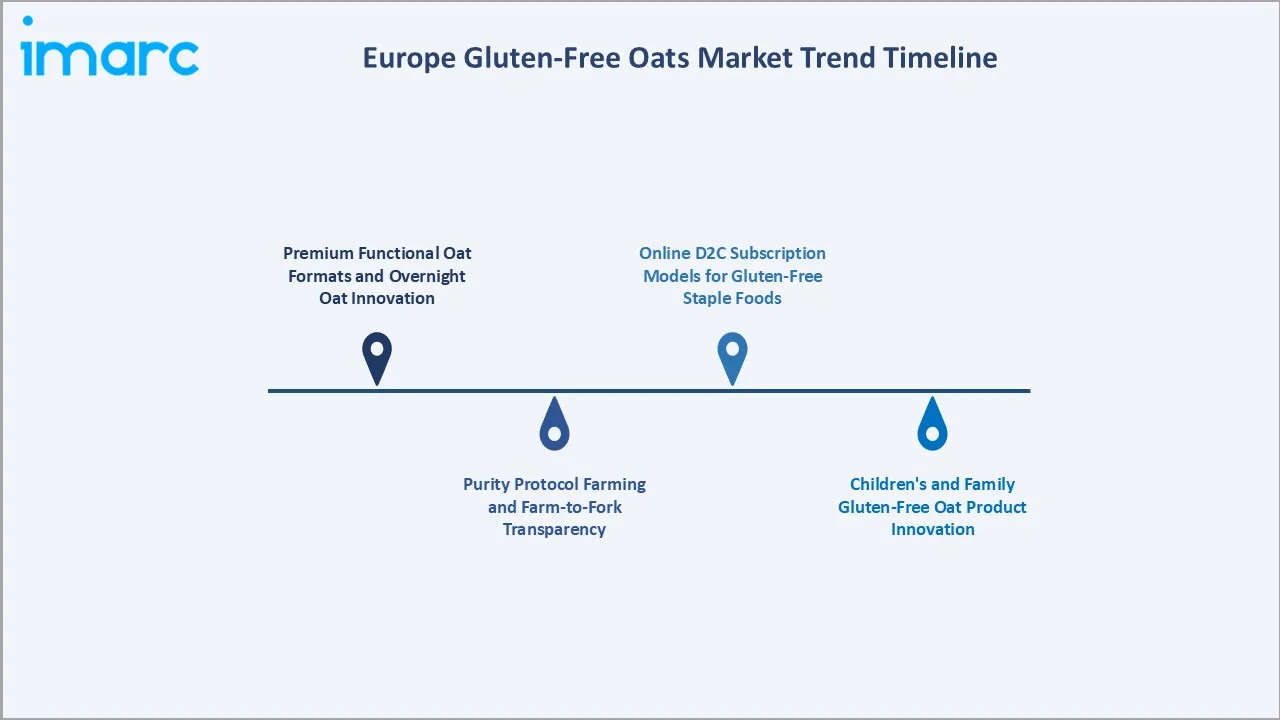
1. Premium Functional Oat Formats and Overnight Oat Innovation
Ready-to-eat overnight oat kits, protein-enriched oat cups, and functional oat blends with adaptogens and superfoods are reshaping the gluten-free oat product landscape. These premium convenience formats command above-average retail prices and are gaining rapid traction in urban health food retail and online channels across Germany, France, and the UK.
2. Purity Protocol Farming and Farm-to-Fork Transparency
Consumer demand for full supply chain transparency is driving investment in purity protocol certified oat farms across Scandinavia and the British Isles. Brands communicating farm origin stories, dedicated growing practices, and contamination testing protocols are building stronger consumer trust and commanding premium price points in European health retail environments.
3. Online D2C Subscription Models for Gluten-Free Staple Foods
Direct-to-consumer subscription models are emerging for certified gluten-free oat products, enabling brands to build recurring revenue streams and deep consumer loyalty. Personalized oat product bundles delivered on subscription are resonating with health-conscious European consumers seeking convenience, consistency, and trusted allergen-free sourcing for their daily nutrition.
4. Children's and Family Gluten-Free Oat Product Innovation
Growing diagnosis of celiac disease in children is driving demand for child-friendly certified gluten-free oat products including flavored instant porridges, oat-based baby foods, and fun-format granola products. European parents managing childhood celiac disease represent a high-loyalty, premium-paying consumer segment creating sustained demand for trusted certified gluten-free oat brands across mainstream supermarket channels.
Industry Value Chain Analysis
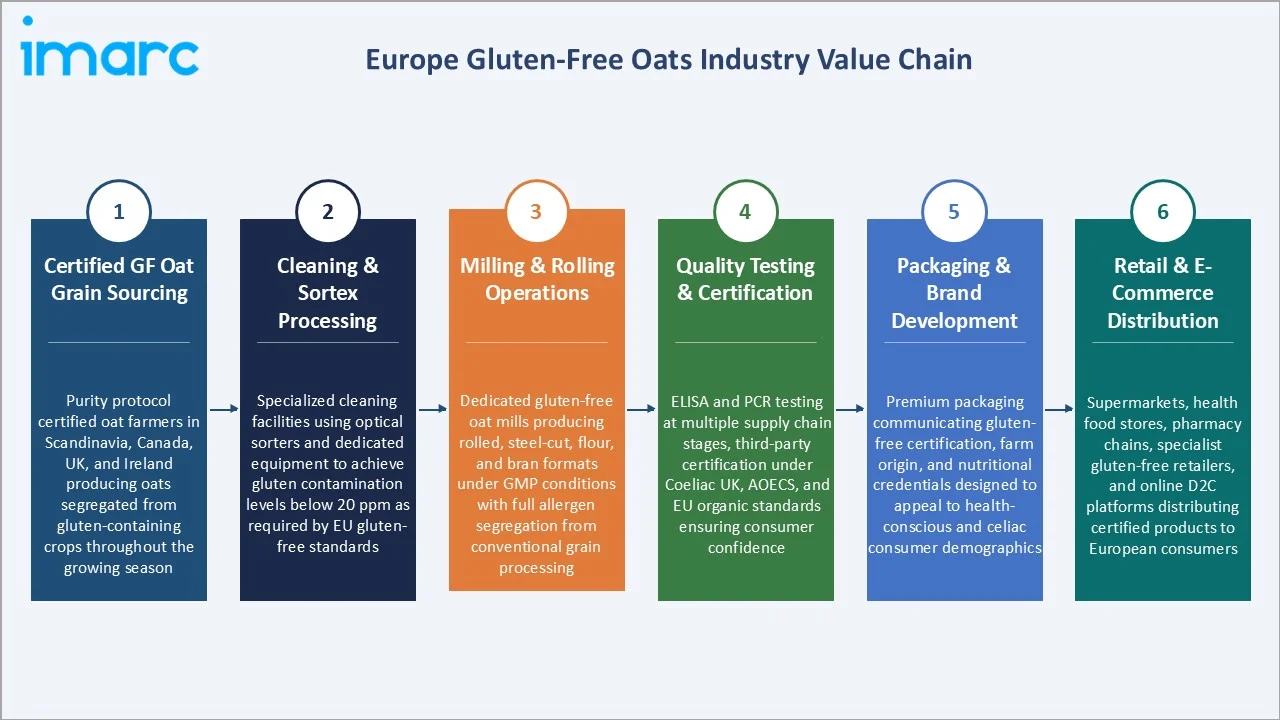
The Europe gluten-free oats value chain begins with certified purity protocol oat farmers and flows through dedicated processing infrastructure, rigorous contamination testing, and specialized distribution to reach health-focused consumers through multiple retail formats.
|
Stage |
Key Participants |
|
Certified GF Oat Grain Sourcing |
Purity protocol certified oat farmers in Scandinavia, Canada, UK, and Ireland producing oats segregated from gluten-containing crops throughout the growing season |
|
Cleaning & Sortex Processing |
Specialized cleaning facilities using optical sorters and dedicated equipment to achieve gluten contamination levels below 20 ppm as required by EU gluten-free standards |
|
Milling & Rolling Operations |
Dedicated gluten-free oat mills producing rolled, steel-cut, flour, and bran formats under GMP conditions with full allergen segregation from conventional grain processing |
|
Quality Testing & Certification |
ELISA and PCR testing at multiple supply chain stages, third-party certification under Coeliac UK, AOECS, and EU organic standards ensuring consumer confidence |
|
Packaging & Brand Development |
Premium packaging communicating gluten-free certification, farm origin, and nutritional credentials designed to appeal to health-conscious and celiac consumer demographics |
|
Retail & E-Commerce Distribution |
Supermarkets, health food stores, pharmacy chains, specialist gluten-free retailers, and online D2C platforms distributing certified products to European consumers |
The quality testing and certification stage is the most critical and commercially differentiating node in the gluten-free oats value chain, where investment in testing infrastructure and certification credentials directly determines retail access, consumer trust, and achievable product pricing.
Technology Landscape in the Europe Gluten-Free Oats Industry
Purity Protocol Farming and Agronomic Segregation Technology
Purity protocol gluten-free oat production involves specialized agronomic protocols ensuring zero co-farming with wheat, barley, or rye within buffer zone distances. Advanced seed purity verification, dedicated farm equipment cleaning protocols, and GPS-tracked field management systems are enabling scalable certified production that meets EU gluten-free standards at commercially viable yields across Nordic and British Isles farming regions.
Optical Sorting and Near-Infrared Detection Technology
Advanced optical sorting machines using multi-spectral imaging and near-infrared spectroscopy enable real-time detection and removal of contaminated grain kernels during processing. These technologies have dramatically improved the commercial feasibility of certified gluten-free oat production by providing efficient contamination removal at production-line scale, reducing reliance on purely agronomic controls and improving overall supply chain reliability for certified gluten-free oat manufacturers.
Digital Traceability and Blockchain-Based Supply Chain Transparency
Emerging blockchain-based traceability platforms are enabling gluten-free oat brands to provide consumers with full farm-to-fork supply chain transparency through scannable QR codes on packaging. These systems document farm origin, contamination test results, certification status, and processing history, building consumer confidence and supporting premium price positioning for brands investing in transparent certification communication.
Market Segmentation Analysis
The report covers the following segments:
|
Segment Category |
Leading Segment |
Market Share |
Year |
|
Product Type |
Rolled Oats |
41.8% |
2025 |
|
Application |
Breakfast Cereals |
46.2% |
2025 |
|
End Use |
Retail |
🔒 |
2025 |
|
Distribution Channel |
Supermarkets and Hypermarkets |
🔒 |
2025 |
|
Country |
Italy |
24.8% |
2025 |

By Product Type
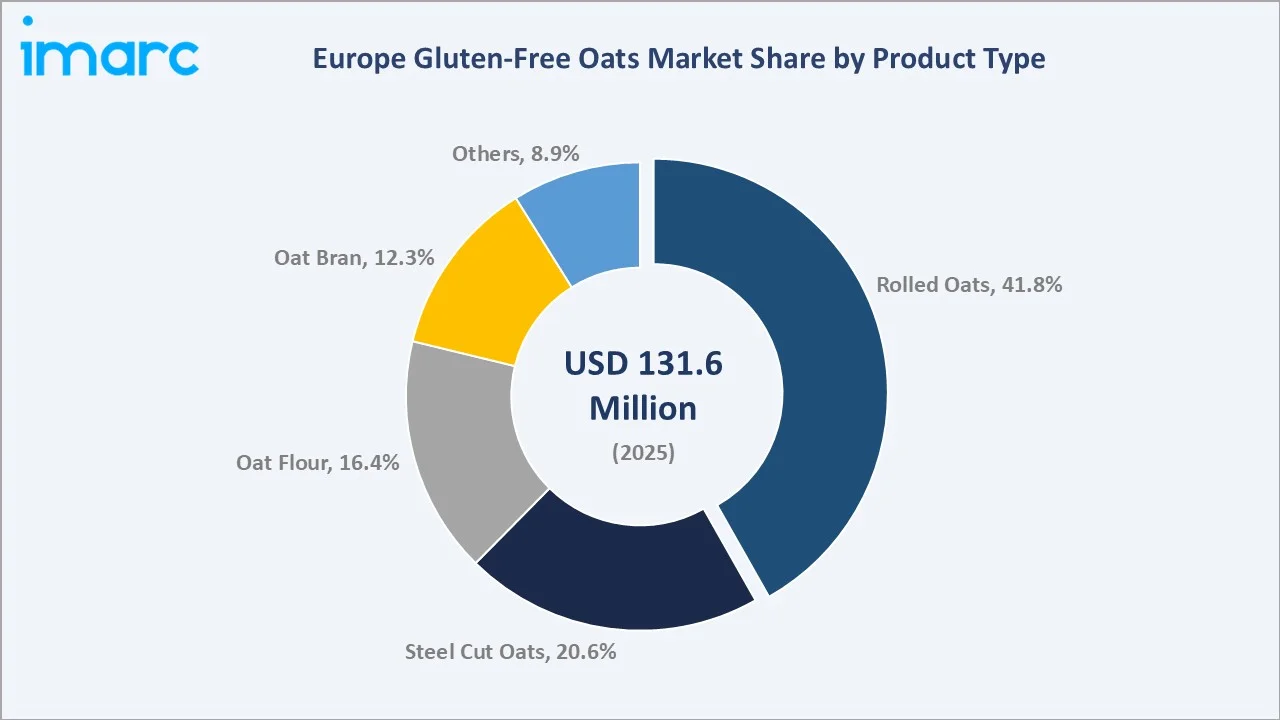
Rolled Oats lead at 41.8% (2025). This segment dominates through their versatile utility across breakfast, baking, and snacking applications, making them the foundational gluten-free oat format for both retail consumers and food manufacturing customers across Europe.
To access detailed market analysis, Request Sample
Steel Cut Oats at 20.6% represent the premium artisan segment favored by health-focused consumers for their minimal processing and superior nutritional retention. Oat Flour at 16.4% grows through expanding gluten-free bakery applications. Oat Bran at 12.3% serves the functional health and cholesterol-management nutrition segment.
By Application
Breakfast Cereals lead at 46.2% (2025). This segment dominates through strong retail positioning of certified gluten-free muesli, granola, and oat-based cereal products, combined with growing consumer preference for convenient and nutritious morning meal solutions across European markets.
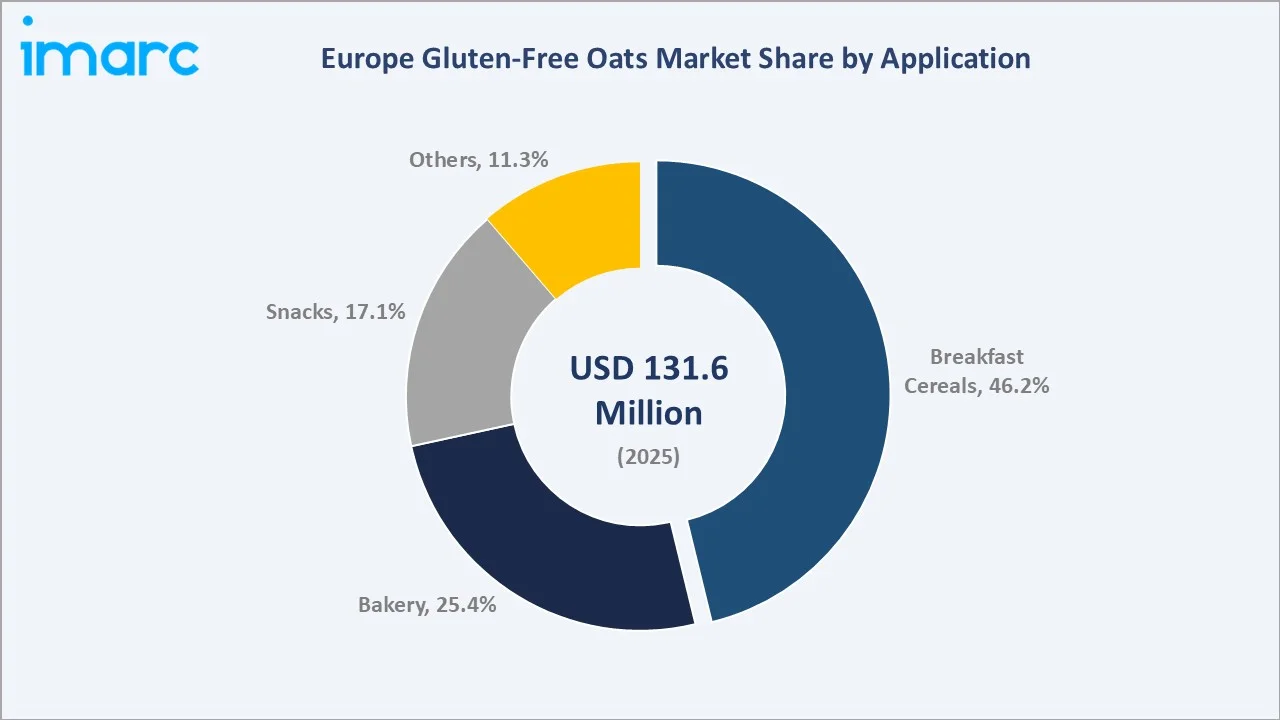
Bakery at 25.4% is growing rapidly through expanding certified gluten-free bread, biscuit, and cake product development incorporating oat flour and rolled oat ingredients. Snacks at 17.1% reflect the growing oat-based bar, granola cluster, and healthy snack product category.
Regional Market Insights
|
Region |
Share (2025) |
Key Europe Gluten-Free Oats Market Drivers & Characteristics |
|
Italy |
24.8% |
Leads through highest European celiac disease prevalence, national health system reimbursement for gluten-free foods, and well-developed specialist retail infrastructure for certified products. |
|
Germany |
20.3% |
Supported by strong health-consciousness, premium food culture, extensive organic and natural food retail network, and growing prevalence of gluten-related disorders across the population. |
|
United Kingdom |
18.7% |
Reflects high celiac disease awareness, Coeliac UK charity-driven education, strong supermarket gluten-free sections, and established brands including Nairn's Oatcakes and Mornflake Oats. |
|
France |
16.2% |
Growing health-conscious consumer base, expanding gluten-free product availability in mainstream supermarkets, and increasing physician awareness of celiac disease diagnosis driving demand growth. |
|
Spain |
10.9% |
Rising health awareness, growing foodservice gluten-free menu adoption, and expanding retail gluten-free product sections are supporting gradual market penetration across urban metropolitan areas. |
|
Others |
9.1% |
Includes Scandinavia (emerging oat producers and health-conscious consumers), Benelux, and Eastern Europe where celiac awareness is increasing alongside growing health food retail infrastructure. |
Italy's 24.8% market leadership is structurally supported by its national gluten-free food subsidy program for celiac patients, the highest celiac diagnosis rate in Europe, and a well-organized retail environment with dedicated gluten-free product sections in mainstream supermarkets.
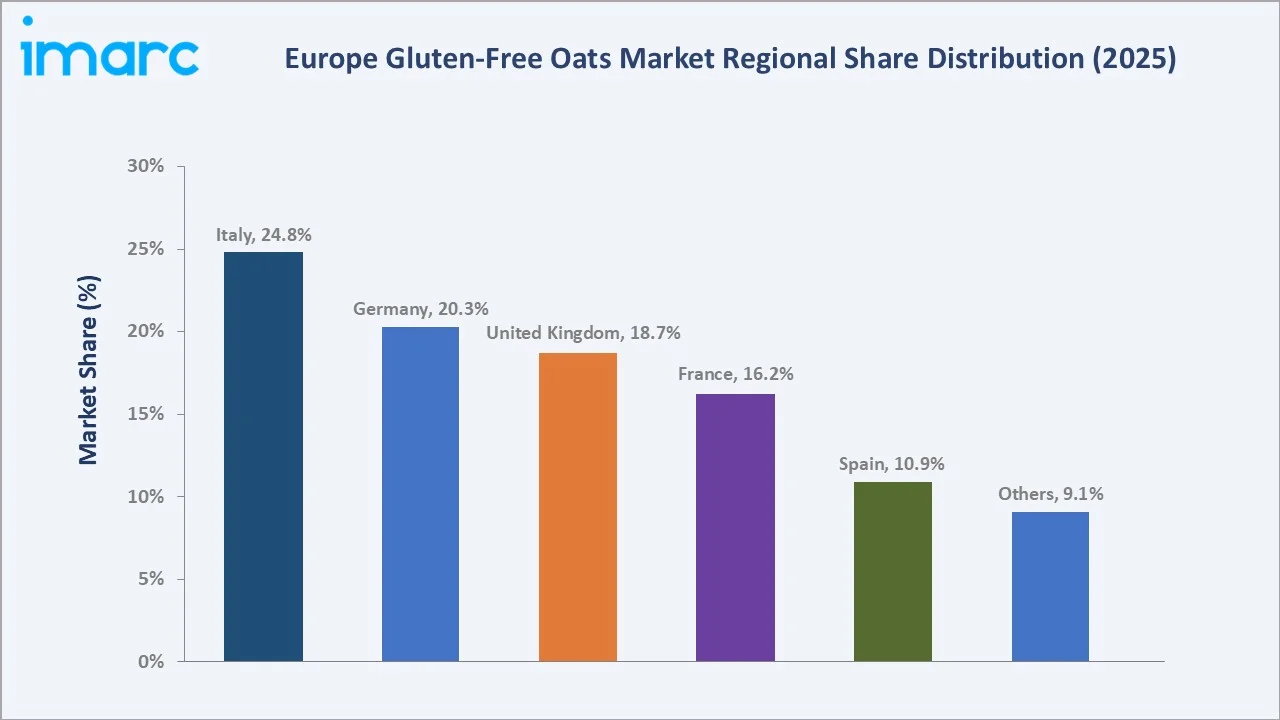
Germany at 20.3% reflects its premium food culture and strong organic/natural food retail infrastructure. The UK at 18.7% benefits from Coeliac UK's influential consumer education programs. France (16.2%) and Spain (10.9%) represent growing mid-tier markets, while Others (9.1%) highlight Scandinavia's dual role as both producer and consumer of certified gluten-free oats.
Competitive Landscape
The Europe gluten-free oats competitive landscape combines global food company scale with specialist certified oat producers and regional brands, creating a market where premium certification credentials and brand trust are as commercially important as production scale.
|
Company |
Key Brands |
Market Position |
Core Strength |
|
PepsiCo |
Quaker Gluten-Free Oats |
Market Leader |
Quaker leverages PepsiCo's global distribution scale and strong brand recognition to offer certified gluten-free oat products with broad retail coverage across European supermarket chains. |
|
Bob's Red Mill Natural Foods |
Bob's Red Mill Gluten-Free Oats |
Market Leader |
Bob's Red Mill builds strong brand authority through rigorous purity protocol farming standards, extensive allergen testing protocols, and premium clean-label positioning in health food retail across Europe. |
|
Glebe Farm |
PureOaty, Glebe Farm GF Oats |
Innovator |
Glebe Farm operates the UK's first certified gluten-free oat supply chain from dedicated farm to finished product, providing complete farm-to-fork traceability that resonates strongly with health-conscious European consumers. |
Key players include PepsiCo, Bob's Red Mill Natural Foods, Glebe Farm, and others.
Key Company Profiles
Bob's Red Mill Natural Foods
Bob's Red Mill Natural Foods is a leading US-based whole grain and specialty food company with a strong European market presence through its comprehensive certified gluten-free oat product range, renowned for its stringent purity protocol standards and clean-label positioning.
- Key Brands: Bob's Red Mill Gluten-Free Old Fashioned Rolled Oats, Gluten-Free Steel Cut Oats, Gluten-Free Oat Flour, and Gluten-Free Quick Cooking Oats.
- Strategic Focus: Maintaining premium brand positioning through best-in-class purity protocol farming standards, extensive third-party contamination testing, and transparent communication of gluten-free production credentials that resonate with health-conscious and celiac European consumers. Bob's Red Mill is expanding its European footprint through strategic retail partnerships with premium health food chains and growing D2C online channels, positioning its certified gluten-free oat range as the gold standard for contamination-tested gluten-free oat products in the European market.
Glebe Farm
Glebe Farm is a pioneering UK-based certified gluten-free food company operating the United Kingdom's first end-to-end certified gluten-free oat supply chain, from dedicated farm cultivation through to finished consumer products under its PureOaty brand.
- Key Brands: PureOaty (oat drink), Glebe Farm Gluten-Free Oat Flour, Glebe Farm Certified Gluten-Free Rolled Oats, and branded retail consumer packs.
- Strategic Focus: Differentiating through complete farm-to-fork transparency and vertical supply chain control, from dedicated certified gluten-free oat farming through on-farm processing to consumer-ready products. Glebe Farm is expanding ingredient supply relationships with European gluten-free food manufacturers seeking traceable certified gluten-free oat ingredients, while simultaneously building its direct-to-consumer retail brand presence across UK and European health food retail channels where provenance and production transparency are key purchase drivers.
Market Concentration Analysis
The Europe gluten-free oats market is moderately fragmented, combining global brand scale from the key players with specialist certified producers offering superior supply chain transparency. Neither segment commands absolute market dominance.
Market dynamics are shaped by two distinct competitive logics: global brands leveraging distribution scale and brand recognition, and specialist certified producers competing on supply chain purity credentials and consumer trust. The premium nature of gluten-free certification creates sustainable differentiation barriers for quality-focused incumbents.
Investment & Growth Opportunities
Highest Growth Segments
Online D2C subscription gluten-free oat delivery (~15% CAGR), functional nutrition oat formats (~13% CAGR), children's certified gluten-free oat products (~12.5% CAGR), combined organic and gluten-free certified oats (~14% CAGR), and Eastern European market expansion (~13% CAGR from low base) represent the highest-growth investment vectors through 2034.
Emerging Investment Opportunities
EU Farm to Fork strategy promoting reduced pesticide use and expanded organic farming creates structural alignment for purity protocol certified gluten-free oat farming investment in Nordic and British Isles agricultural regions. Premium price realization from combined organic and gluten-free certification creates compelling farm-level economics for early investors.
Investment Themes
- Purity protocol certified gluten-free oat farm development in Scandinavia and the British Isles: Demand for European-grown certified gluten-free oats is outpacing domestic supply, creating investment opportunity in certified farm development that can command premium grain prices from both food manufacturers and consumer brand owners seeking local provenance credentials.
- Digital traceability platform investment for gluten-free oat supply chain transparency: Blockchain-based farm-to-fork traceability systems providing consumers with real-time contamination testing data and supply chain origin information create measurable brand premium and consumer trust advantages that translate into pricing power and market share in premium European health food retail.
Future Market Outlook (2026-2034)
The Europe gluten-free oats market is projected to grow from USD 131.6 Million in 2025 to USD 146.4 Million in 2026, reaching USD 352.9 Million by 2034, registering a CAGR of 11.2% during 2026-2034.
Three structural forces define Europe gluten-free oats market growth through 2034: expanding celiac disease diagnosis driving medically necessitated baseline demand; voluntary health consumer adoption amplifying total addressable market; and continuous product innovation creating new consumption occasions beyond traditional breakfast formats.
Research Methodology
Primary Research
Primary research comprised structured interviews with European gluten-free food industry stakeholders including certified oat producers, food manufacturer procurement managers, retail category buyers, dietitians specializing in celiac disease, and consumer survey data from gluten-free diet adopters across Italy, Germany, the UK, France, and Spain.
Secondary Research
Secondary research encompassed European Food Safety Authority publications, Coeliac UK and AOECS reports, EU food labeling regulatory documents, company annual reports, specialty health food trade publications, and industry association data covering the European free-from food market.
Forecasting Models
Market revenue forecasts developed using a bottom-up consumer demand model: European celiac and gluten-sensitive population estimates by country, multiplied by average annual gluten-free oat product spending per capita, aggregated across all countries and adjusted for voluntary health consumer adoption trends.
Report Coverage:
| Report Features | Details |
|---|---|
| Base Year of the Analysis | 2025 |
| Historical Period | 2020-2025 |
| Forecast Period | 2026-2034 |
| Units | Million USD |
| Scope of the Report | Exploration of Historical Trends and Market Outlook, Industry Catalysts and Challenges, Segment-Wise Historical and Future Market Assessment:
|
| Product Types Covered | Rolled Oats, Steel Cut Oats, Oat Bran, Oat Flour, Others |
| Applications Covered | Breakfast Cereals, Bakery, Snacks, Others |
| End Uses Covered | HORECA, Retail |
| Distribution Channels Covered | Supermarkets and Hypermarkets, Convenience Stores, Online, Others |
| Countries Covered | Germany, United Kingdom, Italy, France, Spain, Others |
| Companies Covered | PepsiCo, Bob's Red Mill Natural Foods, Glebe Farm, etc. |
| Customization Scope | 10% Free Customization |
| Post-Sale Analyst Support | 10-12 Weeks |
| Delivery Format | PDF and Excel through Email (We can also provide the editable version of the report in PPT/Word format on special request) |
Frequently Asked Questions About the Europe Gluten-Free Oats Market Report
The Europe gluten-free oats market size is estimated at USD 146.4 Million in 2026, driven by rising celiac disease prevalence, growing health-consciousness, and expanding certified gluten-free oat product availability across European retail and foodservice channels.
The Europe gluten-free oats market grows at 11.2% CAGR during 2026-2034, reaching USD 352.9 Million by 2034. Growth is sustained by celiac disease expansion, health food trends, product innovation in premium oat formats, and growing e-commerce distribution of certified gluten-free products.
Rolled Oats lead at 41.8% through their versatile utility across breakfast, baking, and snacking applications. Their broad consumer familiarity and use in muesli, granola, porridge, and bakery products makes them the dominant certified gluten-free oat format across European retail markets.
Breakfast Cereals lead at 46.2% through strong retail positioning of certified gluten-free muesli, granola, and instant porridge products. The breakfast occasion's high purchase frequency and growing health-conscious consumer preference for certified allergen-free morning meal options drive this segment's dominant market share.
Italy leads at 24.8% through the highest celiac disease prevalence in Europe, national health system reimbursement programs for gluten-free food purchases by diagnosed patients, and a highly developed specialist gluten-free retail infrastructure across major Italian supermarket chains.
Leading companies include PepsiCo, Bob's Red Mill Natural Foods, Glebe Farm, and others.
Need more help?
- Speak to our experienced analysts for insights on the current market scenarios.
- Include additional segments and countries to customize the report as per your requirement.
- Gain an unparalleled competitive advantage in your domain by understanding how to utilize the report and positively impacting your operations and revenue.
- For further assistance, please connect with our analysts.
 Request Customization
 Speak to an Analyst
 Request Brochure
 Inquire Before Buying
Benefits of Customization
- Personalize this research
- Triangulate with your data
- Get data as per your format and definition
- Gain a deeper dive into a specific application, geography, customer, or competitor
- Any level of personalization
Get in Touch With Us
UNITED STATES
Phone: +1-201-971-6302
INDIA
Phone: +91-120-433-0800
UNITED KINGDOM
Phone: +44-753-714-6104
Email: [email protected]
Client Testimonials



















Related Reports

Choose your plan
*Please note that the prices mentioned below are starting prices for each bundle type. Kindly contact our team for further details.*
Single User License
- 1 User License, Access on 2 Devices
- PDF Report + Excel Dataset (Password Protected)
- Lifetime Access
- No Printing Rights
- 10% Free Report Customization
- 10–12 Weeks of Analyst Support
Five User License
- Access for 5 Users, 2 Devices per User
- PDF Report + Excel Dataset (Password Protected)
- Lifetime Access
- Dedicated Account Manager
- 12–14 Weeks of Analyst Support
- No Printing Rights
- 15% Free Report Customization
- 25% Discount on Your Next Purchase
Corporate User License
- Unlimited User Access (Within Your Organization)
- PDF Report + Excel Dataset
- Lifetime Access
- Dedicated Account Manager
- 14–20 Weeks of Analyst Support
- No Printing Rights
- 20% Free Report Customization
- 30% Discount on Your Next Purchase
Essential Insights
What's included:
3 reports
- Lifetime Access
- PDF Reports
- Excel Datasets
- 2 Weeks of Free Analyst Support
- 2 User Licenses
- Access on 2 Devices
- Printing Rights
- Complimentary PowerPoint (PPT) Version
- Complimentary License Upgrade
Professional Access
What's included:
5 reports
- Lifetime Access
- PDF Reports
- Excel Datasets
- 8 Weeks of Free Analyst Support
- 2 User Licenses
- Access on 2 Devices
- Printing Rights
- Complimentary PowerPoint (PPT) Version
- Complimentary License Upgrade
Business Advantage
What's included:
8 reports
- Lifetime Access
- PDF Reports
- Excel Datasets
- 14 Weeks of Free Analyst Support
- 2 User Licenses
- Access on 2 Devices
- Printing Rights
- Complimentary PowerPoint (PPT) Version
- Complimentary License Upgrade
Enterprise Intelligence
What's included:
10 reports
- Lifetime Access
- PDF Reports
- Excel Datasets
- 20 Weeks of Free Analyst Support
- 2 User Licenses
- Access on 2 Devices
- Printing Rights
- Complimentary PowerPoint (PPT) Version
- Complimentary License Upgrade