
Indian Animal Husbandry Market Size, Share, Trends and Forecast by Segment and Region, 2026-2034
Indian Animal Husbandry Market Size, Share, Trends & Forecast (2026-2034)
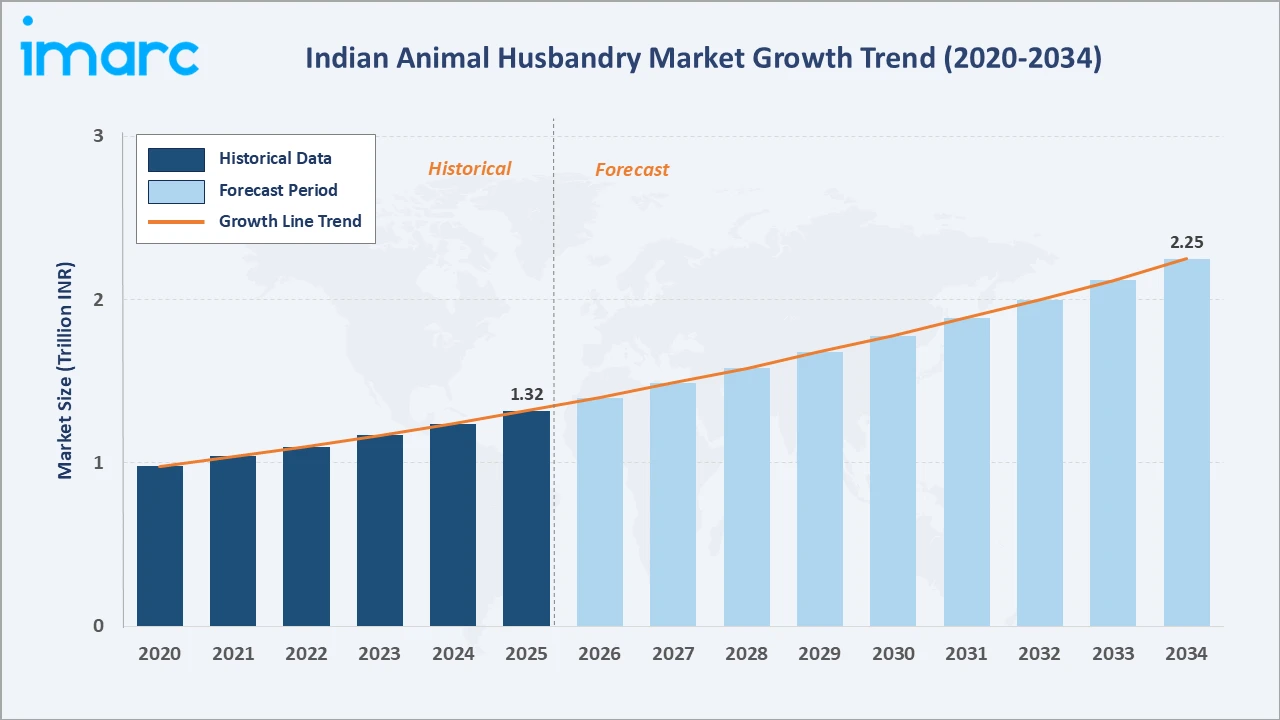
The Indian animal husbandry market grew from INR 1.32 Trillion in 2025 to INR 1.40 Trillion in 2026 and is projected to reach INR 2.25 Trillion by 2034, growing at a CAGR of 6.10% during 2026-2034. Rising protein demand, government schemes, and organized poultry and aquaculture are supporting growth.
Meat, eggs, aquaculture, and allied products such as hides and wool continue to benefit from investment in breeding, feed, processing, and cold chains. Sheep and goat meat dominates segments at 28.0%. North India commands 30.0% of national market share.
Market Snapshot
| Metric | Value |
|---|---|
| Base Year Market Size (2025) | INR 1.32 Trillion |
| Market Size (2026) | INR 1.40 Trillion |
| Forecast Market Size (2034) | INR 2.25 Trillion |
| CAGR (2026-2034) | 6.10% |
| Base Year | 2025 |
| Historical Period | 2020-2025 |
| Forecast Period | 2026-2034 |
| Dominant Segment | Sheep and Goat Meat (28.0%, 2025) |
| Leading Region | North India (30.0%, 2025) |
The Indian animal husbandry market size increased from INR 0.98 Trillion in 2020 to INR 1.32 Trillion in 2025 and is estimated to reach INR 1.40 Trillion in 2026. The market is further expected to grow to INR 1.78 Trillion by 2030 and INR 2.25 Trillion by 2034.
To get more information on this market, Request Sample
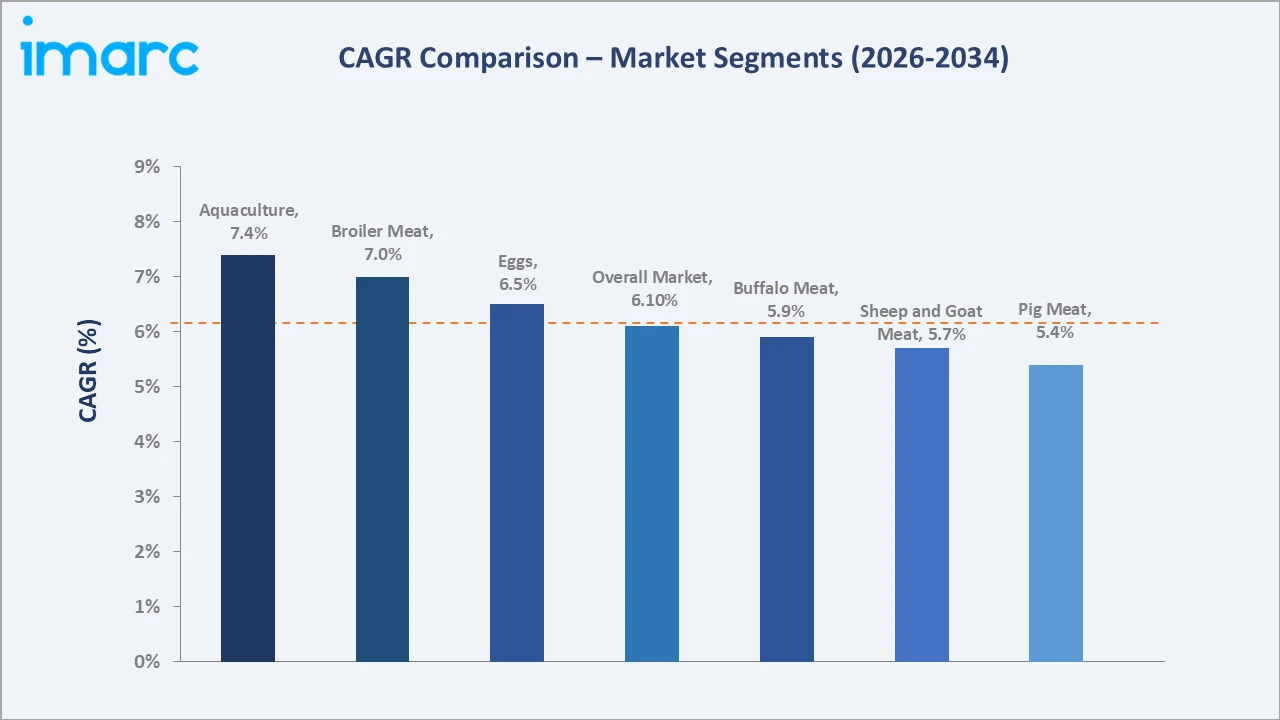
Aquaculture is expected to grow fastest at ~7.4% CAGR, supported by shrimp exports and inland fish farming. Broiler meat follows at ~7.0% CAGR as organized poultry integrators and branded chicken expand across cities.
Executive Summary
The Indian animal husbandry market expanded from INR 1.32 Trillion in 2025 to an estimated INR 1.40 Trillion in 2026. India is one of the world’s largest producers of eggs, buffalo meat, and fish, and livestock provides income for millions of rural households.
Government schemes are supporting breeding, feed, disease control, and processing infrastructure. The market is projected to reach INR 2.25 Trillion by 2034. Sheep and goat meat at 28.0% leads segments. North India leads regions at 30.0%.
Key Market Insights
| Insight | Data |
|---|---|
| Dominant Segment | Sheep and Goat Meat - 28.0% share (2025) |
| Leading Region | North India - 30.0% share (2025) |
| Market Opportunity | Organized poultry and aquaculture; meat and seafood exports; branded processed protein; cold chain and feed |
Key Analytical Observations Supporting the Above Data:
- Sheep and Goat Meat at 28.0%: Sheep and goat meat dominates because mutton and chevon are widely preferred red meats across Indian states, commanding premium prices and strong demand during festivals and celebrations.
- North India at 30.0%: North India leads due to large livestock populations in Uttar Pradesh, Rajasthan, and Punjab, along with major meat processing and export clusters. Uttar Pradesh is a major center for buffalo meat processing. Rajasthan has large sheep and goat populations.
Punjab and Haryana have strong poultry and dairy-linked livestock sectors. Buffalo populations support both dairy and meat production in the region.
Indian Animal Husbandry Market Overview
Animal husbandry covers the rearing of livestock, poultry, and fish for meat, eggs, wool, hides, and other products. It includes sheep and goats, buffaloes, pigs, poultry, aquaculture, and emerging areas such as insect farming. The sector supports nutrition, rural incomes, and exports across India.
Livestock also provides manure, draught power, and income security for rural families. Allied products such as hides and wool support downstream industries. Aquaculture and poultry are the most commercialized segments.
The industry ecosystem links input suppliers, farmers and integrators, processors and exporters, cold chain and distribution players, government agencies, and consumers. Macroeconomic factors include income growth, urbanization, feed prices, rural employment, and export demand, all of which shape the market. Livestock contributes significantly to India’s agricultural output and rural livelihoods.
Many landless and small farmers depend on livestock for income. Women play a significant role in livestock rearing across rural India. Animal husbandry is often a key safety net during crop failures.
Market Dynamics
To evaluate market opportunities, Request Sample
Market Drivers
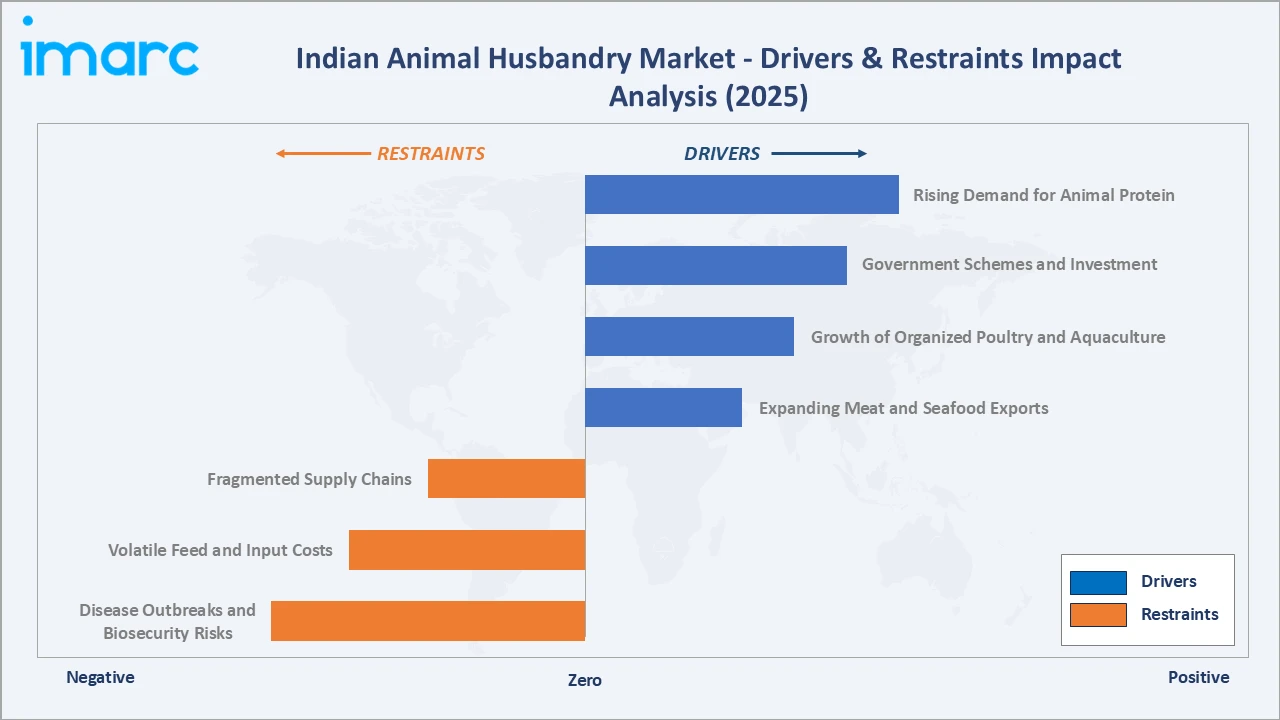
- Rising Demand for Animal Protein: Growing incomes, urbanization, and changing diets are increasing consumption of meat, eggs, and fish across India.
- Government Schemes and Investment: National Livestock Mission subsidies of up to 50% for establishing poultry farms and hatcheries, along with Animal Husbandry Infrastructure Development Fund investments, are accelerating commercial-scale expansion.
- Growth of Organized Poultry and Aquaculture: Integrated poultry companies and modern fish farms are improving productivity, quality, and supply reliability. Contract farming models link smallholder farmers with integrators that provide chicks, feed, veterinary support, and assured purchase of birds.
- Expanding Meat and Seafood Exports: India’s buffalo meat and shrimp exports continue to grow, supported by processing investments and international demand. Export-oriented processing plants follow strict hygiene and quality standards to meet buyer requirements in Asia, the Middle East, and other regions.
Market Restraints
- Disease Outbreaks and Biosecurity Risks: Avian influenza, African swine fever, and other diseases can disrupt production and trade. Outbreaks often lead to culling, movement restrictions, and temporary export bans, causing losses for farmers and processors. Vaccination programs and improved farm biosecurity are helping reduce these risks.
- Volatile Feed and Input Costs: Fluctuating prices of maize, soybean meal, and fishmeal affect farmer and integrator margins. Weather events and global commodity markets can sharply affect feed availability and prices. Higher feed costs often lead to lower production or higher retail prices.
- Fragmented Supply Chains: Smallholder production and limited cold chains lead to losses and inconsistent quality. Many farmers sell through informal markets with limited price transparency. Investment in organized markets and cold chains can reduce these challenges. Farmer producer organizations are also improving market access for smallholders.
Market Opportunities
- Branded and Processed Protein: Ready-to-cook and frozen meat and egg products are gaining popularity in cities. Quick commerce platforms are expanding fresh meat and egg delivery in major cities. Frozen and marinated products appeal to busy urban households. Restaurants and cloud kitchens also prefer consistent processed supplies.
- Insect Farming and Alternative Feed: Insect protein offers a sustainable feed ingredient for poultry and aquaculture.
Market Challenges
- Animal Welfare and Environmental Concerns: Producers face growing expectations on welfare, waste, and emissions. Better practices can improve productivity while addressing these concerns. Waste management and biogas solutions offer additional value for farms. Carbon and sustainability programs may create new incentives for producers.
- Regulatory Compliance: Meeting food safety and export standards requires investment. Traceability and certification are increasingly important for exports. Domestic food safety enforcement is also strengthening. Compliance costs can be challenging for small processors. Modernization of slaughterhouses is a key regulatory priority. Licensed facilities improve hygiene and support export compliance.
Emerging Market Trends
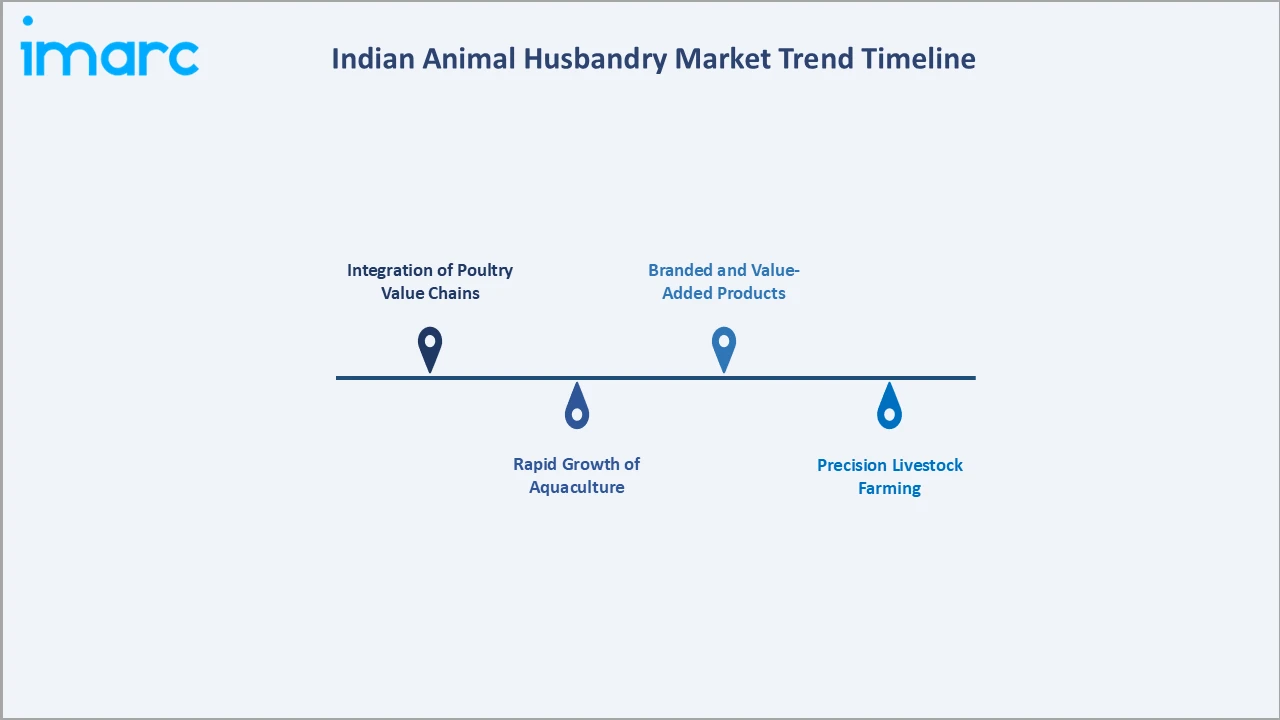
1. Integration of Poultry Value Chains
Integrators are combining feed, hatcheries, contract farming, and processing to improve efficiency and quality. Integration also strengthens biosecurity and disease control. Leading integrators operate across several states with standardized practices. Integration also enables consistent quality for branded products.
2. Rapid Growth of Aquaculture
Shrimp and inland fish farming are expanding with better feed, hatcheries, and export-oriented processing. Andhra Pradesh, Gujarat, and West Bengal are key aquaculture states. Freshwater fish farming is also growing in northern and eastern states. Government programs support hatcheries, feed mills, and fish markets.
Cage culture and biofloc technologies are expanding fish production. Reservoir and pond fisheries offer large untapped potential. Ornamental fish and seaweed farming are niche growth areas. Coastal states are investing in modern fishing harbors.
3. Branded and Value-Added Products
Companies are launching branded chicken, eggs, and processed meat products for urban consumers. Branded eggs with nutrition claims are also gaining popularity. Companies are investing in modern retail outlets and online channels. Brand trust is important for consumers concerned about hygiene and quality.
Chilled and frozen chicken sales are growing in organized retail. Online delivery has made branded meat more convenient. Subscription and scheduled deliveries are attracting regular customers. Online channels also provide product information and recipes.
4. Precision Livestock Farming
Digital tools, sensors, and data analytics are improving animal health monitoring and farm productivity across India. Larger poultry and dairy-linked farms are adopting automated feeding, climate-controlled housing, and mobile veterinary apps, while government programs promote digital livestock identification and health records, supporting early disease detection, traceability, and better feed efficiency.
Industry Value Chain Analysis
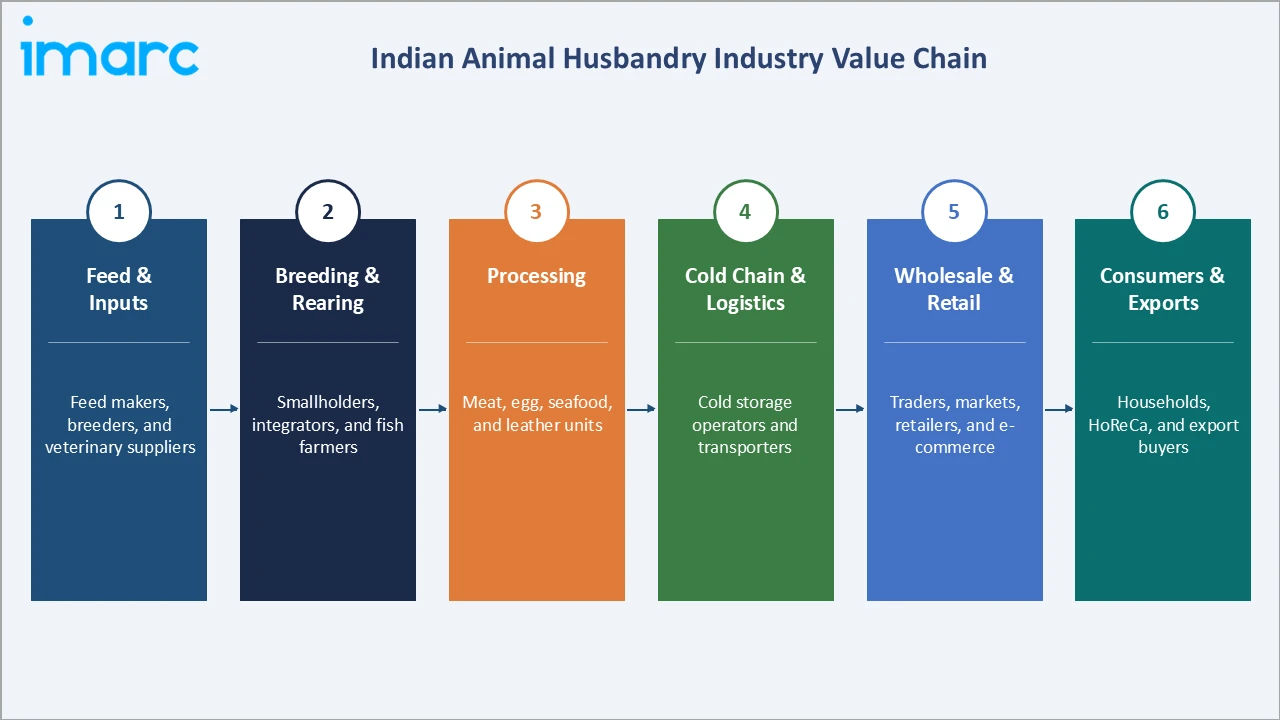
The Indian animal husbandry value chain spans feed and inputs, breeding and rearing, processing, cold chain and logistics, wholesale and retail, and consumers and exports. Value is shifting toward organized processing and branded products. Smallholders remain central to production across most segments. Cooperative models support smallholders in some regions.
Women’s self-help groups play an important role in small livestock rearing. Goat and backyard poultry farming offer income for landless households. These activities require low investment and provide quick returns. Microfinance supports these small-scale livestock enterprises. Credit access remains a key need for small farmers.
| Stage | Key Participants |
|---|---|
| Feed & Inputs | Feed manufacturers, breeders, and veterinary suppliers |
| Breeding & Rearing | Smallholder farmers, integrators, and fish farmers |
| Processing | Meat plants, egg processors, seafood, and leather units |
| Cold Chain & Logistics | Cold storage operators and transporters |
| Wholesale & Retail | Traders, wholesale markets, retailers, and e-commerce |
| Consumers & Exports | Households, HoReCa, and export buyers |
Feed and inputs is the most consequential stage of the chain. Feed accounts for the largest share of production costs and strongly influences productivity and animal health. Processing and cold chains also determine product quality and market reach. Wholesale and retail channels connect producers with consumers nationwide.
Exports add value through processing and international market access. Retail modernization is gradually improving product presentation and safety. Consumers increasingly value hygienic and traceable products. Packaging innovations extend shelf life and reduce wastage. Vacuum-packed products are popular in modern retail.
Technology Landscape in the Indian Animal Husbandry Industry
Improved Breeding and Genetics
Artificial insemination, improved breeds, and genetic selection increase productivity in livestock and poultry. Government breeding programs support indigenous and improved breeds. Better genetics improve growth rates, egg production, and disease resistance. Breeding programs for indigenous goats and poultry support rural farmers. Fish seed improvement programs are boosting aquaculture yields.
Disease-resistant shrimp broodstock improves farm success rates. Hatchery certification improves seed quality for farmers. Specific pathogen-free broodstock is increasingly used.
Feed Formulation and Nutrition
Balanced feed, specialty nutrition, and additives improve growth rates and feed efficiency. Locally sourced ingredients help reduce feed costs. Specialty feeds for aquaculture are a fast-growing category. Feed additives and probiotics improve gut health and reduce antibiotic use. Pellet feed for fish is replacing traditional feeding practices.
Better feed conversion ratios lower production costs. Extruded floating feeds reduce water pollution in ponds. Water quality management improves survival rates.
Digital Farm Management and Traceability
Mobile apps, sensors, and traceability systems help farmers manage health, feeding, and product quality. Traceability is particularly valuable for export-oriented producers. Blockchain and QR code labels are being tested for product traceability. Digital records also support access to credit and insurance. Cold chain monitoring helps maintain product quality during transport.
Reefer vehicles and cold storage capacity are expanding. Government support for integrated cold chains is helping close gaps. Private investment in cold storage is also rising.
Market Segmentation Analysis
The report covers the following segments:
| Segment Category | Leading Segment | Market Share | Year |
|---|---|---|---|
| Segment | Sheep and Goat Meat | 28.0% | 2025 |
| Region | North India | 30.0% | 2025 |

By Segment
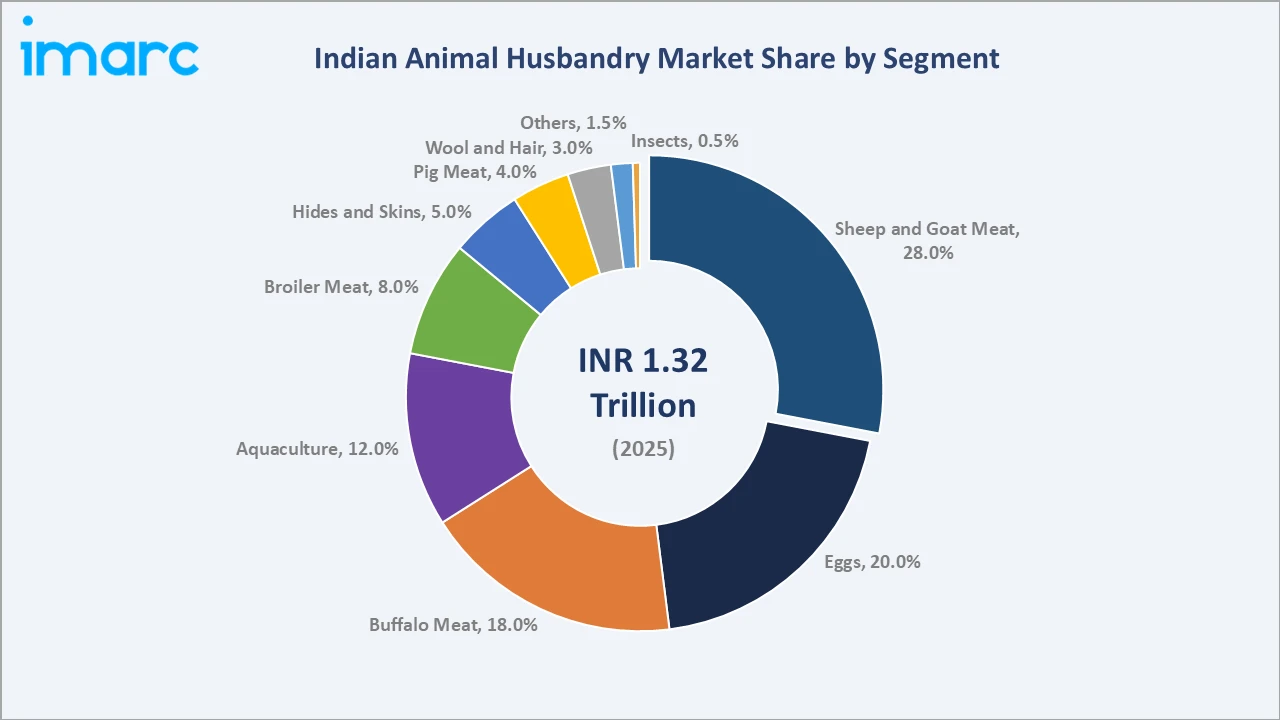
Sheep and goat meat leads at 28.0% (2025), followed by eggs at 20.0% and buffalo meat at 18.0%. These products form the core of India’s animal protein consumption and exports. Mutton and chevon command premium prices across many states. Eggs are among the most affordable sources of animal protein.
To access detailed market analysis, Request Sample
Buffalo meat is a major export product from India. Aquaculture is driven by shrimp exports and domestic fish demand. Broiler meat benefits from short production cycles and organized integration. Eggs benefit from steady year-round demand. Buffalo meat benefits from strong export demand.
Aquaculture at 12.0% grows fastest at ~7.4% CAGR, and broiler meat at 8.0% at ~7.0%. Hides and skins at 5.0%, pig meat at 4.0%, wool and hair at 3.0%, others at 1.5%, and insects at 0.5% complete the market.
Insect farming is an emerging segment focused on feed and food applications. Hides, skins, and wool support India’s leather and textile industries. Pig meat demand is concentrated in the Northeast and some southern states. Others include minor livestock products and by-products. Together these smaller segments add diversity to the market.
Regional Market Insights
| Region | Share (2025) | Key Indian Animal Husbandry Market Drivers & Characteristics |
|---|---|---|
| North India | 30.0% | Large livestock populations and meat export clusters. |
| South India | 28.0% | Strong poultry, egg, and aquaculture production. |
| West India | 24.0% | Organized poultry, dairy-linked livestock, and processing. |
| East India | 18.0% | Inland fisheries and high fish consumption. |
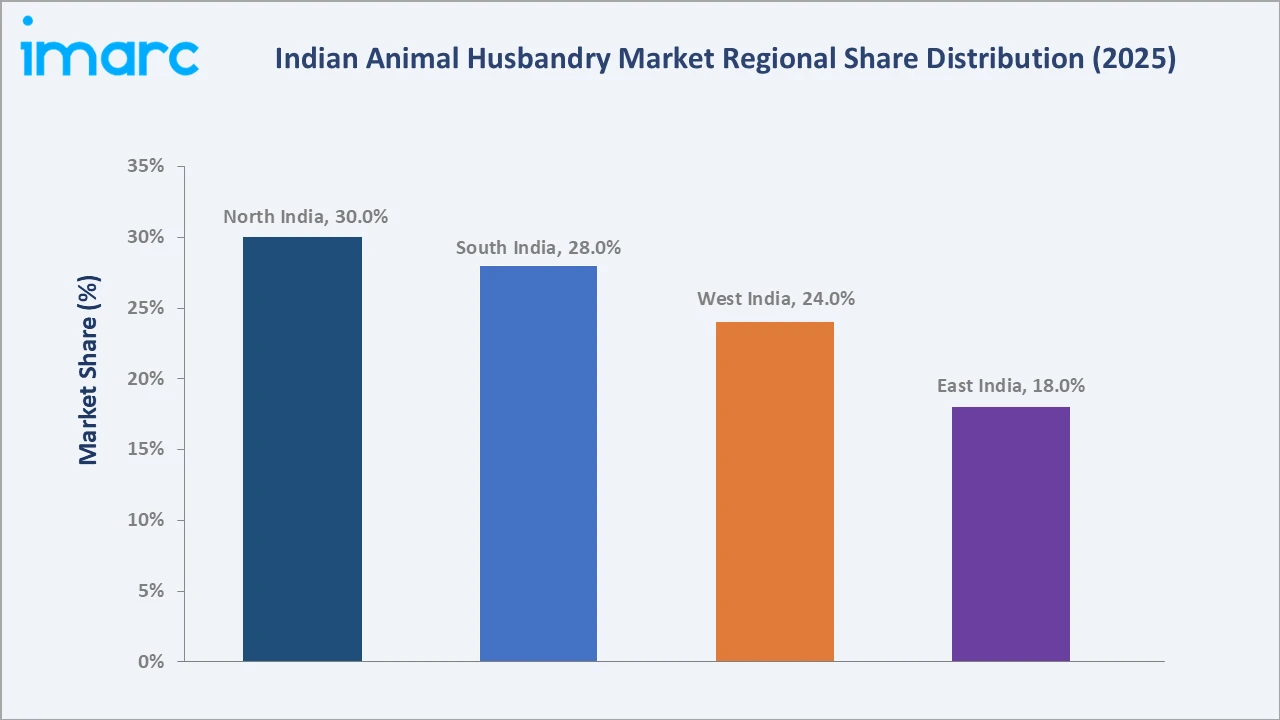
North India's 30.0% market leadership reflects large livestock populations in Uttar Pradesh, Rajasthan, and Punjab, along with major buffalo meat processing clusters. South India's 28.0% reflects strong poultry, egg, and aquaculture production in Andhra Pradesh, Tamil Nadu, and Telangana. Tamil Nadu’s Namakkal region is a major egg production hub.
Andhra Pradesh leads in shrimp aquaculture. Telangana and Karnataka have growing poultry industries.
West India's 24.0% reflects organized poultry and processing in Maharashtra and Gujarat. East India's 18.0% is the smallest share, but high fish consumption and inland fisheries in West Bengal and Odisha support steady growth.
Competitive Landscape
The Indian animal husbandry market includes integrated poultry companies, feed manufacturers, meat exporters, aquaculture firms, and a large number of smallholder producers. Competition centers on integration, feed efficiency, biosecurity, brands, and export capabilities. Smallholders and local traders remain important in red meat and fish supply.
International buyers favor suppliers with strong quality systems. Regional brands compete through local presence and freshness. Exporters compete on quality certifications and buyer relationships. Feed companies compete on quality, price, and technical service. Distribution reach in rural areas is a key advantage. Long-term relationships with farmers support stable supply.
| Company | Key Brands | Market Position | Core Strength |
|---|---|---|---|
| Suguna Foods Private Limited | Suguna, Delfrez | Market Leader | Large integrated broiler and contract farming network. |
| Venkys India | Venky’s | Market Leader | Integrated poultry, feed, and processed foods. |
| Allanasons Pvt Ltd | Allana | Strong Challenger | Leading buffalo meat exporter. |
| Godrej Agrovet | Real Good Chicken, Yummiez | Strong Challenger | Animal feed and processed poultry. |
| Avanti Feeds Limited | Avanti | Innovator | Shrimp feed and seafood processing. |
| IB Group | ABIS | Niche Player | Integrated poultry in central India. |
| Baramati Agro | Baramati Agro | Niche Player | Poultry and feed in Maharashtra. |
The most important competitive dynamic is vertical integration. Companies that control feed, breeding, farming, and processing achieve better cost, quality, and supply reliability.
Key Company Profiles
Godrej Agrovet
Godrej Agrovet is a diversified agribusiness company with leading positions in animal feed, poultry and processed foods, dairy, and crop protection.
- Key Brands: Real Good Chicken, Yummiez, Godrej Jersey.
- Recent Developments: During 2025-26, Godrej Agrovet launched Dhanalaxmi G, a premium cattle feed, and Bypro Plus, an enhanced protein formulation.
- Strategic Focus: Shifting its foods business toward branded value-added products such as frozen chicken and momos.
Avanti Feeds Limited
Avanti Feeds Limited is India’s most vertically integrated aquaculture company, with feed mills, hatcheries, and shrimp processing facilities.
- Key Brands: Avanti, Avanti Delights, Avant Furst.
- Recent Developments: In April 2026, Avanti Feeds approved an investment in Thai Union Feedmill Ecuador, expanding into South American aquaculture with its joint venture partner.
- Strategic Focus: Using its new 7,000 MT Krishnapuram shrimp processing plant to expand value-added products.
Suguna Foods Private Limited
Suguna Foods Private Limited is one of India’s largest integrated poultry companies, operating hatcheries, feed mills, contract farms, and processing plants.
- Key Brands: Suguna, Delfrez.
- Recent Developments: Suguna launched the Delfrez brand to sell its products online and through its own retail channel.
- Strategic Focus: Expanding poultry infrastructure in northern and eastern India, including hatcheries, processing plants, and feed mills.
Market Concentration Analysis
The Indian animal husbandry market is highly fragmented, with millions of smallholder farmers, while organized players lead poultry integration, feed, aquaculture, and meat exports.
Market concentration is gradually increasing as integrators expand contract farming and branded products gain share in cities. Export-oriented meat and seafood processing is relatively concentrated among large firms. Branded products remain a small but growing share of total sales. Smallholder dominance limits consolidation in red meat and fish.
Large companies are expanding through new plants and acquisitions. Joint ventures with global firms bring technology and market access.
Investment & Growth Opportunities
Highest Growth Segments
Aquaculture (~7.4% CAGR through shrimp and inland fish), broiler meat (~7.0% CAGR through organized poultry), eggs (~6.5% CAGR through protein demand), and East India (~6.6% CAGR through fisheries) represent the highest-growth investment areas through 2034.
Emerging Investment Opportunities
Cold chains, processing plants, and branded protein products are among the most promising opportunities, reducing losses and adding value. Feed manufacturing and veterinary services also offer attractive opportunities. Insect protein and alternative feeds offer long-term potential. Veterinary pharmaceuticals and diagnostics are growing alongside the sector.
Livestock insurance and credit services are also expanding. Equipment for poultry housing and fish farming is another growth area. Skill development for farm workers also offers social impact. Training builds skills.
Investment Themes
- Feed and nutrition: Improves productivity and margins.
- Processing and exports: Meet rising global demand.
Future Market Outlook (2026-2034)
The Indian animal husbandry market is projected to grow from INR 1.32 Trillion in 2025 to INR 1.40 Trillion in 2026, reaching INR 2.25 Trillion by 2034, registering a CAGR of 6.10% during 2026-2034.
The anchor value of INR 1.78 Trillion in 2030 marks a point at which organized supply chains should be widespread. Branded and processed products should account for a larger share of urban sales. Exports should continue to grow with improved processing standards. Digital farm management should be more widely adopted.
Insect protein may become a recognized feed ingredient. Precision tools should improve productivity on larger farms. Climate-resilient breeds will gain importance.
Three structural forces define Indian animal husbandry market growth through 2034 protein demand; government support; and organized production. Together, these forces support steady growth across segments and regions. Disease control and feed security will remain critical for long-term growth. Investment in infrastructure and skills will support productivity gains.
Exports and branded products will continue to shape industry structure. Policy continuity will be important for investor confidence. Rural infrastructure development will further support market growth.
Research Methodology
Primary Research
Primary research comprised structured interviews with poultry integrators, feed manufacturers, meat exporters, fish farmers, processors, and government officials across India. Discussions covered production volumes, pricing trends, feed costs, disease management, and regional demand patterns across meat, eggs, aquaculture, and allied products.
Secondary Research
Secondary research covered government statistics, livestock census data, Department of Animal Husbandry and Dairying and Department of Fisheries publications, company reports, and industry databases. Over 50 credible sources were reviewed and cross-checked, and historical production, trade, and price data were used to establish market trends from 2020 to 2025.
Forecasting Models
Market revenue forecasts were developed using a production-based model, multiplying output by segment and region by average prices and aggregating results to total market value. Assumptions on protein demand, feed prices, exports, and government schemes were validated with experienced industry experts, veterinarians, and livestock producers across India.
Report Coverage:
| Report Features | Details |
|---|---|
| Base Year of the Analysis | 2025 |
| Historical Period | 2020-2025 |
| Forecast Period | 2026-2034 |
| Units | Trillion INR |
| Scope of the Report | Exploration of Historical Trends and Market Outlook, Industry Catalysts and Challenges, Segment-Wise Historical and Future Market Assessment:
|
| Segments Covered | Sheep and Goat Meat, Buffalo Meat, Hides and Skins, Pig Meat, Wool and Hair, Broiler Meat, Eggs, Aquaculture, Insects, Others |
| Regions Covered | North India, South India, East India, West India |
| Companies Covered | Suguna Foods Private Limited, Venkys India, Allanasons Pvt Ltd, Godrej Agrovet, Avanti Feeds Limited, IB Group, Baramati Agro, etc. |
| Customization Scope | 10% Free Customization |
| Post-Sale Analyst Support | 10-12 Weeks |
| Delivery Format | PDF and Excel through Email (We can also provide the editable version of the report in PPT/Word format on special request) |
Frequently Asked Questions About the Indian Animal Husbandry Market Report
The Indian animal husbandry market size is estimated at INR 1.40 Trillion in 2026, up from INR 1.32 Trillion in 2025. Growth is supported by rising protein demand, government schemes for livestock and fisheries, and expansion of organized poultry and aquaculture.
The market is expected to grow at a CAGR of 6.10% during 2026-2034, reaching INR 2.25 Trillion by 2034. Growth reflects rising consumption of meat, eggs, and fish, along with investment in feed, breeding, processing, and cold chains.
Sheep and goat meat leads with a 28.0% share in 2025, followed by eggs at 20.0% and buffalo meat at 18.0%. These products are central to Indian diets and exports, while aquaculture is the fastest-growing segment.
Aquaculture is growing fastest at about 7.4% CAGR, supported by shrimp exports, inland fish farming, and better feed and hatcheries. Broiler meat follows at about 7.0% as organized poultry integrators expand.
North India leads with a 30.0% share in 2025, driven by large livestock populations and meat processing clusters. South India follows at 28.0%, supported by strong poultry, egg, and aquaculture production.
Leading companies include Suguna Foods Private Limited, Venkys India, Allanasons Pvt Ltd, Godrej Agrovet, Avanti Feeds Limited, IB Group, and Baramati Agro, among others. These players compete on integration, feed efficiency, biosecurity, and brands.
The market is projected to reach approximately INR 1.78 Trillion by 2030. By then, organized poultry, aquaculture, and cold chain networks should account for a larger share of production and distribution across India.
Key trends include integration of poultry value chains, rapid growth of aquaculture, branded and value-added products, and precision livestock farming. Digital tools are also improving animal health monitoring and farm productivity.
Need more help?
- Speak to our experienced analysts for insights on the current market scenarios.
- Include additional segments and countries to customize the report as per your requirement.
- Gain an unparalleled competitive advantage in your domain by understanding how to utilize the report and positively impacting your operations and revenue.
- For further assistance, please connect with our analysts.
 Request Customization
 Speak to an Analyst
 Request Brochure
 Inquire Before Buying
Benefits of Customization
- Personalize this research
- Triangulate with your data
- Get data as per your format and definition
- Gain a deeper dive into a specific application, geography, customer, or competitor
- Any level of personalization
Get in Touch With Us
UNITED STATES
Phone: +1-201-971-6302
INDIA
Phone: +91-120-433-0800
UNITED KINGDOM
Phone: +44-753-714-6104
Email: [email protected]
Client Testimonials

















Related Reports

Choose your plan
*Please note that the prices mentioned below are starting prices for each bundle type. Kindly contact our team for further details.*
Single User License
- 1 User License, Access on 2 Devices
- PDF Report + Excel Dataset (Password Protected)
- Lifetime Access
- No Printing Rights
- 10% Free Report Customization
- 10–12 Weeks of Analyst Support
Five User License
- Access for 5 Users, 2 Devices per User
- PDF Report + Excel Dataset (Password Protected)
- Lifetime Access
- Dedicated Account Manager
- 12–14 Weeks of Analyst Support
- No Printing Rights
- 15% Free Report Customization
- 25% Discount on Your Next Purchase
Corporate User License
- Unlimited User Access (Within Your Organization)
- PDF Report + Excel Dataset
- Lifetime Access
- Dedicated Account Manager
- 14–20 Weeks of Analyst Support
- No Printing Rights
- 20% Free Report Customization
- 30% Discount on Your Next Purchase
Essential Insights
What's included:
3 reports
- Lifetime Access
- PDF Reports
- Excel Datasets
- 2 Weeks of Free Analyst Support
- 2 User Licenses
- Access on 2 Devices
- Printing Rights
- Complimentary PowerPoint (PPT) Version
- Complimentary License Upgrade
Professional Access
What's included:
5 reports
- Lifetime Access
- PDF Reports
- Excel Datasets
- 8 Weeks of Free Analyst Support
- 2 User Licenses
- Access on 2 Devices
- Printing Rights
- Complimentary PowerPoint (PPT) Version
- Complimentary License Upgrade
Business Advantage
What's included:
8 reports
- Lifetime Access
- PDF Reports
- Excel Datasets
- 14 Weeks of Free Analyst Support
- 2 User Licenses
- Access on 2 Devices
- Printing Rights
- Complimentary PowerPoint (PPT) Version
- Complimentary License Upgrade
Enterprise Intelligence
What's included:
10 reports
- Lifetime Access
- PDF Reports
- Excel Datasets
- 20 Weeks of Free Analyst Support
- 2 User Licenses
- Access on 2 Devices
- Printing Rights
- Complimentary PowerPoint (PPT) Version
- Complimentary License Upgrade