How the Camping Tent Market is Shaping the Global Outdoor Industry: Trends, Challenges, and Opportunities
Introduction:
The global camping tent market has evolved into a significant segment within the outdoor and recreational equipment industry, reflecting changing consumer preferences, sustainability priorities, and lifestyle shifts. Traditionally associated with adventure tourism and leisure activities, camping tents have now become integral to outdoor experiences that emphasize mobility, comfort, and environmental awareness. Their growing relevance is driven by a blend of technological innovation, material advancements, and an expanding base of consumers seeking nature-driven recreation.
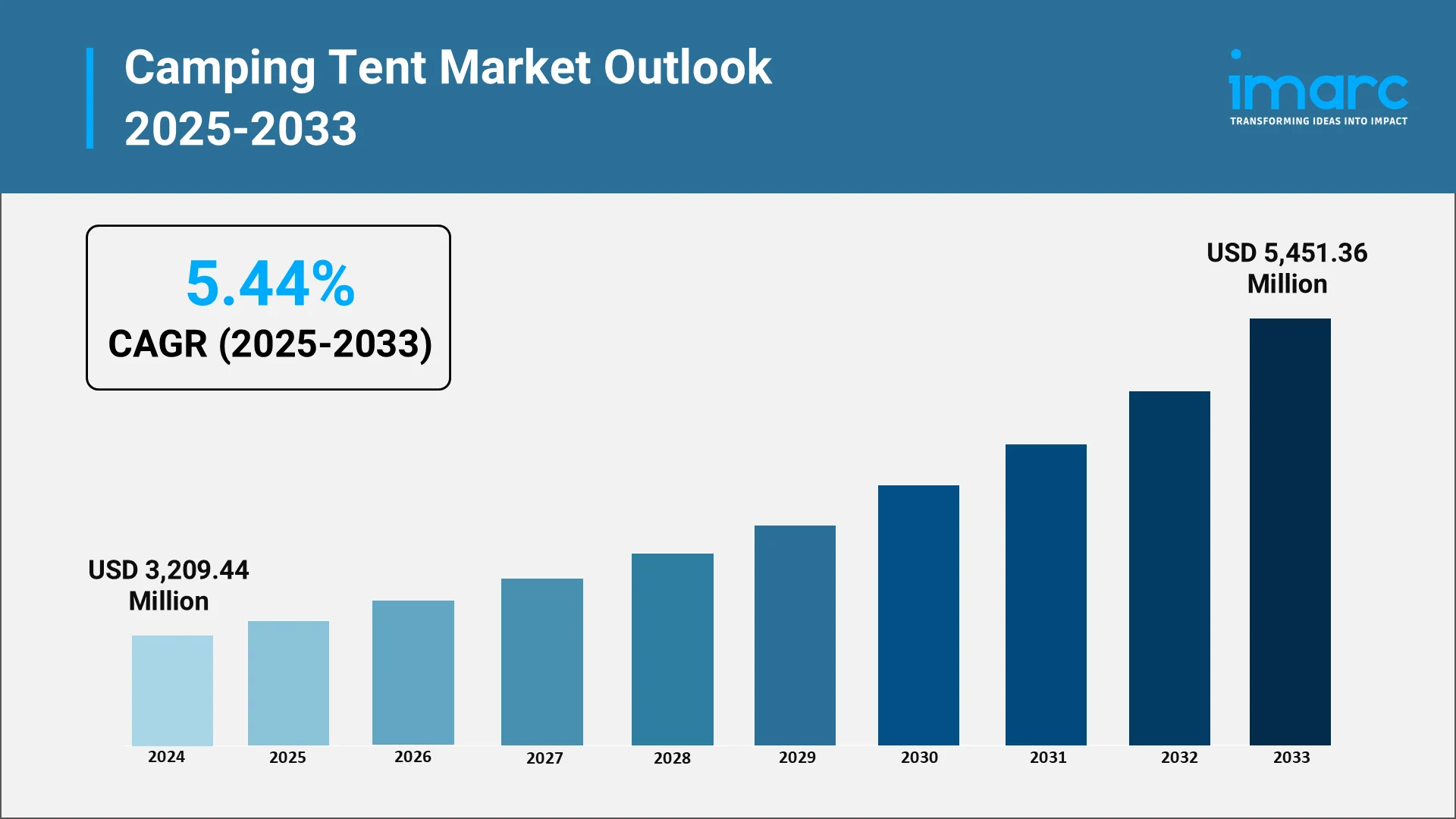
The global camping tent market reached USD 3,209.44 Million in 2024, and is projected to reach USD 5,451.36 Million by 2033, exhibiting a CAGR of 5.44% during 2025-2033. From lightweight backpacking tents to high-capacity family shelters, the global industry caters to a wide range of consumer and institutional needs. The rise of eco-friendly manufacturing, integration of smart materials, and growing rental and sharing models are reshaping how camping products are designed, distributed, and consumed. As demand continues to expand across developed and emerging economies, the camping tent market is playing a pivotal role in shaping the broader dynamics of the global outdoor recreation economy.
Explore in-depth findings for this market, Request Sample
The Role, Impact, and Benefits of Camping Tents in the Outdoor & Recreation Industry:
Camping tents have an important function in the recreational and outdoor industry by offering portable, protective, and sustainable shelter solutions. Their influence goes beyond leisure tourism to encompass education, research missions, emergency services, and eco-tourism ventures. Contemporary tents are designed to endure harsh weather, provide ergonomic use, and feature lightweight materials like carbon fiber poles and synthetic waterproof fabrics.
From a commercial point of view, tents are an important category of products shaping the development of connected industries like outdoor clothing, travel equipment, and adventure tourism services. The rise in experiential travel and sustainable tourism trends has turned tents into a symbol of sustainable recreation. They offer cost-effective shelter, versatility to cover a wide range of landscapes, and endorsement of low-impact models of travel compatible with global sustainability objectives. As camping remains a growing trend among city millennials and corporate wellness teams, the tent industry is solidifying itself as an engine for expansion in the outdoor recreation economy.
Key Growth Drivers in the Global Camping Tent Market:
- Rising Participation in Outdoor and Adventure Activities: The growing interest in outdoor recreation, hiking, and adventure tourism is a major driver of the market. Consumers are increasingly prioritizing nature-based experiences as part of healthier lifestyles and stress management practices. This shift has spurred demand for advanced camping tents that balance comfort with durability. Additionally, tour operators, wellness retreats, and eco-resorts are integrating camping options into their offerings, creating consistent product demand. The trend aligns with the expansion of glamping (glamorous camping), which bridges outdoor adventure with premium accommodation experiences, boosting the global camping tent industry’s value proposition.
- Product Innovation and Material Advancements: Continuous advancements in tent design and material technology are redefining product standards across the world. Manufacturers are developing ultra-lightweight, weather-resistant, and quick-setup designs to enhance portability and convenience. In October 2025, ALUULA Composites Inc. achieved a significant milestone by shipping its first 1.5-meter-wide, ultra-light composite material to leading tent brands. Weighing 24 grams per square meter, the product aims to enhance high-performance tent designs, with consumer-ready prototypes expected as early as 2026. The material boasts superior durability and sustainability features. Integration of nanotechnology-based coatings, recycled fabrics, and modular architecture has enabled improved insulation, ventilation, and structural strength. Furthermore, the growing adoption of smart tents equipped with solar charging panels, integrated lighting, and automated setup mechanisms demonstrates how innovation is elevating user experience and driving consumer preference toward premium tent models.
- Growth of E-Commerce and Direct-to-Consumer Sales Channels: Digital transformation has revolutionized product accessibility, with online platforms becoming a vital sales channel for camping equipment manufacturers. E-commerce enables consumers to compare models, read reviews, and customize orders, fostering brand transparency and global reach. Many leading players now operate direct-to-consumer (D2C) channels to improve margins and enhance customer engagement. Subscription-based tent rental and membership models are also gaining traction, particularly among younger demographics seeking affordability and flexibility. This digitalization of the purchasing journey continues to expand market penetration, particularly in developing regions.
- Increasing Environmental Awareness and Sustainable Manufacturing: The rising emphasis on environmental sustainability is reshaping consumer behavior and manufacturing practices within the camping tent industry. Companies are increasingly adopting eco-friendly materials such as organic cotton, biodegradable fabrics, and recycled polyester. The use of non-toxic waterproof coatings and minimal packaging is reducing the sector’s ecological footprint. Consumers are favoring brands that demonstrate ethical sourcing, responsible production, and circular economy initiatives. As outdoor enthusiasts become advocates for environmental conservation, sustainability-driven innovation is emerging as a critical growth enabler in the global market.
.webp)
Regulatory Framework and Policy Landscape in the Camping Tent Industry:
The camping tent industry operates within a framework of safety, environmental, and trade regulations that influence product design and distribution. Manufacturers must comply with international standards for material safety, flame resistance, and durability testing to ensure consumer protection. Many regions enforce labeling requirements that specify material content, waterproof ratings, and country of origin to enhance transparency.
Environmental policies have also become central to the industry’s regulatory landscape. Regulations promoting eco-friendly materials, waste reduction, and carbon neutrality are encouraging companies to adopt greener production processes. Trade policies related to import tariffs and quality certifications shape supply chain decisions and regional competitiveness. Additionally, government tourism and outdoor recreation guidelines influence market expansion, particularly through programs that promote sustainable camping practices and local manufacturing incentives.
Government Support / Initiatives for the Camping Tent Market:
- Promotion of Eco-Tourism and Sustainable Travel: Governments worldwide are investing in eco-tourism programs that encourage outdoor recreation while preserving natural ecosystems. These initiatives promote responsible camping and create demand for lightweight, recyclable, and sustainable tent solutions. Public-private partnerships often provide grants and tax benefits to manufacturers adhering to green production standards.
- Support for Domestic Manufacturing and Export Competitiveness: To strengthen local industries, several governments are implementing policies that promote domestic manufacturing of outdoor equipment, including tents. Incentives such as reduced import duties on raw materials, R&D tax credits, and infrastructure subsidies are enabling companies to scale operations and expand export capacity.
- Public Safety and Quality Standardization Initiatives: Authorities are increasingly emphasizing the safety and reliability of camping products through stringent testing and certification frameworks. Programs that establish compliance standards for flame retardancy, structural integrity, and material durability help maintain product quality. Governments also collaborate with trade associations to educate consumers and retailers on best practices for camping safety.
Top Camping Tent Manufacturing Companies Worldwide:
Top companies in the camping tent industry are placing greater emphasis on innovation, sustainability, and technology-driven designs to enhance their competitive edge. Key market players include:
- Big Agnes, Inc.: In January 2025, Big Agnes launched its innovative HyperBead fabric technology, enhancing sustainable ultralight tents. This new fabric offers 25% more waterproofing, is 6% lighter, and contains no harmful chemicals. Featured in popular tent lines, HyperBead reflects Big Agnes’ commitment to performance, environmental responsibility, and outdoor adventure.
- NEMO Equipment, Inc: In March 2025, NEMO Equipment launched the Dagger OSMO tent, now recognized as a bluesign® PRODUCT, emphasizing sustainability with 100% recycled, PFAS-free fabrics. This updated tent features improved livability and storage while maintaining lightweight performance. NEMO's commitment highlights the balance of eco-friendly practices and high-quality outdoor gear.
- Newell Brands: In July 2025, Newell Brands UK opened a new showroom in Cheadle, Greater Manchester, for Coleman and Campingaz. Featuring product displays, retailers can explore tents, shelters, and cooking equipment, enhancing their knowledge and merchandising capabilities. This initiative coincides with Coleman’s 125th anniversary and Campingaz’s 75th anniversary, strengthening partnerships in the outdoor retail sector.
Other notable players contributing to the growth and innovation of the camping tent market include AMG-Group, Hilleberg the Tentmaker, Johnson Outdoors Inc., Oase Outdoors, Exxel Outdoors, LLC, Simex Outdoor International GmbH, Skandika, Snugpak, VF Corporation, etc.
Opportunities and Challenges in The Camping Tent Market:
Opportunities:
- Expansion of Glamping and Premium Outdoor Experiences: The rising demand for luxury outdoor experiences is creating new revenue streams for tent manufacturers. The glamping segment emphasizes comfort, aesthetics, and functionality, driving innovation in tent design and materials. High-end tents equipped with insulation, solar-powered lighting, and modular interiors are catering to resorts and boutique travel operators.
- Growth Potential in Emerging Markets: Developing economies are witnessing increased participation in outdoor leisure activities as disposable incomes rise and tourism infrastructure improves. Expanding retail networks and online accessibility are making camping products more attainable to new consumer segments. Market players can capitalize on these regions through localized production, strategic partnerships, and affordable product lines tailored to regional climates and preferences.
- Integration of Smart and Modular Technologies: Technological integration represents one of the most promising opportunities for the camping tent industry. Innovations such as automated setup mechanisms, climate-controlled interiors, and integrated IoT-based monitoring systems are enhancing user comfort and safety. Manufacturers incorporating modular systems that allow tents to expand or reconfigure are addressing evolving consumer demands.
Challenges:
- Volatility in Raw Material Costs and Supply Chain Disruptions: The market is highly sensitive to fluctuations in raw material prices, particularly synthetic fabrics, aluminum, and carbon fiber. Supply chain disruptions due to geopolitical tensions or transportation bottlenecks can impact production schedules and profit margins. Manufacturers must balance cost efficiency with quality while adopting localized sourcing and supplier diversification to mitigate risks.
- Increasing Competition and Price Pressure: The growing number of manufacturers entering the market has intensified competition, leading to price compression and thinner margins. While large players leverage economies of scale, smaller firms often struggle to maintain profitability amid discount-driven retail environments.
- Environmental Concerns and End-of-Life Management: Although sustainability is a key growth driver, it also presents operational challenges related to product lifecycle management. Disposing of non-recyclable materials, managing waste from damaged tents, and meeting stringent environmental standards require continuous innovation and investment. Companies are increasingly exploring circular economy models that include take-back schemes and recycled material integration.
How IMARC Group is Guiding Innovation in a Rapidly Evolving Landscape:
IMARC Group equips stakeholders across the camping tent and outdoor recreation industry with strategic insights to navigate the dynamic and evolving market environment. Our services support clients in identifying emerging opportunities, mitigating risks, and driving innovation in the global camping tent industry through:
- Market Insights: We analyze global trends shaping the camping tent market, including rising demand for sustainable, lightweight, and technologically advanced tents. Our research highlights market movements such as eco-friendly materials, smart tent designs with integrated IoT features, and evolving consumer preferences toward mobility and comfort. These insights enable companies to optimize product portfolios, align with consumer expectations, and enhance market positioning.
- Strategic Forecasting: Clients gain forward-looking perspectives on camping tent market growth, allowing them to anticipate shifts in consumer behavior, material innovation, and distribution channels. Forecasts on e-commerce adoption, modular tent solutions, and rental-based consumption help businesses make informed investment decisions and stay ahead of market trends.
- Competitive Intelligence: We monitor industry developments, including new product launches, innovative material usage, and direct-to-consumer strategies. By evaluating competitor performance and emerging business models, IMARC empowers manufacturers and retailers to refine strategy, optimize operations, and maintain a competitive edge.
- Policy and Regulatory Analysis: We provide guidance on regulatory frameworks affecting the camping tent industry, including safety standards, environmental compliance, and trade regulations. Understanding these requirements helps firms ensure compliance, minimize risk, and adopt best practices in production, distribution, and sustainability initiatives.
- Customized Consulting Solutions: IMARC offers tailored solutions addressing unique business challenges, from product innovation and market entry strategies to operational efficiency and sustainability initiatives. These services help organizations enhance competitiveness and capture growth opportunities in a rapidly evolving global camping tent market.
As the global camping tent market continues to expand, driven by innovation, sustainability, and evolving consumer lifestyles, businesses must remain agile and forward-looking. IMARC Group’s insights, forecasts, and strategic guidance enable stakeholders to navigate market complexities, capitalize on emerging opportunities, and mitigate risks effectively. For detailed insights, data-driven forecasts, and strategic advice, see the complete report here: https://www.imarcgroup.com/camping-tent-market
Our Clients







Contact Us
Have a question or need assistance?
Please complete the form with your inquiry or reach out to us at
Phone Number
+91-120-433-0800+1-201-971-6302
+44-113-547-7077
Previous Post

Aluminum cookware and kitchenware are popular cookware and kitchenware items produced mainly with high-purity aluminum, which are light in weight, have high heat conductivity, and are resistant to corrosion. Aluminum utensils involve a wide array of products ranging from pots, pans, pressure cookers, frying pans, serving trays, ladles, and baking dishes. Aluminum's superior heat distribution has the ability to distribute heat evenly, thus saving energy, and hence is a popular choice for both household and commercial kitchens.
Seamless tubes consist of high-strength, hollow cylindrical products that are produced without welds with uniform structure and higher mechanical performance. Made from solid steel billets using extrusion and piercing operations, seamless tubes boast high dimensional precision, good resistance to pressure, and the capacity to handle high temperature and corrosive environments. Seamless tubes can be made in carbon steel, alloy steel, and stainless-steel grades based on the application.
In an era of rising energy costs and increasing environmental awareness, businesses must optimize their utility consumption to reduce expenses and enhance sustainability. Utility cost and energy efficiency audits give an in-depth examination of energy consumption, highlighting areas where there are inefficiencies and suggesting practical solutions for reducing costs and optimizing day-to-day operations.
Seamless digital documentation and ERP integration are important in today's data-driven business landscape to ensure operational effectiveness, adherence to regulations, and data-driven decision-making.
Discover a complete guide to setting up a manufacturing plant in Japan, including key steps, site selection, government incentives, and industry insights.
Explore key steps, costs, and compliance tips for setting up a manufacturing plant in the Saudi Arabia. A complete guide for investors and entrepreneurs.
Explore key steps, incentives, costs, and compliance tips for setting up a manufacturing plant in the Germany. A complete guide for investors and entrepreneurs.
On-site technical support and troubleshooting services offer real-time, expert solutions to fix intricate technical problems at your business site. On-site services guarantee minimal downtime, maximum system efficiency, and uninterrupted operations by sending experienced technicians directly to your location.
Environmental compliance audits are formal assessments of an organization's compliance with environmental rules, policies, and best practices. Environmental compliance audits assist companies in discovering latent risks, maintaining compliance with legislation, and making sustainable operating enhancements.
Green Building Certification Support services aid companies in obtaining prestigious sustainability certifications like LEED (Leadership in Energy and Environmental Design) and IGBC (Indian Green Building Council).
With the extremely regulated business world today, proper documentation and technical file preparation are essential for product compliance, market access, and quality assurance. Our Documentation and Technical File Preparation services offer intensive support to companies facing intricate regulatory requirements in various global markets.
Warranty and AMC coordination services refer to the process of managing and optimizing warranty claims, maintenance contracts, and after-sales support for companies. They provide smooth coordination between manufacturers, service providers, and customers, increasing customer satisfaction and operational efficiency.
Fire safety and security system design services entail the careful planning, development, and deployment of systems to safeguard people, property, and assets against fire risks and security threats.
In today’s competitive and compliance-driven environment, businesses cannot afford quality lapses, recurring errors, or regulatory non-conformance. Whether in manufacturing, life sciences, energy, or services, Corrective and Preventive Action (CAPA) systems are vital for continuous improvement and risk mitigation. At IMARC Group, we provide strategic CAPA Support Services to help organizations systematically identify, resolve, and prevent quality issues—enhancing productivity, safety, and customer satisfaction.
Civil, Structural, and MEP (Mechanical, Electrical, Plumbing) Design and Verification services involve the holistic planning, design, and validation of infrastructure projects to ensure safety, performance, and adherence to regulatory requirements. These services are essential to build resilient and efficient buildings, industrial premises, and city infrastructure.
In today’s competitive and fast-paced industrial environment, unplanned downtime can significantly disrupt operations and inflate costs. Preventive Maintenance Planning (PMP) offers a proactive approach to asset management - ensuring that equipment, machinery, and infrastructure are serviced regularly to prevent unexpected failures.
Land acquisition and legal due diligence services encompass the detailed process of finding, assessing, and acquiring land parcels for business growth, industrial ventures, or property development. These services confirm that the land is legally sound, unencumbered by disputes, and in line with the client's strategic interests. Through careful due diligence, companies can avoid risks, steer clear of legal traps, and make sound judgments when it comes to land investments.
In today’s hypercompetitive global market, organizations are under constant pressure to boost efficiency, reduce costs, and maximize output. However, improving productivity is not about working harder—it's about working smarter. Productivity Benchmarking and Optimization is a strategic approach that empowers businesses to compare performance metrics, identify gaps, and implement best practices tailored to their industry. At IMARC Group, we provide actionable insights through data-driven benchmarking and optimization strategies to help organizations transform performance into a long-term competitive advantage.
Discover a complete guide to setting up a manufacturing plant in Vietnam, including key steps, site selection, government incentives, and industry insights.
Step-by-step semiconductor manufacturing guide covering wafer production, photolithography, etching, deposition, testing, and the global supply ecosystem.
Process optimization and lean consulting solutions enable companies to streamline operations, eliminate waste, and maximize efficiency in their value chain. Through Lean techniques and continuous improvement practices, we empower organizations to increase productivity, decrease costs, and improve quality, turning operations into competitive strengths.
Explore a step-by-step guide to setting up a paper bag manufacturing plant, including planning, machinery, raw materials, costs, and marketing strategies.
Explore a detailed guide on establishing a manufacturing plant in the UAE, including incentives, legal steps, costs, and strategic industry insights.
In industries where accuracy and compliance are critical, equipment calibration and vendor coordination form the foundation of reliable operations. Whether in production, pharmaceuticals, energy, or research, calibration of equipment ensures accuracy, quality, and compliance with regulatory requirements. At the same time, successful coordination with vendors provides timely service, technical support, and supply chain effectiveness. At IMARC Group, we offer end-to-end calibration and coordination services that help businesses minimize downtime, reduce errors, and maintain operational excellence.
In today's fast-evolving industrial landscape, organizations from various end-use industries are quickly embracing automation and digital monitoring to gain real-time insights, enhance productivity, maintain safety, as well as reduce costs. From smart factories to the digitally enabled energy systems, Industry 4.0 is no longer an option—it is a strategic necessity. Using our services at IMARC Group, we help businesses in identifying, evaluating, as well as implementing tailored automation and digital monitoring solutions that enhance efficiency and long-term sustainability.
Equipment Relocation & Reinstallation services provide secure, efficient, and disruption-minimal transportation of equipment, production lines, and vital assets to new locations. Our turnkey solutions reduce downtime, safeguard precious equipment, and ensure operational readiness after the move, be it for plant growth, site consolidation, or process improvement.
Regulatory approval and licensing entail seeking formal permission from authorities to produce, distribute, or offer products and services in target markets. The procedure depends on the industry, geography, and type of product and may demand careful paperwork, compliance with standards, and extensive testing or inspections.
Explore key steps, incentives, costs, and compliance tips for setting up a manufacturing plant in the US. A complete guide for investors and entrepreneurs.
As industries evolve and operational lifecycles conclude, responsible decommissioning and site closure have become essential components of environmental stewardship and regulatory compliance. Whether it’s an industrial plant, mine, manufacturing unit, or energy facility, decommissioning is not just about shutting down—it's about doing so sustainably, safely, and in alignment with legal and community obligations.
Quality audit services are critical for companies with the objective of upholding high standards, compliance with regulations, and maximizing operational effectiveness. The services entail a rigorous review of processes, products, and systems for purposes of ensuring compliance with quality standards, industry practices, and statutory requirements. Through rigorous audits, firms can detect weaknesses, minimize risks, and undertake remedial measures to better overall performance and customer satisfaction.
Effective spare parts planning and inventory setup are vital for ensuring uninterrupted operations, minimizing downtime, and optimizing costs. Whether you're managing a manufacturing facility, utility infrastructure, or industrial fleet, maintaining the right stock of critical spare parts is essential. At IMARC Group, we help organizations build resilient spare parts strategies through advanced data-driven planning, industry benchmarking, and feasibility assessments.
In today’s highly regulated industrial and commercial environment, Standard Operating Procedures (SOPs) serve as the backbone of compliance, quality, and operational integrity. For businesses across sectors like pharmaceuticals, healthcare, manufacturing, and food processing, adherence to SOPs is not just about maintaining internal discipline—it’s about meeting rigorous external regulatory expectations.
Health and safety compliance audits are organized reviews of workplace conditions, policies, and practices to confirm compliance with occupational safety standards and industry best practices. These audits enable companies to discover potential hazards, reduce risks, and ensure compliance with local and global safety standards, promoting a secure and productive work environment.
Our workforce planning and technical staffing solutions enable companies to create nimble, future-fit teams by linking talent strategies and business goals. We excel at identifying, recruiting, and retaining high-caliber technical talent for operational excellence and innovation in various industries.
Overall Equipment Effectiveness (OEE) is an essential metric used to assess manufacturing efficiency based on the performance of equipment in three significant factors: Availability, Performance, and Quality. Our OEE Improvement Services assist organizations in detecting inefficiencies, removing production losses, and maximizing operational performance to achieve increased productivity and profitability.
In an era defined by rapid industrialization, urban expansion, and climate consciousness, Environmental Impact and Sustainability Studies have emerged as critical tools for responsible decision-making. Governments, investors, and corporations are under growing pressure to adopt sustainable practices that align with global environmental standards. At IMARC Group, we bridge this need by offering comprehensive market intelligence and prefeasibility studies with a dedicated focus on environmental impact and sustainability.
3D modeling and simulation technologies, especially Digital Twins, now serve as laboratories for operational efficiency, product innovation, and predictive maintenance in the era of the digital transformation propelling the industry's evolution. These latest developments permit real-time monitoring and optimization for the lifecycle of any physical asset, system, or process by providing a virtual rendering.
Post-commissioning performance validation is an essential process for guaranteeing that newly commissioned systems, equipment, or facilities are performing as desired, according to design specifications, regulatory requirements, and performance criteria.
Pilot plant setup and evaluation services include designing, building, and running small-volume manufacturing plants for the purpose of testing and proving processes prior to full-scale commercial development. Pilot plant services fill the gap between laboratory experimentation and plant production so that companies can prove technology, determine feasibility, and avoid risk before committing substantial capital.
In today’s dynamic industrial landscape, ensuring the health, safety, and environmental well-being of employees is more critical than ever. Environmental, health, and safety (EHS) training is becoming an essential aspect of responsible corporate practices. It promotes a culture of safety while also guaranteeing adherence to changing regulatory standards. At IMARC Group, we offer customized EHS training solutions aimed at assisting organizations in reducing risk, improving compliance, and fostering robust safety cultures.
In today's dynamic market environment, businesses are under constant pressure to minimize costs, enhance efficiency, and meet customer expectations without overstocking or understocking. At IMARC Group, our Inventory Optimization and Stock Planning Services aim to equip organizations with data-informed insights and practical strategies that effectively align supply with demand.
In today’s fast-paced and highly competitive marketplace, businesses are under increasing pressure to optimize operations, reduce environmental footprints, and comply with evolving regulatory requirements. Equipment Lifecycle Assessment Services (ELAS) offer an all-encompassing method for assessing the efficiency, expenses, ecological effects, and overall sustainability of machinery and equipment for its complete lifespan—from acquisition to disposal.
In today’s hyper-regulated global economy, the difference between a successful market entry and a costly delay often comes down to one word: compliance. Whether you're manufacturing pharmaceuticals, exporting packaged food, or launching consumer electronics, aligning your processes with regulatory standards isn't optional—it's mission-critical.
Multi-vendor coordination and integration services involve the strategic management and seamless unification of multiple vendors, suppliers, and service providers to ensure cohesive operations and optimized performance for your business.
In industries where even the slightest environmental variation can compromise product integrity, the role of clean rooms and cold chain systems becomes paramount. From life-saving pharmaceuticals to temperature-sensitive vaccines and high-precision semiconductors, these operations demand absolute control over air quality and temperature.
In a world where environmental footprint is on the global agenda, waste management has emerged as the defining feature of responsible business and governance. Waste is no longer an afterthought as it used to be. Now it's at the forefront of policy formulation, sustainability reporting, and operational planning.
Establishing a temporary site office and providing utility services requires having fully furnished temporary office facilities with minimal infrastructure to support business operations in remote or project-oriented areas. The establishment of a temporary site office and provision of utility services also provides businesses with an expert working environment that has the necessary utilities, allowing them to focus on temporary work assignments, construction ventures, or expanding into new markets.
In a landmark achievement, India has surpassed Japan to become the world’s fourth-largest economy in 2025, with a nominal GDP of $4.187 trillion, according to the International Monetary Fund (IMF). This milestone, driven by robust growth, strategic reforms, and favorable global conditions, positions India as a global economic powerhouse, trailing only the United States, China, and Germany. As India celebrates this ascent, the nation sets its sights on overtaking Germany to claim the third spot by 2028. Join us as we explore the drivers, implications, and future prospects of India’s economic rise.
In an age defined by resource efficiency, regulatory scrutiny, and rising operational costs, utilities planning is no longer an afterthought—it is a strategic imperative. Whether it's ensuring uninterrupted power in a data center, maintaining air quality in a hospital, or optimizing water and steam systems in a manufacturing plant, intelligent utility planning is the hidden force behind seamless operations.
Raw material sourcing and import advisory services entail the strategic activity of sourcing, screening, and procuring quality raw materials from both local and foreign suppliers. These services help companies obtain cost-effective, dependable, and compliant sources of materials to facilitate smooth production and supply chain operations.
Construction management services, powered by deep market intelligence, provide comprehensive oversight across the entire lifecycle of a construction project—from pre-construction planning to final handover. At IMARC, we integrate data-driven insights into supplier benchmarking, cost forecasting, and regulatory trends to support efficient execution and strategic decision-making.
In a volatile global economy, risk is no longer a question of if but when. Whether it's regulatory changes, supply chain disruptions, cyber attacks, or environmental issues, companies in various industries face uncertainties that can halt growth and profitability. It is here that Risk Assessment and Mitigation Planning Services are no longer a safety measure but a strategic imperative.
Organizations tend to outgrow the facilities that they already have with the fast-paced and ever-changing world of business today. It may be because of growing production requirements, expansion of new markets, or merely maximizing operational efficiencies, facility expansion is always a key component of long-term business planning. Moreover, expanding the facility is not just about expanding space it is about aligning future objectives with infrastructure, reducing risks, and maximizing return on investment.
Vendor auditing and compliance verification are essential procedures for companies that depend on vendors of raw materials and machinery to ensure product quality, operational effectiveness, and regulatory compliance. Vendor auditing is the systematic assessment of vendors to meet specified standards in quality control, financial strength, compliance with laws, and operational dependability. Through careful auditing, companies can manage risks, increase supply chain transparency, and promote long-term, reliable vendor relationships.
In the competitive business environment of the present times, completing projects successfully depends on precise planning and financial management. Project scheduling and cost estimation services are important elements that assist companies in mapping timelines, allocating resources optimally, and estimating project budgets accurately. These services enable organizations to have a systematic mechanism for managing projects, minimizing delays, cost overruns, and scope creep, thereby delivering the project on scheduled time and within the budgeted funds.
In the current competitive and regulation-focused business environment, companies must continuously provide quality, uphold compliance standards, and enhance operational efficiency. A key facilitator for achieving these goals is a Standard Operating Procedure (SOP) - a documented collection of detailed instructions aimed at assisting teams in executing regular tasks reliably and effectively. At IMARC Group, we focus on developing personalized SOPs designed for particular industries and business requirements, guaranteeing your operations stay efficient, adaptable, and compliant.
Installation supervision and equipment commissioning are critical phases in the successful delivery of any capital project. They confirm that equipment, systems, and infrastructure are installed based on technical specifications and run safely and efficiently from their earliest possible start. These services facilitate the identification and rectification of defects early on, cutting down delays, preventing expensive rework, and decreasing long-term operational risks. As industrial projects increase in complexity, proper supervision and formal commissioning are critical to achieve performance goals, comply with regulations, and optimize the return on investment. This process is the basis for dependable, efficient, and safe operations in a broad range of industries.
Contract manufacturer identification services involve the process of locating, evaluating, and selecting reliable manufacturing partners capable of producing goods according to your specifications, quality standards, and business requirements. These services ensure seamless production, cost efficiency, and scalability by identifying manufacturers that align with your operational goals, regulatory compliance, and market demands.
The Bill of Materials (BOM) is a crucial document in the manufacturing process, providing a comprehensive list of all the components, materials, assemblies, and sub-assemblies needed to manufacture a product. BOM preparation services are designed to ensure that every detail of the manufacturing process, from raw materials to finished products, is properly accounted for and organized. At IMARC Group, we offer expert BOM preparation services that help manufacturers streamline production, reduce errors, and optimize costs.
Penetrating new markets is a vital business growth strategy, but it is also fraught with challenges when extending into foreign markets where there are varying regulatory regimes, cultural sensitivities, and business conventions. Perhaps one of the most reliable ways to avoid these challenges is through finding local partners or joint ventures. Local Partner or Joint Venture Identification Services offer companies the necessary assistance required to identify the appropriate local entities that can assist them in overcoming these complexities, driving growth, and realizing operational success in a new market.
On construction and infrastructure projects, on-site delivery of work is a critical aspect to be managed in a manner that projects are delivered on time, within budget, and as per defined quality standards. Site Supervision and Civil Execution Oversight Services aim to ensure that the entire process of construction, starting from planning to execution, adheres to safety requirements, laws, and project specifications. Such services include carefully tracking site work, coordinating contractors, managing resources, and monitoring daily operations to prevent risks and maximize the implementation process.
India and United Kingdom have announced the successful conclusion of a mutually beneficial India – UK Free Trade Agreement (FTA). This forward-looking Agreement is aligned with India’s vision of Viksit Bharat 2047 and complements the growth aspirations of both the countries.
Plant layout and process flow design services optimize the physical arrangement of equipment, workflows, and operational systems within industrial facilities. These services enhance productivity, minimize costs, and ensure seamless material and personnel movement, tailored to your production goals and industry standards.
Procurement Strategy and Cost Benchmarking Services play a pivotal role in optimizing an organization's procurement processes, ensuring that the company gets the best value for its investments. In a world where cost efficiency, sustainability, and strategic sourcing are critical, these services offer businesses the necessary tools to improve their procurement operations and strengthen their competitive position. By offering insights into industry standards, historical data, and best practices, organizations can make informed decisions to streamline their supply chain management, reduce costs, and increase operational efficiency.
In today’s competitive business environment, expanding into new markets or establishing new manufacturing facilities requires careful navigation through local regulations, licensing processes, and government incentives. This is where Industrial Licensing and Incentive Advisory Services come into play. These services guide businesses through the complex regulatory landscape and help them access valuable incentives offered by governments to promote industrial growth.
In today's globalized and competitive market, businesses are constantly seeking ways to improve their supply chain operations. One critical element of a successful supply chain strategy is identifying and evaluating the right suppliers. Supplier Identification and Evaluation Services help businesses find reliable suppliers who can meet their quality, cost, and delivery expectations. At IMARC Group, we offer comprehensive services to guide businesses through the complex supplier selection process, ensuring they partner with the most suitable suppliers to drive efficiency and growth.
Capital Expenditure (CapEx) and Operating Expenditure (OpEx) represent two fundamental pillars of corporate financial management. Capital Expenditure (CapEx) covers investments in assets that fuel future growth—new machinery, property, or digital infrastructure. It builds long-term value, boosts capacity, and often attracts investor confidence.
Starting a new business or expanding an existing one involves substantial risk and investment. To steer through these intricacies, business corporations and entrepreneurs both bank on expert feasibility studies as well as full-fledged business planning services. At IMARC Group, we equip businesses with the insights and strategic tools they require to make informed, data-driven decisions.
Technology transfer services enable the smooth transfer of innovations, knowledge, and technical skills from universities, research institutions, or firms to business enterprises. This enables bridging the innovation-market gap such that advanced technologies are developed, scaled, and commercialized successfully.
In today’s complex project environments, the success of any venture—whether it's an industrial plant, residential development, or large-scale commercial project—largely hinges on the availability and adequacy of utilities and infrastructure. At IMARC Group, we provide utility and infrastructure evaluation services aimed at giving businesses a thorough insight into key support systems that contribute to operational efficiency and project feasibility.
For companies hoping to succeed and last, location analysis and site selection are essential procedures. This service offers a thorough analysis to determine the best geographical areas and sites suited to a client's particular operational requirements and strategic goals. To make sure our recommendations are in complete harmony with your vision, we thoroughly examine your business model, target market, logistical needs, and growth goals.
Distribution partner identification services involve the process of locating, assessing, and selecting reliable and capable partners to distribute your products or services in targeted markets. These services aim to ensure efficient supply chain management, seamless market entry, and expanded business reach by identifying partners that align with your business goals and market requirements.