GCC Biodegradable Food Service Disposables Market Growth: Transforming Food Packaging Through Innovation
Introduction:
The GCC biodegradable food service disposables market size is undergoing a remarkable change as environmental sustainability takes center stage in regional business and regulatory agendas. Throughout the Gulf Cooperation Council nations, which include countries like Saudi Arabia, the UAE, Qatar, Kuwait, Oman, and Bahrain, significant players within the food service packaging sector are powerfully embracing novel packaging solutions that not only reduce environmental impact but also cater to modern-day consumers' needs for convenience and efficiency. Moving toward biodegradable food service disposables is not because of consumer preference alone; it follows from alignment with governmental policies to reduce the ecological footprint of single-use plastics.
Biodegradable disposables, made from plant-based materials like cornstarch, sugarcane bagasse, and cellulose, have gained increasing recognition for their potential to be integrated into the circular economy framework. These materials are designed to degrade naturally, contributing toward lesser landfill burden and promoting environmental protection at each level. In fact, Dubai Municipality recently enacted a sweeping ban on all single-use bags under 57 µm thick—including paper, plant-based, and biodegradable ones—from June 1, 2024, as part of its broader sustainability drive. The trends in the GCC biodegradable food service disposables market indicate that their adoption in the form of eco-friendly alternatives is now spreading across various channels, including restaurants, cafés, and catering services, apart from the vastly growing food delivery channels. This shift reflects the commitment toward sustainability on a larger scale, wherein corporates and government entities alike recognize the role that environmentally responsible packaging has to play in shaping a greener future.
The transition to biodegradable food service disposables is supported through a mix of regulatory encouragement, public awareness campaigns, and technological advances in sustainable materials. Enterprises are increasingly integrating these solutions into their operations in order to meet both consumer expectations and legislative requirements. For instance, in September 2025, the UAE announced a nationwide ban on the import, production, and trade of single-use plastic items (cups, cutlery, containers, plates) starting January 1, 2026 — a clear regulatory push that is accelerating the shift to compostable plant-based alternatives. Thus, the GCC biodegradable food service disposables market share is gradually diversifying, including all kinds of products such as plates, cutlery, cups, containers, and take-away packaging-all designed to dovetail with sustainability goals.
How Vision 2030 is Transforming the GCC Biodegradable Foodservice Disposables Industry:
The development of initiatives related to Vision 2030 in GCC countries, especially in Saudi Arabia and the UAE, is driving significant changes in regional food service packaging. Emphasis on environmental sustainability, innovation, and circular economy principles in national visions accelerates the shift toward biodegradable solutions. Different regulatory frameworks and incentive programs, part of Vision 2030, motivate businesses to increase the level of eco-friendly packaging, with additional stimuli for research and development in the field of biopolymer and compostable substitutes. This not only serves to tackle the environmental objectives of the region but also presents the GCC as a leader in innovation for sustainable food packaging, opening up opportunities for growth in product portfolios for both manufacturers and service providers.
Explore in-depth findings for this market, Request Sample
Key Industry Trends:
Shift Towards Compostable and Plant-Based Packaging Materials
One of the major trends in the GCC biodegradable foodservice disposables market is the move toward compostable and plant-based materials. Conventional plastic disposables are being gradually replaced by their alternatives sourced from renewable resources like sugarcane bagasse, wheat straw, cornstarch, and bamboo fiber. These materials have been formulated to break down under natural conditions and present a practical solution to minimize environmental impact while serving the functional needs of foodservice operations. In April 2025, the Gulf Petrochemicals and Chemicals Association (GPCA) released a report highlighting policy and investment opportunities in the GCC to scale up plastic-waste recycling and promote sustainable alternatives — signaling strong cross-sector support for biodegradable and circular-economy materials. The demand for plant-based packaging is also driven by increased consumer awareness of ecological issues and a preference for products that facilitate a sustainable lifestyle.
The manufacturers are working with material blends to guarantee that these biodegradable products will continue offering environmental benefits while maintaining durability, heat resistance, and aesthetic appeal. This is one trend that is creating an ecosystem where sustainability is no longer a compromise in product quality and consumer experience.
Growing Adoption of Eco-Friendly Disposables in HoReCa and Food Delivery Channels
The HoReCa industry, in addition to increasing food delivery services, is a key driver in the growth of the GCC biodegradable food service disposables market size. With growing consumer demand for takeout or home delivery of meals, there arises an intense need for single-use packaging that would be convenient yet at the same time ecologically responsible. Biodegradable disposables, such as plates, cutlery, and containers, are being used in the operations of food service more and more, offering an eco-conscious alternative to conventional plastics.
These solutions are therefore adopted by restaurants and food delivery platforms as part of building better brand images and appealing to the call for sustainability. Further, eco-friendly packaging offers differentiation in competitive markets that attract ecologically conscious consumers who would prefer businesses with responsible operational practices. This is also driven by the fact that packaging manufacturers have teamed up with food service providers in co-developing solutions that meet functional requirements yet reduce ecological impact. For instance, in April 2023, Deliveroo UAE partnered with Sineo Packaging to launch a web-store for its restaurant partners, offering over 20 biodegradable or compostable packaging items (including containers, cups, cutlery), enabling restaurants to source sustainable, branded packaging cost-effectively.
Government Regulations Targeting Single-Use Plastics Reduction
Regulatory steps taken by GCC governments are of paramount importance in shaping the growth path for disposables that are biodegradable. In most GCC countries, governments actively encourage the reduction in the use of single-use plastics through policy formulation and implementation. These regulations vary from a ban on plastic bags to making food serving premises adhere to eco-friendly packaging norms to offering incentives in respect of businesses integrating biodegradable solutions into their operations.
As such, compliance with these regulations has become a key consideration for food service providers and manufacturers alike. In this vein, companies that take up biodegradable alternatives reduce regulatory risks while meeting broader environmental sustainability programs. Regulatory frameworks, therefore, are a pivotal factor influencing GCC biodegradable food service disposables market share to catalyze innovation that would encourage large-scale adoptions of eco-conscious packaging solutions.
Expanding Biopolymer and Pulp-Based Food Service Product Lines
There is a significant growth in the product lines made of biopolymer and pulp. The companies manufacturing disposable products are adding many different items, such as plates, bowls, trays, and containers, made with biodegradable or compostable material. Biopolymers obtained from renewable feedstocks, including polylactic acid (PLA) and polyhydroxyalkanoates (PHA), are finding increased acceptance due to their properties, which are very similar to conventional plastics, with sustainable life-cycles. In a major regional development, Gulf Biopolymer Industries (based in Abu Dhabi) is building the MENA region’s first PLA production plant in Kezad, with an annual capacity of 30,000 tons.
Additionally, packaging made from pulp, generally sourced from sugarcane bagasse or recycled paper, sees increased usage in institutional and commercial food service. These materials offer strong structural performance and thermal stability, while their end-of-life pathway is fully compostable. The growth of these product lines reflects the ongoing GCC biodegradable food service disposables market trends, emphasizing sustainability without compromising on utility or convenience.
Growing Corporate Commitments Towards Sustainable Operations
Corporate sustainability initiatives shape the course of development in the GCC biodegradable foodservice disposables market. Many companies now understand that operational practices must be aligned with environmental responsibility to meet stakeholder expectations and build brand equity. For example, in 2024, Hotpack Global reported that 96% of its product lineup is environmentally friendly, highlighting the company’s commitment to biodegradable and recyclable packaging solutions. This encompasses the food service industry's move toward biodegradable and compostable disposables, the integration of waste management strategies, and the promotion of a circular economy approach.
More and more, organizations include sustainable packaging within their corporate social responsibility programs, an indicator of a more general commitment toward environmental stewardship. This is causing a positive feedback loop wherein, with more businesses starting to use eco-friendly solutions, consumer acceptance grows, further reinforcing market expansion and innovation.
Market Segmentation & Regional Insights:
A study on the GCC biodegradable food service disposables market reveals that segmentation by material type, product type, end-use application, and distribution channel is possible. Material types include plant-based bioplastics, bagasse, paper, and other compostable substrates. Product types range from plates, bowls, and trays to cups, cutlery, and takeaway packaging. The end-use applications include HoReCa establishments, catering services, institutional canteens, and food delivery platforms. Distribution channels include direct sales, retail outlets, and online platforms.
The UAE and Saudi Arabia are also emerging as regional leaders in the use of biodegradable disposables due to their progressive environmental policies, urbanization, and strong food service industries. Other GCC countries like Qatar, Kuwait, Oman, and Bahrain are registering stable growth on the basis of governmental incentives taken for promoting such products, awareness campaigns, and increasing consumer preference toward sustainable solutions. This regional diversity underlines the strategic opportunities available for market participants seeking expansion in the GCC footprint.
.webp)
Forecast (2025–2033):
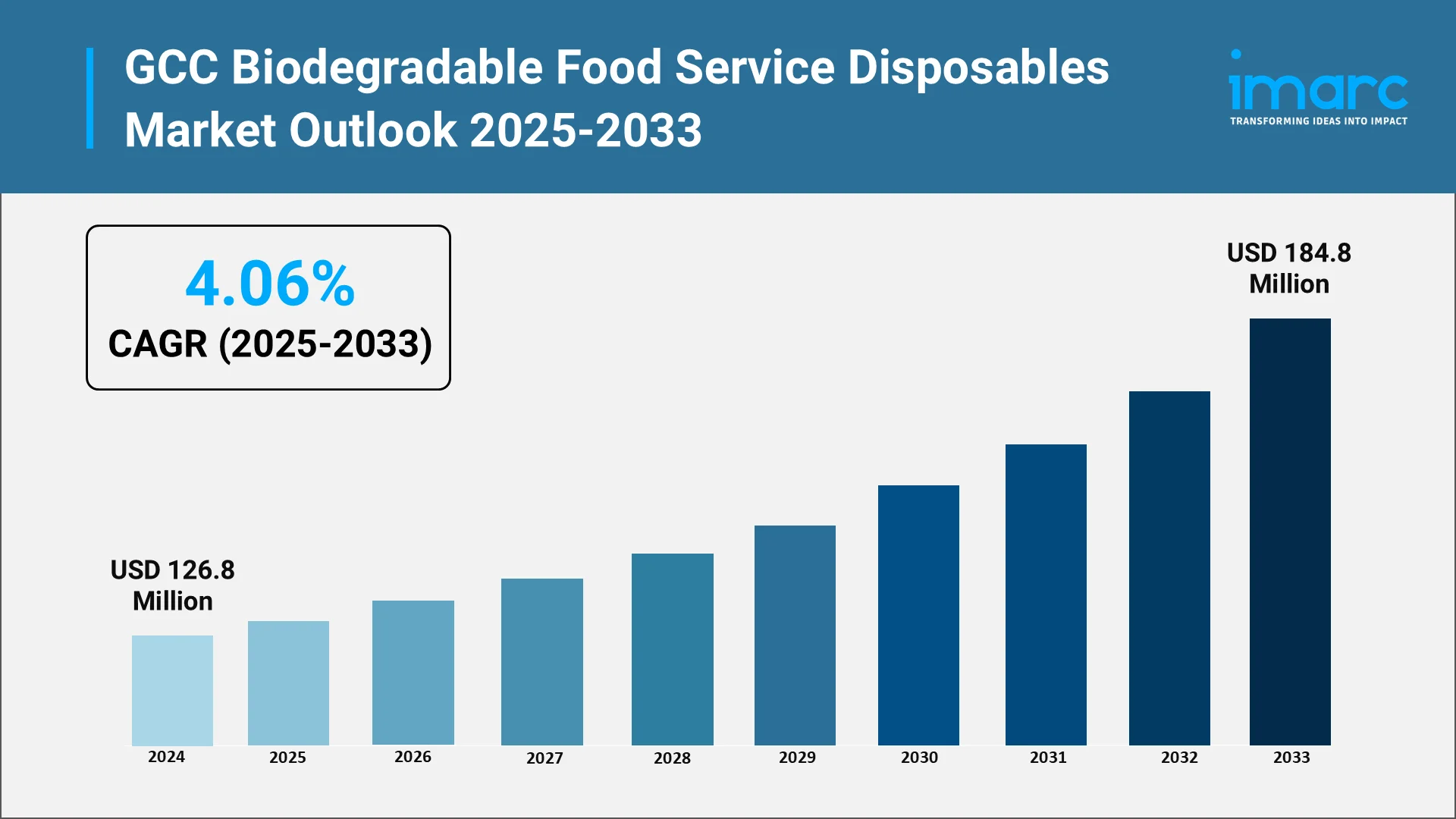
A combination of environmental, regulatory, and commercial factors places the GCC biodegradable foodservice disposables market size in a position for continued growth throughout the forecast period. The GCC biodegradable food service disposables market size reached USD 126.8 Million in 2024, and looking forward, the market is expected to reach USD 184.8 Million by 2033, exhibiting a growth rate (CAGR) of 4.06% during 2025-2033. The growing awareness toward environmental impact and bans on single-use plastics across the GCC are driving up demand for biodegradable and compostable alternatives. Increasing food delivery service penetration and quick-service restaurants amplify this demand, where eco-friendly, convenient packaging becomes an operational necessity.
This trend is reinforced by corporate sustainability initiatives. Enterprises are eager to introduce green practices into their operations and to show that they are responsible towards the environment. The multi-dimensional growth outlook suggests that the market will continue to expand in product categories, materials, and regional segments, reflecting a shift toward circular economy principles and long-term environmental stewardship.
Conclusion:
The GCC biodegradable food service disposables market is transforming significantly, driven by innovation, regulatory support, and growth in environmental consciousness. Key trends, including the transition toward compostable and plant-based materials, increasing penetration in HoReCa and food delivery channels, widening applications of biopolymer and pulp-based products, and corporate sustainability initiatives, are influencing the way the industry is evolving.
As the GCC enforces strict policies of sustainability and environmental protection, biodegradable food service disposables will see a stable market growth with support from innovation in material science, regulation incentives, and consumer awareness. Businesses operating in this landscape must proactively adopt eco-friendly packaging solutions to remain competitive, meet regulatory standards, and contribute to long-term environmental goals.
IMARC Group offers unrivaled expertise in market analysis, tailored solutions, and actionable recommendations for organizations seeking comprehensive insights into the GCC biodegradable food service disposables market research, strategic opportunities, and growth forecasts.
Choose IMARC Group As We Offer Unmatched Expertise and Core Services:
- Data-Driven Market Research: Gain in-depth, reliable insights into market trends, competitive landscapes, and regional developments.
- Strategic Growth Forecasting: Leverage accurate forecasting models to identify potential opportunities and plan long-term growth strategies.
- Competitive Benchmarking: Understand the positioning of key players, assess emerging competitors, and identify differentiation strategies.
- Policy and Infrastructure Advisory: Navigate regulatory frameworks and sustainability guidelines with expert advice tailored to regional contexts.
- Custom Reports and Consulting: Receive tailored research solutions that align with organizational goals, ensuring actionable intelligence and informed decision-making.
IMARC Group empowers businesses to navigate the evolving GCC biodegradable food service disposables market landscape, enabling them to embrace innovation, sustainability, and profitability.
Our Clients









Contact Us
Have a question or need assistance?
Please complete the form with your inquiry or reach out to us at
Phone Number
+91-120-433-0800+1-201-971-6302
+44-113-547-7077
Previous Post

PVC blisters packaging is a type of thermoforming packaging wherein polyvinyl chloride (PVC) material is heated to mold it into packaging cavities to securely place individual items inside, which is then closed with either aluminum foil or paper-based lidding materials. PVC packaging exhibits clarity, strength, and moldability, making it possible to view the individual items while also protecting them against external damage.
A PET bottle is a type of rigid packaging packaging that is produced using a thermoplastic called polyethylene terephthalate, also known as polyester. The production of a PET bottle involves an injection stretch-blow molding technique that provides a lightweight and durable package with high clarity, strength, and impermeability.
Paper cups are a type of beverage container made mostly from paperboard. The paperboard gives the container strength. The lining of the paperboard varies and usually consists of waterborne coatings, bio-based coatings, and polymer coatings. This facilitates the paper cup to hold hot and cold fluids for an amount of time. Paper cups come in various sizes and different wall structures. This makes the paper cup functional for the desired purpose and environment.
Bagasse kraft paper is a green packaging material made from bagasse, the fibrous byproduct that is left when juice is extracted from sugarcane. Kraft paper is generally produced traditionally using wood pulp via the sulfate process, but bagasse offers a sustainable, non-wood source used in promoting green manufacturing and less reliance on forest resources. Bagasse fibers have high cellulose, moderate fiber length, and good bonding properties, making them ideal for manufacturing strong and long-lasting kraft paper. Production includes bagasse collection from sugar mills, purification to eliminate impurities, and processing into pulp either by chemical or mechanical pulping.
Bagasse biodegradable cutlery is made from the fibrous material remaining after extracting sugarcane stalk juice, a low-value agricultural residue also known as bagasse. The material is harvested from sugar mills, washed, pulped and mechanically molded into wet-molded forms; those wet parts are dried, pressed in heat-resistant molds and thermally cured to create rigid, food-grade spoons, forks and knives that are grease- and water-resistant but not covered with plastic coatings.
The global food packaging market is evolving as consumer expectations, sustainability concerns, and technological advancements redefine the way food is kept safe, secure, and delivered. Packaging is no longer merely a container; it has transformed into a critical enabler that drives purchase decisions, improves product shelf life, and communicates brand values. As demand for ready-to-eat, convenience, and packaged foods grows, packaging has emerged to convey sustainability, safety, and innovation.
Aluminum foil is a flexible, thin, and extremely versatile aluminum sheet that has gained universal application in different industries owing to its superior barrier, thermal, and mechanical characteristics. Usually made by rolling aluminum slabs or ingots into extremely thin sheets, aluminum foil is 0.006 mm to 0.2 mm thick.
Glass bottles are rigid, non-porous, and chemically inert packages commonly employed in the packing of beverages, foods, drugs, cosmetics, and specialty chemicals. Constructed mainly from silica sand, soda ash, and limestone, glass bottles are prized for their preservation of product purity, inhibition of chemical leaching, and retention of flavor character.
The corrugated box industry is powered by its versatility, strength, and sustainability, rendering it crucial for shipping, storage, and retail packaging. Crafted from kraft paper, the boxes are strong, cushioned, and protective, serving e-commerce, food & beverage, electronics, and pharmaceuticals industries. Online retailing demand, sustainability drives, and innovation in packaging are driving the growth of the market.
Aluminium cans are common packaging solutions in the food, beverage, and industrial sectors because they are strong, lightweight, and highly recyclable. They ensure product freshness by shielding contents from light, air, and pathogens thanks to their exceptional barrier qualities. Because of its limitless recyclability and little environmental impact, aluminium cans have become the favoured option as sustainability awareness has grown.