Top Factors Driving Growth in the Luxury Watch Market
Introduction to the Luxury Watch Industry:
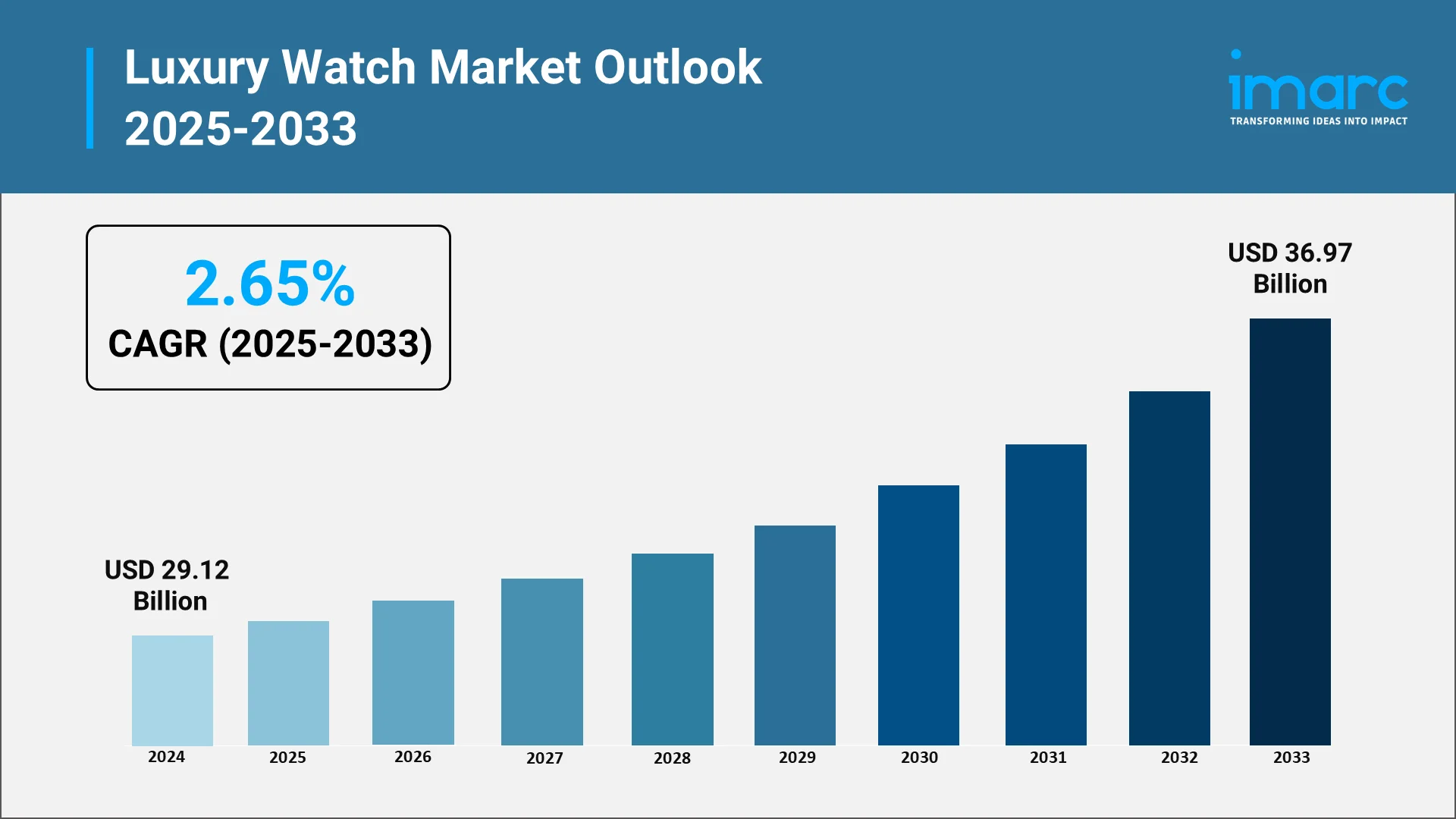
The luxury watch industry represents one of the most enduring segments of the global fashion and lifestyle market. Combining precision engineering with timeless craftsmanship, luxury watches continue to hold strong appeal among high-net-worth individuals, collectors, and aspirational consumers. The global luxury watch market size reached USD 29.12 Billion in 2024, reflecting steady growth driven by premiumization, rising consumer demand in emerging economies, and the enduring value of heritage timepieces.
Over the past decade, the luxury watch market has experienced consistent expansion, supported by changing consumer preferences, international trade flows, and evolving retail landscapes. The sector is poised to grow steadily, driven by premiumization trends, increased brand collaborations, and the rising influence of digital marketing. Global players are focusing on product innovation, personalized services, and sustainability to strengthen their market presence. According to luxury watch market forecast 2025, the industry is expected to witness steady momentum with rising demand across established and emerging regions. Growth will be shaped by a blend of tradition and innovation, as heritage designs meet modern features.
Explore in-depth findings for this market, Request Sample
Key Growth Drivers in the Luxury Watch Industry:
Several factors are contributing to the expansion of the luxury watch market. The following are some of the most significant growth drivers:
- Rising Affluence and Expanding Middle Class: One of the most influential drivers is the rise in global disposable income, especially across emerging economies. In Asia-Pacific, particularly China and India, consumers are increasingly investing in premium timepieces as symbols of success and lifestyle aspiration. The growing middle class, combined with shifting cultural values toward luxury ownership, has fueled demand for high-end watches. This evolving consumer base continues to play a vital role in supporting luxury watch market growth in 2025.
- Growing Demand for Collectibles and Investments: Luxury watches are increasingly viewed as investment-grade assets, attracting enthusiasts and serious investors. Limited-edition releases, vintage masterpieces, and exclusive brand collaborations tend to appreciate in value, making them attractive collectible items. For instance, In August 2025, Nick Jonas partnered with Fossil to launch the limited-edition Machine Luxe Collection, blending his passion for watches with Fossil's design heritage. The collection includes seven watches and two rings, inspired by nostalgic settings. The rise of online resale platforms and global auction houses has accelerated this trend, enabling greater accessibility and liquidity. This growing investment perspective has strengthened the collectible watch segment, significantly enhancing the luxury watch market share and broadening its appeal beyond traditional luxury buyers.
- Heritage and Craftsmanship as Differentiators: In an era where mass production dominates, the enduring appeal of heritage and craftsmanship remains a key driver in the luxury watch industry. Timepieces that showcase intricate artistry, artisanal techniques, and precision engineering offer unmatched exclusivity. For instance, in July 2025, Titan launched JALSA, its first ultra-luxury tourbillon watch, as India's entry for the GPHG 2025. Limited to 10 pieces, it features a flying tourbillon and a hand-painted dial by Padma Shri awardee Shakir Ali. The watch showcases Titan's commitment to haute horlogerie. Leading brands highlight their legacy, reinforcing a sense of authenticity that resonates with discerning consumers.
- Innovation and Technological Integration: While classic designs remain central to luxury watches, innovation and technology are increasingly shaping consumer preferences. Hybrid timepieces, use of advanced materials like ceramics and titanium, and high complications such as tourbillons or skeleton dials appeal to modern buyers. Brands are also embracing customization to cater to younger, design-conscious audiences.
- Global Tourism and Duty-Free Retailing: The expansion of international travel and luxury tourism has emerged as a vital contributor to luxury watch sales. High-end retail outlets and duty-free shops at global airports have become essential distribution channels. Tourists, especially from Asia-Pacific markets like China, remain among the most enthusiastic purchasers of luxury watches during their travels. This trend has created a strong link between global mobility and luxury spending, further boosting sales and positively influencing the market across major destinations.
Government Support / Initiatives for the Luxury Watch Industry:
Government policies and trade frameworks have played a crucial role in shaping the luxury watch industry. Several initiatives support its expansion:
- Free-Trade Agreements: Trade liberalization through international agreements has significantly benefited watchmakers by reducing tariffs and easing cross-border movements. This improved accessibility allows renowned producers, particularly those in Switzerland, to reach broader global audiences. Lower trade barriers also foster stronger competition and innovation while making high-end timepieces more available to new markets, further reinforcing the sector’s long-term growth prospects.
- Intellectual Property and Anti-Counterfeit Regulations: Governments worldwide are intensifying efforts to safeguard luxury industries from counterfeit goods, which pose major threats to brand equity. Enhanced intellectual property rights, stricter enforcement mechanisms, and international cooperation against fraudulent activities are helping protect authenticity. These measures provide consumers with greater confidence in their purchases, reduce financial losses for producers, and contribute to a healthier, more transparent marketplace.
- Luxury Retail Development: Several countries, particularly in Asia and the Middle East, are strategically investing in premium retail infrastructure. Development of upscale shopping districts, integrated malls, and duty-free zones is attracting global brands and affluent consumers. Such initiatives stimulate economic growth while positioning these regions as leading destinations for luxury purchases, thereby strengthening global trade flows and consumer engagement in high-end segments.
- Sustainability and Ethical Sourcing Initiatives: Governments are increasingly prioritizing environmental accountability and ethical trade practices within manufacturing industries. For luxury timepiece producers, this translates into the need for transparent sourcing of materials, responsible supply chain management, and compliance with eco-friendly standards. These initiatives align with changing consumer values, fostering trust and enhancing brand reputation, while simultaneously encouraging the industry to innovate in sustainable practices.
These initiatives, while varying across regions, collectively provide a strong foundation for the luxury watch market forecast 2025, ensuring steady expansion through regulatory support and structured retail growth.
Impact of Social Media and Influencer Marketing:
The digital era has transformed how luxury watches are marketed and perceived. Social media platforms, especially Instagram, TikTok, and YouTube, have become powerful drivers of brand visibility and consumer engagement. Influencer partnerships and celebrity endorsements have proven highly effective in capturing younger audiences who value aspirational lifestyles.
Content-driven strategies such as behind-the-scenes craftsmanship videos, limited-edition launches via livestreams, and user-generated content are reshaping consumer perceptions of exclusivity. Luxury watch market trends 2025 highlight how collaborations with fashion influencers and lifestyle creators have boosted demand among millennials and Gen Z consumers.
Moreover, online luxury resale platforms amplified by influencer testimonials have contributed to the expansion of pre-owned watch sales, further increasing the market share of digital channels. The combination of authenticity, storytelling, and aspirational branding on social media has thus become a defining force behind luxury watch market growth 2025.
.webp)
Opportunities and Challenges in the Luxury Watch Industry:
Opportunities:
- Emerging Market Expansion: Regions such as Asia-Pacific, the Middle East, and Africa are creating fresh prospects for watchmakers. Rising disposable incomes, expanding urban populations, and growing exposure to global lifestyles are fueling demand for high-end products. These regions represent attractive avenues for growth, where aspirational buyers increasingly view fine timepieces as symbols of success and personal achievement.
- Growth of Pre-Owned Market: The second-hand segment is gaining traction as more buyers embrace value-driven purchases. Younger consumers, in particular, are drawn to pre-owned timepieces for affordability and access to rare or discontinued models. Online resale platforms and trusted dealers are fueling this trend, enabling a wider audience to participate in luxury ownership while promoting circular economy practices.
- Digital Retailing: The shift toward online channels has transformed how consumers purchase high-end watches. Direct-to-consumer platforms and e-commerce marketplaces allow brands to reach international buyers seamlessly. Enhanced digital experiences, such as virtual try-ons and personalized consultations, are strengthening customer engagement. This digital evolution expands reach and fosters stronger connections with tech-savvy consumers worldwide.
- Personalization and Bespoke Services: Customization has emerged as a powerful growth avenue, with buyers seeking unique designs that reflect individuality. Options such as engraving, exclusive editions, and tailored materials create emotional resonance, deepening brand loyalty. This focus on personalized offerings enhances exclusivity, allowing companies to differentiate themselves in an increasingly competitive landscape while appealing to discerning clients who value originality. In September 2025, the VERTU Legacy ultra-luxury watch sold out in just over an hour, with only 20 units available globally. Featuring exquisite craftsmanship and three color variants, its exclusive release targeted loyal clients, creating a strong sense of scarcity and desire. This launch reaffirms VERTU's commitment to bespoke high horology and personalized marketing.
Challenges:
- Counterfeiting and Parallel Trade: The industry continues to face threats from counterfeit products and unauthorized distribution channels. These practices undermine consumer confidence, dilute exclusivity, and cause significant financial losses for legitimate brands. Despite stronger regulations, fake goods remain widely available, forcing companies to invest heavily in authentication technologies, supply chain monitoring, and consumer awareness campaigns to protect brand integrity.
- High Dependence on Mature Markets: Many leading watchmakers rely heavily on sales from Europe and North America. This dependence makes them vulnerable to market fluctuations and economic slowdowns in these regions. Diversifying revenue streams by expanding into emerging geographies has become essential for reducing risk exposure, ensuring resilience, and capturing opportunities beyond traditional strongholds.
- Competition from Smartwatches: Digital wearables continue to gain popularity, especially among younger demographics who prioritize connectivity and health-tracking features. This rising trend poses a challenge to traditional mechanical models, which rely on heritage and craftsmanship. To remain competitive, luxury brands are exploring hybrid innovations and focusing on their unique value propositions that emphasize artistry, timelessness, and cultural prestige.
- Price Sensitivity and Accessibility: Balancing exclusivity with affordability presents a persistent challenge. Aspirational buyers often seek entry-level models, yet brands must maintain their high-end positioning. Introducing accessible options without diluting prestige requires strategic product segmentation and careful pricing strategies. This delicate balance ensures broader appeal while preserving the distinctiveness that defines the luxury sector and sustains long-term brand desirability.
- Geopolitical and Economic Uncertainty: Global instability, ranging from trade disputes to inflation and currency fluctuations, creates unpredictable conditions for watchmakers. These disruptions can impact supply chains, alter consumer spending habits, and affect production costs. Navigating such volatility demands agile strategies, diversified sourcing, and flexible operations to mitigate risks and sustain consistent performance despite challenging macroeconomic environments.
Future Outlook for the Luxury Watch Industry:
The global luxury watch market is projected to reach USD 36.97 Billion by 2033, exhibiting a CAGR of 2.65% during 2025-2033. Industry is evolving, blending tradition with innovation. As consumer preferences shift, brands are focusing on personalization, digital experiences, and sustainability to stay competitive. The market forecast for 2025 indicates steady growth, particularly in Asia-Pacific and the Middle East, while mature markets emphasize high-value items and collectibles. Digital platforms, including e-commerce and influencer marketing, will play a significant role, alongside heritage storytelling and artisanal craftsmanship. The pre-owned segment, boosted by authentication technologies, will enhance market share. With increasing consumer confidence and a focus on sustainability, luxury watches are poised to reflect lifestyle and cultural identity by 2025.
How IMARC Group is Guiding Growth in the Luxury Watch Market:
IMARC Group equips stakeholders with actionable insights to navigate the evolving luxury watch industry. Our expertise helps clients capture opportunities, address challenges, and remain competitive in a sector blending tradition with modern innovation.
- Market Insights: Evaluate factors such as rising affluence, premiumization, collectibles as investments, and the growing influence of digital retail.
- Strategic Forecasting: Anticipate future developments including hybrid innovations, personalization, and shifting consumer demand across mature and emerging regions.
- Competitive Intelligence: Track product innovation, exclusive collaborations, and the increasing impact of influencer marketing on purchasing behavior.
- Policy and Regulatory Analysis: Assess the effects of free-trade agreements, anti-counterfeit measures, and sustainability regulations shaping industry practices.
- Customized Consulting: From expansion strategies to digital transformation, we provide tailored solutions aligned with client goals.
IMARC Group enables brands to embrace innovation, adapt to changing preferences, and drive sustainable growth in the luxury watch market. For detailed insights, data-driven forecasts, and strategic advice, see the complete report here: https://www.imarcgroup.com/luxury-watch-market
Our Clients










Contact Us
Have a question or need assistance?
Please complete the form with your inquiry or reach out to us at
Phone Number
+91-120-433-0800+1-201-971-6302
+44-113-547-7077
Previous Post

The Vietnam athleisure market stands at a pivotal juncture, experiencing remarkable transformation driven by evolving lifestyles, rising health consciousness, and rapid urbanization. As Vietnamese people are increasingly prioritizing wellness and seeking versatile clothing that seamlessly transitions from gym workouts to casual social settings, the demand for activewear trends has surged dramatically. With lifestyle apparel Vietnam witnessing unprecedented growth and fitness clothing demand reaching new heights, both international brands and homegrown labels are competing vigorously to capture market share in this dynamic sector.
The Philippines conveyor belt market is picking up speed, powered by the country’s industrial growth and focus on automation. According to the IMARC Group, the market reached USD 31.23 Million in 2024, reflecting notable growth across manufacturing, mining, logistics, and food processing. As industries modernize, the need for efficient material handling systems is creating strong momentum for both domestic and imported conveyor solutions.
The US retail market is undergoing a profound transformation, fueled by the integration of artificial intelligence (AI) across multiple business operations. From personalized consumer engagement to predictive inventory management and dynamic pricing strategies, AI is redefining how retailers operate, compete, and deliver value. Increasing consumer expectations for seamless, personalized, and efficient shopping experiences are prompting businesses to embrace AI-driven solutions to optimize performance, reduce costs, and enhance decision-making.
The global beauty and personal care products market is undergoing a profound transformation, driven by technological innovation, evolving consumer expectations, and sustainability-focused practices. Increasing consumer awareness of health, wellness, and ethical sourcing is compelling companies to rethink traditional formulations and adopt advanced manufacturing techniques. Businesses are now integrating biotechnology, artificial intelligence, and data-driven insights into product development, distribution, and marketing strategies.
The Philippines board game market is on a winning streak, fueled by a growing passion for social play, learning, and creative pastimes. According to IMARC Group, the market reached USD 83.39 Million in 2024, reflecting how board gaming is becoming a favorite form of entertainment across generations. Family games, strategy and role-playing titles, and educational options for kids are gaining steady traction, alongside collectible and pop culture–inspired editions.
The Australian fantasy sports industry is entering a phase of heightened momentum, with market size for 2024 reaching approximately USD 810.6 Million, as detailed in a recent report. This market is forecast to grow to USD 2,180.2 Million by 2033, representing a compound annual growth rate (CAGR) of around 10.4 % from 2025 through 2033 .
Australia's textile recycling sector is experiencing a technological renaissance, with 40% of SMEs currently adopting artificial intelligence (AI), marking a 5% increase compared to the previous quarter (July-Sept 2024). The percentage of businesses unaware of how to utilize AI has decreased by 2% to 21%.
Containers are standardized, tough, watertight containers for efficient storage and transportation of goods by ship, rail, and truck without the need for handling the cargo itself. They are the lifeblood of global trade and logistics, allowing for effective intermodal transport. Constructed from high-strength steel, aluminum, or composite materials, they are designed to withstand rigorous marine and environmental elements. The most common types are dry storage containers for general cargo; however, there are also refrigerated (reefers) for perishables, tank containers for liquids and gases, open-top and flat-rack for oversized equipment, and high-cube for voluminous cargo. Standardization, mainly through ISO specifications, allows for seamless compatibility and efficiency throughout global logistics systems.
Carpet is a textile floor covering made of a pile, tufts of yarn or fiber, sewn to a backing for dimensional stability. Carpets are manufactured in various construction forms: tufted (universal across the world, yarn punched through a primary backing and treated with secondary backing), woven (Wilton and Axminster, highly valued for durability and pattern intricacy), needle-felt (bonded fibers for industrial applications), and knotted (hand-made rugs).
Aloe vera gel is a natural concentrate obtained from the parenchyma of the inner leaf of Aloe barbadensis miller, which is valued for its therapeutic, nutritional, and cosmetic uses. The gel mostly comprises water (more than 95%) and polysaccharides, vitamins, minerals, amino acids, enzymes, and antioxidants responsible for its soothing, moisturizing, and healing actions. Renowned for its anti-inflammatory, antimicrobial, and skin-rejuvenating properties, the aloe vera gel finds broad application in personal care cosmetics, pharmaceuticals, food supplements, and beverages.
Aloe vera is a perennial fleshy succulent plant of the species Aloe barbadensis miller, grown worldwide for its nutritional, medicinal, and cosmetic benefits. It has two primary constituents: the transparent inner gel consisting mainly of polysaccharides, vitamins, enzymes, and amino acids; and the yellowish latex, consisting of anthraquinones with powerful laxative properties. Aloe vera gel is highly prized for its emollient, moisturizing, and healing properties and is a common ingredient in skincare, personal care, and pharmaceutical products.
Air purifiers are appliances that enhance indoor air quality by eliminating pollutants like dust, allergens, smoke, volatile organic compounds (VOCs), and microbial particles. They work on various technologies such as HEPA (High-Efficiency Particulate Air) filters, activated carbon filters, UV-C light, ionizers, and photocatalytic oxidation. Their major components are usually fans or blowers, filter media, sensors, electronic controls, and metal or durable plastic housings. Some of the crucial characteristics of air purifiers include efficiency of filtration, airflow, noise levels, power consumption, and filter material durability.
Air coolers are evaporative coolers based on the principle of water evaporation, utilizing a fan or blower to blow cooled air, as opposed to air conditioners, which function based on refrigerant and compressor principles. Air coolers are designed to deliver low-cost and energy-efficient temperature management, mainly applicable to dry and hot climates. They generally consist of a pump, motor, cooling pads, water tank, blower/fan, and electronic control units. Main characteristics are low energy usage, environmental friendliness, portability, and low cost. Production of air coolers typically consists of combining sheet metal or plastic enclosures with motor-driven fans, water distribution networks, and cellulose or aspen cooling pads.
A4 paper, which is one of the most commonly used paper formats around the world, is 210 mm × 297 mm and forms the part of the ISO 216 system. It mainly consists of cellulose fibers obtained from wood pulp, recycled papers, or other fibrous raw materials like bagasse or bamboo. A4 paper contains crucial characteristics like smoothness, even thickness, high opacity, brightness, tensile strength, and durability, which enable it for printing, copying, and writing. The production process includes pulping raw fibers, bleaching for whiteness, refining for increasing fiber bonding, and sheet formation under regulated drying and calendaring.
The manufacturing sector is constantly changing with continuously rising demands for sustainability, innovation, and efficiency. The time comes when companies want to expand their business or venture into new markets.
India's manufacturing industry is experiencing a remarkable transformation and growth in 2025, aiming to establish the nation as a key player in global manufacturing. Supported by governmental initiatives such as the Make in India program and the Production Linked Incentive (PLI) schemes, the sector has drawn significant foreign direct investment (FDI) and encouraged innovation across multiple industries.
India's manufacturing industry is undergoing a turning point in 2025 based on strong government initiatives, a highly skilled and youthful population, and a worldwide trend towards diverse supply chains.
The global tobacco sector remains one of the most mature yet closely scrutinized industries in the world. With demand persisting across both developing and developed markets, cigarette production continues to be a high-volume, technically refined activity governed by extensive regulation and economic influence.
The global vegan cosmetics market is experiencing unprecedented growth, driven by a new wave of conscious consumers who demand beauty products that are not only effective, but also ethical, sustainable, and cruelty-free. This movement is more than just a passing trend; it's a fundamental shift in values that is reshaping the industry.
The global online grocery market has rapidly evolved from a convenience service to a mainstream retail segment, reshaping how consumers shop for everyday essentials. According to the IMARC group report, the market reached a value of USD 710.10 Billion in 2024 and is projected to witness consistent expansion.
The India textile market is picking up serious momentum, supported by smarter tech and changing user preferences. As more buyers look for eco-friendly, premium-quality products, manufacturers are stepping up with automation, digital tools, and flexible production systems.
The global toys market plays a crucial role as toys fundamentally support child development by fostering creativity, cognitive skills, and social interaction. In 2024, the global toys market was valued at USD 113.94 Billion.
The worldwide luxury watch market is poised for sustained growth, driven by rising affluence, aspirational lifestyle, and digital evolution. As consumers place greater importance on exclusivity and craftsmanship, demand for luxury watches is growing in developed as well as emerging markets.
Baby wipes are wet disposable wipes used to clean the tender skin of an infant, mostly when changing diapers. Composed of non-woven materials and embedded with delicate cleansing products, commonly made from water, mild surfactants, moisturizers such as aloe vera, and preservatives baby wipes are made to be delicate, hypoallergenic, and safe for daily use.
A tennis ball is a type of high-performance sporting ball used in both competitive and recreational tennis. On various court surfaces, its rubber core and felt covering provide the best bounce, speed, and durability. Both pressurised and non-pressurized tennis balls are available to accommodate different playing situations and ability levels. Under international regulations, they are crucial for competitions and training, and business expansion is being driven by sustainability and material innovation.
Caramel colour or E150d, is a common food and beverage colouring ingredient that is made by carefully heating food-grade carbohydrates with alkali or acid catalysts. Known as sulfite ammonia caramel, it gives baked items, sauces, soft drinks, and alcoholic beverages a rich brown colour. In food business, it is a preferred option because to its stability, solubility, and capacity to improve aesthetic appeal. Major food regulators across the world have authorised E150d and regulated it for safe consumption.
Kitchen appliances are a diverse category of electrical and mechanical devices that are essential in modern kitchens for various cooking and food preparation tasks. These appliances have revolutionized the way we prepare and cook food, making the process more efficient and convenient. For instance, refrigerators are crucial for storing perishable foods and keeping them fresh. Ovens and stoves are fundamental for baking, roasting, and cooking on open flames or electric coils. Microwaves provide quick heating, cooking, and defrosting, saving time in the kitchen. Dishwashers automate the often-tedious task of cleaning dishes, while blenders and food processors simplify chopping, pureeing, and blending ingredients.
A plastic cigarette lighter is a small portable hand-held device that gives a flame generally used for lighting cigarettes, cigars, candles, and other small things. They are mostly butane-gas fueled, which makes them easily disposable after all the fuel has been depleted. It's manufactured using polycarbonate or polypropylene plastic, so it's very lightweight and affordable.
Tissue paper, made from both virgin and recycled pulp, has become an essential part of daily life for cleaning, dusting, wrapping, and personal use. The industry's expansion is driven by luxurious tissue products, ultra-absorbent paper towels, and rising prices. Favorable factors such as growth in the IT sector, tourism, and MNCs, along with shifts in lifestyle and attitudes towards hygiene, cleanliness, and freshness, have boosted tissue consumption. Institutions like hospitals, malls, office complexes, and F&B chains are major consumers. Government support for sustainable practices has further spurred growth. West and South India are projected to be the largest consumers of tissues due to high foreign tourist influx, growing urbanization, and a hot climate that increases demand for disposable tissues.
While secondary research acts as the base of decision-making for businesses, primary research fills in the gaps that only a nuanced and personalized perspective can deliver. With enormous volumes of data being added daily on search engines, relying on obsolete and unauthentic data could cost businesses heavily. To stay ahead of the curve and make informed decisions, tapping directly into the information gathered through your customers is essential. This helps reveal the drivers of the decision-making process, unveiling unmet needs, and highlighting nascent trends before they take shape.
Consumer behavior mainly includes consumers’ mental, emotional, and behavioral responses toward the buying pattern of products. There are several factors that influence consumer behavior, such as personal, social, cultural, and psychological. Personal factors include the age, gender, and income of the consumer. Social factors like friends and family and cultural factors such as religion and tradition also play an important role in consumer buying patterns. Motivation, perception, and learning about goods and services change consumer preferences and fall under psychological factors.