Top Factors Driving Growth in the Japan Personal Luxury Goods Industry

Introduction to Japan’s Personal Luxury Goods Market:
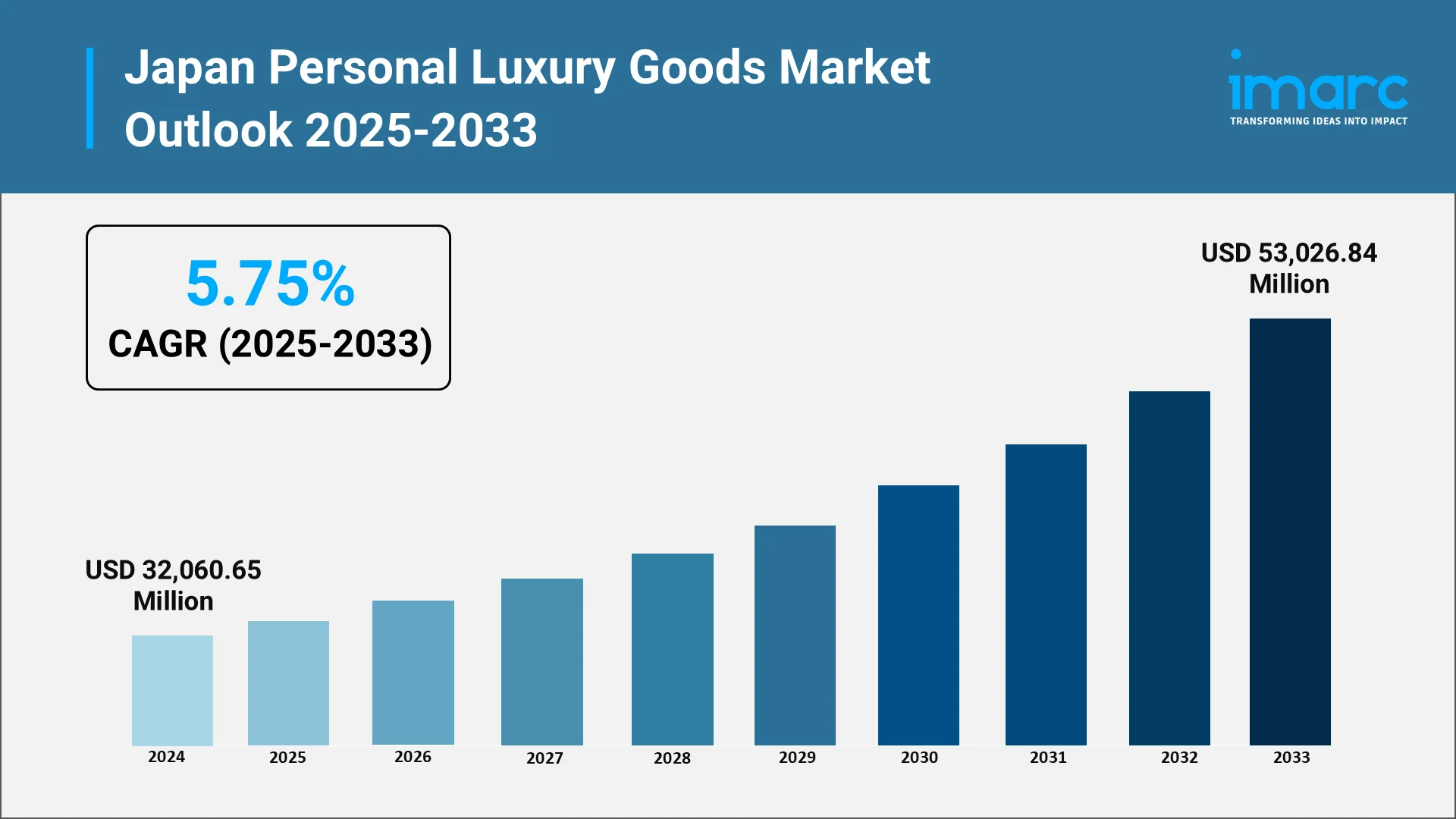
The Japan personal luxury goods industry stands as one of the world’s most crucial and dynamic markets, consistently ranking among the top three globally, alongside the United States and China. In 2024, Japan personal luxury goods market size reached USD 32,060.65 Million in 2024. Historically, Japan was instrumental in the global expansion and "democratization of luxury," pioneering a culture where high-end goods, once exclusive to the elite, became aspirational badges for a vast, affluent middle class. With an established love for craftsmanship, heritage, and quality, Japanese consumers have long boasted some of the highest per capita spending on luxury worldwide.
However, the market today is far from its bubble-era origins. It is a nuanced landscape where traditional values intersect with hyper-modern demands. Post-pandemic recovery, coupled with a surge in inbound tourism and fundamental shifts in local consumer psychology, has positioned Japan for a period of robust growth. This comprehensive analysis, targeting a market outlook toward 2033, delves into several pivotal factors—from rising domestic affluence to the power of digital commerce—that are collectively fueling the expansion of the Japan personal luxury goods industry.
Explore in-depth findings for this market, Request Sample
Rising Affluence and Changing Consumer Preferences:
The primary domestic engine for the luxury market is the evolving behavior of Japan's affluent population, characterized by two major shifts: a move from "Conspicuous Consumption" to "Conscious Consumption," and the emergence of a highly discerning, quality-focused younger demographic.
The Shift from 'Brand as Badge' to 'Individualized Expression':
For decades, luxury in Japan was synonymous with overt status—the "brand as badge" mentality where logo visibility was paramount. This has undergone a fundamental transformation. Today’s Japanese luxury consumer, particularly in metropolitan areas, seeks items that offer deeper personal meaning, exceptional functionality, and a narrative of heritage, rather than just an ostentatious display of wealth. This shift favors brands that can deliver:
- Understated Luxury (Quiet Luxury): A preference for high-quality, logo-minimalist items where the value resides in the materials, craftsmanship, and exclusivity rather than aggressive branding.
- A Focus on Craftsmanship and Monozukuri: Japan’s cultural reverence for meticulous production (monozukuri) means consumers prioritize product durability and quality more severely than almost anywhere else. This translates to a willingness to invest in items perceived as having long-term value, viewing luxury as an investment asset, a trend exemplified by the increasing popularity of collectible luxury watches.
- The Power of Self-Reward: As the population structure continues to age, the financially secure older demographic, along with single professional women in their 20s and 30s (often referred to as 'parasite singles' but possessing substantial disposable income), represent key segments engaging in luxury purchases as a form of self-reward and self-expression, independent of societal status signaling.
The Discerning Younger Consumer:
While older generations exhibit strong brand loyalty, the younger "Yutori generation" (Millennials and Gen Z) are driving change. They are highly attuned to global trends and digital culture, yet they are also value-conscious and scrutinize quality. Although some have resorted to lower-priced goods during economic downturns, they still prioritize durability and a high level of service. This segment's preferences for individualism and authentic connection compel luxury brands to engage with them through personalized, experiential retail.
Influence of Tourism and Duty-Free Retail Expansion:
The second major driver of growth is the resurgent and strategically important luxury shopping tourism segment. The influx of international visitors, especially post-pandemic, has created an enormous windfall for domestic luxury sales, complementing the spending of local residents.
The Inbound Tourism Boom:
The Japanese government’s initiatives to boost tourism, coupled with the favorable exchange rate resulting from the depreciation of the Yen, have made luxury purchases in Japan highly attractive to international travelers.
- Currency Advantage: A weaker Yen effectively lowers the price of luxury goods for visitors holding stronger currencies (e.g., US Dollar, Euro, Yuan), making Japan a price-competitive luxury destination compared to other global shopping hubs.
- Key Consumer Groups: While Japanese travelers have historically been significant buyers of luxury goods overseas, a critical mass of inbound shoppers, particularly from China and South-East Asia, are now bolstering domestic sales. This group is essential, as emerging market consumers have been responsible for the vast majority of global luxury market growth in recent years.
- The Travel Retail Ecosystem: The expansion of duty-free and travel retail channels—in airports, major shopping districts, and through dedicated tourist concessions—is vital. This channel offers attractive discounts and a guarantee of product authenticity, enhancing the overall tourist shopping experience. The strategic development of luxury shopping tourism is a conscious effort by both government bodies and local stakeholders to improve infrastructure and offer fiscal arrangements like tax reductions to attract international brands. The projection of international tourist arrivals reaching over 1.2 million by 2033 further underscores the long-term impact of this driver.
Growing Demand for Sustainable and Ethical Luxury Brands:
A critical, global mega-trend now significantly influencing the Japan personal luxury goods industry is the escalating consumer demand for sustainability, ethical sourcing, and corporate responsibility.
Conscious Consumption and Value Perception:
Japanese consumers, like their global counterparts, are increasingly aware of environmental and social governance (ESG) issues, though this awareness is not uniform across all demographics. The post-pandemic era has accelerated this shift, with consumers making decisions more responsibly and valuing high quality, durability, and adherence to sustainable principles.
- The Search for Sustainable Value: In the luxury context, sustainable luxury is defined by values like rarity, craftsmanship, and longevity, which inherently align with a philosophy of anti-fast-fashion and durability. Consumers are looking for brands that transparently demonstrate commitment to ethical production, reduced environmental impact (e.g., organic materials), and fair labor practices.
- The Rise of Circularity: A notable development is the increasing acceptance and interest in circular economy models, particularly in luxury fashion. Research in Japan has focused on consumer behavior toward both recycled clothing and secondhand clothing, recognizing the different motivations and perceived values associated with each. This willingness to embrace high-end pre-owned goods not only addresses sustainability concerns but also provides access to luxury for value-conscious consumers.
- Brand Imperative: Luxury companies are now compelled to integrate sustainability into their core value proposition and marketing storytelling. For brands, this means moving beyond simple quality claims to offering proof of ethical sourcing and responsible supply chain management to maintain trust and loyalty among modern Japanese consumers.
Digitalization and the Role of E-Commerce in Luxury Sales:
The digital revolution has irrevocably changed the landscape of luxury consumption, making digitalization and e-commerce a key growth pillar. While Japan’s e-commerce penetration has historically lagged behind other major economies, the luxury sector is rapidly catching up, driven by the shift in consumer behavior during and after the global pandemic.
The Omnichannel Imperative:
The modern luxury purchase journey in Japan is no longer a linear path exclusively through department stores or flagship boutiques; it is an integrated, omnichannel experience.
- E-Commerce Adoption: Online shopping is gaining traction, with platforms like Rakuten and Amazon Japan increasing in popularity. For luxury, this involves proprietary e-boutiques and official brand platforms, which allow for better control over brand image and customer experience—a crucial aspect of luxury retail.
- New Digital Engagement Tools: Brands are embracing advanced technologies to bridge the gap between physical exclusivity and digital accessibility:
- Augmented Reality (AR) and Virtual Reality (VR): Implementing AR/VR tools for virtual try-ons or immersive brand experiences appeals to the digitally savvy Japanese consumer.
- Video Content and Storytelling: Video platforms like YouTube and TikTok are popular in Japan, making them critical for brands to convey their heritage, craftsmanship, and unique value through compelling digital storytelling.
- Social Media and Search: Search engines remain the top channel for Japanese internet users to discover new brands or products, followed by traditional media. This mandates sophisticated Search Engine Optimization (SEO) strategies tailored to the Japanese market.
- Data and Personalization: Digital technology allows luxury brands to work with customer data to offer highly personalized services and communication, reinforcing the sense of exclusivity and individual recognition that the new consumer desires.
.webp)
Future Outlook: Market Growth Potential Toward 2033
The Japan personal luxury goods market will be defined by resilience, innovation, and a dual-growth strategy: catering to a hyper-local, quality-focused domestic consumer base while strategically leveraging the massive volume and currency advantages presented by inbound tourism. The growth will be more qualitative than quantitative, prioritizing brand experience, authenticity, and ethical positioning over raw volume sales. IMARC Group expects the market to reach USD 53,026.84 Million by 2033, exhibiting a growth rate (CAGR) of 5.75% during 2025-2033.
Key indicators for growth through 2033 include:
- Sustained Inbound Tourism: The continuation of favorable currency rates and a government commitment to tourism infrastructure will ensure that luxury purchases by international visitors remain a substantial revenue stream.
- Increased Investment in Experiential Retail: Luxury houses will continue to invest heavily in Japanese flagship stores and unique experiential retail formats that combine the best of Japanese service (omotenashi) with digital integration.
- Maturation of Sustainable Demand: As Gen Z's purchasing power grows, the luxury secondhand and rental markets will continue to gain legitimacy and scale, demanding greater transparency from primary market brands regarding their ESG credentials.
The Japan personal luxury goods market size is set not just for expansion, but for a fundamental evolution into a smarter, more responsible, and digitally interconnected ecosystem, securing its position as a global trendsetter in luxury retail for the next decade.
Choose IMARC Group as We Offer Unmatched Expertise and Core Services:
To navigate the intricacies and opportunities within this sophisticated market, industry leaders need clarity and deep, fact-based intelligence. IMARC Group provides the specialized expertise required to capture the next wave of growth in the dynamic Japan personal luxury goods industry.
- Data-Driven Market Research: Deepen your knowledge of Japanese consumer spending patterns, brand performance, and emerging product categories through in-depth market research reports tailored to the luxury segment.
- Strategic Growth Forecasting: Predict emerging trends in luxury retail, from personalization strategies and experiential commerce to shifts in demographic spending by key global regions impacting Japan.
- Competitive Benchmarking: Analyze competitive forces in the Japan personal luxury goods industry, review market share of key players, and monitor breakthroughs in omnichannel integration and supply chain excellence.
- Policy and Infrastructure Advisory: Stay one step ahead of tourism regulations, duty-free retail policies, and import/export strategies affecting luxury brand accessibility and profitability in Japan.
- Custom Reports and Consulting: Get tailored insights geared to your organizational objectives—be it launching a new luxury line in Japan, optimizing your retail footprint, or building a sustainable sourcing strategy.
At IMARC Group, our goal is to empower luxury brand executives with the clarity and intelligence required to master the dynamic Japan personal luxury goods market. Join us in securing your brand's future success—because every luxury purchase is a strategic investment. Click here: https://www.imarcgroup.com/japan-personal-luxury-goods-market
Our Clients










Contact Us
Have a question or need assistance?
Please complete the form with your inquiry or reach out to us at
Phone Number
+91-120-433-0800+1-201-971-6302
+44-113-547-7077
Previous Post

The luxury watch industry represents one of the most enduring segments of the global fashion and lifestyle market. Combining precision engineering with timeless craftsmanship, luxury watches continue to hold strong appeal among high-net-worth individuals, collectors, and aspirational consumers. The global luxury watch market size reached USD 29.12 Billion in 2024, reflecting steady growth driven by premiumization, rising consumer demand in emerging economies, and the enduring value of heritage timepieces.
The Vietnam athleisure market stands at a pivotal juncture, experiencing remarkable transformation driven by evolving lifestyles, rising health consciousness, and rapid urbanization. As Vietnamese people are increasingly prioritizing wellness and seeking versatile clothing that seamlessly transitions from gym workouts to casual social settings, the demand for activewear trends has surged dramatically. With lifestyle apparel Vietnam witnessing unprecedented growth and fitness clothing demand reaching new heights, both international brands and homegrown labels are competing vigorously to capture market share in this dynamic sector.
The Philippines conveyor belt market is picking up speed, powered by the country’s industrial growth and focus on automation. According to the IMARC Group, the market reached USD 31.23 Million in 2024, reflecting notable growth across manufacturing, mining, logistics, and food processing. As industries modernize, the need for efficient material handling systems is creating strong momentum for both domestic and imported conveyor solutions.
The US retail market is undergoing a profound transformation, fueled by the integration of artificial intelligence (AI) across multiple business operations. From personalized consumer engagement to predictive inventory management and dynamic pricing strategies, AI is redefining how retailers operate, compete, and deliver value. Increasing consumer expectations for seamless, personalized, and efficient shopping experiences are prompting businesses to embrace AI-driven solutions to optimize performance, reduce costs, and enhance decision-making.
The global beauty and personal care products market is undergoing a profound transformation, driven by technological innovation, evolving consumer expectations, and sustainability-focused practices. Increasing consumer awareness of health, wellness, and ethical sourcing is compelling companies to rethink traditional formulations and adopt advanced manufacturing techniques. Businesses are now integrating biotechnology, artificial intelligence, and data-driven insights into product development, distribution, and marketing strategies.
The Philippines board game market is on a winning streak, fueled by a growing passion for social play, learning, and creative pastimes. According to IMARC Group, the market reached USD 83.39 Million in 2024, reflecting how board gaming is becoming a favorite form of entertainment across generations. Family games, strategy and role-playing titles, and educational options for kids are gaining steady traction, alongside collectible and pop culture–inspired editions.
The Australian fantasy sports industry is entering a phase of heightened momentum, with market size for 2024 reaching approximately USD 810.6 Million, as detailed in a recent report. This market is forecast to grow to USD 2,180.2 Million by 2033, representing a compound annual growth rate (CAGR) of around 10.4 % from 2025 through 2033 .
Australia's textile recycling sector is experiencing a technological renaissance, with 40% of SMEs currently adopting artificial intelligence (AI), marking a 5% increase compared to the previous quarter (July-Sept 2024). The percentage of businesses unaware of how to utilize AI has decreased by 2% to 21%.
Containers are standardized, tough, watertight containers for efficient storage and transportation of goods by ship, rail, and truck without the need for handling the cargo itself. They are the lifeblood of global trade and logistics, allowing for effective intermodal transport. Constructed from high-strength steel, aluminum, or composite materials, they are designed to withstand rigorous marine and environmental elements. The most common types are dry storage containers for general cargo; however, there are also refrigerated (reefers) for perishables, tank containers for liquids and gases, open-top and flat-rack for oversized equipment, and high-cube for voluminous cargo. Standardization, mainly through ISO specifications, allows for seamless compatibility and efficiency throughout global logistics systems.
Carpet is a textile floor covering made of a pile, tufts of yarn or fiber, sewn to a backing for dimensional stability. Carpets are manufactured in various construction forms: tufted (universal across the world, yarn punched through a primary backing and treated with secondary backing), woven (Wilton and Axminster, highly valued for durability and pattern intricacy), needle-felt (bonded fibers for industrial applications), and knotted (hand-made rugs).
Aloe vera gel is a natural concentrate obtained from the parenchyma of the inner leaf of Aloe barbadensis miller, which is valued for its therapeutic, nutritional, and cosmetic uses. The gel mostly comprises water (more than 95%) and polysaccharides, vitamins, minerals, amino acids, enzymes, and antioxidants responsible for its soothing, moisturizing, and healing actions. Renowned for its anti-inflammatory, antimicrobial, and skin-rejuvenating properties, the aloe vera gel finds broad application in personal care cosmetics, pharmaceuticals, food supplements, and beverages.
Aloe vera is a perennial fleshy succulent plant of the species Aloe barbadensis miller, grown worldwide for its nutritional, medicinal, and cosmetic benefits. It has two primary constituents: the transparent inner gel consisting mainly of polysaccharides, vitamins, enzymes, and amino acids; and the yellowish latex, consisting of anthraquinones with powerful laxative properties. Aloe vera gel is highly prized for its emollient, moisturizing, and healing properties and is a common ingredient in skincare, personal care, and pharmaceutical products.
Air purifiers are appliances that enhance indoor air quality by eliminating pollutants like dust, allergens, smoke, volatile organic compounds (VOCs), and microbial particles. They work on various technologies such as HEPA (High-Efficiency Particulate Air) filters, activated carbon filters, UV-C light, ionizers, and photocatalytic oxidation. Their major components are usually fans or blowers, filter media, sensors, electronic controls, and metal or durable plastic housings. Some of the crucial characteristics of air purifiers include efficiency of filtration, airflow, noise levels, power consumption, and filter material durability.
Air coolers are evaporative coolers based on the principle of water evaporation, utilizing a fan or blower to blow cooled air, as opposed to air conditioners, which function based on refrigerant and compressor principles. Air coolers are designed to deliver low-cost and energy-efficient temperature management, mainly applicable to dry and hot climates. They generally consist of a pump, motor, cooling pads, water tank, blower/fan, and electronic control units. Main characteristics are low energy usage, environmental friendliness, portability, and low cost. Production of air coolers typically consists of combining sheet metal or plastic enclosures with motor-driven fans, water distribution networks, and cellulose or aspen cooling pads.
A4 paper, which is one of the most commonly used paper formats around the world, is 210 mm × 297 mm and forms the part of the ISO 216 system. It mainly consists of cellulose fibers obtained from wood pulp, recycled papers, or other fibrous raw materials like bagasse or bamboo. A4 paper contains crucial characteristics like smoothness, even thickness, high opacity, brightness, tensile strength, and durability, which enable it for printing, copying, and writing. The production process includes pulping raw fibers, bleaching for whiteness, refining for increasing fiber bonding, and sheet formation under regulated drying and calendaring.
The manufacturing sector is constantly changing with continuously rising demands for sustainability, innovation, and efficiency. The time comes when companies want to expand their business or venture into new markets.
India's manufacturing industry is experiencing a remarkable transformation and growth in 2025, aiming to establish the nation as a key player in global manufacturing. Supported by governmental initiatives such as the Make in India program and the Production Linked Incentive (PLI) schemes, the sector has drawn significant foreign direct investment (FDI) and encouraged innovation across multiple industries.
India's manufacturing industry is undergoing a turning point in 2025 based on strong government initiatives, a highly skilled and youthful population, and a worldwide trend towards diverse supply chains.
The global tobacco sector remains one of the most mature yet closely scrutinized industries in the world. With demand persisting across both developing and developed markets, cigarette production continues to be a high-volume, technically refined activity governed by extensive regulation and economic influence.
The global vegan cosmetics market is experiencing unprecedented growth, driven by a new wave of conscious consumers who demand beauty products that are not only effective, but also ethical, sustainable, and cruelty-free. This movement is more than just a passing trend; it's a fundamental shift in values that is reshaping the industry.
The global online grocery market has rapidly evolved from a convenience service to a mainstream retail segment, reshaping how consumers shop for everyday essentials. According to the IMARC group report, the market reached a value of USD 710.10 Billion in 2024 and is projected to witness consistent expansion.
The India textile market is picking up serious momentum, supported by smarter tech and changing user preferences. As more buyers look for eco-friendly, premium-quality products, manufacturers are stepping up with automation, digital tools, and flexible production systems.
The global toys market plays a crucial role as toys fundamentally support child development by fostering creativity, cognitive skills, and social interaction. In 2024, the global toys market was valued at USD 113.94 Billion.
The worldwide luxury watch market is poised for sustained growth, driven by rising affluence, aspirational lifestyle, and digital evolution. As consumers place greater importance on exclusivity and craftsmanship, demand for luxury watches is growing in developed as well as emerging markets.
Baby wipes are wet disposable wipes used to clean the tender skin of an infant, mostly when changing diapers. Composed of non-woven materials and embedded with delicate cleansing products, commonly made from water, mild surfactants, moisturizers such as aloe vera, and preservatives baby wipes are made to be delicate, hypoallergenic, and safe for daily use.
A tennis ball is a type of high-performance sporting ball used in both competitive and recreational tennis. On various court surfaces, its rubber core and felt covering provide the best bounce, speed, and durability. Both pressurised and non-pressurized tennis balls are available to accommodate different playing situations and ability levels. Under international regulations, they are crucial for competitions and training, and business expansion is being driven by sustainability and material innovation.
Caramel colour or E150d, is a common food and beverage colouring ingredient that is made by carefully heating food-grade carbohydrates with alkali or acid catalysts. Known as sulfite ammonia caramel, it gives baked items, sauces, soft drinks, and alcoholic beverages a rich brown colour. In food business, it is a preferred option because to its stability, solubility, and capacity to improve aesthetic appeal. Major food regulators across the world have authorised E150d and regulated it for safe consumption.
Kitchen appliances are a diverse category of electrical and mechanical devices that are essential in modern kitchens for various cooking and food preparation tasks. These appliances have revolutionized the way we prepare and cook food, making the process more efficient and convenient. For instance, refrigerators are crucial for storing perishable foods and keeping them fresh. Ovens and stoves are fundamental for baking, roasting, and cooking on open flames or electric coils. Microwaves provide quick heating, cooking, and defrosting, saving time in the kitchen. Dishwashers automate the often-tedious task of cleaning dishes, while blenders and food processors simplify chopping, pureeing, and blending ingredients.
A plastic cigarette lighter is a small portable hand-held device that gives a flame generally used for lighting cigarettes, cigars, candles, and other small things. They are mostly butane-gas fueled, which makes them easily disposable after all the fuel has been depleted. It's manufactured using polycarbonate or polypropylene plastic, so it's very lightweight and affordable.
Tissue paper, made from both virgin and recycled pulp, has become an essential part of daily life for cleaning, dusting, wrapping, and personal use. The industry's expansion is driven by luxurious tissue products, ultra-absorbent paper towels, and rising prices. Favorable factors such as growth in the IT sector, tourism, and MNCs, along with shifts in lifestyle and attitudes towards hygiene, cleanliness, and freshness, have boosted tissue consumption. Institutions like hospitals, malls, office complexes, and F&B chains are major consumers. Government support for sustainable practices has further spurred growth. West and South India are projected to be the largest consumers of tissues due to high foreign tourist influx, growing urbanization, and a hot climate that increases demand for disposable tissues.
While secondary research acts as the base of decision-making for businesses, primary research fills in the gaps that only a nuanced and personalized perspective can deliver. With enormous volumes of data being added daily on search engines, relying on obsolete and unauthentic data could cost businesses heavily. To stay ahead of the curve and make informed decisions, tapping directly into the information gathered through your customers is essential. This helps reveal the drivers of the decision-making process, unveiling unmet needs, and highlighting nascent trends before they take shape.
Consumer behavior mainly includes consumers’ mental, emotional, and behavioral responses toward the buying pattern of products. There are several factors that influence consumer behavior, such as personal, social, cultural, and psychological. Personal factors include the age, gender, and income of the consumer. Social factors like friends and family and cultural factors such as religion and tradition also play an important role in consumer buying patterns. Motivation, perception, and learning about goods and services change consumer preferences and fall under psychological factors.