Australia Medical Aesthetics Industry: Analysis of Key Trends Shaping the Future of the Industry
Introduction:
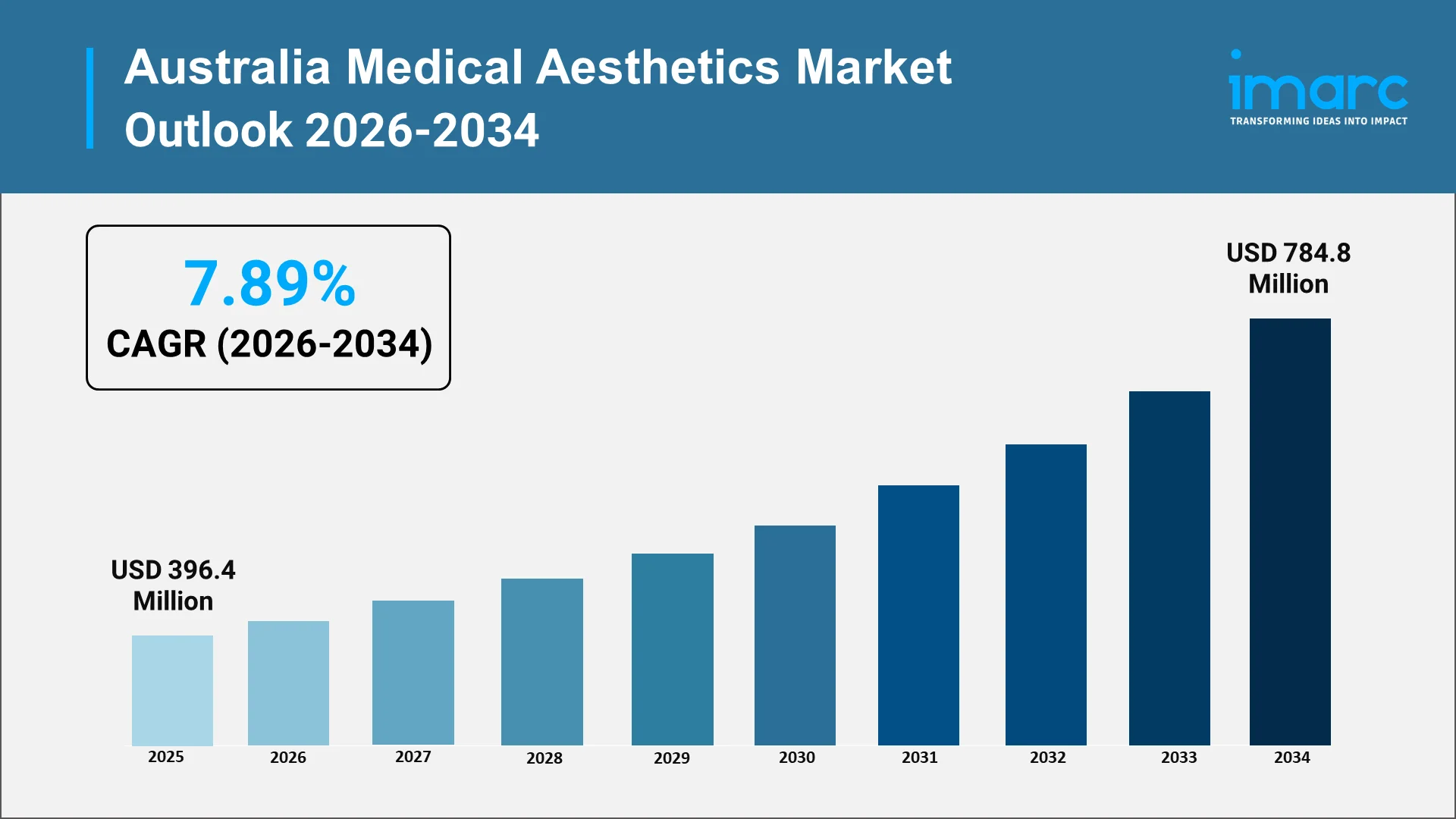
The Australia medical aesthetics industry size reached USD 396.4 Million in 2025. Looking forward, the market is expected to reach USD 784.8 Million by 2034, exhibiting a growth rate (CAGR) of 7.89% during 2026-2034. Over the last ten years, the medical aesthetic industry in Australia has transformed from a niche beauty service into a mainstream part of healthcare and wellness. From being dominated by cosmetic surgery and invasive procedures, the aesthetic landscape now places a premium on safety, subtlety, and scientifically driven outcomes. The Australian market reflects global trends toward minimally invasive treatments; however, its evolution also continues to be shaped at home by unique cultural, ethical, and regulatory influences that have redefined the relationship between medicine, technology, and beauty.
On the whole, the aesthetics industry has become a fusion of medical innovation and consumer empowerment. Patients are no longer the passive recipients of beauty enhancement but become active participants in long-term skin health and self-image management. In its turn, doctors, dermatologists, and nurses integrate advanced technologies, including laser systems, injectables, and regenerative biologics, into holistic treatment plans. The aesthetic space thus bridges the gap between medical science and lifestyle wellness as a reflection of the society that is increasingly interested in self-care, aging prevention, and individualized treatment outcomes.
This transformation is accompanied by rising expectations of professionalism, ethics, and transparency. As the appeal of the non-surgical treatments continues to grow, so does the public debate about safety, qualifications, and the psychological dimensions of cosmetic enhancement. Thus, it is not possible to understand the evolution of the Australian industry only from the viewpoint of innovation; it needs to be recognized as a social and cultural phenomenon that reshapes how individuals define confidence, identity, and wellbeing.
Explore in-depth findings for this market, Request Sample
Recent Market News and Major Research and Development:
The Australian medical aesthetics sector is gaining significant attention in both public discourse and scientific research, driven by growing concerns about regulation, clinical oversight, and consumer safety. Authorities have tightened rules around the marketing and administration of aesthetic procedures, particularly injectables and prescription-only treatments. Recently, the clinic chain Dr Umed Cosmetic & Injectable Clinics entered voluntary administration after 25 legal claims were filed by patients alleging botched facelifts and serious harm. This stricter stance reflects a broader shift toward integrating cosmetic medicine into the healthcare framework, emphasizing patient welfare and professional accountability over commercial promotion.
These regulatory changes have also transformed how clinics engage with consumers, especially on social media, where influencer partnerships and visual content dominate. Marketing now faces heightened scrutiny, pushing practitioners to highlight medical supervision, informed consent, and safety standards instead of focusing solely on aesthetic outcomes. This evolution is fostering a more transparent and responsible communication culture, which is essential for maintaining trust in an expanding and competitive market.
Simultaneously, innovation and research continue to drive the sector forward. Energy-based technologies such as radiofrequency and ultrasound are improving the precision and comfort of skin treatments, while advanced injectable formulations deliver more natural and subtle results. Regenerative medicine leveraging growth factors, collagen stimulators, and bioactive compounds is poised to redefine how aesthetic treatments rejuvenate the skin at the cellular level. In February 2025, InMode Australia revealed its new “QuantumRF” skin-tightening system, aimed at treating facial and body laxity without incisions and with minimal downtime. Collaboration between academic institutions, research centers, and private firms ensures that new technologies undergo rigorous scientific validation. The integration of artificial intelligence in treatment planning is further enhancing facial analysis and outcome prediction. Yet, amid these advancements, safety concerns persist, reinforcing the importance of practitioner training and ethical standards. Overall, Australia’s medical aesthetics industry is evolving toward a model that balances innovation with scientific credibility, patient safety, and professional integrity.
Top Companies in the Australia Medical Aesthetics Industry:
Australia’s aesthetic medicine ecosystem brings together international manufacturers, local distributors, clinics, and training institutions, forming a dynamic network that drives innovation and accessibility. In July 2025, Tissue Repair Limited (ASX: TRP) partnered with Advanced Cosmeceuticals Pty Ltd to distribute its regenerative skincare range across more than 2,500 clinics in Australia and New Zealand, strengthening the local supply chain for evidence-based aesthetic treatments. Global companies specializing in injectables, dermal fillers, and advanced skincare technologies have established a strong foothold in the country, supplying the products that underpin most aesthetic practices. Their collaboration with Australian dermatologists, plastic surgeons, and aesthetic nurses has fostered a culture of evidence-based care, emphasizing patient safety, scientific validation, and consistent clinical outcomes.
Alongside these international players, local operators and clinic chains have expanded rapidly, catering to diverse clientele in both metropolitan and regional areas. Many clinics have evolved into multidisciplinary centers that combine dermatology, cosmetic medicine, and lifestyle wellness under one roof. These facilities often double as training and research hubs, hosting workshops and collecting clinical data to support the safe adoption of new technologies and techniques. This integration of practice, research, and education ensures that Australia’s aesthetic industry continues to advance responsibly.
The education and technology sectors are also playing transformative roles. Accredited training programs for doctors and nurses in injectables, energy-based devices, and advanced aesthetic procedures are helping standardize professional practice. At the same time, digital technologies such as 3D imaging, AI-assisted facial analysis, and simulation tools are reshaping consultations and treatment planning. For example, a recent feature noted that in Australia the “AI revolution” in aesthetic medicine has enabled advanced imaging software to analyse a patient’s facial structure, skin condition and overall anatomy in unprecedented detail. These innovations enable practitioners to visualize results and personalize care with greater precision. Together, manufacturers, clinics, educators, and tech innovators are building a cohesive ecosystem that positions Australia at the forefront of safe, scientifically informed, and patient-centered aesthetic medicine.
Opportunities and Challenges in the Australia Medical Aesthetics Industry:
While Australia’s medical aesthetics industry continues to expand rapidly, this growth brings both opportunities and challenges that require careful management. The sector’s evolution represents a delicate balance between innovation and regulation, clinical excellence and commercial ambition, and accessibility and ethical responsibility. On one hand, advancements in science, technology, and patient demand are driving diversification; on the other, the need for consistent oversight and professional standards has become more pressing than ever. Navigating this balance will define how sustainably the industry matures over the coming decade.
One of the most promising opportunities lies in the integration of aesthetic medicine into broader health and wellness frameworks. Increasingly, consumers view aesthetic treatments not as vanity-driven indulgences but as part of a holistic self-care and preventative health routine. This shift allows practitioners to frame aesthetic medicine around confidence, psychological well-being, and skin health rather than cosmetic enhancement alone. Similarly, the rising preference for non-surgical and low-downtime procedures such as injectables, dermal fillers, and energy-based therapies presents significant market potential. These treatments offer natural, subtle improvements aligned with modern beauty ideals that emphasize authenticity and self-expression. Clinics that can combine medical expertise with empathetic, wellness-oriented care are best positioned to meet these evolving expectations.
Technological innovation is another key driver of opportunity. The integration of artificial intelligence, augmented reality, and advanced digital imaging has transformed consultations and treatment planning. Practitioners can now visualize predicted outcomes with greater accuracy and customize care with unprecedented precision. Concurrently, developments in biomaterials, micro-delivery systems, and regenerative medicine are paving the way for next-generation interventions that work on cellular restoration and long-term rejuvenation. Alongside this, the expansion of professional education and accredited training programs for doctors, nurses, and specialists ensures that clinical skills keep pace with innovation. Establishing robust learning pathways, certification systems, and continuous professional development programs will help Australia maintain its global reputation for ethical and safe aesthetic practice.
However, this momentum also introduces a series of challenges that demand attention. Regulatory fragmentation remains one of the most significant hurdles, as enforcement of national guidelines varies across states and territories. This inconsistency creates confusion for both practitioners and patients, complicating compliance and accountability. The rise of unlicensed operators and informal clinics further threatens public safety, as consumers are often drawn to cheaper, unregulated services that lack medical supervision. Addressing these issues will require stronger regulatory enforcement, consumer education, and professional transparency. Workforce shortages and uneven quality of training are also emerging concerns, as the growing demand for qualified injectors and specialists risks diluting standards without sufficient investment in accredited programs. Additionally, the ethical dimensions of aesthetic care—including patient screening for mental health and body image concerns need deeper integration into clinical practice. Finally, ethical marketing has become a pressing issue. The dominance of social media and influencer culture blurs the line between professionalism and promotion, underscoring the importance of truthful, respectful, and compliant communication. Ultimately, the future of Australia’s medical aesthetics industry depends on balancing innovation with responsibility, ensuring that progress serves both patient safety and public trust.
.webp)
Future Outlook: Australia Medical Aesthetics Industry
The future of Australia’s medical aesthetics industry is set to be defined by sophistication, safety, and sustainability. As technology advances and consumers become more discerning, the industry is shifting beyond traditional notions of beauty toward a more holistic concept of wellness and longevity. Ongoing regulatory reforms are expected to further professionalize the sector, strengthening its medical foundations and reinforcing standards of care. Clinics that invest in evidence-based practice, quality assurance, and continuing education will be at the forefront of this evolution. The gradual decline of unregulated operators marks a critical transition toward a system centered on patient safety, informed consent, and transparent communication of results. This transformation will ensure aesthetic medicine is viewed not merely as a cosmetic pursuit but as a legitimate extension of healthcare focused on long-term well-being.
At the same time, technology and cultural attitudes are reshaping the industry’s future. Artificial intelligence and predictive analytics will enhance diagnostic precision and treatment personalization, while teleconsultations and digital tools will expand access to safe, specialized care across Australia, including in remote regions. Regenerative medicine, emphasizing self-healing and natural rejuvenation, will increasingly replace corrective procedures, reflecting a global shift toward sustainable beauty and inner vitality. As inclusivity and diversity gain prominence, the cultural understanding of beauty is evolving from perfection toward individuality, authenticity, and confidence. This progression aligns aesthetic medicine with psychological well-being and self-acceptance, creating a more balanced, patient-centered industry. Collaboration among clinicians, researchers, product developers, and regulators will remain crucial in maintaining ethical integrity and fostering innovation. By investing in data-driven research, training, and responsible governance, Australia is well positioned to remain a global leader in ethical and technologically advanced aesthetic medicine—an industry that celebrates health, confidence, and the evolving meaning of self-expression.
Australia Medical Aesthetics Industry: Unlocking Strategic Opportunities with IMARC Group’s Expertise
Navigating Australia’s medical aesthetics landscape requires authoritative market research and strategic foresight. As advancements in dermatology, biotechnology, and personalized medicine reshape consumer expectations, industry stakeholders must align with partners who can bridge clinical innovation and market opportunity.
IMARC Group’s analytical expertise delivers a complete understanding of Australia’s aesthetic medicine market, covering trends in injectables, laser therapies, body contouring, and skin rejuvenation technologies. Our research delves into emerging areas such as AI-driven diagnostics, bio-based fillers, and sustainability-focused cosmetic formulations, helping decision-makers anticipate shifts in consumer behavior and regulatory standards.
Through robust data analytics, regulatory intelligence, and competitive landscape assessments, IMARC Group enables healthcare institutions, investors, and technology developers to capitalize on growth opportunities and build resilience in an increasingly sophisticated marketplace. Our tailored studies support clients in evaluating clinic performance, optimizing product portfolios, and identifying innovation pipelines that align with future demand.
At IMARC Group, we empower organizations to thrive in the evolving medical aesthetics and wellness ecosystem of Australia—driving progress, ethical leadership, and evidence-based transformation in one of the region’s most dynamic healthcare sectors.
Our Clients








Contact Us
Have a question or need assistance?
Please complete the form with your inquiry or reach out to us at
Phone Number
+91-120-433-0800+1-201-971-6302
+44-113-547-7077
Previous Post

A rapid diagnostic test (RDT) kit is a medical device designed to quickly detect specific biomarkers, antigens, antibodies, or nucleic acids linked to diseases—typically within minutes and without the need for sophisticated laboratory equipment. These kits often use lateral flow assays, immunochromatographic strips, or rapid molecular testing methods to deliver fast and reliable results.
The Philippines pharmaceutical industry stands as one of Southeast Asia's most dynamic and rapidly expanding healthcare markets in the ASEAN region. With a market valuation reaching USD 3.36 Billion in 2025, the sector demonstrates resilience and tremendous growth potential.
Pharmaceuticals are medical products, substances, or formulations involved in the development, manufacture, and regulation for the prevention, diagnosis, treatment, and management of diseases in humans as well as animals.
The Australia aged care industry stands at a pivotal juncture as the nation grapples with demographic shifts that are reshaping the landscape of elderly care services. With an aging population that continues to expand, Australia faces both unprecedented challenges and remarkable opportunities in delivering quality care to its senior citizens.
The Indian vaccines industry holds an unparalleled position globally, often celebrated as the pharmacy of the world due and its massive production scale and capabilities. It reached INR 113.7 Billion in 2024 according to IMARC Group and it is projected to grow at a CAGR of 8.8% from 2025-2033.
The medical imaging market has reached a transformational phase, driven both by rapid technological advancements and growing demands for precision-driven diagnostics. As health systems worldwide come under increasing pressure to improve patient outcomes while minimizing procedural risks and optimizing clinical workflows, medical imaging has become one of the most important cornerstones of modern medicine.
India’s medical devices industry is on a sustained growth trajectory driven by expanding hospital infrastructure, rising chronic disease burden, stronger local manufacturing supported by government incentives, and a rapidly growing shift toward portable and home care devices.
Pectin represents a naturally occurring polysaccharide mainly extracted from cell walls of fruits (mainly from citrus peel and apple pomace). It is a soluble dietary fiber and a hydrocolloid with gelling, thickening, and stabilizing properties. It is mostly composed of galacturonic acid units.
Paracetamol, also referred to as acetaminophen, is an analgesic and antipyretic compound that is commonly used worldwide for the treatment of mild to moderate pain and the management of fever. The mechanism of action occurs mainly in the central nervous system, where it inhibits the mechanisms that regulate pain and body temperature, but lacks anti-inflammatory properties.
The Australia wellness tourism industry has emerged as a critical segment of the country’s broader travel and hospitality sector. It reflects a growing global emphasis on health, self-care, and holistic well-being, capturing the attention of travelers seeking experiences that combine relaxation, rejuvenation, and personal growth.
The Brazil cardiovascular devices market represents a crucial segment in the country’s healthcare ecosystem, addressing one of the leading causes of morbidity and mortality: cardiovascular diseases. Conditions such as heart attacks, stroke, arrhythmias, and heart failure require ongoing medical intervention and advanced heart disease treatment solutions. With the rising prevalence of cardiovascular disorders, demand for comprehensive cardiac care equipment and innovative treatment modalities is increasing.
India's Ayurvedic products market is experiencing remarkable transformation as consumers increasingly prioritize holistic wellness and natural remedies over conventional alternatives. The convergence of traditional healing wisdom with modern consumer preferences has created a dynamic landscape where herbal medicines, chemical-free personal care products, and immunity-boosting supplements are becoming household staples.
Nicotine pouches are small, smokeless oral delivery products of nicotine, free from tobacco, designed to allow for controlled release of the active principle without burning, vaporizing, or use of traditional tobacco leaves. It consists of a small pouch that contains a matrix made basically from plant fibers, flavorings, pH adjusters, and stabilizers impregnated with nicotine, encased in a permeable material permitting the gradual absorption of the product via the oral mucosa.
The pharmaceutical industry in Japan is among the most advanced globally, recognized for combining innovation, high-quality standards, and patient-centered care. Its extensive value chain includes drug discovery, clinical trials, manufacturing, distribution, marketing, and post-market surveillance. Serving both domestic and international markets, Japanese pharmaceutical companies are respected for regulatory compliance, safety, and reliability, establishing them as trusted global collaborators in drug development.
The pharmaceutical industry in Japan is among the most advanced globally, recognized for combining innovation, high-quality standards, and patient-centered care. Its extensive value chain includes drug discovery, clinical trials, manufacturing, distribution, marketing, and post-market surveillance. Serving both domestic and international markets, Japanese pharmaceutical companies are respected for regulatory compliance, safety, and reliability, establishing them as trusted global collaborators in drug development.
The global healthcare IT industry is on a remarkable upswing, fueled by the surge in preventive care, digital health platforms, and smarter patient management systems. According to IMARC Group, the market hit USD 363.15 Billion in 2024, a clear sign of worldwide adoption. An aging population, the growing comfort with remote care, and the push toward personalized medicine are all speeding this momentum.
The global endoscopy devices market is on a sharp growth path, fueled by the shift toward minimally invasive procedures, the need for early diagnosis, and cutting-edge imaging technologies. IMARC Group reported the market hit USD 50.01 Billion in 2024, underscoring its worldwide acceptance.
The global business-to-business (B2B) payments landscape is experiencing a fundamental transformation that is reshaping how enterprises conduct financial transactions across borders and industries. The market, valued at approximately 1,189.6 Billion in 2024, is projecting remarkable growth with expectations to reach USD 2,189.0 Billion by 2033, exhibiting a CAGR of 7% from 2025-2033. This exponential expansion is signaling a paradigm shift in commercial finance, driven by technological innovation, changing business expectations, and the urgent need for more efficient payment infrastructures.
The smart medical devices market is entering a decade defined by connected care, real-time diagnostics, and patient empowerment. Valued at USD 45.9 Billion in 2024, the market is projected to reach USD 82 Billion by 2033, expanding at a compound annual growth rate (CAGR) of 6.33% between 2025 and 2033 by IMARC Group. This steady rise reflects growing confidence in data-driven healthcare systems, integration of IoT in medical environments, and the increasing role of artificial intelligence in clinical decision-making.
Active Pharmaceutical Ingredients (APIs) are the bioactive molecules of any drug used in pharmaceuticals, which cause the desired therapeutic action in the body of a human being. APIs are the central core of all drugs, chemical or biological and are responsible for the efficacy, strength, and safety of the drug. APIs are synthesized by various complex chemical synthesis, fermentation, biotechnological, or extraction processes based on the type of drug.
A bio medical incinerator is a high-temperature combustion system specialized for biomedical waste disposal by hospitals, clinics, laboratories, and research institutions. Biomedical waste usually consists of infectious waste, pathological waste, sharps, pharmaceuticals, and contaminated disposables that are very hazardous to human health and the environment if not treated.
Obesity, once viewed primarily as a lifestyle choice, is now widely recognized as a complex and chronic disease characterized by excessive body fat accumulation. Its global prevalence is escalating at an alarming rate posing a significant and growing challenge to public health systems worldwide.
Gonorrhea, a sexually transmitted infection caused by the bacterium Neisseria gonorrhoeae, is a major public health issue globally. Reports show that over one million new cases of curable STIs are contracted every day by individuals aged 15 to 49 years, with the majority being asymptomatic.
The 7 major allergic conjunctivitis markets reached a value of USD 2.1 Billion in 2024. Looking forward, IMARC Group expects the 7MM to reach USD 2.9 Billion by 2035, exhibiting a growth rate (CAGR) of 3.00% during 2025-2035.
The healthcare sector is changing rapidly because of the growing demand for better ways to manage chronic diseases. As we move toward 2025 and beyond, digital tools are playing an important role in dealing with conditions like diabetes, heart disease, cancer, and respiratory problems.
The global multivitamin gummies market consists of chewable dietary supplements that are charged with key vitamins and minerals aimed at maintaining general health and wellness. The gummies present a handy, enjoyable, and easy-to-swallow option to classic pills or tablets, hence are predominantly preferred by children and adults who do not like taking pills.
India's pharmaceutical sector is evolving rapidly, supported by the integration of artificial intelligence (AI) across the value chain. As of 2023, India ranked as the third-largest pharmaceutical producer by volume, accounting for 20% of global generic drug exports.
As Lung Cancer Awareness continues to build global momentum in 2025, Artificial Intelligence (AI) is proving to be a transformative force—not only in clinical diagnostics but also in public education and preventive health efforts. Given that lung cancer remains one of the world’s deadliest cancers, accounting for over 1.8 million deaths each year and a five-year survival rate of just 28.4%, the integration of AI marks a critical turning point.
Observed on May 19, Hepatitis Testing Day 2025 emphasizes the need to "Test. Treat. Eliminate," highlighting the gap in diagnosing hepatitis B and C, which cause over 1.3 million deaths annually. Hepatitis remains a major global health threat, on par with HIV, tuberculosis, and malaria. The growing viral hepatitis market <Viral Hepatitis Market Size | Share, Trends - 2034 > reflects rising demand for better diagnostics, treatments, and integrated care. The WHO warns that without faster testing and treatment, the goal of eliminating hepatitis by 2030 may not be achieved, with disparities in diagnostics, particularly in low- and middle-income countries, hindering progress.
Observed on May 8, World Ovarian Cancer Day 2025 carries the theme “No Woman Left Behind,” reinforcing the urgent need to close the gaps in access, diagnosis, treatment, and care across all regions and socioeconomic groups. Ovarian cancer remains one of the deadliest gynecological cancers, often detected too late due to vague symptoms and limited screening tools. The World Ovarian Cancer Coalition projects a 55% rise in annual cases and nearly 70% more deaths by 2050, with the heaviest burden falling on low- and middle-income countries. Equitable access to early diagnostics, genetic testing, and targeted therapies is critical.
In clinics around the world, a concerning pattern is becoming increasingly evident: a growing number of patients are experiencing wheezing, breathlessness, and persistent coughing. This surge reflects a broader global trend. According to the World Health Organization (WHO), more than 260 million people are currently living with asthma, making it one of the most widespread and persistent chronic respiratory conditions globally.
Observed on April 25, World Malaria Day 2025 carries the theme “Accelerating Equity in Malaria Prevention and Cure,” underscoring the urgent need to reach communities still lacking access to life-saving vaccines and diagnostics. While global malaria death rates have seen modest declines, the disease continues to claim the life of one child every minute, highlighting the critical need for swift, equity-driven action
Sulfamethoxazole is a common synthetic antibacterial that is a member of the sulfonamide class of antibiotics. This substance plays a very significant role in modern medicine due to the amazing capabilities offered by the substance for curing infections and bacterial diseases. Trimethoprim and sulfamethoxazole are frequently used together to create the well-known antibiotic co-trimoxazole, which is well-known for its potency against a variety of bacterial infections. It works by preventing the manufacture of folic acid, which is necessary for the growth of bacteria. Sulfamethoxazole is an essential part of modern antibiotic therapy since it has been used to treat lung infections, urinary tract infections, and other common bacterial illnesses.
Healthcare consumables are necessary medical supplies used for patient treatment, diagnostics, and cleanliness in clinics, hospitals, and home care settings. These consist of supplies such as surgical masks, bandages, gloves, syringes, catheters, and disinfectants. Usually, they are disposable or single use to preserve sterility and stop infections. Healthcare consumables are an essential component of the global healthcare ecosystem and are in high demand due to expanding healthcare needs, an increase in operations, infection control measures, and technological improvements.
Catheters are flexible, tubular medical devices designed to access various body cavities, organs, or blood vessels for diagnostic or therapeutic purposes. They can be broadly classified into types based on their application, including urinary catheters, cardiac catheters, and intravenous (IV) catheters. Catheters are commonly used in diverse healthcare settings for managing chronic conditions, enabling fluid drainage, delivering medications, or facilitating minimally invasive surgeries.
Bioinformatics involves applying computational techniques and tools to study and understand biological systems at the molecular level. It is a field of study that combines mathematics, biology, computer science, and statistics to research genomic data and biological networks. The goal is to interpret information from large biological data sets, such as DNA sequences, protein structures, gene expressions, and other high-throughput experimental data. This field provides various products and services, such as knowledge management tools, bioinformatics platforms, and services.
A non-animal model refers to an experimental system or method used in scientific research or testing that does not involve the use of animals. These models are developed to simulate biological processes, test hypotheses, or study diseases without the need for live animals. The aim is often to reduce the reliance on animal testing, which has ethical implications and raises concerns about animal welfare.
Cell therapy involves the transplantation and manipulation of living cells to replace and repair damaged tissue. Its primary branches include stem cell therapy and non-stem cell therapy. Stem cell therapy utilizes stem cells to repair, replace, or rejuvenate damaged or diseased cells and tissues as they possess the ability to differentiate into various specialized cell types, making them valuable for regenerative medicine. Non-stem cell-based therapies typically involve somatic cells isolated from the human body. These cells are propagated, expanded, selected, and then administered to patients for curative, preventive, or diagnostic purposes. On the other hand, gene therapy seeks to treat diseases by introducing, replacing, or inactivating genes within cells.