Industrial Cooling Equipment Manufacturing Plant Cost in India: Machinery, Investment, Manufacturing Process & Profitability
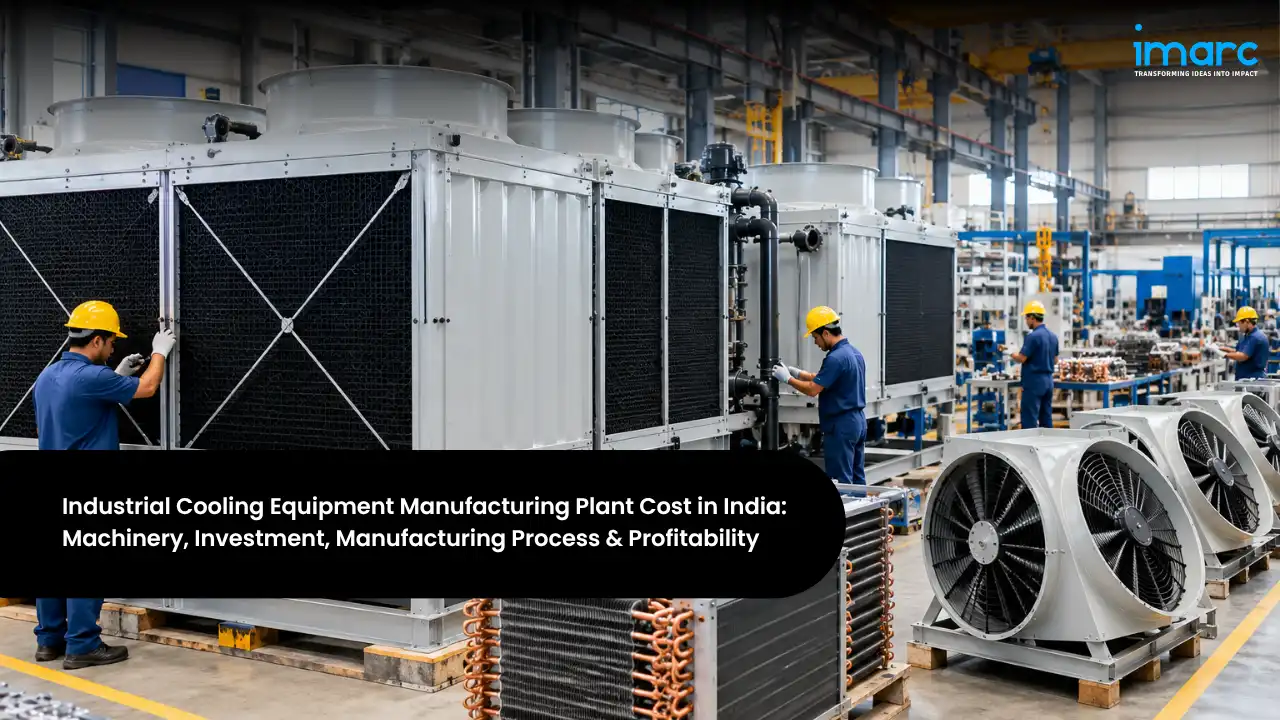
Almost every industrial process generates heat that has to be removed. Power plants, steel mills, refineries, chemical and pharmaceutical units, food processors, plastics moulders, and now data centers all rely on cooling towers, chillers, and heat rejection equipment running around the clock. As India's manufacturing base expands, summers grow hotter, and data center capacity multiplies, demand for reliable and energy-efficient cooling equipment keeps rising. For engineering companies and investors, an Industrial Cooling Equipment Manufacturing Plant Setup in India offers entry into a steady, infrastructure-linked market with growing export potential and a clear push toward cleaner technologies.
Investment depends on the product range, whether the plant builds refrigeration-based chillers as well as cooling towers and heat exchangers, the level of in-house coil and FRP manufacturing, and the testing facilities included. For a typical plant producing cooling towers, process chillers, dry coolers, and evaporative coolers, total investment ranges from about INR 20 crore to INR 250 crore. Bought-out compressors, copper, steel, fans, and controls account for most of the operating cost, so engineering, sourcing, and energy performance are the decisions that shape profitability. At healthy utilisation, a well-run plant can deliver a net profit margin of 10 to 15% and an IRR of 16 to 24%, with payback typically within 3.5 to 5 years.
This guide is written for investors trying to understand how to start an Industrial Cooling Equipment manufacturing plant in India. It covers the main product families and their markets, the demand outlook, the production flow, machinery and raw materials, location and infrastructure, a detailed cost and financial breakdown, the approvals and certifications involved, and how a DPR turns all of this into a bankable plan.
India Market Snapshot
| Key Facts | Details |
|---|---|
| India Cooling Towers Market (2025) | USD 283.8 Million, 4.70% CAGR to 2034 |
| India Data Center Cooling Market (2025) | USD 689.2 Million, 13.54% CAGR to 2034 |
| Main Product Families | Cooling towers, chillers, dry coolers, evaporative coolers |
| Key End Users | Power, steel, chemicals, pharma, food, plastics, data centers |
| Indicative Total Investment | INR 20–250 Crore |
| Typical Payback Period | 3.5–5 Years |
The snapshot shows two layers of demand. Traditional industrial cooling, such as cooling towers for power, steel, and chemical plants, grows steadily with industrial capacity, while data center cooling is expanding at a double-digit rate as AI workloads push heat loads higher. Across both, energy efficiency, water savings, and low-impact refrigerants are becoming central to buying decisions. The wide investment range reflects a genuine choice between a focused plant for cooling towers and heat exchangers and a larger facility that also builds packaged chillers with full refrigeration testing. The sections below work through that choice.
Investment Highlights
Indicative Project Cost in India (2026)
| Parameter | Value |
|---|---|
| Product Range | Cooling towers, process chillers, dry coolers, adiabatic and evaporative coolers |
| Total Project Investment | INR 20 – 250 Crore |
| Payback Period | 3.5 – 5 Years |
| Net Profit Margin | 10 – 15% |
| IRR | 16 – 24% |
| Preferred States | Maharashtra, Gujarat, Tamil Nadu, Haryana, Telangana, West Bengal |
| Key Approvals | Factory License, SPCB consents, refrigerant compliance, ISO certifications, Fire NOC |
| Key Requirement | Thermal engineering capability and performance testing |
These ranges provide a realistic frame for early planning, but actual returns depend on the product mix, the share of engineered and energy-efficient equipment, component and metal prices, and the strength of relationships with EPC contractors, plant owners, and HVAC consultants. A site-specific Industrial Cooling Equipment Feasibility Report narrows each of these assumptions to your chosen products, location, and capacity.
Table of Contents
- What is Industrial Cooling Equipment Manufacturing?
- Why is Industrial Cooling Equipment Manufacturing Growing in India?
- Industrial Cooling Equipment Manufacturing Process Flow
- Raw Materials and Components Required for Industrial Cooling Equipment Manufacturing
- Location, Land & Infrastructure
- Industrial Cooling Equipment Manufacturing Machinery and Equipment
- Industrial Cooling Equipment Manufacturing Plant Setup Cost in India (CapEx & OpEx)
- Financial Analysis and Profitability
- Licenses and Approvals for Industrial Cooling Equipment Manufacturing in India
- Recent Developments in India Industrial Cooling Equipment Manufacturing Industry
- How an Industrial Cooling Equipment Manufacturing Project Report and DPR Helps Investors
- Frequently Asked Questions
What is Industrial Cooling Equipment Manufacturing?
Industrial cooling equipment removes unwanted heat from processes, machines, and buildings. Cooling towers reject heat from circulating water by evaporation, chillers use a refrigeration cycle to produce chilled water or fluid at controlled temperatures, dry coolers and air-cooled heat exchangers reject heat to air without using water, and evaporative and adiabatic coolers combine the two approaches. Manufacturing this equipment brings together thermal design, sheet metal and structural fabrication, heat exchanger production, FRP moulding, refrigeration assembly, electrical controls, and performance testing.
Commercially, the business serves a broad industrial customer base. An Industrial Cooling Equipment Manufacturing Plant can supply power and steel plants, chemical, pharmaceutical, and food processors, plastics and die-casting units, commercial buildings, and data centers, often through EPC contractors and HVAC consultants. Because equipment is frequently engineered to each project's heat load, water quality, and site conditions, strong application engineering earns better margins than standard catalogue products.
- Cooling Towers: Open and closed-circuit towers in FRP, steel, or concrete for process and HVAC heat rejection.
- Process & Industrial Chillers: Air-cooled and water-cooled chillers for plastics, pharma, food, and manufacturing processes.
- Dry Coolers & Air-Cooled Heat Exchangers: Water-free heat rejection for water-scarce sites and closed-loop systems.
- Evaporative & Adiabatic Coolers: Energy-efficient cooling for factories, warehouses, and hybrid heat rejection.
The Main Industrial Cooling Product Families
Choosing which product families to produce is the most important commercial decision, because it determines the machinery, engineering skills, testing facilities, and customers you can serve:
| Product Family | Description | Key Property | Primary Demand |
|---|---|---|---|
| Open-Circuit Cooling Towers | Evaporative towers in FRP or steel | Low cost per unit of heat rejected | Power, steel, chemicals, HVAC |
| Closed-Circuit Coolers | Towers with internal coils | Keeps process fluid clean | Pharma, plastics, furnaces |
| Process Chillers | Packaged refrigeration units | Precise temperature control | Plastics, pharma, food, industry |
| Dry & Adiabatic Coolers | Air-cooled finned heat exchangers | Saves water | Data centers, water-scarce sites |
| Industrial Evaporative Coolers | Large air coolers for spaces | Low energy use | Factories and warehouses |
Product choice shapes the entire plant. Cooling towers need FRP moulding, fill media production, and structural fabrication, while chillers need heat exchanger and refrigeration assembly, brazing, leak testing, and run-testing, and dry coolers depend on efficient finned coil production. Many new entrants start with FRP cooling towers and evaporative coolers, which have simpler technology and broad demand, then add closed-circuit coolers, dry coolers, and chillers as engineering and testing capability grows.
Why is Industrial Cooling Equipment Manufacturing Growing in India?
Key Growth Drivers in the Indian Market
Demand is supported by industrial growth, climate conditions, and new sources of heat load:
- Industrial expansion: Growth in steel, cement, chemicals, pharmaceuticals, food processing, and plastics increases the need for process cooling.
- Power and infrastructure: Power generation, metro systems, airports, and large buildings rely on cooling towers and chillers.
- Data center boom: AI and cloud workloads are driving fast growth in chillers, dry coolers, and cooling towers for data centers.
- Rising temperatures: Hotter summers increase cooling loads and demand for efficient heat rejection.
- Efficiency and sustainability: National cooling and refrigerant policies are pushing buyers toward energy-efficient, water-saving, low-impact equipment.
India-Specific Market Opportunity
| Segment | India Market Context | Manufacturing Role |
|---|---|---|
| Heavy Industry & Power | Steel, cement, chemicals, power plants | Large cooling towers and heat exchangers |
| Process Industries | Pharma, food, plastics, die casting | Process chillers and closed-circuit coolers |
| Data Centers | Fast-growing AI and cloud capacity | Chillers, dry coolers, and towers |
| Commercial Buildings | Offices, malls, hospitals, airports | HVAC cooling towers and chillers |
| Exports | Middle East, Africa, South-East Asia | Cost-competitive engineered equipment |
The strongest opportunity lies in combining steady industrial demand for cooling towers and process chillers with the fast-growing data center segment, where buyers value energy efficiency, water savings, and reliable local support. Manufacturers who can offer engineered solutions, rather than just catalogue products, and who invest in efficient designs and low-impact refrigerants will be well placed in both segments.
Industrial Cooling Equipment Manufacturing Process Flow
Understanding the process helps you plan machinery, testing, and where cost and quality are decided. Cooling equipment is usually built to order or to standard models configured for each project, combining fabrication, heat exchanger production, assembly, and performance testing. Thermal design accuracy and test discipline determine whether equipment delivers its rated performance on site.
The Industrial Cooling Equipment Manufacturing Process Flow
The sequence below reflects a plant producing cooling towers, heat exchangers, and packaged chillers. Cooling towers emphasise FRP and structural work, while chillers emphasise coil production, brazing, and refrigeration testing.
| Unit Operation | Key Activity |
|---|---|
| Thermal Design & Engineering | Heat load, water, and site conditions converted into designs |
| Sheet Metal & Structural Fabrication | Casings, frames, and supports cut, bent, and welded |
| FRP & Fill Media Production | Tower panels, basins, and PVC fill formed |
| Coil & Heat Exchanger Manufacturing | Fins pressed, tubes expanded, and coils brazed |
| Surface Treatment | Galvanising, powder coating, or protective finishes |
| Mechanical Assembly | Fans, motors, pumps, compressors, and piping fitted |
| Refrigeration Circuit Work | Brazing, leak testing, evacuation, and refrigerant charging |
| Electrical & Controls Integration | Panels, VFDs, and controllers wired and programmed |
| Performance & Run Testing | Pressure, leak, electrical, and capacity tests |
| Packing, Dispatch & Site Erection | Shipment and on-site assembly for large towers |
Two factors decide profitability across this flow. The first is engineering and material efficiency compressors, copper, steel, fans, and controls make up most of the cost, so accurate thermal sizing and standardised designs avoid over-engineering while still meeting performance guarantees. The second is testing quality, because equipment that underperforms or leaks on site leads to costly penalties and lost customers, so pressure, leak, and run tests are essential before dispatch.
Raw Materials and Components Required for Industrial Cooling Equipment Manufacturing
The main inputs are compressors, copper tubes and aluminium fins, steel sheets and structural sections, FRP resins and glass fibre, PVC fill media, fans, motors, and pumps, controls and electrical parts, and refrigerants. Because bought-out components and metals dominate cost, a qualified supplier base and steady localisation are central to project planning.
| Raw Material | Role in Product | India Sourcing | % of OpEx |
|---|---|---|---|
| Compressors | Heart of refrigeration chillers | Largely imported; some domestic | 15–22% |
| Copper Tubes & Aluminium Fins | Heat exchanger coils | Domestic producers | 10–15% |
| Steel Sheets & Structurals | Casings, frames, and supports | Domestic steel suppliers | 10–15% |
| Fans, Motors & Pumps | Air and water movement | Domestic and imported | 8–12% |
| FRP Materials & PVC Fill | Tower panels, basins, and fill media | Domestic suppliers | 6–10% |
| Controls, VFDs & Refrigerants | Automation, efficiency, and cooling medium | Domestic and imported | 6–10% |
India has strong domestic supply of steel, copper tubes, aluminium, FRP materials, fans, and motors, but compressors, advanced controls, and some refrigerants are still largely imported. Qualifying multiple suppliers for critical components, holding sensible stock, and localising coils, structures, and FRP parts all help reduce cost and lead times. Metal price clauses in larger project contracts protect margins against copper and steel price swings.
Location, Land & Infrastructure
Site selection for a cooling equipment plant is shaped by proximity to industrial customers and EPC contractors, access to supplier networks for metals, fans, and components, availability of skilled fabricators and refrigeration technicians, and logistics for large, bulky equipment. Being close to major industrial and data center hubs also makes site erection and service easier.
Choosing the Best Location for Industrial Cooling Equipment Manufacturing Plant Setup
| State / Region | Why It Works | Key Advantage |
|---|---|---|
| Maharashtra (Pune & Mumbai) | Major HVAC, engineering, and data center hub | Customers, suppliers, and talent |
| Gujarat (Ahmedabad & Vadodara) | Large chemical and process industry base | Industrial demand and ports |
| Tamil Nadu (Chennai) | Manufacturing and data center cluster | Suppliers, ports, and skilled workforce |
| Haryana (Faridabad & NCR) | Established cooling tower and fabrication base | Northern customers and suppliers |
| Telangana (Hyderabad) | Pharma and data center growth | Process cooling demand and incentives |
| West Bengal (Kolkata) | Eastern industrial and power base | Steel, power, and export access |
Maharashtra, with its concentration of HVAC companies, engineering talent, and data centers, is a natural first choice, while Gujarat offers large process-industry demand and port access for exports. Chennai combines manufacturing and data center growth, Faridabad has a long tradition of cooling tower and fabrication work, and Hyderabad and Kolkata serve pharmaceutical, power, and steel customers. The final choice should balance customer proximity, supplier access, skilled labour, and logistics for large equipment.
Engineering, Testing and Quality Systems
Buyers of cooling equipment expect rated performance, so a credible plant needs strong thermal engineering, documented quality systems, and proper testing facilities. That includes pressure and helium leak testing for coils and refrigeration circuits, evacuation and charging stations, electrical safety tests, and run-test benches where chillers can operate under load before dispatch. Cooling tower makers benefit from thermal performance validation and adherence to recognised industry testing practices. An experienced Industrial Cooling Equipment Manufacturing Consultant in India can help define product platforms, test facilities, and quality procedures so the plant can meet performance guarantees and win approvals from consultants and EPC contractors.
Infrastructure Requirements (Mid-Sized Plant)
| Infrastructure Element | Specification | India-Specific Note |
|---|---|---|
| Total Land Area | 3 – 12 acres | Space for large assemblies and yard |
| Fabrication Shop | Sheet metal, welding, and structural work | Crane-served, high-bay building |
| Coil & Brazing Section | Fin press, tube expansion, brazing | Clean, controlled area |
| FRP Moulding Area | Panel and basin production | Ventilated for resin fumes |
| Test Bays | Pressure, leak, and chiller run tests | Power and water for load testing |
| Power Requirement | 1 – 5 MW | Test bays and coating ovens |
| Warehouse & Yard | Storage and dispatch of bulky units | Heavy truck access |
High-bay fabrication halls, a controlled coil and brazing area, a ventilated FRP section, and capable test bays are the defining infrastructure needs. Chiller run-testing requires enough power and water to simulate real operating loads, while outdoor space is useful for assembling and checking large tower modules. Planning the site for future product lines, such as larger chillers or data center dry coolers, makes expansion straightforward.
Industrial Cooling Equipment Manufacturing Machinery and Equipment
The equipment set covers sheet metal and structural fabrication, coil and heat exchanger production, FRP and fill media forming, refrigeration assembly, surface finishing, and testing. The exact line-up depends on the product families chosen, and many plants add capability in stages. The main items are summarised below.
| Equipment | Function | Key Specification |
|---|---|---|
| CNC Laser Cutting & Turret Punch | Cut sheet metal parts | Precise, high-speed processing |
| CNC Press Brakes & Shears | Bend and cut casings and frames | Accurate multi-axis bending |
| MIG/TIG Welding Stations | Fabricate frames and structures | Consistent structural welds |
| Fin Press Line | Produce heat exchanger fins | High-speed fin stamping |
| Hairpin Bender & Tube Expander | Form and expand coil tubes | Tight tube-to-fin contact |
| Induction Brazing Stations | Join coils and refrigerant piping | Clean, repeatable joints |
| FRP Moulding & Fill Forming Equipment | Make tower panels and fill media | Spray-up moulds and vacuum forming |
| Helium Leak & Pressure Testing | Verify circuit integrity | Sensitive leak detection |
| Evacuation & Refrigerant Charging Stations | Prepare and charge chillers | Accurate charge control |
| Powder Coating Line | Protect metal surfaces | Durable, uniform finish |
| Chiller Run-Test Bench & EOT Cranes | Test under load and handle heavy units | Controlled load and safe lifting |
Equipment should follow the product plan. A cooling tower and evaporative cooler plant needs mainly fabrication, FRP, and fill forming equipment, while dry coolers add fin press and brazing lines, and chillers add full refrigeration assembly and run-testing. Testing equipment is often underestimated, yet it is what allows the plant to guarantee performance to demanding industrial and data center customers.
Industrial Cooling Equipment Manufacturing Plant Setup Cost in India (CapEx & OpEx)
The tables below break down capital and operating costs for a mid-sized cooling equipment facility in India. The final Industrial Cooling Equipment Investment Cost for your project will depend on product families, the degree of in-house coil and FRP production, testing capabilities, automation, and location.
Capital Expenditure (CapEx) Cost Structure
| CapEx Component | % of Total CapEx | What It Covers |
|---|---|---|
| Plant & Machinery | 40–50% | Fabrication, coil, FRP, and assembly equipment |
| Land & Buildings | 18–25% | Fabrication halls, test bays, and warehouse |
| Test Facilities | 6–10% | Leak, pressure, and run-test benches |
| Utilities & Electricals | 4–7% | Power, compressed air, and water systems |
| Engineering Software & Tooling | 3–5% | Thermal design software, moulds, and fixtures |
| Pre-operative & Contingency | 4–6% | Engineering, DPR, certifications, buffer |
| Working Capital | 12–18% | Components, metals, and project receivables |
Machinery and buildings take the largest share of capital, but engineering and testing capabilities are what distinguish a credible supplier. Working capital also deserves careful planning, because compressors and metals must be bought ahead of delivery and project customers often pay in milestones with retention amounts. A detailed Industrial Cooling Equipment Business Plan should model order pipelines, project payment terms, and component lead times together, so that funding matches the real cash cycle of the business.
Operating Expenditure (OpEx) Cost Structure
| OpEx Component | % of Total OpEx | India-Specific Note |
|---|---|---|
| Materials & Bought-Out Components | 70–80% | Compressors, copper, and steel dominate |
| Labour & Engineering | 8–12% | Fabricators, brazers, and design engineers |
| Power & Utilities | 3–6% | Testing, coating, and fabrication |
| Logistics & Site Erection | 3–5% | Bulky shipments and on-site assembly |
| Warranty & Service | 1–3% | After-sales support |
| Maintenance & Overheads | 3–5% | Equipment upkeep and administration |
With materials and components making up most of the cost sheet, margins depend on efficient designs, strong supplier agreements, and steady localisation of coils, structures, and FRP parts. A good operating model tracks material cost per unit of cooling capacity, engineering hours per order, test pass rates, and metal price exposure, and tests how margins respond when copper, steel, or compressor prices move.
Financial Analysis and Profitability
Based on analysis of a mid-sized cooling equipment facility, the financial profile is attractive, supported by broad industrial demand, the fast-growing data center segment, and the value that engineered, energy-efficient equipment commands. The profitability of Industrial Cooling Equipment manufacturing business in India improves markedly with a strong engineering reputation, a growing share of chillers and dry coolers, service revenue, and relationships with EPC contractors and consultants.
| Financial Metric | Indicative Value | India Context |
|---|---|---|
| Gross Profit Margin | 22–32% | Higher for engineered and efficient products |
| Net Profit Margin | 10–15% | After depreciation and Indian corporate taxes |
| Payback Period | 3.5–5 Years | Faster with repeat project customers |
| IRR (Internal Rate of Return) | 16–24% | Higher with chillers and service business |
| Capacity Utilization (stable ops) | 60–85% | Depends on project pipeline |
| Break-even Capacity Utilization | 40–50% | Moderate fixed costs |
Product mix and customer base decide where a plant lands within these ranges. A plant making only standard cooling towers in a competitive market will see tighter margins, while one supplying engineered closed-circuit coolers, efficient chillers, and dry coolers to process industries and data centers can earn significantly more per project. Because orders often come as projects, a balanced customer base and a service business help smooth revenue.
Returns can be strengthened by developing standard but configurable product platforms, investing in energy-efficient and water-saving designs, adopting low-impact refrigerants early, building annual maintenance and retrofit services, and targeting fast-growing segments such as data centers and pharmaceuticals. A reputation for meeting performance guarantees and delivering on time is the most valuable asset in this market.
Key Risks and Mitigation
The main risks are metal and compressor price volatility, lumpy project demand, competition from established domestic and global brands, and evolving refrigerant rules. Price risk is reduced through price-variation clauses and supplier agreements; demand risk by diversifying across industries and building service revenue; competitive risk by engineering quality and local support; and regulatory risk by designing products around low-impact refrigerants. Promoters often work with an Industrial Cooling Equipment Business Plan Consultant in India to test these scenarios before committing capital.
Licenses and Approvals for Industrial Cooling Equipment Manufacturing in India
Approvals for a cooling equipment plant combine standard industrial registrations with environmental, refrigerant, and product quality requirements. Promoters setting up an Industrial Cooling Equipment Manufacturing Plant in India generally need the following:
- Factory License: Registration and plan approval under the Occupational Safety, Health and Working Conditions Code, 2020.
- Pollution Control Consents: Obtain the applicable Consent to Establish and Consent to Operate from the relevant State Pollution Control Board, based on the plant's processes, emissions, waste streams and applicable environmental categorization.
- Refrigerant Compliance: Comply with the applicable Indian requirements governing refrigerants, ozone-depleting substances and HFC phase-down measures, with specific obligations depending on the refrigerants, equipment categories and import/export activities involved.
- Energy Efficiency Labelling: Comply with applicable Bureau of Energy Efficiency requirements and labelling programmes where the specific product category falls within the relevant scheme.
- Quality & Performance Certifications: ISO 9001, ISO 14001, and ISO 45001, plus performance testing to recognised industry standards demanded by consultants and export buyers.
- Business & Tax Registration: Company incorporation, GST, Udyam, and an IEC for importing compressors and exporting equipment.
- Fire Safety & Labour Registrations: Fire NOC, with attention to resin and refrigerant storage, and EPF and ESI registrations.
Pollution consent and the factory license are usually on the critical path for starting production, while customer and consultant approvals take longer and depend on proven performance. Building test facilities and quality documentation alongside the factory, and engaging EPC contractors and HVAC consultants early, shortens the time from commissioning to regular project orders.
Note: The exact approvals, registrations, licenses, and certification requirements may vary depending on factors such as plant location, product families, refrigerants used, target customers, export markets, and applicable regulations. Businesses are advised to undertake a detailed regulatory assessment during the project planning stage to ensure full compliance and timely implementation.
Recent Developments in India Industrial Cooling Equipment Manufacturing Industry
Several recent developments give useful context for investors considering this market:
- Data center cooling growth: India’s data center cooling market reached USD 689.2 million in 2025 and is expected to grow at more than 13% a year to 2034.
- Industry consolidation: In April 2024, the Competition Commission approved Protos Engineering and Paharpur Cooling Towers acquiring additional stakes in Thyssenkrupp Industries India.
- Refrigerant transition: India's HFC phase-down commitments and the India Cooling Action Plan (ICAP), together with evolving environmental requirements, are encouraging manufacturers to adopt more efficient systems and lower-impact refrigerant technologies where technically and commercially appropriate.
- Water-saving technologies: Water scarcity is increasing interest in dry, adiabatic, and hybrid coolers that reduce water consumption.
The common thread is a market that is growing steadily while shifting toward efficiency, water savings, and cleaner refrigerants. New entrants who build strong thermal engineering, invest in modern, efficient designs, and target both traditional industry and fast-growing data centers will be best placed as India's cooling needs expand through the decade.
How an Industrial Cooling Equipment Manufacturing Project Report and DPR Helps Investors
A detailed DPR provides a structured roadmap for the venture, from market demand and product selection to engineering, machinery, testing facilities, certifications, and economics. It helps investors decide the right product mix and capacity, estimate capital and operating expenditure, assess profitability, and identify risks before committing funds.
At its core is a detailed Industrial Cooling Equipment Financial Model covering revenue by product family and customer segment, material and component cost build-ups, engineering and testing costs, project-based working capital, cash flows, break-even, return on investment, and payback. Banks and investors rely on this model to evaluate the project’s long-term viability and financial sustainability. For projects intended for lender financing, promoters may engage specialized project-report or feasibility consultants to prepare the Detailed Project Report (DPR) and independently validate its technical, commercial, and financial assumptions in accordance with prevailing market conditions and industry benchmarks.
For a cooling equipment project, a strong DPR also clarifies the product roadmap, the component sourcing and localisation strategy, the testing and certification plan, and the approach to EPC contractors, consultants, and data center customers, which together are the factors most likely to decide success. By modelling utilisation against realistic project pipelines and testing margins against metal and component price swings, the report turns a steady, growing opportunity into a plan that lenders and partners can trust.
Frequently Asked Questions
What are the first steps to set up an industrial cooling equipment manufacturing plant in India?
Start by choosing your product families, target customers, and capacity, then commission a feasibility study and DPR. Next, secure land near an industrial hub, build fabrication, coil, FRP, and test facilities, assemble a thermal engineering team, arrange compressor and metal supply, obtain the factory license and pollution consent, and begin approvals with consultants and EPC contractors.
How much does it cost to set up an industrial cooling equipment manufacturing plant in India?
A plant producing cooling towers, chillers, dry coolers, and evaporative coolers typically needs about INR 20 crore to INR 250 crore, depending on product families, in-house coil and FRP production, testing facilities, and automation. Machinery, buildings, test bays, and working capital are the largest components.
What are the main steps in industrial cooling equipment manufacturing?
The flow runs from thermal design and engineering through sheet metal and structural fabrication, FRP and fill production, coil and heat exchanger manufacturing, surface treatment, mechanical assembly, refrigeration circuit work, electrical and controls integration, performance and run testing, and dispatch and site erection.
Which machinery does an industrial cooling equipment manufacturing plant need?
Key equipment includes CNC laser cutting and turret punches, press brakes and shears, welding stations, a fin press line, hairpin benders and tube expanders, induction brazing stations, FRP moulding and fill forming equipment, helium leak and pressure testing, evacuation and charging stations, a powder coating line, and a chiller run-test bench with cranes.
What raw materials are used to make industrial cooling equipment?
The main inputs are compressors, copper tubes and aluminium fins, steel sheets and structural sections, fans, motors, and pumps, FRP resins, glass fibre, and PVC fill media, controls and VFDs, refrigerants, and coatings and packaging.
How profitable is industrial cooling equipment manufacturing in India?
A well-run plant typically earns a 10 to 15% net margin and a 16 to 24% IRR, with payback in 3.5 to 5 years at healthy utilisation. Profitability improves with engineered and efficient products, chillers and dry coolers, service revenue, and data center customers, while margins track metal and compressor prices.
Which approvals does an industrial cooling equipment manufacturing plant need in India?
Typical approvals include a factory license, State Pollution Control Board consents, refrigerant compliance, energy efficiency labelling where applicable, ISO certifications and performance testing, a Fire NOC, and GST, Udyam, IEC, and labour registrations.
How do I get a feasibility study or DPR for an industrial cooling equipment manufacturing project?
A detailed feasibility study and DPR covers market demand, product and customer strategy, engineering and testing plans, plant design, approvals, and full financials. Investors usually engage an Industrial Cooling Equipment Manufacturing Feasibility Study Consultant with experience in HVAC, thermal, and process equipment projects to prepare the report and validate it for lenders.
Our Clients









Contact Us
Have a question or need assistance?
Please complete the form with your inquiry or reach out to us at
Phone Number
+91-120-433-0800+1-201-971-6302
+44-113-547-7077
Previous Post

Steel is the backbone of India's economic growth. Buildings, bridges, railways, highways, ports, power plants, automobiles, machinery, and household appliances all depend on it. India is the world's second-largest steel producer, and crude steel output reached about 170 million tonnes in 2025-26.
Ready mix concrete (RMC) is concrete batched in a central plant to a precise, engineered mix design and delivered to construction sites in transit mixers, ready to pour.
Open a modular kitchen cabinet, a wardrobe shutter, or an office workstation in India today and there is a good chance it is made from medium density fibreboard.
India is the world's second-largest producer of ceramic tiles, and walking through any new apartment, mall, hospital, or metro station shows why. Tiles have replaced mosaic, stone, and plain cement floors in homes across the country, while large-format glazed vitrified slabs are now standard in premium projects.
Setting up a TMT Bar Manufacturing Plant in India is a high-demand, infrastructure-driven venture, powered by the country's massive construction and housing boom, government infrastructure spending, and steady urbanisation.
Setting up a Cement Manufacturing Plant in India is a capital-intensive, high-demand venture, powered by the country's massive infrastructure programme, housing boom, and status as the world's second-largest cement producer.
Setting up a PVC Panel Manufacturing Plant in India is a high-demand, construction-driven venture, powered by the country's building boom, fast-growing interior and renovation market, and the shift away from plywood and plaster toward affordable, waterproof panels.
Setting up an Electric Motor Manufacturing Plant in India is a high-value, engineering-driven venture, powered by the country's industrial expansion, energy-efficiency push, and the rise of electric vehicles and automation.
Setting up an Iron Ore Pellets Manufacturing Plant in India is a capital-intensive, high-demand venture, powered by the country's ambitious steel-capacity expansion, the shift toward value-added iron ore, and rising demand from blast furnaces and sponge iron units.
The Saudi Arabia construction market has emerged as one of the most closely watched construction economies in the world. The market reached USD 101.4 Billion in 2025 and is projected to reach USD 140.4 Billion by 2034, expanding at a compound annual growth rate (CAGR) of 3.6% between 2026 and 2034.
A WPC (Wood Plastic Composite) door is a type of composite door made from a combination of wood fibers or wood flour and thermoplastic resins like PVC, polyethylene, or polypropylene, with additives to improve durability and processability. The resulting composite material is then extruded or molded into door panels and frames, providing the attractive look of wood and the strength and water-resistance of plastic.
UPVC windows refer to window frames and window assemblies manufactured from ‘unplasticized polyvinyl chloride,’ which is a relatively rigid and strong thermoplastic substance. While PVC is a flexible material that requires the addition of a softening substance called a plasticizer to be formed into a durable performance material, PVC window frames and UPVC window assemblies, for instance, do not display such requirements due to the presence of unplasticizers, a component of the material that provides enhanced strength, stability, and resistance to the elements such as UV radiation, moisture, and temperature changes.
The Saudi Arabia factoring market represents a critical component of the Kingdom's evolving financial services landscape, offering businesses an increasingly popular alternative to traditional bank lending. Factoring, which involves the sale of accounts receivable to a third-party financial institution at a discount, has emerged as a vital mechanism for improving liquidity, managing cash flow, and mitigating credit risk across diverse industry sectors.
The GCC bridge construction market represents a vital component of the region's ambitious infrastructure transformation agenda, serving as a cornerstone for enhanced mobility, economic integration, and sustainable urban development across the Gulf states.
The Australia industrial couplings industry stands at a transformative juncture in 2025, propelled by technological advancement and surging demand across critical sectors. As mechanical devices connecting two shafts to transmit power and torque, industrial couplings form the backbone of machinery operations in manufacturing, mining, automotive, and energy sectors.
The Saudi Arabia real estate market stands at a pivotal juncture in its evolution, representing one of the most dynamic and transformative sectors within the Kingdom's economy. With this country having a very ambitious agenda of economic diversification and modernization, the real estate business has come out as one of the pillars of this transformation.
Steel is an alloy that consists of iron and carbon in addition to trace amounts of other elements like manganese, silicon, chromium, and nickel. The amount of carbon in steel is usually less than two percent and is an important factor in determining the strength, hardness, and ductility of steel.
Saudi Arabia’s precast concrete market reached USD 1.2 Billion in 2024 as per the IMARC Group, clear proof that off-site construction is rapidly becoming the Kingdom’s go-to building solution. With residential, commercial, and major infrastructure projects multiplying, developers are increasingly turning to precast building solutions to keep pace.
The GCC cold storage construction market represents critical infrastructure underpinning regional food security, pharmaceutical distribution, and temperature-sensitive logistics across the Arabian Peninsula. As Gulf Cooperation Council nations diversify their economies and reduce hydrocarbon dependence, robust cold chain infrastructure has emerged as a cornerstone of sustainable development planning.
PVC panels are lightweight, durable building materials made from polyvinyl chloride using extrusion or molding processes. They are available as rigid or semi-rigid sheets designed primarily for wall and ceiling cladding, partitions, and decorative finishes. Known for their excellent resistance to moisture, chemicals, termites, and corrosion, PVC panels offer a smooth surface and a clean, polished look that’s easy to maintain. Available in an extensive range of colors, textures, and patterns, these panels serve as a practical alternative to traditional materials like wood, plaster, or tiles.
Ready mix concrete (RMC) is a precisely engineered construction material produced in a controlled environment within a batching plant and delivered to construction sites in a freshly mixed, plastic state. It is formulated by combining cement, aggregates, water, and chemical or mineral admixtures in carefully proportioned quantities to achieve specific performance characteristics. Unlike site-mixed concrete, RMC ensures consistent quality, uniformity, and superior workability through automated production and quality control processes.
The construction industry across the Gulf Cooperation Council (GCC) member states is at the core of a monumental economic transformation. Far exceeding traditional building activities, the sector now serves as the principal vehicle for national economic diversification strategies, moving these nations beyond reliance on oil revenues.
Paver blocks are precast construction material made basically from cement, aggregates, sand, and pigments for constructing surfacing. They are produced in standardized shape and thickness, allowing each unit to interlock to form a strong, load-bearing surface with no need for continuous concrete pouring. Paver blocks possess high compressive strength, abrasion resistance, and are easy to lay and maintain.
The Brazil ceramic tiles market has witnessed stable growth, reflecting broader trends in the construction and building materials industries of the country. The Brazil ceramic tiles market size was valued at USD 1.6 Billion in 2025. The market is expected to reach USD 2.2 Billion by 2034, exhibiting a CAGR of 3.91% during 2026-2034.
MDF is an engineered wood product produced by breaking down hardwood or softwood residuals into wood fibers, which are then combined with resin binders under heat and pressure. MDF exhibits a homogeneous density, a smooth surface, and fine texture, ensuring a much more workable material compared to natural wood.
Float glass is a type of flat glass that is manufactured by floating molten glass on a bed of molten tin. This produces a smooth, uniform surface and consistent thickness. The float process was developed by Pilkington in the 1950s and revolutionized glassmaking because it enabled the production of large, flawless sheets of glass without needing polishing or grinding. The basic raw materials used-silica sand, soda ash, limestone, and dolomite-are heated in the furnace to a very high temperature, then continuously poured onto the tin bath, where the molten glass spreads out into an even layer. It cools and solidifies into a perfectly flat and perfectly transparent sheet. As it provides optical clarity and strength and is easily processed into coated, laminated, or toughened forms, float glass is used as a basic product for various applications, ranging from architectural and automotive to industrial applications.
ERW steel pipes can be identified as one of the most important categories of welded pipes and find wide applications in infrastructure, construction, and other industries because of their precision, cost-effectiveness, and reliability. The raw material to produce these pipes is either hot-rolled or cold-rolled steel coils that are longitudinally formed and welded by the application of high-frequency electric resistance welding.
Drill bits are specifically designed cutting instruments intended to produce cylindrical holes in various materials, ranging from soft woods and plastics to hardened steels, stone, and rock. Although they seem straightforward, drill bits consist of various specialized shapes, coatings, and materials that are designed to suit the cutting characteristics of the intended material and the requirements of the drilling task.
Concrete is among the most widely used construction materials in the world due to its strength, versatility, and durability. It is a composite material largely made of cement, water, aggregates-sand, gravel, or crushed stone-and in some cases, admixtures which give special properties to the concrete.
Clay bricks are one of the oldest and most extensively used construction materials in the globe, appreciated for their strength, durability, insulation against heat, and beauty. They are produced mainly from natural clay and shale, which are fashioned, dried, and subjected to high-temperature firing to produce a hard, dense material that can resist multiple environmental and structural stresses. The mix generally consists of alumina, silica, lime, iron oxide, and magnesia that collectively decide the color, texture, and performance properties of the brick.
Metal beam crash barriers and high mast light poles are essential infrastructural features providing security and visibility on highways, city roads, and industrial sites. Metal beam crash barriers or guardrails are made of galvanized steel beams, typically W-beam or Thrie-beam, that are designed to dissipate the impact energy on impact with a vehicle and minimize death and damage to vehicles.
Laminated plywood is an engineered wood material that is produced by laminating several layers of thin veneers of wood together with powerful adhesives and covering them with a protective or decorative laminate sheet. This amalgamation not only increases the strength of the plywood but also its beauty, which is why it is extremely versatile for use in furniture, cabinetry, floors, paneling, and interior design.
Ductile iron pipes (DIP) are a key part of new water and wastewater infrastructure, providing enhanced performance capabilities over older piping materials. Cast from ductile cast iron, a material that has the strength of steel combined with the resistance to corrosion of cast iron, these pipes are designed to endure high-pressure use while still being flexible enough to absorb stress without cracking.
The real estate sector plays a critical role in driving economic growth and shaping communities. It significantly contributes to national economies by generating jobs, influencing investment flows, and boosting government revenues through taxes. Beyond these economic benefits, real estate development directly affects the quality of life by creating homes, enhancing infrastructure, and revitalizing urban areas.
Gypsum boards, also referred to as drywall or plasterboard, are lightweight, strong and fireproof building materials that are frequently used for partitions, walls and ceilings. Constructed from a gypsum core encased in paper liners, they provide improved acoustics, cost effectiveness, and speedy installation. Gypsum boards are favoured in industrial, commercial, and residential construction because of its environmentally beneficial qualities, ability to withstand moisture, and ability to insulate against heat. They are an essential part of efficient and sustainable construction methods because of their adaptability to contemporary building processes.
A frameless shower door is a modern and aesthetically appealing bathroom fixture that has gained popularity for its sleek and minimalist design. They are constructed without the bulky metal framing that surrounds the glass panels and are typically made from thick, tempered glass that is securely attached to the wall and floor using hinges or brackets.