Coal TAR Pitch Distillation Plant Setup Cost in India: Manufacturing Process Flow, Machinery, DPR & Financial Model 2026
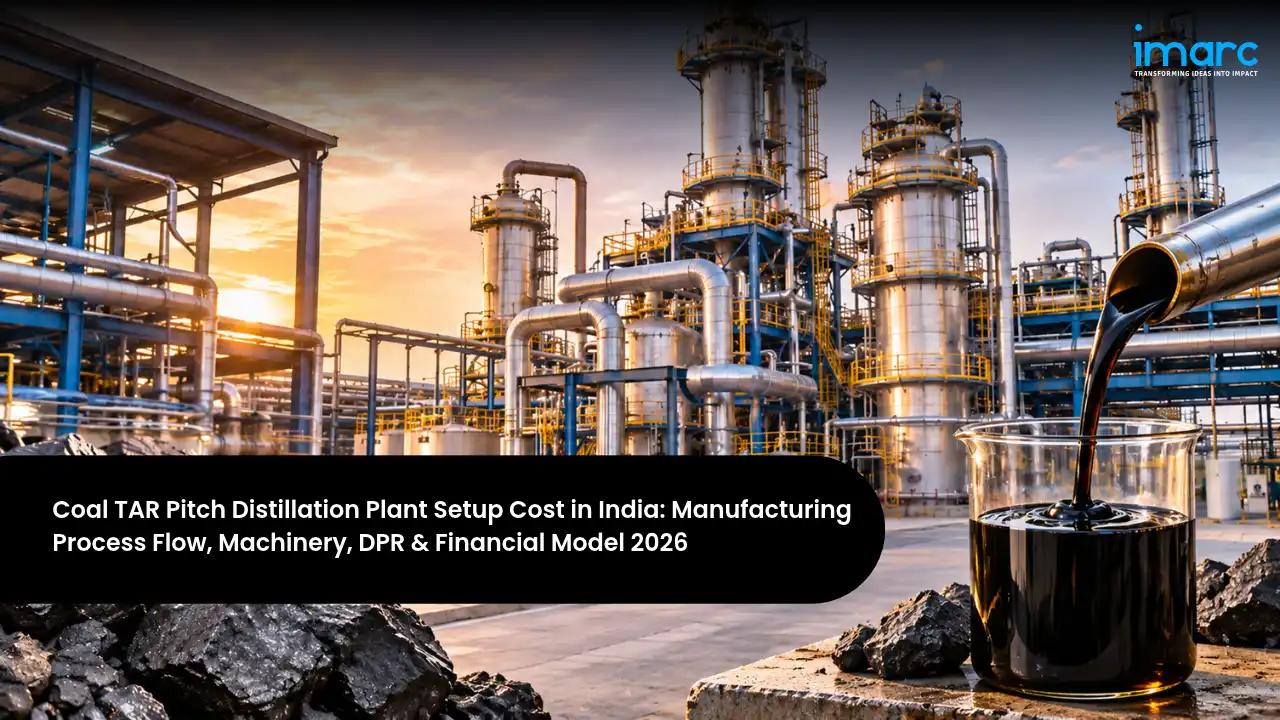
A Coal Tar Pitch Distillation Manufacturing Plant Setup in India sits between two of the country's largest metals industries. Crude coal tar is a by-product of the coke ovens that supply India's steel plants, and coal tar pitch, the heavy residue left after distilling that tar, is the binder used to make the carbon anodes consumed in aluminium smelting and the graphite electrodes used in electric arc furnaces. India is the world's second-largest producer of primary aluminium, so demand for binder pitch is large and steady. Distillation also yields a slate of valuable oils and chemicals, including naphthalene, anthracene oil, wash oil, and creosote oil, which are sold to carbon black, construction chemicals, dye, and wood preservation industries.
The overall Coal Tar Pitch Distillation Manufacturing Plant Cost depends mainly on crude tar throughput, the distillation configuration (atmospheric and vacuum columns), pitch treatment and solidification systems, naphthalene recovery, tank storage for tar and products, fume and emissions control, effluent treatment, and working capital, since crude tar accounts for most of operating cost. A plant processing about 60,000 tonnes of crude coal tar a year typically needs INR 150 crore to INR 250 crore in fixed assets, or about INR 220 crore to INR 330 crore including working capital, while a smaller unit of 20,000 to 30,000 tonnes a year can start at around INR 60 crore to INR 100 crore. IMARC Group puts typical capacities at 50,000 to 1,00,000 tonnes a year, with gross margins of 25 to 35% and net margins of 10 to 15%.
This guide is written for carbon materials companies, steel and coke producers, chemical manufacturers, and investors exploring how to start a Coal Tar Pitch Distillation manufacturing plant in India. It explains products and end uses, demand drivers, the distillation flow, machinery and raw materials, site selection around coke ovens and smelters, a detailed cost and returns breakdown, the environmental and safety approvals involved, and how a DPR pulls these elements into a bankable plan.
India Market Snapshot
| Key Facts | Details |
|---|---|
| India's Global Rank in Primary Aluminium | Second-largest producer |
| India Primary Aluminium Output | 3.47 Lakh Tonnes in April 2025 alone (about 4 Million Tonnes a year) |
| Typical Distillation Plant Capacity | 50,000–1,00,000 Tonnes of crude tar a year |
| Largest Recent Capacity Addition | Epsilon Carbon: 3 Lakh TPA (August 2026), total 6 Lakh TPA |
| Indicative Total Investment | INR 220–330 Crore (60,000 TPA tar, incl. working capital) |
| Typical Payback Period | 4–6 Years |
The snapshot shows a large and growing domestic market anchored by aluminium smelting, with leading producers adding significant capacity. Asia-Pacific accounts for more than half of global coal tar pitch demand, according to IMARC Group, and India's aluminium, graphite electrode, and emerging battery materials industries are adding new demand for high-quality pitch and carbon products.
Investment Highlights
Indicative Project Cost in India (2026)
| Parameter | Value |
|---|---|
| Product Range | Binder pitch, impregnating pitch, special pitches; naphthalene, anthracene oil, wash oil, creosote oil, light oils |
| Total Project Investment | INR 220 – 330 Crore incl. working capital (60,000 TPA tar); INR 60 – 100 Crore (20,000–30,000 TPA) |
| Payback Period | 4 – 6 Years |
| Net Profit Margin | 10 – 15% (IMARC benchmark) |
| IRR | 15 – 20% |
| Best Locations | Odisha, Jharkhand, Chhattisgarh, West Bengal, Karnataka, Andhra Pradesh |
| Mandatory Approvals | Environmental Clearance, SPCB Consents (Red Category), Hazardous Waste Authorisation, PESO License, Factory License (MAH) |
| Key Requirement | Secure crude tar supply, aluminium smelter offtake, and strong emissions and worker-safety controls |
These figures offer a practical frame for early evaluation. Returns depend on securing crude tar at the right price, meeting the tight pitch specifications set by aluminium smelters and electrode makers, earning good value from naphthalene and oils, and controlling emissions of hazardous fumes. A capacity- and site-specific Coal Tar Pitch Distillation Feasibility Report refines these numbers before capital is committed.
Table of Contents
- What is Coal Tar Pitch Distillation Manufacturing?
- Why is Coal Tar Pitch Distillation Manufacturing Growing in India?
- Coal Tar Pitch Distillation Manufacturing Process Flow
- Raw Materials Required for Coal Tar Pitch Distillation Manufacturing
- Location, Land & Infrastructure
- Coal Tar Pitch Distillation Manufacturing Machinery and Equipment
- Coal Tar Pitch Distillation Manufacturing Plant Setup Cost in India (CapEx & OpEx)
- Financial Analysis and Profitability
- Licenses and Approvals for Coal Tar Pitch Distillation Manufacturing in India
- Recent Developments in the India Coal Tar Pitch Distillation Manufacturing Industry
- How Coal Tar Pitch Distillation Manufacturing Project Report and DPR Helps Investors
- Frequently Asked Questions
What is Coal Tar Pitch Distillation Manufacturing?
Coal tar distillation separates crude coal tar into fractions by boiling point. Tar from coke ovens is first settled and dewatered to remove water, ammoniacal liquor, and solids, then preheated and fed to a dehydration column that removes remaining water and light oil. The dried tar passes through atmospheric and vacuum distillation columns, which draw off naphthalene oil, wash oil, and anthracene oil at different temperatures, leaving coal tar pitch as the heavy residue. The pitch is then adjusted to the required softening point, quinoline insoluble content, and coking value, and either stored and shipped hot as liquid pitch or cooled and formed into pastilles or flakes. Naphthalene is recovered from the naphthalene oil by crystallisation. A Coal Tar Pitch Distillation Manufacturing Plant therefore combines tar handling, multi-stage distillation, pitch treatment, chemical recovery, heated storage, and emissions control.
Pitch is sold mainly to aluminium smelters, which use it to bind calcined petroleum coke into carbon anodes, and to graphite electrode, refractory, and carbon product manufacturers. The oils go to carbon black plants, construction chemical producers that make naphthalene-based superplasticisers, dye and phthalic anhydride makers, and wood preservation users. Buyers expect consistent softening point, coking value, quinoline insoluble levels, ash, sulphur, and viscosity, along with reliable supply and safe handling.
- Binder Pitch: For carbon anodes in aluminium smelters, the largest end use.
- Impregnating Pitch: For densifying graphite electrodes and specialty carbon products.
- Naphthalene: For superplasticisers, dyes, phthalic anhydride, and chemicals.
- Anthracene, Wash and Creosote Oils: For carbon black feedstock, wood preservation, and chemicals.
Main Product Types in Coal Tar Distillation
The product slate shapes process design, value, and margins:
| Product Type | Description | Key Feature | Primary Market |
|---|---|---|---|
| Binder Pitch | Medium softening point pitch | High coking value | Aluminium smelters |
| Impregnating Pitch | Low QI, low viscosity pitch | Penetrates pores | Graphite electrodes |
| Special & Industrial Pitch | Refractory, road, waterproofing grades | Tailored properties | Refractories, construction |
| Naphthalene | Crystallised from naphthalene oil | High value per tonne | Construction chemicals, dyes |
| Anthracene & Creosote Oils | Heavy distillates | Carbon-rich feedstock | Carbon black, wood preservation |
Many new plants start with binder pitch and heavy oils, the core products with established buyers, and later add naphthalene refining, impregnating pitch, and specialty grades as quality systems and customer approvals mature. A flexible product slate lets producers shift output towards the most profitable fractions as markets change.
Why is Coal Tar Pitch Distillation Manufacturing Growing in India?
Key Growth Drivers in the Indian Market
Demand for coal tar pitch is driven by aluminium capacity, steel production, and new carbon materials industries. IMARC Group notes that Asia-Pacific accounts for more than half of global demand:
- Aluminium smelter expansion: India's large primary aluminium industry, led by NALCO, Vedanta, Hindalco, and BALCO, consumes large volumes of binder pitch for anodes.
- Graphite electrodes and steel: Growth in electric arc furnace steelmaking supports demand for impregnating pitch.
- Battery and advanced carbon materials: Pitch is a precursor for synthetic graphite anodes and specialty carbons for lithium-ion batteries.
- Construction chemicals and carbon black: Naphthalene and heavy oils serve fast-growing superplasticiser and carbon black markets.
- Rising coke oven capacity: More domestic coke production, supported by anti-dumping duties on imported met coke, increases crude tar availability.
End-Use Market Opportunity
| End Use | Demand Driver | Product Role |
|---|---|---|
| Aluminium Smelting | Smelter output and expansions | Binder pitch for anodes |
| Graphite Electrodes | EAF steel growth | Impregnating and binder pitch |
| Battery & Specialty Carbons | Lithium-ion supply chain | Special pitches, precursors |
| Construction Chemicals | Infrastructure and housing | Naphthalene |
| Carbon Black & Wood Preservation | Tyres, rubber, utilities | Anthracene, wash, creosote oils |
The strongest position for a Coal Tar Pitch Distillation Manufacturing Plant in India combines long-term crude tar supply from coke ovens, proximity to aluminium smelters, consistent pitch quality approved by major customers, good recovery of naphthalene and oils, and strong environmental performance. Producers with diverse product slates and export capability are least exposed to swings in any single market.
Coal Tar Pitch Distillation Manufacturing Process Flow
Understanding the Coal Tar Pitch Distillation Manufacturing Process helps promoters plan columns, heating, storage, emissions control, and quality testing. Pitch quality depends on tar quality, thorough dewatering, accurate temperature and vacuum control in distillation, and precise adjustment of softening point and other properties. Because coal tar and pitch contain polycyclic aromatic hydrocarbons, the process must be enclosed, with vapours collected and treated. The flow below reflects a typical continuous distillation plant.
Step-by-Step Coal Tar Distillation Process Flow
Crude tar is received into heated storage, settled, and dewatered, then preheated and dehydrated to remove water and light oil. Atmospheric and vacuum distillation draw off naphthalene, wash, and anthracene oils, leaving pitch as the residue. The pitch is adjusted to specification and stored hot or solidified, naphthalene is crystallised, and all vents are routed to fume treatment.
| Unit Operation | Key Activity |
|---|---|
| Tar Receiving & Heated Storage | Receive tar, maintain fluidity |
| Settling & Dewatering | Remove water, liquor, solids |
| Preheating | Heat tar for distillation |
| Dehydration Column | Remove water and light oil |
| Atmospheric Distillation | Recover naphthalene and wash oils |
| Vacuum Distillation | Recover anthracene oil, produce pitch |
| Pitch Property Adjustment | Set softening point, QI, coking value |
| Naphthalene Crystallisation | Recover and refine naphthalene |
| Pitch Storage or Solidification | Liquid storage or pastilles |
| Packing, Dispatch & Fume Treatment | Ship products, treat vapours |
Two factors decide profitability. The first is the spread between crude tar cost and product prices: crude tar makes up most of operating cost, so buying tar at good prices and selling pitch and by-products well determines margins. The second is quality and yield: meeting smelter specifications consistently secures long-term contracts, while maximising recovery of high-value naphthalene and oils adds significantly to revenue.
Raw Materials Required for Coal Tar Pitch Distillation Manufacturing
The main input is crude coal tar from coke ovens, supported by fuel for heating, chemicals for naphthalene and phenol recovery, and packaging. IMARC Group estimates crude coal tar at about 80 to 85% of operating cost and utilities at 10 to 15%.
| Raw Material | Role in Process | India Sourcing | % of OpEx |
|---|---|---|---|
| Crude Coal Tar | Main feedstock | Steel plant and merchant coke ovens, imports | 80–85% |
| Process Fuel (Gas or Fuel Oil) | Heat for distillation | Gas suppliers, own light oils | Included in utilities |
| Caustic Soda & Sulphuric Acid | Phenol and oil refining | Domestic chemical suppliers | 1–2% |
| Nitrogen | Inert blanketing of tanks | Industrial gas suppliers | Below 1% |
| Packaging (Bags, Drums, Flexitanks) | Solid pitch and oils dispatch | Domestic suppliers | 1–2% |
Crude tar supply depends on coke production at integrated steel plants and merchant coke makers, so long-term supply agreements with coke oven operators are essential. Tar quality varies with coal blend and oven type, affecting quinoline insoluble content and pitch yield, so incoming tar must be tested and blended carefully. Imports from Asia and the Middle East can supplement domestic supply, and plants near ports gain flexibility in sourcing.
Location, Land & Infrastructure
Location shapes access to crude tar, customers, and ports. The best location for Coal Tar Pitch Distillation manufacturing plant setup lies close to large coke oven batteries for tar supply and to aluminium smelters for pitch offtake, with rail or port access, reliable power and water, and an industrial zone suitable for red-category chemical units.
Preferred States for Coal Tar Distillation Plants in India
| State | Why It Works | Key Advantage |
|---|---|---|
| Odisha | Major aluminium smelters and steel plants | Tar supply and pitch demand |
| Jharkhand | Large coke oven capacity | Crude tar availability |
| Chhattisgarh | Aluminium smelter and steel plants | Demand and supply |
| West Bengal | Established coal tar processing base | Skills and Haldia port |
| Karnataka | Large integrated steel plant and coke ovens | Tar supply and ports |
| Andhra Pradesh | Steel plant, SEZ, Visakhapatnam port | Ports and new investment |
Odisha and Chhattisgarh combine large aluminium smelters with steel plants, offering both supply and demand within short distances. Jharkhand and West Bengal host extensive coke ovens and a long tradition of coal tar processing, while Karnataka and Andhra Pradesh offer integrated steel plants, ports, and recent large investments in coal tar distillation. Plants close to both tar sources and smelters minimise the cost of transporting heavy, heated liquids.
Environmental and Worker Safety Requirements
Coal tar and pitch contain polycyclic aromatic hydrocarbons, some of which are carcinogenic, so coal tar distillation is classed as a red-category, highly polluting activity. Plants must meet emission standards for particulates, volatile organic compounds, and PAHs, manage hazardous wastes such as tar sludge and decanter solids, treat phenolic wastewater, and protect workers from pitch fume exposure. Key controls include closed handling systems, vapour collection with thermal oxidisers or scrubbers, nitrogen blanketing of tanks, enclosed pitch solidification, personal protective equipment, health surveillance, and regular monitoring of workplace air.
Infrastructure Requirements (60,000 TPA Tar Plant)
| Infrastructure Element | Specification | India-Specific Note |
|---|---|---|
| Total Land Area | 15 – 25 acres | Process, tank farm, safety distances |
| Tank Farm | Heated tanks for tar, pitch, oils | Several weeks of storage |
| Process Plant | Dehydration, atmospheric, vacuum columns | Continuous operation |
| Thermal Fluid / Steam System | Heating for columns and tanks | Fuelled by gas or own oils |
| Power | 2 – 4 MW connected load | Pumps, vacuum, cooling |
| Water & Effluent Treatment | Cooling water, phenolic ETP | Zero liquid discharge often required |
| Emission Control | Fume incinerator, scrubbers | PAH and VOC control |
Infrastructure for a coal tar distillation plant centres on a heated tank farm, the distillation columns and furnaces, a thermal fluid or steam heating system, pitch treatment and solidification units, a naphthalene section, cooling towers, an effluent treatment plant, fume treatment, a laboratory, and rail, road, or pipeline links for liquid products. Planning space for liquid pitch storage and loading, impregnating pitch lines, and future specialty carbon products supports long-term growth.
Coal Tar Pitch Distillation Manufacturing Machinery and Equipment
Distillation columns, heat exchangers, tanks, and furnaces for coal tar plants are fabricated in India, while specialised technology for pitch treatment, naphthalene crystallisation, and pitch solidification is often licensed or imported. The main equipment is summarised below.
| Equipment | Function | Key Specification |
|---|---|---|
| Heated Tar Storage Tanks | Store crude tar | Heating coils, nitrogen blanket |
| Settling Tanks & Decanter Centrifuges | Remove water and solids | Continuous dewatering |
| Preheaters & Heat Exchangers | Heat tar feed | Heat recovery from products |
| Dehydration Column | Remove water and light oil | Atmospheric operation |
| Thermal Fluid Heater / Pipe Still Furnace | Supply process heat | High-temperature heating |
| Atmospheric & Vacuum Distillation Columns | Separate oil fractions and pitch | Packed or tray columns |
| Condensers & Vacuum System | Condense fractions, maintain vacuum | Cooling water and ejectors or pumps |
| Pitch Reactor / Heat Treatment Unit | Adjust pitch properties | Temperature-controlled |
| Naphthalene Crystallisers | Recover naphthalene | Fractional crystallisation |
| Pitch Pastillator or Flaker & Fume Treatment | Solidify pitch, treat vapours | Enclosed systems, thermal oxidiser |
Equipment selection should follow capacity and product slate. Column design and vacuum performance largely determine fraction quality and pitch yield, while the pitch treatment system determines whether specifications for smelters and electrode makers can be met consistently. Many promoters begin with dehydration, atmospheric and vacuum distillation, and pitch solidification, adding naphthalene refining, impregnating pitch, and liquid pitch logistics as volumes and customer approvals grow.
Coal Tar Pitch Distillation Manufacturing Plant Setup Cost in India (CapEx & OpEx)
The tables below summarise the capital and operating cost structure of a coal tar distillation plant processing about 60,000 tonnes of crude tar a year in India. The final Coal Tar Pitch Distillation Investment Cost for a specific project depends on capacity, column configuration, product slate, tank farm size, emissions and effluent systems, land costs, and working capital for crude tar and finished stocks.
Capital Expenditure (CapEx) Cost Structure
| CapEx Component | % of Total CapEx | What It Covers |
|---|---|---|
| Distillation Units & Furnaces | 20–26% | Columns, heaters, exchangers, vacuum |
| Pitch Treatment, Solidification & Naphthalene | 10–14% | Reactors, pastillators, crystallisers |
| Tank Farm & Product Handling | 10–14% | Heated tanks, pumps, loading |
| Emission Control, ETP & Utilities | 8–12% | Fume treatment, effluent, cooling, power |
| Land, Buildings & Civil Works | 7–10% | Site, structures, roads, rail links |
| Engineering, Pre-operative & Contingency | 4–6% | Design, trials, approvals |
| Working Capital | 25–32% | Crude tar, finished goods, receivables |
Working capital is large because crude tar dominates costs and buyers often pay on credit, while distillation units, pitch treatment, and the tank farm make up most fixed investment. A Coal Tar Pitch Distillation Business Plan models these components so that capacity, product slate, and financing rest on realistic tar supply and price assumptions.
Operating Expenditure (OpEx) Cost Structure
| OpEx Component | % of Total OpEx | India-Specific Note |
|---|---|---|
| Raw Materials | 80–85% | Crude coal tar dominates |
| Utilities | 10–15% | Fuel, power, cooling water |
| Labour | 2–3% | Skilled operators, lab staff |
| Maintenance | 1–2% | Columns, furnaces, tanks |
| Environmental Compliance | 1–2% | Monitoring, waste disposal |
| Logistics & Overheads | 1–2% | Heated tankers, admin |
With crude tar making up most of operating cost, profitability depends on the spread between tar and product prices, pitch yield, by-product recovery, and fuel efficiency. A sound financial model should test margins against tar price spikes, lower aluminium output, falling naphthalene or oil prices, and tighter environmental requirements.
Financial Analysis and Profitability
Coal tar distillation offers steady returns for producers with secure feedstock and long-term pitch contracts. The profitability of Coal Tar Pitch Distillation manufacturing business in India improves with long-term tar supply agreements, proximity to coke ovens and smelters, high pitch yield and consistent quality, good recovery of naphthalene and oils, fuel savings from burning own light oils, and expansion into impregnating, specialty, and battery-grade pitches.
| Financial Metric | Indicative Value | India Context |
|---|---|---|
| Gross Profit Margin | 25–35% | IMARC benchmark |
| Net Profit Margin | 10–15% | After depreciation and Indian corporate taxes |
| Payback Period | 4–6 Years | Depends on spread and utilisation |
| IRR (Internal Rate of Return) | 15–20% | Sensitive to tar price |
| Capacity Utilization (stable ops) | 75–90% | Limited by tar supply |
| Break-even Capacity Utilization | 50–60% | Moderate fixed costs |
Feedstock security and customer contracts are the decisive factors. Coal tar supply is tied to coke production, and pitch demand to aluminium smelting, so producers with long-term agreements at both ends enjoy stable spreads. Those relying on spot tar or spot pitch sales face more volatile margins, particularly when steel or aluminium markets weaken.
Returns can be strengthened by locating near both coke ovens and smelters, offering liquid pitch delivery to cut customer handling costs, maximising naphthalene and oil recovery, using light oils as fuel, investing in pitch treatment to reach premium grades, exporting to Middle East and Asian smelters, and developing specialty pitches for graphite and battery materials.
Key Risks and Mitigation
The main risks are crude tar supply shortages and price swings, dependence on a few large smelter customers, quality variation in incoming tar, tightening environmental and occupational health rules, fire and spill hazards, and competition from imported pitch and large established producers. Supply risk is reduced through long-term contracts and import options; customer risk through diversified products and export markets; quality risk through tar testing and blending; regulatory risk through best-practice emission and worker-safety controls; and safety risk through robust process safety management.
Licenses and Approvals for Coal Tar Pitch Distillation Manufacturing in India
A coal tar distillation unit requires environmental, hazardous materials, safety, and industrial approvals. Promoters typically need the following before starting commercial production:
- Environmental Clearance: Clearance from the Ministry of Environment, Forest and Climate Change or the state authority under the EIA Notification, based on an environmental impact assessment and public consultation where required.
- Pollution Control Consents: Consent to Establish and Consent to Operate from the State Pollution Control Board under the Air and Water Acts, as a red-category industry.
- Hazardous Waste Authorisation: Authorisation under the Hazardous and Other Wastes Rules for tar sludge, decanter solids, and spent materials.
- PESO License: License from the Petroleum and Explosives Safety Organisation for storage of oils and flammable liquids.
- Factory License and MAH Compliance: Factory registration, safety reports, and on-site emergency plans under hazardous chemical rules.
- Boiler and Fire Approvals: Boiler registration under the Indian Boiler Regulations and a Fire NOC.
- Business and Export Registrations: Company incorporation, GST, an Import Export Code, and REACH or other chemical registrations for export markets.
Environmental clearance and pollution consents usually sit on the critical path given the red-category status of coal tar processing. Engaging a Coal Tar Pitch Distillation Manufacturing Consultant in India can help promoters select technology and site, design compliant emission and effluent systems, obtain approvals, and secure tar supply and offtake agreements.
Note: The exact approvals, registrations, licenses, and certification requirements may vary depending on factors such as plant location, product range, capacity, target customers, and applicable regulations. Businesses are advised to undertake a detailed regulatory assessment during the project planning stage to ensure full compliance and timely implementation.
Recent Developments in the India Coal Tar Pitch Distillation Manufacturing Industry
Several recent developments are shaping the Indian coal tar pitch industry:
- Rain Carbon plans new distillation capacity: In January 2025, Rain Carbon announced a two-phase coal tar distillation facility in the Andhra Pradesh Special Economic Zone, with about 50,000 tonnes a year of pitch in Phase I and about 2,00,000 tonnes a year in Phase II, targeting graphite, battery, and aluminium markets.
- First liquid pitch export from India: In December 2025, Himadri Speciality Chemical made its first export of liquid coal tar pitch, shipping 3,600 tonnes to the Middle East from its New Mangalore Port terminal.
- Epsilon Carbon doubles specialty carbon capacity: In August 2026, Epsilon Carbon added a 3 lakh tonnes a year specialty carbon facility at Vijayanagar, Karnataka, taking its capacity for coal tar pitch, naphthalene, anthracene oil, and other carbon derivatives to 6 lakh tonnes a year.
Together these point to strong investment by leading producers, growing exports, and a shift towards higher-value pitches for graphite and battery materials. For new entrants, success depends on securing tar supply, meeting customer specifications, controlling emissions, and finding a distinct market position alongside large established players.
How Coal Tar Pitch Distillation Manufacturing Project Report and DPR Helps Investors
A detailed Coal Tar Pitch Distillation Project Report gives investors a structured roadmap covering crude tar availability and pricing, pitch and by-product demand, customer specifications, product slate, process design, machinery, utilities, tank farm, emissions and effluent control, approvals, and economics. It helps promoters choose the right capacity and products, estimate capital expenditure (CapEx) and operating expenditure (OpEx), assess profitability, and identify risks before implementation.
At the core of the DPR is a Coal Tar Pitch Distillation Financial Model covering tar purchases and quality, fraction yields, product prices for pitch, naphthalene, and oils, fuel, power, labour, maintenance, environmental compliance, working capital for tar and receivables, cash flow projections, break-even, return on investment (ROI), and payback. Because spreads and yields drive returns, lenders expect detailed sensitivity analysis, which is why many promoters engage a Coal Tar Pitch Distillation Plant Project Report Consultant in India to prepare bank-ready documents.
For a coal tar distillation project specifically, a strong DPR also answers the questions that matter most: where the crude tar will come from and at what price, which smelters and electrode makers will buy the pitch, what product slate maximises value, how emissions and worker exposure will be controlled, and how returns hold up if tar prices rise or aluminium output slows. An experienced Coal Tar Pitch Distillation Manufacturing Feasibility Study Consultant tests these scenarios so that the final plan is one lenders and partners can back with confidence.
Frequently Asked Questions
How do I set up a coal tar pitch distillation manufacturing plant in India?
Start by securing crude tar supply from coke ovens and identifying pitch buyers, then commission a feasibility study and DPR. Choose a site near steel plants and aluminium smelters, install dewatering, distillation, pitch treatment, storage, and emission control systems, obtain environmental, pollution, hazardous waste, PESO, and factory approvals, and complete customer qualification before commercial supply.
What is the cost of setting up a coal tar pitch distillation manufacturing plant in India?
A plant processing about 60,000 tonnes of crude tar a year typically needs INR 150 crore to INR 250 crore in fixed assets, or about INR 220 crore to INR 330 crore including working capital. A smaller unit of 20,000 to 30,000 tonnes a year can start at around INR 60 crore to INR 100 crore.
How is coal tar pitch distillation produced?
Crude coal tar is dewatered, preheated, and dehydrated, then distilled in atmospheric and vacuum columns to remove naphthalene, wash, and anthracene oils. The remaining residue is coal tar pitch, which is adjusted to the required properties and stored hot or solidified into pastilles or flakes.
What machinery is needed for a coal tar pitch distillation manufacturing plant?
Key equipment includes heated tar tanks, settling tanks and decanter centrifuges, preheaters and heat exchangers, dehydration columns, thermal fluid heaters or furnaces, atmospheric and vacuum distillation columns, condensers and vacuum systems, pitch treatment reactors, naphthalene crystallisers, pitch pastillators or flakers, and fume treatment units.
What raw materials are used in coal tar pitch distillation manufacturing?
The main input is crude coal tar from coke ovens, along with fuel for heating, caustic soda and sulphuric acid for chemical recovery, nitrogen for tank blanketing, and packaging materials.
Is coal tar pitch distillation manufacturing profitable in India?
Benchmark figures point to a 10 to 15% net margin and an IRR of around 15 to 20%, with payback in 4 to 6 years. Profitability depends mainly on the spread between crude tar and product prices, pitch yield, by-product recovery, and long-term contracts.
What licenses are needed for a coal tar pitch distillation manufacturing unit in India?
A unit typically needs environmental clearance, State Pollution Control Board consents, hazardous waste authorisation, a PESO license,Li a Factory License with MAH compliance, boiler registration, a Fire NOC, GST, and an IEC for exports.
Which state is best for a coal tar pitch distillation manufacturing plant?
Odisha, Jharkhand, Chhattisgarh, West Bengal, Karnataka, and Andhra Pradesh are strong options. The best site is close to coke ovens for tar supply and to aluminium smelters for pitch sales, with good rail or port access.
How do I get a feasibility study or DPR for a coal tar pitch distillation manufacturing plant?
A professionally prepared DPR covers feedstock assessment, market analysis, technical design, approvals, costs, and financial projections for bank appraisal. Many promoters work with a Coal Tar Pitch Distillation Business Plan Consultant in India to prepare it and align it with lender requirements.
Our Clients









Contact Us
Have a question or need assistance?
Please complete the form with your inquiry or reach out to us at
Phone Number
+91-120-433-0800+1-201-971-6302
+44-113-547-7077
Previous Post

A Solar Water Heater Manufacturing Plant Setup in India supplies one of the simplest and most cost-effective renewable energy products available to households and businesses.
A Solar Glass Manufacturing Plant Setup in India fills a critical gap in the country's fast-growing solar supply chain. Every crystalline silicon solar module needs a sheet of front glass, and bifacial glass-glass modules need a second sheet at the back.
A Solar Cell Manufacturing Plant Setup in India sits at the centre of the country's push to build a complete domestic solar supply chain. Solar cells are the semiconductor devices that convert sunlight into electricity, and they are the core component of every crystalline silicon solar module.
India's energy storage market has moved from pilot projects to procured infrastructure, and the numbers now reflect that shift. The India energy storage market reached a volume of 331.3 MWh in 2025 and is projected to reach 9,294.4 MWh by 2034, expanding at a CAGR of 40.03% during 2026-2034.
A Biodiesel Manufacturing Plant Setup in India connects two national priorities: cutting diesel imports and turning waste oils into clean fuel. Biodiesel is a renewable fuel made of fatty acid methyl esters (FAME), produced by reacting oils and fats with methanol.
The India solar energy market is no longer a niche policy play; it sits at the centre of the country's power investment case. According to IMARC Group, the market grew from USD 30.03 Billion in 2025 to USD 41.39 Billion in 2026 and is projected to reach USD 538.91 Billion by 2034, expanding at a CAGR of 37.82% during 2026-2034.
Setting up a Bio-LNG Manufacturing Plant in India is an opportunity to turn agricultural residue, press mud, cattle dung, and municipal organic waste into a premium, low-carbon transport and industrial fuel.
Lithium-ion cells store energy by moving lithium ions between a cathode and an anode through an electrolyte, and can be charged and discharged thousands of times.
LPG is a mixture of propane and butane that is recovered from natural gas streams and produced in crude oil refineries, then stored as a liquid under moderate pressure and supplied in cylinders, bulk tankers, and pipelines.
Graphene-enhanced batteries use graphene, a single-atom-thick sheet of carbon with outstanding electrical and thermal conductivity, to improve conventional battery chemistries.
A utility-scale photovoltaic project turns sunlight into electricity through fields of PV modules, converts it from DC to AC in inverters, steps up the voltage, and feeds it into the grid for sale under long-term power purchase agreements.
Distribution transformers step down medium-voltage power, typically 11, 22, or 33 kV, to the 415 or 230 volts used by homes, shops, farms, and factories. They are the last link in the power supply chain and are installed in very large numbers on poles, plinths, and in substations across every town and village.
Flexible solar panels are lightweight, frameless modules that can bend to fit curved or weak surfaces where standard glass-and-aluminium panels are too heavy or rigid.
The low voltage cable market sits exactly where electrification stops being a policy target and becomes physical infrastructure. Every new solar rooftop, data centre hall, charging depot, factory line and connected building relies on low voltage cable to move power from a transformer to the load, which is why demand keeps compounding even when headline generation projects pause.
Recycled, or secondary, aluminium is made by melting aluminium scrap and refining it into alloy ingots, billets, and liquid metal, using about 95% less energy than making primary aluminium from bauxite.
The Australia Power Industry is the physical foundation of one of the developed world's most coal-reliant electricity systems, which is precisely why its transition now ranks among the largest infrastructure investment programmes in the country's history.
Every solar panel is connected by cables built to survive 25 years or more of sun, heat, rain, and high DC voltage. India added a record 44.6 GW of solar capacity in 2025-26, taking cumulative solar capacity past 150 GW, and rooftop programmes such as PM Surya Ghar are adding millions of smaller systems.
Biomass briquettes, often called white coal, are dense blocks of compressed agricultural and forestry residues that burn cleanly in industrial boilers, furnaces, and power plants.
Lead-acid batteries start every car, truck, and two-wheeler, back up telecom towers, data centres, and homes through inverters and UPS systems, and store energy for solar installations. Almost all of the lead, plastic, and acid in a used battery can be recovered, and India already meets more than 80% of its lead demand from recycling.
Fuel cells turn hydrogen into electricity with water as the only exhaust, which makes them one of the most important technologies in India's clean energy transition. They power hydrogen buses, trucks, and trains, provide backup power for telecom towers and data centres, and supply off-grid and distributed electricity where diesel generators are used today.
India's cities generate well over a lakh tonnes of municipal solid waste every day, and much of it still ends up in overflowing dumpsites that release methane, catch fire, and pollute land and water.
Every solar power system needs an inverter to convert the direct current produced by solar panels into alternating current that homes, businesses, and the grid can use.
Sodium-ion batteries are emerging as a practical complement to lithium-ion technology. They work on the same principle, shuttling ions between a cathode and an anode, but use sodium, which is abundant, inexpensive, and available within India, in place of lithium.
Few industries in India have scaled as quickly as solar manufacturing. Backed by ambitious renewable energy targets, a rooftop programme for households, import duties on foreign modules, and the Approved List of Models and Manufacturers (ALMM), domestic module capacity has multiplied in just a few years.
Setting up an Electrical Panel Manufacturing Plant in India is a fabrication-and-assembly venture powered by heavy grid modernisation, a fast-growing renewable-energy build-out, rising industrial and commercial construction, and the spread of automation across factories and buildings.
Saudi Arabia has turned its power transition into one of the world's largest procurement programmes, and international developers, lenders, and equipment makers are following the tenders.
Setting up a Battery Manufacturing Plant in India is a high-demand, energy-driven venture, powered by the country's booming automotive sector, huge power-backup market, and the fast-growing shift to electric vehicles and renewable storage.
Setting up a Liquefied Natural Gas (LNG) Manufacturing Plant in India is a capital-intensive, strategically important venture, powered by the country's push toward a gas-based economy, the shift to cleaner fuels in transport and industry, and rising demand for LNG as a truck, bus, and industrial fuel.
The India carbon credit market is moving from a voluntary, project-by-project trade into a regulated national system with binding targets, a central registry, and exchange-based price discovery. According to IMARC Group, the market was valued at USD 33.69 Billion in 2025, grew to USD 44.42 Billion in 2026, and is projected to reach USD 405.47 Billion by 2034, expanding at a CAGR of 31.84% (2026–2034).
Setting up a Syngas Production Plant in India is a capital-intensive but strategically valuable venture, driven by the country's push for cleaner industrial fuels, coal and biomass utilization, and chemical self-reliance. Syngas, or synthesis gas, is a mixture of hydrogen and carbon monoxide produced by gasifying carbon-rich feedstocks, and it serves as a versatile building block for power, chemicals, hydrogen, and synthetic fuels. With abundant biomass, coal, and waste feedstock and growing policy support for gasification, India offers a favourable environment for new plants.
Setting up a Battery Energy Storage System Manufacturing Plant in India is a capital-efficient, high-growth venture, driven by the country's renewable energy expansion, grid modernization, and supportive storage policies. As solar and wind capacity scales up and the grid needs to balance variable generation, battery energy storage systems have become essential infrastructure.
Setting up a Lithium-ion Battery Recycling Plant in India is a capital-intensive but high-potential venture. India's rapid rise as a major electric-vehicle market, its large consumer-electronics base, and its fast-growing energy-storage sector are together creating one of the deepest and fastest-expanding pools of end-of-life lithium-ion batteries in the world.
Solar glass is a type of specialty glass that has high transmittance and is designed exclusively for use in solar energy systems. Unlike regular flat glass, solar glass is designed to have maximum light transmission with minimal losses due to reflection and absorption.
A solar inverter is a vital component in solar photovoltaic (PV) systems, responsible for transforming the direct current (DC) electricity produced by solar panels into alternating current (AC) electricity. This AC power is then suitable for use by the electrical grid, various appliances, and industrial equipment.
Australia has firmly established itself as a dominant force in the global liquefied natural gas (LNG) market, maintaining its position as one of the world's leading exporters. The country's strategic geographical location in the Asia-Pacific region, combined with substantial natural gas reserves, has enabled it to become a critical energy supplier to rapidly growing Asian economies, particularly China, Japan, and South Korea.
Japan's lead acid battery market stands as a cornerstone of the nation's energy storage infrastructure, demonstrating remarkable resilience and adaptability in an era dominated by rapid technological evolution. Despite the global shift toward lithium-ion technologies, the Japanese lead acid battery sector continues to thrive, driven by its unmatched cost-effectiveness, proven reliability, and exceptional recyclability.
Green hydrogen is the cleanest form of hydrogen available, as it is produced through water electrolysis using the electricity generated from renewable energy sources such as solar, wind, or hydropower. Carbon dioxide emissions are zero since no fossil fuels are used. Essentially, an electrolyzer is used in the electrolysis process to split water molecules into hydrogen and oxygen. The resulting hydrogen is refined by purification, compression, or liquefaction and then fed into various applications. Green hydrogen is considered a cornerstone of the global energy transition because it can store renewable energy, decarbonize hard-to-abate sectors, and serve as a sustainable alternative to fossil-fuel-based hydrogen.
Japan’s thermal power plant industry remains a crucial pillar of the nation’s energy infrastructure, providing a stable and reliable source of electricity for both industrial and residential consumption. Thermal power generation, which primarily involves the combustion of fossil fuels such as coal, natural gas, and oil, continues to play a key role despite increasing investments in renewable energy.
An electrical panel, also called a distribution board or switchboard, is an important installation in electrical infrastructure that acts as the main center for the distribution, control, and protection of electrical power within residential, commercial, and industrial systems. It acts as the point at which electrical energy is received from the utility or a source of power generation and is distributed to various circuits and equipment in an organized manner.
The global oil and gas EPC market is currently experiencing a remarkable transformation as it positions itself at the intersection of traditional energy demands and technological innovation. As of 2024, the market is demonstrating robust growth, reaching USD 52.9 Billion in 2024, depending on regional scope and market segmentation approaches. This substantial market base is supporting a major number of capital projects worldwide, including offshore platform projects and onshore installations that are collectively shaping the energy landscape.
Bamboo pellets are a biomass fuel type created through the compression of bamboo residues like shavings, sawdust, and chips into thick cylindrical pellets. They are an environmentally friendly substitute for conventional fossil fuels like natural gas and coal. Due to the fast growth rate and high biomass yield of bamboo, it has become one of the most renewable raw materials for the production of bioenergy.
Biomass briquettes are dense, solid fuel blocks made of compressed organic waste materials like sawdust, agricultural wastes, wood shavings, coconut shells, rice husk, or herbaceous biomass. The briquetting process usually involves drying the biomass to lower the moisture content (usually down to 10-15%), grinding or milling for a fine particle size uniformity, and then compressing under high pressure with or without a binding agent.
Biogas is a renewable energy form generated by the anaerobic fermentation of organic matter including agricultural residues, animal waste, municipal solid waste, sewage sludge, and food waste. Microorganisms in the absence of oxygen break down organic substances in the process and produce a gaseous mixture of mainly methane (CH4) and carbon dioxide (CO2), with traces of hydrogen sulfide (H2S) and water vapor.
A battery is an electrochemical energy storage system that transforms chemical energy into electrical energy by way of redox reactions between its electrodes and electrolyte. It consists of a single or multiple electrochemical cells, each having a positive electrode (cathode), a negative electrode (anode), and an electrolyte for ion transfer. Batteries are categorically divided into primary (non-rechargeable) and secondary (rechargeable) types.
The global energy landscape is undergoing a seismic transformation, with green hydrogen emerging as one of the most promising solutions to achieve deep decarbonization across sectors. Far from a niche technology, green hydrogen is emerging as a critical pillar of the future energy system, offering a pathway to a sustainable and resilient economy.
Transmission line towers are essential support components of transmission lines installed on overhead to distribute high-voltage electricity over long distances. Towers are made of galvanized steel, primarily, and are designed to tolerate mechanical stress, environmental loads, and electrical safety. Some of the important characteristics of transmission line towers are high structural strength, corrosion resistance, adaptability for modular design, and high service life. They are normally produced in lattice form (tubular or free-standing towers) or tubular form, with types including suspension towers, tension towers, angle towers, and terminal towers based on use.
The energy storage revolution is here, and it's powered by graphene. While the world struggles with the limitations of conventional lithium-ion batteries, a new technology is emerging that promises to shatter every performance barrier we've accepted as unchangeable.
Australia is undergoing a significant energy transformation, underscoring the growing role of renewable energy sources. These sources are key to combating climate change by reducing greenhouse gas emissions, the primary cause of global warming and air pollution. Beyond environmental benefits, renewable energy strengthens energy security by diversifying power sources and reducing dependence on volatile fossil fuel imports, contributing to greater energy independence.
Learn how to plan capital investment, manage raw material costs, post manufacturing cost and optimize operations for setting up solar panel plant.
Battery Energy Storage System (BESS) represents a power grid technology that stores electricity to enhance electric power grid reliability while increasing operational efficiency. BESS permits battery recharging during periods of low demand or extra grid supply capacity. BESS provides three principal operational functionalities which include power grid stabilization during supply disruptions, control of energy supply variations, and integration of intermittent renewable generation from wind and solar resources.
China's economic presence is expanding globally, and Latin America and the Caribbean (LAC) have become a focal point for its investments, especially within the energy sector. The region, rich in natural resources and experiencing rising energy demands, offers strategic opportunities for Chinese energy giants looking to invest and expand. LAC is currently leading a transformative movement towards sustainable energy. From 2015 to 2022, the region increased its renewable energy capacity by an impressive 51%, now generating 64% of its electricity from renewables such as hydropower, wind, and solar. This shift addresses the global demand for cleaner energy while supporting local economic growth and enhancing energy security.
Hydrogen is a clean, renewable, and widely available energy source that can be produced through various methods. Production techniques such as coal gasification, steam methane reforming, electrolysis, and thermochemical processes highlight its versatility. Hydrogen is essential in several critical sectors, including methanol and ammonia production, petroleum refining, transportation, power generation, as well as in electronics, metal industries, and as a rocket propellant. The increasing concern over carbon emissions and greenhouse gases has led to a shift towards cleaner fuel options. Hydrogen is recognized for its cleanliness and versatility as an energy carrier. Additionally, supportive government initiatives and favorable policies are driving the growth of hydrogen production globally.
Hydrogen is a clean, renewable, and abundant energy source derived from various methods. Its applications span across transportation, heating, and power generation. Diverse production methods, including coal gasification, steam methane reforming, electrolysis, and thermochemical processes, contribute to its versatility. Hydrogen plays a pivotal role in crucial sectors like methanol and ammonia production, petroleum refining, transportation, power generation, as well as in electronics, metal industries, and as a rocket propellant.
A floating solar farm is a renewable energy installation in which solar panels are mounted on floating structures in water bodies such as lakes, reservoirs, ponds, or even the sea. This technology, also known as a floating photovoltaic (PV) system, or “floatovoltaics,” enables solar power generation in areas with limited available land or where land use is restricted for other purposes. Floating solar farms offer various benefits, including improved solar panel efficiency through cooling, land conservation, reduction of evaporation and algae growth, and integration with hydropower facilities to generate both solar and hydroelectric power in the same location.
Nuclear power utilizes nuclear reactions to generate heat, which is then converted into electricity. This energy is released from the nucleus—the core of atoms composed of protons and neutrons. Nuclear power can be derived from nuclear fission, nuclear decay, and nuclear fusion reactions. Across the globe, nuclear power plants predominantly use the fission of uranium and plutonium to produce electricity. The heat generated from fission is used to create steam, which drives turbines connected to generators. Nuclear power offers several advantages over fossil fuels, such as minimal greenhouse gas emissions and a higher energy density, meaning a small amount of nuclear fuel produces a large amount of energy.