Philippines Retail Sector Industry: Convenience Food Boom, Key Sectors, Leading Retailers
_11zon.webp)
Introduction:
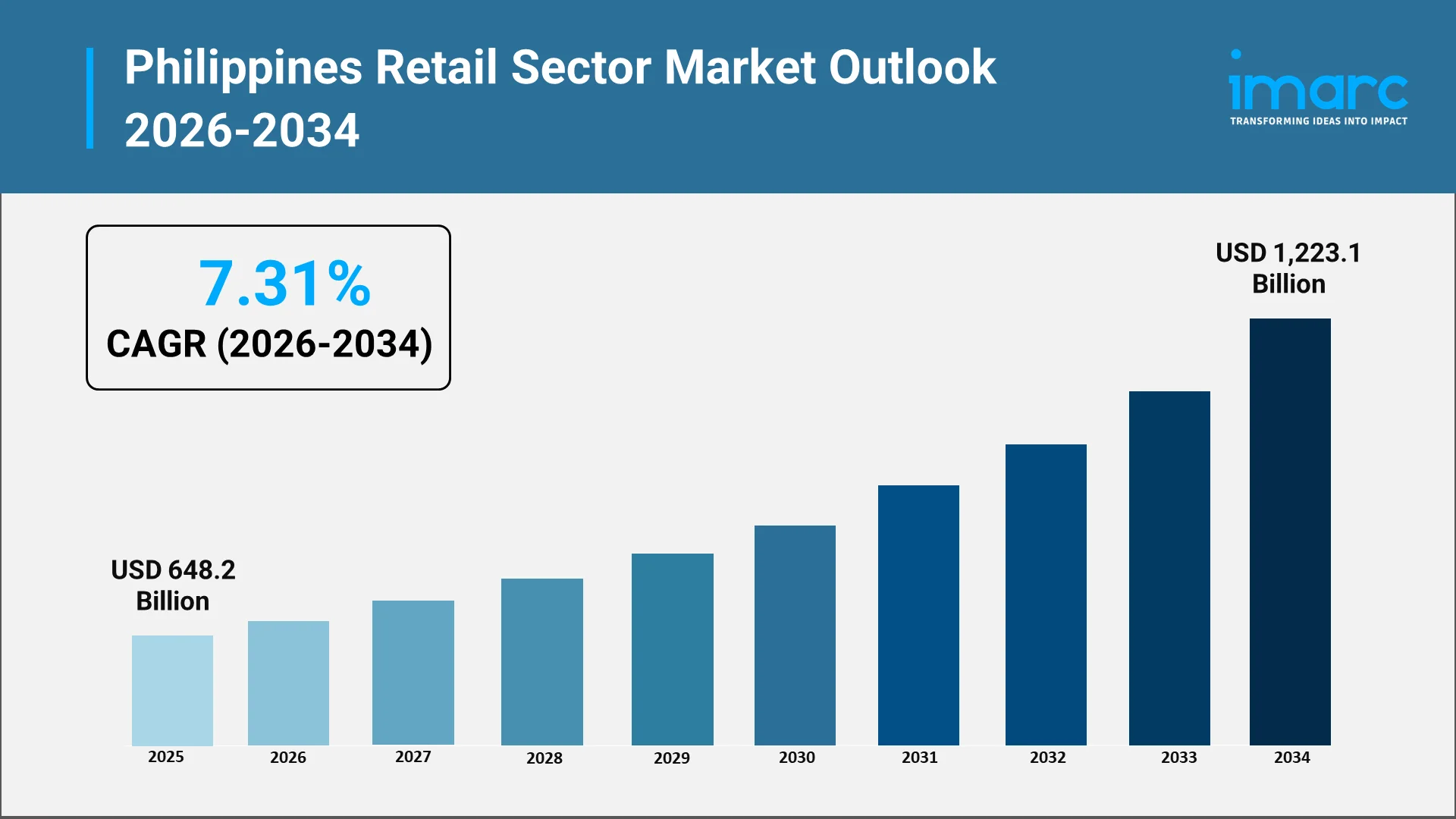
The Philippines retail sector has become a pluralistic and dynamic environment where old-fashioned stores coexist with high-tech contemporary formats enabled by digital strength. The Philippines retail sector market size reached USD 648.2 Billion in 2025. The market is projected to reach USD 1,223.1 Billion by 2034, exhibiting a growth rate (CAGR) of 7.31% during 2026-2034. Moreover, consumers desire quicker service, effortless convenience, and effortless experience whether shopping in store or ordering through the internet. Urbanization, busier lifestyles, and changing preferences have driven a robust increase in convenience foods like ready-to-eat meals, fast food snacks, and easy meal kits. Retailers are transforming their product offerings, store formats, and operational approaches to address these expectations, combining flexible technologies and enhancing logistics. As per sources, in December 2024, Jollibee Foods Corporation launched its “Signature Sips” beverage line and introducing the stand-alone Milksha concept store in January 2025, reflecting how Filipino-origin retailers are innovating in both product and format to meet modern consumer demands. Moreover, this change emphasizes a convergence of enduring retail capabilities with new and more efficient means of fulfilling daily consumer requirements.
Convenience food is also a leading force in retail transformation since it compels businesses to make investments in superior cold storage, food-handling procedures, and strong relationships with suppliers. Through such developments, these gains fortify other fresh and perishable categories as well. For consumers, this means more offerings that are easy to prepare but remain delicious, while for retailers, it means higher sales and customer retention. The increasing desire for quick, ready answers highlights a retail climate that prioritizes not just quickness but reliable quality.
Explore in-depth findings for this market, Request Sample
Recent Market News & Major Research and Development in the Philippines Retail Sector Industry:
- Shifts in format and consumer touchpoints: Recent developments show a broad reorientation toward mixed-format retailing. Brick-and-mortar outlets are being redesigned to accommodate experiential elements, dedicated pick-up hubs, quick-service food counters, and compact merchandising zones that prioritize convenience food. Smaller-format urban stores are proliferating in walkable neighborhoods and transit corridors, while larger outlets are experimenting with integrated meal-prep and demonstration kitchens. Watsons Philippines expanded in April 2024, opening 80 new stores and increasing its nationwide footprint to 1,166 outlets, strengthening access to health and beauty products across local communities. Meanwhile, digital channels are becoming fully integrated into the customer journey rather than existing as parallel options; retailers are designing journeys where online orders, express pick-up, and in-store returns form a single brand experience.
- Innovation in product development and private-label offerings: In product development, the emphasis is on freshness, taste authenticity, and time-saving preparation. Research and development labs and category teams are focusing on shelf-stable formats that preserve flavor, packaging that enhances reheating convenience, and portion-controlled servings that align with single-household consumption patterns. Private-label convenience ranges are being elevated—playing up artisanal ingredients, regional flavors, and health-forward formulations—to offer a curated alternative to national brands while preserving retailer margins and brand loyalty.
- Cold chain and logistics R&D: Reliable cold chain infrastructure has become central to ambitions in convenience food. Firms and logistics partners are piloting temperature-controlled micro-fulfillment centers close to urban centers, experimenting with last-mile refrigerated carriers, and refining inventory algorithms to reduce waste. Research into packaging technologies—barrier films, resealable systems, and microwave-friendly substrates, aims to extend shelf life without compromising taste or natural ingredient claims. These technical investments tighten the link between product innovation and operational execution.
Top Companies in the Philippines Retail Sector Industry:
Top companies in the Philippines retail sector include SM Retail, Robinsons Retail Holdings, Puregold Price Club, and AllDay Supermarket. These leaders expand nationwide, upgrade digital payments, and strengthen e-commerce logistics. By improving fresh food, private-label assortments, and convenience formats, they shape consumer expectations and competition across urban and emerging retail hubs.
- Large-format hypermarket and supermarket leaders
These operators anchor suburban and regional shopping patterns with broad assortments that cover fresh, frozen, and ambient categories supported by strong supplier networks and efficient logistics. Their role in convenience food is defined by the ability to integrate in-house food preparation alongside full fresh sections, giving shoppers a complete meal solution in one visit. Ready-to-eat counters, chilled meal displays, and meal-pairing bundles encourage shoppers to combine quick dining options with staple groceries. Their scale allows for continual refinement of recipes, frequent menu refreshes, and strong control over quality, price, and availability. They play a central role in shaping consumer expectations for freshness and value in convenience-led shopping.
- Convenience store chains
Small-footprint convenience outlets are positioned at the heart of the convenience food rise, strategically located near transit systems, offices, and dense housing clusters. They focus on fast-turnover products that require little or no preparation supported by compact refrigeration and hot-food facilities. Immediacy drives their merchandising approach, ensuring that items are easy to grab and consume on the move. Frequent restocking and localised assortment management help maintain freshness and relevance. These stores thrive on speed and accessibility, often becoming a reliable daily stop for workers, students, and commuters seeking quick, satisfying meal solutions. In March 2025, SM Investments announced plans to open at least 200 new Alfamart stores across Luzon, reinforcing rapid expansion of neighborhood convenience retail in the Philippines.
- Specialty fresh and perish-focused retailers
These retailers spotlight premium quality, curated sourcing, and strong culinary appeal as their key differentiators. Fresh produce, deli counters, and artisanal ready-to-eat offerings sit at the core of their strategy. In October 2025, Spinneys partnered with Ayala Corporation to enter the Philippines, targeting rising premium fresh-food demand driven by growing affluent shoppers, strengthening the country’s evolving retail sector landscape. Additionally, many collaborate with independent chefs, small-scale food makers, or local kitchens to introduce seasonal and small-batch menu items that feel crafted and authentic. Customers are drawn by a desire for superior ingredients and transparency in sourcing rather than simply low prices. This premium positioning allows these retailers to attract shoppers who want convenience without compromise on flavor or freshness.
- Pure-play e-commerce marketplaces and quick-commerce enablers
Online food retailing has become an essential channel for consumers prioritizing convenience and delivery efficiency. These digital players specialize in sending heat-and-eat products, snack packs, and fresh bundles directly to homes with same-day or even hour-specific delivery. Micro-fulfillment hubs and agile route planning underpin the promise of speed and reliability. They often serve as a complementary extension of traditional brick-and-mortar, particularly beneficial for shoppers who plan meals ahead or avoid travel during busy hours. Their success stems from combining digital convenience with dependable access to fresh, ready options.
- Multi-format omnichannel groups
These groups operate across retail formats, including large supermarkets, small convenience stores, specialised boutiques, and dedicated online channels. Integration enables shared supply chains, unified loyalty programs, and consistent quality standards. Their flexibility allows for quick experimentation, moving successful convenience products from one format to another and coordinating promotions to guide shoppers smoothly between channels. This interconnected approach supports strong brand presence and consumer familiarity no matter the shopping mission or platform used. In April 2025, Funko announced that its first Southeast Asia licensed store will open in the Philippines by June 2025, reflecting rising global retail investment and strong local fan-driven demand.
Opportunities and Challenges in the Philippines Retail Sector Industry:
Opportunities:
- Convenience-Focused Store and Product Expansion: Retailers can redesign store formats to cater to fast-paced consumer habits. Compact outlets in transport hubs and workplaces can emphasize grab-and-go meals, healthy snacks, and heat-and-eat dishes. This creates more frequent quick trips that lift sales with minimal shopping time required. Ready-meal coolers, express checkout points, and online pickup counters help deliver fast choices without long queues or large baskets. Retailers can rotate offerings tied to local tastes so menus stay exciting. Enhanced digital ordering paired with quick delivery and click-and-collect boosts accessibility for busy households. In March 2025, Philippine Seven Corporation noted strong performance in Visayas and Mindanao stores, driven by remote workers and freelancers boosting local spending despite overall convenience sales flattening. Further, by treating convenience food as a core category rather than a side offering, retailers can deepen daily relevance and encourage repeat visits. It strengthens brand identity around reliability and practical everyday value, making convenience formats a major growth engine.
- Private-Label Growth and Responsible Retailing Initiatives: Private-label convenience food offers retailers room to be more creative and competitive. They can introduce fresh meals, regional flavors, and portion-friendly options designed to suit students, office workers, and small families. Exclusive recipes turn the retailer into a destination for everyday meals rather than a generic store. Stronger margins from private labels support pricing flexibility and promotional activity without sacrificing profitability. As convenience food grows, retailers can lead in sustainability by optimizing packaging that protects freshness yet reduces waste. New recycle-ready materials, efficient cold chains, and improved inventory control all contribute to lower spoilage. Responsible sourcing of ingredients further strengthens trust and differentiates in a market where consumers want quality with accountability.
Challenges:
- Perishable Supply Chain and Food-Safety Demands: Convenience food requires dependable cold storage and rapid replenishment, making logistics more complex than traditional packaged products. Fresh meals spoil quickly if temperatures shift or deliveries are delayed, so forecasting must be precise to avoid both waste and shortages. Food-safety rules heighten the pressure, especially when stores heat or prepare meals on-site. Employees need ongoing training to maintain hygiene and prevent cross-contamination, along with documentation that passes audits and protects brand trust. Any lapse can create costly reputational damage. These requirements demand tighter supply chain coordination, more skilled staff, and advanced monitoring systems to ensure meals remain fresh, safe, and consistently available.
- Profitability, Skills Gaps, and Execution Pressures: Convenience food brings higher operating complexity because staff must manage chilled units, hot displays, and basic meal preparation while keeping service quick. Costs escalate if labor or replenishment processes are inefficient. Recruiting workers experienced with perishables and food handling can be challenging, especially across large store networks. Retailers sometimes rely on external kitchens, yet consistency in taste, presentation, and packaging must be maintained everywhere. Technology investments such as automated restocking, temperature-tracking, and demand forecasting can reduce waste and labor strain. Successful execution requires ongoing training and operational discipline so that fast service, product quality, and profitability remain aligned as demand rises.
.webp)
Future Outlook: Philippines Retail Sector Industry
Strategic imperatives for resilient growth
- Retailers that prioritize three strategic imperatives will be best positioned to capture growth. First, invest in integrated, temperature-controlled logistics and micro-fulfillment to ensure consistent availability of fresh convenience items. Second, embed digital demand-sensing tools and agile inventory systems to match supply cadence to rapidly shifting consumption patterns. Third, cultivate a diversified product pipeline—private-label innovation, local culinary partnerships, and health-focused convenience ranges—to sustain relevance across demographic cohorts.
Technological and consumer-led convergence
- Technology will continue to tighten the link between consumer demand and fulfillment, with AI-enabled assortment decisions, frictionless checkout, and pricing that reflects freshness all helping reduce delays during routine food purchases. The rise of convenience food in the Philippines is not temporary but a long-term shift that reshapes retail competition. Retailers that master cold-chain reliability, meal innovation, and digital integration will win customer loyalty by making fresh, flavorful, and affordable ready-to-eat solutions easily accessible, turning everyday shopping moments into consistently fast and satisfying experiences.
Conclusion:
The Philippine retail market is gradually shifting toward a more convenience-driven market, with ready-to-consume and quick-prep food shaping store formats, logistics, and consumer interaction strategy. Retailers are taking advantage of the transformation to reimagine in-store designs, add new culinary areas, and strengthen online and on-demand delivery capacities. The changes address fast lifestyles, increasing urban populations, and increasing demand for speed and ease in everyday meals. Deeper alliances with local food makers and investments in freshness management serve to improve quality and accessibility. Sustainability continues to be a core focus, supporting sound sourcing and better packaging options. Convenience food is no longer a specialty or novelty, but a strategic driver that influences competitiveness and long-term growth throughout the nation's varied retail formats.
Choose IMARC Group as We Offer Unmatched Expertise in the Philippines Retail Sector Industry:
- Data-Driven Market Research: Deepen your knowledge of the Philippines retail sector through comprehensive research covering convenience-food expansion, store format evolution, omnichannel adoption, and changing shopper missions across urban and suburban locations.
- Strategic Growth Forecasting: Predict the future of retail by tracking the rise of grab-and-go meals, micro-stores near transit hubs, ready-to-eat assortments, and digital fulfillment services that enable faster, smarter consumer engagement.
- Competitive Benchmarking: Analyze competitive dynamics across supermarkets, convenience chains, specialty retailers, and e-commerce players while tracking innovation in meal solutions, fresh-food merchandising, and shopper experience upgrades.
- Policy and Infrastructure Advisory: Stay ahead of regulatory updates, responsible sourcing frameworks, cold-chain enhancement programs, and sustainability guidelines that influence operational standards and food-safety execution in retail.
- Custom Reports and Consulting: Get tailored insights for expansion planning, private-label meal development, cold-chain optimization, digital retail strategy, and smarter location decisions across high-traffic catchments.
At IMARC Group, we equip retail leaders with the intelligence needed to shape the next stage of growth for the Philippines, where convenience, quality, and everyday accessibility define shopping success.
Our Clients










Contact Us
Have a question or need assistance?
Please complete the form with your inquiry or reach out to us at
Phone Number
+91-120-433-0800+1-201-971-6302
+44-113-547-7077
Previous Post

Polyester fabric is a type of synthetic fabric made from polyester fibers. The main source of polyester fibers is petrochemical polymers like polyethylene terephthalate. Polyester fabric is made from processing chips of polymers to produce continuous filaments and staple fibers. The processing of polymers involves heating and melting chips of polymers made from petrochemical materials to produce continuous filaments and staple fibers.
India's gaming industry is rapidly evolving into one of the largest and most dynamic markets in the world. Driven by the increasing adoption of smartphones, affordable internet, and a tech-savvy youth population, gaming is becoming a mainstream form of entertainment.
The beauty landscape in India is undergoing a major transformation propelled by creativity, research, and technology. The India cosmetics market size was valued at USD 15.46 Billion in 2025. Looking forward, the market is expected to reach USD 25.39 Billion by 2034, exhibiting a CAGR of 5.7% from 2026-2034.
The drivers for changing India's textile sector include sustainability, modernization of production, and the introduction of advanced chemical solutions. The India textile market size was valued at USD 152.40 Billion in 2025. The market is projected to reach USD 213.75 Billion by 2034, exhibiting a CAGR of 3.83% from 2026-2034. It places the India textile chemicals market at an important position in this evolution, enabling everything from fiber processing to finishing.
India's consumer landscape is experiencing a profound transformation, driven by rapid digital adoption, evolving consumer preferences, and robust infrastructure development. The shift from traditional brick-and-mortar shopping to digital platforms represents more than a mere change in purchasing channels—it signifies a fundamental restructuring of how businesses engage with consumers and how millions of Indians access goods and services.
The Saudi Arabia deodorants market size continues to evolve as consumers embrace modern grooming habits, premium personal care products, and innovative hygiene solutions. With rising awareness of body care, fragrance layering, and daily freshness, deodorants have become an essential part of both men’s and women’s personal grooming rituals.
Pet foods consist of commercially processed foods that contain nutritional requirements tailored according to their consumption by domesticated pets like dogs, cats, birds, fish, and small animals. The foods contain planned nutritional compositions, such as ingredients like protein, carbohydrate, fat, vitamins, and minerals.
Perfume is a scented liquid composition that contains a mixture of fragrance chemicals, essential oils, aroma chemicals, fixatives, and solvents that are formulated for a pleasing and distinct fragrance emission upon application on human skin or on objects.
Technological advancements and shifting consumer expectations have caused the worldwide washing machine industry to drastically change. Washing machines are becoming indispensable parts of contemporary homes, smoothly integrating into smart home ecosystems from conventional semi-automatic models to fully linked, smart appliances.
Paper plates are disposable food containers, also referred to as tableware, and are made mostly from paperboard, pulp, and materials that are derived from fibers. These plates are designed to be convenient, hygienic, and easy to handle while being moisture and grease-proof, making them ideal for packing different food varieties, ranging from dry foods to moist and greasy food items.
The GCC cigarette lighter market is undergoing a steady phase of expansion due to evolving consumer habits, sustained product demand, and widening distribution channels across the region. In 2024, the GCC cigarette lighter market was valued at USD 197 Million. A key factor shaping industry performance is the rise in convenience-led purchases, driven by widespread retail penetration, duty-free availability, and the continued popularity of smoking-related accessories.
Paint brushes are hand-operated applicator tools, designed and manufactured with great precision, utilizing the capabilities of these tools to apply, spread, and manage liquid paint, along with other forms of paint such as varnishes, stains, lacquers, and surface finishes, onto a desired surface. Paint brushes are commonly manufactured using a series of components, including a handle, a ferrule, and natural or man-made hairs, or a combination of these two. They are also manufactured and designed with different shapes and sizes, according to the viscosity and texture of the paint.
Pan masala is a ready-to-use chewing mixture that is traditionally used as a mouth freshener as well as a digestive aid and is of South Asian origin. It is prepared by mixing different components such as areca nut, catechu, slaked lime, spices, flavoring agents, sweet agents, and aroma agents in specific proportions. It is usually packed ready for use and is different from the betel quid variant that is prepared by using fresh betel leaves. Contemporary formulations of pan masala aim to achieve consistency, shelf life, and standardized flavor so that it can be mass-produced and marketed.
Paper bags can be defined as the final product made from paper-based material such as kraft paper, recycled paper, or specialty paper, used for packing or storing products. Paper bags come in different shapes and sizes with varying strength, ranging from flat-bottom paper bags, gusseted paper bags, and handled paper bags. Paper bags can be biodegradable, can be recycled, and can be made from renewable resources.
The Brazil cosmetics products market represents one of the most vibrant and diverse beauty sectors in Latin America, reflecting a deep-seated cultural emphasis on personal appearance, wellness, and self-care. The Brazilian consumer has long been known for a keen taste for grooming, fashion, and aesthetics, which logically applies to the cosmetics industry. Driven by an expanding middle-class population, an increase in urbanization, and increasing awareness about wellness-oriented lifestyles, the market continues to evolve.
The commercial landscape across the globe is undergoing a seismic shift, driven by technology, changing consumer expectations, and macroeconomic volatility. This transformation is particularly pronounced in high-density, globally connected urban centres like Singapore. Historically a powerhouse of trade and luxury commerce, the nation is now navigating an intricate matrix of digital disruption and soaring operational pressures.
The India confectionery industry has emerged as one of the most dynamic segments within the country's food and beverage sector. Driven by changing consumer preferences, rising disposable incomes, and evolving lifestyles, the market continues to witness remarkable transformation across urban and rural landscapes.
As disposable incomes rise, households are diversifying across investment-grade gold, diamond-studded jewellery, and designer ornaments. Gold, in particular, holds unmatched cultural and economic importance, sustaining demand even through economic fluctuations. Recent indicators show how this cultural attachment continues to translate into measurable investment momentum. Gold demand stood at 135 tonnes in Q2 2025, with a full-year forecast between 600 and 700 tonnes. By mid-2025, India’s total gold holdings reached 66.7 tonnes, with two tonnes added in June and nine tonnes in the first half of the year.
Mobile accessories encompass a wide range of auxiliary products that are intended to complement, protect, enhance, or extend the functional capabilities of smartphones and other portable communication devices. Examples of these accessories include protective cases, screen guards, chargers, power banks, earphones, wireless earbuds, smart wearables, mounts, portable speakers, and connectivity adapters. They enable better usability, device safety, personalization, convenience, and integration with digital ecosystems. Mobile accessories are made from a variety of materials and technologies to meet various performance, durability, and design requirements for different groups of users.
Japan boasts a long and rich culture of traditional board games such as Go and Shogi, which have long been a fundamental component of its culture. The current board game market in Japan, though, is a vibrant mix of these indigenous games and an incredibly diverse range of modern games based on both Western and domestic design schools.
The tobacco industry has long been a cornerstone in world trade and consumer culture, shaping the courses of economies, employment landscapes, and industrial practices for centuries. Even in today's world, with growing awareness regarding health and sustainability, tobacco remains an imposing force in global commerce.
The Australia sportswear industry is experiencing unprecedented momentum, transforming into a multi-billion-dollar powerhouse where fashion, fitness, and lifestyle converge. As health consciousness sweeps the continent and athleisure becomes a wardrobe staple, the Australian market leads a global revolution in performance apparel.
Japan's luxury apparel industry has traditionally been characterized by its profound respect for craftsmanship, quality, and cultural refinement. Japanese consumers have a reverence for art and nuance, preferring items that reflect precision and enduring design over short-lived trends. Over the past decade, Japanese luxury fashion has transcended conventional retailing experiences and assumed a contemporary identity that coalesces international influences with domestic sentiments.
A mattress is a cushioned structure intended to support the human body, either while sleeping, resting, or for therapeutic purposes. It is typically made up of comfort layers, including foam, latex, fiber, or gel, combined with a supportive core, like innerspring coils, high-density foam, or hybrid constructions. Mattresses are designed to evenly distribute body weight to relieve pressure points and ensure proper spinal alignment.
Liquid detergent is a formulated cleaning solution comprising surfactants, solvents, builders, enzymes, pH stabilizers, perfumes, and other additives, which are collectively used for removing dirt, stains, and oils from fabrics, dishes, and different surfaces. Unlike powdered detergents, liquid detergents dissolve immediately in water, allowing even distribution during washing and effective performance in both hot and cold water.
The Japan personal luxury goods industry stands as one of the world’s most crucial and dynamic markets, consistently ranking among the top three globally, alongside the United States and China. In 2024, Japan personal luxury goods market size reached USD 32,060.65 Million in 2024.
The luxury watch industry represents one of the most enduring segments of the global fashion and lifestyle market. Combining precision engineering with timeless craftsmanship, luxury watches continue to hold strong appeal among high-net-worth individuals, collectors, and aspirational consumers. The global luxury watch market size reached USD 29.12 Billion in 2024, reflecting steady growth driven by premiumization, rising consumer demand in emerging economies, and the enduring value of heritage timepieces.
The Vietnam athleisure market stands at a pivotal juncture, experiencing remarkable transformation driven by evolving lifestyles, rising health consciousness, and rapid urbanization. As Vietnamese people are increasingly prioritizing wellness and seeking versatile clothing that seamlessly transitions from gym workouts to casual social settings, the demand for activewear trends has surged dramatically. With lifestyle apparel Vietnam witnessing unprecedented growth and fitness clothing demand reaching new heights, both international brands and homegrown labels are competing vigorously to capture market share in this dynamic sector.
The Philippines conveyor belt market is picking up speed, powered by the country’s industrial growth and focus on automation. According to the IMARC Group, the market reached USD 31.23 Million in 2024, reflecting notable growth across manufacturing, mining, logistics, and food processing. As industries modernize, the need for efficient material handling systems is creating strong momentum for both domestic and imported conveyor solutions.
The US retail market is undergoing a profound transformation, fueled by the integration of artificial intelligence (AI) across multiple business operations. From personalized consumer engagement to predictive inventory management and dynamic pricing strategies, AI is redefining how retailers operate, compete, and deliver value. Increasing consumer expectations for seamless, personalized, and efficient shopping experiences are prompting businesses to embrace AI-driven solutions to optimize performance, reduce costs, and enhance decision-making.
The global beauty and personal care products market is undergoing a profound transformation, driven by technological innovation, evolving consumer expectations, and sustainability-focused practices. Increasing consumer awareness of health, wellness, and ethical sourcing is compelling companies to rethink traditional formulations and adopt advanced manufacturing techniques. Businesses are now integrating biotechnology, artificial intelligence, and data-driven insights into product development, distribution, and marketing strategies.
The Philippines board game market is on a winning streak, fueled by a growing passion for social play, learning, and creative pastimes. According to IMARC Group, the market reached USD 83.39 Million in 2024, reflecting how board gaming is becoming a favorite form of entertainment across generations. Family games, strategy and role-playing titles, and educational options for kids are gaining steady traction, alongside collectible and pop culture–inspired editions.
The Australian fantasy sports industry is entering a phase of heightened momentum, with market size for 2024 reaching approximately USD 810.6 Million, as detailed in a recent report. This market is forecast to grow to USD 2,180.2 Million by 2033, representing a compound annual growth rate (CAGR) of around 10.4 % from 2025 through 2033 .
Australia's textile recycling sector is experiencing a technological renaissance, with 40% of SMEs currently adopting artificial intelligence (AI), marking a 5% increase compared to the previous quarter (July-Sept 2024). The percentage of businesses unaware of how to utilize AI has decreased by 2% to 21%.
Containers are standardized, tough, watertight containers for efficient storage and transportation of goods by ship, rail, and truck without the need for handling the cargo itself. They are the lifeblood of global trade and logistics, allowing for effective intermodal transport. Constructed from high-strength steel, aluminum, or composite materials, they are designed to withstand rigorous marine and environmental elements. The most common types are dry storage containers for general cargo; however, there are also refrigerated (reefers) for perishables, tank containers for liquids and gases, open-top and flat-rack for oversized equipment, and high-cube for voluminous cargo. Standardization, mainly through ISO specifications, allows for seamless compatibility and efficiency throughout global logistics systems.
Carpet is a textile floor covering made of a pile, tufts of yarn or fiber, sewn to a backing for dimensional stability. Carpets are manufactured in various construction forms: tufted (universal across the world, yarn punched through a primary backing and treated with secondary backing), woven (Wilton and Axminster, highly valued for durability and pattern intricacy), needle-felt (bonded fibers for industrial applications), and knotted (hand-made rugs).
Aloe vera gel is a natural concentrate obtained from the parenchyma of the inner leaf of Aloe barbadensis miller, which is valued for its therapeutic, nutritional, and cosmetic uses. The gel mostly comprises water (more than 95%) and polysaccharides, vitamins, minerals, amino acids, enzymes, and antioxidants responsible for its soothing, moisturizing, and healing actions. Renowned for its anti-inflammatory, antimicrobial, and skin-rejuvenating properties, the aloe vera gel finds broad application in personal care cosmetics, pharmaceuticals, food supplements, and beverages.
Aloe vera is a perennial fleshy succulent plant of the species Aloe barbadensis miller, grown worldwide for its nutritional, medicinal, and cosmetic benefits. It has two primary constituents: the transparent inner gel consisting mainly of polysaccharides, vitamins, enzymes, and amino acids; and the yellowish latex, consisting of anthraquinones with powerful laxative properties. Aloe vera gel is highly prized for its emollient, moisturizing, and healing properties and is a common ingredient in skincare, personal care, and pharmaceutical products.
Air purifiers are appliances that enhance indoor air quality by eliminating pollutants like dust, allergens, smoke, volatile organic compounds (VOCs), and microbial particles. They work on various technologies such as HEPA (High-Efficiency Particulate Air) filters, activated carbon filters, UV-C light, ionizers, and photocatalytic oxidation. Their major components are usually fans or blowers, filter media, sensors, electronic controls, and metal or durable plastic housings. Some of the crucial characteristics of air purifiers include efficiency of filtration, airflow, noise levels, power consumption, and filter material durability.
Air coolers are evaporative coolers based on the principle of water evaporation, utilizing a fan or blower to blow cooled air, as opposed to air conditioners, which function based on refrigerant and compressor principles. Air coolers are designed to deliver low-cost and energy-efficient temperature management, mainly applicable to dry and hot climates. They generally consist of a pump, motor, cooling pads, water tank, blower/fan, and electronic control units. Main characteristics are low energy usage, environmental friendliness, portability, and low cost. Production of air coolers typically consists of combining sheet metal or plastic enclosures with motor-driven fans, water distribution networks, and cellulose or aspen cooling pads.
A4 paper, which is one of the most commonly used paper formats around the world, is 210 mm × 297 mm and forms the part of the ISO 216 system. It mainly consists of cellulose fibers obtained from wood pulp, recycled papers, or other fibrous raw materials like bagasse or bamboo. A4 paper contains crucial characteristics like smoothness, even thickness, high opacity, brightness, tensile strength, and durability, which enable it for printing, copying, and writing. The production process includes pulping raw fibers, bleaching for whiteness, refining for increasing fiber bonding, and sheet formation under regulated drying and calendaring.
The manufacturing sector is constantly changing with continuously rising demands for sustainability, innovation, and efficiency. The time comes when companies want to expand their business or venture into new markets.
India's manufacturing industry is experiencing a remarkable transformation and growth in 2025, aiming to establish the nation as a key player in global manufacturing. Supported by governmental initiatives such as the Make in India program and the Production Linked Incentive (PLI) schemes, the sector has drawn significant foreign direct investment (FDI) and encouraged innovation across multiple industries.
India's manufacturing industry is undergoing a turning point in 2025 based on strong government initiatives, a highly skilled and youthful population, and a worldwide trend towards diverse supply chains.
The global tobacco sector remains one of the most mature yet closely scrutinized industries in the world. With demand persisting across both developing and developed markets, cigarette production continues to be a high-volume, technically refined activity governed by extensive regulation and economic influence.
The global vegan cosmetics market is experiencing unprecedented growth, driven by a new wave of conscious consumers who demand beauty products that are not only effective, but also ethical, sustainable, and cruelty-free. This movement is more than just a passing trend; it's a fundamental shift in values that is reshaping the industry.
The global online grocery market has rapidly evolved from a convenience service to a mainstream retail segment, reshaping how consumers shop for everyday essentials. According to the IMARC group report, the market reached a value of USD 710.10 Billion in 2024 and is projected to witness consistent expansion.
The India textile market is picking up serious momentum, supported by smarter tech and changing user preferences. As more buyers look for eco-friendly, premium-quality products, manufacturers are stepping up with automation, digital tools, and flexible production systems.
The global toys market plays a crucial role as toys fundamentally support child development by fostering creativity, cognitive skills, and social interaction. In 2024, the global toys market was valued at USD 113.94 Billion.
The worldwide luxury watch market is poised for sustained growth, driven by rising affluence, aspirational lifestyle, and digital evolution. As consumers place greater importance on exclusivity and craftsmanship, demand for luxury watches is growing in developed as well as emerging markets.
Baby wipes are wet disposable wipes used to clean the tender skin of an infant, mostly when changing diapers. Composed of non-woven materials and embedded with delicate cleansing products, commonly made from water, mild surfactants, moisturizers such as aloe vera, and preservatives baby wipes are made to be delicate, hypoallergenic, and safe for daily use.
A tennis ball is a type of high-performance sporting ball used in both competitive and recreational tennis. On various court surfaces, its rubber core and felt covering provide the best bounce, speed, and durability. Both pressurised and non-pressurized tennis balls are available to accommodate different playing situations and ability levels. Under international regulations, they are crucial for competitions and training, and business expansion is being driven by sustainability and material innovation.
Caramel colour or E150d, is a common food and beverage colouring ingredient that is made by carefully heating food-grade carbohydrates with alkali or acid catalysts. Known as sulfite ammonia caramel, it gives baked items, sauces, soft drinks, and alcoholic beverages a rich brown colour. In food business, it is a preferred option because to its stability, solubility, and capacity to improve aesthetic appeal. Major food regulators across the world have authorised E150d and regulated it for safe consumption.
Kitchen appliances are a diverse category of electrical and mechanical devices that are essential in modern kitchens for various cooking and food preparation tasks. These appliances have revolutionized the way we prepare and cook food, making the process more efficient and convenient. For instance, refrigerators are crucial for storing perishable foods and keeping them fresh. Ovens and stoves are fundamental for baking, roasting, and cooking on open flames or electric coils. Microwaves provide quick heating, cooking, and defrosting, saving time in the kitchen. Dishwashers automate the often-tedious task of cleaning dishes, while blenders and food processors simplify chopping, pureeing, and blending ingredients.
A plastic cigarette lighter is a small portable hand-held device that gives a flame generally used for lighting cigarettes, cigars, candles, and other small things. They are mostly butane-gas fueled, which makes them easily disposable after all the fuel has been depleted. It's manufactured using polycarbonate or polypropylene plastic, so it's very lightweight and affordable.
Tissue paper, made from both virgin and recycled pulp, has become an essential part of daily life for cleaning, dusting, wrapping, and personal use. The industry's expansion is driven by luxurious tissue products, ultra-absorbent paper towels, and rising prices. Favorable factors such as growth in the IT sector, tourism, and MNCs, along with shifts in lifestyle and attitudes towards hygiene, cleanliness, and freshness, have boosted tissue consumption. Institutions like hospitals, malls, office complexes, and F&B chains are major consumers. Government support for sustainable practices has further spurred growth. West and South India are projected to be the largest consumers of tissues due to high foreign tourist influx, growing urbanization, and a hot climate that increases demand for disposable tissues.
While secondary research acts as the base of decision-making for businesses, primary research fills in the gaps that only a nuanced and personalized perspective can deliver. With enormous volumes of data being added daily on search engines, relying on obsolete and unauthentic data could cost businesses heavily. To stay ahead of the curve and make informed decisions, tapping directly into the information gathered through your customers is essential. This helps reveal the drivers of the decision-making process, unveiling unmet needs, and highlighting nascent trends before they take shape.
Consumer behavior mainly includes consumers’ mental, emotional, and behavioral responses toward the buying pattern of products. There are several factors that influence consumer behavior, such as personal, social, cultural, and psychological. Personal factors include the age, gender, and income of the consumer. Social factors like friends and family and cultural factors such as religion and tradition also play an important role in consumer buying patterns. Motivation, perception, and learning about goods and services change consumer preferences and fall under psychological factors.