Chlorine Tablet Plant Setup Cost in India: Manufacturing Process Flow, Machinery, DPR & Financial Model 2026
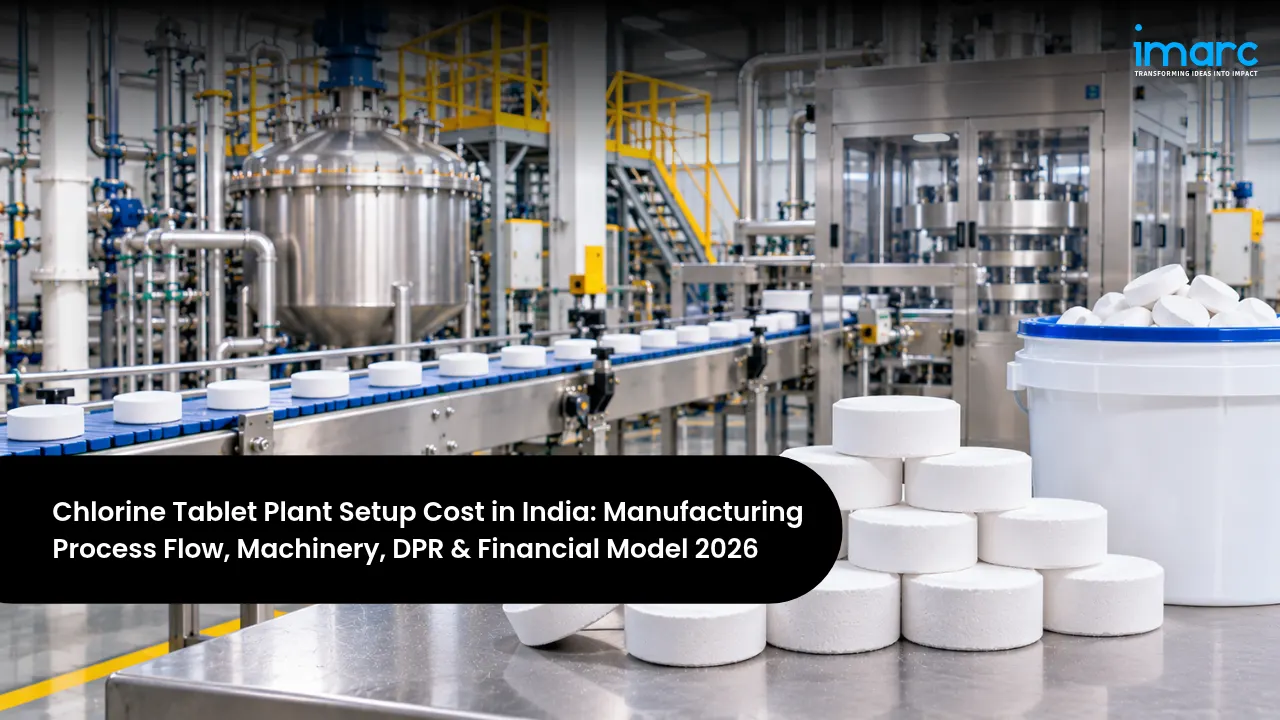
A Chlorine Tablet Manufacturing Plant Setup in India produces compressed disinfectant tablets that release chlorine in water for drinking water treatment, surface and hospital disinfection, swimming pools, wastewater, and sanitation. Products include sodium dichloroisocyanurate (NaDCC) effervescent tablets for household and emergency drinking water, NaDCC disinfection tablets for hospitals and institutions, trichloroisocyanuric acid (TCCA) tablets for pools, tanks, and sanitation, and calcium hypochlorite tablets. Demand is driven by public health programmes, disaster and flood relief, rural water supply, hospitals, hospitality, and pool maintenance.
The overall Chlorine Tablet Manufacturing Plant Cost depends mainly on capacity, the product mix, dehumidified processing rooms, milling and blending equipment, dry granulators, rotary and hydraulic tablet presses, dedusting and testing equipment, strip, blister, and tub packing lines, dust collection and fire safety systems, land and buildings, and working capital for chemicals, packaging, and tender receivables. A plant producing about 3,000 tonnes of tablets a year typically needs INR 8 crore to INR 14 crore in fixed assets, or about INR 12 crore to INR 20 crore including working capital. A smaller unit of 300 to 600 tonnes a year can start at around INR 1.5 crore to INR 3 crore. IMARC Group cites a typical capacity of 10,000 tonnes a year, with gross margins of 30 to 40% and net margins of 15 to 22%.
This guide is written for water treatment chemical companies, pharmaceutical and disinfectant manufacturers, chemical traders, and investors exploring how to start a Chlorine Tablet manufacturing plant in India. It explains product types and end uses, demand drivers, the production flow, machinery and raw materials, site selection, a detailed cost and returns breakdown, the drug, BIS, and safety approvals involved, and how a DPR pulls these elements into a bankable plan.
India Market Snapshot
| Key Facts | Details |
|---|---|
| Global Chlorine Tablet Market (2025) | USD 2.31 Billion |
| Projected Global Market (2034) | USD 3.58 Billion (5.0% CAGR) |
| Indian Standard for NaDCC Tablets | IS 15773 |
| Anti-Dumping Duty on TCCA Imports | Up to USD 986 Per Tonne (China, Japan) |
| Typical Plant Capacity (IMARC) | 10,000 Tonnes a Year |
| Indicative Total Investment | INR 12–20 Crore (3,000 TPA, incl. working capital) |
IMARC Group values the global chlorine tablet market at USD 2.31 billion in 2025 and expects it to grow about 5% a year. In India, government health departments distribute crores of chlorine tablets during floods and monsoons, while anti-dumping duties on TCCA imports support domestic chemical supply.
Investment Highlights
Indicative Project Cost in India (2026)
| Parameter | Value |
|---|---|
| Product Range | NaDCC effervescent drinking water tablets, NaDCC disinfection tablets, TCCA pool and sanitation tablets, and calcium hypochlorite tablets |
| Total Project Investment | INR 12–20 Crore incl. working capital (3,000 TPA); INR 1.5–3 Crore (300–600 TPA) |
| Payback Period | 3–5 Years |
| Net Profit Margin | 15–22% (IMARC benchmark) |
| IRR | 18–24% |
| Best Locations | Gujarat, Maharashtra, Telangana, Himachal Pradesh, Tamil Nadu, Uttar Pradesh |
| Mandatory Approvals | Drug and Product Licenses (for drinking water tablets), BIS License (IS 15773), Factory License, SPCB Consents, Fire NOC, GST, Udyam |
| Key Requirement | Moisture control, consistent available chlorine, safe handling of oxidisers, and tender and institutional sales |
These figures offer a practical frame for early evaluation. Returns depend on buying quality NaDCC and TCCA at good prices, strict moisture control during processing and packing, consistent tablet weight and available chlorine, proper licenses and certifications for government tenders, safe storage of oxidising chemicals, and steady sales to health departments, institutions, distributors, and exporters. A capacity- and product-specific Chlorine Tablet Feasibility Report refines these numbers before capital is committed.
Table of Contents
- What is Chlorine Tablet Manufacturing?
- Why is Chlorine Tablet Manufacturing Growing in India?
- Chlorine Tablet Manufacturing Process Flow
- Raw Materials Required for Chlorine Tablet Manufacturing
- Location, Land & Infrastructure
- Chlorine Tablet Manufacturing Machinery and Equipment
- Chlorine Tablet Manufacturing Plant Setup Cost in India (CapEx & OpEx)
- Financial Analysis and Profitability
- Licenses and Approvals for Chlorine Tablet Manufacturing in India
- Recent Developments in the India Chlorine Tablet Manufacturing Industry
- How Chlorine Tablet Manufacturing Project Report and DPR Helps Investors
- Frequently Asked Questions
What is Chlorine Tablet Manufacturing?
Chlorine tablets are made by compressing chlorine-releasing chemicals, mainly NaDCC, TCCA, or calcium hypochlorite, into tablets of defined weight and strength. Because these chemicals react with moisture and organic matter, processing takes place in dehumidified rooms with dedicated, corrosion-resistant equipment. The active powder is sieved or milled and blended with excipients, such as effervescent agents for fast-dissolving drinking water tablets or binders and lubricants for slow-dissolving pool tablets. The blend is usually granulated dry by roller compaction, then compressed on rotary presses for small tablets or hydraulic presses for large pool tablets. Tablets are dedusted, tested for weight, hardness, available chlorine, and dissolution, and packed promptly in moisture-proof strips, blisters, tubs, or buckets. A Chlorine Tablet Manufacturing Plant therefore combines dry processing, blending, granulation, compression, testing, and moisture-proof packing, supported by dust control and fire safety.
Products are sold to state health departments and municipal bodies, disaster management agencies, hospitals and clinics, hotels and institutions, swimming pools and resorts, water treatment contractors, distributors and retailers, NGOs and relief organisations, and export markets in Africa and Asia. Buyers expect accurate available chlorine, consistent tablet weight, fast or controlled dissolution, long shelf life, safe packaging, BIS and other certifications, and competitive tender pricing.
- NaDCC Drinking Water Tablets: Effervescent tablets for household and emergency use.
- NaDCC Disinfection Tablets: Larger tablets for hospitals and surfaces.
- TCCA Tablets: Slow-dissolving tablets for pools and tanks.
- Calcium Hypochlorite Tablets: Tablets for water and sanitation uses.
Main Product Types in Chlorine Tablet Production
The product mix shapes equipment, packaging, and margins:
| Product Type | Description | Key Feature | Primary Market |
|---|---|---|---|
| NaDCC Effervescent (small) | Tablets for litres of water | Fast dissolving | Health departments, relief |
| NaDCC Disinfection (large) | Grams-strength tablets | Surface disinfection | Hospitals, institutions |
| TCCA 200 g Tablets | Slow-release tablets | Long-lasting chlorine | Pools, overhead tanks |
| TCCA 20 g Tablets | Small slow-release tablets | Spas, small systems | Pools, sanitation |
| Calcium Hypochlorite Tablets | Unstabilised chlorine | No cyanuric acid build-up | Water treatment |
Many new entrants start with NaDCC drinking water and disinfection tablets for government tenders and institutions, along with TCCA pool tablets for distributors, then add specialised strengths, branded retail packs, and export products as certifications and customer base grow. Branded retail and export packs usually earn better margins than tender supply.
Why is Chlorine Tablet Manufacturing Growing in India?
Key Growth Drivers in the Indian Market
Demand for chlorine tablets in India comes from public health, water supply, and institutions:
- Flood and monsoon response: Health departments distribute large volumes of tablets during floods and monsoons to prevent water-borne disease.
- Rural drinking water: Expanding rural water supply needs simple, low-cost disinfection.
- Hospitals and infection control: Hospitals and clinics use NaDCC tablets for surface and spill disinfection.
- Pools and hospitality: Hotels, resorts, and residential pools use TCCA tablets.
- Exports and relief: International relief agencies and African markets buy water purification tablets.
End-Use Market Opportunity
| End Use | Demand Driver | Product Role |
|---|---|---|
| Government Health Programmes | Flood and disease control | NaDCC drinking water tablets |
| Hospitals & Institutions | Infection control | NaDCC disinfection tablets |
| Pools & Hospitality | Water sanitation | TCCA tablets |
| Water Utilities & Tanks | Storage disinfection | TCCA and NaDCC tablets |
| Exports & NGOs | Humanitarian demand | Drinking water tablets |
The strongest position for a Chlorine Tablet Manufacturing Plant in India combines reliable NaDCC and TCCA supply, strict moisture and quality control, the drug, BIS, and GMP credentials needed for government tenders, efficient tablet pressing and packing, and a balanced mix of tender, institutional, distributor, and export sales.
Chlorine Tablet Manufacturing Process Flow
Understanding the Chlorine Tablet Manufacturing Process helps promoters plan raw material handling, blending, granulation, compression, packing, layout, staffing, and safety. Product quality depends on raw material purity and moisture, excipient selection, blend uniformity, compression force, and moisture-proof packing. The flow below reflects a typical chlorine tablet plant.
Step-by-Step Chlorine Tablet Production Flow
Active chemicals and excipients are received, tested, and stored dry, then sieved, blended, and dry-granulated. The granules are compressed into tablets, dedusted, tested, and packed in moisture-proof packs.
| Unit Operation | Key Activity |
|---|---|
| Raw Material Receipt & Testing | Available chlorine, moisture |
| Dry Storage | Dehumidified, segregated store |
| Sieving / Milling | Uniform particle size |
| Blending | Mix actives and excipients |
| Dry Granulation | Roller compaction |
| Compression | Rotary or hydraulic presses |
| Dedusting | Remove loose powder |
| Quality Testing | Weight, hardness, chlorine |
| Moisture-Proof Packing | Strips, blisters, tubs |
| Labelling & Dispatch | Batch coding, cartons |
Two factors decide profitability. The first is raw material cost and stability: NaDCC and TCCA make up most of material cost and their prices depend on Chinese supply, trade duties, and domestic producers, while moisture causes chlorine loss, so smart buying, dry storage, and fast processing protect margins and quality. The second is market access: a large share of demand comes from government tenders and institutions that require drug licenses, BIS certification, and GMP, so holding the right credentials and building distributor and export channels decide volumes.
Raw Materials Required for Chlorine Tablet Manufacturing
The main inputs are NaDCC, TCCA, or calcium hypochlorite, effervescent and other excipients, and packaging materials. IMARC Group estimates raw materials at 50 to 60% of operating cost and utilities at 15 to 20%.
| Raw Material | Role in Process | India Sourcing | % of OpEx |
|---|---|---|---|
| NaDCC Powder / Granules | Active for drinking water tablets | Domestic producers, imports | 25–30% |
| TCCA Powder / Granules | Active for pool tablets | Domestic producers, imports | 15–20% |
| Sodium Bicarbonate & Adipic Acid | Effervescent system | Domestic suppliers | 3–5% |
| Binders & Lubricants | Tablet formation | Domestic suppliers | 1–2% |
| Alu Foil, Tubs & Cartons | Moisture-proof packing | Domestic suppliers | 8–12% |
India has domestic producers of chlorinated isocyanurates, and anti-dumping duties on TCCA imports from China and Japan support local supply, but prices still track global markets. Tablet makers should qualify reliable suppliers, test every lot for available chlorine and moisture, store chemicals in dry, cool, segregated areas away from incompatible materials, and plan stocks ahead of the monsoon tender season.
Location, Land & Infrastructure
Location shapes raw material access, regulatory support, and market reach. The best location for Chlorine Tablet manufacturing plant setup lies in an approved industrial area with chemical and pharmaceutical clusters, good road connectivity, reliable power for dehumidification, and access to chemical suppliers, packaging vendors, and major tender and distribution markets.
Preferred States for Chlorine Tablet Plants in India
| State | Why It Works | Key Advantage |
|---|---|---|
| Gujarat | Chemical and chlor-alkali clusters | Raw material supply |
| Maharashtra | Chemical and pharma industry | Suppliers, western markets |
| Telangana | Hyderabad pharma ecosystem | GMP expertise, drug licensing |
| Himachal Pradesh | Baddi pharma cluster | Pharma manufacturing base |
| Tamil Nadu | Chemical and pharma units | Southern markets |
| Uttar Pradesh | Large public health demand | Northern markets |
Gujarat and Maharashtra offer strong chemical ecosystems and raw material suppliers, while Telangana and Himachal Pradesh provide pharmaceutical manufacturing expertise useful for drug-licensed drinking water tablets. Tamil Nadu and Uttar Pradesh serve large regional public health and institutional markets.
Product Quality and Compliance Requirements
NaDCC drinking water tablets are made to IS 15773 and buyer specifications that typically require declared tablet weight and available chlorine, at least 24 hours of chlorination stability in water, a minimum two-year shelf life, and airtight packing, with government tenders often asking for drug and product licenses, GMP, the ISI mark, and toxicology certificates. Key controls include raw material assays, humidity monitoring, blend uniformity, weight and hardness checks, available chlorine assays, dissolution tests, stability studies, and batch traceability.
Infrastructure Requirements (3,000 TPA Plant)
| Infrastructure Element | Specification | India-Specific Note |
|---|---|---|
| Total Land Area | 1–2 acres | Production, segregated stores |
| Production Building | 1,500–2,500 m² | Dehumidified process rooms |
| Power | 250–450 kW connected load | Presses, dehumidifiers, HVAC |
| Humidity Control | Low relative humidity rooms | Prevents chlorine loss |
| Dust Collection | Extraction and filtration | Worker safety |
| Laboratory | Chemical testing and stability | License compliance |
| Segregated Stores | Oxidiser storage | Fire safety |
Infrastructure for a chlorine tablet plant centres on segregated, ventilated stores for oxidising chemicals, dehumidified processing rooms for sieving, blending, granulation, and compression, packing rooms, dust collection, a quality laboratory, and finished goods storage. Planning space for additional presses and packing lines from the outset supports growth.
Chlorine Tablet Manufacturing Machinery and Equipment
Most chlorine tablet machinery, including blenders, roller compactors, tablet presses, and packing machines, is made in India, while some high-speed presses and specialised corrosion-resistant tooling are imported. The main equipment is summarised below.
| Equipment | Function | Key Specification |
|---|---|---|
| Dehumidifiers & AHUs | Low-humidity rooms | Controlled relative humidity |
| Sifter / Multi Mill | Particle size control | Corrosion-resistant |
| Blender | Mix actives and excipients | Octagonal or V-type |
| Roller Compactor | Dry granulation | No water use |
| Rotary Tablet Press | Small tablets | Multi-station, coated tooling |
| Hydraulic Tablet Press | Large pool tablets | High compression force |
| Deduster & Metal Detector | Clean and inspect tablets | Inline |
| Strip / Blister Packing Machine | Moisture-proof unit packs | Alu-alu packing |
| Tub Filling & Induction Sealing | Bulk packs | Airtight sealing |
| Dust Collector & Laboratory | Safety and QC | Filtration, chlorine assays |
Tablet presses and packing machines largely determine output, while humidity control, blending, and testing determine product stability and quality. Many promoters begin with one rotary press, a hydraulic press for pool tablets, and strip packing, then add higher-speed presses, blister lines, and automated tub packing as volumes grow.
Chlorine Tablet Manufacturing Plant Setup Cost in India (CapEx & OpEx)
The tables below summarise the capital and operating cost structure of a plant producing about 3,000 tonnes of chlorine tablets a year in India. The final Chlorine Tablet Investment Cost for a specific project depends on capacity, product mix, humidity control, number of presses and packing lines, laboratory and safety systems, land and building costs, and working capital for chemicals, packaging, and tender receivables.
Capital Expenditure (CapEx) Cost Structure
| CapEx Component | % of Total CapEx | What It Covers |
|---|---|---|
| Blending & Granulation | 8–12% | Sifters, blenders, compactors |
| Tablet Presses | 14–18% | Rotary and hydraulic presses |
| Packing Lines | 12–16% | Strip, blister, tub lines |
| Humidity Control & Dust Systems | 10–12% | Dehumidifiers, AHUs, collectors |
| Laboratory & Safety | 4–6% | QC equipment, fire systems |
| Land & Buildings | 16–20% | Site, controlled rooms, stores |
| Working Capital | 22–28% | Chemicals, packaging, receivables |
Presses, packing lines, and humidity control form the largest share of fixed investment, while working capital is significant because stocks are built before the monsoon and government buyers may pay slowly. A Chlorine Tablet Business Plan models these components so that capacity, product mix, and financing rest on realistic chemical prices, packaging costs, utilisation, tender prices, and payment terms.
Operating Expenditure (OpEx) Cost Structure
| OpEx Component | % of Total OpEx | India-Specific Note |
|---|---|---|
| Active Chemicals & Excipients | 45–52% | NaDCC and TCCA prices |
| Packaging | 8–12% | Alu foil, tubs, cartons |
| Utilities | 12–16% | Dehumidification and HVAC |
| Labour | 6–8% | Operators, QC, packing |
| Selling & Distribution | 6–9% | Tenders, distributors |
| Logistics & Overheads | 4–6% | Hazmat freight, administration |
With chemicals, packaging, and utilities forming most of operating cost, profitability depends on raw material buying, yield, packing efficiency, utilisation, and sales mix. A sound financial model should test margins against NaDCC and TCCA price changes, changes in trade duties, aggressive tender pricing, delayed government payments, and seasonal swings in demand.
Financial Analysis and Profitability
Chlorine tablet manufacturing offers attractive returns for certified producers with good market access. The profitability of Chlorine Tablet manufacturing business in India improves with smart chemical buying, strict moisture control and low losses, efficient pressing and packing, the credentials needed for government tenders, a growing share of branded retail, hospital, and export sales, and careful management of seasonal stocks and receivables.
| Financial Metric | Indicative Value | India Context |
|---|---|---|
| Gross Profit Margin | 30–40% | IMARC benchmark |
| Net Profit Margin | 15–22% | IMARC benchmark |
| Payback Period | 3–5 Years | Moderate capital needs |
| IRR (Internal Rate of Return) | 18–24% | Sensitive to tenders and chemical costs |
| Capacity Utilization (stable ops) | 55–75% | Seasonal and tender-linked |
| Break-even Capacity Utilization | 40–50% | Humidity control and fixed costs |
Certifications and sales mix are the decisive factors. Producers with drug licenses, BIS certification, and GMP that win repeat tenders and also sell to hospitals, distributors, and export buyers earn stable returns, while those relying on a few price-driven tenders face volatile volumes and payment delays.
Returns can be strengthened by securing WHO-aligned quality systems for export and relief buyers, building branded retail and hospital ranges, adding TCCA and calcium hypochlorite products for pools, offering contract manufacturing, and pursuing exports to Africa, the Middle East, and South Asia.
Key Risks and Mitigation
The main risks are raw material price volatility, dependence on government tenders, product degradation from moisture, fire and handling hazards with oxidising chemicals, regulatory or certification gaps, and competition from imported tablets. Price risk is reduced through supplier contracts and stock planning; tender risk through diversified customers; quality risk through humidity control and stability testing; and safety risk through segregated storage, dust control, fire systems, and trained staff.
Licenses and Approvals for Chlorine Tablet Manufacturing in India
A chlorine tablet unit requires product, industrial, environmental, safety, and business approvals. Promoters typically need the following before starting commercial production:
- Drug and Product Licenses: Licenses from the State Drug Controller where drinking water purification tablets are made and sold as drugs, along with GMP certification.
- BIS License: ISI mark under IS 15773 for NaDCC tablets, commonly required in government tenders.
- Factory License and Fire NOC: Factory registration and fire safety approval, including safe storage of oxidising chemicals.
- Pollution Control Consents: Consent to Establish and Consent to Operate from the State Pollution Control Board.
- Testing and Toxicology Certificates: Accredited laboratory reports and toxicology certificates as tender buyers require.
- Legal Metrology and Transport: Packaged commodity registration and compliance with hazardous goods transport rules for oxidisers.
- Business Registrations: Company registration, GST, Udyam, trademark, and an Import Export Code.
Drug licenses, GMP, and BIS certification often take the longest and are essential for government tenders. Engaging a Chlorine Tablet Manufacturing Consultant in India can help promoters design humidity-controlled facilities, select machinery, plan formulations and packaging, obtain licenses and certifications, and build tender, institutional, and export channels.
Note: The exact approvals, registrations, licenses, and certification requirements may vary depending on factors such as plant location, product range, capacity, target customers, and applicable regulations. Businesses are advised to undertake a detailed regulatory assessment during the project planning stage to ensure full compliance and timely implementation.
Recent Developments in the India Chlorine Tablet Manufacturing Industry
Several recent developments are shaping chlorine tablet demand in India:
- Jal Jeevan Mission extended: In February 2025, the Union Budget extended the Jal Jeevan Mission to 2028, sustaining investment in rural drinking water supply and treatment.
- Anti-dumping duty on TCCA: In March 2025, India imposed anti-dumping duties of up to USD 986 per tonne on TCCA imports from China and Japan for five years, supporting domestic supply.
- Flood response demand: In August 2026, Gujarat's health department distributed more than 1.05 crore chlorine tablets door to door in flood-hit districts.
Together these point to steady public health demand and a more protected domestic raw material market. For new entrants, success depends on certifications, moisture control, cost management, and tender and distribution access.
How Chlorine Tablet Manufacturing Project Report and DPR Helps Investors
A detailed Chlorine Tablet Project Report gives investors a structured roadmap covering demand by end use and channel, competition, product mix, raw material sourcing, process design, machinery, humidity control, safety systems, approvals, distribution, and economics. It helps promoters choose the right capacity, product range, and location, estimate capital expenditure (CapEx) and operating expenditure (OpEx), assess profitability, and identify risks before implementation.
At the core of the DPR is a Chlorine Tablet Financial Model covering NaDCC, TCCA, and excipient prices, tablet yields, packaging costs, utilities, labour, selling prices by product and channel, tender pricing, seasonal demand, working capital, cash flow projections, break-even, return on investment (ROI), and payback. Because tenders and chemical costs drive returns, lenders expect detailed sensitivity analysis, which is why many promoters engage a Chlorine Tablet Plant Project Report Consultant in India to prepare bank-ready documents.
For a chlorine tablet project specifically, a strong DPR also answers the questions that matter most: which licenses and certifications are needed for target buyers, how much of the volume will come from tenders versus distributors and exports, how much stock the monsoon season requires, how chemical prices and duties affect costs, and how returns hold up if tender prices fall or payments are delayed. An experienced Chlorine Tablet Manufacturing Feasibility Study Consultant tests these scenarios so that the final plan is one lenders and partners can back with confidence.
Frequently Asked Questions
How do I set up a chlorine tablet manufacturing unit in India?
Start by identifying target products and buyers, then commission a feasibility study and DPR. Choose a site in an approved industrial area, build dehumidified processing rooms, install blending, granulation, tablet pressing, and packing equipment with dust and fire safety systems, obtain drug, product, BIS, factory, pollution, and fire approvals, and register with tender portals and distributors.
What is the cost of setting up a chlorine tablet manufacturing plant in India?
A plant producing about 3,000 tonnes of tablets a year typically needs INR 8 crore to INR 14 crore in fixed assets, or about INR 12 crore to INR 20 crore including working capital. A smaller unit of 300 to 600 tonnes a year can start at around INR 1.5 crore to INR 3 crore.
How are chlorine tablets made?
NaDCC or TCCA powder is sieved and blended with excipients in low-humidity rooms, granulated dry, and compressed into tablets on rotary or hydraulic presses. Tablets are dedusted, tested, and packed in moisture-proof strips, blisters, or tubs.
What machinery is needed for a chlorine tablet manufacturing plant?
Key equipment includes dehumidifiers and air handling units, sifters and multi mills, blenders, roller compactors, rotary and hydraulic tablet presses, dedusters, strip or blister packing machines, tub filling and induction sealing machines, dust collectors, and laboratory instruments.
What raw materials are used for chlorine tablets?
The main inputs are sodium dichloroisocyanurate, trichloroisocyanuric acid, or calcium hypochlorite, along with sodium bicarbonate and adipic acid for effervescent tablets, binders, lubricants, and moisture-proof packaging.
Is chlorine tablet manufacturing profitable in India?
Benchmark figures point to a 15 to 22% net margin and an IRR of around 18 to 24%, with payback in 3 to 5 years. Profitability depends mainly on chemical costs, moisture control, certifications, tender success, and sales mix.
What licenses are needed for a chlorine tablet manufacturing unit in India?
A unit typically needs drug and product licenses with GMP for drinking water tablets, a BIS license under IS 15773, a Factory License, Fire NOC, State Pollution Control Board consents, Legal Metrology registration, GST, and Udyam registration.
Which state is best for a chlorine tablet manufacturing plant?
Gujarat, Maharashtra, Telangana, Himachal Pradesh, Tamil Nadu, and Uttar Pradesh are strong options. The best site combines chemical or pharmaceutical ecosystems with good access to tender and distribution markets.
How do I get a feasibility study or DPR for a chlorine tablet manufacturing plant?
A professionally prepared DPR covers market and tender assessment, technical design, safety, approvals, costs, and financial projections for bank appraisal. Many promoters work with a Chlorine Tablet Business Plan Consultant in India to prepare it and align it with lender requirements.
Our Clients








Contact Us
Have a question or need assistance?
Please complete the form with your inquiry or reach out to us at
Phone Number
+91-120-433-0800+1-201-971-6302
+44-113-547-7077
Previous Post

For years, a cancer antibody meant a drive to the clinic, a wait for a free chair and hours on an IV line. That model is breaking. According to IMARC Group, the global wearable injectors market was valued at USD 9.77 Billion in 2025 and is projected to reach USD 27.22 Billion by 2034, growing at a CAGR of 11.69% during 2026-2034. That is a market roughly 2.8 times larger in under a decade.
A Medical Equipment Manufacturing Plant Setup in India produces the devices hospitals, clinics, diagnostic centres, and homes rely on to diagnose, monitor, and treat patients.
An Agave Manufacturing Plant Setup in India turns the sugar-rich hearts, or piñas, of mature agave plants into high-value products such as agave spirits, agave syrup, and inulin, with fibre and biomass as useful by-products.
A Blood Collection Tube Manufacturing Plant Setup in India supplies one of the most widely used consumables in healthcare.
An HPMC Capsule Manufacturing Plant Setup in India produces plant-based, two-piece hard capsules made from hydroxypropyl methylcellulose, a cellulose derivative obtained from wood pulp or cotton.
A spirulina Manufacturing Plant Setup in India turns sunlight, water, carbon dioxide, and mineral nutrients into one of the most protein-dense foods available.
A Nicotine Pouches Manufacturing Plant Setup in India is one of the most regulation-sensitive projects an investor can consider. Nicotine pouches are small, tobacco-free pouches filled with plant fibres, a nicotine salt, flavours, and sweeteners, placed under the lip so that nicotine is absorbed through the gums.
The medical imaging market is a concentrated, capital-intensive oligopoly in which a handful of global vendors dominate high-value modalities, but the periphery of that structure is now moving. IMARC Group estimates the global medical imaging market at USD 49.0 Billion in 2026, up from USD 46.8 Billion in 2025, and projects it to reach USD 71.2 Billion by 2034, a CAGR of 4.78% during 2026-2034.
IV infusion bags are sterile, flexible plastic bags filled with fluids such as normal saline, dextrose, and Ringer lactate that are dripped directly into a patient's vein to restore fluids, salts, and energy or to dilute medicines.
The global orthopedic prosthetics market is moving away from a replacement-device business model and toward a capability-driven care model, in which fit, function and follow-up data determine whether a device delivers value. According to IMARC Group, the market was valued at USD 2.5 Billion in 2025 and is projected to reach USD 3.5 Billion by 2034, expanding at a CAGR of 3.61% between 2026 and 2034.
Health supplements and functional nutrition products are made by blending vitamins, minerals, proteins, probiotics, and botanical extracts and turning them into tablets, capsules, softgels, powders, gummies, and drinks under food-grade good manufacturing practices.
Generic medicines are copies of off-patent brands that contain the same active ingredient, strength, dosage form, and effect, and are approved on the basis of bioequivalence rather than new clinical trials, so they reach patients at a fraction of the original price.
The UK Health Insurance Market is at an inflection point, shaped by the mounting strain on the National Health Service and a structural shift in how employers and individuals seek to protect their health. According to IMARC Group, the market was valued at USD 67.2 Billion in 2025 to USD 70.9 Billion in 2026 and is projected to reach USD 98.6 Billion by 2034, growing at a CAGR of 4.21% (2026–2034).
Single-use syringes are sterile medical devices made from a moulded plastic barrel and plunger, a rubber gasket, and usually a fine stainless steel needle, and they are used once and discarded to prevent infection.
Absorbent cotton wool is raw cotton that has been cleaned, scoured, and bleached to remove natural waxes, oils, and impurities, then carded into soft, pure white layers that absorb many times their own weight in liquid.
Generic formulations are finished medicines, such as tablets and capsules, that contain the same active ingredient, strength, and effect as an original brand once its patent expires.
IV solutions, also called intravenous fluids or large volume parenterals, are sterile solutions given directly into a patient's vein to restore fluids and electrolytes, provide nutrition, or deliver medicines.
Paracetamol, also called acetaminophen, is one of the world's most widely used medicines for pain and fever, sold in tablets, syrups, suspensions, injections, and combination products.
Ayurveda is India's traditional system of medicine, and Ayurvedic medicines are made from herbs, minerals, and natural bases such as ghee, oils, honey, and jaggery, following classical texts and modern quality standards.
The Europe Medical Cannabis Industry has moved decisively from a patchwork of national pilot programmes into a credentialed pharmaceutical market with prescriptions, import quotas, reimbursement pathways and EU-GMP supply chains. According to IMARC Group, the market reached USD 3,060.0 Million in 2025 and is projected to reach USD 13,161.29 Million by 2034, expanding at a CAGR of 17.60% (2026–2034).
Workplace wellbeing in Asia-Pacific has shifted from a discretionary benefit to something employers are measured on, by regulators, insurers, and the talent market alike. According to IMARC Group, the Corporate Wellness Market was valued at USD 75.0 Billion in 2025 and is projected to reach USD 129.5 Billion by 2034, growing at a CAGR of 6.07% (2026–2034).
The Europe Digital Health Industry has become the continent's principal answer to a demographic and fiscal problem that hospitals alone cannot solve: ageing populations, rising chronic-disease burdens and persistent clinical staff shortages, set against public health budgets that cannot expand at the same pace as demand.
For two decades India bought most of its medical technology from abroad. The government's own assessment put import dependence at more than 85% of the market in 2020, and the country's role was that of a large consumer rather than a producer. That position is now changing, as incentive schemes, multinational localization, and domestic innovation turn the Indian medical devices sector into a manufacturing and export base.
Rapid diagnostic tests deliver results in minutes, without laboratory equipment, at a clinic, pharmacy, field camp, or at home. Lateral flow tests for malaria, dengue, typhoid, HIV, hepatitis, syphilis, pregnancy, fertility, drugs of abuse, and cardiac markers have become an essential part of India's healthcare system, especially in primary care and rural areas where laboratories are scarce.
Setting up a Generic Injectables Manufacturing Plant in India is a high-value, highly regulated venture, powered by the country's position as the pharmacy of the world, growing global demand for affordable injectables, and a wave of patent expiries opening new products to generic competition.
Setting up a Pharmaceutical Manufacturing Plant in India is a high-potential, strategically strong venture, powered by the country's position as the pharmacy of the world and one of the largest generic drug producers globally. India's deep formulation expertise, cost competitiveness, and vast domestic and export demand make a pharmaceutical manufacturing unit setup in India one of the most attractive opportunities in the healthcare sector.
The Dental 3D Printing Market is attracting renewed investor attention because the technology has moved from a promising adjunct to a default production method inside dental laboratories and clinics.
Vitamin water is a functional, non-carbonated beverage that is created by the fortification of purified water with a combination of vitamins, minerals, and sometimes electrolytes, along with natural or artificial flavors and sweeteners. It is placed in a category between bottled water and carbonated soft drinks, providing hydration with a functional twist.
Vitamin B12, or cobalamin, is a water-soluble vitamin that contains the metal cobalt and is a micronutrient required by the human body. It acts as a coenzyme in the synthesis of DNA, the production of red blood cells, and the functioning of the nervous system.
Japan's dietary supplements industry has become one of the most advanced and innovation-led industries in the world. It is at the nexus of science, culture, and consumer health awareness.
A syringe is a medical instrument that is used to inject fluids into the body or to withdraw fluids from the body. A syringe usually has a cylindrical body, a plunger that moves inside the body to generate pressure or suction, and a nozzle to which a needle can be attached.
Cosmetic surgery in Australia today has evolved into a significant element of the greater beauty and wellness economy. Changing cultural attitudes, advances in medical aesthetics, and the rise of social media over the last ten years have reconstituted the ways in which cosmetic surgery is perceived and undertaken by Australians.
The contact lenses market represents a dynamic segment of the global vision care industry, characterized by continuous innovation and expanding demographic demand.
Brazil's diagnostic imaging equipment market stands at a pivotal moment as Latin America's largest and most dynamic healthcare arena. With substantial investments in hospital modernization, regulatory reforms, and artificial intelligence adoption, the market is transforming rapidly. As providers transition from analog to AI-ready platforms, Brazil emerges as a critical destination for medical device manufacturers seeking growth through the next decade.
The Indian healthcare space has indeed been changing. Telemedicine has emerged as one of the most important drivers of this change. Driving this transformation is the increased adoption of digital tools, growing patient awareness, and the pressing need to make healthcare more accessible across diverse geographies.
The Australia medical aesthetics industry size reached USD 396.4 Million in 2025. Looking forward, the market is expected to reach USD 784.8 Million by 2034, exhibiting a growth rate (CAGR) of 7.89% during 2026-2034. Over the last ten years, the medical aesthetic industry in Australia has transformed from a niche beauty service into a mainstream part of healthcare and wellness.
A rapid diagnostic test (RDT) kit is a medical device designed to quickly detect specific biomarkers, antigens, antibodies, or nucleic acids linked to diseases—typically within minutes and without the need for sophisticated laboratory equipment. These kits often use lateral flow assays, immunochromatographic strips, or rapid molecular testing methods to deliver fast and reliable results.
The Philippines pharmaceutical industry stands as one of Southeast Asia's most dynamic and rapidly expanding healthcare markets in the ASEAN region. With a market valuation reaching USD 3.36 Billion in 2025, the sector demonstrates resilience and tremendous growth potential.
Pharmaceuticals are medical products, substances, or formulations involved in the development, manufacture, and regulation for the prevention, diagnosis, treatment, and management of diseases in humans as well as animals.
The Australia aged care industry stands at a pivotal juncture as the nation grapples with demographic shifts that are reshaping the landscape of elderly care services. With an aging population that continues to expand, Australia faces both unprecedented challenges and remarkable opportunities in delivering quality care to its senior citizens.
The Indian vaccines industry holds an unparalleled position globally, often celebrated as the pharmacy of the world due and its massive production scale and capabilities. It reached INR 113.7 Billion in 2024 according to IMARC Group and it is projected to grow at a CAGR of 8.8% from 2025-2033.
The medical imaging market has reached a transformational phase, driven both by rapid technological advancements and growing demands for precision-driven diagnostics. As health systems worldwide come under increasing pressure to improve patient outcomes while minimizing procedural risks and optimizing clinical workflows, medical imaging has become one of the most important cornerstones of modern medicine.
India’s medical devices industry is on a sustained growth trajectory driven by expanding hospital infrastructure, rising chronic disease burden, stronger local manufacturing supported by government incentives, and a rapidly growing shift toward portable and home care devices.
Pectin represents a naturally occurring polysaccharide mainly extracted from cell walls of fruits (mainly from citrus peel and apple pomace). It is a soluble dietary fiber and a hydrocolloid with gelling, thickening, and stabilizing properties. It is mostly composed of galacturonic acid units.
Paracetamol, also referred to as acetaminophen, is an analgesic and antipyretic compound that is commonly used worldwide for the treatment of mild to moderate pain and the management of fever. The mechanism of action occurs mainly in the central nervous system, where it inhibits the mechanisms that regulate pain and body temperature, but lacks anti-inflammatory properties.
The Australia wellness tourism industry has emerged as a critical segment of the country’s broader travel and hospitality sector. It reflects a growing global emphasis on health, self-care, and holistic well-being, capturing the attention of travelers seeking experiences that combine relaxation, rejuvenation, and personal growth.
The Brazil cardiovascular devices market represents a crucial segment in the country’s healthcare ecosystem, addressing one of the leading causes of morbidity and mortality: cardiovascular diseases. Conditions such as heart attacks, stroke, arrhythmias, and heart failure require ongoing medical intervention and advanced heart disease treatment solutions. With the rising prevalence of cardiovascular disorders, demand for comprehensive cardiac care equipment and innovative treatment modalities is increasing.
India's Ayurvedic products market is experiencing remarkable transformation as consumers increasingly prioritize holistic wellness and natural remedies over conventional alternatives. The convergence of traditional healing wisdom with modern consumer preferences has created a dynamic landscape where herbal medicines, chemical-free personal care products, and immunity-boosting supplements are becoming household staples.
Nicotine pouches are small, smokeless oral delivery products of nicotine, free from tobacco, designed to allow for controlled release of the active principle without burning, vaporizing, or use of traditional tobacco leaves. It consists of a small pouch that contains a matrix made basically from plant fibers, flavorings, pH adjusters, and stabilizers impregnated with nicotine, encased in a permeable material permitting the gradual absorption of the product via the oral mucosa.
The pharmaceutical industry in Japan is among the most advanced globally, recognized for combining innovation, high-quality standards, and patient-centered care. Its extensive value chain includes drug discovery, clinical trials, manufacturing, distribution, marketing, and post-market surveillance. Serving both domestic and international markets, Japanese pharmaceutical companies are respected for regulatory compliance, safety, and reliability, establishing them as trusted global collaborators in drug development.
The pharmaceutical industry in Japan is among the most advanced globally, recognized for combining innovation, high-quality standards, and patient-centered care. Its extensive value chain includes drug discovery, clinical trials, manufacturing, distribution, marketing, and post-market surveillance. Serving both domestic and international markets, Japanese pharmaceutical companies are respected for regulatory compliance, safety, and reliability, establishing them as trusted global collaborators in drug development.
The global healthcare IT industry is on a remarkable upswing, fueled by the surge in preventive care, digital health platforms, and smarter patient management systems. According to IMARC Group, the market hit USD 363.15 Billion in 2024, a clear sign of worldwide adoption. An aging population, the growing comfort with remote care, and the push toward personalized medicine are all speeding this momentum.
The global endoscopy devices market is on a sharp growth path, fueled by the shift toward minimally invasive procedures, the need for early diagnosis, and cutting-edge imaging technologies. IMARC Group reported the market hit USD 50.01 Billion in 2024, underscoring its worldwide acceptance.
The global business-to-business (B2B) payments landscape is experiencing a fundamental transformation that is reshaping how enterprises conduct financial transactions across borders and industries. The market, valued at approximately 1,189.6 Billion in 2024, is projecting remarkable growth with expectations to reach USD 2,189.0 Billion by 2033, exhibiting a CAGR of 7% from 2025-2033. This exponential expansion is signaling a paradigm shift in commercial finance, driven by technological innovation, changing business expectations, and the urgent need for more efficient payment infrastructures.
The smart medical devices market is entering a decade defined by connected care, real-time diagnostics, and patient empowerment. Valued at USD 45.9 Billion in 2024, the market is projected to reach USD 82 Billion by 2033, expanding at a compound annual growth rate (CAGR) of 6.33% between 2025 and 2033 by IMARC Group. This steady rise reflects growing confidence in data-driven healthcare systems, integration of IoT in medical environments, and the increasing role of artificial intelligence in clinical decision-making.
Active Pharmaceutical Ingredients (APIs) are the bioactive molecules of any drug used in pharmaceuticals, which cause the desired therapeutic action in the body of a human being. APIs are the central core of all drugs, chemical or biological and are responsible for the efficacy, strength, and safety of the drug. APIs are synthesized by various complex chemical synthesis, fermentation, biotechnological, or extraction processes based on the type of drug.
A bio medical incinerator is a high-temperature combustion system specialized for biomedical waste disposal by hospitals, clinics, laboratories, and research institutions. Biomedical waste usually consists of infectious waste, pathological waste, sharps, pharmaceuticals, and contaminated disposables that are very hazardous to human health and the environment if not treated.
Obesity, once viewed primarily as a lifestyle choice, is now widely recognized as a complex and chronic disease characterized by excessive body fat accumulation. Its global prevalence is escalating at an alarming rate posing a significant and growing challenge to public health systems worldwide.
Gonorrhea, a sexually transmitted infection caused by the bacterium Neisseria gonorrhoeae, is a major public health issue globally. Reports show that over one million new cases of curable STIs are contracted every day by individuals aged 15 to 49 years, with the majority being asymptomatic.
The 7 major allergic conjunctivitis markets reached a value of USD 2.1 Billion in 2024. Looking forward, IMARC Group expects the 7MM to reach USD 2.9 Billion by 2035, exhibiting a growth rate (CAGR) of 3.00% during 2025-2035.
The healthcare sector is changing rapidly because of the growing demand for better ways to manage chronic diseases. As we move toward 2025 and beyond, digital tools are playing an important role in dealing with conditions like diabetes, heart disease, cancer, and respiratory problems.
The global multivitamin gummies market consists of chewable dietary supplements that are charged with key vitamins and minerals aimed at maintaining general health and wellness. The gummies present a handy, enjoyable, and easy-to-swallow option to classic pills or tablets, hence are predominantly preferred by children and adults who do not like taking pills.
India's pharmaceutical sector is evolving rapidly, supported by the integration of artificial intelligence (AI) across the value chain. As of 2023, India ranked as the third-largest pharmaceutical producer by volume, accounting for 20% of global generic drug exports.
As Lung Cancer Awareness continues to build global momentum in 2025, Artificial Intelligence (AI) is proving to be a transformative force—not only in clinical diagnostics but also in public education and preventive health efforts. Given that lung cancer remains one of the world’s deadliest cancers, accounting for over 1.8 million deaths each year and a five-year survival rate of just 28.4%, the integration of AI marks a critical turning point.
Observed on May 19, Hepatitis Testing Day 2025 emphasizes the need to "Test. Treat. Eliminate," highlighting the gap in diagnosing hepatitis B and C, which cause over 1.3 million deaths annually. Hepatitis remains a major global health threat, on par with HIV, tuberculosis, and malaria. The growing viral hepatitis market <Viral Hepatitis Market Size | Share, Trends - 2034 > reflects rising demand for better diagnostics, treatments, and integrated care. The WHO warns that without faster testing and treatment, the goal of eliminating hepatitis by 2030 may not be achieved, with disparities in diagnostics, particularly in low- and middle-income countries, hindering progress.
Observed on May 8, World Ovarian Cancer Day 2025 carries the theme “No Woman Left Behind,” reinforcing the urgent need to close the gaps in access, diagnosis, treatment, and care across all regions and socioeconomic groups. Ovarian cancer remains one of the deadliest gynecological cancers, often detected too late due to vague symptoms and limited screening tools. The World Ovarian Cancer Coalition projects a 55% rise in annual cases and nearly 70% more deaths by 2050, with the heaviest burden falling on low- and middle-income countries. Equitable access to early diagnostics, genetic testing, and targeted therapies is critical.
In clinics around the world, a concerning pattern is becoming increasingly evident: a growing number of patients are experiencing wheezing, breathlessness, and persistent coughing. This surge reflects a broader global trend. According to the World Health Organization (WHO), more than 260 million people are currently living with asthma, making it one of the most widespread and persistent chronic respiratory conditions globally.
Observed on April 25, World Malaria Day 2025 carries the theme “Accelerating Equity in Malaria Prevention and Cure,” underscoring the urgent need to reach communities still lacking access to life-saving vaccines and diagnostics. While global malaria death rates have seen modest declines, the disease continues to claim the life of one child every minute, highlighting the critical need for swift, equity-driven action
Sulfamethoxazole is a common synthetic antibacterial that is a member of the sulfonamide class of antibiotics. This substance plays a very significant role in modern medicine due to the amazing capabilities offered by the substance for curing infections and bacterial diseases. Trimethoprim and sulfamethoxazole are frequently used together to create the well-known antibiotic co-trimoxazole, which is well-known for its potency against a variety of bacterial infections. It works by preventing the manufacture of folic acid, which is necessary for the growth of bacteria. Sulfamethoxazole is an essential part of modern antibiotic therapy since it has been used to treat lung infections, urinary tract infections, and other common bacterial illnesses.
Healthcare consumables are necessary medical supplies used for patient treatment, diagnostics, and cleanliness in clinics, hospitals, and home care settings. These consist of supplies such as surgical masks, bandages, gloves, syringes, catheters, and disinfectants. Usually, they are disposable or single use to preserve sterility and stop infections. Healthcare consumables are an essential component of the global healthcare ecosystem and are in high demand due to expanding healthcare needs, an increase in operations, infection control measures, and technological improvements.
Catheters are flexible, tubular medical devices designed to access various body cavities, organs, or blood vessels for diagnostic or therapeutic purposes. They can be broadly classified into types based on their application, including urinary catheters, cardiac catheters, and intravenous (IV) catheters. Catheters are commonly used in diverse healthcare settings for managing chronic conditions, enabling fluid drainage, delivering medications, or facilitating minimally invasive surgeries.
Bioinformatics involves applying computational techniques and tools to study and understand biological systems at the molecular level. It is a field of study that combines mathematics, biology, computer science, and statistics to research genomic data and biological networks. The goal is to interpret information from large biological data sets, such as DNA sequences, protein structures, gene expressions, and other high-throughput experimental data. This field provides various products and services, such as knowledge management tools, bioinformatics platforms, and services.
A non-animal model refers to an experimental system or method used in scientific research or testing that does not involve the use of animals. These models are developed to simulate biological processes, test hypotheses, or study diseases without the need for live animals. The aim is often to reduce the reliance on animal testing, which has ethical implications and raises concerns about animal welfare.
Cell therapy involves the transplantation and manipulation of living cells to replace and repair damaged tissue. Its primary branches include stem cell therapy and non-stem cell therapy. Stem cell therapy utilizes stem cells to repair, replace, or rejuvenate damaged or diseased cells and tissues as they possess the ability to differentiate into various specialized cell types, making them valuable for regenerative medicine. Non-stem cell-based therapies typically involve somatic cells isolated from the human body. These cells are propagated, expanded, selected, and then administered to patients for curative, preventive, or diagnostic purposes. On the other hand, gene therapy seeks to treat diseases by introducing, replacing, or inactivating genes within cells.