Which Device, Therapy and End-Use Segments Lead the Wearable Injectors Market?
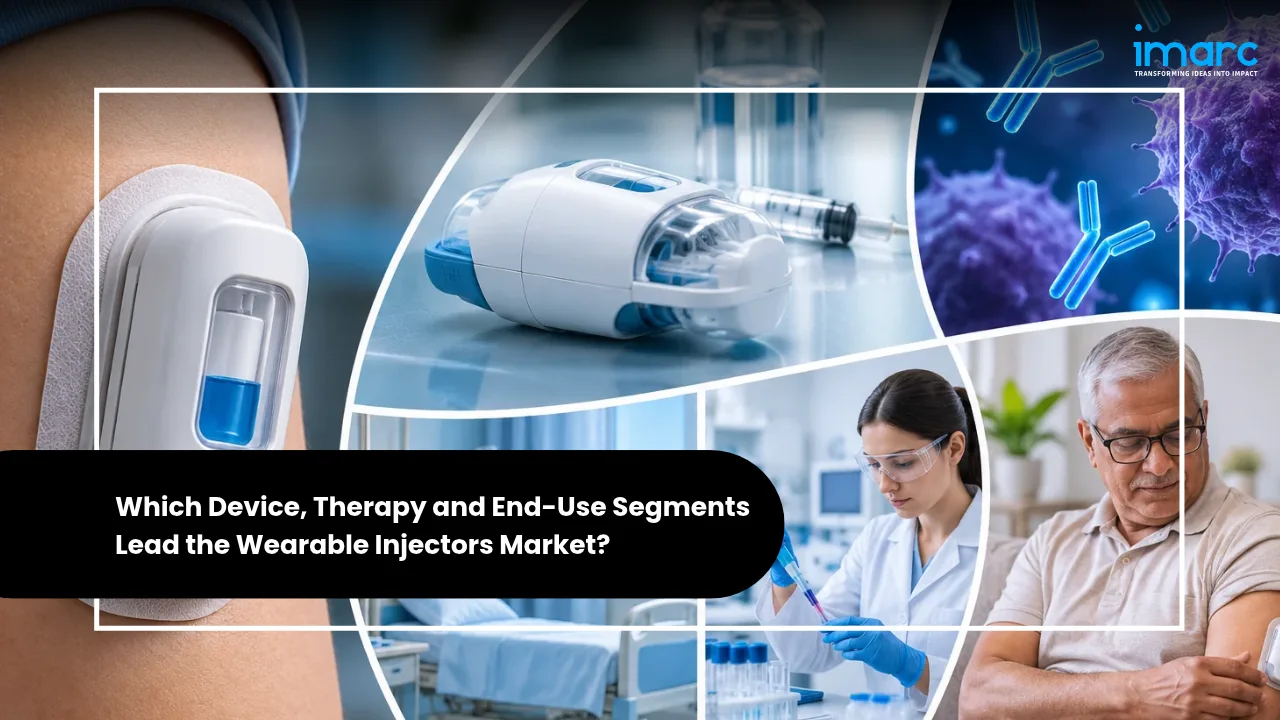
For years, a cancer antibody meant a drive to the clinic, a wait for a free chair and hours on an IV line. That model is breaking. According to IMARC Group, the global wearable injectors market was valued at USD 9.77 Billion in 2025 and is projected to reach USD 27.22 Billion by 2034, growing at a CAGR of 11.69% during 2026-2034. That is a market roughly 2.8 times larger in under a decade.
The real question for pharma, device and investor teams is not whether wearable injectors will grow. It is where that growth will land: which therapies, which device architectures, which countries and which care settings. A wrong platform bet can tie a drug launch to a device that regulators, payers or patients do not accept.
This guide breaks the opportunity down so you can decide where to partner, invest or build.
How Big Is the Wearable Injectors Market and How Fast Is It Growing?
IMARC Group values the global wearable injectors market at USD 9.77 Billion in 2025 and expects it to reach USD 27.22 Billion by 2034, a CAGR of 11.69% during 2026-2034. Growth comes from chronic disease, the shift of biologic therapy from hospital to home and the subcutaneous reformulation of large-volume monoclonal antibodies.
It tells you that wearable injectors are moving from a specialty niche toward a default format for home-administered biologics. The headline average, though, hides wide gaps between device types, therapy areas and countries, which is where the commercial decisions are actually made.
Why Is Demand for Wearable Injectors Still Rising?
Demand keeps rising because four forces work together: a large and growing chronic disease population, a biologics pipeline that is moving from IV to subcutaneous delivery, payers pushing expensive infusions out of hospital chairs, and patients who prefer treatment at home. Each one widens the addressable pool for body-worn devices.
Chronic disease is now the norm, not the exception. CDC researchers report that in 2023, 76.4% of US adults, representing about 194 million people, had at least one of 12 selected chronic conditions. By life stage, the share was about 6 in 10 young adults (59.5%), 8 in 10 midlife adults (78.4%) and 9 in 10 older adults (93.0%). Globally, the WHO's cancer agency IARC estimated 20 million new cancer cases and 9.7 million cancer deaths in 2022.
The biologics pipeline is going subcutaneous. IMARC Group cites more than 8,000 active biologic candidates in 2025, with over 400 in late-stage subcutaneous reformulation.
Payers want infusions out of the hospital. IMARC Group estimates US infusion chair costs of USD 1,500-3,500 per chair-hour, which is why payers are moving high-cost biologics into the home.
Patients choose the wearable when offered. In Sanofi's IZALCO phase 2 study, 74.5% of patients who tried both methods preferred the on-body injector over manual injection. For a sponsor, that preference becomes a commercial argument with prescribers and payers.
Key Wearable Injectors Industry Trends to Watch
Large-Volume On-Body Platforms Reach Frontline Cancer Drugs
Device programmes supporting 10-50 mL subcutaneous delivery, such as Enable Injections' enFuse, West Pharmaceutical's SmartDose 10 and BD Libertas, are scaling to convert biologics that were previously IV-only, according to IMARC Group. 2026 proved the point: subcutaneous Sarclisa, delivered by an on-body injector, was approved in the EU in June, the US in July and Japan in October. Wearables have moved from supportive care into the cancer drug itself, which opens the largest-value oncology molecules to the format.
Connectivity Becomes Part of the Product
IMARC Group reports that over 40% of new wearable injectors launched between 2023 and 2025 include connectivity, up from under 10% in 2019. In April 2026, Aptar Digital Health became Enable Injections' preferred digital health partner, building a companion app for enFuse covering onboarding, injection guidance and adherence data. Dose confirmation data lets sponsors show adherence in the real world, which strengthens payer negotiations.
Reusable Drive Units and Lower-Waste Designs
IMARC Group notes that sustainability redesigns pairing reusable electronic modules with disposable drug-contact cartridges target a 60-70% cut in per-dose plastic waste, and that European procurement increasingly scores devices on lifecycle carbon footprint. SQ Innovation's Lasix ONYU uses a reusable electromechanical unit that can be used up to 48 times with a sterile single-use cartridge holder.
How Wearable Injectors Work and Why Biologics Need Them
A wearable injector is a body-worn device that delivers a large subcutaneous dose, typically 1-50 mL of a viscous biologic, over 5 to 45 minutes, filling the gap between autoinjectors, limited to around 2 mL, and hospital infusion pumps, according to IMARC Group. Understanding the architecture matters, because the device choice fixes cost, regulatory scope and which drugs it can carry.
On-body versus off-body. On-body injectors stick directly to the skin and held 63.4% of the global market in 2025; IMARC Group says they can deliver doses of up to 30 mL and are now the preferred format for oncology, autoimmune and long-acting biologics. Off-body devices, worn on a belt or placed beside the patient with tubing to the skin, held 36.6% and dominate niches such as insulin pumps, where reusable electronics and larger reservoirs matter more than discretion.
Spring, motor or pressure-based systems: what drives the plunger. IMARC Group segments the technology into spring-based, motor-driven, rotary pump, expanding battery and other systems, with spring-based designs leading at 35.8% in 2025 because of their low cost and mechanical simplicity. Motor-driven and rotary-pump platforms give the precise flow control that IMARC Group describes as essential for viscous biologics above 20 cP, while expanding battery chemistry enables very thin form factors. Motor-driven and rotary-pump platforms give the precise flow control that IMARC Group describes as essential for viscous biologics above 20 cP, while expanding battery technologies enable very thin form factors.
Why large-volume, high-viscosity biologics need them. When a sponsor reformulates an IV monoclonal antibody for subcutaneous use, the dose often runs to several millilitres of thick liquid. An autoinjector cannot push that volume comfortably in seconds; a wearable delivers it slowly and hands-free, which is what makes the IV-to-subcutaneous switch practical for patients.
Biosimilars add a second wave. IMARC Group notes that more than 25 biologics lose exclusivity through 2030, making wearable platforms a lever for biosimilar sponsors to compete on convenience rather than price alone. IMARC Group values the global biosimilar market at USD 32.9 Billion in 2025, heading to USD 210.4 Billion by 2034, at a CAGR of 22.90%. Originators facing biosimilar price pressure will use better delivery formats to defend patient preference, while biosimilar makers will use them to stand apart.
What it means for you: the device decision is a molecule decision. Volume, viscosity and the patient population should drive the choice of drive mechanism in phase 2, not after pivotal data.
Which Regions Offer the Biggest Wearable Injectors Opportunity?
North America is the largest region with 34.2% of the global wearable injectors market in 2025, while Asia Pacific, at 27.8%, is the fastest-growing, according to IMARC Group. Europe holds 22.6%, Latin America 8.4%, and the Middle East and Africa 7.0%.
North America: Where First Approvals Land
IMARC Group points to more than 900 active biologic INDs in the United States and a payer system that has supported home infusion reimbursement since 2021. Recent firsts, including the FDA approval of Lasix ONYU in October 2025 and Sarclisa Escena in July 2026, landed here.
What it means for you: the US is the reference market for regulatory precedent and pricing, so most global launch sequences should start here.
Asia Pacific: The Growth Engine
IMARC Group highlights China's diabetes patient pool of more than 140 million, Japan's ageing population and South Korea's biosimilar manufacturing base. IMARC Group expects the India wearable injectors market to grow from USD 387.1 Million in 2025 to USD 1,476.3 Million by 2034, at a CAGR of 15.56%, faster than the global market. This is a clear case where the global CAGR understates a country opportunity.
What it means for you: Asia Pacific rewards partners who combine local manufacturing with regulatory know-how in China, Japan and India.
Europe: Biosimilars and Tender Rules Shape Demand
Germany, the United Kingdom and France lead Europe, where biosimilar adoption, the EU MDR framework and national home health schemes drive demand, according to IMARC Group.
What it means for you: in Europe, device evidence under MDR and sustainability credentials can decide tenders as much as price.
Latin America, the Middle East and Africa: Selective Entry
IMARC Group describes these smaller regions as expanding pockets anchored by Brazil's public-health scale-up, Mexico's biosimilar access, GCC premium-care investment and oncology expansion in South Africa.
What it means for you: enter through specific payers or private hospital groups rather than broad national launches.

Which Wearable Injectors Segments Are Growing Fastest?
IMARC Group identifies large-volume on-body formats supporting 10-50 mL subcutaneous delivery as the fastest-growing device sub-segment through 2034. Oncology leads applications and home care leads end use, while GLP-1 obesity therapy is the largest single new indication in view.
Oncology: the value anchor. Oncology is the largest application, holding 29.5% of the market in 2025, according to IMARC Group.
Home care: the setting that is gaining share. Home care leads end use at 42.7% in 2025, ahead of hospitals and clinics at 39.6%, with others at 17.7%, according to IMARC Group.
GLP-1 and diabetes: the volume wildcard. IMARC Group estimates GLP-1 obesity therapeutics could generate USD 4-6 Billion in annual wearable injector pull-through by 2030. In adjacent diabetes delivery, IMARC Group values the global insulin pumps market at USD 5.9 Billion in 2025, reaching USD 9.1 Billion by 2034.
What it means for you: segment growth is diverging, so a forecast built on the blended market rate will misprice an oncology on-body platform and an off-body insulin system alike.
Combination-Product Regulation and Home-Care Economics
In the US, a wearable injector sold with its drug is a combination product overseen by FDA's Office of Combination Products and manufactured under 21 CFR Part 4, while in the EU, Article 117 of the MDR puts device conformity evidence into the medicine's dossier.
FDA's Office of Combination Products. FDA's Office of Combination Products was established on 24 December 2002; it assigns a lead centre and coordinates reviews, and prefilled drug delivery systems are a textbook single-entity combination product.
Human factors is the step that surprises drug teams. FDA's September 2023 final guidance on human factors engineering for combination products asks sponsors to identify critical tasks, treat training as part of the user interface and submit validation data. IMARC Group estimates human factors validation adds 12-18 months to approval pathways, and that a validated drug-device programme typically costs USD 50-150 million over 4-6 years.
EU MDR Article 117. For marketing authorisation applications submitted from 26 May 2021, the dossier must include the device's declaration of conformity or EU certificate, or else a notified body opinion on conformity with the MDR's general safety and performance requirements. In practice, the device partner's regulatory file now sits on the drug's critical path.
CMS home infusion: narrower than many assume. Section 5012 of the 21st Century Cures Act created a Medicare home infusion therapy benefit, effective 1 January 2021, covering professional services such as nursing, training and remote monitoring for drugs given intravenously or subcutaneously through a pump that counts as durable medical equipment. A disposable on-body injector co-packaged with a drug does not automatically fit that definition, so coverage often depends on pharmacy versus medical benefit billing.
The site-of-care math. With chair-hours costing USD 1,500-3,500 in the US, per IMARC Group, every maintenance dose moved home frees capacity and cost. IMARC Group notes hospitals and clinics remain the main channel for first doses and oncology induction cycles, and values the wider home infusion therapy market at USD 47.7 Billion in 2025. The realistic model is hybrid: first doses in clinic, maintenance doses at home with nurse or specialty pharmacy support.
What it means for you: regulatory timing and reimbursement differ by country, so the same device can reach patients years apart in two markets. Plan both before the device is frozen.
What Are the Biggest Risks in the Wearable Injectors Business?
The main risks are high development cost, device failures and recalls, uneven reimbursement for home use, and the waste burden of single-use devices; IMARC Group lists combination-product costs, regulatory complexity under 21 CFR Part 4 and EU MDR, and fragmented reimbursement as the key challenges.
Cost and time. IMARC Group notes that misclassification can delay US patient access by 3-6 months, on top of a programme cost of USD 50-150 million. Small biotechs rarely carry this alone, which pushes them toward proven platforms.
Reliability and recalls. The Neulasta label warns that a missed dose could occur due to an on-body injector failure or leakage. In March 2026, Insulet began a recall of certain Omnipod 5 Pods because a manufacturing defect could tear the internal cannula and cause insulin under-delivery; FDA classified it as the most serious type, and by 17 April 2026 Insulet had reported 29 serious injuries and no deaths.
Reimbursement gaps. Home benefits were written for pumps and nursing services, not single-use combination products, so launch economics can stall even after approval.
Concentration. IMARC Group notes that combination-product development costs above USD 100 Million per programme are structurally excluding sub-scale entrants. For sponsors, that means fewer platform choices and more negotiating power on the device side.
Who Is Winning in the Wearable Injectors Market?
IMARC Group names Becton, Dickinson and Company, Insulet, West Pharmaceutical Services, Ypsomed and Enable Injections as the strategic core, with the top five holding an estimated 55-62% of device-platform revenue in 2025, and Debiotech and Sonceboz among emerging players.
Leaders differ by model: BD (Libertas), West (SmartDose), Ypsomed (YpsoDose) and Enable (enFuse) target large-volume biologics, while Insulet's Omnipod leads on-body insulin delivery. Our reading: the winners hold regulatory precedent, because each approval on a platform lowers risk for the next sponsor, which is why enFuse now backs approvals in rare disease and oncology across three major regions.
If you are benchmarking a device partner or an acquisition target, speak to an IMARC Group analyst about the competitor profiles in the full report.
Recent News and Mega Announcements in the Wearable Injectors Market
Since mid-2025, wearable injectors have moved into frontline oncology and heart failure care, while device makers bundled filling, assembly and digital tools around their platforms. Latest first:
- October 2026: Japan's Ministry of Health, Labour and Welfare approved Sanofi's CirCLIQ injector for subcutaneous Sarclisa, Enable Injections' first enFuse approval in Japan and the country's first anticancer treatment delivered by an on-body injector.
- September 2026: Ypsomed and ten23 health added device assembly capability for the YpsoDose large-volume wearable injector, so pharma customers can source 10 mL cartridge filling, testing and final combination product assembly in one supply chain.
- July 2026: The US FDA approved Sarclisa Escena (isatuximab-irfc) subcutaneous via an on-body injector for multiple myeloma across the IV formulation's indications, supported by the IRAKLIA phase 3 study.
- June 2026: The European Commission approved Sarclisa subcutaneous via the CirCLIQ on-body injector, the first anticancer therapy in the EU given through an on-body injector, for use at home or in outpatient settings.
- May 2026: Enable Injections received CE certification of its enFuse on-body delivery system for use with Aspaveli (pegcetacoplan), distributed by Sobi across the EU, for patients aged 12 and older.
- April 2026: Aptar Digital Health became Enable Injections' preferred digital health partner for an enFuse companion app covering onboarding, injection guidance and adherence data.
- October 2025: The FDA approved SQ Innovation's Lasix ONYU, a subcutaneous furosemide combination product for edema in chronic heart failure, using an infusor designed and manufactured by Gerresheimer.
- July 2025: BD announced the first pharma-sponsored combination product clinical trial using the BD Libertas Wearable Injector, after more than 50 BD-conducted pre-clinical and clinical studies.
What These Moves Mean for Your Business
Platforms with approvals are pulling ahead. One platform, enFuse, now supports approvals in rare disease and oncology across the US, EU and Japan.
Supply chains are bundling. Integrated filling, testing and assembly offers, such as Ypsomed with ten23 health, cut the hand-offs a sponsor must manage. Fewer interfaces mean fewer launch delays.
Data is becoming part of the product. Device makers without a digital layer risk being treated as commodity hardware.
Practical Recommendations by Business Type
- For biopharma lifecycle teams: Screen IV antibodies nearing patent expiry for subcutaneous reformulation and choose the device in phase 2 planning, since human factors work can add 12-18 months, per IMARC Group.
- For device makers: Build the package pharma will reuse: human factors data, MDR certification and combination product CGMP compliance, and offer fill-finish and assembly through partners.
- For market access teams: Map how each country reimburses home administration of a single-use combination product before launch, because the US Medicare benefit is tied to pump-based DME.
- For investors: Look for platforms with approvals across multiple drugs and regions, and above-average growth pockets such as India, which IMARC Group expects to grow at a CAGR of 15.56%.
- For quality and manufacturing leaders: Learn from the 2026 Omnipod 5 recall and inspect fluid paths in-line, because FDA noted the under-delivery could occur without an alarm.
These are strategic starting points, not guaranteed outcomes. Your final decision should rest on therapy-level and country-level data for your specific programme.
Conclusion
Wearable injectors are turning hours in an infusion chair into a button press at home. IMARC Group values the global wearable injectors market at USD 9.77 Billion in 2025, rising to USD 27.22 Billion by 2034, at a CAGR of 11.69%, with on-body devices, oncology and home care already leading. The 2026 approvals of on-body Sarclisa in the EU, US and Japan show the model now works for frontline cancer drugs, not only supportive care.
The winners will be partnerships that solve the hard parts together: formulation, human factors, combination product regulation, reliable manufacturing and reimbursement at home. If you are choosing a platform or planning a subcutaneous switch, start with a sample of IMARC Group's Wearable Injectors Market report and test the numbers against your own programme.
Our Clients








Contact Us
Have a question or need assistance?
Please complete the form with your inquiry or reach out to us at
Phone Number
+91-120-433-0800+1-201-971-6302
+44-113-547-7077
Previous Post

A Medical Equipment Manufacturing Plant Setup in India produces the devices hospitals, clinics, diagnostic centres, and homes rely on to diagnose, monitor, and treat patients.
An Agave Manufacturing Plant Setup in India turns the sugar-rich hearts, or piñas, of mature agave plants into high-value products such as agave spirits, agave syrup, and inulin, with fibre and biomass as useful by-products.
A Blood Collection Tube Manufacturing Plant Setup in India supplies one of the most widely used consumables in healthcare.
An HPMC Capsule Manufacturing Plant Setup in India produces plant-based, two-piece hard capsules made from hydroxypropyl methylcellulose, a cellulose derivative obtained from wood pulp or cotton.
A spirulina Manufacturing Plant Setup in India turns sunlight, water, carbon dioxide, and mineral nutrients into one of the most protein-dense foods available.
A Nicotine Pouches Manufacturing Plant Setup in India is one of the most regulation-sensitive projects an investor can consider. Nicotine pouches are small, tobacco-free pouches filled with plant fibres, a nicotine salt, flavours, and sweeteners, placed under the lip so that nicotine is absorbed through the gums.
The medical imaging market is a concentrated, capital-intensive oligopoly in which a handful of global vendors dominate high-value modalities, but the periphery of that structure is now moving. IMARC Group estimates the global medical imaging market at USD 49.0 Billion in 2026, up from USD 46.8 Billion in 2025, and projects it to reach USD 71.2 Billion by 2034, a CAGR of 4.78% during 2026-2034.
IV infusion bags are sterile, flexible plastic bags filled with fluids such as normal saline, dextrose, and Ringer lactate that are dripped directly into a patient's vein to restore fluids, salts, and energy or to dilute medicines.
The global orthopedic prosthetics market is moving away from a replacement-device business model and toward a capability-driven care model, in which fit, function and follow-up data determine whether a device delivers value. According to IMARC Group, the market was valued at USD 2.5 Billion in 2025 and is projected to reach USD 3.5 Billion by 2034, expanding at a CAGR of 3.61% between 2026 and 2034.
Health supplements and functional nutrition products are made by blending vitamins, minerals, proteins, probiotics, and botanical extracts and turning them into tablets, capsules, softgels, powders, gummies, and drinks under food-grade good manufacturing practices.
Generic medicines are copies of off-patent brands that contain the same active ingredient, strength, dosage form, and effect, and are approved on the basis of bioequivalence rather than new clinical trials, so they reach patients at a fraction of the original price.
The UK Health Insurance Market is at an inflection point, shaped by the mounting strain on the National Health Service and a structural shift in how employers and individuals seek to protect their health. According to IMARC Group, the market was valued at USD 67.2 Billion in 2025 to USD 70.9 Billion in 2026 and is projected to reach USD 98.6 Billion by 2034, growing at a CAGR of 4.21% (2026–2034).
Single-use syringes are sterile medical devices made from a moulded plastic barrel and plunger, a rubber gasket, and usually a fine stainless steel needle, and they are used once and discarded to prevent infection.
Absorbent cotton wool is raw cotton that has been cleaned, scoured, and bleached to remove natural waxes, oils, and impurities, then carded into soft, pure white layers that absorb many times their own weight in liquid.
Generic formulations are finished medicines, such as tablets and capsules, that contain the same active ingredient, strength, and effect as an original brand once its patent expires.
IV solutions, also called intravenous fluids or large volume parenterals, are sterile solutions given directly into a patient's vein to restore fluids and electrolytes, provide nutrition, or deliver medicines.
Paracetamol, also called acetaminophen, is one of the world's most widely used medicines for pain and fever, sold in tablets, syrups, suspensions, injections, and combination products.
Ayurveda is India's traditional system of medicine, and Ayurvedic medicines are made from herbs, minerals, and natural bases such as ghee, oils, honey, and jaggery, following classical texts and modern quality standards.
The Europe Medical Cannabis Industry has moved decisively from a patchwork of national pilot programmes into a credentialed pharmaceutical market with prescriptions, import quotas, reimbursement pathways and EU-GMP supply chains. According to IMARC Group, the market reached USD 3,060.0 Million in 2025 and is projected to reach USD 13,161.29 Million by 2034, expanding at a CAGR of 17.60% (2026–2034).
Workplace wellbeing in Asia-Pacific has shifted from a discretionary benefit to something employers are measured on, by regulators, insurers, and the talent market alike. According to IMARC Group, the Corporate Wellness Market was valued at USD 75.0 Billion in 2025 and is projected to reach USD 129.5 Billion by 2034, growing at a CAGR of 6.07% (2026–2034).
The Europe Digital Health Industry has become the continent's principal answer to a demographic and fiscal problem that hospitals alone cannot solve: ageing populations, rising chronic-disease burdens and persistent clinical staff shortages, set against public health budgets that cannot expand at the same pace as demand.
For two decades India bought most of its medical technology from abroad. The government's own assessment put import dependence at more than 85% of the market in 2020, and the country's role was that of a large consumer rather than a producer. That position is now changing, as incentive schemes, multinational localization, and domestic innovation turn the Indian medical devices sector into a manufacturing and export base.
Rapid diagnostic tests deliver results in minutes, without laboratory equipment, at a clinic, pharmacy, field camp, or at home. Lateral flow tests for malaria, dengue, typhoid, HIV, hepatitis, syphilis, pregnancy, fertility, drugs of abuse, and cardiac markers have become an essential part of India's healthcare system, especially in primary care and rural areas where laboratories are scarce.
Setting up a Generic Injectables Manufacturing Plant in India is a high-value, highly regulated venture, powered by the country's position as the pharmacy of the world, growing global demand for affordable injectables, and a wave of patent expiries opening new products to generic competition.
Setting up a Pharmaceutical Manufacturing Plant in India is a high-potential, strategically strong venture, powered by the country's position as the pharmacy of the world and one of the largest generic drug producers globally. India's deep formulation expertise, cost competitiveness, and vast domestic and export demand make a pharmaceutical manufacturing unit setup in India one of the most attractive opportunities in the healthcare sector.
The Dental 3D Printing Market is attracting renewed investor attention because the technology has moved from a promising adjunct to a default production method inside dental laboratories and clinics.
Vitamin water is a functional, non-carbonated beverage that is created by the fortification of purified water with a combination of vitamins, minerals, and sometimes electrolytes, along with natural or artificial flavors and sweeteners. It is placed in a category between bottled water and carbonated soft drinks, providing hydration with a functional twist.
Vitamin B12, or cobalamin, is a water-soluble vitamin that contains the metal cobalt and is a micronutrient required by the human body. It acts as a coenzyme in the synthesis of DNA, the production of red blood cells, and the functioning of the nervous system.
Japan's dietary supplements industry has become one of the most advanced and innovation-led industries in the world. It is at the nexus of science, culture, and consumer health awareness.
A syringe is a medical instrument that is used to inject fluids into the body or to withdraw fluids from the body. A syringe usually has a cylindrical body, a plunger that moves inside the body to generate pressure or suction, and a nozzle to which a needle can be attached.
Cosmetic surgery in Australia today has evolved into a significant element of the greater beauty and wellness economy. Changing cultural attitudes, advances in medical aesthetics, and the rise of social media over the last ten years have reconstituted the ways in which cosmetic surgery is perceived and undertaken by Australians.
The contact lenses market represents a dynamic segment of the global vision care industry, characterized by continuous innovation and expanding demographic demand.
Brazil's diagnostic imaging equipment market stands at a pivotal moment as Latin America's largest and most dynamic healthcare arena. With substantial investments in hospital modernization, regulatory reforms, and artificial intelligence adoption, the market is transforming rapidly. As providers transition from analog to AI-ready platforms, Brazil emerges as a critical destination for medical device manufacturers seeking growth through the next decade.
The Indian healthcare space has indeed been changing. Telemedicine has emerged as one of the most important drivers of this change. Driving this transformation is the increased adoption of digital tools, growing patient awareness, and the pressing need to make healthcare more accessible across diverse geographies.
The Australia medical aesthetics industry size reached USD 396.4 Million in 2025. Looking forward, the market is expected to reach USD 784.8 Million by 2034, exhibiting a growth rate (CAGR) of 7.89% during 2026-2034. Over the last ten years, the medical aesthetic industry in Australia has transformed from a niche beauty service into a mainstream part of healthcare and wellness.
A rapid diagnostic test (RDT) kit is a medical device designed to quickly detect specific biomarkers, antigens, antibodies, or nucleic acids linked to diseases—typically within minutes and without the need for sophisticated laboratory equipment. These kits often use lateral flow assays, immunochromatographic strips, or rapid molecular testing methods to deliver fast and reliable results.
The Philippines pharmaceutical industry stands as one of Southeast Asia's most dynamic and rapidly expanding healthcare markets in the ASEAN region. With a market valuation reaching USD 3.36 Billion in 2025, the sector demonstrates resilience and tremendous growth potential.
Pharmaceuticals are medical products, substances, or formulations involved in the development, manufacture, and regulation for the prevention, diagnosis, treatment, and management of diseases in humans as well as animals.
The Australia aged care industry stands at a pivotal juncture as the nation grapples with demographic shifts that are reshaping the landscape of elderly care services. With an aging population that continues to expand, Australia faces both unprecedented challenges and remarkable opportunities in delivering quality care to its senior citizens.
The Indian vaccines industry holds an unparalleled position globally, often celebrated as the pharmacy of the world due and its massive production scale and capabilities. It reached INR 113.7 Billion in 2024 according to IMARC Group and it is projected to grow at a CAGR of 8.8% from 2025-2033.
The medical imaging market has reached a transformational phase, driven both by rapid technological advancements and growing demands for precision-driven diagnostics. As health systems worldwide come under increasing pressure to improve patient outcomes while minimizing procedural risks and optimizing clinical workflows, medical imaging has become one of the most important cornerstones of modern medicine.
India’s medical devices industry is on a sustained growth trajectory driven by expanding hospital infrastructure, rising chronic disease burden, stronger local manufacturing supported by government incentives, and a rapidly growing shift toward portable and home care devices.
Pectin represents a naturally occurring polysaccharide mainly extracted from cell walls of fruits (mainly from citrus peel and apple pomace). It is a soluble dietary fiber and a hydrocolloid with gelling, thickening, and stabilizing properties. It is mostly composed of galacturonic acid units.
Paracetamol, also referred to as acetaminophen, is an analgesic and antipyretic compound that is commonly used worldwide for the treatment of mild to moderate pain and the management of fever. The mechanism of action occurs mainly in the central nervous system, where it inhibits the mechanisms that regulate pain and body temperature, but lacks anti-inflammatory properties.
The Australia wellness tourism industry has emerged as a critical segment of the country’s broader travel and hospitality sector. It reflects a growing global emphasis on health, self-care, and holistic well-being, capturing the attention of travelers seeking experiences that combine relaxation, rejuvenation, and personal growth.
The Brazil cardiovascular devices market represents a crucial segment in the country’s healthcare ecosystem, addressing one of the leading causes of morbidity and mortality: cardiovascular diseases. Conditions such as heart attacks, stroke, arrhythmias, and heart failure require ongoing medical intervention and advanced heart disease treatment solutions. With the rising prevalence of cardiovascular disorders, demand for comprehensive cardiac care equipment and innovative treatment modalities is increasing.
India's Ayurvedic products market is experiencing remarkable transformation as consumers increasingly prioritize holistic wellness and natural remedies over conventional alternatives. The convergence of traditional healing wisdom with modern consumer preferences has created a dynamic landscape where herbal medicines, chemical-free personal care products, and immunity-boosting supplements are becoming household staples.
Nicotine pouches are small, smokeless oral delivery products of nicotine, free from tobacco, designed to allow for controlled release of the active principle without burning, vaporizing, or use of traditional tobacco leaves. It consists of a small pouch that contains a matrix made basically from plant fibers, flavorings, pH adjusters, and stabilizers impregnated with nicotine, encased in a permeable material permitting the gradual absorption of the product via the oral mucosa.
The pharmaceutical industry in Japan is among the most advanced globally, recognized for combining innovation, high-quality standards, and patient-centered care. Its extensive value chain includes drug discovery, clinical trials, manufacturing, distribution, marketing, and post-market surveillance. Serving both domestic and international markets, Japanese pharmaceutical companies are respected for regulatory compliance, safety, and reliability, establishing them as trusted global collaborators in drug development.
The pharmaceutical industry in Japan is among the most advanced globally, recognized for combining innovation, high-quality standards, and patient-centered care. Its extensive value chain includes drug discovery, clinical trials, manufacturing, distribution, marketing, and post-market surveillance. Serving both domestic and international markets, Japanese pharmaceutical companies are respected for regulatory compliance, safety, and reliability, establishing them as trusted global collaborators in drug development.
The global healthcare IT industry is on a remarkable upswing, fueled by the surge in preventive care, digital health platforms, and smarter patient management systems. According to IMARC Group, the market hit USD 363.15 Billion in 2024, a clear sign of worldwide adoption. An aging population, the growing comfort with remote care, and the push toward personalized medicine are all speeding this momentum.
The global endoscopy devices market is on a sharp growth path, fueled by the shift toward minimally invasive procedures, the need for early diagnosis, and cutting-edge imaging technologies. IMARC Group reported the market hit USD 50.01 Billion in 2024, underscoring its worldwide acceptance.
The global business-to-business (B2B) payments landscape is experiencing a fundamental transformation that is reshaping how enterprises conduct financial transactions across borders and industries. The market, valued at approximately 1,189.6 Billion in 2024, is projecting remarkable growth with expectations to reach USD 2,189.0 Billion by 2033, exhibiting a CAGR of 7% from 2025-2033. This exponential expansion is signaling a paradigm shift in commercial finance, driven by technological innovation, changing business expectations, and the urgent need for more efficient payment infrastructures.
The smart medical devices market is entering a decade defined by connected care, real-time diagnostics, and patient empowerment. Valued at USD 45.9 Billion in 2024, the market is projected to reach USD 82 Billion by 2033, expanding at a compound annual growth rate (CAGR) of 6.33% between 2025 and 2033 by IMARC Group. This steady rise reflects growing confidence in data-driven healthcare systems, integration of IoT in medical environments, and the increasing role of artificial intelligence in clinical decision-making.
Active Pharmaceutical Ingredients (APIs) are the bioactive molecules of any drug used in pharmaceuticals, which cause the desired therapeutic action in the body of a human being. APIs are the central core of all drugs, chemical or biological and are responsible for the efficacy, strength, and safety of the drug. APIs are synthesized by various complex chemical synthesis, fermentation, biotechnological, or extraction processes based on the type of drug.
A bio medical incinerator is a high-temperature combustion system specialized for biomedical waste disposal by hospitals, clinics, laboratories, and research institutions. Biomedical waste usually consists of infectious waste, pathological waste, sharps, pharmaceuticals, and contaminated disposables that are very hazardous to human health and the environment if not treated.
Obesity, once viewed primarily as a lifestyle choice, is now widely recognized as a complex and chronic disease characterized by excessive body fat accumulation. Its global prevalence is escalating at an alarming rate posing a significant and growing challenge to public health systems worldwide.
Gonorrhea, a sexually transmitted infection caused by the bacterium Neisseria gonorrhoeae, is a major public health issue globally. Reports show that over one million new cases of curable STIs are contracted every day by individuals aged 15 to 49 years, with the majority being asymptomatic.
The 7 major allergic conjunctivitis markets reached a value of USD 2.1 Billion in 2024. Looking forward, IMARC Group expects the 7MM to reach USD 2.9 Billion by 2035, exhibiting a growth rate (CAGR) of 3.00% during 2025-2035.
The healthcare sector is changing rapidly because of the growing demand for better ways to manage chronic diseases. As we move toward 2025 and beyond, digital tools are playing an important role in dealing with conditions like diabetes, heart disease, cancer, and respiratory problems.
The global multivitamin gummies market consists of chewable dietary supplements that are charged with key vitamins and minerals aimed at maintaining general health and wellness. The gummies present a handy, enjoyable, and easy-to-swallow option to classic pills or tablets, hence are predominantly preferred by children and adults who do not like taking pills.
India's pharmaceutical sector is evolving rapidly, supported by the integration of artificial intelligence (AI) across the value chain. As of 2023, India ranked as the third-largest pharmaceutical producer by volume, accounting for 20% of global generic drug exports.
As Lung Cancer Awareness continues to build global momentum in 2025, Artificial Intelligence (AI) is proving to be a transformative force—not only in clinical diagnostics but also in public education and preventive health efforts. Given that lung cancer remains one of the world’s deadliest cancers, accounting for over 1.8 million deaths each year and a five-year survival rate of just 28.4%, the integration of AI marks a critical turning point.
Observed on May 19, Hepatitis Testing Day 2025 emphasizes the need to "Test. Treat. Eliminate," highlighting the gap in diagnosing hepatitis B and C, which cause over 1.3 million deaths annually. Hepatitis remains a major global health threat, on par with HIV, tuberculosis, and malaria. The growing viral hepatitis market <Viral Hepatitis Market Size | Share, Trends - 2034 > reflects rising demand for better diagnostics, treatments, and integrated care. The WHO warns that without faster testing and treatment, the goal of eliminating hepatitis by 2030 may not be achieved, with disparities in diagnostics, particularly in low- and middle-income countries, hindering progress.
Observed on May 8, World Ovarian Cancer Day 2025 carries the theme “No Woman Left Behind,” reinforcing the urgent need to close the gaps in access, diagnosis, treatment, and care across all regions and socioeconomic groups. Ovarian cancer remains one of the deadliest gynecological cancers, often detected too late due to vague symptoms and limited screening tools. The World Ovarian Cancer Coalition projects a 55% rise in annual cases and nearly 70% more deaths by 2050, with the heaviest burden falling on low- and middle-income countries. Equitable access to early diagnostics, genetic testing, and targeted therapies is critical.
In clinics around the world, a concerning pattern is becoming increasingly evident: a growing number of patients are experiencing wheezing, breathlessness, and persistent coughing. This surge reflects a broader global trend. According to the World Health Organization (WHO), more than 260 million people are currently living with asthma, making it one of the most widespread and persistent chronic respiratory conditions globally.
Observed on April 25, World Malaria Day 2025 carries the theme “Accelerating Equity in Malaria Prevention and Cure,” underscoring the urgent need to reach communities still lacking access to life-saving vaccines and diagnostics. While global malaria death rates have seen modest declines, the disease continues to claim the life of one child every minute, highlighting the critical need for swift, equity-driven action
Sulfamethoxazole is a common synthetic antibacterial that is a member of the sulfonamide class of antibiotics. This substance plays a very significant role in modern medicine due to the amazing capabilities offered by the substance for curing infections and bacterial diseases. Trimethoprim and sulfamethoxazole are frequently used together to create the well-known antibiotic co-trimoxazole, which is well-known for its potency against a variety of bacterial infections. It works by preventing the manufacture of folic acid, which is necessary for the growth of bacteria. Sulfamethoxazole is an essential part of modern antibiotic therapy since it has been used to treat lung infections, urinary tract infections, and other common bacterial illnesses.
Healthcare consumables are necessary medical supplies used for patient treatment, diagnostics, and cleanliness in clinics, hospitals, and home care settings. These consist of supplies such as surgical masks, bandages, gloves, syringes, catheters, and disinfectants. Usually, they are disposable or single use to preserve sterility and stop infections. Healthcare consumables are an essential component of the global healthcare ecosystem and are in high demand due to expanding healthcare needs, an increase in operations, infection control measures, and technological improvements.
Catheters are flexible, tubular medical devices designed to access various body cavities, organs, or blood vessels for diagnostic or therapeutic purposes. They can be broadly classified into types based on their application, including urinary catheters, cardiac catheters, and intravenous (IV) catheters. Catheters are commonly used in diverse healthcare settings for managing chronic conditions, enabling fluid drainage, delivering medications, or facilitating minimally invasive surgeries.
Bioinformatics involves applying computational techniques and tools to study and understand biological systems at the molecular level. It is a field of study that combines mathematics, biology, computer science, and statistics to research genomic data and biological networks. The goal is to interpret information from large biological data sets, such as DNA sequences, protein structures, gene expressions, and other high-throughput experimental data. This field provides various products and services, such as knowledge management tools, bioinformatics platforms, and services.
A non-animal model refers to an experimental system or method used in scientific research or testing that does not involve the use of animals. These models are developed to simulate biological processes, test hypotheses, or study diseases without the need for live animals. The aim is often to reduce the reliance on animal testing, which has ethical implications and raises concerns about animal welfare.
Cell therapy involves the transplantation and manipulation of living cells to replace and repair damaged tissue. Its primary branches include stem cell therapy and non-stem cell therapy. Stem cell therapy utilizes stem cells to repair, replace, or rejuvenate damaged or diseased cells and tissues as they possess the ability to differentiate into various specialized cell types, making them valuable for regenerative medicine. Non-stem cell-based therapies typically involve somatic cells isolated from the human body. These cells are propagated, expanded, selected, and then administered to patients for curative, preventive, or diagnostic purposes. On the other hand, gene therapy seeks to treat diseases by introducing, replacing, or inactivating genes within cells.