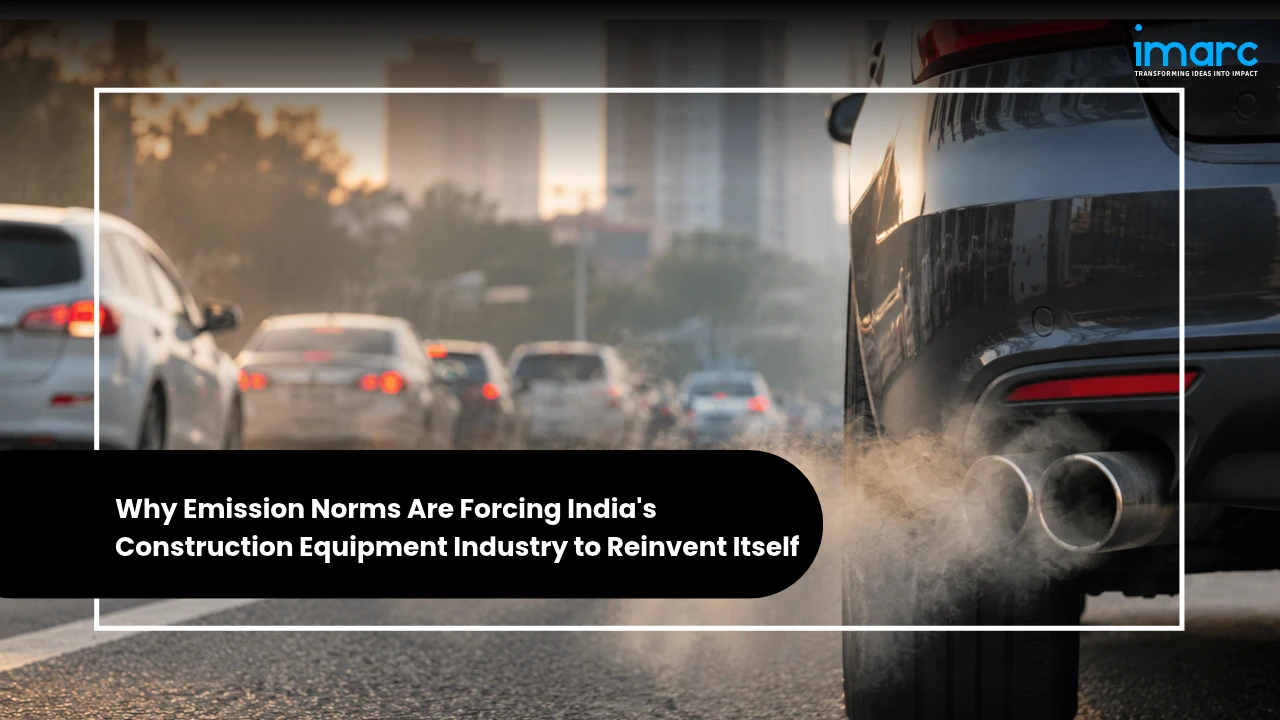
Why Emission Norms Are Forcing India's Construction Equipment Industry to Reinvent Itself
Introduction: India's Construction Equipment Industry Enters a New Compliance Era
The India Construction Equipment Market stands at a defining crossroads where accelerating infrastructure investment collides with some of the most consequential regulatory changes the sector has ever faced. According to IMARC Group, the market was valued at USD 15.37 Billion in 2025 and is projected to reach USD 29.50 Billion by 2034, growing at a CAGR of 7.52% (2026–2034). The Government of India's Union Budget 2024–25 allocated a record capital expenditure of INR 11.11 trillion for infrastructure development equivalent to 3.4% of GDP signalling an unwavering political commitment to roads, railways, urban infrastructure, and housing that underpins the market's long-term demand floor. Simultaneously, the Ministry of Road Transport and Highways, in coordination with the Bureau of Indian Standards, has been progressively enforcing Construction Equipment Vehicle (CEV) emission norms that are pushing the industry toward a fundamental technological reset.
On the demand side, an extraordinary pipeline of public infrastructure projects national highways, metro rail corridors, port modernisation, affordable housing under the Pradhan Mantri Awas Yojana, and the Smart Cities Mission is generating multi-year, sustained demand for heavy and light construction equipment across every major geography. On the supply side, the transition to CEV Stage IV and the roadmap toward CEV Stage V equivalent standards is forcing original equipment manufacturers to invest heavily in cleaner engine technology, electronic control systems, and advanced emissions after-treatment cost increases that are being passed through to contractors and reshaping the economics of equipment ownership, rental, and replacement.
At the segmentation level, products account for a dominant 69.0% share of the market by solution type, while heavy construction equipment leads with a 64.0% equipment-type share. Excavators command 30.0% of the equipment mix, reflecting their centrality across excavation, foundation work, mining, and civil construction. North India anchors regional demand with a 30.0% share, driven by the density of road and urban infrastructure projects across Uttar Pradesh, Rajasthan, Haryana, and Delhi NCR. The overarching theme shaping the market is the emission-driven replacement cycle a structural force that is simultaneously creating near-term cost pressure and a long-term opportunity for manufacturers, rental operators, and technology providers.
This blog examines the India Construction Equipment Market's size and segments, recent announcements, trends shaping 2026, geographic hotspots, competitive landscape, policy environment, forecast through 2034, and the opportunities available to manufacturers, investors, rental operators, and technology providers.
Key Takeaways
- The India Construction Equipment Market was valued at USD 15.37 Billion in 2025 and is forecast to reach USD 29.50 Billion by 2034, at a CAGR of 7.52% (2026–2034).
- Products account for the largest solution-type share at 69.0%, with heavy construction equipment dominating equipment types at 64.0%, reflecting the scale of civil and infrastructure project requirements across the country.
- Excavators lead by equipment sub-type with a 30.0% share, underpinned by their irreplaceable role across road construction, mining, urban development, and foundation engineering.
- North India commands the leading regional share at 30.0%, driven by the concentration of national highway projects, urban infrastructure spending, and mining activity across the Indo-Gangetic plain and Rajasthan.
- The enforcement of CEV Stage IV emission norms increasing engine and system costs by an estimated 8–15% is triggering a structural replacement cycle that is simultaneously challenging price-sensitive small contractors and creating significant upgrade-demand opportunities for manufacturers and rental operators.
India Construction Equipment Market Size, Share & Growth Outlook
According to IMARC Group, the India Construction Equipment Market reached USD 15.37 Billion in 2025 and is projected to reach USD 29.50 Billion by 2034, at a CAGR of 7.52% during 2026–2034. Growth is distributed across solution types, equipment categories, applications, and end-use industries, with the fastest expansion occurring in emission-compliant equipment segments, electric and hybrid machinery, and technology-enabled rental platforms. The leading segments are:
- By Solution Type: Products account for 69.0% of the market, reflecting the ongoing capital investment by construction firms, mining companies, and infrastructure developers in owned equipment fleets. Services, including maintenance, rental, telematics, and financing solutions, hold the remaining 31.0% and are growing at an above-average rate as operators seek to reduce total cost of ownership.
- By Equipment Type: Heavy Construction Equipment dominates with a 64.0% share, encompassing excavators, wheel loaders, motor graders, compactors, and cranes used across large-scale civil, mining, and infrastructure projects. Light and compact equipment accounts for the balance, serving urban construction, utility work, and smaller contractors.
- By Type: Excavators lead with a 30.0% share by equipment sub-type, driven by their versatility across earthmoving, trenching, demolition, and loading operations. Other significant categories include wheel loaders, cranes, compactors, and road construction equipment.
- By Application: Excavation and Mining accounts for the largest application share at 28.0%, followed by road construction, building and housing, and utility infrastructure. The mining application is benefiting from both mineral sector expansion and infrastructure-linked quarrying activity.
- By Industry: Construction and Infrastructure represents the dominant end-use industry with a 45.0% share, anchored by public and private infrastructure investment across roads, urban development, ports, and housing. Mining, energy, and agriculture account for the remaining share.
- By Region: North India leads with a 30.0% regional share, supported by the highest concentration of national highway projects, smart city developments, and mining operations.
Recent News & Mega Announcements
Recent developments in the India Construction Equipment Market include significant announcements, investments, and partnerships:
- In 2025, Tata Hitachi Construction Machinery launched the Shinrai Prime CEV 5 backhoe loader in India, designed to meet the latest emission norms while enhancing performance and fuel efficiency. The new model features a CEV Stage V-compliant engine with advanced after-treatment systems, delivering improved power, lower emissions, and optimised operating costs.
- In 2025, J C Bamford Excavators Ltd (JCB) launched its largest-ever 52-tonne excavator at EXCON 2025 in Bengaluru, marking the company’s entry into the heavy excavator segment. The launch was part of a broader showcase of over 10 new machines and digital solutions aimed at both domestic and export markets.
- AB Volvo has introduced electric variants of mini excavators and compact loaders, with pilot deployments carried out across smart city projects in Pune and Bengaluru. The company’s ECR25 Electric has also been demonstrated at major Indian construction expos, reflecting growing OEM focus on battery-electric options for compact equipment in urban environments.
- In 2026, BEML Limited introduced India’s first indigenously developed 35-ton electric dump truck, marking a significant step toward sustainable construction and mining equipment. The heavy-duty machine is designed for zero-emission operations and high energy efficiency, replacing conventional diesel-powered dumpers in mining and infrastructure applications.
Industry Trends Shaping 2026
Three trends are shaping the India Construction Equipment Market in 2026:
1. The CEV Stage IV Emission Compliance Transition and Its Cost Cascade
The transition to Construction Equipment Vehicle Stage IV emission norms is the single most disruptive structural force in the India construction equipment industry in 2026. The adoption of Stage IV-compliant diesel engines which require advanced fuel injection systems, exhaust gas recirculation, diesel oxidation catalysts, and in some configurations diesel particulate filters has increased the base cost of new compliant equipment by an estimated 8–15% compared to previous-generation machines. For large infrastructure contractors and mining companies with the financial depth to absorb higher upfront costs and access equipment financing, the transition is accelerating fleet renewal and presenting manufacturers with strong upgrade-cycle demand. For small and price-sensitive contractors who collectively account for a significant share of equipment buyers in India's fragmented construction sector the cost increase is a material barrier, diverting demand toward the used equipment market, rental platforms, and delayed replacement decisions. The Ministry of Road Transport and Highways has signalled that compliance timelines will be enforced, making eventual transition non-negotiable. This regulatory certainty is prompting the rental sector to invest aggressively in compliant fleets, positioning rental-as-a-service as the most cost-accessible route for smaller operators to access modern, emission-legal machinery.
2. Telematics, AI-Enabled Diagnostics, and Smart Equipment Integration
The integration of telematics, GPS-based machine control, AI-enabled diagnostics, and predictive maintenance platforms is fundamentally changing how construction equipment is operated, maintained, and commercially managed in India. Leading original equipment manufacturers are embedding telematics units as standard equipment in their CEV Stage IV-compliant machines, providing fleet owners with real-time data on machine location, fuel consumption, utilisation rates, engine health parameters, and operator behaviour. AI-powered diagnostic platforms process this data to predict component failures before they cause unplanned downtime a capability that is particularly valuable in remote infrastructure construction sites where equipment service support is logistically challenging. The Government of India's National Infrastructure Pipeline, which targets completion of projects worth INR 111 lakh crore by 2025, includes large-scale road, bridge, and tunnel construction in geographically difficult terrain where maximising machine uptime through predictive maintenance delivers measurable project cost and schedule benefits. GPS-based machine control where the equipment's bucket, blade, or drum is guided by satellite positioning referenced against a digital terrain model is also gaining adoption in highway and grading applications, reducing material waste and rework while improving surface quality outcomes.
3. Electric and Hybrid Equipment Pilots and the Road to Electrification
While full electrification of India's construction equipment fleet remains a medium-to-long-term prospect, 2026 marks the year in which structured electric and hybrid equipment pilots by global and domestic OEMs are generating real operational data from Indian construction sites. Battery-electric compact excavators, electric wheel loaders, and hybrid energy storage systems for tower cranes are being trialled in urban infrastructure projects in major cities, where noise ordinances, air quality regulations, and access to grid power make electric equipment operationally attractive. The Bureau of Energy Efficiency and the Ministry of Heavy Industries have both indicated policy interest in incentivising the adoption of zero-emission construction machinery as part of India's broader decarbonisation agenda, aligning with the country's commitment under the Paris Agreement to reduce the emissions intensity of GDP. Global OEMs including Volvo CE, Komatsu, and Caterpillar are advancing India-specific electrification roadmaps informed by their pilot experiences, while domestic manufacturers are exploring partnerships with battery technology providers and electric drivetrain specialists. The segment remains nascent in volume terms but is attracting disproportionate strategic investment given its long-term disruption potential.

Geographic Hotspots
North India anchors the India Construction Equipment Market with a commanding 30.0% regional share a concentration rooted in the extraordinary density of infrastructure investment across Uttar Pradesh, Rajasthan, Haryana, Delhi NCR, Himachal Pradesh, and Uttarakhand. The Uttar Pradesh Expressways Industrial Development Authority's ongoing expressway network expansion, including the Ganga Expressway and Bundelkhand Expressway projects, has placed the state among the single largest consumers of heavy earthmoving and road construction equipment in the country. Rajasthan's mining sector covering stone quarrying, mineral extraction, and sand mining generates sustained demand for hydraulic excavators, rock breakers, and dump trucks throughout the year. The Delhi NCR region's continuous urban infrastructure development, metro rail expansion, and commercial real estate activity creates a reliable baseload of demand for compact and medium-sized equipment. The region's road network density and proximity to major equipment manufacturing hubs in Haryana and Rajasthan also reduces logistics costs and improves after-sales service availability for equipment operators, reinforcing North India's structural demand advantage.
South India, encompassing Tamil Nadu, Karnataka, Andhra Pradesh, and Telangana, represents the second major demand concentration and is among the fastest-growing regions in percentage terms. The scale of urban infrastructure investment in Bengaluru, Chennai, Hyderabad, and Amaravati spanning metro rail, elevated corridors, IT park construction, and port expansion is driving consistent demand for excavators, cranes, and concrete equipment. Tamil Nadu and Andhra Pradesh's active port and coastal infrastructure development programmes, including the Sagarmala scheme's port connectivity projects, are generating incremental demand for heavy marine and civil construction equipment. The South's concentration of large, financially sophisticated infrastructure contractors with access to equipment financing further supports above-average adoption of premium, emission-compliant machines.
West India, led by Maharashtra and Gujarat, contributes a significant share of market demand anchored in both construction and mining activity. Maharashtra's Mumbai Metropolitan Region Development Authority projects including coastal road development, metro expansions, and the Navi Mumbai International Airport represent some of the most capital-intensive urban infrastructure undertakings in the country, requiring large fleets of cranes, excavators, and compactors. Gujarat's industrial infrastructure investment, driven by the DMIC (Delhi-Mumbai Industrial Corridor) and Dholera Smart City development, adds substantial construction equipment demand in the western industrial belt. The state's thriving minerals and aggregates sector further underpins excavation equipment utilisation rates throughout the year.
Northeast India, while smaller in absolute volume, is emerging as a strategically important growth region for construction equipment demand. The Government of India's Act East Policy and the dedicated infrastructure investment programme for the eight northeastern states spanning roads, bridges, tunnels, and river connectivity projects in geographically challenging terrain are creating incremental demand for specialised excavation and road construction machinery. The region's limited access to used equipment and established rental networks means that new equipment adoption, often through government-sponsored procurement and contractor mobilisation, is proportionally higher than in more mature markets, making northeast India a meaningful incremental growth opportunity for manufacturers and rental operators over the forecast period.
Competitive Landscape & Key Players Strategies
Competitive activity is intensifying as leading players expand across the India Construction Equipment Market:
- JCB India Limited (J C Bamford Excavators Ltd): JCB is the market leader, with the largest market share and dominance in the backhoe loader and excavator segments, where it commands an estimated 45%+ share as of 2025. Its portfolio spans backhoe loaders tracked and wheeled excavators, skid-steer loaders, compactors, telehandlers, and an EV range. Its strategic focus is localisation of components, premium product positioning, and an electrification roadmap for the Indian market by 2027. Its LiveLink telematics platform provides GPS tracking, fuel efficiency insights, and predictive maintenance alerts.
- Tata Hitachi Construction Machinery: Tata Hitachi is a market leader in hydraulic excavators, combining local manufacturing advantage with advanced Japanese engineering capabilities. Its ZAXIS series ranges from mini to large hydraulic excavators, alongside wheeled excavators and soil compactors, and the ZAXIS GI series is specifically designed for Indian ground conditions. The company has launched the Shinrai Prime CEV 5 backhoe loader with a CEV Stage V-compliant engine. Its strategic focus is hydraulic excavator segment leadership, Indian-condition product localisation, and digital after-sales transformation.
- BEML Limited: BEML is a market leader in defence and mining equipment, supported by strong PSU relationships. Its portfolio includes dump trucks, mining dozers, motor graders, BE series hydraulic excavators, pipe layers, and metro rail cars. Its remote diagnostics systems support real-time fleet monitoring, and in 2026 it introduced India’s first indigenously developed 35-ton electric dump truck. Its strategic focus is self-reliance in defence-grade equipment, metro and rail expansion, and international market entry in Africa and Southeast Asia.
- AB Volvo (Volvo CE India): Volvo operates as a challenger in the premium segment through its EC and L series, with a strength in emission-compliant technology. It has introduced electric variants of mini excavators and compact loaders, and its ECR25 Electric has been demonstrated at major Indian construction expos. Pilot deployments have been carried out across smart city projects in Pune and Bengaluru.
- Escorts Kubota Limited: Escorts Kubota competes as a challenger through its Digmax brand, with a focus on compact equipment and the agricultural-infrastructure crossover.
- CNH Industrial (CASE Construction Equipment): CNH competes under the Case brand as an emerging player, with a focus on backhoe loaders and growth in compact equipment. The company has also introduced electric variants of mini excavators and compact loaders.
- MCE: MCE is an emerging player with its EarthMaster and Loader range, focused on backhoe loaders and rural and semi-urban penetration.
- Action Construction Equipment Ltd. (ACE): ACE is a specialist in cranes and material handling equipment, with a focus on tier-2 cities.
Winning in this market ultimately requires the ability to deliver emission-compliant, technology-enabled equipment backed by rapid nationwide service coverage with competitive financing and rental solutions that make modern machinery accessible across the full spectrum of contractor sizes.
Policy & Regulatory Landscape
The India Construction Equipment Market operates within a supportive and evolving policy and regulatory framework that is simultaneously driving infrastructure demand and mandating technological transformation:
- CEV Stage IV / BS-VI Emission Norms: The Ministry of Road Transport and Highways, in coordination with the Bureau of Indian Standards, has enforced CEV Stage IV emission standards for construction equipment vehicles, mandating significantly lower limits for particulate matter, nitrogen oxides, hydrocarbons, and carbon monoxide compared to previous CEV Stage III norms. The transition has increased engine system complexity and unit costs by an estimated 8–15%, creating a structural upgrade imperative for equipment operators and reshaping procurement economics across the industry.
- National Infrastructure Pipeline (NIP): The Government of India's National Infrastructure Pipeline, originally envisioned at INR 111 lakh crore for the period through 2025 and subsequently expanded under successive budgets, provides the foundational demand guarantee for construction equipment across roads, railways, urban infrastructure, ports, airports, and energy. Projects under the NIP represent the single largest source of heavy equipment utilisation in the country.
- Union Budget Capital Expenditure Allocation: The Union Budget 2024–25 allocated INR 11.11 lakh crore as capital expenditure for infrastructure, representing 3.4% of GDP and a continuation of the government's multi-year commitment to infrastructure-led economic growth. This budgetary commitment directly translates into equipment procurement, fleet mobilisation, and rental demand for construction machinery across the project lifecycle.
- Smart Cities Mission and AMRUT 2.0: The Smart Cities Mission covering 100 selected cities and the Atal Mission for Rejuvenation and Urban Transformation (AMRUT) 2.0, targeting all urban local bodies with populations above one lakh, are generating sustained demand for compact and medium construction equipment in urban settings for utility upgrades, road resurfacing, stormwater drainage, and public space development.
- Pradhan Mantri Awas Yojana (PMAY): The government's flagship affordable housing programme, targeting the construction of millions of housing units for urban and rural beneficiaries, drives consistent demand for concrete equipment, cranes, and material handling machinery at scale across both organised contractors and smaller regional builders.
- Make in India and PLI for Capital Goods: The Make in India initiative and the Production Linked Incentive scheme for capital goods, administered by the Ministry of Heavy Industries, incentivise domestic manufacturing of construction and mining equipment, supporting local OEMs and joint ventures in expanding production capacity and reducing import dependence for critical machinery categories.
Challenges & Risks
Key challenges and risks include:
- CEV Stage IV Cost Escalation for Small Contractors: The 8–15% increase in equipment costs driven by emission compliance hardware advanced fuel injection, exhaust after-treatment, and electronic control systems places significant financial pressure on small and price-sensitive contractors who lack access to affordable equipment financing, potentially diverting demand toward non-compliant used equipment or delaying fleet renewal decisions that undermine productivity and project quality.
- Volatile Commodity and Steel Input Costs: Construction equipment manufacturers are heavily exposed to fluctuations in steel, aluminium, copper, and hydraulic component prices, all of which are influenced by global commodity cycles, currency movements, and supply chain disruptions. Sudden input cost increases compress manufacturer margins and can force price adjustments that further stress price-sensitive buyer segments, creating a volatile demand environment particularly acute for domestic mid-market OEMs.
- Underdeveloped After-Sales Service Infrastructure in Remote Regions: Despite the geographic expansion of infrastructure projects into remote areas including northeast India, high-altitude road construction, and deep-forest mining the service and spare parts network of most OEMs remains concentrated in established industrial corridors. Equipment breakdowns in remote sites with limited access to authorised service centres cause extended unplanned downtime that inflates project costs and damages contractor confidence in newer, more technologically complex emission-compliant machines.
- Fragmented and Unorganised Rental Market: The equipment rental market in India, while growing rapidly, remains largely unorganised, with a high proportion of rental transactions conducted through informal brokers and small operators without standardised maintenance protocols or compliance tracking. This fragmentation makes it difficult for contractors to guarantee the emission compliance status of rented equipment, creating legal and operational risk as enforcement of CEV norms tightens.
- Skilled Operator and Technician Shortage: The transition to CEV Stage IV-compliant equipment with embedded electronics, telematics systems, and advanced hydraulics requires a significantly upgraded skill base among both equipment operators and service technicians. The current supply of formally trained operators and certified technicians in India falls well short of the demand being generated by the infrastructure project pipeline, creating a human capital bottleneck that constrains productivity gains and increases the risk of improper operation and maintenance of high-value equipment.
Forecast 2026–2034: The Emission-Driven Replacement and Electrification Outlook
IMARC Group projects the India Construction Equipment Market to expand from USD 15.37 Billion in 2025 to USD 29.50 Billion by 2034, at a CAGR of 7.52% (2026–2034). This near-doubling of market value over nine years reflects the convergence of durable structural demand drivers sustained government infrastructure capital expenditure, urbanisation, housing construction, and mining sector growth with a technology-driven replacement cycle that is simultaneously retiring aging pre-compliance fleets and expanding the addressable market for premium, emission-compliant, and digitally enabled machinery.
The emission compliance transition will remain the dominant near-term catalyst, as the combination of regulatory enforcement and contractor-level awareness of total cost of ownership advantages drives accelerating fleet renewal through the late 2020s. The rental-as-a-service segment will expand at an above-average rate as small and mid-sized contractors increasingly prefer flexible, maintenance-included access to modern compliant equipment over the capital commitment of direct ownership. Electric and hybrid equipment will transition from pilot to early commercial adoption in urban and short-cycle applications during the 2027–2029 window, with a more meaningful volume contribution expected in the 2030–2034 period as battery technology costs decline and charging infrastructure matures.
Geographically, North India will retain its market leadership, but south and west India will deliver the highest incremental volume growth, driven by urban infrastructure investment and industrial construction. Mining-linked demand across central and eastern India will sustain heavy equipment utilisation rates independent of construction cycles, providing a demand floor that buffers the market from downturns in any single end-use sector. The integration of telematics, AI diagnostics, and autonomous machine control features will progressively become a baseline expectation rather than a differentiating premium, reshaping the competitive dynamics of the market through the forecast decade.
Opportunities for Stakeholders
- Manufacturers / OEMs: The emission-driven replacement cycle creates a structurally timed, policy-backed demand wave for CEV Stage IV-compliant and next-generation equipment that rewards manufacturers who have invested ahead of enforcement in localised, compliant product ranges. OEMs who bundle equipment with telematics subscriptions, annual maintenance contracts, and operator training programmes can capture a growing services revenue stream that improves margins and deepens customer lock-in particularly valuable as the market transitions toward total cost of ownership purchasing decisions rather than upfront acquisition price comparisons alone.
- Investors / Lenders: The India Construction Equipment Market's projected expansion from USD 15.37 Billion to USD 29.50 Billion, at a CAGR of 7.52% through 2034 anchored in government infrastructure capital expenditure that is explicitly ring-fenced in successive Union Budgets offers investors a rare combination of policy-backed demand certainty and technology-driven growth optionality. Equipment financing non-banking financial companies, infrastructure-focused private equity funds, and strategic investors in rental platform businesses all have compelling entry points as the market transitions structurally toward asset-light, service-intensive operating models.
- Technology Providers: Developers of telematics platforms, AI-powered predictive maintenance software, GPS machine control systems, fleet management dashboards, and operator training simulators have a large and rapidly expanding addressable market as OEMs standardise digital connectivity across their CEV Stage IV lineups. Providers who can demonstrate measurable reductions in fuel consumption, unplanned downtime, and operator error quantified through real project data from Indian construction sites will find both OEM integration partnerships and direct fleet-operator contracts within reach.
- Distributors / Rental Operators: The Rental-as-a-Service model is the single most important distribution innovation in the India construction equipment sector, enabling small and mid-sized contractors to access modern, emission-compliant machinery without the capital outlay of direct ownership. Organised rental aggregators who invest in compliant, telematics-equipped fleets, standardised maintenance protocols, and digital booking platforms will capture the substantial demand being displaced from ownership by the cost step-up of CEV Stage IV compliance a displacement that is permanent and growing as enforcement tightens and the used non-compliant equipment market contracts.
Conclusion: An Industry Reinventing Itself to Build a Nation
The India Construction Equipment Market, valued at USD 15.37 Billion in 2025 and projected to reach USD 29.50 Billion by 2034, at a CAGR of 7.52%, is a market defined by the productive tension between relentless infrastructure demand and a regulatory-driven technological transformation that is forcing every participant manufacturers, contractors, rental operators, financiers, and technology providers to fundamentally reconsider how equipment is designed, purchased, deployed, and maintained. The CEV Stage IV emission norms are not merely a compliance checkbox; they are the catalyst for an industry-wide reinvention that is accelerating the adoption of telematics, predictive diagnostics, electric and hybrid powertrains, and rental-as-a-service business models that will define competitive positioning through 2034 and beyond.
The challenges are real particularly the 8–15% cost escalation for small and price-sensitive contractors, the skilled operator and technician shortage, and the uneven geographic spread of after-sales service infrastructure. But the structural growth drivers are equally compelling: an infrastructure capital expenditure pipeline of historic scale, urbanisation-driven equipment demand across every major city corridor, mining sector expansion, and a government commitment to northeast India's connectivity that is opening an entirely new geographic frontier for the industry. For manufacturers who invest in compliance-ready, digitally enabled product ranges; for rental operators who build organised, telematics-managed fleets; and for investors who recognise the infrastructure-anchored growth thesis, the India Construction Equipment Market offers a durable and substantial opportunity over the decade ahead.
Our Clients









Contact Us
Have a question or need assistance?
Please complete the form with your inquiry or reach out to us at
Phone Number
+91-120-433-0800+1-201-971-6302
+44-113-547-7077
Previous Post

Setting up a WPC Door Manufacturing Plant in India taps into a fast-moving shift in the building materials market. Wood plastic composite (WPC) doors combine wood flour or fibre with PVC or other polymers to create doors and frames that look and work like wood but resist water, termites, rot, and warping.
Setting up a Technical Textiles Manufacturing Plant in India gives investors access to one of the fastest-evolving parts of the textile value chain.
Angle sections are L-shaped profiles made mainly by extruding aluminium alloy billets through a shaped die, then straightening, cutting, and heat treating them.
Japan's construction industry is at an inflection point, and the Japan modular construction market sits at the centre of the response. According to IMARC Group, the Japan modular construction market size increased from USD 18.11 Billion in 2025 to USD 18.85 Billion in 2026 and is projected to reach USD 29.27 Billion by 2034, growing at a compound annual growth rate of 5.65% from 2026 to 2034.
DI pipes are made by treating molten iron with magnesium so that its graphite forms tiny spheres instead of flakes, casting it in spinning water-cooled moulds, and then annealing, zinc coating, cement lining, and testing each pipe.
Gypsum plasterboard is a flat building panel with a core of set gypsum bonded between a face paper and a back paper. Fixed to light steel frames, it creates ceilings, partitions, and wall linings that go up far faster than brick and wet plaster, weigh much less, and resist fire because gypsum holds chemically bound water.
MIG welding wire is a continuous solid wire, usually 0.8 to 1.6 mm in diameter, that is fed through a welding gun and melted by an electric arc under a shielding gas to join metals.
Gypsum board, also called plasterboard or drywall, is a panel made of a set gypsum core sandwiched between two sheets of heavy paper.
Steel forgings are strong, reliable metal parts made by shaping heated steel under the force of presses and hammers, which refines the grain structure and gives far better strength and fatigue resistance than casting or machining from bar.
PVC boards, mainly PVC foam boards and WPC boards, are lightweight, waterproof, termite-proof sheets used as an alternative to plywood and MDF in kitchens, bathrooms, wardrobes, furniture, partitions, signage, and interiors.
Laminated veneer lumber, or LVL, is an engineered wood product made by bonding thin wood veneers with their grain running in the same direction, producing straight, strong, and dimensionally stable members from fast-growing plantation timber.
Fly ash bricks turn a waste product from coal-fired power plants into strong, uniform building blocks that need no firing in a kiln. India's thermal power plants generated about 340 million tonnes of fly ash in 2024-25, and government rules require building projects within 300 km of these plants to use ash-based bricks and blocks where they are priced competitively.
Nuts and bolts hold together almost everything that is built or manufactured, from cars, tractors, and two-wheelers to bridges, towers, railways, machinery, and household appliances.
Precast elements are cast in a factory under controlled conditions and then transported to site, where they are lifted into place like the parts of a kit. India's construction sector is turning to this method to build faster, with better quality and less dependence on site labour.
Rice husk ash (RHA) is the residue left when rice husk is burned, and when the burning is properly controlled it is one of the richest natural sources of amorphous silica, typically 85 to 95% silica by weight.
Concrete poles carry most of India's low-tension and 11 kV distribution lines, as well as street lights, rural feeders, and telecom cables. They are strong, durable, resistant to rust, rot, and termites, need almost no maintenance, and cost less than steel poles, which makes them the default choice for state power distribution companies.
Crushed stone aggregates and manufactured sand are the most widely used construction materials after water. They form the bulk of concrete, the base layers of roads and runways, railway ballast, and the fill under buildings, factories, and ports.
Almost every industrial process generates heat that has to be removed. Power plants, steel mills, refineries, chemical and pharmaceutical units, food processors, plastics moulders, and now data centers all rely on cooling towers, chillers, and heat rejection equipment running around the clock.
Steel is the backbone of India's economic growth. Buildings, bridges, railways, highways, ports, power plants, automobiles, machinery, and household appliances all depend on it. India is the world's second-largest steel producer, and crude steel output reached about 170 million tonnes in 2025-26.
Ready mix concrete (RMC) is concrete batched in a central plant to a precise, engineered mix design and delivered to construction sites in transit mixers, ready to pour.
Open a modular kitchen cabinet, a wardrobe shutter, or an office workstation in India today and there is a good chance it is made from medium density fibreboard.
India is the world's second-largest producer of ceramic tiles, and walking through any new apartment, mall, hospital, or metro station shows why. Tiles have replaced mosaic, stone, and plain cement floors in homes across the country, while large-format glazed vitrified slabs are now standard in premium projects.
Setting up a TMT Bar Manufacturing Plant in India is a high-demand, infrastructure-driven venture, powered by the country's massive construction and housing boom, government infrastructure spending, and steady urbanisation.
Setting up a Cement Manufacturing Plant in India is a capital-intensive, high-demand venture, powered by the country's massive infrastructure programme, housing boom, and status as the world's second-largest cement producer.
Setting up a PVC Panel Manufacturing Plant in India is a high-demand, construction-driven venture, powered by the country's building boom, fast-growing interior and renovation market, and the shift away from plywood and plaster toward affordable, waterproof panels.
Setting up an Electric Motor Manufacturing Plant in India is a high-value, engineering-driven venture, powered by the country's industrial expansion, energy-efficiency push, and the rise of electric vehicles and automation.
Setting up an Iron Ore Pellets Manufacturing Plant in India is a capital-intensive, high-demand venture, powered by the country's ambitious steel-capacity expansion, the shift toward value-added iron ore, and rising demand from blast furnaces and sponge iron units.
The Saudi Arabia construction market has emerged as one of the most closely watched construction economies in the world. The market reached USD 101.4 Billion in 2025 and is projected to reach USD 140.4 Billion by 2034, expanding at a compound annual growth rate (CAGR) of 3.6% between 2026 and 2034.
A WPC (Wood Plastic Composite) door is a type of composite door made from a combination of wood fibers or wood flour and thermoplastic resins like PVC, polyethylene, or polypropylene, with additives to improve durability and processability. The resulting composite material is then extruded or molded into door panels and frames, providing the attractive look of wood and the strength and water-resistance of plastic.
UPVC windows refer to window frames and window assemblies manufactured from ‘unplasticized polyvinyl chloride,’ which is a relatively rigid and strong thermoplastic substance. While PVC is a flexible material that requires the addition of a softening substance called a plasticizer to be formed into a durable performance material, PVC window frames and UPVC window assemblies, for instance, do not display such requirements due to the presence of unplasticizers, a component of the material that provides enhanced strength, stability, and resistance to the elements such as UV radiation, moisture, and temperature changes.
The Saudi Arabia factoring market represents a critical component of the Kingdom's evolving financial services landscape, offering businesses an increasingly popular alternative to traditional bank lending. Factoring, which involves the sale of accounts receivable to a third-party financial institution at a discount, has emerged as a vital mechanism for improving liquidity, managing cash flow, and mitigating credit risk across diverse industry sectors.
The GCC bridge construction market represents a vital component of the region's ambitious infrastructure transformation agenda, serving as a cornerstone for enhanced mobility, economic integration, and sustainable urban development across the Gulf states.
The Australia industrial couplings industry stands at a transformative juncture in 2025, propelled by technological advancement and surging demand across critical sectors. As mechanical devices connecting two shafts to transmit power and torque, industrial couplings form the backbone of machinery operations in manufacturing, mining, automotive, and energy sectors.
The Saudi Arabia real estate market stands at a pivotal juncture in its evolution, representing one of the most dynamic and transformative sectors within the Kingdom's economy. With this country having a very ambitious agenda of economic diversification and modernization, the real estate business has come out as one of the pillars of this transformation.
Steel is an alloy that consists of iron and carbon in addition to trace amounts of other elements like manganese, silicon, chromium, and nickel. The amount of carbon in steel is usually less than two percent and is an important factor in determining the strength, hardness, and ductility of steel.
Saudi Arabia’s precast concrete market reached USD 1.2 Billion in 2024 as per the IMARC Group, clear proof that off-site construction is rapidly becoming the Kingdom’s go-to building solution. With residential, commercial, and major infrastructure projects multiplying, developers are increasingly turning to precast building solutions to keep pace.
The GCC cold storage construction market represents critical infrastructure underpinning regional food security, pharmaceutical distribution, and temperature-sensitive logistics across the Arabian Peninsula. As Gulf Cooperation Council nations diversify their economies and reduce hydrocarbon dependence, robust cold chain infrastructure has emerged as a cornerstone of sustainable development planning.
PVC panels are lightweight, durable building materials made from polyvinyl chloride using extrusion or molding processes. They are available as rigid or semi-rigid sheets designed primarily for wall and ceiling cladding, partitions, and decorative finishes. Known for their excellent resistance to moisture, chemicals, termites, and corrosion, PVC panels offer a smooth surface and a clean, polished look that’s easy to maintain. Available in an extensive range of colors, textures, and patterns, these panels serve as a practical alternative to traditional materials like wood, plaster, or tiles.
Ready mix concrete (RMC) is a precisely engineered construction material produced in a controlled environment within a batching plant and delivered to construction sites in a freshly mixed, plastic state. It is formulated by combining cement, aggregates, water, and chemical or mineral admixtures in carefully proportioned quantities to achieve specific performance characteristics. Unlike site-mixed concrete, RMC ensures consistent quality, uniformity, and superior workability through automated production and quality control processes.
The construction industry across the Gulf Cooperation Council (GCC) member states is at the core of a monumental economic transformation. Far exceeding traditional building activities, the sector now serves as the principal vehicle for national economic diversification strategies, moving these nations beyond reliance on oil revenues.
Paver blocks are precast construction material made basically from cement, aggregates, sand, and pigments for constructing surfacing. They are produced in standardized shape and thickness, allowing each unit to interlock to form a strong, load-bearing surface with no need for continuous concrete pouring. Paver blocks possess high compressive strength, abrasion resistance, and are easy to lay and maintain.
The Brazil ceramic tiles market has witnessed stable growth, reflecting broader trends in the construction and building materials industries of the country. The Brazil ceramic tiles market size was valued at USD 1.6 Billion in 2025. The market is expected to reach USD 2.2 Billion by 2034, exhibiting a CAGR of 3.91% during 2026-2034.
MDF is an engineered wood product produced by breaking down hardwood or softwood residuals into wood fibers, which are then combined with resin binders under heat and pressure. MDF exhibits a homogeneous density, a smooth surface, and fine texture, ensuring a much more workable material compared to natural wood.
Float glass is a type of flat glass that is manufactured by floating molten glass on a bed of molten tin. This produces a smooth, uniform surface and consistent thickness. The float process was developed by Pilkington in the 1950s and revolutionized glassmaking because it enabled the production of large, flawless sheets of glass without needing polishing or grinding. The basic raw materials used-silica sand, soda ash, limestone, and dolomite-are heated in the furnace to a very high temperature, then continuously poured onto the tin bath, where the molten glass spreads out into an even layer. It cools and solidifies into a perfectly flat and perfectly transparent sheet. As it provides optical clarity and strength and is easily processed into coated, laminated, or toughened forms, float glass is used as a basic product for various applications, ranging from architectural and automotive to industrial applications.
ERW steel pipes can be identified as one of the most important categories of welded pipes and find wide applications in infrastructure, construction, and other industries because of their precision, cost-effectiveness, and reliability. The raw material to produce these pipes is either hot-rolled or cold-rolled steel coils that are longitudinally formed and welded by the application of high-frequency electric resistance welding.
Drill bits are specifically designed cutting instruments intended to produce cylindrical holes in various materials, ranging from soft woods and plastics to hardened steels, stone, and rock. Although they seem straightforward, drill bits consist of various specialized shapes, coatings, and materials that are designed to suit the cutting characteristics of the intended material and the requirements of the drilling task.
Concrete is among the most widely used construction materials in the world due to its strength, versatility, and durability. It is a composite material largely made of cement, water, aggregates-sand, gravel, or crushed stone-and in some cases, admixtures which give special properties to the concrete.
Clay bricks are one of the oldest and most extensively used construction materials in the globe, appreciated for their strength, durability, insulation against heat, and beauty. They are produced mainly from natural clay and shale, which are fashioned, dried, and subjected to high-temperature firing to produce a hard, dense material that can resist multiple environmental and structural stresses. The mix generally consists of alumina, silica, lime, iron oxide, and magnesia that collectively decide the color, texture, and performance properties of the brick.
Metal beam crash barriers and high mast light poles are essential infrastructural features providing security and visibility on highways, city roads, and industrial sites. Metal beam crash barriers or guardrails are made of galvanized steel beams, typically W-beam or Thrie-beam, that are designed to dissipate the impact energy on impact with a vehicle and minimize death and damage to vehicles.
Laminated plywood is an engineered wood material that is produced by laminating several layers of thin veneers of wood together with powerful adhesives and covering them with a protective or decorative laminate sheet. This amalgamation not only increases the strength of the plywood but also its beauty, which is why it is extremely versatile for use in furniture, cabinetry, floors, paneling, and interior design.
Ductile iron pipes (DIP) are a key part of new water and wastewater infrastructure, providing enhanced performance capabilities over older piping materials. Cast from ductile cast iron, a material that has the strength of steel combined with the resistance to corrosion of cast iron, these pipes are designed to endure high-pressure use while still being flexible enough to absorb stress without cracking.
The real estate sector plays a critical role in driving economic growth and shaping communities. It significantly contributes to national economies by generating jobs, influencing investment flows, and boosting government revenues through taxes. Beyond these economic benefits, real estate development directly affects the quality of life by creating homes, enhancing infrastructure, and revitalizing urban areas.
Gypsum boards, also referred to as drywall or plasterboard, are lightweight, strong and fireproof building materials that are frequently used for partitions, walls and ceilings. Constructed from a gypsum core encased in paper liners, they provide improved acoustics, cost effectiveness, and speedy installation. Gypsum boards are favoured in industrial, commercial, and residential construction because of its environmentally beneficial qualities, ability to withstand moisture, and ability to insulate against heat. They are an essential part of efficient and sustainable construction methods because of their adaptability to contemporary building processes.
A frameless shower door is a modern and aesthetically appealing bathroom fixture that has gained popularity for its sleek and minimalist design. They are constructed without the bulky metal framing that surrounds the glass panels and are typically made from thick, tempered glass that is securely attached to the wall and floor using hinges or brackets.