Why Brand Exclusivity Is Becoming a Key Growth Driver in the Saudi Arabia Luxury Apparel Market
Introduction: Brand Exclusivity Redefines Luxury
The Saudi Arabia luxury apparel market has moved beyond the volume-led phase of its expansion. IMARC Group values the market at USD 752.2 Million in 2025, with a forecast of USD 1,102.8 Million by 2034, implying a CAGR of 4.34% during 2026-2034. What separates this cycle from the previous decade of growth is not how many labels enter the Kingdom, but how carefully those labels restrict access once they arrive. Exclusivity, once a by-product of price and imported scarcity, is now a deliberately managed commercial strategy.
The demand base justifies that discipline. Rising household wealth, expanding high-income expatriate communities, greater female workforce participation and the liberalisation of entertainment and tourism under Vision 2030 have widened the pool of buyers willing to pay premium prices. At the same time, offline channels still account for 76.3% of sales in 2025, which tells brands that the purchase is social and experiential rather than purely transactional. Buyers are paying for access, authentication and setting, and those are precisely the levers that exclusivity controls.
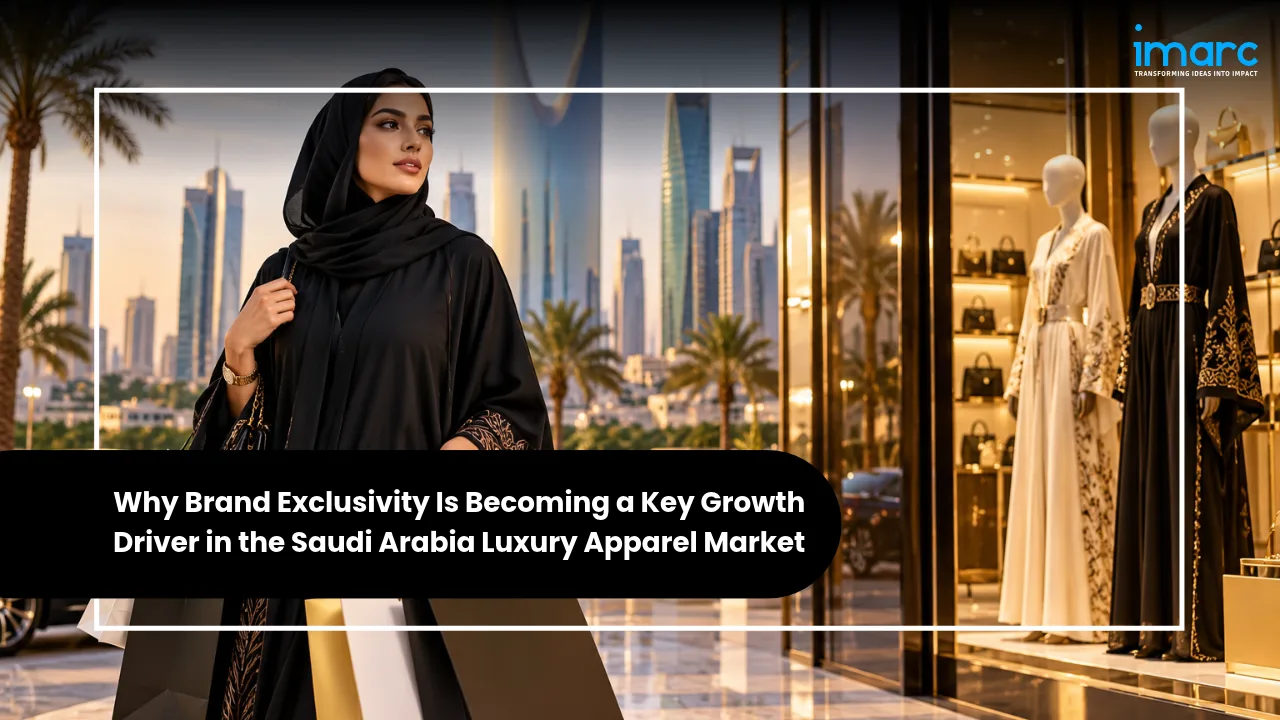
The clearest physical expression of the shift is the launch of Solitaire in Riyadh in April 2025, a luxury destination spanning more than 60,000 square metres that Chalhoub Group developed around flagship formats from its brand portfolio rather than mass-market tenancies. Curated tenant mixes, single-brand boutiques and limited-edition drops convert floor space into scarcity. The third edition of Riyadh Fashion Week in October 2025 pushed the same logic onto the runway, pairing regional designers with international buyers under a controlled showcase format.
This blog examines why exclusivity has become a growth driver in the Saudi Arabia luxury apparel market, how the market size and segment mix support that reading, and what the policy environment, competitive strategies and forecast period imply for brands, retailers and investors.
Key Takeaways
- The Saudi Arabia luxury apparel market stood at USD 752.2 Million in 2025 and is projected to reach USD 1,102.8 Million by 2034, growing at a CAGR of 4.34% during 2026-2034.
- Upper Wear is the leading type with a 52.8% share in 2025, sustained by premium abaya and thobe demand and international designer ready-to-wear.
- The Northern and Central Region leads with a 39.5% market share in 2025, anchored by Riyadh's concentration of high-net-worth households and premium retail destinations.
- The most notable recent development is the April 2025 opening of Solitaire in Riyadh, a 60,000 square metre luxury destination built around flagship stores from Chalhoub Group's brand portfolio.
- The defining trend is the shift from visibility to controlled access, with single-brand boutiques, capsule collections and clienteling replacing wholesale distribution as the preferred route to Saudi consumers.
Market Size, Share & Growth Outlook
According to IMARC Group, the Saudi Arabia luxury apparel market reached USD 752.2 Million in 2025 and is projected to reach USD 1,102.8 Million by 2034, expanding at a CAGR of 4.34% during 2026-2034. The market travelled from USD 608.1 Million in 2020 to its current level, is anchored at USD 930.3 Million in 2030, and then compounds toward the 2034 figure. That trajectory matters for the exclusivity argument: a market adding roughly USD 350 Million of value over nine years cannot grow by widening distribution alone, because the incremental buyer is already affluent and already served. Growth has to come from higher basket values, deeper brand attachment and formats that make access feel earned. The leading segments are:
- Type: Upper Wear dominates with a 52.8% share in 2025, reflecting the cultural centrality of premium abayas and thobes, strong gifting demand and the steady inflow of international designer ready-to-wear. This segment is also the fastest at the top end, growing at approximately 4.6% CAGR, which confirms that exclusivity is concentrated where the garment is socially visible.
- End User: Women remain the largest end-user base, anchored by the abaya as an everyday garment in which fabric, cut and finishing are read as signals of status, and increasingly supplemented by occasion wear, modest luxury silhouettes and international designer pieces. Men's demand is narrower but similarly top-weighted, concentrated in premium thobes, bishts for ceremonial use and designer formalwear, where tailoring quality and provenance carry the same exclusivity logic.
- Distribution Channel: The Offline Channel holds a 76.3% share in 2025, driven by an experiential shopping model in which consumers value personalised service, product authentication and the prestige of flagship boutiques in luxury malls. Online channels are nevertheless expanding at roughly 5.8% CAGR, faster than the market, because digital clienteling extends exclusivity rather than diluting it.
- Region: The Northern and Central Region commands a 39.5% share in 2025, supported by Riyadh's high-income household base, premium destinations such as Kingdom Centre and Mall of Arabia, and the capital's role as the commercial and cultural hub of the Kingdom.
The segment mix explains why scarcity works here: three quarters of demand flows through controlled physical environments, and more than half sits in apparel that carries cultural meaning, so the brand's ability to limit and stage access directly shapes pricing power.
Recent News & Mega Announcements
Developments between 2024 and 2025 show brands converting capital expenditure into controlled access rather than broader reach:
- Solitaire, Riyadh (April 2025): Chalhoub Group opened a luxury destination of more than 60,000 square metres built around flagship stores from its brand portfolio, giving partner labels dedicated environments instead of shared retail space.
- Riyadh Fashion Week, third edition (October 2025): The Saudi Fashion Commission expanded the event under the leadership of its CEO Burak Cakmak, positioning it as the curated gateway through which international buyers and press encounter Saudi design talent.
- On opens first GCC store (2025): The Swiss performance brand selected Kingdom Centre in Riyadh for its first Gulf store, treating the Kingdom as a launch market rather than a follow-on territory.
- Okhtein opens first Saudi flagship (2025): The Egyptian accessories label debuted in Kingdom Mall, Riyadh, with pieces designed specifically for the local clientele, a format that ties scarcity to geography.
- Tourism target raised to 150 million visitors by 2030: The Vision 2030 Annual Report 2025 confirms the original 100 million visitor target was exceeded ahead of schedule and the goal subsequently lifted, expanding the inbound luxury buyer pool.
Each of these moves narrows the funnel: fewer doors, better doors, and formats that reward a specific client rather than a general crowd.
Industry Trends Shaping 2026
Three trends explain how exclusivity is being operationalised across the Saudi Arabia luxury apparel market in 2026:
1. Scarcity by Design in the Saudi Arabia Luxury Apparel Market
The dominant shift is the replacement of wholesale breadth with controlled retail. Brands are consolidating into brand-operated boutiques, reducing multi-brand exposure and using store size, location and service depth as filters. The Solitaire model illustrates the economics: a dedicated flagship can carry a narrower product range at full price, protect markdown discipline and gather first-party client data that a department store counter never returns. With 76.3% of sales still flowing through offline channels in 2025, the physical store remains the primary exclusivity instrument, and premium mall landlords are now competing on curation rather than occupancy. The consequence is a slower store count but a higher revenue per square metre, which suits a market growing at 4.34% CAGR where brand equity, not unit volume, is the scarce resource.
Limited-edition drops reinforce the same logic. Capsule collections released to a defined client list, Ramadan and Eid ranges confined to a single flagship, and appointment-only previews convert product into an event. For a market forecast to add roughly USD 350 Million in value by 2034, this protects pricing while the base expands.
2. Culturally Anchored Exclusivity: Premium Abayas and Designer Capsules
Upper Wear's 52.8% share in 2025 is not a legacy statistic; it is the segment where exclusivity carries the most cultural weight. The abaya and thobe have moved from a category defined by modesty to one defined by authorship, fabric and cut, and local ateliers and international houses are now collaborating on capsules that are sold in limited runs. This is where scarcity feels legitimate to the Saudi consumer: the garment is culturally embedded, so a restricted release reads as respect for craft rather than manufactured hype.
Riyadh Fashion Week has accelerated the trend by giving Saudi designers a structured route into international wholesale, while the Saudi Fashion Commission supports the value chain from design through production. The commercial effect is that a Saudi-designed piece can command premium pricing alongside an imported European collection, which lifts the segment's average selling price without expanding distribution. Upper Wear's roughly 4.6% CAGR is therefore concentrated in the designer and occasion-wear tier rather than in volume basics.
3. Digital Clienteling and Private Access
Online channels are the fastest-growing part of the market at approximately 5.8% CAGR, but the notable development is the model rather than the channel. Saudi luxury consumers are being recruited into closed digital environments: Arabic-language apps, WhatsApp-based client advisers, private sale windows and virtual try-on sessions offered by invitation. These formats replicate boutique exclusivity at scale and are particularly effective with younger buyers who discover brands on social platforms but expect a personal relationship before purchase.
The strategic value is data. A brand that knows a client's size, occasion calendar and preferred delivery window can limit access with precision, releasing a collection to forty clients instead of four hundred. That protects full-price sell-through in a market where offline retail still holds 76.3% of value, and it gives international houses a defensible reason to invest in Saudi-specific digital infrastructure rather than a translated version of a global site.

Geographic Hotspots
The Northern and Central Region accounts for 39.5% of the market in 2025, and Riyadh explains most of that concentration. The capital combines the Kingdom's densest cluster of high-net-worth households with premium destinations such as Kingdom Centre, Mall of Arabia and the newly opened Solitaire, and it functions as the commercial and cultural reference point for the rest of the country. Nearly every exclusivity-led format arrives in Riyadh first: On's inaugural Gulf store, Okhtein's first Saudi flagship and Chalhoub Group's flagship-led destination all launched in the capital. For brands, Riyadh is the price-setting market, and a Riyadh flagship establishes the reference price and service standard that other cities then inherit.
The Western Region operates on a different logic. Jeddah carries a long trading and fashion heritage, a more established multi-brand retail base and a consumer profile that responds to designer discovery rather than pure heritage branding. The Red Sea coast and AlUla add a tourism-driven tier, where resort and occasion wear bought by international visitors creates seasonal demand windows that domestic-only retail cannot replicate. These are episodic but high-value touchpoints, and they suit limited-collection releases tied to specific events and seasons.
The Eastern Province, anchored by Dammam and Khobar, is the third node. It is smaller in luxury density but wealthy, close to the Gulf Cooperation Council consumer base and accustomed to cross-border shopping, which makes it a natural test market for exclusive capsule formats before national rollout. Beyond these three, the growth geography is defined less by city boundaries and more by the tourist itinerary: the Vision 2030 Annual Report 2025 confirms the visitor target was exceeded early and raised to 150 million by 2030, creating airport retail, resort boutiques and hotel-based personal shopping as new points at which exclusivity can be staged.
Competitive Landscape & Key Players Strategies
The Saudi Arabia luxury apparel market is moderately competitive, comprising international luxury conglomerates and established designer fashion houses. Competition centers on brand heritage, exclusive collections, premium retail experiences, product quality, and digital engagement. Key players include:
- Louis Vuitton (LVMH): Strengthens its market position through iconic monogram designs, premium ready-to-wear collections, and exclusive boutique experiences, targeting affluent consumers seeking prestigious luxury fashion.
- Kering: Competes through distinctive designer apparel, contemporary styling, and internationally recognized collections, appealing to younger Saudi consumers and expatriates seeking fashionable luxury products.
- Chanel: Differentiates through timeless designs, haute couture heritage, premium ready-to-wear collections, and exclusive customer experiences, particularly targeting affluent consumers in the women's luxury apparel segment.
- Burberry: Focuses on British fashion heritage, signature trench coats, classic check patterns, and contemporary apparel collections, strengthening its appeal among consumers seeking recognizable luxury designs.
Competition is increasingly shaped by brand exclusivity, designer innovation, personalized shopping experiences, and omnichannel retail strategies. Luxury brands that combine strong brand recognition with culturally relevant collections and effective customer engagement are well positioned to attract affluent consumers across Saudi Arabia.
Policy & Regulatory Landscape, Challenges & Risks
Government policy has become a primary market force, shaping both the supply of luxury retail space and the cost of operating within it. Key frameworks include:
- Vision 2030 and the Saudi Fashion Commission: The diversification programme funds tourism, entertainment and cultural infrastructure, while the Fashion Commission supports the design-to-production value chain and stages Riyadh Fashion Week, which lowers entry costs for Saudi designers and gives international buyers a curated sourcing route.
- 15% value added tax on luxury purchases: Saudi Arabia raised VAT from 5% to 15% in July 2020, applying it to imported apparel and raising the landed cost of every foreign label. For exclusivity-led brands this is a mixed outcome: it inflates the price gap against grey-market supply and makes the authorised boutique's authentication and after-sales service more valuable, but it also stretches the premium segment thinner.
- Customs duty and import cost structure: Apparel imports face customs duties in addition to VAT, calculated on cost, insurance and freight value, which compounds the price of European and Asian production before a garment reaches a Saudi rail. The effect is to push brands toward higher-value, lower-volume assortments, which aligns with scarcity-led merchandising.
- 100% foreign ownership in wholesale and retail trade: The ceiling on foreign investment in the sector was raised from 75% to 100%, allowing international houses to operate directly instead of relying on local partners. Direct ownership is the legal precondition for the flagship-only model now spreading across Riyadh.
On the constraining side, several structural risks persist:
- Landed cost and parallel imports: Combined duty and 15% VAT widen the gap between authorised boutique pricing and informal channels, encouraging parallel imports that undercut the very price architecture exclusivity depends on.
- Counterfeit supply and brand dilution: Grey-market and counterfeit apparel competes directly with authentic luxury, weakening the premium signal that justifies restricted distribution and forcing brands to invest in authentication, traceability and after-sales controls.
- Oil-linked demand cyclicality: Saudi discretionary spending tracks oil prices and government fiscal stance, so a sustained period of weaker oil revenue can compress the affluent buyer base faster than brands can adjust store networks, leaving fixed flagship costs exposed.
- Talent and localisation requirements: Building local luxury retail, visual merchandising and design expertise remains difficult, and workforce localisation obligations add cost and training burden precisely when brands need service quality to carry the exclusivity promise.
Forecast 2026-2034
The market is projected to expand from USD 752.2 Million in 2025 to USD 1,102.8 Million by 2034, a CAGR of 4.34% over 2026-2034, with an interim anchor of USD 930.3 Million in 2030. Read alongside the 2020 starting point of USD 608.1 Million, the path implies steady rather than explosive compounding, roughly USD 46 Million of added value in an average year. That pace favours operators who can raise average selling price and protect full-price sell-through, because volume growth alone will not deliver the forecast.
Channel dynamics will determine where that value lands. Offline retail holds 76.3% of the market in 2025 and will remain the majority through the forecast period, but online channels are growing at approximately 5.8% CAGR, ahead of the market, and will steadily take share. The practical implication is not the decline of the boutique but its redefinition: physical space becomes a service and authentication hub, while digital clienteling handles discovery and repeat purchase.
Type dynamics reinforce the exclusivity thesis. Upper Wear holds 52.8% of 2025 value and grows at roughly 4.6% CAGR, marginally above the overall market, so its share should edge upward across the forecast period. Accessories and other categories will grow from a smaller base, supported by gifting demand and tourism-linked purchasing. If the tourism target of 150 million annual visitors by 2030 is approached, inbound demand could push the upper end of the range, particularly in Riyadh, Jeddah, AlUla and Red Sea destinations where visitor spending is concentrated in occasion and resort wear.
Opportunities for Stakeholders
- Premium abaya and traditional wear modernisation: Partnerships between luxury houses and Saudi designers can build culturally grounded capsules sold in limited runs, capturing the style-conscious segment without discounting the category's heritage.
- Sustainable luxury lines: Younger Saudi consumers are showing environmental awareness, and brands offering certified materials and transparent supply chains can claim a premium position that scarcity-based merchandising supports rather than undermines.
- Tourism-linked personal shopping: With the visitor target raised to 150 million by 2030, hotel and airport-based personal shopping services, private appointments and duty-free luxury zones create new access points for high-spending inbound clients.
- Digital clienteling infrastructure: Arabic-language apps, invitation-only sale windows and virtual try-on give brands a way to grow the 5.8% CAGR online channel while keeping assortment restricted, which is the central tension in luxury e-commerce.
- Flagship-led mall partnerships: Developers curating premium tenancy, as at Solitaire in Riyadh, need brands that deliver footfall and prestige, which gives luxury houses leverage on rent, location and exclusivity clauses.
- Local design and production capability: Investment in Saudi ateliers, pattern-making and quality control reduces dependence on imported finished goods and softens exposure to duty and freight costs, while supporting the localisation agenda.
Saudi Arabia Luxury Apparel Market Outlook
Exclusivity is increasingly driving growth in Saudi Arabia’s luxury apparel market, as scarcity shifts from a supply-side limitation to a deliberate pricing strategy. While limited availability once reflected restricted imports, brands can now use curated distribution and controlled access to appeal to affluent, well-informed consumers. Market projections reinforce this shift, with the sector expected to grow from USD 752.2 Million in 2025 to USD 1,102.8 Million by 2034, at a CAGR of 4.34%. With offline retail accounting for 76.3% of market value and Upper Wear representing 52.8%, growth will depend not only on customer acquisition but also on exclusive access, premium in-store experiences and cultural relevance.
The risks are real but structural rather than existential. Duty and 15% VAT inflate landed cost and invite parallel trade; counterfeit supply tests authentication; oil-linked fiscal cycles can compress discretionary spending; and the talent base required to deliver a genuinely premium service experience is still being built. Each of these is a reason for tighter distribution rather than looser. The brands that win through 2034 will be those that treat the Kingdom as a series of controlled environments, capital, Jeddah, the Eastern Province and the tourist corridor, and release product into each with intent.
For retailers, developers and designers alike, the implication is straightforward: in this market, restraint is a growth strategy, and the ability to say no to a sale is increasingly what protects the next one.
Our Clients










Contact Us
Have a question or need assistance?
Please complete the form with your inquiry or reach out to us at
Phone Number
+91-120-433-0800+1-201-971-6302
+44-113-547-7077
Previous Post

Cigarettes are composed of finely cut tobacco leaf rolled into a paper cylinder, often with a filter at one end. In India, the demand for domestic cigarette production has grown due to rising consumer markets and diminishing reliance on imports.
The Saudi Arabia kitchen chimney market is moving decisively upmarket, as households stop treating ventilation as a hidden utility and start specifying it as part of kitchen design, indoor air quality and resale value.
Faucets, also called taps or CP fittings, control the flow of water in kitchens, bathrooms, and commercial washrooms. Most quality faucets in India are made from brass that is forged or cast, precision machined, polished, and chrome plated, then fitted with ceramic disc cartridges, aerators, and handles, while lower-priced ranges use stainless steel, zinc, or plastic.
Toys range from moulded plastic figures, vehicles, and building blocks to ride-on cars, soft plush toys, educational and STEM kits, electronic and remote-controlled toys, board games, and puzzles.
The UK Furniture Market is experiencing a period of selective growth, where headline expansion masks significant divergence at the segment level. According to IMARC Group, the market was valued at USD 22.78 Billion in 2025 and is projected to reach USD 32.40 Billion by 2034, growing at a CAGR of 3.87% (2026–2034).
Fast moving consumer goods are everyday products that sell quickly at relatively low prices, such as detergents, dishwash products, surface cleaners, soaps, shampoos, toothpaste, packaged foods, and beverages.
Footwear covers sports shoes, sneakers, leather shoes, sandals, slippers, safety boots, and school shoes. India is the world's second-largest footwear producer, making about 2.9 billion pairs a year, or roughly 12.5% of global output, and its domestic market was valued at about USD 20.67 billion in 2025.
Washing powder is one of the most widely used household products in India, bought by almost every family for hand washing and, increasingly, for washing machines.
Energy meters measure the electricity used by every home, shop, factory, and farm connection, and they sit at the centre of India's effort to cut distribution losses and modernise its power sector.
Sanitary napkins are an essential hygiene product for hundreds of millions of women and girls in India, and one of the fastest-growing categories in personal care.
The Healthy Snacks Market has moved decisively from a niche wellness category to a mainstream pillar of the global food and beverage industry, driven by a fundamental and durable shift in how consumers around the world think about what they eat between meals.
India is one of the world's largest producers and consumers of textiles, and it generates around 7 million tonnes of textile waste every year, from cutting scraps and yarn waste in factories to old clothes and household textiles.
India has more than a billion mobile connections, creating a large and recurring market for chargers, cables, protective cases, screen guards, earbuds and other mobile accessories.
The television has quietly become the most connected screen in many Indian homes. Streaming apps, cricket in 4K, YouTube, and voice-controlled content have turned the TV into a smart device, and falling prices, a lower GST rate, and easy online buying have brought smart TVs within reach of millions of first-time buyers.
India is sleeping better, or at least spending more to try. Rising incomes, smaller urban homes, a booming hotel sector, and growing awareness of back health have pushed households away from cotton gaddas toward engineered foam, spring, and hybrid mattresses.
Setting up a Diaper Manufacturing Plant in India is a high-speed converting venture powered by rising hygiene awareness, growing disposable incomes, low current penetration, and expanding demand across baby and adult categories.
Setting up a Liquid Detergent Manufacturing Plant in India is a formulation-and-blending venture with relatively accessible entry capital, powered by rising hygiene awareness, a steady shift from powders to liquids, expanding modern retail, and growing demand across laundry, dishwash, and household cleaning categories.
Setting up a Kraft Paper Manufacturing Plant in India is a high-demand, sustainability-driven venture, powered by the country's booming e-commerce, packaging, and corrugated-box industries. Kraft paper is the base material for corrugated boxes and packaging, and demand is rising as businesses shift from plastic to recyclable paper-based packaging.
Setting up a Garment Manufacturing Plant in India is a high-demand, employment-generating venture, powered by the country's vast textile base, skilled workforce, and growing role as a global apparel sourcing hub.
The Luxury Fashion Market reached USD 261.0 Billion in 2025 and is projected to reach USD 341.0 Billion by 2034, growing at a CAGR of 3.02% (2026–2034).
Setting up a Container Manufacturing Plant in India is a capital-efficient, high-demand venture powered by the country's fast-growing food, pharmaceutical, FMCG, and industrial packaging sectors.
Bath soap is a body wash product developed primarily to provide personal care. It is made by the alkali saponification, a method that generates soap salts and glycerin in the soap via a reaction between fats or oils and an alkali, such as sodium hydroxide. Bath soaps are made by separating out dirt, sweat, excess oil and microorganisms while helping to remove dirt, sweat, excess oil and water soap from the skin to avoid dirt, extra oil and bacteria and viruses while preserving the balance of both cleansing the skin and compatibility between the application.
Waste tyre recycling can be defined as the organized collection, treatment, and recovery of end-of-life tyres (ELTs) to produce new materials, energy sources, or secondary raw materials. Tyres are made up of vulcanized rubber, steel reinforcement, textiles, and chemical compounds, making them non-biodegradable materials that cannot be easily decomposed.
Wallpaper is a decorative and practical wall covering material used to cover interior surfaces for aesthetic purposes, protection, and ambiance. It is usually made from paper, vinyl, non-woven fibers, textile backing, or a combination of materials, printed or embossed with designs, textures, or solid colors.
The Australian footwear industry is experiencing a remarkable transformation as it navigates a confluence of shifting consumer preferences, technological advancements, and sustainability imperatives.
Tennis ball production is the process of making standardized balls for the game of tennis. The process involves making balls with specific performance and bounce features. A tennis ball is made up of a hollow rubber core that is filled with pressurized air. The core is then covered with a woven felt material.
Soap is a type of cleaning agent made by the chemical reaction of fats or oils and an alkali in a process known as saponification. The chemical reaction transforms triglycerides into soap, also known as fatty acid salts, giving these substances the properties of a surfactant, allowing the substance to be used for the removal of dirt, oil, and bacteria from surfaces.
The size of the global hair oil market has undergone significant transformation with increasing consciousness among consumers to adopt hair care as part of their personal wellness, beyond the realm of mere beauty. Hair oils, being long considered one of the traditional grooming essentials, have transformed into complex formulations to suit various hair types and scalp conditions. Over the past years, lifestyle change, growing awareness related to scalp health, and the rising demand for natural beauty have significantly impacted the consumption pattern in the hair oil segment.
The global online grocery market research landscape has undergone unprecedented changes in recent years, with an upward trend marking the way consumers engage with food retail. There has been a significant expansion in the size of the online grocery market, fuelled by changing consumer preferences, technological advances, and increased convenience associated with digital shopping. Households are showing a growing reliance on online platforms for regular essentials more than ever, making the sector a cornerstone of modern retail.
The UAE’s pet food sector has emerged as one of the most dynamic and lifestyle-influenced consumer categories. While historically smaller and more niche compared to mainstream food and beverage markets, the industry has grown in relevance due to changing demographics, international influences, and shifting consumer priorities. Residents across major cities are embracing pets as companions for emotional well-being and as part of a balanced lifestyle.
The Saudi Arabia road freight transport market represents one of the key building blocks of the economic infrastructure in the Kingdom, providing for cargo movement across various domestic supply chains. It also involves road freight operations, which allow for the distribution of goods-from manufactured goods, consumer goods, and industrial supplies to agricultural produce-across its large and wide geography.
The Saudi Arabia luxury market represents one of the most dynamic and rapidly evolving segments within the Middle Eastern premium retail landscape. As the Kingdom undergoes comprehensive economic diversification and social transformation, luxury consumption patterns are experiencing unprecedented shifts that reflect changing demographics, evolving consumer preferences, and ambitious national development goals.
The Philippines retail sector has become a pluralistic and dynamic environment where old-fashioned stores coexist with high-tech contemporary formats enabled by digital strength. The Philippines retail sector market size reached USD 648.2 Billion in 2025. The market is projected to reach USD 1,223.1 Billion by 2034, exhibiting a growth rate (CAGR) of 7.31% during 2026-2034.
Polyester fabric is a type of synthetic fabric made from polyester fibers. The main source of polyester fibers is petrochemical polymers like polyethylene terephthalate. Polyester fabric is made from processing chips of polymers to produce continuous filaments and staple fibers. The processing of polymers involves heating and melting chips of polymers made from petrochemical materials to produce continuous filaments and staple fibers.
India's gaming industry is rapidly evolving into one of the largest and most dynamic markets in the world. Driven by the increasing adoption of smartphones, affordable internet, and a tech-savvy youth population, gaming is becoming a mainstream form of entertainment.
The beauty landscape in India is undergoing a major transformation propelled by creativity, research, and technology. The India cosmetics market size was valued at USD 15.46 Billion in 2025. Looking forward, the market is expected to reach USD 25.39 Billion by 2034, exhibiting a CAGR of 5.7% from 2026-2034.
The drivers for changing India's textile sector include sustainability, modernization of production, and the introduction of advanced chemical solutions. The India textile market size was valued at USD 152.40 Billion in 2025. The market is projected to reach USD 213.75 Billion by 2034, exhibiting a CAGR of 3.83% from 2026-2034. It places the India textile chemicals market at an important position in this evolution, enabling everything from fiber processing to finishing.
India's consumer landscape is experiencing a profound transformation, driven by rapid digital adoption, evolving consumer preferences, and robust infrastructure development. The shift from traditional brick-and-mortar shopping to digital platforms represents more than a mere change in purchasing channels—it signifies a fundamental restructuring of how businesses engage with consumers and how millions of Indians access goods and services.
The Saudi Arabia deodorants market size continues to evolve as consumers embrace modern grooming habits, premium personal care products, and innovative hygiene solutions. With rising awareness of body care, fragrance layering, and daily freshness, deodorants have become an essential part of both men’s and women’s personal grooming rituals.
Pet foods consist of commercially processed foods that contain nutritional requirements tailored according to their consumption by domesticated pets like dogs, cats, birds, fish, and small animals. The foods contain planned nutritional compositions, such as ingredients like protein, carbohydrate, fat, vitamins, and minerals.
Perfume is a scented liquid composition that contains a mixture of fragrance chemicals, essential oils, aroma chemicals, fixatives, and solvents that are formulated for a pleasing and distinct fragrance emission upon application on human skin or on objects.
Technological advancements and shifting consumer expectations have caused the worldwide washing machine industry to drastically change. Washing machines are becoming indispensable parts of contemporary homes, smoothly integrating into smart home ecosystems from conventional semi-automatic models to fully linked, smart appliances.
Paper plates are disposable food containers, also referred to as tableware, and are made mostly from paperboard, pulp, and materials that are derived from fibers. These plates are designed to be convenient, hygienic, and easy to handle while being moisture and grease-proof, making them ideal for packing different food varieties, ranging from dry foods to moist and greasy food items.
The GCC cigarette lighter market is undergoing a steady phase of expansion due to evolving consumer habits, sustained product demand, and widening distribution channels across the region. In 2024, the GCC cigarette lighter market was valued at USD 197 Million. A key factor shaping industry performance is the rise in convenience-led purchases, driven by widespread retail penetration, duty-free availability, and the continued popularity of smoking-related accessories.
Paint brushes are hand-operated applicator tools, designed and manufactured with great precision, utilizing the capabilities of these tools to apply, spread, and manage liquid paint, along with other forms of paint such as varnishes, stains, lacquers, and surface finishes, onto a desired surface. Paint brushes are commonly manufactured using a series of components, including a handle, a ferrule, and natural or man-made hairs, or a combination of these two. They are also manufactured and designed with different shapes and sizes, according to the viscosity and texture of the paint.
Pan masala is a ready-to-use chewing mixture that is traditionally used as a mouth freshener as well as a digestive aid and is of South Asian origin. It is prepared by mixing different components such as areca nut, catechu, slaked lime, spices, flavoring agents, sweet agents, and aroma agents in specific proportions. It is usually packed ready for use and is different from the betel quid variant that is prepared by using fresh betel leaves. Contemporary formulations of pan masala aim to achieve consistency, shelf life, and standardized flavor so that it can be mass-produced and marketed.
Paper bags can be defined as the final product made from paper-based material such as kraft paper, recycled paper, or specialty paper, used for packing or storing products. Paper bags come in different shapes and sizes with varying strength, ranging from flat-bottom paper bags, gusseted paper bags, and handled paper bags. Paper bags can be biodegradable, can be recycled, and can be made from renewable resources.
The Brazil cosmetics products market represents one of the most vibrant and diverse beauty sectors in Latin America, reflecting a deep-seated cultural emphasis on personal appearance, wellness, and self-care. The Brazilian consumer has long been known for a keen taste for grooming, fashion, and aesthetics, which logically applies to the cosmetics industry. Driven by an expanding middle-class population, an increase in urbanization, and increasing awareness about wellness-oriented lifestyles, the market continues to evolve.
The commercial landscape across the globe is undergoing a seismic shift, driven by technology, changing consumer expectations, and macroeconomic volatility. This transformation is particularly pronounced in high-density, globally connected urban centres like Singapore. Historically a powerhouse of trade and luxury commerce, the nation is now navigating an intricate matrix of digital disruption and soaring operational pressures.
The India confectionery industry has emerged as one of the most dynamic segments within the country's food and beverage sector. Driven by changing consumer preferences, rising disposable incomes, and evolving lifestyles, the market continues to witness remarkable transformation across urban and rural landscapes.
As disposable incomes rise, households are diversifying across investment-grade gold, diamond-studded jewellery, and designer ornaments. Gold, in particular, holds unmatched cultural and economic importance, sustaining demand even through economic fluctuations. Recent indicators show how this cultural attachment continues to translate into measurable investment momentum. Gold demand stood at 135 tonnes in Q2 2025, with a full-year forecast between 600 and 700 tonnes. By mid-2025, India’s total gold holdings reached 66.7 tonnes, with two tonnes added in June and nine tonnes in the first half of the year.
Mobile accessories encompass a wide range of auxiliary products that are intended to complement, protect, enhance, or extend the functional capabilities of smartphones and other portable communication devices. Examples of these accessories include protective cases, screen guards, chargers, power banks, earphones, wireless earbuds, smart wearables, mounts, portable speakers, and connectivity adapters. They enable better usability, device safety, personalization, convenience, and integration with digital ecosystems. Mobile accessories are made from a variety of materials and technologies to meet various performance, durability, and design requirements for different groups of users.
Japan boasts a long and rich culture of traditional board games such as Go and Shogi, which have long been a fundamental component of its culture. The current board game market in Japan, though, is a vibrant mix of these indigenous games and an incredibly diverse range of modern games based on both Western and domestic design schools.
The tobacco industry has long been a cornerstone in world trade and consumer culture, shaping the courses of economies, employment landscapes, and industrial practices for centuries. Even in today's world, with growing awareness regarding health and sustainability, tobacco remains an imposing force in global commerce.
The Australia sportswear industry is experiencing unprecedented momentum, transforming into a multi-billion-dollar powerhouse where fashion, fitness, and lifestyle converge. As health consciousness sweeps the continent and athleisure becomes a wardrobe staple, the Australian market leads a global revolution in performance apparel.
Japan's luxury apparel industry has traditionally been characterized by its profound respect for craftsmanship, quality, and cultural refinement. Japanese consumers have a reverence for art and nuance, preferring items that reflect precision and enduring design over short-lived trends. Over the past decade, Japanese luxury fashion has transcended conventional retailing experiences and assumed a contemporary identity that coalesces international influences with domestic sentiments.
A mattress is a cushioned structure intended to support the human body, either while sleeping, resting, or for therapeutic purposes. It is typically made up of comfort layers, including foam, latex, fiber, or gel, combined with a supportive core, like innerspring coils, high-density foam, or hybrid constructions. Mattresses are designed to evenly distribute body weight to relieve pressure points and ensure proper spinal alignment.
Liquid detergent is a formulated cleaning solution comprising surfactants, solvents, builders, enzymes, pH stabilizers, perfumes, and other additives, which are collectively used for removing dirt, stains, and oils from fabrics, dishes, and different surfaces. Unlike powdered detergents, liquid detergents dissolve immediately in water, allowing even distribution during washing and effective performance in both hot and cold water.
The Japan personal luxury goods industry stands as one of the world’s most crucial and dynamic markets, consistently ranking among the top three globally, alongside the United States and China. In 2024, Japan personal luxury goods market size reached USD 32,060.65 Million in 2024.
The luxury watch industry represents one of the most enduring segments of the global fashion and lifestyle market. Combining precision engineering with timeless craftsmanship, luxury watches continue to hold strong appeal among high-net-worth individuals, collectors, and aspirational consumers. The global luxury watch market size reached USD 29.12 Billion in 2024, reflecting steady growth driven by premiumization, rising consumer demand in emerging economies, and the enduring value of heritage timepieces.
The Vietnam athleisure market stands at a pivotal juncture, experiencing remarkable transformation driven by evolving lifestyles, rising health consciousness, and rapid urbanization. As Vietnamese people are increasingly prioritizing wellness and seeking versatile clothing that seamlessly transitions from gym workouts to casual social settings, the demand for activewear trends has surged dramatically. With lifestyle apparel Vietnam witnessing unprecedented growth and fitness clothing demand reaching new heights, both international brands and homegrown labels are competing vigorously to capture market share in this dynamic sector.
The Philippines conveyor belt market is picking up speed, powered by the country’s industrial growth and focus on automation. According to the IMARC Group, the market reached USD 31.23 Million in 2024, reflecting notable growth across manufacturing, mining, logistics, and food processing. As industries modernize, the need for efficient material handling systems is creating strong momentum for both domestic and imported conveyor solutions.
The US retail market is undergoing a profound transformation, fueled by the integration of artificial intelligence (AI) across multiple business operations. From personalized consumer engagement to predictive inventory management and dynamic pricing strategies, AI is redefining how retailers operate, compete, and deliver value. Increasing consumer expectations for seamless, personalized, and efficient shopping experiences are prompting businesses to embrace AI-driven solutions to optimize performance, reduce costs, and enhance decision-making.
The global beauty and personal care products market is undergoing a profound transformation, driven by technological innovation, evolving consumer expectations, and sustainability-focused practices. Increasing consumer awareness of health, wellness, and ethical sourcing is compelling companies to rethink traditional formulations and adopt advanced manufacturing techniques. Businesses are now integrating biotechnology, artificial intelligence, and data-driven insights into product development, distribution, and marketing strategies.
The Philippines board game market is on a winning streak, fueled by a growing passion for social play, learning, and creative pastimes. According to IMARC Group, the market reached USD 83.39 Million in 2024, reflecting how board gaming is becoming a favorite form of entertainment across generations. Family games, strategy and role-playing titles, and educational options for kids are gaining steady traction, alongside collectible and pop culture–inspired editions.
The Australian fantasy sports industry is entering a phase of heightened momentum, with market size for 2024 reaching approximately USD 810.6 Million, as detailed in a recent report. This market is forecast to grow to USD 2,180.2 Million by 2033, representing a compound annual growth rate (CAGR) of around 10.4 % from 2025 through 2033 .
Australia's textile recycling sector is experiencing a technological renaissance, with 40% of SMEs currently adopting artificial intelligence (AI), marking a 5% increase compared to the previous quarter (July-Sept 2024). The percentage of businesses unaware of how to utilize AI has decreased by 2% to 21%.
Containers are standardized, tough, watertight containers for efficient storage and transportation of goods by ship, rail, and truck without the need for handling the cargo itself. They are the lifeblood of global trade and logistics, allowing for effective intermodal transport. Constructed from high-strength steel, aluminum, or composite materials, they are designed to withstand rigorous marine and environmental elements. The most common types are dry storage containers for general cargo; however, there are also refrigerated (reefers) for perishables, tank containers for liquids and gases, open-top and flat-rack for oversized equipment, and high-cube for voluminous cargo. Standardization, mainly through ISO specifications, allows for seamless compatibility and efficiency throughout global logistics systems.
Carpet is a textile floor covering made of a pile, tufts of yarn or fiber, sewn to a backing for dimensional stability. Carpets are manufactured in various construction forms: tufted (universal across the world, yarn punched through a primary backing and treated with secondary backing), woven (Wilton and Axminster, highly valued for durability and pattern intricacy), needle-felt (bonded fibers for industrial applications), and knotted (hand-made rugs).
Aloe vera gel is a natural concentrate obtained from the parenchyma of the inner leaf of Aloe barbadensis miller, which is valued for its therapeutic, nutritional, and cosmetic uses. The gel mostly comprises water (more than 95%) and polysaccharides, vitamins, minerals, amino acids, enzymes, and antioxidants responsible for its soothing, moisturizing, and healing actions. Renowned for its anti-inflammatory, antimicrobial, and skin-rejuvenating properties, the aloe vera gel finds broad application in personal care cosmetics, pharmaceuticals, food supplements, and beverages.
Aloe vera is a perennial fleshy succulent plant of the species Aloe barbadensis miller, grown worldwide for its nutritional, medicinal, and cosmetic benefits. It has two primary constituents: the transparent inner gel consisting mainly of polysaccharides, vitamins, enzymes, and amino acids; and the yellowish latex, consisting of anthraquinones with powerful laxative properties. Aloe vera gel is highly prized for its emollient, moisturizing, and healing properties and is a common ingredient in skincare, personal care, and pharmaceutical products.
Air purifiers are appliances that enhance indoor air quality by eliminating pollutants like dust, allergens, smoke, volatile organic compounds (VOCs), and microbial particles. They work on various technologies such as HEPA (High-Efficiency Particulate Air) filters, activated carbon filters, UV-C light, ionizers, and photocatalytic oxidation. Their major components are usually fans or blowers, filter media, sensors, electronic controls, and metal or durable plastic housings. Some of the crucial characteristics of air purifiers include efficiency of filtration, airflow, noise levels, power consumption, and filter material durability.
Air coolers are evaporative coolers based on the principle of water evaporation, utilizing a fan or blower to blow cooled air, as opposed to air conditioners, which function based on refrigerant and compressor principles. Air coolers are designed to deliver low-cost and energy-efficient temperature management, mainly applicable to dry and hot climates. They generally consist of a pump, motor, cooling pads, water tank, blower/fan, and electronic control units. Main characteristics are low energy usage, environmental friendliness, portability, and low cost. Production of air coolers typically consists of combining sheet metal or plastic enclosures with motor-driven fans, water distribution networks, and cellulose or aspen cooling pads.
A4 paper, which is one of the most commonly used paper formats around the world, is 210 mm × 297 mm and forms the part of the ISO 216 system. It mainly consists of cellulose fibers obtained from wood pulp, recycled papers, or other fibrous raw materials like bagasse or bamboo. A4 paper contains crucial characteristics like smoothness, even thickness, high opacity, brightness, tensile strength, and durability, which enable it for printing, copying, and writing. The production process includes pulping raw fibers, bleaching for whiteness, refining for increasing fiber bonding, and sheet formation under regulated drying and calendaring.
The manufacturing sector is constantly changing with continuously rising demands for sustainability, innovation, and efficiency. The time comes when companies want to expand their business or venture into new markets.
India's manufacturing industry is experiencing a remarkable transformation and growth in 2025, aiming to establish the nation as a key player in global manufacturing. Supported by governmental initiatives such as the Make in India program and the Production Linked Incentive (PLI) schemes, the sector has drawn significant foreign direct investment (FDI) and encouraged innovation across multiple industries.
India's manufacturing industry is undergoing a turning point in 2025 based on strong government initiatives, a highly skilled and youthful population, and a worldwide trend towards diverse supply chains.
The global tobacco sector remains one of the most mature yet closely scrutinized industries in the world. With demand persisting across both developing and developed markets, cigarette production continues to be a high-volume, technically refined activity governed by extensive regulation and economic influence.
The global vegan cosmetics market is experiencing unprecedented growth, driven by a new wave of conscious consumers who demand beauty products that are not only effective, but also ethical, sustainable, and cruelty-free. This movement is more than just a passing trend; it's a fundamental shift in values that is reshaping the industry.
The global online grocery market has rapidly evolved from a convenience service to a mainstream retail segment, reshaping how consumers shop for everyday essentials. According to the IMARC group report, the market reached a value of USD 710.10 Billion in 2024 and is projected to witness consistent expansion.
The India textile market is picking up serious momentum, supported by smarter tech and changing user preferences. As more buyers look for eco-friendly, premium-quality products, manufacturers are stepping up with automation, digital tools, and flexible production systems.
The global toys market plays a crucial role as toys fundamentally support child development by fostering creativity, cognitive skills, and social interaction. In 2024, the global toys market was valued at USD 113.94 Billion.
The worldwide luxury watch market is poised for sustained growth, driven by rising affluence, aspirational lifestyle, and digital evolution. As consumers place greater importance on exclusivity and craftsmanship, demand for luxury watches is growing in developed as well as emerging markets.
Baby wipes are wet disposable wipes used to clean the tender skin of an infant, mostly when changing diapers. Composed of non-woven materials and embedded with delicate cleansing products, commonly made from water, mild surfactants, moisturizers such as aloe vera, and preservatives baby wipes are made to be delicate, hypoallergenic, and safe for daily use.
A tennis ball is a type of high-performance sporting ball used in both competitive and recreational tennis. On various court surfaces, its rubber core and felt covering provide the best bounce, speed, and durability. Both pressurised and non-pressurized tennis balls are available to accommodate different playing situations and ability levels. Under international regulations, they are crucial for competitions and training, and business expansion is being driven by sustainability and material innovation.
Caramel colour or E150d, is a common food and beverage colouring ingredient that is made by carefully heating food-grade carbohydrates with alkali or acid catalysts. Known as sulfite ammonia caramel, it gives baked items, sauces, soft drinks, and alcoholic beverages a rich brown colour. In food business, it is a preferred option because to its stability, solubility, and capacity to improve aesthetic appeal. Major food regulators across the world have authorised E150d and regulated it for safe consumption.
Kitchen appliances are a diverse category of electrical and mechanical devices that are essential in modern kitchens for various cooking and food preparation tasks. These appliances have revolutionized the way we prepare and cook food, making the process more efficient and convenient. For instance, refrigerators are crucial for storing perishable foods and keeping them fresh. Ovens and stoves are fundamental for baking, roasting, and cooking on open flames or electric coils. Microwaves provide quick heating, cooking, and defrosting, saving time in the kitchen. Dishwashers automate the often-tedious task of cleaning dishes, while blenders and food processors simplify chopping, pureeing, and blending ingredients.
A plastic cigarette lighter is a small portable hand-held device that gives a flame generally used for lighting cigarettes, cigars, candles, and other small things. They are mostly butane-gas fueled, which makes them easily disposable after all the fuel has been depleted. It's manufactured using polycarbonate or polypropylene plastic, so it's very lightweight and affordable.
Tissue paper, made from both virgin and recycled pulp, has become an essential part of daily life for cleaning, dusting, wrapping, and personal use. The industry's expansion is driven by luxurious tissue products, ultra-absorbent paper towels, and rising prices. Favorable factors such as growth in the IT sector, tourism, and MNCs, along with shifts in lifestyle and attitudes towards hygiene, cleanliness, and freshness, have boosted tissue consumption. Institutions like hospitals, malls, office complexes, and F&B chains are major consumers. Government support for sustainable practices has further spurred growth. West and South India are projected to be the largest consumers of tissues due to high foreign tourist influx, growing urbanization, and a hot climate that increases demand for disposable tissues.
While secondary research acts as the base of decision-making for businesses, primary research fills in the gaps that only a nuanced and personalized perspective can deliver. With enormous volumes of data being added daily on search engines, relying on obsolete and unauthentic data could cost businesses heavily. To stay ahead of the curve and make informed decisions, tapping directly into the information gathered through your customers is essential. This helps reveal the drivers of the decision-making process, unveiling unmet needs, and highlighting nascent trends before they take shape.
Consumer behavior mainly includes consumers’ mental, emotional, and behavioral responses toward the buying pattern of products. There are several factors that influence consumer behavior, such as personal, social, cultural, and psychological. Personal factors include the age, gender, and income of the consumer. Social factors like friends and family and cultural factors such as religion and tradition also play an important role in consumer buying patterns. Motivation, perception, and learning about goods and services change consumer preferences and fall under psychological factors.