Toothpaste Plant Setup Cost in India: Manufacturing Process Flow, Machinery, DPR & Financial Model 2026
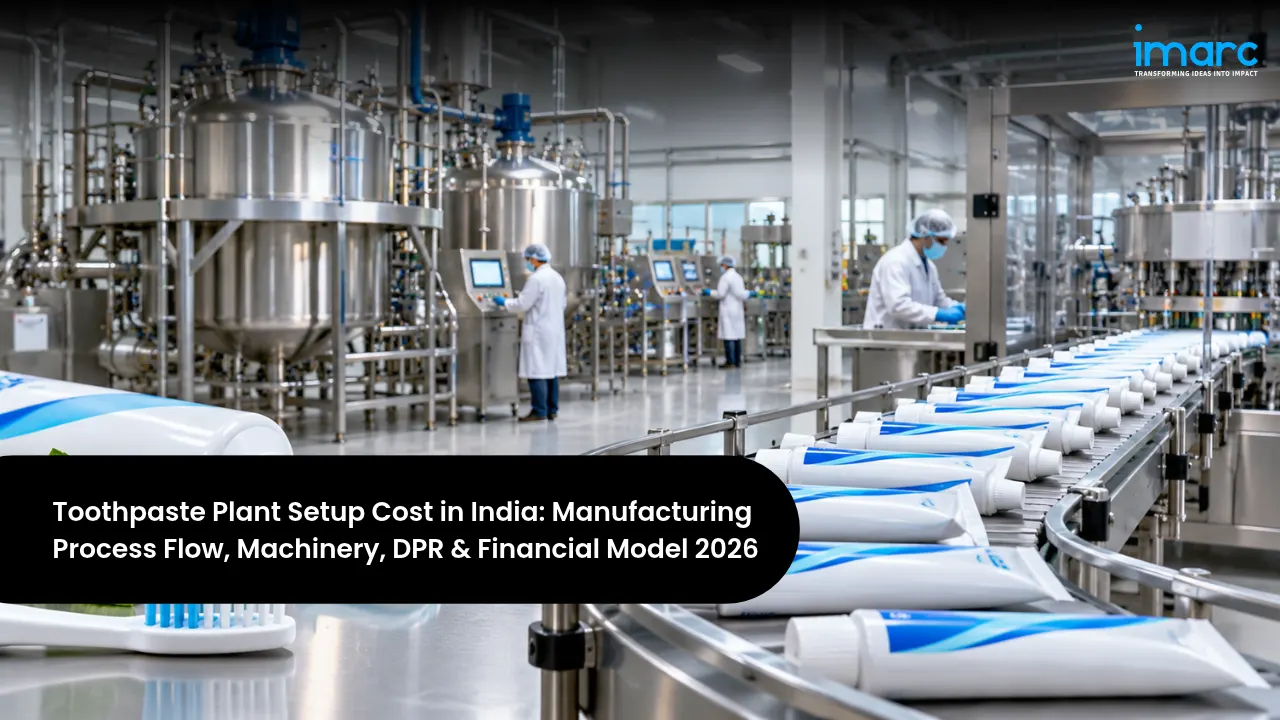
A Toothpaste Manufacturing Plant Setup in India produces dentifrices that clean teeth, prevent cavities, freshen breath, and address problems such as sensitivity, gum health, and staining. Products include fluoride toothpastes, gel and transparent toothpastes, herbal and Ayurvedic toothpastes, whitening and sensitivity formulas, children's toothpastes, and private label products for retailers and exporters, packed mainly in laminated tubes. Toothpaste is used in almost every Indian household, and rising awareness of oral health, premiumisation, and rural penetration keep the category growing.
The overall Toothpaste Manufacturing Plant Cost depends mainly on capacity, the product range, gel preparation and vacuum mixing systems, homogenisers, holding and transfer systems, tube filling and sealing machines, cartoning and packing lines, the purified water system, quality control laboratory, land and buildings, and working capital for raw materials, tubes, cartons, and trade credit. A plant producing about 12,000 tonnes a year, equal to roughly 120 million 100 g tubes, typically needs INR 35 crore to INR 55 crore in fixed assets, or about INR 50 crore to INR 75 crore including working capital. A smaller unit of 1,500 to 3,000 tonnes a year focused on herbal or private label products can start at around INR 5 crore to INR 10 crore. IMARC Group puts typical capacities at 50,000 to 100,000 tonnes a year, with gross margins of 25 to 35% and net margins of 10 to 20%.
This guide is written for personal care companies, Ayurvedic and herbal brands, contract manufacturers, FMCG distributors building their own brands, and investors exploring how to start a Toothpaste manufacturing plant in India. It explains product types and channels, demand drivers, the production flow, machinery and raw materials, site selection, a detailed cost and returns breakdown, the cosmetic, quality, and packaging approvals involved, and how a DPR pulls these elements into a bankable plan.
India Market Snapshot
| Key Facts | Details |
|---|---|
| Global Toothpaste Market (2025) | USD 22.3 Billion |
| Projected Global Market (2034) | USD 29.7 Billion (3.26% CAGR) |
| GST on Toothpaste | 5%, cut from 18% (September 2025) |
| Indian Standard | IS 6356:2021, Toothpaste |
| Typical Plant Capacity (IMARC) | 50,000–100,000 Tonnes a year |
| Indicative Total Investment | INR 50–75 Crore (12,000 TPA, incl. working capital) |
IMARC Group values the global toothpaste market at USD 22.3 billion in 2025. In India, the cut in GST on toothpaste from 18% to 5% in September 2025 lowered consumer prices, and the category has since returned to volume growth led by premium and herbal products.
Investment Highlights
Indicative Project Cost in India (2026)
| Parameter | Value |
|---|---|
| Product Range | Fluoride, gel, herbal and Ayurvedic, whitening, sensitivity, and children's toothpastes, plus private label and export products |
| Total Project Investment | INR 50 – 75 Crore incl. working capital (12,000 TPA); INR 5 – 10 Crore (1,500–3,000 TPA) |
| Payback Period | 4 – 5 Years |
| Net Profit Margin | 10 – 20% (IMARC benchmark) |
| IRR | 18 – 24% |
| Best Locations | Himachal Pradesh, Uttarakhand, Gujarat, Maharashtra, Andhra Pradesh, Assam |
| Mandatory Approvals | Cosmetic Manufacturing License, AYUSH License (Ayurvedic), Factory License, SPCB Consents, Fire NOC, Legal Metrology, Plastic EPR, GST, Udyam |
| Key Requirement | Stable formulations, GMP-compliant production, efficient tube filling, and strong brand or contract customers |
These figures offer a practical frame for early evaluation. Returns depend on stable, well-tested formulations, consistent raw material quality, hygienic GMP production, efficient mixing and high-speed tube filling, control of tube and packaging costs, and either strong brand distribution or long-term contract manufacturing customers. A capacity- and product-specific Toothpaste Feasibility Report refines these numbers before capital is committed.
Table of Contents
- What is Toothpaste Manufacturing?
- Why is Toothpaste Manufacturing Growing in India?
- Toothpaste Manufacturing Process Flow
- Raw Materials Required for Toothpaste Manufacturing
- Location, Land & Infrastructure
- Toothpaste Manufacturing Machinery and Equipment
- Toothpaste Manufacturing Plant Setup Cost in India (CapEx & OpEx)
- Financial Analysis and Profitability
- Licenses and Approvals for Toothpaste Manufacturing in India
- Recent Developments in the India Toothpaste Manufacturing Industry
- How Toothpaste Manufacturing Project Report and DPR Helps Investors
- Frequently Asked Questions
What is Toothpaste Manufacturing?
Toothpaste is a smooth, stable paste or gel made by dispersing fine abrasives in a humectant base thickened with binders, with surfactants for foaming, active ingredients such as fluoride, sweeteners, flavours, and preservatives. Production starts with preparing a gel phase by dissolving binders such as carboxymethyl cellulose or xanthan gum in purified water and humectants such as sorbitol and glycerin, along with dissolved actives and sweeteners. In a vacuum planetary mixer, abrasives such as calcium carbonate or dental-grade silica are added and dispersed, followed by surfactant and flavour, while vacuum removes air to prevent bubbles. The paste is homogenised, tested for viscosity, pH, and active content, held in tanks, and filled into laminated tubes that are sealed, coded, cartoned, and packed. A Toothpaste Manufacturing Plant therefore combines dispensing, gel preparation, vacuum mixing, homogenisation, quality control, filling, sealing, and packing.
Products are sold through FMCG distributors, wholesalers, retailers, modern trade and e-commerce, pharmacies and dental clinics, hotels and institutions, private label customers including retail chains and brands, and export markets in Africa, the Middle East, and South Asia. Buyers expect effective cleaning and cavity protection, pleasant taste and texture, stable shelf life, compliance with IS 6356 and cosmetic rules, attractive packaging, and competitive pricing.
- Fluoride Toothpastes: Everyday cavity protection.
- Herbal and Ayurvedic: Neem, clove, and other herbal formulas.
- Gel and Specialty: Whitening, sensitivity, and gel variants.
- Children's and Private Label: Kids' formulas and contract brands.
Main Product Types in Toothpaste Production
The product mix shapes formulation, equipment, and margins:
| Product Type | Description | Key Feature | Primary Market |
|---|---|---|---|
| Calcium Carbonate Paste | Opaque fluoride paste | Low cost, mass market | Rural and value segments |
| Silica Gel Paste | Transparent or gel formula | Premium look and feel | Urban and premium |
| Herbal & Ayurvedic | Plant extracts, natural claims | Strong consumer pull | Herbal and Ayurvedic brands |
| Sensitivity & Whitening | Specialty actives | Higher pricing | Premium and pharmacy |
| Children's Toothpaste | Lower fluoride, mild flavours | Family segment | Kids' brands |
Many new entrants start with calcium carbonate fluoride pastes and herbal variants for regional brands or private label customers, then add gel, sensitivity, whitening, and children's formulas as formulation expertise and customer base grow. Premium gels, specialty, and herbal products usually earn better margins than basic pastes.
Why is Toothpaste Manufacturing Growing in India?
Key Growth Drivers in the Indian Market
Demand for toothpaste in India is driven by awareness, penetration, and premiumisation:
- Oral health awareness: Campaigns and dental professionals encourage regular and night-time brushing.
- Rural penetration: Toothpaste continues to replace tooth powders and traditional methods in rural India.
- Premiumisation: Consumers are trading up to whitening, sensitivity, and gel variants.
- Herbal preference: Herbal and Ayurvedic toothpastes have strong and growing appeal.
- Lower GST: The cut in GST from 18% to 5% has made toothpaste more affordable.
End-Use Market Opportunity
| Channel | Demand Driver | Product Role |
|---|---|---|
| General Trade | Mass household demand | Value and mid-price pastes |
| Modern Trade & E-commerce | Urban premium buyers | Gels, specialty, herbal |
| Pharmacies & Dentists | Therapeutic needs | Sensitivity and gum care |
| Private Label | Retailer and brand demand | Contract manufacturing |
| Exports | Africa, Middle East, South Asia | Value and herbal pastes |
The strongest position for a Toothpaste Manufacturing Plant in India combines stable, differentiated formulations, GMP-compliant production, efficient high-speed filling, competitive costs, and either a strong regional or herbal brand with good distribution or long-term contract manufacturing for established brands, retailers, and exporters.
Toothpaste Manufacturing Process Flow
Understanding the Toothpaste Manufacturing Process helps promoters plan dispensing, gel preparation, mixing, filling, packing, layout, staffing, and quality control. Product quality depends on raw material purity, correct order of addition, binder hydration, effective deaeration, homogenisation, active ingredient stability, and hygiene. The flow below reflects a typical toothpaste plant.
Step-by-Step Toothpaste Production Flow
Raw materials are weighed and the gel phase is prepared, then abrasives, surfactants, and flavours are mixed in under vacuum. The paste is homogenised, tested, held, filled into tubes, sealed, coded, cartoned, and packed.
| Unit Operation | Key Activity |
|---|---|
| Raw Material Dispensing | Weigh to batch formula |
| Gel Phase Preparation | Water, humectants, binders |
| Actives & Sweeteners | Dissolve fluoride, saccharin |
| Abrasive Addition | Vacuum mixing of powders |
| Surfactant & Flavour | Add under vacuum |
| Homogenisation & Deaeration | Smooth, bubble-free paste |
| Quality Testing | Viscosity, pH, fluoride, micro |
| Holding & Transfer | Store paste for filling |
| Tube Filling & Sealing | Fill, seal, code tubes |
| Cartoning & Packing | Cartons, shippers, dispatch |
Two factors decide profitability. The first is formulation and packaging cost: humectants, abrasives, flavours, and laminated tubes make up most of operating cost, so efficient formulas, smart sourcing, and right-sized packaging protect margins without compromising quality. The second is market access: toothpaste is a heavily branded category dominated by large companies, so new plants succeed either by building a focused brand with strong distribution or by securing steady contract manufacturing and private label volumes.
Raw Materials Required for Toothpaste Manufacturing
The main inputs are abrasives, humectants, binders, surfactants, active ingredients, sweeteners, flavours, herbal extracts, laminated tubes, and cartons. IMARC Group estimates raw materials, driven mainly by calcium carbonate, at 50 to 60% of operating cost and utilities at 10 to 15%.
| Raw Material | Role in Process | India Sourcing | % of OpEx |
|---|---|---|---|
| Calcium Carbonate / Silica | Abrasive | Domestic producers | 12–16% |
| Sorbitol & Glycerin | Humectants | Domestic producers | 14–18% |
| Binders, SLS, Fluoride & Sweeteners | Texture, foam, actives | Domestic and imported | 4–6% |
| Flavours & Herbal Extracts | Taste and herbal claims | Domestic flavour houses | 7–10% |
| Laminated Tubes & Cartons | Primary and secondary packing | Domestic tube makers | 14–18% |
India has strong domestic supply of precipitated calcium carbonate, sorbitol, glycerin, flavours, herbal extracts, and laminated tubes, while some dental-grade silica, specialty actives, and flavour components are imported. Manufacturers should qualify suppliers for consistent purity, test each lot, secure long-term tube supply, and manage flavour costs through formulation.
Location, Land & Infrastructure
Location shapes logistics, incentives, and access to suppliers. The best location for Toothpaste manufacturing plant setup lies in an established personal care or FMCG cluster with good road connectivity to distribution hubs, reliable power and good-quality water, access to tube and packaging suppliers, and, where possible, state industrial incentives.
Preferred States for Toothpaste Plants in India
| State | Why It Works | Key Advantage |
|---|---|---|
| Himachal Pradesh | Baddi FMCG and pharma cluster | Established personal care base |
| Uttarakhand | Haridwar and Pantnagar | Herbal and FMCG manufacturing |
| Gujarat | Industrial corridors, ports | Exports, chemical suppliers |
| Maharashtra | Large FMCG ecosystem | Suppliers, western market |
| Andhra Pradesh | Southern industrial hubs | Southern market, ports |
| Assam | Northeast industrial incentives | Eastern market access |
Himachal Pradesh and Uttarakhand host many personal care and herbal product plants, with skilled labour and supplier networks, while Gujarat and Maharashtra offer large industrial ecosystems, chemical and packaging suppliers, and ports. Andhra Pradesh serves southern markets, and Assam suits companies targeting eastern and northeastern India with state incentives.
Product Quality and Compliance Requirements
Toothpaste in India is regulated as a cosmetic and must conform to IS 6356 under the Cosmetics Rules, 2020, which covers parameters such as fluoride content, heavy metals, abrasiveness, pH, and microbial limits, with special labelling for children's products. Ayurvedic toothpastes need AYUSH licensing. Key controls include raw material testing, purified water monitoring, batch records, in-process viscosity and pH checks, fluoride assay, microbial testing, stability studies, tube seal integrity checks, and batch coding for traceability.
Infrastructure Requirements (12,000 TPA Plant)
| Infrastructure Element | Specification | India-Specific Note |
|---|---|---|
| Total Land Area | 3 – 5 acres | Production, warehouses |
| Production Building | 5,000 – 8,000 m² | Hygienic manufacturing and filling |
| Power | 600 – 1,000 kW connected load | Mixers, fillers, HVAC |
| Purified Water | RO and EDI system | Product water quality |
| Quality Laboratory | Chemical and microbiology labs | IS 6356 compliance |
| Warehousing | Raw material, tubes, finished goods | Large packaging stocks |
| Utilities | Compressed air, chilled water, HVAC | Controlled environment |
Infrastructure for a toothpaste plant centres on raw material and packaging stores, a dispensing area, a manufacturing hall with gel tanks and vacuum mixers, holding tanks, filling and packing halls, a purified water plant, quality and microbiology laboratories, and finished goods warehouses. Planning space for additional mixers and filling lines from the outset supports growth.
Toothpaste Manufacturing Machinery and Equipment
Most toothpaste machinery, including vacuum mixers, homogenisers, tube fillers, cartoners, and water systems, is manufactured in India, while high-speed tube filling lines and fully automatic packing systems are often imported. The main equipment is summarised below.
| Equipment | Function | Key Specification |
|---|---|---|
| Dispensing & Weighing System | Accurate batching | Calibrated scales |
| Gel Preparation Tank | Hydrate binders | Stainless steel, high-shear |
| Vacuum Planetary Mixer | Main paste mixing | 1 – 3 tonne batches |
| Homogeniser / Colloid Mill | Smooth texture | Inline or batch |
| Powder Transfer System | Abrasive handling | Vacuum conveying |
| Holding Tanks & Pumps | Paste storage and transfer | Sanitary design |
| Tube Filling & Sealing Machines | Fill and seal tubes | 100 – 250 tubes per minute |
| Cartoning & Case Packing | Secondary packing | Automatic, checkweighers |
| Purified Water & CIP Systems | Water and cleaning | RO, EDI, CIP skids |
| Laboratory Instruments | Quality control | Viscometer, fluoride meter, micro lab |
Vacuum mixers and tube filling lines largely determine output, while formulation control, deaeration, and hygiene determine product quality. Many promoters begin with one or two mixers and semi-automatic or mid-speed filling lines for contract and regional brands, then add high-speed fillers, automatic cartoners, and additional mixing capacity as volumes grow.
Toothpaste Manufacturing Plant Setup Cost in India (CapEx & OpEx)
The tables below summarise the capital and operating cost structure of a plant producing about 12,000 tonnes of toothpaste a year in India. The final Toothpaste Investment Cost for a specific project depends on capacity, product range, mixing and filling speeds, level of automation, laboratory and water systems, land and building costs, and working capital for raw materials, packaging, finished stock, and trade credit.
Capital Expenditure (CapEx) Cost Structure
| CapEx Component | % of Total CapEx | What It Covers |
|---|---|---|
| Gel & Mixing Systems | 12–16% | Tanks, vacuum mixers, homogenisers |
| Filling & Sealing Lines | 16–20% | Tube fillers, sealers |
| Cartoning & Packing | 8–10% | Cartoners, case packers |
| Water, CIP & Utilities | 6–8% | RO, EDI, HVAC, compressors |
| Laboratory & QC | 3–5% | Chemical and micro labs |
| Land & Buildings | 16–20% | Site, hygienic buildings |
| Working Capital | 25–30% | Materials, tubes, stock, receivables |
Filling and mixing equipment form the largest share of fixed investment, while working capital is significant because tubes and cartons are ordered in large printed runs and distributors buy on credit. A Toothpaste Business Plan models these components so that capacity, product mix, and financing rest on realistic raw material and packaging prices, filling speeds, utilisation, channel margins, and marketing or contract terms.
Operating Expenditure (OpEx) Cost Structure
| OpEx Component | % of Total OpEx | India-Specific Note |
|---|---|---|
| Raw Materials | 34–42% | Humectants, abrasives, flavours |
| Packaging | 16–20% | Laminated tubes, cartons |
| Utilities | 8–10% | Power, purified water, HVAC |
| Labour | 6–8% | Operators, QC, packing |
| Selling & Distribution | 10–14% | Trade margins, marketing |
| Logistics, Maintenance & Overheads | 5–7% | Freight, upkeep, administration |
With materials, packaging, and distribution forming most of operating cost, profitability depends on formulation efficiency, packaging design, filling productivity, channel strategy, and scale. A sound financial model should test margins against sorbitol, glycerin, and flavour price changes, tube cost increases, competitive price promotions, higher marketing spend, and slower distribution growth.
Financial Analysis and Profitability
Toothpaste manufacturing offers attractive returns for producers with efficient plants and assured offtake. The profitability of Toothpaste manufacturing business in India improves with efficient formulations, high filling speeds, low wastage, a growing share of herbal, gel, and specialty products, long-term contract manufacturing agreements, focused regional or niche brands, and use of state incentives.
| Financial Metric | Indicative Value | India Context |
|---|---|---|
| Gross Profit Margin | 25–35% | IMARC benchmark |
| Net Profit Margin | 10–20% | IMARC benchmark |
| Payback Period | 4–5 Years | Moderate capital needs |
| IRR (Internal Rate of Return) | 18–24% | Sensitive to offtake and pricing |
| Capacity Utilization (stable ops) | 60–80% | Linked to brand or contract volumes |
| Break-even Capacity Utilization | 40–50% | Packaging and fixed costs |
Offtake and brand strategy are the decisive factors. Plants with long-term contracts from established brands and retailers, or with a strong regional or herbal brand, earn steady returns, while plants relying on new brands without distribution face high marketing costs and slow volume growth against large incumbents.
Returns can be strengthened by offering contract manufacturing and private label services, developing herbal, Ayurvedic, and natural formulas, adding premium gels and specialty variants, making tooth powders and mouthwash on shared infrastructure, targeting exports to Africa and the Middle East, and investing in high-speed filling to lower unit costs.
Key Risks and Mitigation
The main risks are intense competition from large brands, dependence on a few contract customers, raw material and tube price changes, quality or stability failures, regulatory changes on ingredients and labelling, and high marketing costs for new brands. Competition risk is reduced through niche positioning and contract manufacturing; customer risk through diversification; cost risk through supplier contracts; and quality risk through GMP, stability testing, and strong QC.
Licenses and Approvals for Toothpaste Manufacturing in India
A toothpaste unit requires cosmetic, industrial, environmental, packaging, and business approvals. Promoters typically need the following before starting commercial production:
- Cosmetic Manufacturing License: License from the State Licensing Authority under the Drugs and Cosmetics Act and Cosmetics Rules, 2020, with products conforming to IS 6356.
- AYUSH License: Separate license for Ayurvedic toothpastes and tooth powders marketed with Ayurvedic claims.
- Factory License and Fire NOC: Factory registration and fire safety approval for the plant.
- Pollution Control Consents: Consent to Establish and Consent to Operate from the State Pollution Control Board.
- Legal Metrology: Registration for packaged commodities, including labelling and net quantity rules.
- Plastic EPR Registration: Extended Producer Responsibility registration for plastic packaging such as laminated tubes.
- Business Registrations: Company registration, GST, Udyam, trademark, and an Import Export Code.
The cosmetic manufacturing license and GMP readiness often take the longest and are essential before production. Engaging a Toothpaste Manufacturing Consultant in India can help promoters develop formulations, select machinery, design GMP-compliant facilities, obtain licenses, and build contract manufacturing or brand distribution strategies.
Note: The exact approvals, registrations, licenses, and certification requirements may vary depending on factors such as plant location, product range, capacity, target customers, and applicable regulations. Businesses are advised to undertake a detailed regulatory assessment during the project planning stage to ensure full compliance and timely implementation.
Recent Developments in the India Toothpaste Manufacturing Industry
Several recent developments are shaping the toothpaste industry in India:
- GST cut on oral care: In September 2025, GST on toothpaste and other oral care products was cut from 18% to 5%, lowering consumer prices after a short period of trade disruption.
- Competitive shifts: In February 2026, reports showed Colgate-Palmolive India's toothpaste volumes falling about 2% in the December quarter while Dabur's toothpaste business grew about 10%.
- Return to volume growth: In October 2026, Colgate-Palmolive India reported 12.2% sales growth for the September quarter, with high single-digit toothpaste volume growth led by premium products.
Together these point to a more affordable, growing category with rising premiumisation and active competition, including from herbal brands. For new entrants, success depends on formulation, quality, cost, and a clear route to market.
How Toothpaste Manufacturing Project Report and DPR Helps Investors
A detailed Toothpaste Project Report gives investors a structured roadmap covering demand by segment and channel, competition, product range, formulation, raw material and packaging sourcing, process design, machinery, quality systems, approvals, distribution, and economics. It helps promoters choose the right capacity, product mix, and business model, estimate capital expenditure (CapEx) and operating expenditure (OpEx), assess profitability, and identify risks before implementation.
At the core of the DPR is a Toothpaste Financial Model covering raw material and packaging costs per tube, batch yields, filling speeds, utilities, labour, selling prices by pack size and channel, trade margins, marketing or contract terms, working capital, cash flow projections, break-even, return on investment (ROI), and payback. Because offtake and packaging costs drive returns, lenders expect detailed sensitivity analysis, which is why many promoters engage a Toothpaste Plant Project Report Consultant in India to prepare bank-ready documents.
For a toothpaste project specifically, a strong DPR also answers the questions that matter most: whether to pursue an own brand, contract manufacturing, or both, which formulations and price points to launch, how long licensing and GMP readiness will take, how much working capital packaging and credit terms will require, and how returns hold up if volumes ramp up slowly or input costs rise. An experienced Toothpaste Manufacturing Feasibility Study Consultant tests these scenarios so that the final plan is one lenders and partners can back with confidence.
Frequently Asked Questions
How do I set up a toothpaste manufacturing factory in India?
Start by choosing your business model and product range, then commission a feasibility study and DPR. Choose a site in an FMCG cluster, install gel preparation, vacuum mixing, homogenising, tube filling, and packing equipment with purified water and laboratories, obtain a cosmetic manufacturing license and factory, pollution, and fire approvals, and secure brand distribution or contract manufacturing customers.
What is the cost of setting up a toothpaste manufacturing plant in India?
A plant producing about 12,000 tonnes a year typically needs INR 35 crore to INR 55 crore in fixed assets, or about INR 50 crore to INR 75 crore including working capital. A smaller unit of 1,500 to 3,000 tonnes a year focused on herbal or private label products can start at around INR 5 crore to INR 10 crore.
How is toothpaste made?
Binders are hydrated in water and humectants to form a gel, actives and sweeteners are dissolved, and abrasives, surfactants, and flavours are mixed in under vacuum. The paste is homogenised, tested, filled into tubes, sealed, and packed.
What machinery is needed for a toothpaste manufacturing plant?
Key equipment includes dispensing systems, gel preparation tanks, vacuum planetary mixers, homogenisers or colloid mills, powder transfer systems, holding tanks and pumps, tube filling and sealing machines, cartoning and case packing machines, purified water and CIP systems, and laboratory instruments.
What raw materials are used for toothpaste?
The main inputs are calcium carbonate or silica abrasives, sorbitol and glycerin humectants, binders, sodium lauryl sulphate, fluoride, sweeteners, flavours, herbal extracts, preservatives, laminated tubes, and cartons.
Is toothpaste manufacturing profitable in India?
Benchmark figures point to a 10 to 20% net margin and an IRR of around 18 to 24%, with payback in 4 to 5 years. Profitability depends mainly on assured offtake, formulation and packaging costs, filling efficiency, and channel strategy.
What licenses are needed for a toothpaste manufacturing unit in India?
A unit typically needs a cosmetic manufacturing license under the Cosmetics Rules, 2020, an AYUSH license for Ayurvedic products, a Factory License, Fire NOC, State Pollution Control Board consents, Legal Metrology registration, plastic EPR registration, GST, and Udyam registration.
Which state is best for a toothpaste manufacturing plant?
Himachal Pradesh, Uttarakhand, Gujarat, Maharashtra, Andhra Pradesh, and Assam are strong options. The best site combines an FMCG supplier ecosystem, good logistics to major markets, and available state incentives.
How do I get a feasibility study or DPR for a toothpaste manufacturing plant?
A professionally prepared DPR covers market and channel assessment, formulation, technical design, approvals, costs, and financial projections for bank appraisal. Many promoters work with a Toothpaste Business Plan Consultant in India to prepare it and align it with lender requirements.
Our Clients










Contact Us
Have a question or need assistance?
Please complete the form with your inquiry or reach out to us at
Phone Number
+91-120-433-0800+1-201-971-6302
+44-113-547-7077
Previous Post

Water flossers used to be a niche gadget that a hygienist mentioned once a year. That is changing. According to IMARC Group, the global water flosser market grew from USD 1.06 Billion in 2025 to USD 1.13 Billion in 2026 and is projected to reach USD 1.64 Billion by 2034, at a CAGR of 4.74% during 2026-2034. That is roughly USD 510 Million of additional annual sales in eight years.
A Mobile Case and Cover Manufacturing Plant Setup in India produces protective and decorative accessories for one of the world's largest smartphone markets.
A Non-Woven Bag Manufacturing Plant Setup in India converts polypropylene (PP) spunbond non-woven fabric into reusable carry bags for retail, grocery, apparel, pharmacy, food takeaway, promotional, and gifting uses.
A Stainless Steel Faucet Manufacturing Plant Setup in India serves one of the fastest-growing segments of the bath and kitchen fittings market. Stainless steel faucets, made mainly from SS304 and SS316 grades, include kitchen sink mixers, basin mixers, pillar taps, bib cocks, angle valves, shower mixers, and sensor taps.
The Japan Luxury Watch Market is a mature, craftsmanship-led and steadily expanding opportunity for brands that can match local expectations on quality, service and retail presence. IMARC Group reports that the market grew from USD 3.4 Billion in 2025 to USD 3.7 Billion in 2026 and is expected to reach USD 6.3 Billion by 2034, exhibiting a CAGR of 6.70% during 2026-2034.
A Water Filter Manufacturing Plant Setup in India serves one of the country's most essential consumer and industrial needs. Water filters remove sediment, chlorine, odour, organic compounds, dissolved salts, and microorganisms from drinking and process water using a combination of sediment cartridges, activated carbon filters, ultrafiltration and reverse osmosis membranes, and ultraviolet disinfection.
The knee pad market is expanding steadily as workplace safety rules, sports participation and preventive healthcare habits push protective knee gear into mainstream use. According to IMARC Group, the market grew from USD 6.4 Billion in 2025 to USD 6.6 Billion in 2026 and is projected to reach USD 8.4 Billion by 2034, exhibiting a CAGR of 3.00% during 2026-2034.
A Cardboard Boxes Manufacturing Plant Setup in India serves one of the country's most widespread packaging needs, supplying shipping cartons, retail packs, and product boxes to food and beverage, FMCG, pharmaceuticals, electronics, textiles, e-commerce, and industrial users.
An Apparel Manufacturing Plant Setup in India builds on one of the country's oldest and largest industries. India has a complete textile value chain, from cotton and man-made fibres to yarn, fabric, processing, and garment making, along with a large skilled workforce and a fast-growing domestic consumer market.
The India packaged atta market is moving from a niche convenience purchase to a core household staple category. Wheat flour has long been milled at neighbourhood chakkis or bought loose, yet sealed, branded atta is steadily taking over kitchens in cities and increasingly in smaller towns. According to IMARC Group, the market reached INR 95.1 Billion in 2025 and is projected to reach INR 286.4 Billion by 2034, growing at a CAGR of 12.64% during 2026-2034.
An Automotive Clutch Manufacturing Plant Setup in India serves one of the world's largest vehicle markets. India produces tens of millions of two-wheelers, passenger cars, commercial vehicles, and tractors every year, and the vast majority use a clutch to connect and disconnect engine power from the transmission.
The Indian pre-school/childcare market has moved from a support service for working parents into a mainstream household education decision, and the numbers reflect that shift. According to IMARC Group, the market grew from USD 5.1 Billion in 2025 to USD 5.9 Billion in 2026 and is projected to reach USD 12.0 Billion by 2034, expanding at a CAGR of 9.16% between 2026 and 2034.
Setting up a Toilet Paper Manufacturing Plant in India is a bet on one of the country's most under-penetrated hygiene categories. Per capita tissue consumption in India is estimated at under 0.2 kg a year, against a global average of more than 5 kg, yet demand is rising quickly as hotels, offices, hospitals, malls, airports, and urban households adopt Western-style hygiene habits.
The global Bluetooth speaker market is expanding at a rate that most consumer electronics categories no longer achieve, but the growth is being earned under unusually tight margins. According to IMARC Group, the market reached USD 19.5 Billion in 2025 and is projected to reach USD 66.1 Billion by 2034, a CAGR of 14.10% during 2026-2034.
A Glass Bottle Manufacturing Plant Setup in India serves some of the country's steadiest consumer industries. Glass bottles and jars package liquor, beer, soft drinks, sauces, pickles, pharmaceuticals, cosmetics, and perfumes, and brand owners value glass for being inert, impermeable, premium in appearance, and endlessly recyclable.
A Razor Manufacturing Plant Setup in India targets a product that hundreds of millions of people buy again and again. Razors range from traditional double-edge safety blades used by barbers and in rural markets to disposable twin- and triple-blade razors and premium multi-blade cartridge systems.
Setting up a Ceiling Fan Manufacturing Plant in India is a practical, demand-backed venture in one of the world's largest fan markets. Long summers across most of the country, steady housing construction, near-universal household electrification, and a regulatory push toward energy-efficient BLDC models keep demand both large and upgrading.
Adult incontinence products, such as pant-style and tape-style diapers, underpads, and insert pads, are absorbent hygiene products made from fluff pulp and super absorbent polymer wrapped between soft nonwoven fabrics and a leak-proof backsheet, with elastics and fasteners for a secure fit.
The product is a dry, ready-to-chew blend of cut and processed areca nut with catechu, slaked lime, cardamom, flavours, and sweeteners, sold in small pouches, tins, and jars as an after-meal mouth freshener across India.
Male latex contraceptives are thin sheaths made by dipping glass formers into compounded natural rubber latex, curing the film in ovens, stripping and washing the pieces, and then testing every single one electronically for holes before lubricating and sealing it in foil.
Disposable paperboard plates are pressed from food-grade board, often laminated with silver foil paper or coated for grease and moisture resistance, and are used at weddings, festivals, religious gatherings, street food stalls, canteens, caterers, quick-service restaurants, and homes.
The US handicrafts market has moved from the margins of the hobby and gift economy into one of the more resilient corners of American consumer spending. According to IMARC Group, the market stood at USD 345.24 Billion in 2025, rose to USD 372.05 Billion in 2026, and is projected to reach USD 676.82 Billion by 2034, expanding at a CAGR of 7.77% during 2026-2034.
A pocket lighter is a small plastic or metal reservoir of liquefied butane fitted with a valve, a flame adjuster, and an ignition system, either a steel wheel striking a flint or a piezoelectric spark, that releases and lights a controlled flame at the press of a button.
The Saudi Arabia luxury apparel market has moved beyond the volume-led phase of its expansion. IMARC Group values the market at USD 752.2 Million in 2025, with a forecast of USD 1,102.8 Million by 2034, implying a CAGR of 4.34% during 2026-2034.
Cigarettes are composed of finely cut tobacco leaf rolled into a paper cylinder, often with a filter at one end. In India, the demand for domestic cigarette production has grown due to rising consumer markets and diminishing reliance on imports.
The Saudi Arabia kitchen chimney market is moving decisively upmarket, as households stop treating ventilation as a hidden utility and start specifying it as part of kitchen design, indoor air quality and resale value.
Faucets, also called taps or CP fittings, control the flow of water in kitchens, bathrooms, and commercial washrooms. Most quality faucets in India are made from brass that is forged or cast, precision machined, polished, and chrome plated, then fitted with ceramic disc cartridges, aerators, and handles, while lower-priced ranges use stainless steel, zinc, or plastic.
Toys range from moulded plastic figures, vehicles, and building blocks to ride-on cars, soft plush toys, educational and STEM kits, electronic and remote-controlled toys, board games, and puzzles.
The UK Furniture Market is experiencing a period of selective growth, where headline expansion masks significant divergence at the segment level. According to IMARC Group, the market was valued at USD 22.78 Billion in 2025 and is projected to reach USD 32.40 Billion by 2034, growing at a CAGR of 3.87% (2026–2034).
Fast moving consumer goods are everyday products that sell quickly at relatively low prices, such as detergents, dishwash products, surface cleaners, soaps, shampoos, toothpaste, packaged foods, and beverages.
Footwear covers sports shoes, sneakers, leather shoes, sandals, slippers, safety boots, and school shoes. India is the world's second-largest footwear producer, making about 2.9 billion pairs a year, or roughly 12.5% of global output, and its domestic market was valued at about USD 20.67 billion in 2025.
Washing powder is one of the most widely used household products in India, bought by almost every family for hand washing and, increasingly, for washing machines.
Energy meters measure the electricity used by every home, shop, factory, and farm connection, and they sit at the centre of India's effort to cut distribution losses and modernise its power sector.
Sanitary napkins are an essential hygiene product for hundreds of millions of women and girls in India, and one of the fastest-growing categories in personal care.
The Healthy Snacks Market has moved decisively from a niche wellness category to a mainstream pillar of the global food and beverage industry, driven by a fundamental and durable shift in how consumers around the world think about what they eat between meals.
India is one of the world's largest producers and consumers of textiles, and it generates around 7 million tonnes of textile waste every year, from cutting scraps and yarn waste in factories to old clothes and household textiles.
India has more than a billion mobile connections, creating a large and recurring market for chargers, cables, protective cases, screen guards, earbuds and other mobile accessories.
The television has quietly become the most connected screen in many Indian homes. Streaming apps, cricket in 4K, YouTube, and voice-controlled content have turned the TV into a smart device, and falling prices, a lower GST rate, and easy online buying have brought smart TVs within reach of millions of first-time buyers.
India is sleeping better, or at least spending more to try. Rising incomes, smaller urban homes, a booming hotel sector, and growing awareness of back health have pushed households away from cotton gaddas toward engineered foam, spring, and hybrid mattresses.
Setting up a Diaper Manufacturing Plant in India is a high-speed converting venture powered by rising hygiene awareness, growing disposable incomes, low current penetration, and expanding demand across baby and adult categories.
Setting up a Liquid Detergent Manufacturing Plant in India is a formulation-and-blending venture with relatively accessible entry capital, powered by rising hygiene awareness, a steady shift from powders to liquids, expanding modern retail, and growing demand across laundry, dishwash, and household cleaning categories.
Setting up a Kraft Paper Manufacturing Plant in India is a high-demand, sustainability-driven venture, powered by the country's booming e-commerce, packaging, and corrugated-box industries. Kraft paper is the base material for corrugated boxes and packaging, and demand is rising as businesses shift from plastic to recyclable paper-based packaging.
Setting up a Garment Manufacturing Plant in India is a high-demand, employment-generating venture, powered by the country's vast textile base, skilled workforce, and growing role as a global apparel sourcing hub.
The Luxury Fashion Market reached USD 261.0 Billion in 2025 and is projected to reach USD 341.0 Billion by 2034, growing at a CAGR of 3.02% (2026–2034).
Setting up a Container Manufacturing Plant in India is a capital-efficient, high-demand venture powered by the country's fast-growing food, pharmaceutical, FMCG, and industrial packaging sectors.
Bath soap is a body wash product developed primarily to provide personal care. It is made by the alkali saponification, a method that generates soap salts and glycerin in the soap via a reaction between fats or oils and an alkali, such as sodium hydroxide. Bath soaps are made by separating out dirt, sweat, excess oil and microorganisms while helping to remove dirt, sweat, excess oil and water soap from the skin to avoid dirt, extra oil and bacteria and viruses while preserving the balance of both cleansing the skin and compatibility between the application.
Waste tyre recycling can be defined as the organized collection, treatment, and recovery of end-of-life tyres (ELTs) to produce new materials, energy sources, or secondary raw materials. Tyres are made up of vulcanized rubber, steel reinforcement, textiles, and chemical compounds, making them non-biodegradable materials that cannot be easily decomposed.
Wallpaper is a decorative and practical wall covering material used to cover interior surfaces for aesthetic purposes, protection, and ambiance. It is usually made from paper, vinyl, non-woven fibers, textile backing, or a combination of materials, printed or embossed with designs, textures, or solid colors.
The Australian footwear industry is experiencing a remarkable transformation as it navigates a confluence of shifting consumer preferences, technological advancements, and sustainability imperatives.
Tennis ball production is the process of making standardized balls for the game of tennis. The process involves making balls with specific performance and bounce features. A tennis ball is made up of a hollow rubber core that is filled with pressurized air. The core is then covered with a woven felt material.
Soap is a type of cleaning agent made by the chemical reaction of fats or oils and an alkali in a process known as saponification. The chemical reaction transforms triglycerides into soap, also known as fatty acid salts, giving these substances the properties of a surfactant, allowing the substance to be used for the removal of dirt, oil, and bacteria from surfaces.
The size of the global hair oil market has undergone significant transformation with increasing consciousness among consumers to adopt hair care as part of their personal wellness, beyond the realm of mere beauty. Hair oils, being long considered one of the traditional grooming essentials, have transformed into complex formulations to suit various hair types and scalp conditions. Over the past years, lifestyle change, growing awareness related to scalp health, and the rising demand for natural beauty have significantly impacted the consumption pattern in the hair oil segment.
The global online grocery market research landscape has undergone unprecedented changes in recent years, with an upward trend marking the way consumers engage with food retail. There has been a significant expansion in the size of the online grocery market, fuelled by changing consumer preferences, technological advances, and increased convenience associated with digital shopping. Households are showing a growing reliance on online platforms for regular essentials more than ever, making the sector a cornerstone of modern retail.
The UAE’s pet food sector has emerged as one of the most dynamic and lifestyle-influenced consumer categories. While historically smaller and more niche compared to mainstream food and beverage markets, the industry has grown in relevance due to changing demographics, international influences, and shifting consumer priorities. Residents across major cities are embracing pets as companions for emotional well-being and as part of a balanced lifestyle.
The Saudi Arabia road freight transport market represents one of the key building blocks of the economic infrastructure in the Kingdom, providing for cargo movement across various domestic supply chains. It also involves road freight operations, which allow for the distribution of goods-from manufactured goods, consumer goods, and industrial supplies to agricultural produce-across its large and wide geography.
The Saudi Arabia luxury market represents one of the most dynamic and rapidly evolving segments within the Middle Eastern premium retail landscape. As the Kingdom undergoes comprehensive economic diversification and social transformation, luxury consumption patterns are experiencing unprecedented shifts that reflect changing demographics, evolving consumer preferences, and ambitious national development goals.
The Philippines retail sector has become a pluralistic and dynamic environment where old-fashioned stores coexist with high-tech contemporary formats enabled by digital strength. The Philippines retail sector market size reached USD 648.2 Billion in 2025. The market is projected to reach USD 1,223.1 Billion by 2034, exhibiting a growth rate (CAGR) of 7.31% during 2026-2034.
Polyester fabric is a type of synthetic fabric made from polyester fibers. The main source of polyester fibers is petrochemical polymers like polyethylene terephthalate. Polyester fabric is made from processing chips of polymers to produce continuous filaments and staple fibers. The processing of polymers involves heating and melting chips of polymers made from petrochemical materials to produce continuous filaments and staple fibers.
India's gaming industry is rapidly evolving into one of the largest and most dynamic markets in the world. Driven by the increasing adoption of smartphones, affordable internet, and a tech-savvy youth population, gaming is becoming a mainstream form of entertainment.
The beauty landscape in India is undergoing a major transformation propelled by creativity, research, and technology. The India cosmetics market size was valued at USD 15.46 Billion in 2025. Looking forward, the market is expected to reach USD 25.39 Billion by 2034, exhibiting a CAGR of 5.7% from 2026-2034.
The drivers for changing India's textile sector include sustainability, modernization of production, and the introduction of advanced chemical solutions. The India textile market size was valued at USD 152.40 Billion in 2025. The market is projected to reach USD 213.75 Billion by 2034, exhibiting a CAGR of 3.83% from 2026-2034. It places the India textile chemicals market at an important position in this evolution, enabling everything from fiber processing to finishing.
India's consumer landscape is experiencing a profound transformation, driven by rapid digital adoption, evolving consumer preferences, and robust infrastructure development. The shift from traditional brick-and-mortar shopping to digital platforms represents more than a mere change in purchasing channels—it signifies a fundamental restructuring of how businesses engage with consumers and how millions of Indians access goods and services.
The Saudi Arabia deodorants market size continues to evolve as consumers embrace modern grooming habits, premium personal care products, and innovative hygiene solutions. With rising awareness of body care, fragrance layering, and daily freshness, deodorants have become an essential part of both men’s and women’s personal grooming rituals.
Pet foods consist of commercially processed foods that contain nutritional requirements tailored according to their consumption by domesticated pets like dogs, cats, birds, fish, and small animals. The foods contain planned nutritional compositions, such as ingredients like protein, carbohydrate, fat, vitamins, and minerals.
Perfume is a scented liquid composition that contains a mixture of fragrance chemicals, essential oils, aroma chemicals, fixatives, and solvents that are formulated for a pleasing and distinct fragrance emission upon application on human skin or on objects.
Technological advancements and shifting consumer expectations have caused the worldwide washing machine industry to drastically change. Washing machines are becoming indispensable parts of contemporary homes, smoothly integrating into smart home ecosystems from conventional semi-automatic models to fully linked, smart appliances.
Paper plates are disposable food containers, also referred to as tableware, and are made mostly from paperboard, pulp, and materials that are derived from fibers. These plates are designed to be convenient, hygienic, and easy to handle while being moisture and grease-proof, making them ideal for packing different food varieties, ranging from dry foods to moist and greasy food items.
The GCC cigarette lighter market is undergoing a steady phase of expansion due to evolving consumer habits, sustained product demand, and widening distribution channels across the region. In 2024, the GCC cigarette lighter market was valued at USD 197 Million. A key factor shaping industry performance is the rise in convenience-led purchases, driven by widespread retail penetration, duty-free availability, and the continued popularity of smoking-related accessories.
Paint brushes are hand-operated applicator tools, designed and manufactured with great precision, utilizing the capabilities of these tools to apply, spread, and manage liquid paint, along with other forms of paint such as varnishes, stains, lacquers, and surface finishes, onto a desired surface. Paint brushes are commonly manufactured using a series of components, including a handle, a ferrule, and natural or man-made hairs, or a combination of these two. They are also manufactured and designed with different shapes and sizes, according to the viscosity and texture of the paint.
Pan masala is a ready-to-use chewing mixture that is traditionally used as a mouth freshener as well as a digestive aid and is of South Asian origin. It is prepared by mixing different components such as areca nut, catechu, slaked lime, spices, flavoring agents, sweet agents, and aroma agents in specific proportions. It is usually packed ready for use and is different from the betel quid variant that is prepared by using fresh betel leaves. Contemporary formulations of pan masala aim to achieve consistency, shelf life, and standardized flavor so that it can be mass-produced and marketed.
Paper bags can be defined as the final product made from paper-based material such as kraft paper, recycled paper, or specialty paper, used for packing or storing products. Paper bags come in different shapes and sizes with varying strength, ranging from flat-bottom paper bags, gusseted paper bags, and handled paper bags. Paper bags can be biodegradable, can be recycled, and can be made from renewable resources.
The Brazil cosmetics products market represents one of the most vibrant and diverse beauty sectors in Latin America, reflecting a deep-seated cultural emphasis on personal appearance, wellness, and self-care. The Brazilian consumer has long been known for a keen taste for grooming, fashion, and aesthetics, which logically applies to the cosmetics industry. Driven by an expanding middle-class population, an increase in urbanization, and increasing awareness about wellness-oriented lifestyles, the market continues to evolve.
The commercial landscape across the globe is undergoing a seismic shift, driven by technology, changing consumer expectations, and macroeconomic volatility. This transformation is particularly pronounced in high-density, globally connected urban centres like Singapore. Historically a powerhouse of trade and luxury commerce, the nation is now navigating an intricate matrix of digital disruption and soaring operational pressures.
The India confectionery industry has emerged as one of the most dynamic segments within the country's food and beverage sector. Driven by changing consumer preferences, rising disposable incomes, and evolving lifestyles, the market continues to witness remarkable transformation across urban and rural landscapes.
As disposable incomes rise, households are diversifying across investment-grade gold, diamond-studded jewellery, and designer ornaments. Gold, in particular, holds unmatched cultural and economic importance, sustaining demand even through economic fluctuations. Recent indicators show how this cultural attachment continues to translate into measurable investment momentum. Gold demand stood at 135 tonnes in Q2 2025, with a full-year forecast between 600 and 700 tonnes. By mid-2025, India’s total gold holdings reached 66.7 tonnes, with two tonnes added in June and nine tonnes in the first half of the year.
Mobile accessories encompass a wide range of auxiliary products that are intended to complement, protect, enhance, or extend the functional capabilities of smartphones and other portable communication devices. Examples of these accessories include protective cases, screen guards, chargers, power banks, earphones, wireless earbuds, smart wearables, mounts, portable speakers, and connectivity adapters. They enable better usability, device safety, personalization, convenience, and integration with digital ecosystems. Mobile accessories are made from a variety of materials and technologies to meet various performance, durability, and design requirements for different groups of users.
Japan boasts a long and rich culture of traditional board games such as Go and Shogi, which have long been a fundamental component of its culture. The current board game market in Japan, though, is a vibrant mix of these indigenous games and an incredibly diverse range of modern games based on both Western and domestic design schools.
The tobacco industry has long been a cornerstone in world trade and consumer culture, shaping the courses of economies, employment landscapes, and industrial practices for centuries. Even in today's world, with growing awareness regarding health and sustainability, tobacco remains an imposing force in global commerce.
The Australia sportswear industry is experiencing unprecedented momentum, transforming into a multi-billion-dollar powerhouse where fashion, fitness, and lifestyle converge. As health consciousness sweeps the continent and athleisure becomes a wardrobe staple, the Australian market leads a global revolution in performance apparel.
Japan's luxury apparel industry has traditionally been characterized by its profound respect for craftsmanship, quality, and cultural refinement. Japanese consumers have a reverence for art and nuance, preferring items that reflect precision and enduring design over short-lived trends. Over the past decade, Japanese luxury fashion has transcended conventional retailing experiences and assumed a contemporary identity that coalesces international influences with domestic sentiments.
A mattress is a cushioned structure intended to support the human body, either while sleeping, resting, or for therapeutic purposes. It is typically made up of comfort layers, including foam, latex, fiber, or gel, combined with a supportive core, like innerspring coils, high-density foam, or hybrid constructions. Mattresses are designed to evenly distribute body weight to relieve pressure points and ensure proper spinal alignment.
Liquid detergent is a formulated cleaning solution comprising surfactants, solvents, builders, enzymes, pH stabilizers, perfumes, and other additives, which are collectively used for removing dirt, stains, and oils from fabrics, dishes, and different surfaces. Unlike powdered detergents, liquid detergents dissolve immediately in water, allowing even distribution during washing and effective performance in both hot and cold water.
The Japan personal luxury goods industry stands as one of the world’s most crucial and dynamic markets, consistently ranking among the top three globally, alongside the United States and China. In 2024, Japan personal luxury goods market size reached USD 32,060.65 Million in 2024.
The luxury watch industry represents one of the most enduring segments of the global fashion and lifestyle market. Combining precision engineering with timeless craftsmanship, luxury watches continue to hold strong appeal among high-net-worth individuals, collectors, and aspirational consumers. The global luxury watch market size reached USD 29.12 Billion in 2024, reflecting steady growth driven by premiumization, rising consumer demand in emerging economies, and the enduring value of heritage timepieces.
The Vietnam athleisure market stands at a pivotal juncture, experiencing remarkable transformation driven by evolving lifestyles, rising health consciousness, and rapid urbanization. As Vietnamese people are increasingly prioritizing wellness and seeking versatile clothing that seamlessly transitions from gym workouts to casual social settings, the demand for activewear trends has surged dramatically. With lifestyle apparel Vietnam witnessing unprecedented growth and fitness clothing demand reaching new heights, both international brands and homegrown labels are competing vigorously to capture market share in this dynamic sector.
The Philippines conveyor belt market is picking up speed, powered by the country’s industrial growth and focus on automation. According to the IMARC Group, the market reached USD 31.23 Million in 2024, reflecting notable growth across manufacturing, mining, logistics, and food processing. As industries modernize, the need for efficient material handling systems is creating strong momentum for both domestic and imported conveyor solutions.
The US retail market is undergoing a profound transformation, fueled by the integration of artificial intelligence (AI) across multiple business operations. From personalized consumer engagement to predictive inventory management and dynamic pricing strategies, AI is redefining how retailers operate, compete, and deliver value. Increasing consumer expectations for seamless, personalized, and efficient shopping experiences are prompting businesses to embrace AI-driven solutions to optimize performance, reduce costs, and enhance decision-making.
The global beauty and personal care products market is undergoing a profound transformation, driven by technological innovation, evolving consumer expectations, and sustainability-focused practices. Increasing consumer awareness of health, wellness, and ethical sourcing is compelling companies to rethink traditional formulations and adopt advanced manufacturing techniques. Businesses are now integrating biotechnology, artificial intelligence, and data-driven insights into product development, distribution, and marketing strategies.
The Philippines board game market is on a winning streak, fueled by a growing passion for social play, learning, and creative pastimes. According to IMARC Group, the market reached USD 83.39 Million in 2024, reflecting how board gaming is becoming a favorite form of entertainment across generations. Family games, strategy and role-playing titles, and educational options for kids are gaining steady traction, alongside collectible and pop culture–inspired editions.
The Australian fantasy sports industry is entering a phase of heightened momentum, with market size for 2024 reaching approximately USD 810.6 Million, as detailed in a recent report. This market is forecast to grow to USD 2,180.2 Million by 2033, representing a compound annual growth rate (CAGR) of around 10.4 % from 2025 through 2033 .
Australia's textile recycling sector is experiencing a technological renaissance, with 40% of SMEs currently adopting artificial intelligence (AI), marking a 5% increase compared to the previous quarter (July-Sept 2024). The percentage of businesses unaware of how to utilize AI has decreased by 2% to 21%.
Containers are standardized, tough, watertight containers for efficient storage and transportation of goods by ship, rail, and truck without the need for handling the cargo itself. They are the lifeblood of global trade and logistics, allowing for effective intermodal transport. Constructed from high-strength steel, aluminum, or composite materials, they are designed to withstand rigorous marine and environmental elements. The most common types are dry storage containers for general cargo; however, there are also refrigerated (reefers) for perishables, tank containers for liquids and gases, open-top and flat-rack for oversized equipment, and high-cube for voluminous cargo. Standardization, mainly through ISO specifications, allows for seamless compatibility and efficiency throughout global logistics systems.
Carpet is a textile floor covering made of a pile, tufts of yarn or fiber, sewn to a backing for dimensional stability. Carpets are manufactured in various construction forms: tufted (universal across the world, yarn punched through a primary backing and treated with secondary backing), woven (Wilton and Axminster, highly valued for durability and pattern intricacy), needle-felt (bonded fibers for industrial applications), and knotted (hand-made rugs).
Aloe vera gel is a natural concentrate obtained from the parenchyma of the inner leaf of Aloe barbadensis miller, which is valued for its therapeutic, nutritional, and cosmetic uses. The gel mostly comprises water (more than 95%) and polysaccharides, vitamins, minerals, amino acids, enzymes, and antioxidants responsible for its soothing, moisturizing, and healing actions. Renowned for its anti-inflammatory, antimicrobial, and skin-rejuvenating properties, the aloe vera gel finds broad application in personal care cosmetics, pharmaceuticals, food supplements, and beverages.
Aloe vera is a perennial fleshy succulent plant of the species Aloe barbadensis miller, grown worldwide for its nutritional, medicinal, and cosmetic benefits. It has two primary constituents: the transparent inner gel consisting mainly of polysaccharides, vitamins, enzymes, and amino acids; and the yellowish latex, consisting of anthraquinones with powerful laxative properties. Aloe vera gel is highly prized for its emollient, moisturizing, and healing properties and is a common ingredient in skincare, personal care, and pharmaceutical products.
Air purifiers are appliances that enhance indoor air quality by eliminating pollutants like dust, allergens, smoke, volatile organic compounds (VOCs), and microbial particles. They work on various technologies such as HEPA (High-Efficiency Particulate Air) filters, activated carbon filters, UV-C light, ionizers, and photocatalytic oxidation. Their major components are usually fans or blowers, filter media, sensors, electronic controls, and metal or durable plastic housings. Some of the crucial characteristics of air purifiers include efficiency of filtration, airflow, noise levels, power consumption, and filter material durability.
Air coolers are evaporative coolers based on the principle of water evaporation, utilizing a fan or blower to blow cooled air, as opposed to air conditioners, which function based on refrigerant and compressor principles. Air coolers are designed to deliver low-cost and energy-efficient temperature management, mainly applicable to dry and hot climates. They generally consist of a pump, motor, cooling pads, water tank, blower/fan, and electronic control units. Main characteristics are low energy usage, environmental friendliness, portability, and low cost. Production of air coolers typically consists of combining sheet metal or plastic enclosures with motor-driven fans, water distribution networks, and cellulose or aspen cooling pads.
A4 paper, which is one of the most commonly used paper formats around the world, is 210 mm × 297 mm and forms the part of the ISO 216 system. It mainly consists of cellulose fibers obtained from wood pulp, recycled papers, or other fibrous raw materials like bagasse or bamboo. A4 paper contains crucial characteristics like smoothness, even thickness, high opacity, brightness, tensile strength, and durability, which enable it for printing, copying, and writing. The production process includes pulping raw fibers, bleaching for whiteness, refining for increasing fiber bonding, and sheet formation under regulated drying and calendaring.
The manufacturing sector is constantly changing with continuously rising demands for sustainability, innovation, and efficiency. The time comes when companies want to expand their business or venture into new markets.
India's manufacturing industry is experiencing a remarkable transformation and growth in 2025, aiming to establish the nation as a key player in global manufacturing. Supported by governmental initiatives such as the Make in India program and the Production Linked Incentive (PLI) schemes, the sector has drawn significant foreign direct investment (FDI) and encouraged innovation across multiple industries.
India's manufacturing industry is undergoing a turning point in 2025 based on strong government initiatives, a highly skilled and youthful population, and a worldwide trend towards diverse supply chains.
The global tobacco sector remains one of the most mature yet closely scrutinized industries in the world. With demand persisting across both developing and developed markets, cigarette production continues to be a high-volume, technically refined activity governed by extensive regulation and economic influence.
The global vegan cosmetics market is experiencing unprecedented growth, driven by a new wave of conscious consumers who demand beauty products that are not only effective, but also ethical, sustainable, and cruelty-free. This movement is more than just a passing trend; it's a fundamental shift in values that is reshaping the industry.
The global online grocery market has rapidly evolved from a convenience service to a mainstream retail segment, reshaping how consumers shop for everyday essentials. According to the IMARC group report, the market reached a value of USD 710.10 Billion in 2024 and is projected to witness consistent expansion.
The India textile market is picking up serious momentum, supported by smarter tech and changing user preferences. As more buyers look for eco-friendly, premium-quality products, manufacturers are stepping up with automation, digital tools, and flexible production systems.
The global toys market plays a crucial role as toys fundamentally support child development by fostering creativity, cognitive skills, and social interaction. In 2024, the global toys market was valued at USD 113.94 Billion.
The worldwide luxury watch market is poised for sustained growth, driven by rising affluence, aspirational lifestyle, and digital evolution. As consumers place greater importance on exclusivity and craftsmanship, demand for luxury watches is growing in developed as well as emerging markets.
Baby wipes are wet disposable wipes used to clean the tender skin of an infant, mostly when changing diapers. Composed of non-woven materials and embedded with delicate cleansing products, commonly made from water, mild surfactants, moisturizers such as aloe vera, and preservatives baby wipes are made to be delicate, hypoallergenic, and safe for daily use.
A tennis ball is a type of high-performance sporting ball used in both competitive and recreational tennis. On various court surfaces, its rubber core and felt covering provide the best bounce, speed, and durability. Both pressurised and non-pressurized tennis balls are available to accommodate different playing situations and ability levels. Under international regulations, they are crucial for competitions and training, and business expansion is being driven by sustainability and material innovation.
Caramel colour or E150d, is a common food and beverage colouring ingredient that is made by carefully heating food-grade carbohydrates with alkali or acid catalysts. Known as sulfite ammonia caramel, it gives baked items, sauces, soft drinks, and alcoholic beverages a rich brown colour. In food business, it is a preferred option because to its stability, solubility, and capacity to improve aesthetic appeal. Major food regulators across the world have authorised E150d and regulated it for safe consumption.
Kitchen appliances are a diverse category of electrical and mechanical devices that are essential in modern kitchens for various cooking and food preparation tasks. These appliances have revolutionized the way we prepare and cook food, making the process more efficient and convenient. For instance, refrigerators are crucial for storing perishable foods and keeping them fresh. Ovens and stoves are fundamental for baking, roasting, and cooking on open flames or electric coils. Microwaves provide quick heating, cooking, and defrosting, saving time in the kitchen. Dishwashers automate the often-tedious task of cleaning dishes, while blenders and food processors simplify chopping, pureeing, and blending ingredients.
A plastic cigarette lighter is a small portable hand-held device that gives a flame generally used for lighting cigarettes, cigars, candles, and other small things. They are mostly butane-gas fueled, which makes them easily disposable after all the fuel has been depleted. It's manufactured using polycarbonate or polypropylene plastic, so it's very lightweight and affordable.
Tissue paper, made from both virgin and recycled pulp, has become an essential part of daily life for cleaning, dusting, wrapping, and personal use. The industry's expansion is driven by luxurious tissue products, ultra-absorbent paper towels, and rising prices. Favorable factors such as growth in the IT sector, tourism, and MNCs, along with shifts in lifestyle and attitudes towards hygiene, cleanliness, and freshness, have boosted tissue consumption. Institutions like hospitals, malls, office complexes, and F&B chains are major consumers. Government support for sustainable practices has further spurred growth. West and South India are projected to be the largest consumers of tissues due to high foreign tourist influx, growing urbanization, and a hot climate that increases demand for disposable tissues.
While secondary research acts as the base of decision-making for businesses, primary research fills in the gaps that only a nuanced and personalized perspective can deliver. With enormous volumes of data being added daily on search engines, relying on obsolete and unauthentic data could cost businesses heavily. To stay ahead of the curve and make informed decisions, tapping directly into the information gathered through your customers is essential. This helps reveal the drivers of the decision-making process, unveiling unmet needs, and highlighting nascent trends before they take shape.
Consumer behavior mainly includes consumers’ mental, emotional, and behavioral responses toward the buying pattern of products. There are several factors that influence consumer behavior, such as personal, social, cultural, and psychological. Personal factors include the age, gender, and income of the consumer. Social factors like friends and family and cultural factors such as religion and tradition also play an important role in consumer buying patterns. Motivation, perception, and learning about goods and services change consumer preferences and fall under psychological factors.