Which Product Segment Leads the Global Water Flosser Market: Cordless or Countertop?
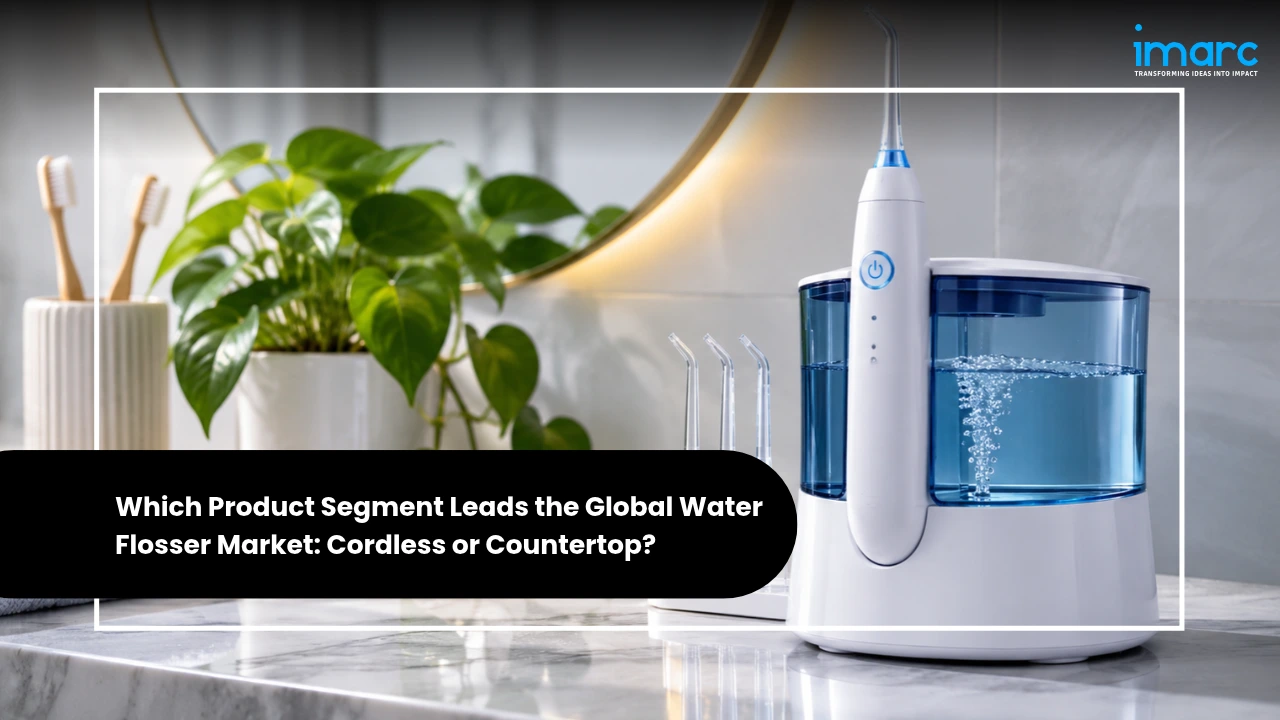
Water flossers used to be a niche gadget that a hygienist mentioned once a year. That is changing. According to IMARC Group, the global water flosser market grew from USD 1.06 Billion in 2025 to USD 1.13 Billion in 2026 and is projected to reach USD 1.64 Billion by 2034, at a CAGR of 4.74% during 2026-2034. That is roughly USD 510 Million of additional annual sales in eight years.
For a brand, retailer or investor, the real question is not whether the category will grow. It is where that growth will land: which buyers, which product formats, which price tiers, which channels and which countries. Get that right and water flossers become a high-loyalty device with recurring tip revenue. Get it wrong and you are fighting value brands on marketplaces.
This guide breaks the opportunity down so you can decide where to play.
How Big Is the Water Flosser Market and How Fast Is It Growing?
The global water flosser market is valued at USD 1.13 Billion in 2026, up from USD 1.06 Billion in 2025, according to IMARC Group's market report. It is projected to reach USD 1.64 Billion by 2034, growing at a CAGR of 4.74% during 2026-2034, with cordless devices and North America leading demand.
That growth rate is ahead of the broader category. IMARC Group expects the global oral hygiene market, valued at USD 54.0 Billion in 2025, to grow at a CAGR of 2.77%, and the electric toothbrush market, worth USD 3.8 Billion in 2026, at 3.76%. Water flossers are still only about 2% of oral hygiene spending, which is why the headroom matters.
What this means for you: the category is moving from a "my dentist told me to" purchase toward a mainstream routine, so share is still won on buyer education. A single global growth rate also hides very different speeds by region and by buyer type, which is where most planning mistakes start.
Why Is Demand for Water Flossers Still Rising?
Water flosser demand keeps rising because four forces work together: a huge global burden of gum disease, a stubborn gap between knowing you should floss and actually doing it, dentists actively recommending devices, and e-commerce making comparison and purchase easy. IMARC Group names e-commerce expansion and dental professional endorsement as core market drivers.
Oral disease is a mass-market problem. The World Health Organization estimates that oral diseases affect almost 3.5 billion people, about 45% of the global population, and that severe periodontal disease affects about 19% of people aged over 15, more than 1 billion cases. In the United States, 42% of adults aged 30 and older have periodontitis and about 8% have severe periodontitis.
The flossing gap is the opening. US government data shows periodontitis was most common, at 53.1%, among adults who did not floss regularly. Many people simply will not clean between their teeth with string, and a device that makes it easier turns a chore into a routine.
Dentists are the sales force. IMARC Group estimates that dental professionals drive 65-70% of consumer home care water flosser purchases through their recommendations.
E-commerce removes the friction. IMARC Group estimates that online sales account for 45-55% of consumer water flosser purchases globally by 2025.
Key Water Flosser Industry Trends to Watch
Self-Adjusting and Smart Devices
Users who find high pressure uncomfortable stay on low settings or quit, and brands now design around that. Waterpik's PROMAX, launched in March 2026, offers 10 intensity settings, five specialised tips, two user profiles and a SMARTADVANCE mode that raises intensity automatically over two weeks. In China, Xiaomi's Mijia Smart Water Flosser Pro, launched in July 2026, added a colour screen, app control and ten pressure levels.
What it means for you: smart features help most when they prove progress or build the habit, not when they add screens for their own sake.
Cordless Gets Smaller and Lasts Longer
Cordless water flossers already lead the market with a 52.8% share in 2025, according to IMARC Group. Development now focuses on battery life and pocketability. Oclean's A10 portable flosser, launched in the US in mid-2025, weighs 136 g and claims up to 40 days per charge. Xiaomi claims a 105-day battery for its new Mijia model.
What it means for you: battery life is now table stakes; differentiate on comfort, tips and proof.
Oral Care Sold Like Wellness
IMARC Group highlights social media and dental influencer marketing as a trend reshaping how consumers discover water flossers. Waterpik's June 2026 "Gum Gains" campaign for PROMAX, featuring a Peloton instructor and fitness creators, framed gum care as part of a progressive fitness routine.
What it means for you: younger buyers are a new acquisition pool, reached through creators rather than the dental chair.
Who Buys a Water Flosser and Why
Water flosser buyers fall into five groups: orthodontic patients, people with implants or bridges, gum disease patients, older adults and convenience seekers. IMARC Group reports that dental clinics account for 47.6% of application demand in 2025, which shows how strongly clinical need, not impulse, still shapes the category.
Braces and orthodontic users. IMARC Group describes water flossers as suited to cleaning around braces, implants, veneers, crowns and fixed bridges. Brackets and wires trap food where string floss struggles. Parents buy on the orthodontist's advice; the challenge is retention once the braces come off.
Implant, crown and bridge wearers. Restorations are expensive, so these patients protect them. They respond to clinical language and specialised tips, and replace tips reliably.
Gum disease patients. With 42% of US adults aged 30 and older living with periodontitis, this is the largest addressable group in mature markets. Usually told by a hygienist that their gums bleed, they want visible results quickly.
Older adults. Older adults carry the highest burden: NIDCR data shows total periodontitis of 59.8% among US adults aged 65 and older. The US population aged 65 and older rose to 61.2 million in 2024, or 18.0% of the population, up from 12.4% in 2004. Globally, the US Census Bureau projects the share of people aged 65 and older to nearly double from 10.5% in 2025 to 19.6% by 2060, and the United Nations expects people aged 65 and over to outnumber children under 18 by the late 2070s. Reduced hand dexterity makes a device easier than string floss.
Convenience and wellness seekers. The newest group is younger, discovers devices on social media and buys for design and portability. They are the easiest to acquire and the easiest to lose.
What it means for you: one product cannot serve all five groups. Your persona decides tips, price, channel and claims, and persona size differs sharply by country, which a global average will not show.
Which Regions Offer the Biggest Water Flosser Opportunity?
North America leads the water flosser market with a 36.8% share in 2025, followed by Europe at 27.4% and Asia-Pacific at 23.1%, according to IMARC Group. Asia-Pacific is the fastest-growing region, driven by China, South Korea and emerging Southeast Asian markets. The right region depends on whether you are chasing scale, growth or margin.
North America: The Professional Recommendation Market
North America is the most developed market, built on regular dental visits. IMARC Group's United States oral hygiene market report values the wider US category at USD 9.66 Billion in 2026. Waterpik water flossers were named among the drivers of Church & Dwight's US organic growth in Q3 2026.
What it means for you: this is a brand and evidence market, where a dental programme and clinical proof matter more than price.
Europe: High Awareness, Habit Still to Build
IMARC Group describes Europe as a mature market with high oral care awareness and professional recommendation infrastructure. Growth depends on turning awareness into daily use.
What it means for you: Europe rewards steady, pharmacy-led and dentist-led distribution rather than heavy discounting.
Asia-Pacific: The Growth Engine
Growth is led by e-commerce, rising oral health awareness and fast-moving local device brands such as Xiaomi and Oclean. IMARC Group links Asia-Pacific's acceleration closely to e-commerce. In Japan, both Philips and Panasonic added oral irrigator models in 2025-2026.
What it means for you: Asia-Pacific offers the fastest growth but the fiercest price and feature competition, so entry needs a sharp cost base and marketplace skills.
Latin America and Middle East and Africa: Early-Stage Markets
Together these regions account for about 12.7% of the market.
What it means for you: dental partnerships and affordable cordless models matter most here, and country-level data is essential because demand is concentrated in a few urban markets.

Which Water Flosser Segments Are Growing Fastest?
Cordless devices lead with a 52.8% share in 2025, followed by countertop units at 33.4% and other formats at 13.8%, according to IMARC Group. The application and channel shifts beneath that split change the economics.
Cordless: the volume and entry segment. Cordless suits small bathrooms, travellers and first-time buyers, and most new launches land here, so price competition is intense.
Countertop: the clinical workhorse. Countertop units still win on pressure range, reservoir size and shared households. Waterpik's PROMAX, a countertop model with a reservoir rated for over 90 seconds, shows the format moving upmarket on automation rather than size.
Dental clinic versus home care. Dental clinics account for 47.6% of application demand in 2025, according to IMARC Group. Our reading: home care is where growth from new buyers will come, but the clinic remains the gatekeeper that starts most purchases.
Online versus offline. With online at an estimated 45-55% of consumer purchases, according to IMARC Group, marketplaces now decide which brands get compared. Pharmacies still matter for trust and older shoppers.
What it means for you: the format, application and channel splits move at different speeds in different countries, so a product plan built on global shares can over-invest in the wrong format.
Pricing, Premiumization and the Dentist Recommendation Effect
Water flosser pricing is splitting into two tiers. Premium devices compete on clinical results, automation and professional acceptance, while value brands compete on price and portability. Waterpik's PROMAX carries an MSRP of USD 149.99, while Xiaomi's app-connected Mijia Smart Water Flosser Pro launched in China at 399 yuan, about USD 58.
The middle is being squeezed. In its annual report for 2025, Church & Dwight said its Waterpik business had seen customer distribution losses and lower consumer demand, mainly because consumers were spending less and more were choosing value brands amid inflation.
Premium wins when it is provable. By Q3 2026, Church & Dwight reported that Waterpik had delivered double-digit sales growth and was gaining share in 2026, after the PROMAX launch and a portfolio reset. Waterpik states that PROMAX is accepted by the American Dental Association. Automation, evidence and professional acceptance justify a higher price; cosmetic upgrades do not.
The dentist recommendation effect. Because dental professionals drive an estimated 65-70% of home care purchases, according to IMARC Group, the typical journey starts in the chair and finishes online, where online sales make up an estimated 45-55% of consumer purchases. Panasonic took this further in October 2026 with a dental-clinic-only "Doltz Dentistry" series in Japan that includes an oral irrigator. The online shift is visible at company level too: Church & Dwight reported global online sales at 25.9% of total consumer sales in Q3 2026, with e-commerce revenue up 20%, a company-wide figure rather than water flossers alone. Brands without a dental programme pay more for every online customer.
Regulation sets the floor, not the ceiling. In the US, 21 CFR 872.6510 defines an oral irrigation unit as an AC-powered device delivering a pressurized stream of water between the teeth. It is Class I, subject to general controls and exempt from 510(k) premarket notification within the limits of 21 CFR 872.9. The FDA classification database lists the device under product code EFS, notes that it is not GMP exempt, and requires establishment registration. Our reading: "exempt" does not mean unregulated, and sellers of battery-powered imports should confirm classification, listing and quality system obligations before launch.
What it means for you: choose a clear price position, provable premium or good-enough value, and use replacement tips to lift lifetime value. Price bands differ widely by country and channel, so one global benchmark will mislead. If you are setting price points for a launch, speak to an IMARC Group analyst about pricing and channel data for your markets.
What Are the Biggest Risks in the Water Flosser Business?
The main risks are consumer trade-down to value brands, a persistent habit gap that leads to device abandonment, scrutiny of clinical claims, and tariff and sourcing exposure. Church & Dwight stopped importing substantially all Waterpik flossers from China into the US to manage tariff exposure, which shows how real the supply chain risk is.
Trade-down hits discretionary devices first. A water flosser is easy to postpone when budgets tighten.
The habit gap is hidden churn. Abandonment after a few uncomfortable uses rarely shows up in sales data until replacement-tip revenue stalls.
Claims need discipline. Many plaque and bleeding claims rest on company data on file. Tie claims to specific study conditions and never imply that a device treats disease.
Sourcing and tariffs can move costs quickly. Tariff changes can reshape landed cost within a season, and their timing differs by country, another reason headline growth rates are not enough for a sourcing decision.
What it means for you: build your plan around comfort at first use, substantiated claims and a diversified supplier base before you scale media spend.
Who Is Winning in the Water Flosser Market?
IMARC Group profiles key players including Water Pik Inc. (Church & Dwight Co. Inc.), Koninklijke Philips N.V., The Procter & Gamble Company, Aquapick, Hydro Floss (Oral Care Technologies Inc.), Shenzhen Relish Technology Co. Ltd., Ginsey Home Solutions, Oral Breeze and ToiletTree Products Inc. Xiaomi, Oclean and Panasonic are pushing hard on features and price.
Our reading: Waterpik wins on professional trust and automation, oral care majors on toothbrush bundling and retail reach, and Asian brands on cheap smart features. The open space for challengers is persona-specific products, such as orthodontic or senior-friendly devices, backed by a dental programme.
Recent News and Mega Announcements in the Water Flosser Market
The last 18 months show three patterns: premium brands are using automation and professional channels to defend value, Asian device makers are pushing smart features at low prices, and inflation and tariffs are reshaping portfolios and supply chains. Here is the timeline, latest first.
- October 2026: Church & Dwight reported Q3 2026 results in which Waterpik delivered double-digit sales growth and was gaining share in 2026, with Waterpik water flossers named among the drivers of US organic growth.
- October 2026: Panasonic announced its "Doltz Dentistry" series of dental-clinic-exclusive models in Japan, including an oral irrigator and its first plaque-detection camera brush, with orders starting from late October 2026.
- July 2026: Xiaomi launched the Mijia Smart Water Flosser Pro in China at 399 yuan, with a colour screen, app control, ten pressure levels and a claimed 105-day battery.
- June 2026: Waterpik launched its "Gum Gains" campaign for PROMAX, featuring a Peloton instructor and fitness creators.
- March 2026: On World Oral Health Day, Waterpik introduced the PROMAX water flosser with SMARTADVANCE mode, QUIETPULSE noise reduction, 10 intensity settings and five tips.
- February 2026: Church & Dwight's annual report for 2025 said inflation had driven Waterpik consumers toward value brands and that the company had stopped importing substantially all Waterpik flossers from China into the US.
- September 2025: Philips Japan launched the Sonicare Compact Flosser 1000 oral irrigator alongside five new electric toothbrushes.
- August 2025: Oclean launched its A10 portable water flosser using air-and-water "AirPump" technology.
What These Moves Mean for Your Business
Automation is the new premium. Solving the "users stay on low pressure" problem is a stronger story than adding more settings, and it is what helped Waterpik return to growth.
The dental channel is being formalised. Panasonic's clinic-only line treats the dental office as a sales channel, not just a source of recommendations, and others may follow.
Smart features are getting cheap. When app control ships at about USD 58, it stops being a premium differentiator.
Practical Recommendations by Business Type
- For premium oral care brands: Build a dental programme before scaling paid media. With dental professionals driving an estimated 65-70% of home care purchases, according to IMARC Group, hygienist education, sampling and clinical evidence are your most efficient acquisition spend.
- For value and D2C brands: Win on marketplaces with proof, not adjectives. Ratings and a comfortable first use matter more than specifications.
- For retailers and e-commerce category managers: Range by persona (orthodontic, implant, senior, travel) and give replacement tips prominent space.
- For dental distributors: Treat the clinic as a point of sale, as Panasonic does, and bundle devices with patient education.
- For investors and contract manufacturers: Look at persona-specific challengers and at diversified, non-China production capacity, given tariff exposure. Adjacent IMARC reports on the dental floss market and floss picks market show how large the wider interdental category is.
These are strategic starting points, not guaranteed outcomes. Your final decision should rest on country-level and segment-level data for your specific market.
Conclusion
The water flosser market is a USD 1.13 Billion category in 2026 heading to USD 1.64 Billion by 2034, according to IMARC Group, growing faster than oral hygiene overall. The drivers are durable: billions of people with oral disease, widespread gum disease, ageing populations and a generation that treats oral care as wellness.
But the buyer is changing. Purchases start in the dental chair and finish online, cordless devices lead, and consumers are splitting between provable premium and good-enough value. Brands that pick a persona, earn professional trust and design for lasting habits will capture the growth. To see how the numbers apply to your market, download a sample of IMARC Group's Water Flosser Market report.
Our Clients










Contact Us
Have a question or need assistance?
Please complete the form with your inquiry or reach out to us at
Phone Number
+91-120-433-0800+1-201-971-6302
+44-113-547-7077
Previous Post

A Mobile Case and Cover Manufacturing Plant Setup in India produces protective and decorative accessories for one of the world's largest smartphone markets.
A Non-Woven Bag Manufacturing Plant Setup in India converts polypropylene (PP) spunbond non-woven fabric into reusable carry bags for retail, grocery, apparel, pharmacy, food takeaway, promotional, and gifting uses.
A Stainless Steel Faucet Manufacturing Plant Setup in India serves one of the fastest-growing segments of the bath and kitchen fittings market. Stainless steel faucets, made mainly from SS304 and SS316 grades, include kitchen sink mixers, basin mixers, pillar taps, bib cocks, angle valves, shower mixers, and sensor taps.
The Japan Luxury Watch Market is a mature, craftsmanship-led and steadily expanding opportunity for brands that can match local expectations on quality, service and retail presence. IMARC Group reports that the market grew from USD 3.4 Billion in 2025 to USD 3.7 Billion in 2026 and is expected to reach USD 6.3 Billion by 2034, exhibiting a CAGR of 6.70% during 2026-2034.
A Water Filter Manufacturing Plant Setup in India serves one of the country's most essential consumer and industrial needs. Water filters remove sediment, chlorine, odour, organic compounds, dissolved salts, and microorganisms from drinking and process water using a combination of sediment cartridges, activated carbon filters, ultrafiltration and reverse osmosis membranes, and ultraviolet disinfection.
The knee pad market is expanding steadily as workplace safety rules, sports participation and preventive healthcare habits push protective knee gear into mainstream use. According to IMARC Group, the market grew from USD 6.4 Billion in 2025 to USD 6.6 Billion in 2026 and is projected to reach USD 8.4 Billion by 2034, exhibiting a CAGR of 3.00% during 2026-2034.
A Cardboard Boxes Manufacturing Plant Setup in India serves one of the country's most widespread packaging needs, supplying shipping cartons, retail packs, and product boxes to food and beverage, FMCG, pharmaceuticals, electronics, textiles, e-commerce, and industrial users.
An Apparel Manufacturing Plant Setup in India builds on one of the country's oldest and largest industries. India has a complete textile value chain, from cotton and man-made fibres to yarn, fabric, processing, and garment making, along with a large skilled workforce and a fast-growing domestic consumer market.
The India packaged atta market is moving from a niche convenience purchase to a core household staple category. Wheat flour has long been milled at neighbourhood chakkis or bought loose, yet sealed, branded atta is steadily taking over kitchens in cities and increasingly in smaller towns. According to IMARC Group, the market reached INR 95.1 Billion in 2025 and is projected to reach INR 286.4 Billion by 2034, growing at a CAGR of 12.64% during 2026-2034.
An Automotive Clutch Manufacturing Plant Setup in India serves one of the world's largest vehicle markets. India produces tens of millions of two-wheelers, passenger cars, commercial vehicles, and tractors every year, and the vast majority use a clutch to connect and disconnect engine power from the transmission.
The Indian pre-school/childcare market has moved from a support service for working parents into a mainstream household education decision, and the numbers reflect that shift. According to IMARC Group, the market grew from USD 5.1 Billion in 2025 to USD 5.9 Billion in 2026 and is projected to reach USD 12.0 Billion by 2034, expanding at a CAGR of 9.16% between 2026 and 2034.
Setting up a Toilet Paper Manufacturing Plant in India is a bet on one of the country's most under-penetrated hygiene categories. Per capita tissue consumption in India is estimated at under 0.2 kg a year, against a global average of more than 5 kg, yet demand is rising quickly as hotels, offices, hospitals, malls, airports, and urban households adopt Western-style hygiene habits.
The global Bluetooth speaker market is expanding at a rate that most consumer electronics categories no longer achieve, but the growth is being earned under unusually tight margins. According to IMARC Group, the market reached USD 19.5 Billion in 2025 and is projected to reach USD 66.1 Billion by 2034, a CAGR of 14.10% during 2026-2034.
A Glass Bottle Manufacturing Plant Setup in India serves some of the country's steadiest consumer industries. Glass bottles and jars package liquor, beer, soft drinks, sauces, pickles, pharmaceuticals, cosmetics, and perfumes, and brand owners value glass for being inert, impermeable, premium in appearance, and endlessly recyclable.
A Razor Manufacturing Plant Setup in India targets a product that hundreds of millions of people buy again and again. Razors range from traditional double-edge safety blades used by barbers and in rural markets to disposable twin- and triple-blade razors and premium multi-blade cartridge systems.
Setting up a Ceiling Fan Manufacturing Plant in India is a practical, demand-backed venture in one of the world's largest fan markets. Long summers across most of the country, steady housing construction, near-universal household electrification, and a regulatory push toward energy-efficient BLDC models keep demand both large and upgrading.
Adult incontinence products, such as pant-style and tape-style diapers, underpads, and insert pads, are absorbent hygiene products made from fluff pulp and super absorbent polymer wrapped between soft nonwoven fabrics and a leak-proof backsheet, with elastics and fasteners for a secure fit.
The product is a dry, ready-to-chew blend of cut and processed areca nut with catechu, slaked lime, cardamom, flavours, and sweeteners, sold in small pouches, tins, and jars as an after-meal mouth freshener across India.
Male latex contraceptives are thin sheaths made by dipping glass formers into compounded natural rubber latex, curing the film in ovens, stripping and washing the pieces, and then testing every single one electronically for holes before lubricating and sealing it in foil.
Disposable paperboard plates are pressed from food-grade board, often laminated with silver foil paper or coated for grease and moisture resistance, and are used at weddings, festivals, religious gatherings, street food stalls, canteens, caterers, quick-service restaurants, and homes.
The US handicrafts market has moved from the margins of the hobby and gift economy into one of the more resilient corners of American consumer spending. According to IMARC Group, the market stood at USD 345.24 Billion in 2025, rose to USD 372.05 Billion in 2026, and is projected to reach USD 676.82 Billion by 2034, expanding at a CAGR of 7.77% during 2026-2034.
A pocket lighter is a small plastic or metal reservoir of liquefied butane fitted with a valve, a flame adjuster, and an ignition system, either a steel wheel striking a flint or a piezoelectric spark, that releases and lights a controlled flame at the press of a button.
The Saudi Arabia luxury apparel market has moved beyond the volume-led phase of its expansion. IMARC Group values the market at USD 752.2 Million in 2025, with a forecast of USD 1,102.8 Million by 2034, implying a CAGR of 4.34% during 2026-2034.
Cigarettes are composed of finely cut tobacco leaf rolled into a paper cylinder, often with a filter at one end. In India, the demand for domestic cigarette production has grown due to rising consumer markets and diminishing reliance on imports.
The Saudi Arabia kitchen chimney market is moving decisively upmarket, as households stop treating ventilation as a hidden utility and start specifying it as part of kitchen design, indoor air quality and resale value.
Faucets, also called taps or CP fittings, control the flow of water in kitchens, bathrooms, and commercial washrooms. Most quality faucets in India are made from brass that is forged or cast, precision machined, polished, and chrome plated, then fitted with ceramic disc cartridges, aerators, and handles, while lower-priced ranges use stainless steel, zinc, or plastic.
Toys range from moulded plastic figures, vehicles, and building blocks to ride-on cars, soft plush toys, educational and STEM kits, electronic and remote-controlled toys, board games, and puzzles.
The UK Furniture Market is experiencing a period of selective growth, where headline expansion masks significant divergence at the segment level. According to IMARC Group, the market was valued at USD 22.78 Billion in 2025 and is projected to reach USD 32.40 Billion by 2034, growing at a CAGR of 3.87% (2026–2034).
Fast moving consumer goods are everyday products that sell quickly at relatively low prices, such as detergents, dishwash products, surface cleaners, soaps, shampoos, toothpaste, packaged foods, and beverages.
Footwear covers sports shoes, sneakers, leather shoes, sandals, slippers, safety boots, and school shoes. India is the world's second-largest footwear producer, making about 2.9 billion pairs a year, or roughly 12.5% of global output, and its domestic market was valued at about USD 20.67 billion in 2025.
Washing powder is one of the most widely used household products in India, bought by almost every family for hand washing and, increasingly, for washing machines.
Energy meters measure the electricity used by every home, shop, factory, and farm connection, and they sit at the centre of India's effort to cut distribution losses and modernise its power sector.
Sanitary napkins are an essential hygiene product for hundreds of millions of women and girls in India, and one of the fastest-growing categories in personal care.
The Healthy Snacks Market has moved decisively from a niche wellness category to a mainstream pillar of the global food and beverage industry, driven by a fundamental and durable shift in how consumers around the world think about what they eat between meals.
India is one of the world's largest producers and consumers of textiles, and it generates around 7 million tonnes of textile waste every year, from cutting scraps and yarn waste in factories to old clothes and household textiles.
India has more than a billion mobile connections, creating a large and recurring market for chargers, cables, protective cases, screen guards, earbuds and other mobile accessories.
The television has quietly become the most connected screen in many Indian homes. Streaming apps, cricket in 4K, YouTube, and voice-controlled content have turned the TV into a smart device, and falling prices, a lower GST rate, and easy online buying have brought smart TVs within reach of millions of first-time buyers.
India is sleeping better, or at least spending more to try. Rising incomes, smaller urban homes, a booming hotel sector, and growing awareness of back health have pushed households away from cotton gaddas toward engineered foam, spring, and hybrid mattresses.
Setting up a Diaper Manufacturing Plant in India is a high-speed converting venture powered by rising hygiene awareness, growing disposable incomes, low current penetration, and expanding demand across baby and adult categories.
Setting up a Liquid Detergent Manufacturing Plant in India is a formulation-and-blending venture with relatively accessible entry capital, powered by rising hygiene awareness, a steady shift from powders to liquids, expanding modern retail, and growing demand across laundry, dishwash, and household cleaning categories.
Setting up a Kraft Paper Manufacturing Plant in India is a high-demand, sustainability-driven venture, powered by the country's booming e-commerce, packaging, and corrugated-box industries. Kraft paper is the base material for corrugated boxes and packaging, and demand is rising as businesses shift from plastic to recyclable paper-based packaging.
Setting up a Garment Manufacturing Plant in India is a high-demand, employment-generating venture, powered by the country's vast textile base, skilled workforce, and growing role as a global apparel sourcing hub.
The Luxury Fashion Market reached USD 261.0 Billion in 2025 and is projected to reach USD 341.0 Billion by 2034, growing at a CAGR of 3.02% (2026–2034).
Setting up a Container Manufacturing Plant in India is a capital-efficient, high-demand venture powered by the country's fast-growing food, pharmaceutical, FMCG, and industrial packaging sectors.
Bath soap is a body wash product developed primarily to provide personal care. It is made by the alkali saponification, a method that generates soap salts and glycerin in the soap via a reaction between fats or oils and an alkali, such as sodium hydroxide. Bath soaps are made by separating out dirt, sweat, excess oil and microorganisms while helping to remove dirt, sweat, excess oil and water soap from the skin to avoid dirt, extra oil and bacteria and viruses while preserving the balance of both cleansing the skin and compatibility between the application.
Waste tyre recycling can be defined as the organized collection, treatment, and recovery of end-of-life tyres (ELTs) to produce new materials, energy sources, or secondary raw materials. Tyres are made up of vulcanized rubber, steel reinforcement, textiles, and chemical compounds, making them non-biodegradable materials that cannot be easily decomposed.
Wallpaper is a decorative and practical wall covering material used to cover interior surfaces for aesthetic purposes, protection, and ambiance. It is usually made from paper, vinyl, non-woven fibers, textile backing, or a combination of materials, printed or embossed with designs, textures, or solid colors.
The Australian footwear industry is experiencing a remarkable transformation as it navigates a confluence of shifting consumer preferences, technological advancements, and sustainability imperatives.
Tennis ball production is the process of making standardized balls for the game of tennis. The process involves making balls with specific performance and bounce features. A tennis ball is made up of a hollow rubber core that is filled with pressurized air. The core is then covered with a woven felt material.
Soap is a type of cleaning agent made by the chemical reaction of fats or oils and an alkali in a process known as saponification. The chemical reaction transforms triglycerides into soap, also known as fatty acid salts, giving these substances the properties of a surfactant, allowing the substance to be used for the removal of dirt, oil, and bacteria from surfaces.
The size of the global hair oil market has undergone significant transformation with increasing consciousness among consumers to adopt hair care as part of their personal wellness, beyond the realm of mere beauty. Hair oils, being long considered one of the traditional grooming essentials, have transformed into complex formulations to suit various hair types and scalp conditions. Over the past years, lifestyle change, growing awareness related to scalp health, and the rising demand for natural beauty have significantly impacted the consumption pattern in the hair oil segment.
The global online grocery market research landscape has undergone unprecedented changes in recent years, with an upward trend marking the way consumers engage with food retail. There has been a significant expansion in the size of the online grocery market, fuelled by changing consumer preferences, technological advances, and increased convenience associated with digital shopping. Households are showing a growing reliance on online platforms for regular essentials more than ever, making the sector a cornerstone of modern retail.
The UAE’s pet food sector has emerged as one of the most dynamic and lifestyle-influenced consumer categories. While historically smaller and more niche compared to mainstream food and beverage markets, the industry has grown in relevance due to changing demographics, international influences, and shifting consumer priorities. Residents across major cities are embracing pets as companions for emotional well-being and as part of a balanced lifestyle.
The Saudi Arabia road freight transport market represents one of the key building blocks of the economic infrastructure in the Kingdom, providing for cargo movement across various domestic supply chains. It also involves road freight operations, which allow for the distribution of goods-from manufactured goods, consumer goods, and industrial supplies to agricultural produce-across its large and wide geography.
The Saudi Arabia luxury market represents one of the most dynamic and rapidly evolving segments within the Middle Eastern premium retail landscape. As the Kingdom undergoes comprehensive economic diversification and social transformation, luxury consumption patterns are experiencing unprecedented shifts that reflect changing demographics, evolving consumer preferences, and ambitious national development goals.
The Philippines retail sector has become a pluralistic and dynamic environment where old-fashioned stores coexist with high-tech contemporary formats enabled by digital strength. The Philippines retail sector market size reached USD 648.2 Billion in 2025. The market is projected to reach USD 1,223.1 Billion by 2034, exhibiting a growth rate (CAGR) of 7.31% during 2026-2034.
Polyester fabric is a type of synthetic fabric made from polyester fibers. The main source of polyester fibers is petrochemical polymers like polyethylene terephthalate. Polyester fabric is made from processing chips of polymers to produce continuous filaments and staple fibers. The processing of polymers involves heating and melting chips of polymers made from petrochemical materials to produce continuous filaments and staple fibers.
India's gaming industry is rapidly evolving into one of the largest and most dynamic markets in the world. Driven by the increasing adoption of smartphones, affordable internet, and a tech-savvy youth population, gaming is becoming a mainstream form of entertainment.
The beauty landscape in India is undergoing a major transformation propelled by creativity, research, and technology. The India cosmetics market size was valued at USD 15.46 Billion in 2025. Looking forward, the market is expected to reach USD 25.39 Billion by 2034, exhibiting a CAGR of 5.7% from 2026-2034.
The drivers for changing India's textile sector include sustainability, modernization of production, and the introduction of advanced chemical solutions. The India textile market size was valued at USD 152.40 Billion in 2025. The market is projected to reach USD 213.75 Billion by 2034, exhibiting a CAGR of 3.83% from 2026-2034. It places the India textile chemicals market at an important position in this evolution, enabling everything from fiber processing to finishing.
India's consumer landscape is experiencing a profound transformation, driven by rapid digital adoption, evolving consumer preferences, and robust infrastructure development. The shift from traditional brick-and-mortar shopping to digital platforms represents more than a mere change in purchasing channels—it signifies a fundamental restructuring of how businesses engage with consumers and how millions of Indians access goods and services.
The Saudi Arabia deodorants market size continues to evolve as consumers embrace modern grooming habits, premium personal care products, and innovative hygiene solutions. With rising awareness of body care, fragrance layering, and daily freshness, deodorants have become an essential part of both men’s and women’s personal grooming rituals.
Pet foods consist of commercially processed foods that contain nutritional requirements tailored according to their consumption by domesticated pets like dogs, cats, birds, fish, and small animals. The foods contain planned nutritional compositions, such as ingredients like protein, carbohydrate, fat, vitamins, and minerals.
Perfume is a scented liquid composition that contains a mixture of fragrance chemicals, essential oils, aroma chemicals, fixatives, and solvents that are formulated for a pleasing and distinct fragrance emission upon application on human skin or on objects.
Technological advancements and shifting consumer expectations have caused the worldwide washing machine industry to drastically change. Washing machines are becoming indispensable parts of contemporary homes, smoothly integrating into smart home ecosystems from conventional semi-automatic models to fully linked, smart appliances.
Paper plates are disposable food containers, also referred to as tableware, and are made mostly from paperboard, pulp, and materials that are derived from fibers. These plates are designed to be convenient, hygienic, and easy to handle while being moisture and grease-proof, making them ideal for packing different food varieties, ranging from dry foods to moist and greasy food items.
The GCC cigarette lighter market is undergoing a steady phase of expansion due to evolving consumer habits, sustained product demand, and widening distribution channels across the region. In 2024, the GCC cigarette lighter market was valued at USD 197 Million. A key factor shaping industry performance is the rise in convenience-led purchases, driven by widespread retail penetration, duty-free availability, and the continued popularity of smoking-related accessories.
Paint brushes are hand-operated applicator tools, designed and manufactured with great precision, utilizing the capabilities of these tools to apply, spread, and manage liquid paint, along with other forms of paint such as varnishes, stains, lacquers, and surface finishes, onto a desired surface. Paint brushes are commonly manufactured using a series of components, including a handle, a ferrule, and natural or man-made hairs, or a combination of these two. They are also manufactured and designed with different shapes and sizes, according to the viscosity and texture of the paint.
Pan masala is a ready-to-use chewing mixture that is traditionally used as a mouth freshener as well as a digestive aid and is of South Asian origin. It is prepared by mixing different components such as areca nut, catechu, slaked lime, spices, flavoring agents, sweet agents, and aroma agents in specific proportions. It is usually packed ready for use and is different from the betel quid variant that is prepared by using fresh betel leaves. Contemporary formulations of pan masala aim to achieve consistency, shelf life, and standardized flavor so that it can be mass-produced and marketed.
Paper bags can be defined as the final product made from paper-based material such as kraft paper, recycled paper, or specialty paper, used for packing or storing products. Paper bags come in different shapes and sizes with varying strength, ranging from flat-bottom paper bags, gusseted paper bags, and handled paper bags. Paper bags can be biodegradable, can be recycled, and can be made from renewable resources.
The Brazil cosmetics products market represents one of the most vibrant and diverse beauty sectors in Latin America, reflecting a deep-seated cultural emphasis on personal appearance, wellness, and self-care. The Brazilian consumer has long been known for a keen taste for grooming, fashion, and aesthetics, which logically applies to the cosmetics industry. Driven by an expanding middle-class population, an increase in urbanization, and increasing awareness about wellness-oriented lifestyles, the market continues to evolve.
The commercial landscape across the globe is undergoing a seismic shift, driven by technology, changing consumer expectations, and macroeconomic volatility. This transformation is particularly pronounced in high-density, globally connected urban centres like Singapore. Historically a powerhouse of trade and luxury commerce, the nation is now navigating an intricate matrix of digital disruption and soaring operational pressures.
The India confectionery industry has emerged as one of the most dynamic segments within the country's food and beverage sector. Driven by changing consumer preferences, rising disposable incomes, and evolving lifestyles, the market continues to witness remarkable transformation across urban and rural landscapes.
As disposable incomes rise, households are diversifying across investment-grade gold, diamond-studded jewellery, and designer ornaments. Gold, in particular, holds unmatched cultural and economic importance, sustaining demand even through economic fluctuations. Recent indicators show how this cultural attachment continues to translate into measurable investment momentum. Gold demand stood at 135 tonnes in Q2 2025, with a full-year forecast between 600 and 700 tonnes. By mid-2025, India’s total gold holdings reached 66.7 tonnes, with two tonnes added in June and nine tonnes in the first half of the year.
Mobile accessories encompass a wide range of auxiliary products that are intended to complement, protect, enhance, or extend the functional capabilities of smartphones and other portable communication devices. Examples of these accessories include protective cases, screen guards, chargers, power banks, earphones, wireless earbuds, smart wearables, mounts, portable speakers, and connectivity adapters. They enable better usability, device safety, personalization, convenience, and integration with digital ecosystems. Mobile accessories are made from a variety of materials and technologies to meet various performance, durability, and design requirements for different groups of users.
Japan boasts a long and rich culture of traditional board games such as Go and Shogi, which have long been a fundamental component of its culture. The current board game market in Japan, though, is a vibrant mix of these indigenous games and an incredibly diverse range of modern games based on both Western and domestic design schools.
The tobacco industry has long been a cornerstone in world trade and consumer culture, shaping the courses of economies, employment landscapes, and industrial practices for centuries. Even in today's world, with growing awareness regarding health and sustainability, tobacco remains an imposing force in global commerce.
The Australia sportswear industry is experiencing unprecedented momentum, transforming into a multi-billion-dollar powerhouse where fashion, fitness, and lifestyle converge. As health consciousness sweeps the continent and athleisure becomes a wardrobe staple, the Australian market leads a global revolution in performance apparel.
Japan's luxury apparel industry has traditionally been characterized by its profound respect for craftsmanship, quality, and cultural refinement. Japanese consumers have a reverence for art and nuance, preferring items that reflect precision and enduring design over short-lived trends. Over the past decade, Japanese luxury fashion has transcended conventional retailing experiences and assumed a contemporary identity that coalesces international influences with domestic sentiments.
A mattress is a cushioned structure intended to support the human body, either while sleeping, resting, or for therapeutic purposes. It is typically made up of comfort layers, including foam, latex, fiber, or gel, combined with a supportive core, like innerspring coils, high-density foam, or hybrid constructions. Mattresses are designed to evenly distribute body weight to relieve pressure points and ensure proper spinal alignment.
Liquid detergent is a formulated cleaning solution comprising surfactants, solvents, builders, enzymes, pH stabilizers, perfumes, and other additives, which are collectively used for removing dirt, stains, and oils from fabrics, dishes, and different surfaces. Unlike powdered detergents, liquid detergents dissolve immediately in water, allowing even distribution during washing and effective performance in both hot and cold water.
The Japan personal luxury goods industry stands as one of the world’s most crucial and dynamic markets, consistently ranking among the top three globally, alongside the United States and China. In 2024, Japan personal luxury goods market size reached USD 32,060.65 Million in 2024.
The luxury watch industry represents one of the most enduring segments of the global fashion and lifestyle market. Combining precision engineering with timeless craftsmanship, luxury watches continue to hold strong appeal among high-net-worth individuals, collectors, and aspirational consumers. The global luxury watch market size reached USD 29.12 Billion in 2024, reflecting steady growth driven by premiumization, rising consumer demand in emerging economies, and the enduring value of heritage timepieces.
The Vietnam athleisure market stands at a pivotal juncture, experiencing remarkable transformation driven by evolving lifestyles, rising health consciousness, and rapid urbanization. As Vietnamese people are increasingly prioritizing wellness and seeking versatile clothing that seamlessly transitions from gym workouts to casual social settings, the demand for activewear trends has surged dramatically. With lifestyle apparel Vietnam witnessing unprecedented growth and fitness clothing demand reaching new heights, both international brands and homegrown labels are competing vigorously to capture market share in this dynamic sector.
The Philippines conveyor belt market is picking up speed, powered by the country’s industrial growth and focus on automation. According to the IMARC Group, the market reached USD 31.23 Million in 2024, reflecting notable growth across manufacturing, mining, logistics, and food processing. As industries modernize, the need for efficient material handling systems is creating strong momentum for both domestic and imported conveyor solutions.
The US retail market is undergoing a profound transformation, fueled by the integration of artificial intelligence (AI) across multiple business operations. From personalized consumer engagement to predictive inventory management and dynamic pricing strategies, AI is redefining how retailers operate, compete, and deliver value. Increasing consumer expectations for seamless, personalized, and efficient shopping experiences are prompting businesses to embrace AI-driven solutions to optimize performance, reduce costs, and enhance decision-making.
The global beauty and personal care products market is undergoing a profound transformation, driven by technological innovation, evolving consumer expectations, and sustainability-focused practices. Increasing consumer awareness of health, wellness, and ethical sourcing is compelling companies to rethink traditional formulations and adopt advanced manufacturing techniques. Businesses are now integrating biotechnology, artificial intelligence, and data-driven insights into product development, distribution, and marketing strategies.
The Philippines board game market is on a winning streak, fueled by a growing passion for social play, learning, and creative pastimes. According to IMARC Group, the market reached USD 83.39 Million in 2024, reflecting how board gaming is becoming a favorite form of entertainment across generations. Family games, strategy and role-playing titles, and educational options for kids are gaining steady traction, alongside collectible and pop culture–inspired editions.
The Australian fantasy sports industry is entering a phase of heightened momentum, with market size for 2024 reaching approximately USD 810.6 Million, as detailed in a recent report. This market is forecast to grow to USD 2,180.2 Million by 2033, representing a compound annual growth rate (CAGR) of around 10.4 % from 2025 through 2033 .
Australia's textile recycling sector is experiencing a technological renaissance, with 40% of SMEs currently adopting artificial intelligence (AI), marking a 5% increase compared to the previous quarter (July-Sept 2024). The percentage of businesses unaware of how to utilize AI has decreased by 2% to 21%.
Containers are standardized, tough, watertight containers for efficient storage and transportation of goods by ship, rail, and truck without the need for handling the cargo itself. They are the lifeblood of global trade and logistics, allowing for effective intermodal transport. Constructed from high-strength steel, aluminum, or composite materials, they are designed to withstand rigorous marine and environmental elements. The most common types are dry storage containers for general cargo; however, there are also refrigerated (reefers) for perishables, tank containers for liquids and gases, open-top and flat-rack for oversized equipment, and high-cube for voluminous cargo. Standardization, mainly through ISO specifications, allows for seamless compatibility and efficiency throughout global logistics systems.
Carpet is a textile floor covering made of a pile, tufts of yarn or fiber, sewn to a backing for dimensional stability. Carpets are manufactured in various construction forms: tufted (universal across the world, yarn punched through a primary backing and treated with secondary backing), woven (Wilton and Axminster, highly valued for durability and pattern intricacy), needle-felt (bonded fibers for industrial applications), and knotted (hand-made rugs).
Aloe vera gel is a natural concentrate obtained from the parenchyma of the inner leaf of Aloe barbadensis miller, which is valued for its therapeutic, nutritional, and cosmetic uses. The gel mostly comprises water (more than 95%) and polysaccharides, vitamins, minerals, amino acids, enzymes, and antioxidants responsible for its soothing, moisturizing, and healing actions. Renowned for its anti-inflammatory, antimicrobial, and skin-rejuvenating properties, the aloe vera gel finds broad application in personal care cosmetics, pharmaceuticals, food supplements, and beverages.
Aloe vera is a perennial fleshy succulent plant of the species Aloe barbadensis miller, grown worldwide for its nutritional, medicinal, and cosmetic benefits. It has two primary constituents: the transparent inner gel consisting mainly of polysaccharides, vitamins, enzymes, and amino acids; and the yellowish latex, consisting of anthraquinones with powerful laxative properties. Aloe vera gel is highly prized for its emollient, moisturizing, and healing properties and is a common ingredient in skincare, personal care, and pharmaceutical products.
Air purifiers are appliances that enhance indoor air quality by eliminating pollutants like dust, allergens, smoke, volatile organic compounds (VOCs), and microbial particles. They work on various technologies such as HEPA (High-Efficiency Particulate Air) filters, activated carbon filters, UV-C light, ionizers, and photocatalytic oxidation. Their major components are usually fans or blowers, filter media, sensors, electronic controls, and metal or durable plastic housings. Some of the crucial characteristics of air purifiers include efficiency of filtration, airflow, noise levels, power consumption, and filter material durability.
Air coolers are evaporative coolers based on the principle of water evaporation, utilizing a fan or blower to blow cooled air, as opposed to air conditioners, which function based on refrigerant and compressor principles. Air coolers are designed to deliver low-cost and energy-efficient temperature management, mainly applicable to dry and hot climates. They generally consist of a pump, motor, cooling pads, water tank, blower/fan, and electronic control units. Main characteristics are low energy usage, environmental friendliness, portability, and low cost. Production of air coolers typically consists of combining sheet metal or plastic enclosures with motor-driven fans, water distribution networks, and cellulose or aspen cooling pads.
A4 paper, which is one of the most commonly used paper formats around the world, is 210 mm × 297 mm and forms the part of the ISO 216 system. It mainly consists of cellulose fibers obtained from wood pulp, recycled papers, or other fibrous raw materials like bagasse or bamboo. A4 paper contains crucial characteristics like smoothness, even thickness, high opacity, brightness, tensile strength, and durability, which enable it for printing, copying, and writing. The production process includes pulping raw fibers, bleaching for whiteness, refining for increasing fiber bonding, and sheet formation under regulated drying and calendaring.
The manufacturing sector is constantly changing with continuously rising demands for sustainability, innovation, and efficiency. The time comes when companies want to expand their business or venture into new markets.
India's manufacturing industry is experiencing a remarkable transformation and growth in 2025, aiming to establish the nation as a key player in global manufacturing. Supported by governmental initiatives such as the Make in India program and the Production Linked Incentive (PLI) schemes, the sector has drawn significant foreign direct investment (FDI) and encouraged innovation across multiple industries.
India's manufacturing industry is undergoing a turning point in 2025 based on strong government initiatives, a highly skilled and youthful population, and a worldwide trend towards diverse supply chains.
The global tobacco sector remains one of the most mature yet closely scrutinized industries in the world. With demand persisting across both developing and developed markets, cigarette production continues to be a high-volume, technically refined activity governed by extensive regulation and economic influence.
The global vegan cosmetics market is experiencing unprecedented growth, driven by a new wave of conscious consumers who demand beauty products that are not only effective, but also ethical, sustainable, and cruelty-free. This movement is more than just a passing trend; it's a fundamental shift in values that is reshaping the industry.
The global online grocery market has rapidly evolved from a convenience service to a mainstream retail segment, reshaping how consumers shop for everyday essentials. According to the IMARC group report, the market reached a value of USD 710.10 Billion in 2024 and is projected to witness consistent expansion.
The India textile market is picking up serious momentum, supported by smarter tech and changing user preferences. As more buyers look for eco-friendly, premium-quality products, manufacturers are stepping up with automation, digital tools, and flexible production systems.
The global toys market plays a crucial role as toys fundamentally support child development by fostering creativity, cognitive skills, and social interaction. In 2024, the global toys market was valued at USD 113.94 Billion.
The worldwide luxury watch market is poised for sustained growth, driven by rising affluence, aspirational lifestyle, and digital evolution. As consumers place greater importance on exclusivity and craftsmanship, demand for luxury watches is growing in developed as well as emerging markets.
Baby wipes are wet disposable wipes used to clean the tender skin of an infant, mostly when changing diapers. Composed of non-woven materials and embedded with delicate cleansing products, commonly made from water, mild surfactants, moisturizers such as aloe vera, and preservatives baby wipes are made to be delicate, hypoallergenic, and safe for daily use.
A tennis ball is a type of high-performance sporting ball used in both competitive and recreational tennis. On various court surfaces, its rubber core and felt covering provide the best bounce, speed, and durability. Both pressurised and non-pressurized tennis balls are available to accommodate different playing situations and ability levels. Under international regulations, they are crucial for competitions and training, and business expansion is being driven by sustainability and material innovation.
Caramel colour or E150d, is a common food and beverage colouring ingredient that is made by carefully heating food-grade carbohydrates with alkali or acid catalysts. Known as sulfite ammonia caramel, it gives baked items, sauces, soft drinks, and alcoholic beverages a rich brown colour. In food business, it is a preferred option because to its stability, solubility, and capacity to improve aesthetic appeal. Major food regulators across the world have authorised E150d and regulated it for safe consumption.
Kitchen appliances are a diverse category of electrical and mechanical devices that are essential in modern kitchens for various cooking and food preparation tasks. These appliances have revolutionized the way we prepare and cook food, making the process more efficient and convenient. For instance, refrigerators are crucial for storing perishable foods and keeping them fresh. Ovens and stoves are fundamental for baking, roasting, and cooking on open flames or electric coils. Microwaves provide quick heating, cooking, and defrosting, saving time in the kitchen. Dishwashers automate the often-tedious task of cleaning dishes, while blenders and food processors simplify chopping, pureeing, and blending ingredients.
A plastic cigarette lighter is a small portable hand-held device that gives a flame generally used for lighting cigarettes, cigars, candles, and other small things. They are mostly butane-gas fueled, which makes them easily disposable after all the fuel has been depleted. It's manufactured using polycarbonate or polypropylene plastic, so it's very lightweight and affordable.
Tissue paper, made from both virgin and recycled pulp, has become an essential part of daily life for cleaning, dusting, wrapping, and personal use. The industry's expansion is driven by luxurious tissue products, ultra-absorbent paper towels, and rising prices. Favorable factors such as growth in the IT sector, tourism, and MNCs, along with shifts in lifestyle and attitudes towards hygiene, cleanliness, and freshness, have boosted tissue consumption. Institutions like hospitals, malls, office complexes, and F&B chains are major consumers. Government support for sustainable practices has further spurred growth. West and South India are projected to be the largest consumers of tissues due to high foreign tourist influx, growing urbanization, and a hot climate that increases demand for disposable tissues.
While secondary research acts as the base of decision-making for businesses, primary research fills in the gaps that only a nuanced and personalized perspective can deliver. With enormous volumes of data being added daily on search engines, relying on obsolete and unauthentic data could cost businesses heavily. To stay ahead of the curve and make informed decisions, tapping directly into the information gathered through your customers is essential. This helps reveal the drivers of the decision-making process, unveiling unmet needs, and highlighting nascent trends before they take shape.
Consumer behavior mainly includes consumers’ mental, emotional, and behavioral responses toward the buying pattern of products. There are several factors that influence consumer behavior, such as personal, social, cultural, and psychological. Personal factors include the age, gender, and income of the consumer. Social factors like friends and family and cultural factors such as religion and tradition also play an important role in consumer buying patterns. Motivation, perception, and learning about goods and services change consumer preferences and fall under psychological factors.