Dehydrated Vegetables Plant Setup Cost in India: Processing Flow, Machinery, DPR & Financial Model 2026
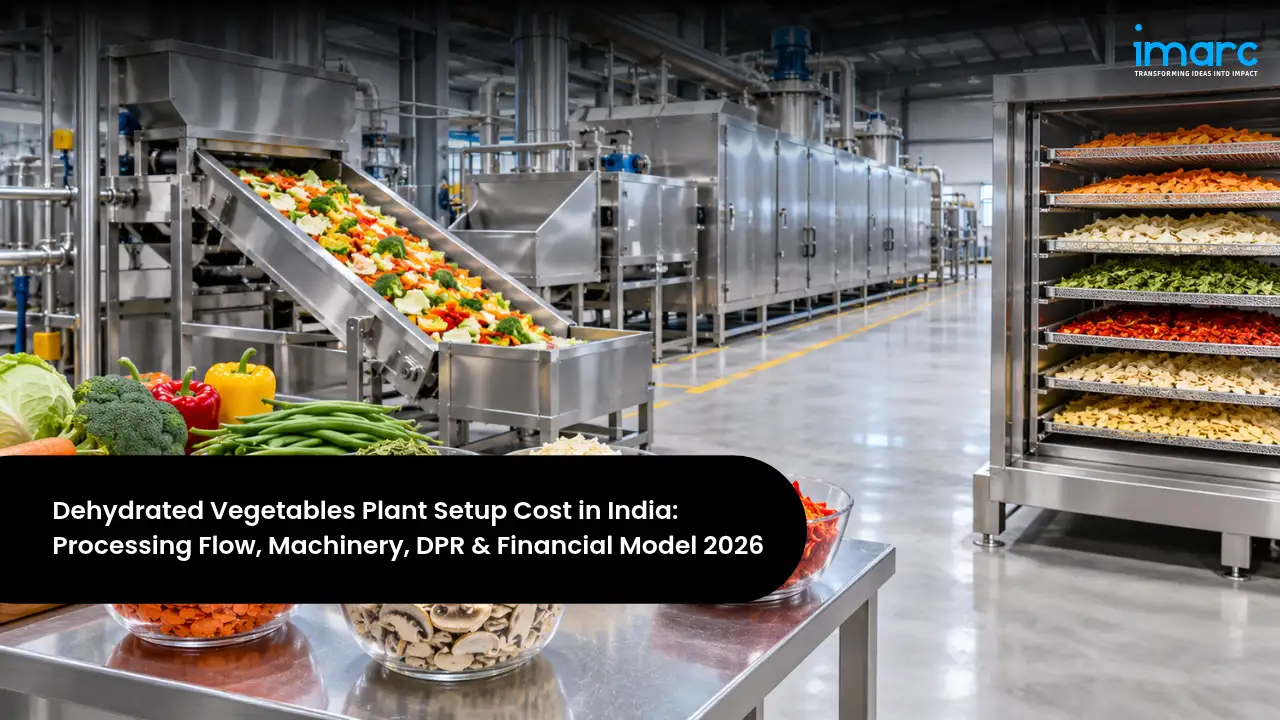
A Dehydrated Vegetables Processing Plant Setup in India removes most of the water from fresh vegetables to produce shelf-stable flakes, chopped and minced pieces, granules, and powders. The best-known products are dehydrated white onion and garlic, alongside potato, tomato, carrot, ginger, chilli, cabbage, spinach, okra, peas, and bell peppers. These ingredients are used in instant noodles, soups, sauces, seasonings, spice blends, snacks, ready meals, bakery fillings, and food service, and they are exported in large volumes to North America, Europe, and West Asia. India is one of the world's largest producers of onions and vegetables and already hosts a major dehydration cluster at Mahuva in Gujarat. Dehydration reduces post-harvest losses, stabilises farm prices, and turns seasonal surplus into year-round, export-ready ingredients.
The overall Dehydrated Vegetables Processing Plant Cost depends mainly on capacity, the product mix, peeling, washing, and cutting equipment, the type and size of dryers, milling and grading lines, colour sorting and metal detection, cold storage for finished products, utilities, land and buildings, and working capital, which is high because vegetables are bought in season. A plant producing about 2,000 tonnes of dehydrated vegetables a year typically needs INR 12 crore to INR 20 crore in fixed assets, or about INR 20 crore to INR 32 crore including working capital, while a small tray or cabinet dryer unit of 100 to 300 tonnes a year can start at around INR 1 crore to INR 3 crore. IMARC Group puts typical capacities at 1,000 to 5,000 tonnes a year, with gross margins of 25 to 35% and net margins of 10 to 18%.
This guide is written for food processors, onion and garlic traders, farmer producer organisations, spice and seasoning companies, exporters, and investors exploring how to start a Dehydrated Vegetables Processing plant in India. It explains product types and end uses, demand drivers, the processing flow, machinery and raw materials, site selection in vegetable-growing belts, a detailed cost and returns breakdown, the food safety, export, and other approvals involved, and how a DPR pulls these elements into a bankable plan.
India Market Snapshot
| Key Facts | Details |
|---|---|
| Global Dehydrated Vegetables Market (2025) | USD 82.14 Billion |
| Global Market Outlook | USD 119.36 Billion by 2034, 4.2% CAGR |
| Gujarat Dehydrated White Onion Exports (FY 2023–24) | 83,452 Tonnes |
| Mahuva Dehydration Cluster | About 120 dehydration plants |
| Typical Plant Capacity | 1,000–5,000 Tonnes a Year |
| Indicative Total Investment | INR 20–32 Crore (2,000 TPA, incl. working capital) |
The snapshot shows a large and steadily growing global dehydrated vegetables market, according to IMARC Group, and a strong Indian export base led by dehydrated white onion from Gujarat, which exported 83,452 tonnes in 2023–24 according to APEDA data. The Mahuva cluster alone has about 120 dehydration plants making flakes, granules, and powders, showing the depth of India's processing ecosystem and its export reach.
Investment Highlights
Indicative Project Cost in India (2026)
| Parameter | Value |
|---|---|
| Product Range | Dehydrated onion, garlic, potato, tomato, carrot, ginger, chilli, and leafy vegetables in flakes, minced, granules, and powders |
| Total Project Investment | INR 20 – 32 Crore incl. working capital (2,000 TPA); INR 1 – 3 Crore (100–300 TPA) |
| Payback Period | 4 – 5 Years |
| Net Profit Margin | 10 – 18% (IMARC benchmark) |
| IRR | 18 – 24% |
| Best Locations | Gujarat, Maharashtra, Madhya Pradesh, Rajasthan, Karnataka, Uttar Pradesh |
| Mandatory Approvals | FSSAI License, APEDA RCMC, IEC, SPCB Consents, Factory License, Boiler Registration |
| Key Requirement | Seasonal raw material buying, efficient drying, and export-grade quality systems |
These figures offer a practical frame for early evaluation. Returns depend on buying vegetables at good prices during the harvest season, securing suitable varieties with high solids, drying efficiently to lower fuel costs, achieving consistent colour, moisture, and microbial quality, obtaining export certifications, and building long-term relationships with food manufacturers and international buyers. A capacity- and product-specific Dehydrated Vegetables Feasibility Report refines these numbers before capital is committed.
Table of Contents
- What is Dehydrated Vegetables Processing?
- Why is Dehydrated Vegetables Processing Growing in India?
- Dehydrated Vegetables Processing Flow
- Raw Materials Required for Dehydrated Vegetables Processing
- Location, Land & Infrastructure
- Dehydrated Vegetables Processing Machinery and Equipment
- Dehydrated Vegetables Processing Plant Setup Cost in India (CapEx & OpEx)
- Financial Analysis and Profitability
- Licenses and Approvals for Dehydrated Vegetables Processing in India
- Recent Developments in the India Dehydrated Vegetables Processing Industry
- How Dehydrated Vegetables Processing Project Report and DPR Helps Investors
- Frequently Asked Questions
What is Dehydrated Vegetables Processing?
Vegetable dehydration preserves vegetables by reducing their moisture to a level where microbes cannot grow, typically to a few percent. Fresh vegetables are sorted and graded, then peeled, topped, or trimmed as needed and thoroughly washed. They are cut into slices, dice, or flakes, and some vegetables are blanched to preserve colour and inactivate enzymes, while onions and garlic are usually dried without blanching. The pieces are dried in multi-stage belt dehydrators or tunnel dryers using controlled hot air, or in tray and cabinet dryers in small units, and premium products may be freeze-dried. The dried product is cooled, then milled and sieved into flakes, chopped, minced, granules, and powders, sorted for colour and foreign matter, passed through metal detectors, tested, and packed, often in poly-lined cartons stored in cool conditions. A Dehydrated Vegetables Processing Plant therefore combines receiving, sorting, peeling, washing, cutting, blanching, drying, milling, grading, inspection, packing, and storage.
Products are sold to instant noodle, soup, sauce, and seasoning manufacturers, spice blenders, snack and namkeen makers, ready-meal and food service companies, bakery and frozen food producers, airlines and institutional caterers, retail brands, and importers and distributors in North America, Europe, West Asia, and Asia. Buyers expect consistent colour, flavour, and size, low moisture and microbial counts, residue compliance, and traceability.
- Dehydrated Onion: White onion flakes, chopped, minced, granules, and powder.
- Dehydrated Garlic: Flakes, granules, and powder for seasonings.
- Other Vegetable Products: Potato, tomato, carrot, ginger, chilli, okra, and leafy vegetables.
- Blends and Retail Packs: Vegetable mixes for soups, noodles, and home cooking.
Main Product Types in Vegetable Dehydration
The product mix shapes equipment, quality systems, and margins:
| Product Type | Description | Key Feature | Primary Market |
|---|---|---|---|
| Onion Flakes & Chopped | Cut and dried white onion | Largest volume product | Food processors, exporters |
| Onion & Garlic Powders | Finely milled powders | Seasoning base | Spice and snack makers |
| Granules & Minced | Sized pieces | Precise particle size | Soups, sauces, seasonings |
| Mixed Vegetable Flakes | Carrot, cabbage, peas, beans | Soup and noodle inclusions | Instant food makers |
| Specialty & Freeze-Dried | Ginger, chilli, spinach, freeze-dried | Higher value per kg | Premium and export buyers |
Many new entrants start with dehydrated onion and garlic, then add tomato, potato, leafy vegetables, blends, and premium products as quality systems grow. Powders, specialty vegetables, and certified organic or freeze-dried products earn higher margins than standard flakes.
Why is Dehydrated Vegetables Processing Growing in India?
Key Growth Drivers in the Indian Market
Demand for dehydrated vegetables is driven by convenience foods, food service, exports, and policy support. IMARC Group expects the global dehydrated vegetables market to grow at 4.2% a year from 2026 to 2034:
- Instant and convenience foods: Instant noodles, soups, and ready meals use dehydrated vegetables as key inclusions.
- Seasonings and snacks: Spice blends, seasonings, and snack coatings rely on onion, garlic, and tomato powders.
- Export demand: India is a leading exporter of dehydrated onion and garlic to North America, Europe, and West Asia.
- Reducing post-harvest losses: Dehydration turns seasonal surplus into stable products and supports farm incomes.
- Food processing incentives: Production-linked incentives and food processing schemes support processed fruit and vegetable capacity.
End-Use Market Opportunity
| End Use | Demand Driver | Product Role |
|---|---|---|
| Instant Foods | Noodles, soups, ready meals | Flakes, mixed vegetables |
| Seasonings & Spices | Snack and seasoning growth | Powders and granules |
| Food Service & HoReCa | Convenience and consistency | Chopped and minced products |
| Exports | Global ingredient demand | Onion, garlic, specialty products |
| Retail & Institutional | Home cooking, catering | Retail packs and blends |
The strongest position for a Dehydrated Vegetables Processing Plant in India combines secure access to suitable vegetable varieties, efficient multi-stage drying, consistent quality and microbial control, export certifications, cold storage for finished goods, and long-term relationships with food manufacturers and importers.
Dehydrated Vegetables Processing Flow
Understanding the Dehydrated Vegetables Processing helps promoters plan seasonal procurement, preparation, drying, grading, layout, staffing, and quality control. Product quality depends on raw material variety and freshness, hygiene in peeling and washing, uniform cutting, correct blanching, drying temperature and time, moisture control, and protection from contamination. The flow below reflects a typical onion and garlic dehydration plant with capacity for other vegetables.
Step-by-Step Dehydrated Vegetables Processing Flow
Fresh vegetables are received, sorted, peeled, washed, and cut, with blanching for some products. The pieces are dried in belt dehydrators, cooled, milled, and graded into flakes, granules, and powders, then colour-sorted, metal-checked, tested, packed, and stored in cool conditions.
| Unit Operation | Key Activity |
|---|---|
| Receiving & Sorting | Check variety, quality, size |
| Peeling & Trimming | Remove skins, tops, roots |
| Washing | Remove soil and residues |
| Cutting | Slice, dice, or flake |
| Blanching (where needed) | Preserve colour, inactivate enzymes |
| Dehydration | Multi-stage belt or tray drying |
| Cooling & Conditioning | Stabilise moisture |
| Milling & Grading | Flakes, minced, granules, powder |
| Sorting & Inspection | Colour sorting, metal detection, testing |
| Packing & Storage | Poly-lined cartons, cool storage |
Two factors decide profitability. The first is raw material buying: fresh vegetables make up most of operating cost and their prices swing sharply with harvests and weather, so buying in season, contracting suitable varieties, and holding finished stock in cold storage are essential. The second is drying efficiency and quality: drying consumes large amounts of energy, and export buyers pay for consistent colour, low microbial counts, and certified supply, so efficient dryers, low-cost fuels or heat pumps, and strong quality systems decide margins.
Raw Materials Required for Dehydrated Vegetables Processing
The main inputs are fresh vegetables, especially white onion and garlic, supported by processing aids and packaging. IMARC Group estimates raw materials at 60 to 70% of operating cost and utilities at 20 to 25%.
| Raw Material | Role in Process | India Sourcing | % of OpEx |
|---|---|---|---|
| Fresh White Onion | Main product | Gujarat, Maharashtra, Madhya Pradesh | 35–45% |
| Fresh Garlic | Flakes, granules, powder | Madhya Pradesh, Rajasthan, Gujarat | 8–12% |
| Other Vegetables | Tomato, potato, carrot, ginger, chilli, leafy greens | Local farms and mandis | 5–10% |
| Processing Aids | Anti-caking agents, cleaning materials | Domestic suppliers | Below 1% |
| Packaging (Cartons, Liners, Bags) | Export and domestic packing | Domestic suppliers | 4–6% |
Dehydration needs varieties with high dry matter and good colour, such as white onion varieties grown widely in Gujarat and Maharashtra, because fresh-to-dry ratios are high and solids content strongly affects yield and cost. Producers should contract with farmers and farmer producer organisations for suitable varieties, buy heavily during peak harvest when prices are lowest, and store finished products rather than fresh vegetables. Pesticide residue control at farm level is increasingly important for export markets.
Location, Land & Infrastructure
Location shapes raw material cost, freshness, energy access, and export logistics. The best location for Dehydrated Vegetables Processing plant setup lies in or near major onion, garlic, and vegetable growing belts, with reliable power and fuel, adequate clean water, cold storage, and good road connectivity to ports for exports and to food processing customers.
Preferred States for Vegetable Dehydration Plants in India
| State | Why It Works | Key Advantage |
|---|---|---|
| Gujarat | Mahuva and Bhavnagar dehydration cluster | White onion supply, export expertise |
| Maharashtra | Nashik and Pune onion belt | Largest onion production, ports |
| Madhya Pradesh | Onion and garlic belts around Indore and Mandsaur | Onion and garlic supply |
| Rajasthan | Garlic and onion production | Raw material and lower costs |
| Karnataka | Onion and vegetable growing districts | Southern supply and demand |
| Uttar Pradesh | Potato and vegetable production | Large vegetable base |
Gujarat's Mahuva cluster is India's best-known centre for dehydrated onion, with established suppliers, skilled labour, and export experience, while Maharashtra offers the country's largest onion production and port access. Madhya Pradesh and Rajasthan are major garlic and onion producers, Karnataka serves southern markets, and Uttar Pradesh offers a large base of potatoes and vegetables. Locating within growing belts keeps raw material fresh and transport costs low.
Product Quality and Food Safety Requirements
Buyers specify moisture, colour, particle size, bulk density, microbial limits, foreign matter, pesticide residues, and heavy metals, and export buyers often require HACCP, BRCGS, FSSC 22000, kosher, halal, or organic certification. Hygienic plant design, clean water, pest control, and protection against foreign matter are essential. Key controls include raw material inspection, wash water quality, drying temperature and moisture monitoring, colour sorting, metal detection, microbial and residue testing, and full batch traceability.
Infrastructure Requirements (2,000 TPA Plant)
| Infrastructure Element | Specification | India-Specific Note |
|---|---|---|
| Total Land Area | 2 – 4 acres | Raw material yard, plant, cold store |
| Processing Building | 3,000 – 5,000 m² | Hygienic preparation, drying, packing |
| Power | 400 – 800 kW connected load | Dryer fans, cutters, mills |
| Heat Source | Hot air generators, boiler, or heat pumps | Biomass, coal, gas, or electric |
| Water | 50 – 100 KLD | Washing and cleaning |
| Cold Storage | Finished goods cool storage | Preserve colour and quality |
| Effluent Treatment & Laboratory | ETP for wash water, QC lab | SPCB and export compliance |
Infrastructure for a dehydration plant centres on a raw material receiving and sorting yard, peeling and washing areas, cutting and blanching sections, belt dehydrators with heat sources, milling and grading rooms, colour sorting and metal detection, a packing hall, cool storage for finished goods, an effluent treatment plant, and a quality laboratory. Planning space for additional dryers and specialty product lines from the outset supports growth.
Dehydrated Vegetables Processing Machinery and Equipment
Most vegetable dehydration equipment, including peelers, washers, cutters, belt dehydrators, mills, and packing machines, is manufactured in India, while some high-end colour sorters, heat pump dryers, and freeze dryers are imported. The main equipment is summarised below.
| Equipment | Function | Key Specification |
|---|---|---|
| Receiving & Sorting Conveyors | Inspect and grade vegetables | Hygienic design |
| Onion Peelers & Topping Machines | Remove skins and ends | High throughput, low loss |
| Bubble Washers | Clean vegetables | Effective soil removal |
| Slicers, Dicers & Flaking Machines | Cut vegetables | Uniform cutting |
| Blanchers | Pre-treat selected vegetables | Controlled temperature |
| Multi-Stage Belt Dehydrator | Dry vegetables | Zoned temperature control |
| Hot Air Generators / Heat Pumps | Supply drying heat | Fuel-efficient |
| Mills, Sifters & Graders | Make powders and granules | Precise sizing |
| Colour Sorters & Metal Detectors | Remove defects and contaminants | Export-grade quality |
| Packing Machines, Cold Storage & QC Lab | Pack, store, test | Moisture and microbial testing |
Equipment selection should follow capacity, product mix, and energy source. The belt dehydrator and heat source largely determine output, product quality, and fuel cost, while colour sorters and metal detectors determine export suitability. Many promoters begin with onion and garlic lines and add blanchers, specialty cutters, heat pump dryers, or freeze dryers for higher-value products as markets grow.
Dehydrated Vegetables Processing Plant Setup Cost in India (CapEx & OpEx)
The tables below summarise the capital and operating cost structure of a dehydration plant producing about 2,000 tonnes of dehydrated vegetables a year in India. The final Dehydrated Vegetables Investment Cost for a specific project depends on capacity, product mix, dryer type and heat source, milling and grading lines, sorting equipment, cold storage, land and building costs, and working capital for seasonal raw material purchases and finished stock.
Capital Expenditure (CapEx) Cost Structure
| CapEx Component | % of Total CapEx | What It Covers |
|---|---|---|
| Preparation Lines | 10–14% | Sorting, peeling, washing, cutting |
| Dehydration Systems | 25–30% | Belt dehydrators, heat sources |
| Milling, Grading & Sorting | 10–14% | Mills, sifters, colour sorters, metal detectors |
| Packing & Cold Storage | 8–10% | Packing machines, cool storage |
| Utilities & ETP | 6–8% | Power, water treatment, effluent |
| Land & Buildings | 15–18% | Site, hygienic buildings, stores |
| Working Capital | 15–20% | Seasonal vegetable stock, finished goods, receivables |
Dehydration systems form the largest share of fixed investment, while working capital is significant because vegetables are bought in bulk during harvest and finished stock is sold through the year. A Dehydrated Vegetables Business Plan models these components so that capacity, product mix, and financing rest on realistic vegetable prices, fresh-to-dry ratios, fuel costs, export prices, and payment terms.
Operating Expenditure (OpEx) Cost Structure
| OpEx Component | % of Total OpEx | India-Specific Note |
|---|---|---|
| Fresh Vegetables | 50–60% | Onion, garlic, other vegetables |
| Utilities & Fuel | 20–25% | Drying heat, power |
| Labour | 6–8% | Peeling, sorting, packing staff |
| Packaging | 4–6% | Cartons, liners, bags |
| Cold Storage & Maintenance | 3–5% | Storage power, upkeep |
| Logistics & Certification | 3–5% | Port delivery, audits, testing |
With vegetables and drying energy forming most of operating cost, profitability depends on procurement timing, varieties with high solids, drying efficiency, product mix, and export prices. A sound financial model should test margins against poor harvests and price spikes, export restrictions on onions, fuel and power cost increases, currency movements, competition from other origins, and stricter residue standards.
Financial Analysis and Profitability
Vegetable dehydration offers solid returns for plants that buy well and meet export quality standards. The profitaability of Dehydrated Vegetables Processing business in India improves with season-time procurement at low prices, contract farming of suitable varieties, high fresh-to-dry yields, energy-efficient dryers, a growing share of powders and specialty products, export certifications, long-term contracts with food manufacturers and importers, and good cold storage management.
| Financial Metric | Indicative Value | India Context |
|---|---|---|
| Gross Profit Margin | 25–35% | IMARC benchmark |
| Net Profit Margin | 10–18% | After depreciation and Indian corporate taxes |
| Payback Period | 4–5 Years | Moderate capital needs |
| IRR (Internal Rate of Return) | 18–24% | Sensitive to vegetable and fuel prices |
| Capacity Utilization (stable ops) | 60–80% | Seasonal raw material availability |
| Break-even Capacity Utilization | 40–50% | Energy and working capital costs |
Procurement and quality are the decisive factors. Dehydrated onion and garlic prices follow fresh crop cycles, so plants that buy at harvest, hold stock efficiently, and sell to quality-focused buyers earn the best returns. Diversifying into powders, specialty vegetables, and certified products reduces dependence on a single crop.
Returns can be strengthened by contracting farmers for high-solids varieties, using biomass or heat pump dryers to cut fuel costs, running multiple vegetables across seasons to raise utilisation, investing in colour sorting and microbial control, obtaining BRCGS, organic, and other certifications, building direct relationships with global food companies, and adding retail and food service packs for the domestic market.
Key Risks and Mitigation
The main risks are volatile vegetable prices, poor harvests, changes in onion export policy, high fuel costs, microbial or residue rejections, competition from other exporting countries, currency swings, and seasonal working capital needs. Price risk is reduced through season-time buying, contracts, and storage; policy risk through product diversification; energy risk through efficient dryers and alternative fuels; quality risk through strong food safety systems; and market risk through diverse customers and destinations.
Licenses and Approvals for Dehydrated Vegetables Processing in India
A dehydration unit requires food safety, export, environmental, industrial, and business approvals. Promoters typically need the following before starting commercial production:
- FSSAI License: A Central or State FSSAI license based on capacity and export activity, with compliance with food safety and labelling standards.
- APEDA Registration: Registration-cum-Membership Certificate with APEDA for exporting dehydrated vegetables.
- Import Export Code: An IEC from the DGFT for international trade.
- Food Safety Certifications: HACCP, BRCGS, FSSC 22000, kosher, halal, and organic certification as required by buyers.
- Pollution Control Consents: Consent to Establish and Consent to Operate from the State Pollution Control Board, covering wash water effluent and heat source emissions.
- Factory, Boiler and Fire Approvals: Factory license, boiler registration where steam boilers are used, and fire safety approval.
- Business Registrations: Company registration, GST, Udyam, Legal Metrology for retail packs, and registration under food processing schemes where applicable.
FSSAI licensing, APEDA registration, and export certifications usually need attention early. Engaging a Dehydrated Vegetables Processing Consultant in India can help promoters plan procurement and varieties, select dryers and processing lines, design food safety systems, obtain approvals and scheme benefits, and connect with export buyers.
Note: The exact approvals, registrations, licenses, and certification requirements may vary depending on factors such as plant location, product range, capacity, target customers, and applicable regulations. Businesses are advised to undertake a detailed regulatory assessment during the project planning stage to ensure full compliance and timely implementation.
Recent Developments in the India Dehydrated Vegetables Processing Industry
Several recent developments are shaping dehydrated vegetable demand and supply in India:
- Global ingredient players enter India: In January 2025, Germany's Emsland Group partnered with UniBourne Food Ingredients to expand its presence in India, reflecting rising demand for processed vegetable ingredients.
- Dehydrated foods company lists: In August 2025, Sawaliya Foods Products Limited launched an IPO on the NSE SME platform, with shares listing well above the issue price, signalling investor interest in dehydrated food businesses.
- Food processing incentives gain traction: In April 2026, reports noted that the production-linked incentive scheme for food processing had approved over 165 projects and disbursed more than INR 2,160 crore in incentives, with dehydrated vegetable products among the processed foods showing strong export momentum.
Together these point to rising investment, policy support, and export momentum. For new entrants, success depends on procurement, drying efficiency, quality systems, and buyer relationships.
How Dehydrated Vegetables Processing Project Report and DPR Helps Investors
A detailed Dehydrated Vegetables Project Report gives investors a structured roadmap covering raw material availability and seasonality, demand by product and market, buyer specifications, product mix, processing design, machinery, energy options, cold storage, approvals, certifications, logistics, and economics. It helps promoters choose the right capacity, dryer technology, and product range, estimate capital expenditure (CapEx) and operating expenditure (OpEx), assess profitability, and identify risks before implementation.
At the core of the DPR is a Dehydrated Vegetables Financial Model covering seasonal vegetable prices, fresh-to-dry ratios, fuel and power use, labour, packaging, cold storage, certification costs, domestic and export prices, currency, working capital, cash flow projections, break-even, return on investment (ROI), and payback. Because vegetable prices, energy, and export markets drive returns, lenders expect detailed sensitivity analysis, which is why many promoters engage a Dehydrated Vegetables Plant Project Report Consultant in India to prepare bank-ready documents.
For a dehydration project specifically, a strong DPR also answers the questions that matter most: how much raw material can be secured at harvest prices, which varieties give the best yields, which dryer and heat source minimise cost, how much working capital seasonal buying will require, and how returns hold up if crop prices spike or export rules change. An experienced Dehydrated Vegetables Processing Feasibility Study Consultant tests these scenarios so that the final plan is one lenders and partners can back with confidence.
Frequently Asked Questions
How do I set up a dehydrated vegetables processing unit in India?
Start by identifying target products, buyers, and raw material sources, then commission a feasibility study and DPR. Choose a site in a vegetable-growing belt, install sorting, peeling, washing, cutting, drying, milling, grading, sorting, and packing equipment, obtain FSSAI, APEDA, IEC, pollution, and factory approvals, secure export certifications, and contract suitable vegetable varieties.
What is the cost of setting up a dehydrated vegetables processing plant in India?
A plant producing about 2,000 tonnes of dehydrated vegetables a year typically needs INR 12 crore to INR 20 crore in fixed assets, or about INR 20 crore to INR 32 crore including working capital. A small tray or cabinet dryer unit of 100 to 300 tonnes a year can start at around INR 1 crore to INR 3 crore.
How are dehydrated vegetables manufactured?
Fresh vegetables are sorted, peeled, washed, and cut, with blanching for some products, then dried in belt or tray dryers to low moisture. The dried product is cooled, milled, graded into flakes, granules, or powders, sorted, tested, and packed.
What machinery is needed for a dehydrated vegetables processing plant?
Key equipment includes sorting conveyors, onion peelers, bubble washers, slicers and dicers, blanchers, multi-stage belt dehydrators, hot air generators or heat pumps, mills, sifters, colour sorters, metal detectors, packing machines, cold storage, and a quality laboratory.
What raw materials are used for dehydrated vegetables?
The main inputs are fresh vegetables, especially white onion and garlic, along with potato, tomato, carrot, ginger, chilli, and leafy greens, plus processing aids and packaging such as cartons, liners, and bags.
Is dehydrated vegetables processing plant profitable in India?
Benchmark figures point to a 10 to 18% net margin and an IRR of around 18 to 24%, with payback in 4 to 5 years. Profitability depends mainly on vegetable procurement, fresh-to-dry yields, fuel costs, product mix, export prices, and quality.
What licenses are needed for a dehydrated vegetables processing unit in India?
A unit typically needs an FSSAI license, APEDA registration, an Import Export Code, State Pollution Control Board consents, a Factory License, boiler registration where applicable, Fire NOC, GST, and Udyam registration, along with buyer-required certifications such as HACCP or BRCGS.
Which state is best for a dehydrated vegetables processing plant?
Gujarat, Maharashtra, Madhya Pradesh, Rajasthan, Karnataka, and Uttar Pradesh are strong options. The best site lies in a major onion, garlic, or vegetable belt with good energy supply and access to ports.
How do I get a feasibility study or DPR for a dehydrated vegetables processing plant?
A professionally prepared DPR covers raw material and market assessment, technical design, approvals, costs, and financial projections for bank appraisal. Many promoters work with a Dehydrated Vegetables Business Plan Consultant in India to prepare it and align it with lender requirements.
Our Clients










Contact Us
Have a question or need assistance?
Please complete the form with your inquiry or reach out to us at
Phone Number
+91-120-433-0800+1-201-971-6302
+44-113-547-7077
Previous Post

A Mango Pulp Manufacturing Plant Setup in India converts ripe mangoes into a smooth, shelf-stable pulp used by beverage, dairy, ice cream, bakery, confectionery, and baby food makers at home and abroad.
An Almond Milk Manufacturing Plant Setup in India produces a creamy, plant-based beverage made by grinding almonds with water, filtering, blending, and heat-treating the mixture.
A Pea Protein Powder Manufacturing Plant Setup in India extracts high-quality protein from yellow and field peas for sports nutrition, protein supplements, dairy alternatives, meat analogues, bakery, beverages, infant and clinical nutrition, and pet food.
An Edible Vegetable Oil Manufacturing Plant Setup in India produces one of the country's most essential food staples. Edible oils such as palm, soybean, sunflower, mustard, groundnut, rice bran, and cottonseed oil are used in every household kitchen and by restaurants, caterers, bakeries, snack and namkeen makers, and packaged food companies.
An Olive Manufacturing Plant Setup in India turns raw or bulk-brined olives into ready-to-eat table olives and related products for India's fast-growing pizza, restaurant, retail, and online grocery markets.
Food safety testing rarely makes the news, yet it is one of the steadiest growth markets in food. According to IMARC Group, the global food safety testing market was valued at USD 27.16 Billion in 2025 and is expected to reach USD 53.62 Billion by 2034, growing at a CAGR of 7.85% during 2026-2034. That is roughly USD 26.5 Billion of new annual value in under a decade.
The tequila market is moving from a regional specialty to a mainstream global spirits category, with value increasingly concentrated in premium, additive-free and cocktail-led products. IMARC Group estimates the global tequila market at USD 20.3 Billion in 2025, and projects it to reach USD 47.8 Billion by 2034, expanding at a CAGR of 9.99% during 2026-2034.
A Guar Gum Processing Plant Setup in India builds on one of the country's most distinctive agricultural advantages. Guar gum is a natural polysaccharide obtained from the endosperm of the guar bean, grown mainly in the arid regions of Rajasthan, Gujarat, Haryana, and Punjab.
A Banana Wine Manufacturing Plant Setup in India links the world's largest banana crop with one of the country's fastest-growing alcoholic beverage categories.
A Food Processing Plant Setup in India gives investors access to one of the country's largest and most resilient industries. India is among the world's biggest producers of milk, fruits, vegetables, grains, pulses, and spices, yet only a part of this output is processed before it reaches consumers.
An Oleoresin Manufacturing Plant Setup in India builds on the country's position as the world's largest producer and exporter of spices and spice extracts.
A Fish processing Plant Setup in India links one of the world's largest fish producing nations with fast-growing domestic and global demand for safe, convenient seafood.
The India microgreens market is moving from a niche urban farming category into a mainstream fresh produce line, and the redistribution of demand toward quick commerce and online grocery is doing much of the pushing. According to IMARC Group, the market stood at USD 87.67 Million in 2026 and is projected to reach USD 158.56 Million by 2034, expanding at a CAGR of 7.69% during 2026-2034.
A Coconut Processing Plant Setup in India builds on the country's position as the world's largest coconut producer. Modern coconut processing turns fresh nuts into higher-value products such as desiccated coconut, virgin coconut oil, coconut milk and cream, and packaged coconut water, while shells and husks become feedstock for charcoal, activated carbon, coir, and coco peat.
A Castor Oil Processing Plant Setup in India builds on one of the country's clearest global leadership positions. India grows most of the world's castor seed and supplies the large majority of internationally traded castor oil, with production concentrated in North Gujarat and neighbouring Rajasthan.
A Baby Food and Infant Formula Manufacturing Plant Setup in India is one of the most demanding food processing projects, because the products feed the most vulnerable consumers.
A Gelato Manufacturing Plant Setup in India targets the premium end of one of the country's fastest-growing food categories.
A Whiskey Manufacturing Plant Setup in India places investors in the world's largest whiskey market by volume. Whiskey dominates India's spirits consumption, ranging from mass-market blends to premium Indian single malts that now win international awards and compete with Scotch on the shelf.
The global coffee packaging market size reached USD 910.9 Million in 2025 and is projected to climb to USD 1,388.1 Million by 2034, registering a CAGR of 4.65% during 2026-2034. That trajectory is moderate by consumer-packaging standards, but it understates how much structural change is compressed into it.
A Potato Starch Manufacturing Plant Setup in India builds on the country's position as the world's second-largest potato producer. Potato starch is a fine, white, neutral-tasting powder extracted from potatoes, valued for its high viscosity, clear gels, binding strength, and clean flavour.
A Mineral Water Processing Plant Setup in India serves one of the most essential and fastest-growing consumer categories in the country.
Setting up a Sugar Manufacturing Plant in India means entering one of the country's largest and most policy-shaped agro-industries.
A Ghee Manufacturing Plant Setup in India builds on one of the country's most trusted and widely consumed dairy products. Ghee, or clarified butter, is made by heating butter or cream until the water evaporates and the milk solids separate, leaving a golden, aromatic fat with a long shelf life.
A Cashew Nut Manufacturing Plant Setup in India builds on one of the country's oldest and most export-oriented agro-processing industries.
Setting up a Whey Protein Powder Manufacturing Plant in India addresses a striking gap in the world's largest milk-producing nation. India produces close to 250 million tonnes of milk a year, yet it imports an estimated 80 to 90% of the supplement-grade whey used by its fast-growing sports nutrition and protein brands.
The Indian animal feed market is being reshaped less by what happens inside a feed mill than by what appears on Indian dinner plates. According to IMARC Group, the market was valued at INR 1,186.30 Billion in 2025 and is projected to reach INR 2,112.96 Billion by 2034, expanding at a CAGR of 6.6% over 2026-2034.
Setting up a Pectin Manufacturing Plant in India is a timely, import-substitution opportunity in a fast-growing food ingredients segment.
Peanut spread is a smooth or crunchy paste made by roasting, skinning, and grinding groundnuts, often with a little salt, sugar, and a stabiliser. It is rich in protein and healthy fats, and in India it has moved from a niche import to an everyday breakfast and fitness food sold through supermarkets, pharmacies, gyms, and online stores.
The organic and natural pet food market has moved from a specialist shelf in independent pet stores to a structural growth engine inside global pet care. According to IMARC Group, the global natural pet food market reached USD 33.6 Billion in 2025 and is projected to reach USD 59.4 Billion by 2034, expanding at a CAGR of 6.33% during 2026-2034.
Edible oils are produced by pressing and solvent-extracting oilseeds such as soybean, mustard, groundnut, and sunflower, or by importing crude palm, soybean, and sunflower oil, and then refining them through degumming, bleaching, and deodorisation to remove impurities, colour, and odour before packing them for homes, restaurants, and food processors.
Club soda is purified water chilled and charged with food-grade carbon dioxide under pressure, then filled into PET bottles, glass bottles, or cans and sealed so that it keeps its fizz until opened.
Ice cream is a frozen dairy dessert made by pasteurising and homogenising a mix of milk, cream, sugar, stabilisers, and flavours, then freezing it while whipping in air and hardening it at very low temperatures.
CNSL, the dark, viscous liquid held in the honeycomb of the cashew shell, is recovered by pressing shells left over from kernel processing and then heating the crude liquid so that its anacardic acid turns into cardanol.
Ground spices and blended masalas turn whole chilli, turmeric, coriander, cumin, pepper, and other spices into clean, safe, ready-to-use powders and mixes for homes, restaurants, food processors, and export buyers.
Fishmeal is a brown, protein-rich powder made by cooking, pressing, drying, and grinding small oily fish and fish processing waste, with fish oil recovered as a valuable co-product.
Dried banana ingredients are made by washing, peeling, and slicing fresh fruit, treating it to prevent browning, drying it in belt, tray, or spray dryers, and milling it into a fine, shelf-stable product.
Dried egg is made by breaking fresh eggs, pasteurising the liquid whole egg, yolk, or white, and spray drying it into a fine powder that keeps for a year or more without refrigeration.
Whey is the liquid left after milk is made into cheese or paneer, and it contains high-quality proteins that can be separated by membrane filtration and spray dried into concentrates and isolates.
The pectin market has moved from the back of the ingredient label to the centre of product development strategy. As food manufacturers strip out synthetic gelling agents, stabilisers and thickeners, pectin has become one of the few hydrocolloids that can deliver texture and shelf stability while still reading as a familiar, fruit-derived ingredient.
Poultry processing turns live broilers into hygienically slaughtered, chilled, cut, and packed meat, ready for retail shelves, restaurants, quick-service chains, caterers, and export. India produced about 10.5 million tonnes of meat in 2024-25, and poultry made up roughly half of it at 5.18 million tonnes, yet around 85% of birds are still sold live or slaughtered in small wet-market shops.
The global tomato ketchup market reached USD 20.8 Billion in 2025 and is projected to reach USD 26.3 Billion by 2034, growing at a CAGR of 2.68% during 2026-2034, according to IMARC Group. Those numbers describe a mature, high-volume condiment category rather than a fast-growing one.
Coconut shell powder is made by cleaning, drying, crushing, and finely grinding the hard inner shell of the coconut into a uniform powder. Because the shell is dense, rich in lignin, low in ash, and slightly oily, the powder is an excellent natural filler.
Dextrins are modified starches made by heating dry starch, usually with a small amount of acid, so that its long molecules break into shorter ones. The result is a powder that dissolves easily in water and forms strong, quick-drying adhesive films.
Fruit powders are made by drying fruit pulp or juice into a fine, free-flowing powder that keeps the flavour, colour, and much of the nutrition of fresh fruit while lasting months without refrigeration.
Yeast is a living microorganism that makes bread rise, ferments beer, wine, and spirits, turns sugar into fuel ethanol, and supplies protein, vitamins, and flavour to food, feed, and nutrition products.
The global champagne market is entering a phase where value growth matters more than volume growth. IMARC Group values the market at USD 6.6 Billion in 2025 and projects it to reach USD 8.1 Billion by 2034, expanding at a CAGR of 2.25% during 2026-2034.
India is one of the world's leading coffee producers and exporters, growing shade-grown arabica and robusta in the hills of Karnataka, Kerala, and Tamil Nadu and supplying green, roasted, and instant coffee to more than 100 countries.
The Australia Online Grocery Industry has crossed the point where volume growth is the scarce commodity. What is scarce now is profitable volume. According to IMARC Group, the market reached USD 17.22 Billion in 2025 and USD 21.91 Billion in 2026, and is projected to reach USD 96.59 Billion by 2034, expanding at a CAGR of 20.37% (2026–2034), a more than five-fold expansion in under a decade. That growth is unfolding inside one of the most closely regulated grocery markets in the developed world.
Baby formula, also known as infant formula, is a manufactured food product designed to serve as a substitute for or supplement to human breast milk for infants and young children up to three years of age.
Palm oil is the world's most widely used vegetable oil, extracted from the fruit of the oil palm and used in cooking oils, vanaspati, bakery fats, snacks, soaps, cosmetics, and oleochemicals, while the kernel yields palm kernel oil and cake.
Beer is one of the world's most widely consumed drinks, brewed from malted barley, water, hops, and yeast, often with rice or maize as adjuncts. In India, beer accounts for only a small share of alcohol consumption compared with most countries, but that is changing as a young, urban, and increasingly female consumer base embraces lighter drinks, premium lagers, wheat beers, and craft styles.
Bread, buns, rusk, cakes, cookies, and biscuits are part of daily meals and snacking in almost every Indian household, from metro cities to small towns.
Makhana has moved from a pond crop traded through village aggregators into a branded snack with its own export code and a national board behind it. According to IMARC Group, the India makhana market was valued at INR 9.29 Billion in 2025 and is projected to reach INR 19.95 Billion by 2034, growing at a CAGR of 8.85% (2026–2034).
Packaged drinking water has become an everyday essential in India, sold at railway stations, highway dhabas, offices, weddings, hotels, and homes. Concerns about groundwater contamination, rising incomes, travel and tourism, and hot summers keep demand growing year after year, and the market is worth more than USD 8 billion.
Every year, India's vehicles, machinery, and industries consume around 3 million tonnes of lubricants, making the country one of the world's largest lubricant markets.
Indian wine has come a long way from a niche curiosity to a genuine lifestyle category. Young urban consumers, growing interest in food pairing, wine tourism in regions such as Nashik and Nandi Valley, and supportive state grape policies have given domestic wineries room to grow, while producers have steadily improved quality and won international recognition.
Setting up an Extra Neutral Alcohol Manufacturing Plant in India is a fermentation-and-distillation venture anchored to the large and growing alcoholic-beverage industry, along with pharmaceutical, cosmetic, and industrial demand.
Setting up a Shrimp Processing Plant in India is a high-potential, export-oriented venture, powered by the country's position as one of the world's largest shrimp producers and exporters. India's vast coastline, expanding vannamei aquaculture, and strong demand from the United States, China, the European Union, and Japan make a frozen shrimp processing Plant Setup in India one of the most attractive opportunities in the seafood sector.
India's post-pandemic food delivery boom, followed by the new quick-commerce disruption from Zepto Cafe and Swiggy Bolt, has turned the Cloud Kitchen Market in India into a genuine focus of global investor curiosity.
The total addressable market for India's functional beverages is expanding from USD 6.9 Billion in 2025 to a projected USD 18.8 Billion by 2034, growing at a CAGR of 10.74% (2026–2034).
The halal food market has moved well beyond a religious-compliance niche into one of the largest, fastest-growing consumer food categories in the world. The global market was valued at USD 2,956.4 billion in 2025 and is projected to reach USD 6,329.3 billion by 2034, expanding at a compound annual growth rate (CAGR) of 8.56% between 2026 and 2034.
India’s dairy industry is undergoing a structural transformation, driven by rising incomes, urbanization, changing consumption patterns, and strong policy support. Traditionally dominated by an unorganized and cooperative-led system, the sector is now evolving into a more competitive, branded, and technology-enabled ecosystem.
Cheese is a dairy food made by coagulating the proteins in milk, mainly casein, using enzymes, acids, or microorganisms, followed by separating the curds from the whey. Cheese can be made from the milk of cows, buffaloes, goats, sheep, or a combination of these. The coagulated curd is then processed by cutting, cooking, pressing, salting, and aging to achieve desired texture, moisture, and flavor characteristics.
Avocado oil is a vegetable oil that is extracted from the pulp of ripe avocados (Persea americana), unlike other vegetable oils that are extracted from seeds. Avocado oil contains high amounts of monounsaturated fatty acids, specifically oleic acid, as well as phytosterols, tocopherols, and carotenoids. Avocado oil can be classified as extra virgin, virgin, or refined, depending on the extraction and refining process.
Wine is a type of alcoholic drink that is made by the controlled fermentation of grape juice, where the natural or added yeast ferments the sugars in the juice to produce ethanol, carbon dioxide, and other compounds. Wine is made up of water, ethanol, organic acids, phenolic compounds, aromatic esters, and trace minerals.
Whey protein is a high-quality, complete protein obtained from whey, which is the liquid by-product of cheese production. Milk coagulated with enzymes or acids separates into curds (casein) and whey. Whey is a liquid that contains soluble proteins like beta-lactoglobulin, alpha-lactalbumin, serum albumin, and immunoglobulins. Whey is filtered and dried to produce commercial products like whey protein concentrate (WPC), whey protein isolate (WPI), and whey protein hydrolysate (WPH).
Whole egg powder is a dehydrated egg ingredient made by spray drying homogenized liquid whole eggs, which include a mixture of egg yolk and egg white in their natural ratio. Fresh whole shell eggs are broken, filtered, pasteurized, and then processed into a stable powder form using controlled drying methods. The final product preserves the functional and nutritional qualities of fresh eggs, such as high-quality protein, essential amino acids, lipids, vitamins, and emulsifying fractions.
Tea is a drink made from the processed leaves and flower buds of the plant Camellia sinensis. The essential properties of tea, namely flavor, aroma, color, and strength, depend on the level of oxidation, drying, and fermentation of the processed leaves. Tea can be categorized based on the processing techniques into black tea, green tea, oolong tea, white tea, and specialty teas.
Soy milk is a plant-based beverage made from whole soybeans that have been soaked, ground, and their liquid extracted, then cooked and filtered. It is completely devoid of elements originating from animals and is intended to operate and look like dairy milk. In addition to naturally existing proteins, carbs, and healthy fats from soybeans, soy milk is frequently supplemented with vitamins and minerals to improve its nutritional value.
Soya chunks are a protein-rich food item that is prepared using defatted soy flour, which is a by-product of soybean oil extraction. Soya chunks are prepared using the process of extrusion cooking, which converts the soy flour into porous, sponge-like granules with a fibrous structure that resembles meat when rehydrated.
Soya chunks are a protein-rich food item that is prepared using defatted soy flour, which is a by-product of soybean oil extraction. Soya chunks are prepared using the process of extrusion cooking, which converts the soy flour into porous, sponge-like granules with a fibrous structure that resembles meat when rehydrated. Soya chunks have a neutral flavor, which helps them absorb the flavors of spices and seasonings while cooking.
Saudi Arabia’s precast concrete market reached USD 1.2 Billion in 2024 as per the IMARC Group, clear proof that off-site construction is rapidly becoming the Kingdom’s go-to building solution. With residential, commercial, and major infrastructure projects multiplying, developers are increasingly turning to precast building solutions to keep pace.
The global emergency food market has emerged as a critical component of household preparedness infrastructure, disaster response frameworks, and government stockpiling programs worldwide. In March 2025, the National Disaster Response Force (NDRF), established in India, conducted a National Capacity Building Competition for State Disaster Response Forces (SDRFs) to improve their readiness and effectiveness in managing collapsed structure emergencies.
The Saudi Arabia sauces and seasonings market size is expanding steadily as consumers embrace more diverse flavors, convenient food formats, and global culinary influences. Evolving lifestyles, greater exposure to international cuisines, and a strong shift toward home cooking have collectively shaped the contemporary marketplace.
The GCC chocolate market has experienced robust expansion in recent years, driven by evolving consumer preferences, rising disposable incomes, and the proliferation of international brands. In 2024, the GCC chocolate market size reached USD 3,200.77 Million, reflecting sustained growth across premium, artisanal, and mass-market segments.
The Gulf Cooperation Council (GCC) region continues to position itself as one of the fastest-evolving markets for packaged beverages, with bottled water standing at the forefront of this transformation. The GCC bottled water market size has expanded steadily in recent years, supported by a strong shift toward health-driven consumption, improved hydration awareness, and evolving lifestyle patterns across the member countries.
India’s pet sector has experienced a remarkable transformation, driven by urbanization, evolving lifestyles, and a stronger emotional bond between people and their companion animals. What was once a niche trend among a few urban families has now become a widespread practice across Indian households, where pets are regarded as integral members of the family.
Shrimp is one of the world’s most precious natural spices, derived from the dried red stigmas of the Crocus sativus flower. Each bloom yields only a few delicate stigmas, which must be carefully hand-harvested, dried, and processed to preserve their vibrant color, distinctive aroma, and rich flavor. The spice’s deep golden-yellow hue, bitter-sweet taste, and unique fragrance are primarily attributed to its key bioactive compounds like crocin, picrocrocin, and safranal.
The Australian craft beer industry has emerged as a significant segment of the broader alcoholic beverages market driven by evolving consumer preferences, rising disposable incomes, and a growing appreciation for artisanal and premium products. Over the past decade, the market has witnessed substantial expansion with craft breweries increasingly occupying a distinct niche in the highly competitive beer sector.
India is witnessing a profound transformation in how its citizens approach health and wellness. The nutritional supplements market of the country has evolved from a niche segment into a mainstream industry serving millions of health-conscious consumers.
Sea salt is a natural mineral product obtained through the solar evaporation of seawater, followed by harvesting, washing, drying, grading, and packaging. Unlike refined table salt, which undergoes heavy chemical processing, sea salt production relies primarily on solar energy and natural crystallization, allowing it to retain trace minerals such as magnesium, calcium, and potassium that contribute to its distinct taste and nutritional value.
Saffron is one of the world’s most precious natural spices, derived from the dried red stigmas of the Crocus sativus flower. Each bloom yields only a few delicate stigmas, which must be carefully hand-harvested, dried, and processed to preserve their vibrant color, distinctive aroma, and rich flavor.
The India edible oil market stands as one of the most dynamic sectors within the country's consumer goods landscape. As households increasingly prioritize quality, health, and convenience, demand for diverse oil varieties continues to surge. The transformation from traditional purchasing habits to modern retail experiences reflects broader shifts in consumer awareness and lifestyle choices.
India's organic food industry stands at the intersection of health consciousness, agricultural innovation, and sustainable practices. As consumers increasingly prioritize chemical-free nutrition and environmental sustainability, the sector faces transformative opportunities alongside significant operational challenges shaped by evolving dietary preferences, technology adoption in agriculture, and regulatory frameworks that collectively define market dynamics.
Japan’s gluten-free foods and drinks market has evolved into a vibrant segment of the country’s growing health and wellness culture. Once catering mainly to individuals with celiac disease or gluten intolerance, gluten-free products now appeal to a broader demographic pursuing balanced, wellness-oriented lifestyles.
The GCC coconut water market is experiencing remarkable momentum as consumer preferences shift decisively toward natural hydration solutions and functional beverages. This transformation is propelled by heightened health consciousness, expanding fitness culture, and growing awareness of the nutritional benefits associated with coconut-based drinks.
The Saudi Arabia online grocery market is experiencing transformative growth, driven by widespread digital adoption, evolving consumer preferences, and strategic government initiatives aligned with Vision 2030. As one of the fastest-growing e-commerce segments in the Middle East, the online grocery sector is reshaping how Saudi consumers shop for everyday essentials.
Onion powder is a dehydrated and ground seasoning that results from the drying of fresh onions into a concentrated powdered form. The process of dehydration removes moisture from the product, while maintaining the flavor, aroma, and pungency characteristics of the onion, thereby making it a stable and ready-to-use ingredient with a longer shelf life. Onion powder can be prepared through various controlled drying, grinding, and screening processes from white, red, or yellow onion varieties.
Japan's animal feed industry stands as a cornerstone of the nation's agricultural infrastructure, supporting domestic livestock production and ensuring food security. The sector encompasses diverse feed products for cattle, swine, poultry, and aquaculture operations that sustain Japan's protein supply chain.
Nutraceuticals are bioactive, health-enhancing products derived from food sources, botanical ingredients, or purified nutrients that provide physiological benefits beyond basic nutrition. They include dietary supplements, functional foods, fortified beverages, herbal extracts, probiotics, omega-fatty-acid formulations, vitamins, minerals, and specialized nutritional compounds. Nutraceuticals are designed to support wellness, prevent nutrient deficiencies, and promote specific health outcomes, including the improvement of immunity, digestive balance, cognitive function, metabolic health, or cardiovascular support.
India's spice industry stands as a vibrant cornerstone of the nation's agricultural economy and cultural identity. As global consumers increasingly seek authentic flavors and natural ingredients, India's position as the world's leading spice producer continues to strengthen.
According to IMARC Group, India's ice cream consumption has grown nearly fourfold over the past decade. Despite this, India's per-capita consumption stands at just ~400 ml per year — far below the global average of ~2.5 litres. That gap is not a weakness. It is the single most compelling argument for the industry's long-term runway.
Millet represents a group of small-seeded cereals, primarily from the Poaceae family, which are grown as staple foods for thousands of years in Asia and Africa and, increasingly, in other parts of the world. These cereals include pearl millet, foxtail millet, finger millet, proso millet, barnyard millet, and little millet.
Milk powder is a type of dehydrated dairy product, which is manufactured by removing almost all moisture from liquid milk by means of various evaporation and drying techniques. The resultant product is a stable, shelf-friendly powder containing most of the nutritional components of milk, including proteins, lactose, minerals, and fats. Milk powder may be prepared from whole, skimmed, or partially skimmed milk, depending on its intended use. The very low moisture content inhibits microbial growth and spoilage; hence, it becomes more feasible regarding transport, storage, and usage in different formulations.
Meat generally denotes the animal tissues that are consumed and mainly include muscle fibers, though the content of fat, connective tissue, and moisture may vary. There are a number of sources, although they are mainly livestock such as cattle, pigs, sheep, poultry, and, in some regions, game animals.
Australia's tea market is at a crossroads, undergoing extraordinary change inspired by changing consumption habits, health awareness, and the explosion of functional drinks.
The Australia dairy industry stands as a vital pillar of the nation's agricultural economy, representing the third-largest rural sector and contributing significantly to both domestic food security and export earnings.
India has emerged as one of the fastest-growing fisheries producers in the world, backed by rising health awareness, export diversification, and evolving aquaculture technology.
Ice cream is a frozen dairy dessert made by blending milk, cream, sugar, and flavorings, then freezing the mixture while incorporating air to give a smooth, creamy texture. The mixture is pasteurized, homogenized, then churned under controlled conditions to prevent the formation of large ice crystals. Depending on the recipe and product category, it may contain stabilizers, emulsifiers, fruits, nuts, chocolate, or other inclusions. It comes in hardpacked ice cream, softserve, gelato, sorbets, and frozen yogurt. The texture, flavor, and quality of this frozen dessert will depend on the ratios of ingredients used and the techniques followed in processing.
The Philippines mushroom industry is undergoing a transformative phase, driven by a growing consumer shift toward functional and nutrient-dense foods. As health awareness rises across both urban and rural populations, mushrooms are increasingly recognized for their high protein, fiber, and antioxidant content. This change is not merely dietary it reflects a broader movement toward wellness-oriented lifestyles that prioritize natural, sustainable, and locally sourced food options. For agribusiness investors and food manufacturers, this evolution signals significant growth potential in both production and value-added segments of the market.
The Vietnam aquaculture market has transformed from traditional fishing practices into one of the world's most dynamic seafood production sectors. Vietnam now ranks as the fourth-largest aquaculture producer globally, supplying markets across Asia, Europe, and the Americas. Understanding what drives this growth is essential for investors, businesses, and policymakers looking to engage with this evolving industry.
French fries are thin strips of baked or deep-fried potatoes with a fluffy inside and a crispy outside. They originated in Europe and are now a common fast-food staple that is consumed as a snack or side dish in many countries. French fries are made mostly from high-starch potatoes and are produced in large quantities by chopping, blanching, frying, and occasionally freezing. They are among the most well-liked and extensively consumed potato-based food products in the world because of their ability to be seasoned, flavored, or combined with condiments like cheese, mayonnaise, or ketchup.
Glucose powder is a crystalline or powdered form of a simple sugar, glucose, derived mainly from sources of starch: corn, wheat, or rice. Glucose powder is obtained by the hydrolysis of starch into glucose by enzymes, followed by purification and concentration of the solution and its drying to yield a readily water-soluble, easily digested carbohydrate powder. Glucose powder is an instant source of energy as it is quickly absorbed in the body, which makes the product valuable in food, beverage, nutraceutical, and pharmaceutical applications. It has a neutral taste, a very high sweetness index compared to regular sugar, and excellent dissolving properties, making it useful in various industrial formulations and household consumption.
Ghee is a class of clarified butter that, conventionally, is prepared by simmering butter until the milk solids separate and caramelize, leaving a golden, fragrant fat. Presently, it is widely used in South Asian, Middle Eastern, and increasingly global cuisines. Ghee has a high smoke point, long shelf life, and rich flavor, which makes it suitable for cooking, frying, and flavor enhancement. During its production, water and milk proteins are removed, making the product a lactose-free fat that contains fat-soluble vitamins and bioactive compounds. Its stability, purity, and distinctive taste make ghee an important culinary and functional ingredient in both traditional and modern food applications.
Fruit powder is made by removing the moisture content of whole fruits through various methods, such as spray drying, freeze-drying, drum drying, or vacuum drying, to get a finely ground, dehydrated powder form. After drying, the fruit is then milled into a stable, lightweight, and shelf-friendly powder that retains much of the fruit's natural flavor, aroma, nutrients, and color. Fruit powders have the essence of fresh fruit in concentrated, easy-to-handle form and are thus highly versatile in food, beverage, nutraceutical, and cosmetic applications. They offer an alternative to fresh fruits in a more convenient manner with longer shelf life and consistent quality for industrial use.
Garlic powder is the dried form of garlic, made by drying fresh garlic cloves and then grinding them to a uniform powder. Garlic dehydration removes moisture while preserving much of the flavor, aroma, and pungency of garlic. This concentrated form offers longer shelf life, easy storage, and consistent taste compared to fresh garlic. Garlic powder is widely used as a seasoning, marinade ingredient, and flavor enhancer in culinary, industrial, and packaged-food applications. Garlic powder imparts the taste of garlic without peeling or chopping into the dishes; therefore, it is very convenient and versatile for both homes and large-scale food manufacturers.
The Frozen food market is highly diversified, encompassing categories like frozen ready meals, fruits and vegetables, meat, seafood, desserts, and bakery items. This robust growth is fueled by fundamental shifts, including urbanization, the rise of dual-income households, and a consumer demand for convenience without compromising nutritional value. Modern freezing technologies ensure high quality and extended shelf life, addressing the critical issue of food waste.
The United States shrimp market stands as one of the most dynamic segments within the global seafood industry. It reached 983,000 Tons in 2024 as per IMARC Group and is projected to reach 1,280,000 Tons by 2033 at a growth rate of 3% from 2025 to 2033. As consumer preferences shift toward healthier protein sources and sustainable options, shrimp has emerged as a cornerstone of American dietary habits. The market reflects transformations in consumer behavior, international trade dynamics, and technological innovation within aquaculture and seafood processing.
The Australia gluten-free food industry is flourishing, powered by a surge in health-conscious consumers, a rise in gluten intolerance cases, and a growing appetite for clean-label, nutritious products. In 2024, the industry reached a notable milestone, hitting USD 361.20 Million, according to IMARC Group. Popular categories like gluten-free bakery items, snacks, dairy, and ready-to-eat (RTE) meals are leading the charge.
The global frozen food industry has undergone a remarkable transformation over the past decade, evolving from a convenience-focused sector into a sophisticated, technology-driven marketplace that prioritizes quality, nutrition, and sustainability. Innovation serves as the primary catalyst for this evolution, fundamentally reshaping consumer perceptions and market dynamics across all geographic regions.
Egg powder is a type of dehydrated product prepared from whole eggs, egg whites, or egg yolks, using a controlled drying process that removes moisture content while preserving the natural nutrients, flavor, and functional properties in fresh eggs. Originally developed to extend the shelf life of eggs, it was also meant to be convenient and easily transportable for food manufacturing, catering, and military or outdoor purposes.
The global ginger market is currently experiencing a remarkable phase of expansion, positioning itself as one of the most dynamic segments within the spice and functional ingredient industries. As consumers worldwide are increasingly gravitating toward natural, health-promoting ingredients, ginger is emerging as a star performer that is capturing attention across multiple sectors, from culinary applications to pharmaceuticals and nutraceuticals. The market is demonstrating robust momentum that industry analysts are tracking with considerable interest.
Coconut is an important tropical crop with a wide array of uses, and hence it is considered the "Tree of Life." The fruit, leaves, trunk, and roots of coconuts yield a wide range of products. Each part has economic value and, therefore, provides a means of livelihood in many rural communities and agro-industrial development in tropical regions such as Southeast Asia, South Asia, and the Pacific Islands.
Coconut yogurt is a plant-based alternative to traditional dairy, made from the rich milk of mature coconuts. This yogurt boasts the same feel and taste as traditional dairy yogurt, all the while catering to vegans, lactose-intolerant, or allergenic consumers. Manufactured like traditional yogurt, this variety is fermented with live bacterial cultures such as Lactobacillus bulgaricus and Streptococcus thermophilus. These same cultures ferment the natural sugars of the coconut milk into lactic acid during processing, creating a thick consistency and giving it that tangy taste typical of yogurt.
The Australian dog food market is undergoing an important transformation, motivated mainly by advancements in AI technology. As more people own pets, they increasingly demand more tailored and nutritious options for dogs. Both technology and artificial intelligence (AI) are important to facilitate this, and reshaping the industry overall.
Coconut sugar, also known as coconut palm sugar, is a natural sweetener derived from the sap of flower buds from the coconut palm tree, Cocos nucifera. It has traditionally been produced in various tropical countries like Indonesia, the Philippines, India, and Thailand, where coconut cultivation is plentiful. This type of sugar is produced by tapping the flower buds of the coconut palm to collect the sap. The sap collected is then heated gently to boil off the water content, concentrate the sugars, and form a thick syrup.
The cashew nut is the kidney-shaped seed of the cashew apple, which is the fruit of the tropical evergreen tree Anacardium occidentale. In trade, the "cashew nut" is the edible kernel extracted from the drupe that lies under the cashew apple; the apple itself is consumed for juices and value-added products in certain markets. Cashew trees are adapted to tropical and subtropical regions with good drainage soils, and leading producers are Vietnam, India, Côte d'Ivoire, Brazil, and some West African states.
Carbonated soft drinks (CSDs) are soft drinks that contain carbon dioxide gas dissolved under pressure, providing the characteristic fizz and invigorating mouth feel that consumers like. They generally consist of carbonated water, sweeteners (sugar, high-fructose corn syrup, or low-calorie alternatives), flavoring ingredients, colorants, and preservatives. The products that fall under the category are colas, lemon-lime beverages, fruit-flavored sodas, tonic water, and sparkling mineral water.
Beer is one of the oldest and most popular alcoholic drinks in the world, made by the fermentation of cereal grains, usually barley, but also wheat, maize, or rice using yeast, hops, and water. The process of brewing turns these natural products into a drink that has intricate flavors, fizz, and a range of alcohol levels, usually 3% to 8% ABV. Hops add bitterness and flavor, with malted barley adding fermentable sugars and color. Beer has developed in centuries from small-scale, craft brewing to an international industrialized market with identifiable styles including lagers, ales, stouts, and pilsners.
The areca nut, or betel nut, is the seed of the areca palm (Areca catechu), a tropical palm mainly grown in South and Southeast Asia. It is one of the oldest described masticatories, chewing historically with betel leaf and lime for its mild stimulant effect. The nut is oval, fibrous, and high in alkaloids like arecoline, which is responsible for the typical flavor and psychoactive effects. Top producers are India, Bangladesh, Sri Lanka, Indonesia, Myanmar, Thailand, and China, with India dominating in both output and consumption.
Apple juice is among the most popular fruit drinks in the world, appreciated for its crisp flavor, inherent sweetness, and health advantages. Apple juice is made by pressing fresh apples and filtering the resulting liquid, containing vital nutrients like vitamin C, potassium, antioxidants, and polyphenols that support immune function, cardiovascular health, and hydration. Based on manufacturing techniques, apple juice can be clear, murky, or concentrated, with each type presenting unique taste profiles and longevity attributes.
Banana powder is a dry, fine, nutrient-dense substance created by dehydrating ripe or unripe bananas using methods like spray drying, freeze drying, or drum drying. It acts as an easy and shelf-stable substitute for fresh bananas, preserving most of their essential nutrients such as potassium, magnesium, vitamin B6, and dietary fiber. The production process includes choosing premium bananas, removing their peels, cutting them into slices, and drying them to an optimal moisture content before milling into a fine powder.
Almonds are nutrient-dense seeds obtained from the fruit of the Prunus dulcis tree, highly prized as a food item and source of industrial raw materials. Botanically drupes, almonds have a hard shell covering the edible kernel, which is rich in proteins, monounsaturated fat, fiber, vitamins, and minerals. The two main varieties are sweet almonds, eaten raw or processed into food items, and bitter almonds, used conventionally to extract oil and flavor after purging. The distinguishing features are mild nutty taste, excellent shelf life if kept properly, and very good compatibility with food as well as non-food uses. Almonds are processed in several steps like cleaning, shelling, blanching, roasting, or oil extraction, depending on the final purpose.
In today's fast-paced world, ready-to-eat food has become a staple for anyone juggling work, family, or travel. These foods offer the comfort of a home-cooked dish, without the time and effort, making them a go-to solution for people who crave convenience. With over 4 billion people living in cities globally and the number of dual-income households rising, the time available for traditional cooking has significantly decreased, creating consistent demand for quick meal options.
Cocoa powder is one of the main derivatives of the cocoa bean, which is derived after cocoa butter has been extracted from it during the chocolate production process. It consists mainly of non-fat cocoa solids, which contain a high content of polyphenols, flavonoids, and alkaloids like theobromine. Famous for its intense color, bitter-sweet taste, and antioxidant activity, cocoa powder comes in natural and alkalized (Dutch-processed) grades, each with distinctive taste profiles and functional characteristics.
Cassava starch or tapioca starch is a white, odorless, fine powder extracted from the cassava plant's roots (Manihot esculenta). Cassava starch has diverse applications in food, pharmaceutical, textile, paper, and adhesives industries because of its unbeatable thickening, gelling, binding, and stabilizing properties. In the food industry, cassava starch finds its applications in bakery, confectionery, dairy, beverages, and gluten-free foods as a substitute for wheat and corn-based starches.
The global vegan yogurt market was valued at USD 3.40 Billion in 2024 and is projected to reach USD 12.21 Billion by 2033, growing at a CAGR of 14.51% from 2025 to 2033. This expansion is marked by ongoing innovation, enhanced consumer personalization, and a deeper commitment to sustainability.
The guacamole market is experiencing a notable change, primarily fueled by an increasing consumer preference for healthy, convenient, and natural food choices. In 2024, the market was valued at USD 1379.9 Million. Guacamole is a creamy avocado-based dip originating from Mexican cuisine has grown into a globally popular food product recognized for its nutritional value and versatility.
Corn starch tableware is a new and ecofriendly solution to traditional plastic disposable items, which aims at solving the increasing environmental issues linked to plastic waste. Comprising mostly of corn starch, a plant-based and renewable resource, the products range from plates, bowls, cups, cutlery, and food containers, all of which are completely biodegradable and compostable.
Artificial Intelligence (AI) is transforming India's beer market at a rapid pace by balancing art with advanced technology. Right from brewing to branding, AI makes fermentation precise, temperature adjustment accurate, and ingredient control efficient, guaranteeing consistent quality and innovation in taste.
Soybean oil is a major vegetable oil used as food obtained from the seeds of the soybean crop. It ranks among the world's most significant edible oils, widely utilized in the preparation of foods, processed food items, industrial purposes, and increasingly in biofuels. High in polyunsaturated fats, especially omega-6 fatty acids, soybean oil has applications in non-food industries such as the production of biodiesel, cosmetics, naphthas, and lubricants.
A bun is a small, round or oval-shaped, soft-textured bread product that can be slightly sweet or savory in taste. Made chiefly of wheat flour, yeast, sugar, salt, water, and fat, buns are found in most cuisines around the globe.
The global dairy market is presently experiencing a profound transformation. This is largely accredited to the strategic integration of artificial intelligence (AI), a technology poised to redefine established paradigms of efficiency and innovation within the industry.
People’s relationship with food is undergoing a profound transformation. No longer just a source of fuel, what individuals eat is now seen as a cornerstone of the overall well-being—a tool to boost immunity, sharpen focus, support digestion, and build long-term resilience. This evolution in consumer consciousness is creating a powerful demand for foods that are functional, organic, and transparently made with real ingredients.
Tequila, once confined to regional consumption in Mexico, has now become a popular spirit worldwide, known for its rich heritage, skilled craftsmanship, and premium quality. Made from blue agave, tequila has attracted international consumers for its distinct flavor, artisanal qualities, and cocktail versatility.
Avocado oil is a nutritious oil pressed from the pulp of avocados (Persea americana), in contrast with most oils, which are seed derived. Avocado oil is valued for its rich content of monounsaturated fats, especially oleic acid, in addition to necessary vitamins like E, A, and D. Avocado oil has a mild, buttery taste and very high smoke point and is used both in food preparation and cosmetics.
Biscuits are dry, baked foods made from flour and usually crisp in texture and flat in shape, eaten frequently as a snack or with a meal. They consist mostly of wheat flour, sugar, fat (butter or vegetable oil), and leavening agents such as baking powder. Flavors and variety may be added using ingredients like milk solids, chocolate, spices, or dried fruits. Biscuits come in sweet and savory forms, varying from cookies and cream-filled to salted crackers. Their shelf life, which is lengthy, convenient packaging, and broad taste appeal have made them a household staple, school staple, and workplace staple worldwide.
Nutritional powders have become essential nutritional supplements created to address the specific health needs of vulnerable demographics, including diabetic patients, the aged, and the sick. When regular food intake is inadequate or compromised, these powders, which are made with specially designed compositions and are high in vital vitamins, minerals, protein, and carbs, offer balanced nourishment. Specialized baby formulas guarantee the best possible growth and development in the early years of life.
Vegetable oils remain among the world’s most widely used agricultural products, essential to food manufacturing, biofuels, cosmetics, and industrial goods.
Learn key financial strategies, operational and capital cost planning essentials for starting a profitable livestock feed production business in 2025.
World Tea Day, celebrated every year on May 21st, is an opportunity to appreciate the rich history, cultural significance, and economic impact of tea. From its origins in ancient China to its status as a global commodity, tea continues to connect people, cultures, and economies.
Mango pulp is the thick, smooth, and semi-liquid product yielded by crushing or pulping ripened mangoes. It is the inner flesh of the mango fruit extracted, without the skin and seeds. Mango pulp is widely utilized as a base for many food items, including mango juice, nectar, drinks, smoothies, ice creams, desserts, and as a topping for pancakes or yogurt. Mango juice is a cool drink prepared from ripe mangoes' juice. To make mango juice, the ripe mangoes are normally peeled, pitted, and the flesh of the mango is squeezed to get the pulp. The pulp is further treated to remove the juice from any remaining fibers or solids.
Soy sauce is a liquid condiment used extensively in cooking and seasoning food. Produced from fermented soybeans, wheat, salt, and water, it provides a deep umami taste that can be used to enhance different foods. It is a common ingredient in Asian cooking and has become popular worldwide in marinades, stir-fries, dips, and processed foods. Come in various forms including light, dark, and low-sodium, soy sauce meets the different consumer tastes and nutritional requirements, rendering it a vital ingredient in the food industry.
Instant coffee is a quick and easy-to-brew coffee beverage that is produced by brewing coffee beans into a liquid that concentrates and evaporates into powder or grain form. It rapidly dissolves in hot water, so it's highly sought after by customers demanding fast and easy coffee brewing. It has a long storage life and is inexpensive, making it popular in homes, offices, and food service establishments. It is fueled by urbanization, hectic lifestyles, and growing demand for convenience drinks.
Glucose syrup and sorbitol syrup are versatile sweeteners widely used across the food and beverage industry. Their ability to enhance texture, retain moisture, and extend shelf life makes them essential ingredients in confectionery, bakery, dairy, and beverage products. Beyond their functional benefits, these syrups contribute to taste enhancement and product stability, catering to consumer preferences for smooth, consistent formulations.
Potato flakes are a highly adaptable food ingredient created by processing cooked potatoes into thin, dehydrated slices. They are often used in soups, snacks, baked goods, and fast meals and are well-known for their usefulness, taste, and simplicity of usage. These flakes provide a reliable and effective option for home cooking, foodservice, and commercial food production while preserving the natural flavour, texture, and nutritional value of fresh potatoes. They are indispensable in a variety of culinary applications due to their lengthy shelf life, lightweight design, and easy rehydration method. Their ability to be used in a variety of recipes, from thickened stews to crispy coatings, further solidifies their position as a basic component of the world's food industry.
Industrial enzymes are biological catalysts that fast-track the chemical process that is involved during the industrial processes. Their use is mainly seen in the food and beverage, pharmaceutical, textile, biofuel, and detergent industries. This enzyme is very effective as it is energy efficient and has cleaner and greener production. Its stability and specificity make it a wonderful tool for breaking complex molecules while improving product quality and yield. Industrial enzymes can enhance the texture of bread, benefit dairy processing, assist in the production of biofuels, and clean wastewater. All these phenomena illustrate that industrial enzymes are a mandatory requirement to manufacture many more products with sustainability and cost effectiveness for multiple industries.
Sorbitol is a sugar alcohol widely used as a sweetener, humectant, and stabilizer in food, pharmaceuticals, and cosmetics. It is made commercially by hydrogenating glucose and is naturally present in fruits like apples and pears. Because of its mild sweetness, low glycaemic index, and ability to retain moisture, sorbitol is a popular ingredient in skincare, dental care, and sugar-free goods. It is also an essential component of industrial processes and a laxative in medical applications.
Inedible beef tallow, a byproduct of the meat processing industry, is derived from beef suet and serves various industrial and commercial purposes. This versatile substance undergoes rendering, a process that separates the fat from solid components. Inedible beef tallow's primary application is in animal feed, as it provides essential fats and energy for livestock, particularly in pet food and livestock supplements. Additionally, it finds use in the cosmetics and personal care industry, contributing to the production of candles, soaps, and skin-care products.
Vitamin C supplements are typically made by extracting ascorbic acid from various sources, such as citrus fruits, or synthesizing it in a laboratory setting. The extracted or synthesized ascorbic acid is then processed and formulated into different types of supplements, including tablets, capsules, chewable, and powdered forms. One of the primary advantages of Vitamin C supplements is their ability to support a healthy immune system.
Over the recent decade, the online food and grocery delivery business in India has witnessed exponential growth. This expansion is attributed to the increasing penetration of smartphones, the affordability and convenience offered by food delivery app services, and the growing availability of low-cost internet services. The industry has become progressively competitive, with numerous local and international players competing for a significant market share. Nonetheless, despite the extreme competition, global players are continuing to make significant investments in India on account of its significant market share in the global online food delivery market.
‘World Food Day’ is celebrated on October 16th as a global responsibility to abolish hunger. 2024’s theme for the day is ‘Right to foods for a better life and a better future’. This theme highlights the significance of enabling access to nutritious food for all, particularly in the face of global challenges, including poverty, climate change, and conflict. In line with this theme, in October 2024, India and the United Arab Emirates (UAE) announced plans for developing a food corridor between the two nations, with an initial investment of over USD 2 Billion (INR 17,000 Crore) in food processing and logistics for food parks. This project significantly reinforces the UAE's food security while providing support to Indian farmers. The initiative is part of a bigger investment strategy targeting over USD100 Billion across key sectors, including manufacturing, infrastructure, and logistics.
A vegan, or a plant-based diet, focuses mainly on consuming fruits, vegetables, grains, legumes, nuts, and seeds. It excludes all animal-derived products and ingredients, including meat, poultry, fish, dairy, eggs, and honey. Nowadays, people are shifting toward vegan diets for a variety of reasons, such as ethical concerns for animal welfare, environmental sustainability, health benefits, and personal preferences.
Functional foods promote overall well-being and offer specific health benefits beyond daily nutrient intake. These benefits encompass enhanced bone health, effective cholesterol management, improved heart health, and eye health. Functional foods include probiotic yoghurt, omega-3 enriched eggs, fortified milk, antioxidant-rich berries, and functional beverages.
Fusion cuisine and beverages blend different ingredients, flavors, or techniques from various culinary or cultural backgrounds to create unique and innovative flavor profiles in dishes and drinks. Fusion beverages encompass both alcoholic and non-alcoholic options, including cocktails, mocktails, smoothies, teas, and more. These beverages span a spectrum from simple combinations to complex and inventive concoctions. Changing taste preferences and global connectivity are the main reasons for the increasing adoption of fusion beverages. They are available in various product types, such as carbonated drinks, fused teas and coffees, fruit juices, fusion alcoholic beverages, energy drinks, sports drinks, and more. These beverages are accessible through off-trade outlets (hypermarkets, supermarkets, discounters, grocery stores, off-license stores, alcohol and confectionery stores, highly specialized retailers, and online stores), as well as on-trade establishments (pubs, bars, cafés, restaurants, clubs, discos, hotels, mass events, and others). Examples of fusion beverages include fruit-infused tea, Asian-inspired cocktails, spicy margaritas, bubble tea creations, mojito variations, and infused waters. Furthermore, fusion cuisine merges elements from diverse culinary traditions, such as Asian, European, African, or Latin American, to craft new and exciting dishes. Examples of fusion cuisine include sushi burritos, Thai basil pizza, kimchi tacos, and more.